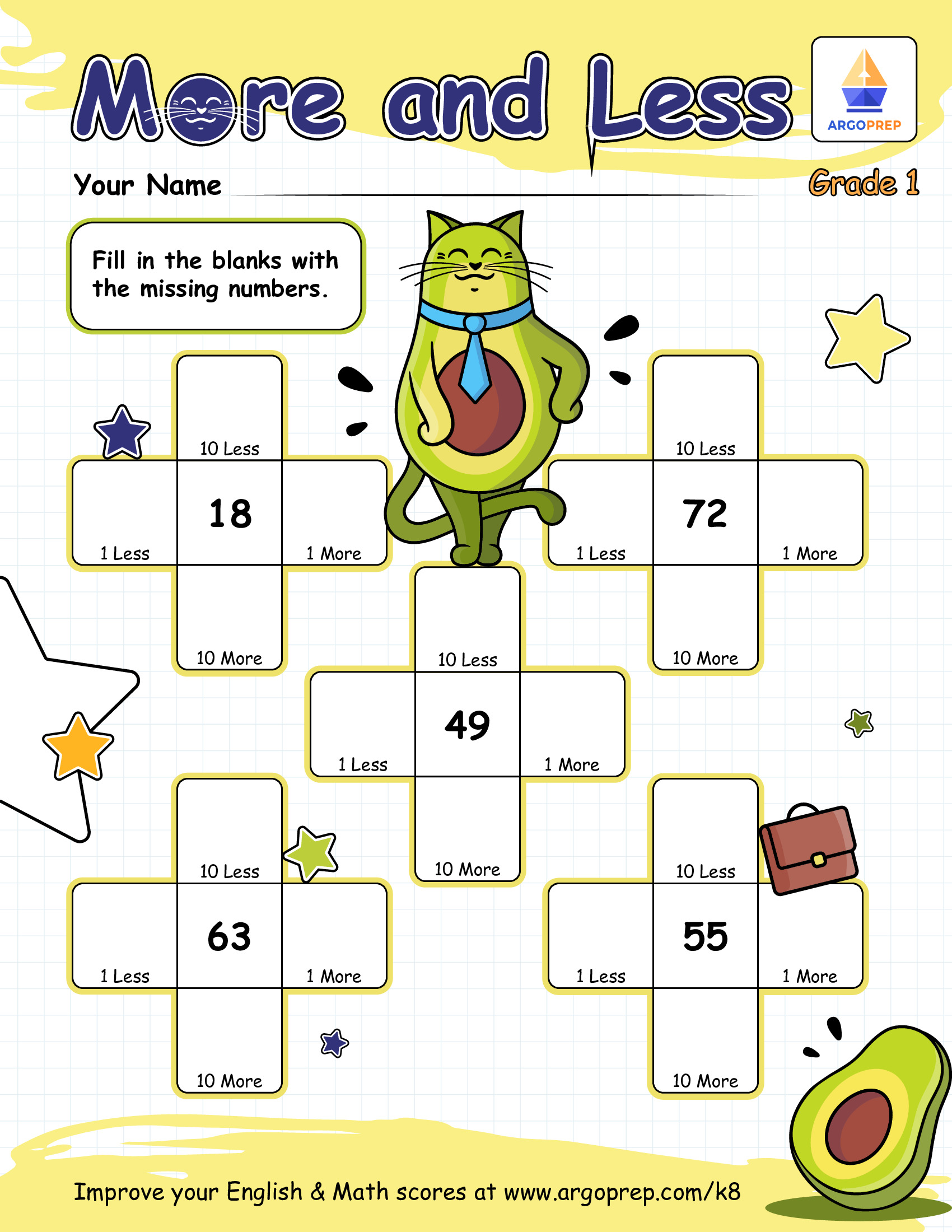
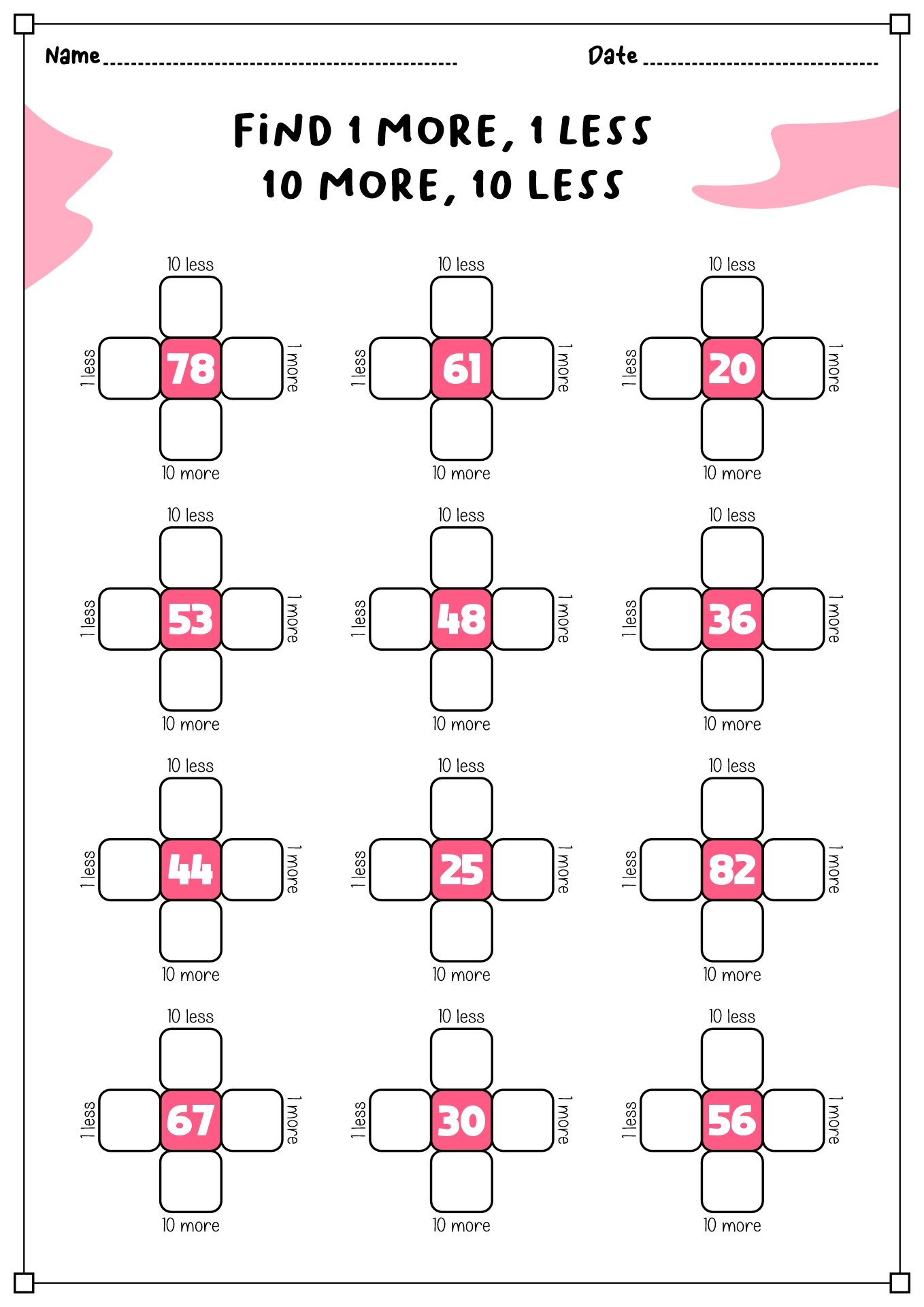
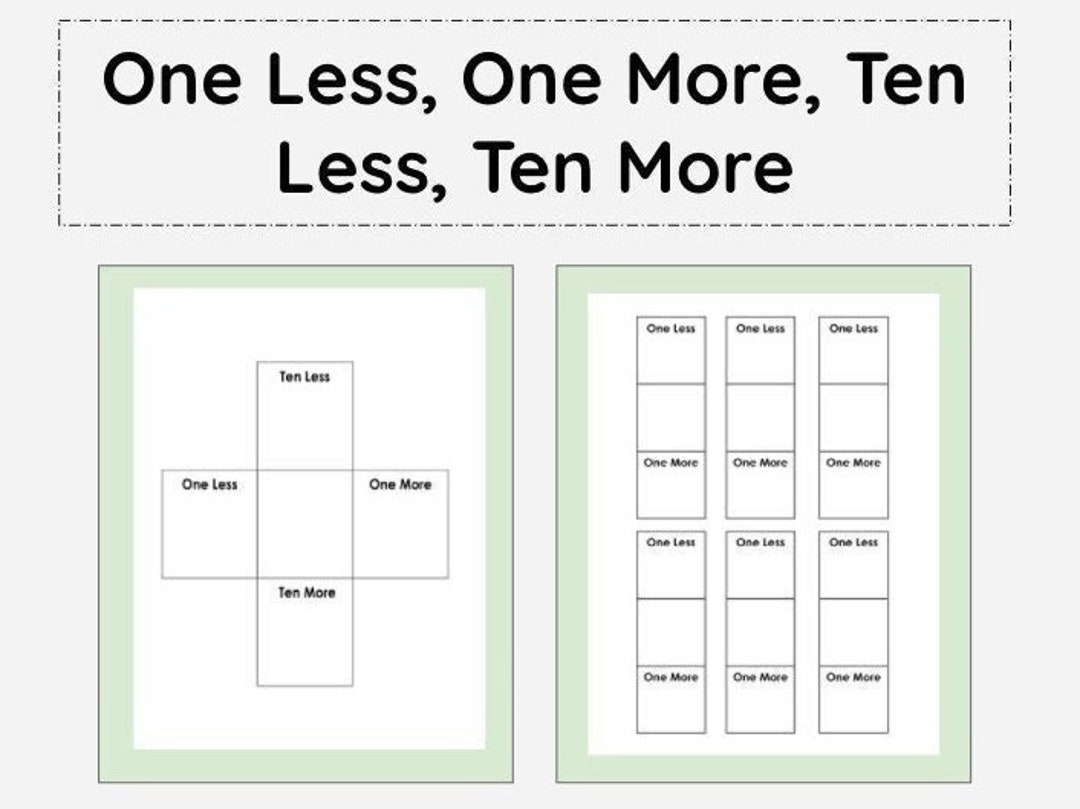
10 More Ten Less Worksheets offer a powerful, engaging way for students to develop number sense and mastery of basic arithmetic operations. These worksheets challenge learners to think critically, identify patterns, and apply addition and subtraction skills in meaningful contexts. By integrating this classic worksheet series into daily math practices, teachers and parents can create a dynamic learning environment that fosters confidence and accuracy.
What Are 10 More Ten Less Worksheets?

These worksheets are designed around the common problem type “10 More 10 Less,” which presents a series of number relationships where students determine whether a given number is ten more, ten less, or neither relative to another. The structure typically includes pairs of numbers or short sequences requiring comparison, encouraging students to mentally shift by ten, a cornerstone concept in early mathematics curriculum.
Core Features of the Worksheet Format
- Number Pairs: Each question presents two numbers, and the student marks “10 more,” “10 less,” or “neither.”
- Pattern Recognition: Some worksheets extend the concept into simple sequences, prompting students to spot consistent ten-step jumps.
- Visual Aids: Graphical representations or number line illustrations help visual learners grasp the ten-unit difference.
- Progressive Difficulty: Worksheets range from basic pairs (e.g., 12 vs. 22) to multi-digit comparisons, allowing skill growth over time.
Why 10 More Ten Less Worksheets Are Valuable

Mastering ten-based relationships is foundational for later math topics such as place value, decimals, and algebraic thinking. Here are the key benefits:
- Reinforces Place Value: Shifting by ten reinforces the idea that the tens place increases by one while the units stay constant.
- Builds Mental Math: Regular practice enables quick, intuitive calculation without reliance on a calculator.
- Develops Pattern Thinking: Students learn to identify regular intervals, a skill critical for understanding series and sequences.
- Supports Assessment Readiness: Many state and national standards evaluate this concept; worksheets provide targeted practice.
Key Concepts Covered in 10 More Ten Less Worksheets

These worksheets address multiple learning objectives that align with early elementary math standards.
1. Addition and Subtraction of Tens
Students are prompted to add or subtract 10 from a base number, solidifying the operation’s effect on the tens digit.
2. Comparing Numbers
By asking whether one number is ten more or less than another, learners practice logical comparison and numerical ordering.
3. Number Line Visualization
Many worksheets incorporate a number line, encouraging spatial reasoning about the distance between numbers.
4. Cognitive Flexibility
Switching between “more” and “less” tasks develops mental agility and discourages rote memorization.
How to Use 10 More Ten Less Worksheets Effectively

Implementing these worksheets can be seamless when following a structured approach.
Step 1: Warm‑Up Activity
Begin with a quick number line review, asking students to place 10, 20, 30, and so forth, to refresh their mental model of tens.
Step 2: Guided Practice
Work through the first few questions as a class, modeling how to identify a ten difference. Encourage verbal reasoning: “If 37 is ten less than 47, how can we tell?”
Step 3: Independent Worksheet Time
Provide the worksheet in a structured format. Set a time limit to build fluency while allowing for self‑pace.
Step 4: Peer Review and Discussion
Pair students to compare answers, promoting collaborative problem‑solving and justification of reasoning.
Step 5: Reflective Feedback
After completion, discuss common errors. Highlight patterns that students missed and offer corrective strategies, such as visualizing the tens place as a “step” on the number line.
Sample Worksheet Design Ideas

Below is a typical layout you can adapt for classroom use or home practice:
- Question Set 1: 14 vs. 24 – “10 more”
- Question Set 2: 37 vs. 27 – “10 less”
- Question Set 3: 56 vs. 66 – “10 more”
- Question Set 4: 80 vs. 70 – “10 more”
- Question Set 5: 91 vs. 81 – “10 more”
- Question Set 6: 105 vs. 115 – “10 less”
- Question Set 7: 118 vs. 128 – “10 more”
- Question Set 8: 134 vs. 124 – “10 less”
- Question Set 9: 145 vs. 155 – “10 less”
- Question Set 10: 200 vs. 210 – “10 more”
For advanced students, add a bonus section where they create their own number pairs and challenge classmates to determine the relationship.
Differentiating for Diverse Learners

Each student learns at a unique pace, and 10 More Ten Less Worksheets can be tailored accordingly.
For Visual Learners
Incorporate color‑coded number lines or use stickers to highlight the ten‑step increments. Visual markers help anchor the concept of a “step” across the tens place.
For Kinesthetic Learners
Use manipulatives like ten blocks or counters. Students can physically add or remove a group of ten to see the effect on the overall count.
For Advanced Students
Introduce negative numbers or larger multi‑digit comparisons, such as 219 vs. 229, to keep the challenge appropriate.
For Struggling Students
Break the problem into smaller steps: first identify the units digit, then compare the tens digit. Use a two‑column approach where one column lists the tens and the other the units.
Assessment and Feedback Strategies

Regular assessment helps track progress and identify misconceptions before they become ingrained.
Formative Checkpoints
After each worksheet session, ask a few students to explain their reasoning aloud. This provides immediate insight into their conceptual understanding.
Summative Evaluations
Incorporate a quick quiz that includes 10 More Ten Less questions alongside other addition and subtraction problems to evaluate overall numeracy competence.
Feedback Templates
- Positive Reinforcement: “Great job spotting the ten-step difference!”
- Constructive Guidance: “Remember to double‑check the tens digit before deciding if it’s 10 more or less.”
Integrating Technology
Digital platforms can enhance the worksheet experience through interactive features.
Online Math Games
Choose apps that allow students to drag numbers along a virtual number line, reinforcing ten‑step relationships in a gamified setting.
Adaptive Learning Tools
Many educational software suites analyze student responses in real time, providing customized follow‑up questions to address specific gaps.
Printable PDF Templates
Download and print worksheets to maintain a low‑tech approach when devices are scarce or in offline environments.
Tips for Teachers and Parents

Effective use of these worksheets depends on thoughtful planning and ongoing support.
1. Scaffold Progression
Begin with single‑digit comparisons, then move to double digits, and finally to multi‑digit numbers. Gradual exposure helps build confidence.
2. Encourage Explanation
Ask students to write a short justification for each answer. This promotes deeper conceptual understanding.
3. Use Real‑World Contexts
Relate questions to everyday scenarios, such as “If a store price is $14 and another item is $24, how much more is the second item?” This bridges abstract math to practical life.
4. Offer Timed Challenges
Once students are comfortable, introduce timed rounds to build mental calculation speed.
5. Celebrate Milestones
Create a progress chart where students earn stickers or stars for consecutive correct responses, motivating sustained effort.
Conclusion

Incorporating 10 More Ten Less Worksheets into your math curriculum provides a targeted, engaging approach to mastering place value, addition, and subtraction. By thoughtfully sequencing instruction, differentiating for learner needs, and integrating technology where appropriate, educators can ensure that every student gains a solid foundation in ten‑step relationships. Consistent practice, paired with reflective feedback and real‑world connections, will transform this simple worksheet into a powerful tool for building lifelong math confidence.