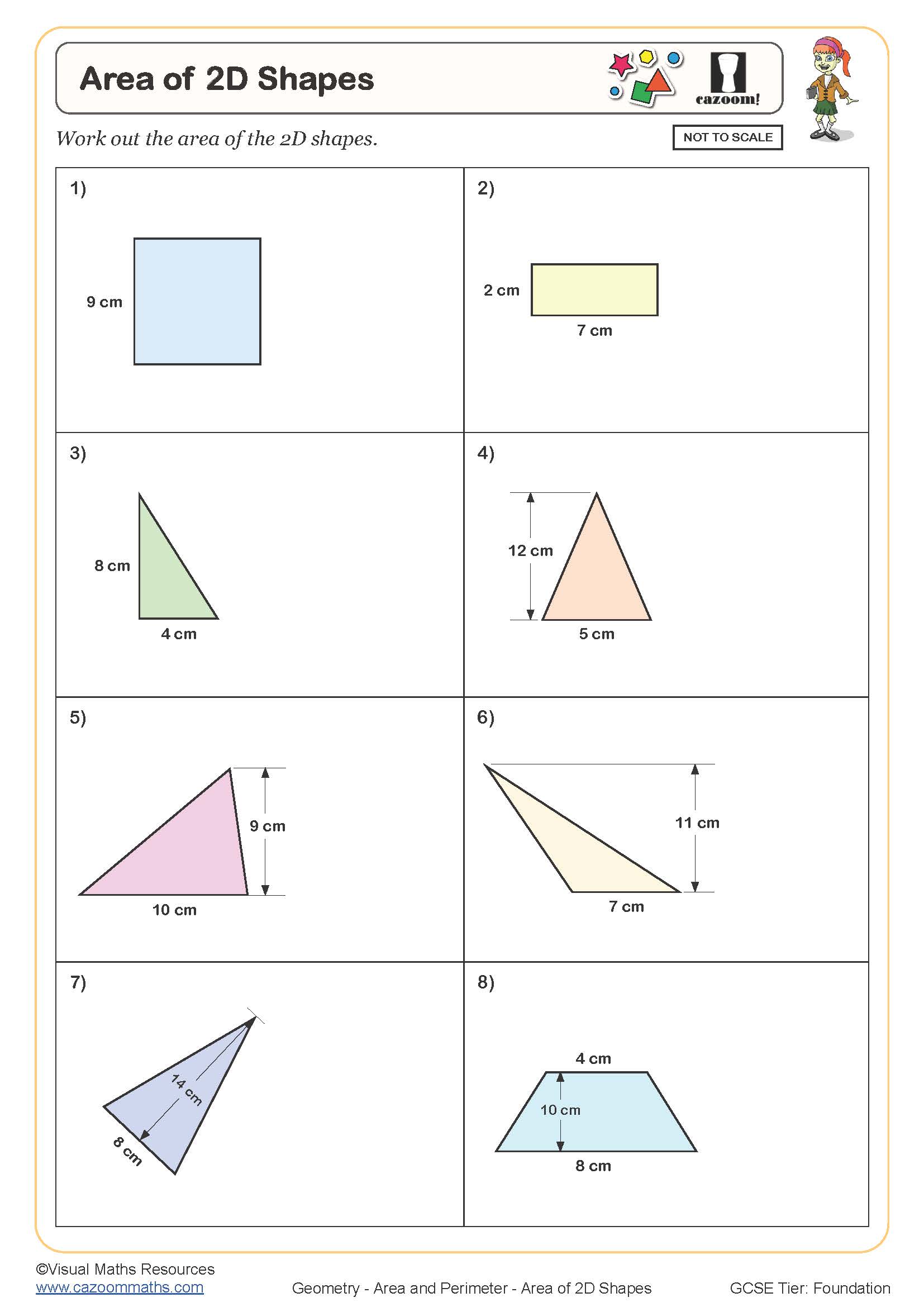
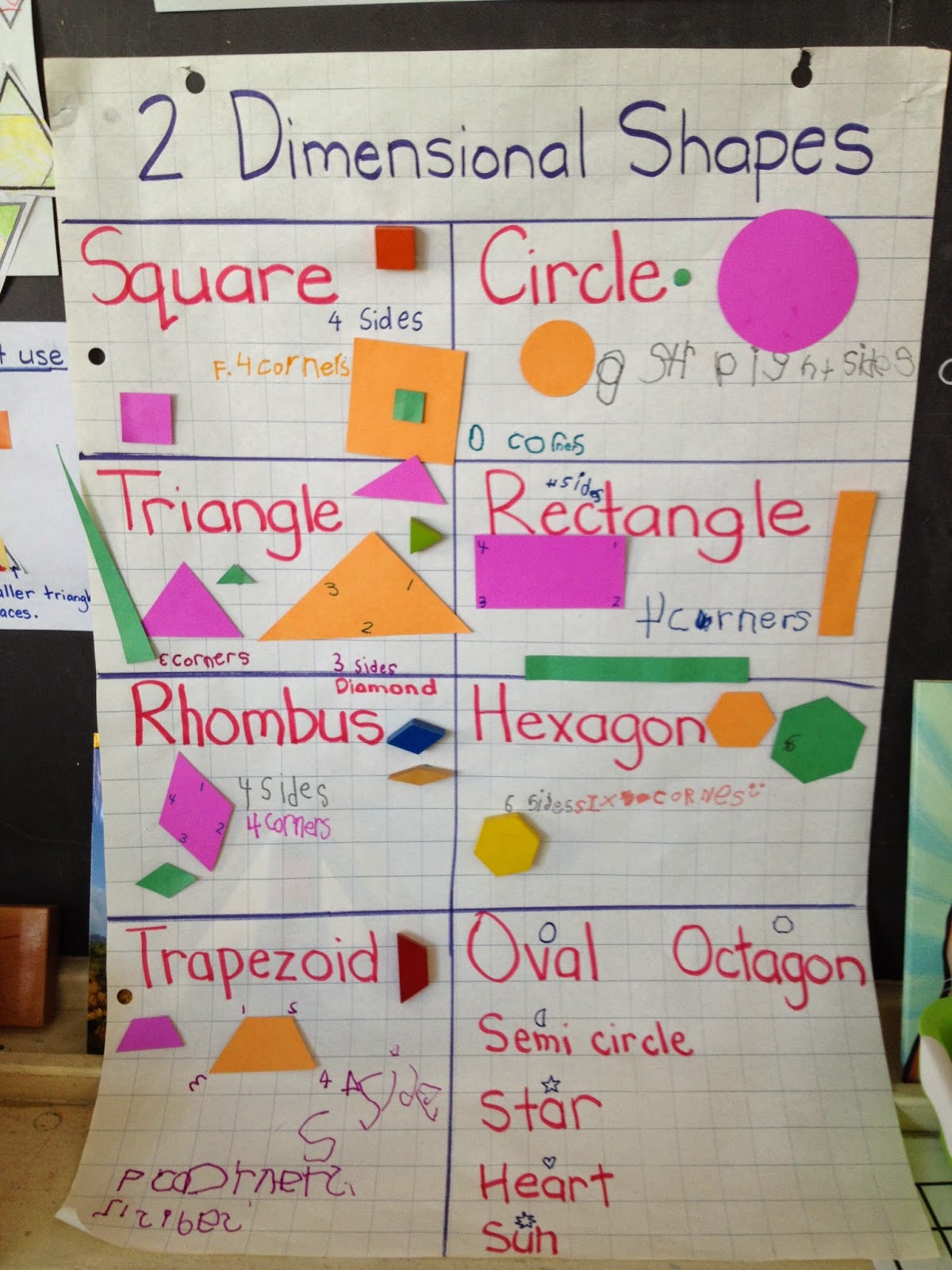
2 Dimensional Shapes Worksheet offers a vivid gateway for students to explore geometry in a playful yet structured way. By blending clear visual cues, engaging tasks, and real‑world examples, this worksheet type encourages both critical thinking and creative problem‑solving across diverse learning environments.
Why 2 Dimensional Shapes Matter in Modern Education

Understanding shapes is a cornerstone of spatial reasoning. Whether a child is drawing a mandala in art class or solving a geometry puzzle in mathematics, 2‑D shapes provide the foundational vocabulary needed to interpret the world around them. In many Asian classrooms, precision and pattern recognition are highly valued; incorporating shape worksheets reinforces these cultural strengths while fostering universal skills such as logical deduction, measurement, and symmetry.
Key Cognitive Benefits
- Spatial Awareness: Recognizing and differentiating shapes sharpens visual perception.
- Logical Sequencing: Identifying properties of shapes encourages systematic reasoning.
- Problem‑Solving: Worksheets that ask students to calculate perimeter or area build quantitative skills.
- Creativity: Shape‑based art projects nurture imagination through structured limits.
Academic Standards Alignment
State and national math standards frequently reference shape identification, classification, and area/perimeter calculations. By providing targeted worksheets, teachers can effortlessly align lessons with curriculum benchmarks, ensuring students achieve proficiency before advancing to more complex topics such as 3‑D geometry or trigonometry.
Core 2‑D Shapes to Focus On

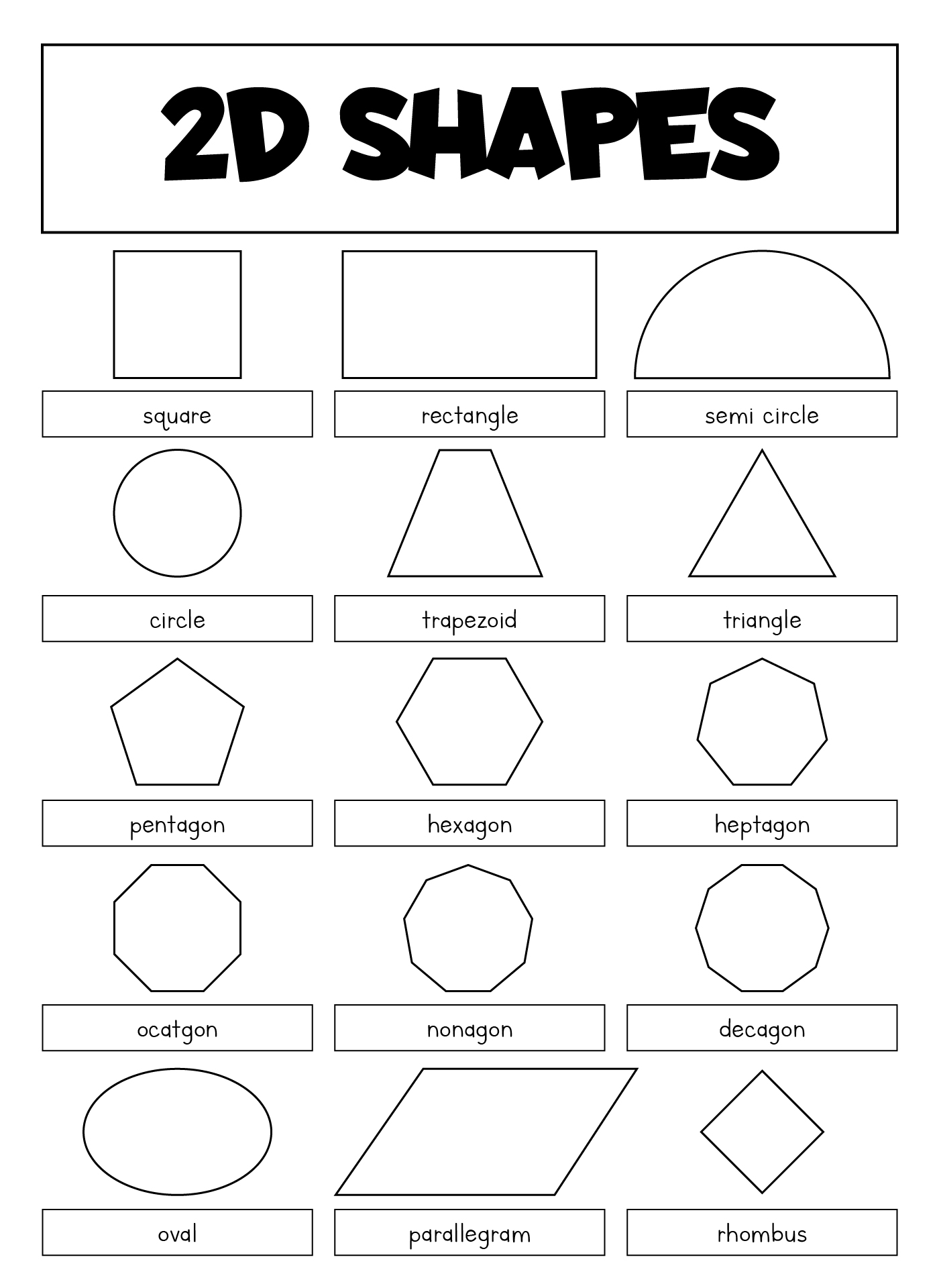
While countless polygons exist, the most effective worksheets start with a limited set of classic shapes. This focus allows students to master essential properties before moving to more elaborate forms.
Circle
A perfect round shape with no corners. Key concepts: radius, diameter, circumference, and pi. Activities may include labeling parts, measuring circumference with a string, or comparing the area of circles with different radii.
Triangle
Three sides and angles. Distinguish between equilateral, isosceles, and scalene triangles. Worksheets can feature angle classification (acute, right, obtuse) and triangle congruence checks using the SSS or ASA methods.
Quadrilateral Family
- Square: Equal sides, right angles.
- Rectangle: Opposite sides equal, right angles.
- Rhombus: Equal sides, opposite angles equal.
- Parallelogram: Opposite sides and angles equal.
- Trapezoid: At least one pair of parallel sides.
Each shape offers unique lessons on symmetry, angles, and properties, and can be used to compare perimeter and area.
Other Polygons
Once foundational shapes are mastered, introduce pentagons, hexagons, octagons, and the classic star shape. Highlight interior angle sums (e.g., a pentagon’s interior angles total 540°) and use real‑world examples like Japanese origami or Chinese dragon patterns to illustrate the shapes’ cultural relevance.
Designing an Engaging Worksheet
Creating a worksheet that balances challenge and accessibility requires thoughtful structuring. Below is a step‑by‑step guide to designing effective 2‑D shape worksheets.
Step 1: Define Learning Objectives
Determine which concepts you want students to internalize. Objectives could range from “Identify the number of sides in each shape” to “Calculate the area of a given shape using a specific formula.” Clear goals guide every subsequent decision.
Step 2: Choose a Theme
Asian learners often appreciate thematic coherence. For instance, a “Japanese Garden” theme might feature petals (circles), koi pond outlines (ellipses), and stone lanterns (rectangles). The theme ties the worksheet’s aesthetic to the learning content, boosting engagement.
Step 3: Mix Textual and Visual Instructions
Include a brief explanation for each task, followed by a visual example. Use labels such as “Find the perimeter of this triangle” and show a diagram with a highlighted side. Visual clarity reduces confusion and supports visual learners.
Step 4: Integrate Progressive Difficulty
- Level 1: Identify shapes, name them.
- Level 2: Count sides, measure basic lengths.
- Level 3: Calculate area/perimeter, compare shapes.
- Level 4: Apply transformations (reflection, rotation) to shapes.
- Level 5: Design a composite figure using multiple shapes.
Step 5: Provide Immediate Feedback Elements
Incorporate answer keys in a separate column or use colored pencils for self‑checking. Immediate feedback helps students correct misconceptions in real time.
Sample Worksheet Ideas for Various Grades

Grade 2: Shape Hunt
Provide a grid of mixed shapes. Students circle or color the shapes that match a given criterion (e.g., “All circles” or “Squares with side length > 5 cm”). This activity cultivates visual discrimination and basic measurement skills.
Grade 4: Area Calculation
Present a composite figure made of rectangles and triangles. Ask students to calculate the total area using the formula A = lw for rectangles and A = ½bh for triangles. Add a cultural element such as “Calculate the area of a tea set’s base plate (circle) and its lid (ellipse)” to maintain thematic relevance.
Grade 6: Symmetry Exploration
Give students a set of irregular polygons and ask them to draw axes of symmetry. Provide examples from traditional Asian art—such as a lotus petal pattern—to illustrate symmetrical principles in culturally familiar contexts.
Leveraging Technology to Enhance Worksheets

Digital tools can transform static worksheets into dynamic learning experiences. Consider the following tech integrations:
Interactive Shape Builders
Online platforms allow students to drag and drop shape components, instantly visualizing changes in perimeter or area. This interactive approach deepens understanding of how shape modifications affect measurements.
Geometric Games
Gamified quizzes—such as matching a shape to its description—provide immediate scoring feedback and encourage healthy competition. Many Asian educational apps use leaderboard systems to motivate students further.
Printable PDF Templates
While the article advises not to provide URLs, teachers can generate high‑quality printable PDFs with clear lines and ample space for student answers. This ensures accessibility for classrooms with limited digital resources.
Cultural Connections to Increase Relatability

Asian cultures often celebrate patterns and geometry in everyday life. By weaving these references into worksheets, learners can see the relevance of shapes beyond the textbook.
Origami Patterns
Introduce students to the geometric origins of popular origami folds such as the crane or the paper boat. Ask them to identify the shapes that appear at each fold, encouraging a blend of mathematics and traditional craft.
Temple Architecture
Explain how the precise angles in a pagoda’s roof design rely on accurate triangular and trapezoidal calculations. Students can draw a simplified roof, calculate angles, and discuss how these shapes contribute to structural stability.
Festival Symbols
Shapes like the hexagon appear in Japanese koinobori (carp streamers). Provide worksheets where students draw and calculate the perimeter of these symbols, linking math with cultural celebrations.
Assessment Strategies and Grading Rubrics

To measure proficiency, teachers can adopt a rubric that balances accuracy, reasoning, and creativity. Here’s a concise example:
Assessment Rubric
- Accuracy: Correct identification and calculation (50%).
- Methodology: Proper use of formulas and steps (30%).
- Cultural Application: Incorporation of thematic examples (20%).
Provide descriptive comments alongside each score to guide improvement. For instance, “Excellent use of the area formula for rectangles; consider exploring the ½bh formula for triangles next.”
Printable Resources for Teachers and Parents

While direct links are excluded, teachers can compile worksheets into themed packs—such as “Mandala Shape Challenge” or “Asian Market Geometry”—and distribute them during classroom activities or as homework. Parents can use these materials for home practice, fostering a collaborative learning environment.
DIY Shape Kit
Encourage families to create a set of paper shapes from recycled cardboard. Together, they can complete worksheets by cutting, measuring, and labeling real shapes, linking tactile experience with theoretical concepts.
Tips for Parents and Teachers to Maximize Learning

- Start with simple shape recognition before introducing complex formulas.
- Use real‑world objects (e.g., chopsticks as a rectangle, sushi rolls as circles) to demonstrate measurements.
- Incorporate story‑telling: “Imagine a dragon’s body is a hexagon; calculate its area to estimate how many scales it needs.”
- Encourage discussion about how shapes influence design and architecture in their own culture.
- Reinforce learning by having students explain their reasoning aloud, promoting metacognition.
Conclusion

Crafting a comprehensive 2 Dimensional Shapes Worksheet that blends educational rigor with cultural resonance offers students a memorable learning journey. By systematically covering fundamental shapes, integrating real‑world Asian examples, and leveraging technology, educators can cultivate spatial reasoning, problem‑solving, and creative expression. With the right design and support, these worksheets become a powerful tool that bridges classroom learning and everyday life, preparing students for advanced geometric challenges and a deeper appreciation of the world’s inherent patterns.