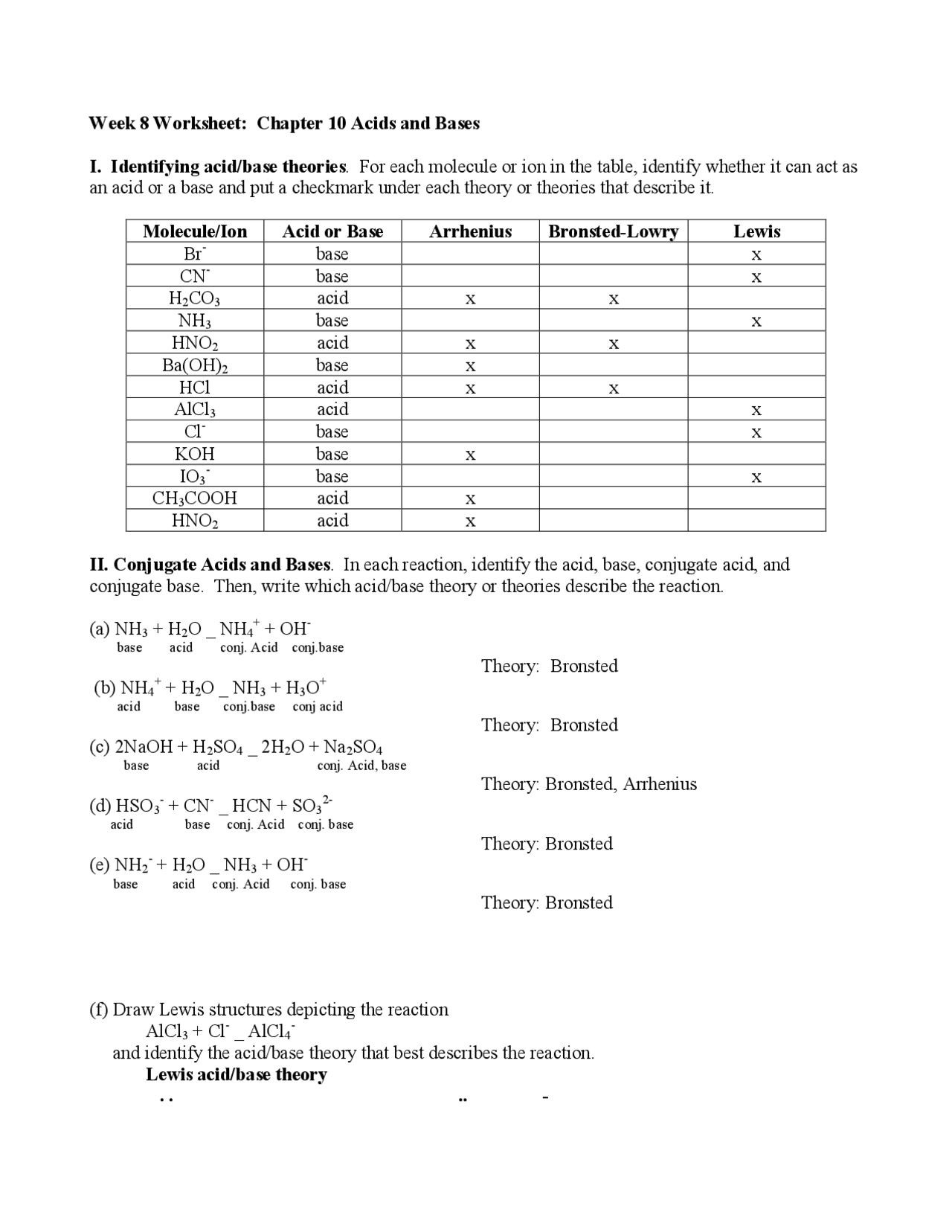
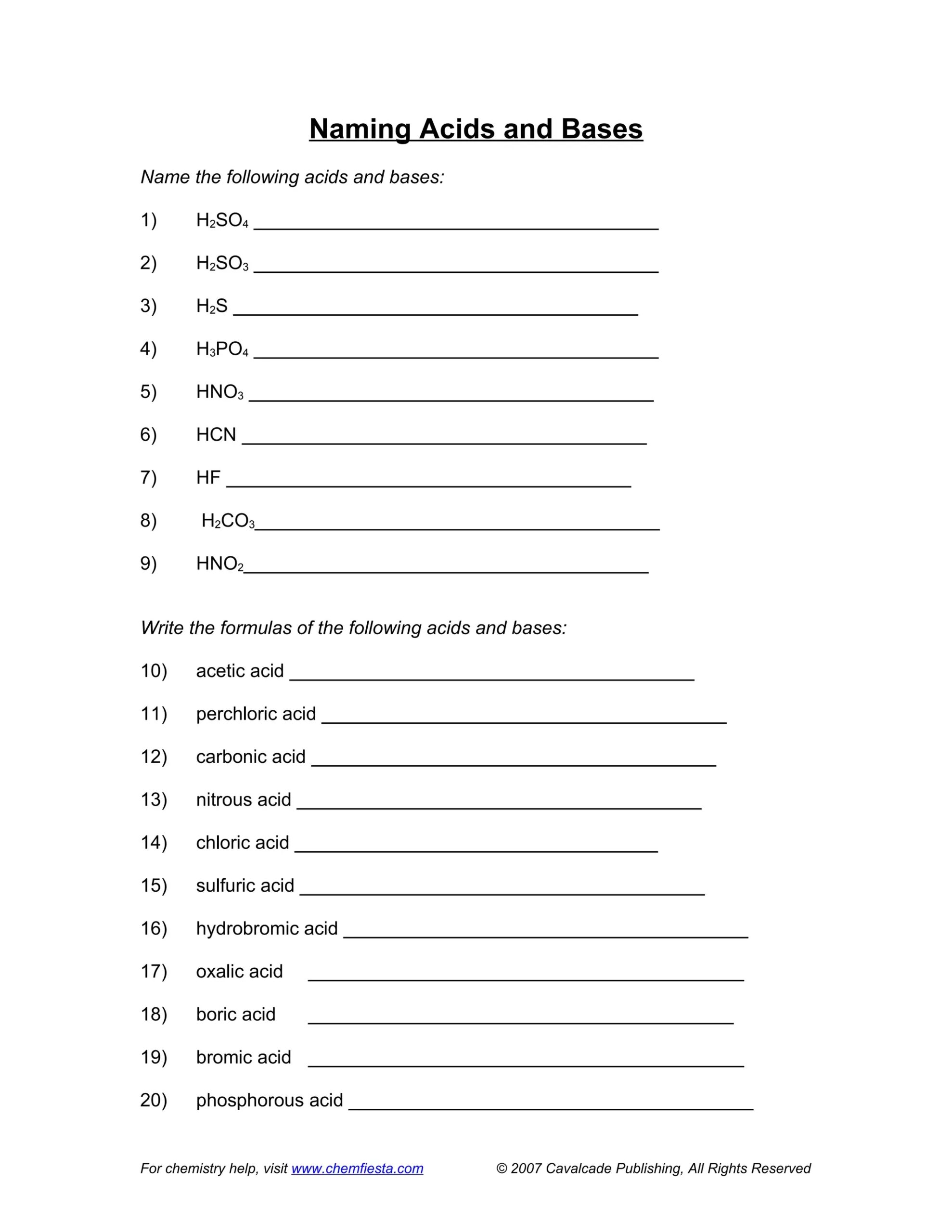
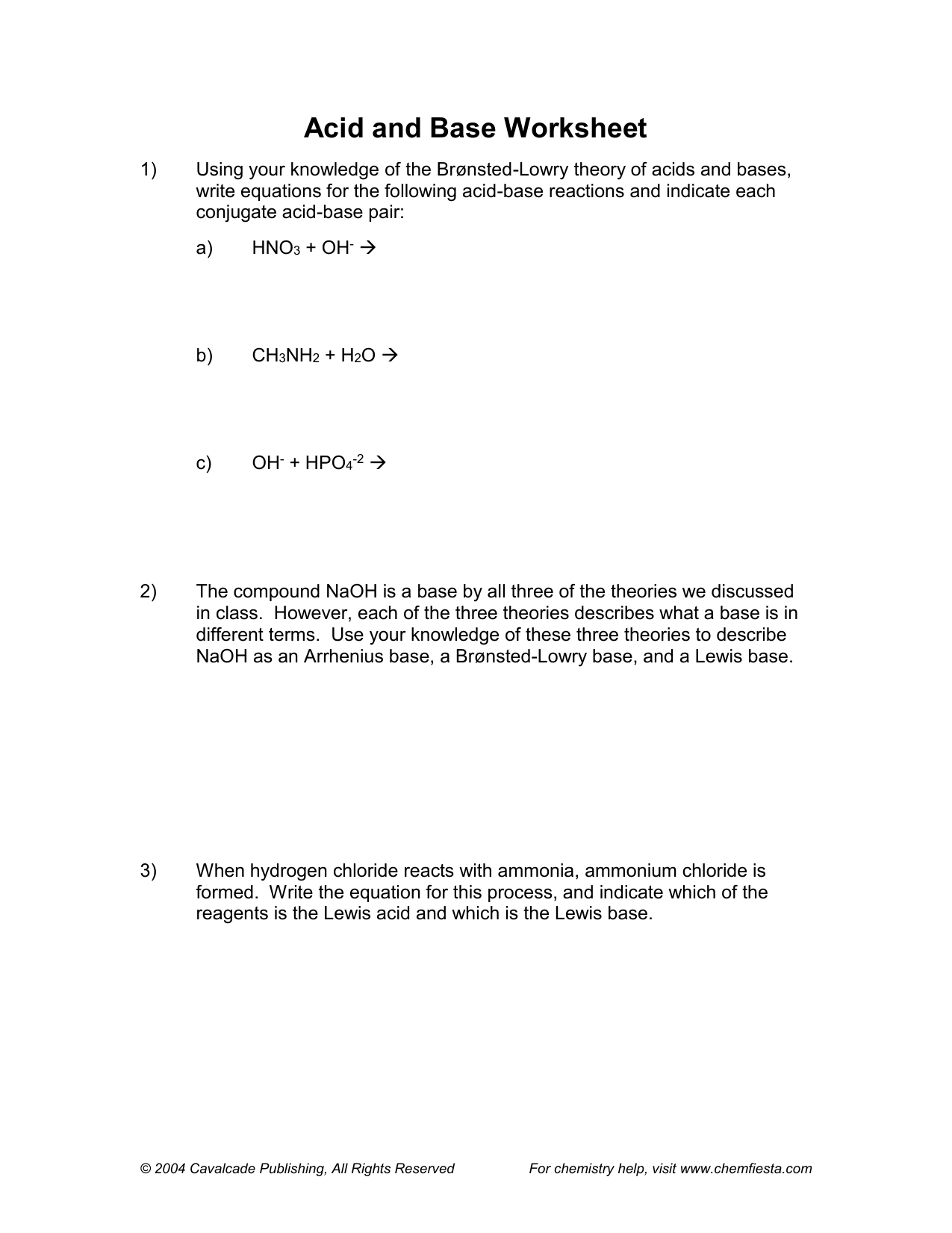
Acid Or Base Worksheet is more than just a classroom exercise; it’s the passport to mastering the chemistry of life, the ultimate test of your ability to keep your cool when a pH scale skews out of control. Imagine a world where every sip of coffee, every bite of pizza, and every splash of lemon is a puzzle waiting to be solved. That world exists, and it starts with a sheet of questions that make you laugh, groan, and occasionally do a celebratory dance when you finally get the answer right.
Why You Need an Acid Or Base Worksheet

When high school labs turned into a battle of the best lab coats, you quickly learned that acids and bases aren’t just science jargon—they’re the hidden forces behind the world’s most common reactions. A well‑crafted worksheet does more than check boxes; it forces you to think critically, apply theory to practice, and occasionally spot the typo that turns a textbook solution into a comedy of errors.
Here are three reasons to embrace the worksheet with gusto:
- Foundation Building: It solidifies your understanding of pH, neutralization, and buffer systems, turning abstract concepts into tangible knowledge.
- Real‑World Insight: From food preservation to medical diagnostics, acids and bases shape everyday life. A worksheet can show you how to navigate these applications.
- Exam Confidence: The repetitive, problem‑solving nature of worksheets builds muscle memory—so you won’t be tripping over a simple Ka value in the middle of an exam.
From Classroom to Kitchen
Think about the last time you opened a bottle of vinegar. That was a simple acid in a glass. Now imagine that same vinegar used to balance the pH of your soil or to clean the stainless steel of your kitchen counter. Every practical situation involves acid or base chemistry; your worksheet is the manual for becoming the household hero you always wanted to be.
What Makes an Awesome Worksheet?

Not all worksheets are created equal. A great one hits the sweet spot between challenging and accessible, with humor sprinkled in like confetti. Here’s what to look for:
- Clear Objectives: Each problem should have a purpose—be it calculating pH, balancing equations, or interpreting titration curves.
- Varied Difficulty: From drag‑and‑drop pH values to multi‑step derivations, the worksheet should keep you on your toes.
- Contextual Scenarios: Real‑world narratives (e.g., “You’re a sushi chef balancing the pH of your soy sauce”) make the math feel meaningful.
- Feedback Opportunities: Immediate answers or a key at the end allows you to correct mistakes and learn on the fly.
- Humorous Touches: Puns like “You’re not a pH of the earth, you’re a *ph*reak” keep the learning fun.
Typical Sections on an Acid Or Base Worksheet
1. pH Calculations—Simple logs and antilogs.
2. Neutralization Reactions—Balancing equations like a pro.
3. Buffer Systems—Understanding conjugate pairs.
4. Titration Curves—Graph interpretation with a dash of storytelling.
5. Real‑World Application Problems—From brewing beer to designing cosmetics.
The Science Behind Acid-Base Balance

Before you dive into the worksheet, let’s recap the fundamentals that will help you win the battle against the acids and bases. Think of acids and bases as the yin and yang of chemistry—neither is inherently good or evil, but their interaction creates a dynamic equilibrium that keeps life running smoothly.
Understanding pH and pOH
The pH scale ranges from 0 to 14, with 7 being neutral. Acids have pH < 7, bases > 7. The pOH scale is the complementary measure; pH + pOH = 14 at 25 °C. A quick mnemonic: “When in doubt, pH is a Hard puzzle, but pOH is a Outstanding helper.”
The Role of Ka and Kb
Every weak acid has a dissociation constant (Ka). Likewise, weak bases have Kb. These constants tell you how fully the acid or base ionizes in water. The smaller the Ka or Kb, the weaker the acid or base. Worksheet problems often require you to calculate Ka or Kb from given equilibrium constants.
Buffers—The Chemistry of Calm
A buffer solution resists changes in pH when a small amount of acid or base is added. Classic examples include the bicarbonate system in blood and the carbonate system in seawater. Understanding how to construct and analyze buffer equations is essential for the worksheet and real life.
Step‑By‑Step Guide to Completing Your Worksheet

Let’s walk through a typical worksheet problem to illustrate how to approach each question with confidence and a smile.
Example Problem 1: pH of a 0.02 M Acetic Acid Solution
Step 1: Identify Ka. The Ka for acetic acid is 1.8 × 10⁻⁵.
Step 2: Set up the expression. Use the weak acid approximation: Ka = (x²)/(0.02 – x), where x is [H⁺].
Step 3: Simplify. For small x, Ka ≈ x²/0.02. Solve for x → x = √(Ka × 0.02) = √(3.6 × 10⁻⁷) ≈ 6.0 × 10⁻⁴.
Step 4: Convert to pH. pH = –log10(6.0 × 10⁻⁴) ≈ 3.22. Voila!
Example Problem 2: Buffer Capacity of a 0.1 M HCl/NaCl Solution
Because HCl is a strong acid, it can’t form a buffer with NaCl alone. But if you swap it for acetic acid and its salt, you can calculate the buffer capacity using ΔpH = 0.5 log[(C₂ + ΔC₂)/(C₁ – ΔC₁)]. The worksheet will give you the numbers—your job is to plug them in and interpret the result.
Example Problem 3: Titration Curve Interpretation
Given a titration curve with a clear equivalence point at pH 5.2, determine whether the titrant was a strong acid or a weak base. The answer? A strong acid, because a weak base would push the equivalence point above 7.
Common Pitfalls and How to Avoid Them

- Forgetting the Units: Concentration and volume mismatches can lead to off‑by‑ten errors.
- Neglecting the Approximation: Assuming x is negligible when it isn’t can skew the results.
- Mixing Up pH and pOH: A quick check—if pH > 7, you’re dealing with a base; if < 7, it’s an acid.
- Ignoring the Context: Sometimes the problem’s story holds clues—don’t skip the narrative!
- Skipping the Sign: Remember that a negative logarithm of a positive number is a positive value.
Real‑World Applications of Acid‑Base Knowledge
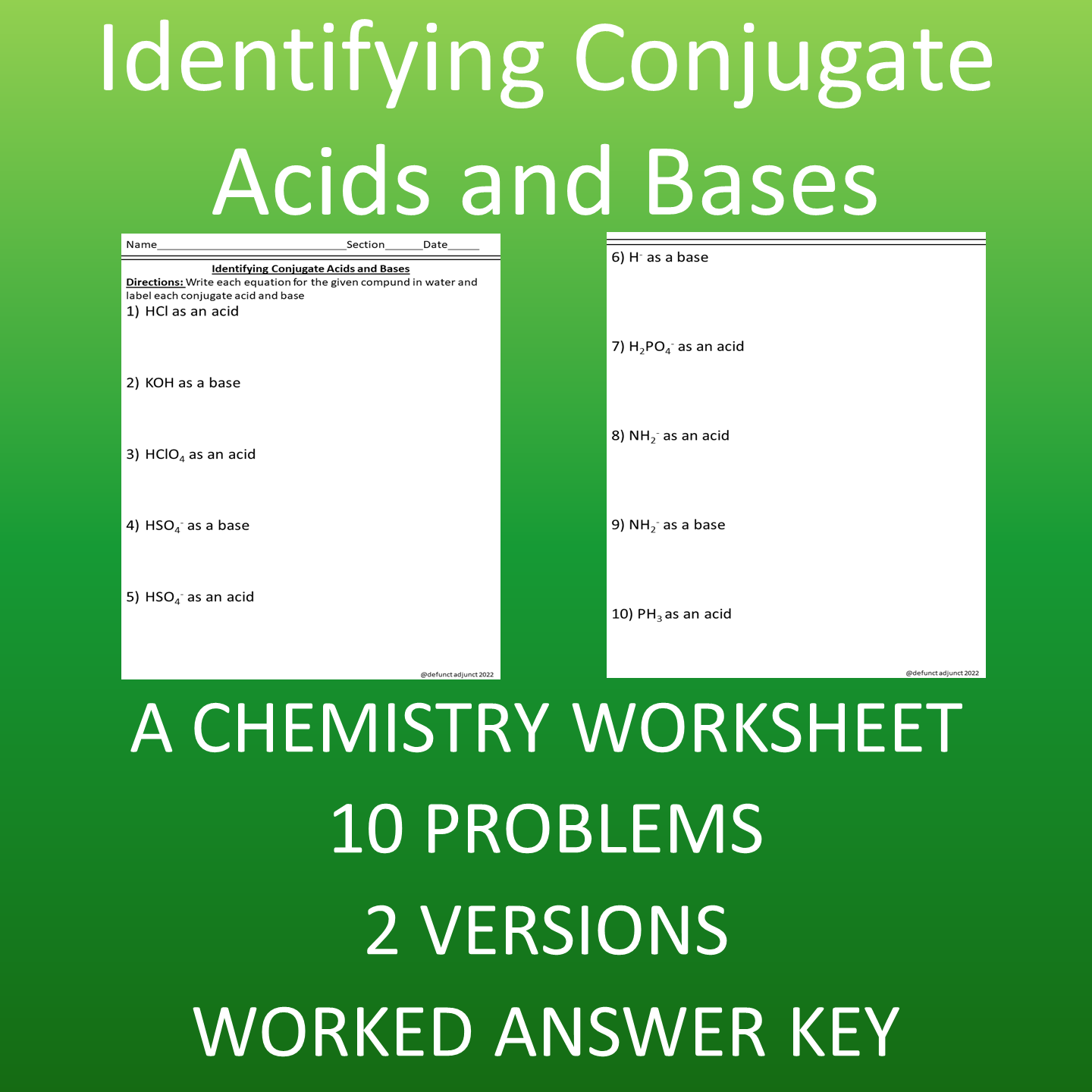
Beyond textbooks, the ability to analyze acids and bases has tangible benefits. Below are some everyday scenarios where your worksheet skills will shine.
Cooking and Food Preservation
Acidic marinades (vinegar, lemon juice) help break down proteins, while buffering agents keep the pH of fermented foods stable. Understanding the acid-base balance can help you tweak recipes for better texture and flavor.
Medical Diagnostics
The body’s blood has a tight pH range (7.35–7.45). A simple buffer, like bicarbonate, keeps it from swinging into dangerous extremes. Knowledge of acid-base calculations is critical for designing intravenous solutions and interpreting lab results.
Environmental Monitoring
River and ocean pH levels affect marine life. By measuring changes and calculating buffer capacities, scientists can assess the impact of industrial runoff or CO₂ absorption.
Industrial Cleaning and Manufacturing
Cleaning agents often rely on strong acids or bases to dissolve grime. The same principles apply to manufacturing processes where pH control determines product quality.
Fun Tips and Tricks to Keep the Energy High

- Use Mnemonics: “Never Lose Your Acidic Friend” (NLOAF) can help remember the order of magnitude of Ka values.
- Turn Problems into Stories: Imagine the acid as a villain and the base as a hero battling in a dramatic showdown.
- Gamify the Worksheet: Time yourself, score points for each correct answer, and reward yourself with a pH‑friendly snack.
- Pair Up: Study with a friend. One can do the calculations, the other checks logic—think of it as a pH‑dance partnership.
- Visualize the Curves: Sketching a titration curve can reveal hidden patterns that a number alone won’t show.
Where to Find Great Acid Or Base Worksheets

While you can create your own, here are a few top sources that consistently deliver high‑quality, humorous, and educational worksheets:
- Interactive Labs: Many science education platforms offer downloadable worksheets with instant feedback.
- Open‑Source Chemistry Communities: Forums and blogs often share peer‑reviewed problem sets.
- Educational Publishers: Look for textbooks that include supplementary PDF sheets.
- University Course Pages: Professors often post past exams and worksheets for self‑study.
Wrapping Up

Whether you’re a high‑school student eyeing an AP chemistry exam, a chemistry teacher looking for engaging class material, or a curious foodie fascinated by the science behind your favorite dishes, an Acid Or Base Worksheet is your gateway to deeper understanding. By embracing the humor, applying the concepts, and practicing diligently, you’ll transform every pH calculation into a confidence‑boosting win.
So next time you see a worksheet that seems like a labyrinth of formulas, remember: it’s not a punishment—it’s a puzzle waiting for a witty, knowledgeable, and slightly caffeinated brain to solve. Happy balancing, and may your pH always stay just where it should be!