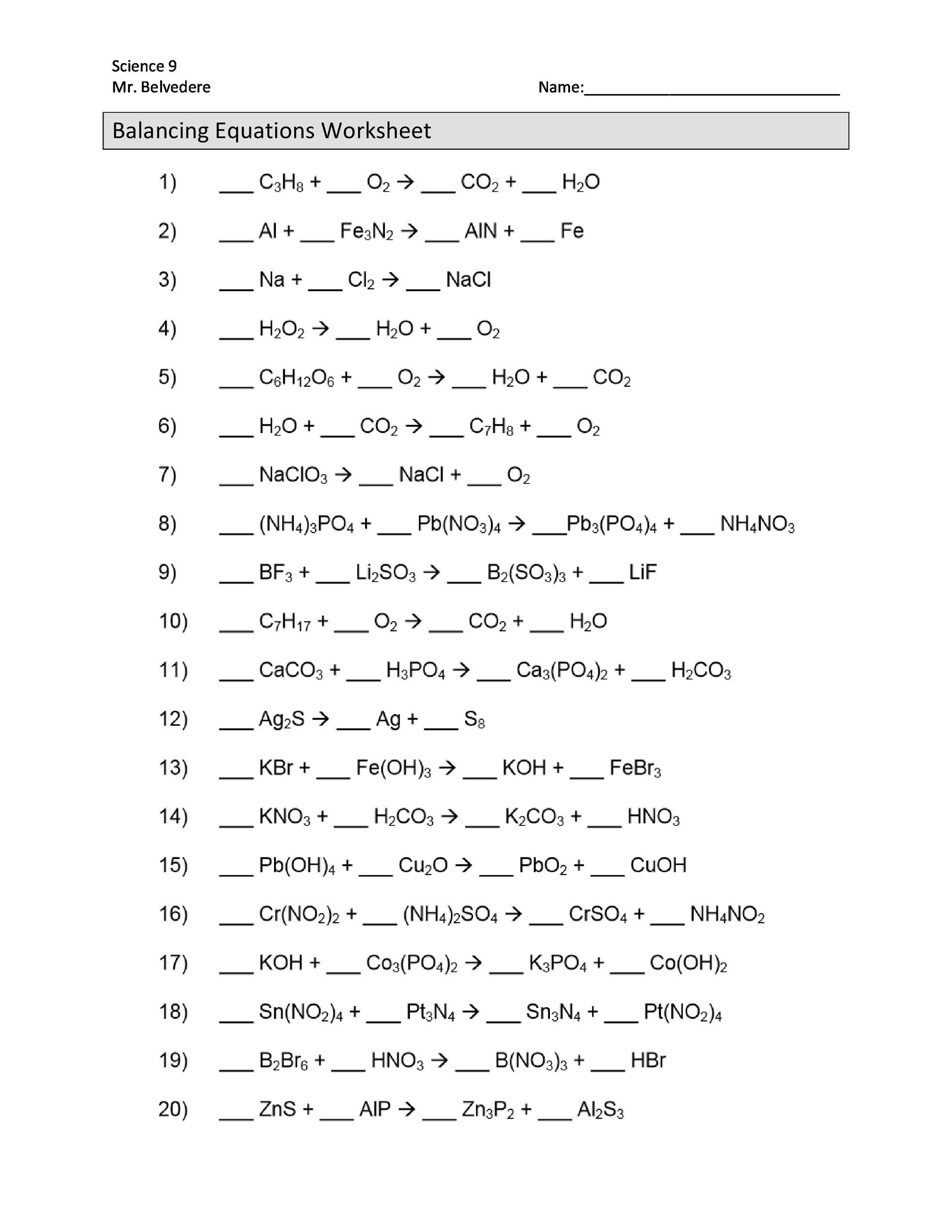
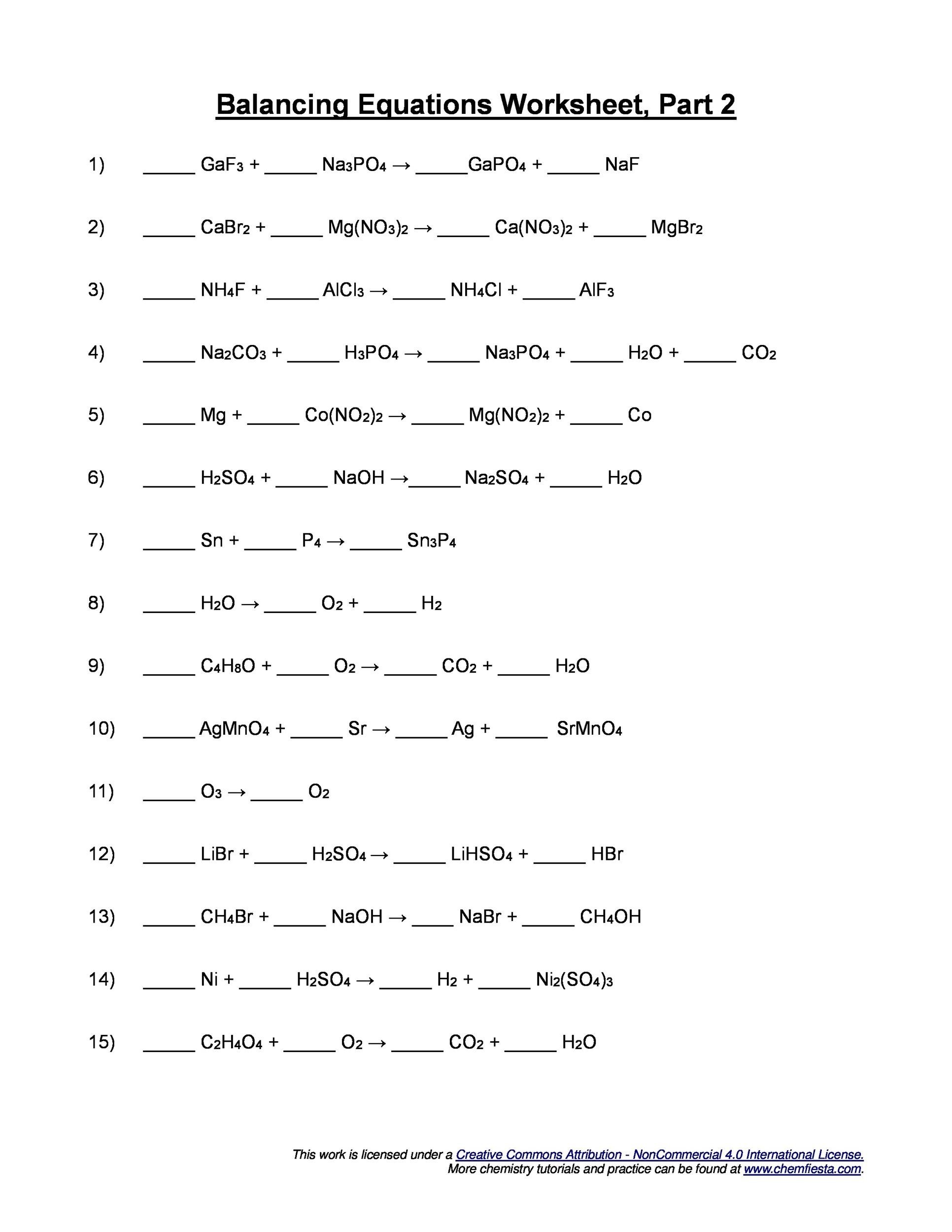
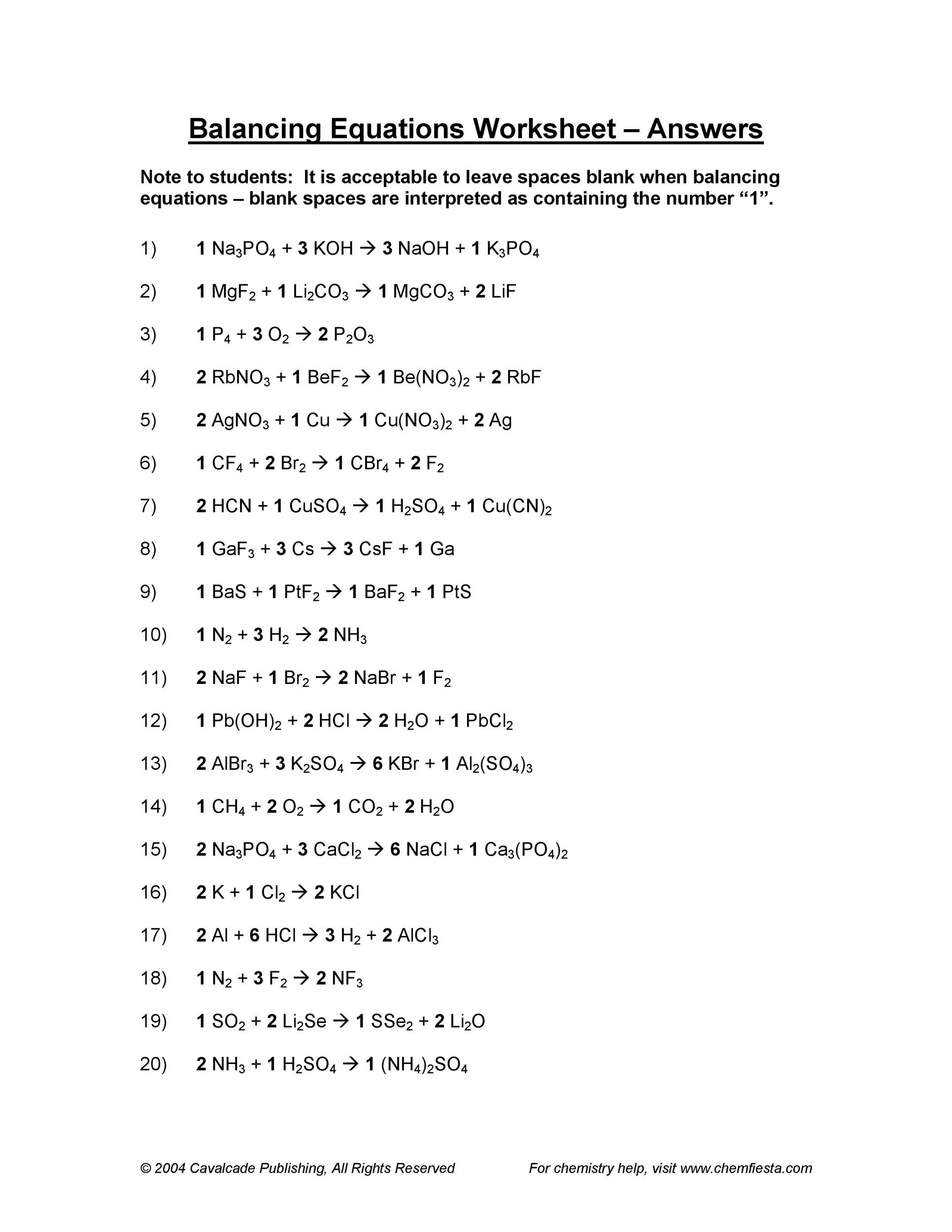
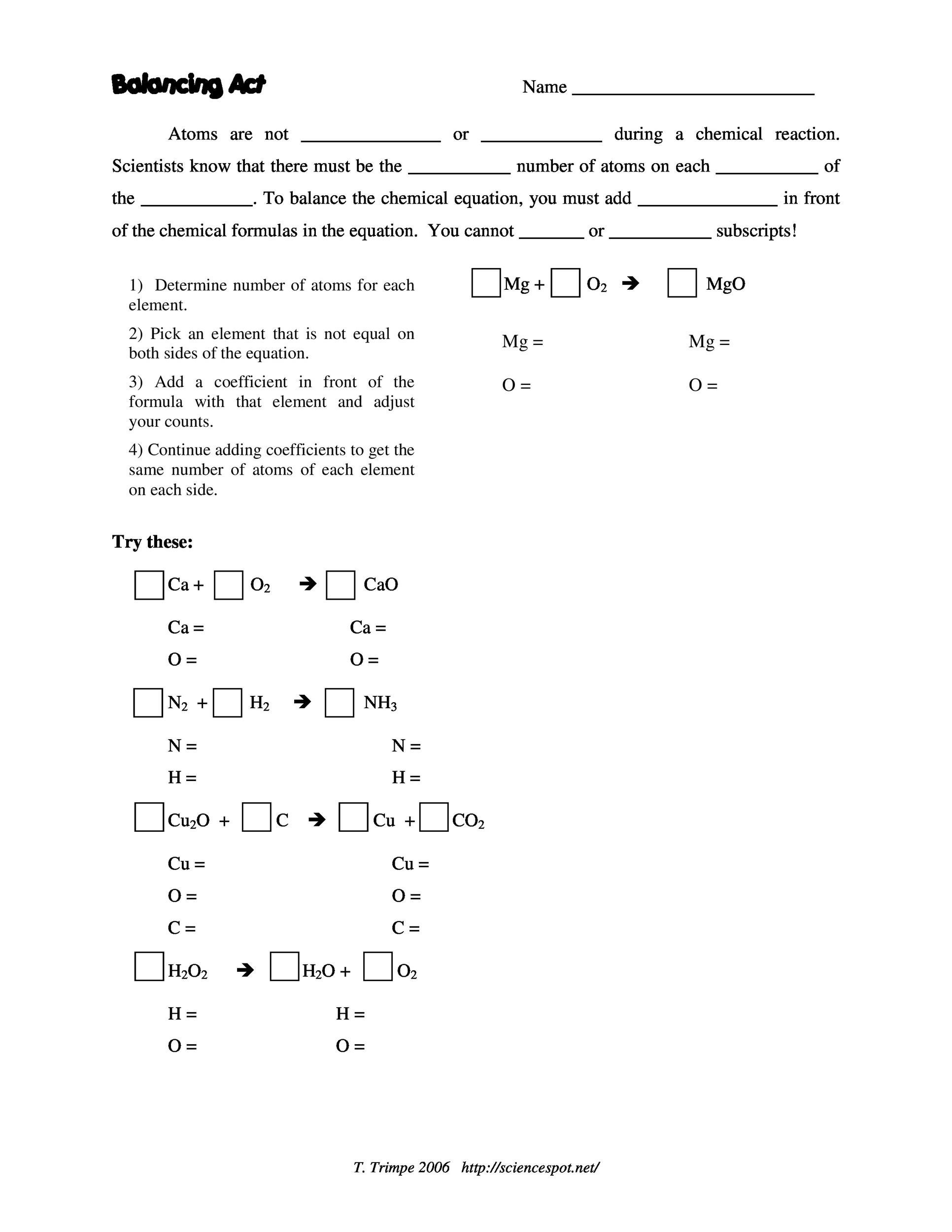
Balancing Of Chemical Equations Worksheet is a cornerstone resource for students navigating the complexities of stoichiometry, enabling them to translate theoretical concepts into practical skills with confidence and precision.
Understanding the Foundations of Chemical Balancing
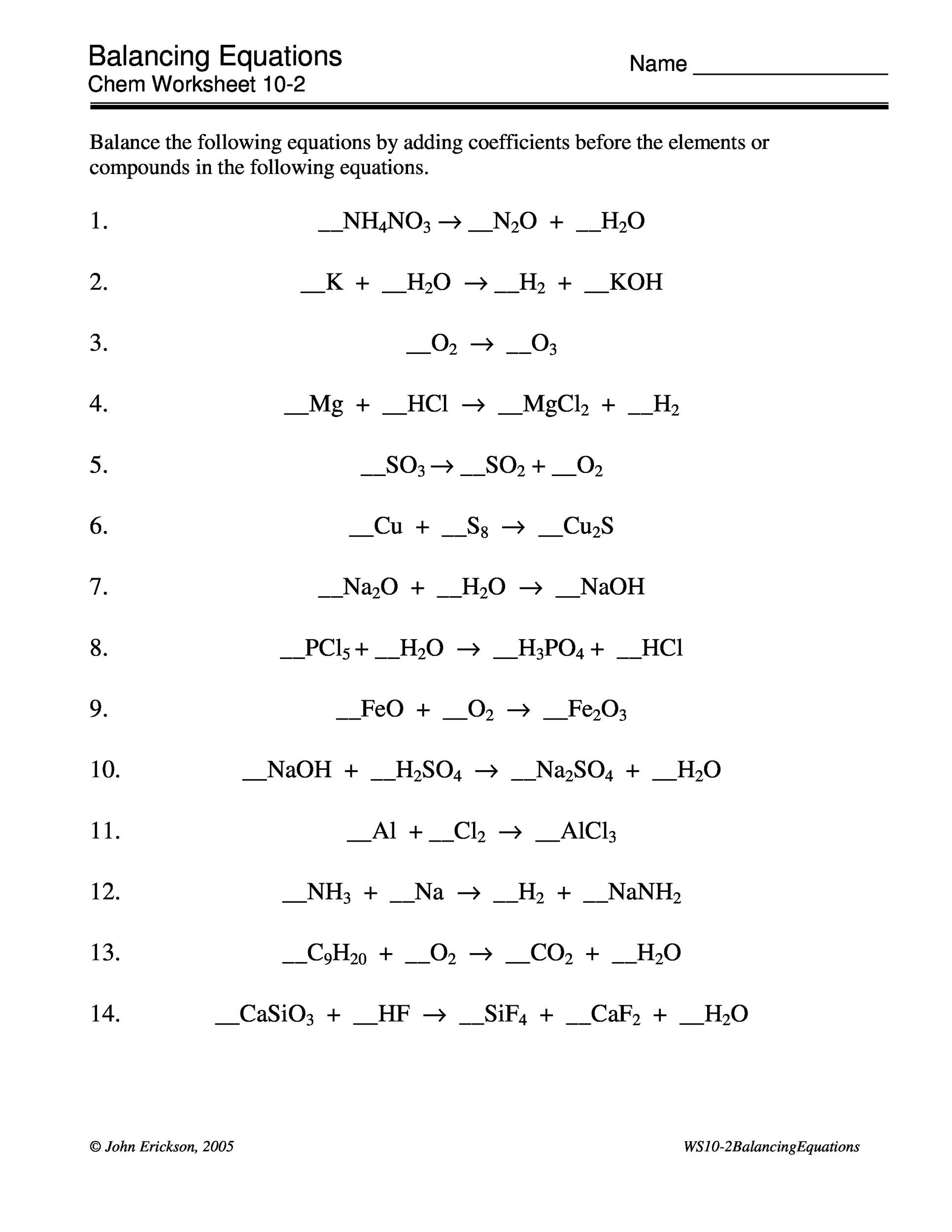
What Constitutes a Balanced Equation
A chemical equation is considered balanced when the number of atoms for each element on the reactant side equals the number on the product side. This ensures that mass is conserved, a principle rooted in the Law of Conservation of Mass. Students often mistakenly focus solely on the coefficients, neglecting the need to account for all atoms, which can lead to inaccurate stoichiometric calculations later in their coursework.
Key Elements of a Balanced Equation
- Reactants and Products: The substances that participate in the reaction, represented by their chemical formulas.
- Stoichiometric Coefficients: Whole numbers placed before each formula to indicate the relative quantities of each reactant and product.
- Atomic Balance: The final count of each type of atom must be identical on both sides of the arrow.
- Charge Balance: For ionic equations, the total electrical charge must also match across the reaction.
Step‑by‑Step Methodology for Effective Balancing

1. Write the Skeleton Equation
Begin with the correct formulas of all reactants and products. Avoid adding coefficients at this stage; instead, focus on placing each species correctly.
2. Count Atoms for Each Element
Tabulate the number of atoms of every element on both sides. A simple table or a “count sheet” helps prevent overlooking elements, especially in complex organic reactions.
3. Adjust Coefficients Systematically
Start with the most complex molecule or the one that contains the least common elements. Adjust its coefficient to equalize that element’s count on both sides. Repeat the process for remaining elements, using the most recent adjustments as reference points.
4. Verify the Charge (if applicable)
For reactions involving ions, sum the charges on each side and make sure they match. This step is critical for ensuring the equation is not just atomically balanced but also electrically balanced.
5. Simplify Coefficients
Divide all coefficients by their greatest common divisor to reduce the equation to its simplest integer form. This final touch enhances readability and prevents confusion during subsequent calculations.
Common Challenges and How to Overcome Them

Misinterpreting Coefficients as Ratios
Students often treat coefficients as ratios rather than whole numbers, leading to fractional or decimal coefficients that complicate stoichiometric calculations. Emphasize that coefficients should always be integers and that any fractions can be eliminated by multiplying the entire equation by the necessary factor.
Neglecting Oxygen and Hydrogen in Organic Equations
In organic chemistry, oxygen and hydrogen are ubiquitous and can dominate the balancing process. A helpful strategy is to first balance all non-hydrogen, non-oxygen atoms, then address hydrogen and oxygen in a final sweep.
Overlooking Charge in Redox Reactions
Redox reactions involve electron transfer, and students may forget to balance charges. Introducing the “half‑reaction method” can clarify the process: split the reaction into oxidation and reduction halves, balance each, and then recombine.
Practical Applications of Balancing Worksheets

Real‑World Engineering Problems
In chemical engineering, balanced equations determine feedstock requirements, reactor design parameters, and safety protocols. Practicing with worksheets that mimic industrial processes—such as ammonia synthesis or fuel combustion—prepares students for real‑life scenarios.
Environmental Impact Calculations
Environmental scientists use balanced equations to model pollutant formation and degradation. Worksheets featuring atmospheric reactions, like the formation of ozone or nitrogen oxides, help learners appreciate the societal relevance of stoichiometry.
Pharmaceutical Formulation
Medicines are synthesized through multi‑step reactions that rely on precise stoichiometric balances to achieve purity and efficacy. Worksheets that simulate drug synthesis pathways provide context for chemistry’s role in healthcare.
Designing Effective Worksheets for Diverse Learners

Incorporating Progressive Difficulty Levels
Begin with simple equations involving only two elements, then advance to multi‑element organic compounds and redox systems. This scaffolded approach builds confidence before confronting more complex scenarios.
Using Visual Aids and Color Coding
Color‑coding coefficients, reactants, and products can aid visual learners. For instance, use blue for reactants, green for products, and red for coefficients. This visual distinction reduces cognitive load during the balancing process.
Integrating Interactive Digital Elements
Digital worksheets that provide instant feedback—highlighting mismatched atoms or incorrect charges—encourage self‑directed learning. Adaptive algorithms can adjust the difficulty based on performance, ensuring that each student remains challenged yet not overwhelmed.
Teacher Strategies for Maximizing Worksheet Effectiveness

Explicit Instruction on the Balancing Protocol
Spend initial lessons dedicated to the step‑by‑step methodology, using live demonstrations on a whiteboard or interactive screen. Having students articulate each step verbally reinforces their understanding.
Peer‑Review Sessions
Organize group activities where students exchange worksheets and critique each other’s solutions. Peer feedback promotes critical thinking and exposes learners to multiple solving strategies.
Linking Worksheets to Laboratory Experiments
When possible, connect worksheet problems to upcoming lab sessions. For instance, students can predict the amounts of reactants required for a titration experiment before conducting it, thereby reinforcing the practical value of balancing.
Student Self‑Study Techniques

Regular Practice with Time Constraints
Introduce timed exercises to simulate exam conditions. Setting a timer encourages students to apply their balancing skills efficiently, improving both speed and accuracy.
Creating a Personal Balanced Equation Log
Students should maintain a logbook where they record solved equations, noting the strategy used and any challenges faced. Reviewing this log periodically helps identify recurring mistakes and track progress.
Leveraging Online Forums and Study Groups
Participating in chemistry discussion forums allows learners to pose questions and receive alternative explanations. Engaging in study groups encourages collaborative problem solving and the sharing of mnemonic devices.
Assessment and Feedback Loops

Formative Quizzes with Immediate Feedback
Short quizzes that provide instant corrections help students recognize misconceptions early. Including a variety of question types—multiple choice, fill‑in, and open‑ended—ensures comprehensive assessment.
Summative Projects Involving Real Data
Assign projects where students must balance equations based on real experimental data, such as combustion analysis or gas chromatography results. These projects deepen their appreciation of how theoretical balancing translates into tangible measurements.
Advanced Topics for Enthusiastic Learners
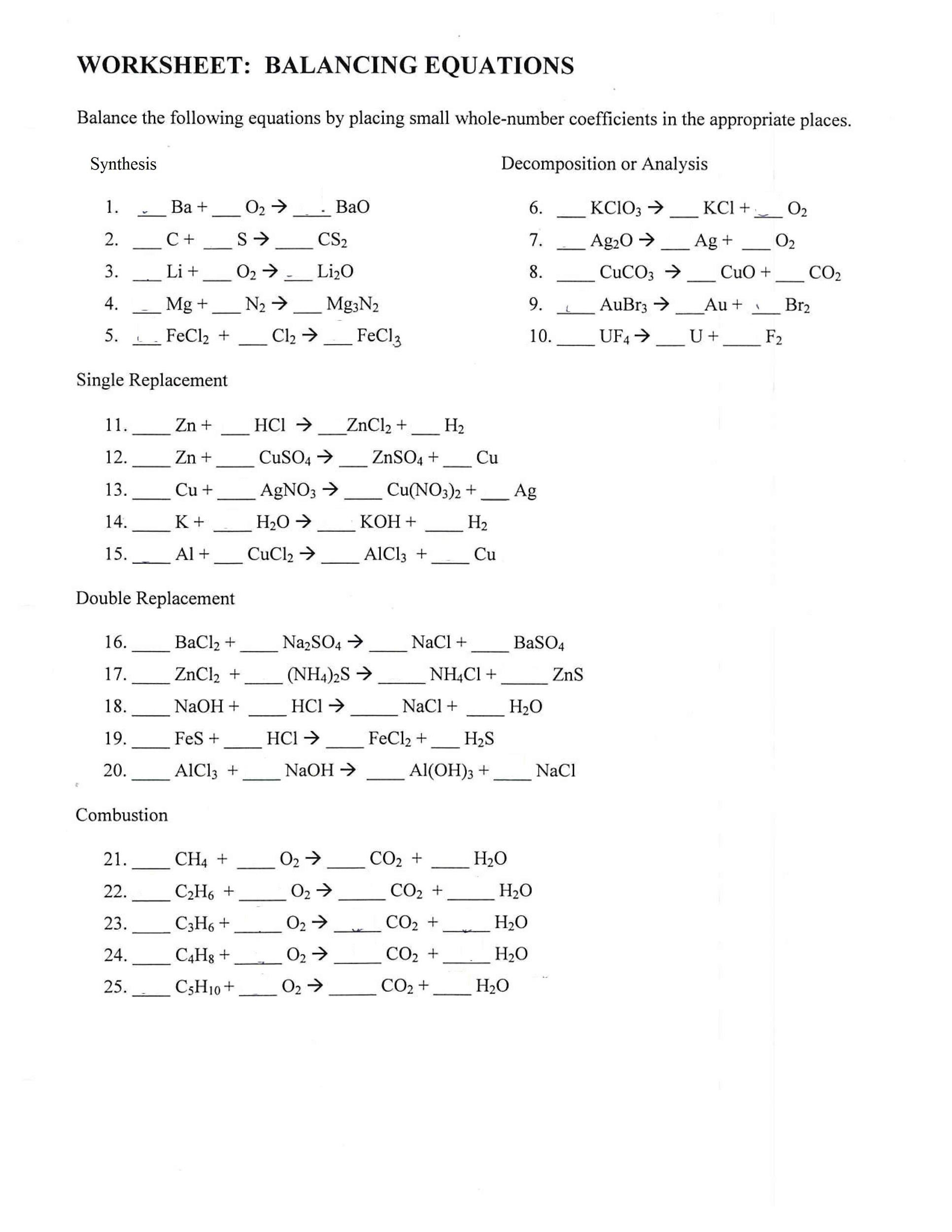
Mass‑Action Equilibrium Calculations
Once students master balancing, introduce the equilibrium constant (K) and illustrate how balanced equations underpin the calculation of Kc or Kp. Worksheets that ask students to determine equilibrium positions based on reaction stoichiometry add an extra layer of depth.
Stoichiometry in Energy Calculations
Balancing equations is essential for calculating enthalpy changes (ΔH) and Gibbs free energy (ΔG). Incorporating worksheets that require students to link balanced equations with thermodynamic data exposes them to the interdisciplinary nature of chemistry.
Computational Chemistry and Reaction Networks
For advanced courses, provide worksheets that simulate reaction mechanisms within computational models. Balancing becomes a prerequisite for building accurate reaction networks, which are critical in fields like catalysis and materials science.
Conclusion: Mastery Through Structured Practice

Balancing Of Chemical Equations Worksheet is more than a routine exercise; it is a gateway to mastering the language of chemistry. By adopting a systematic approach, addressing common pitfalls, and integrating real‑world contexts, both educators and learners can transform balancing from a mechanical task into a foundational skill that underpins scientific inquiry, engineering innovation, and environmental stewardship.