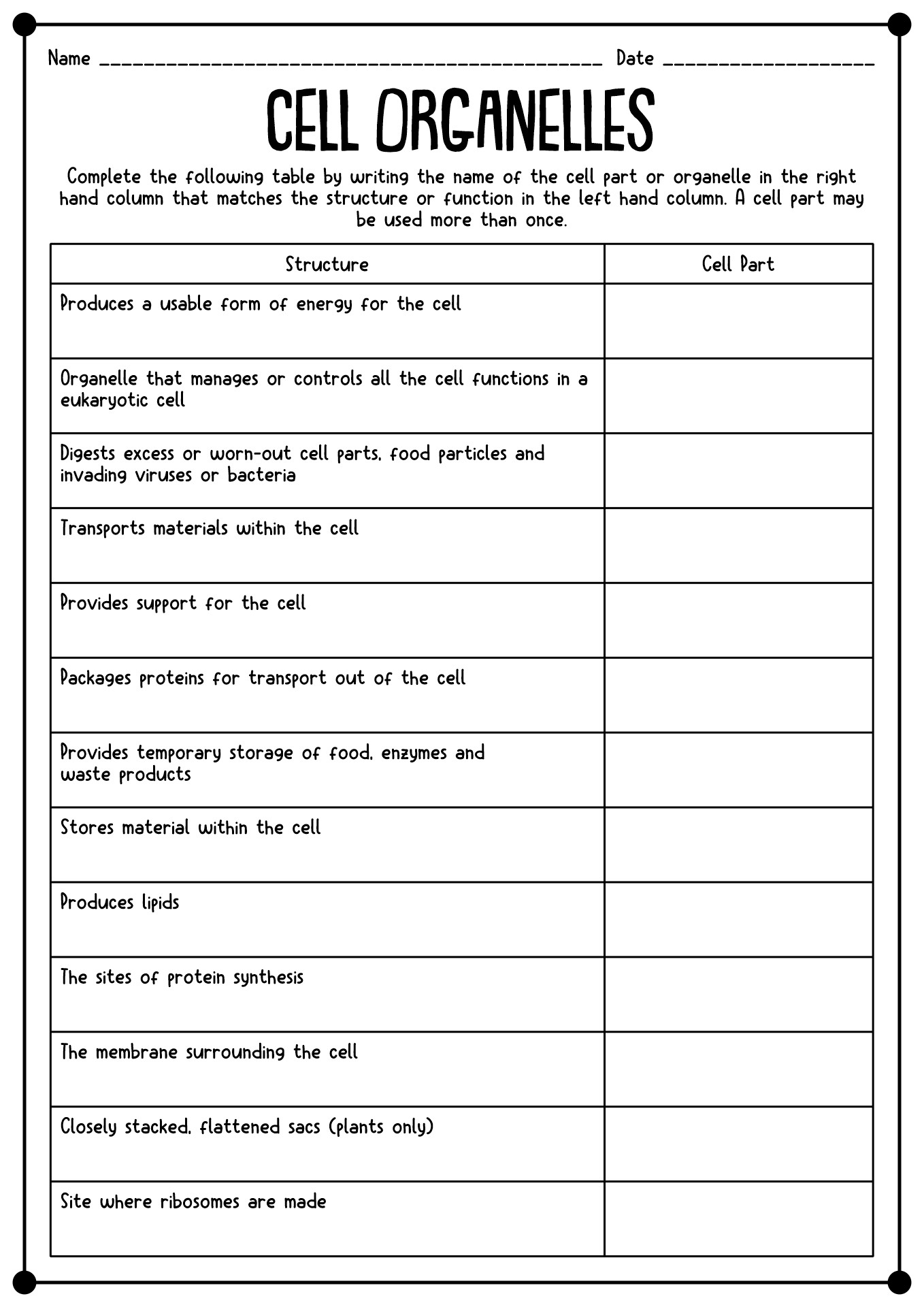
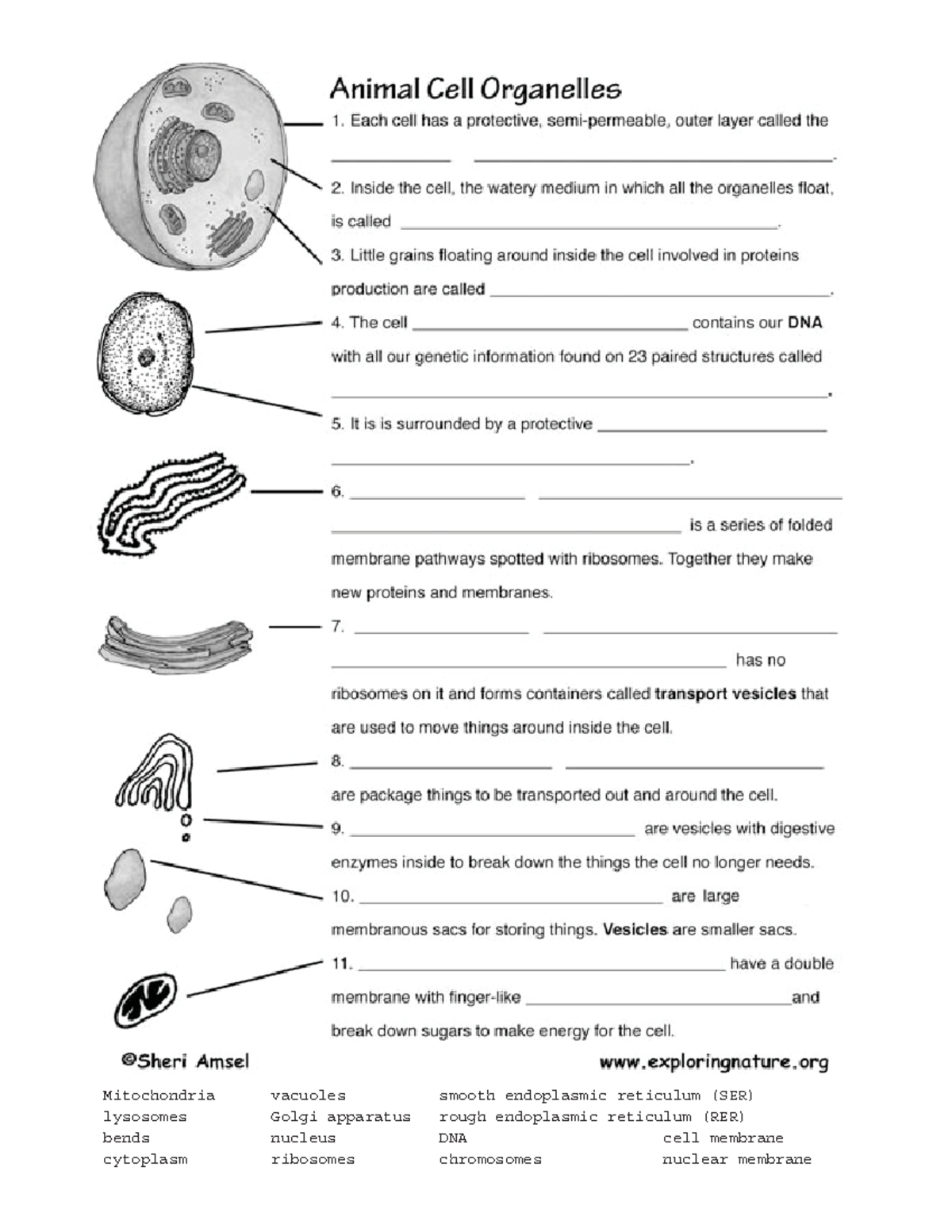
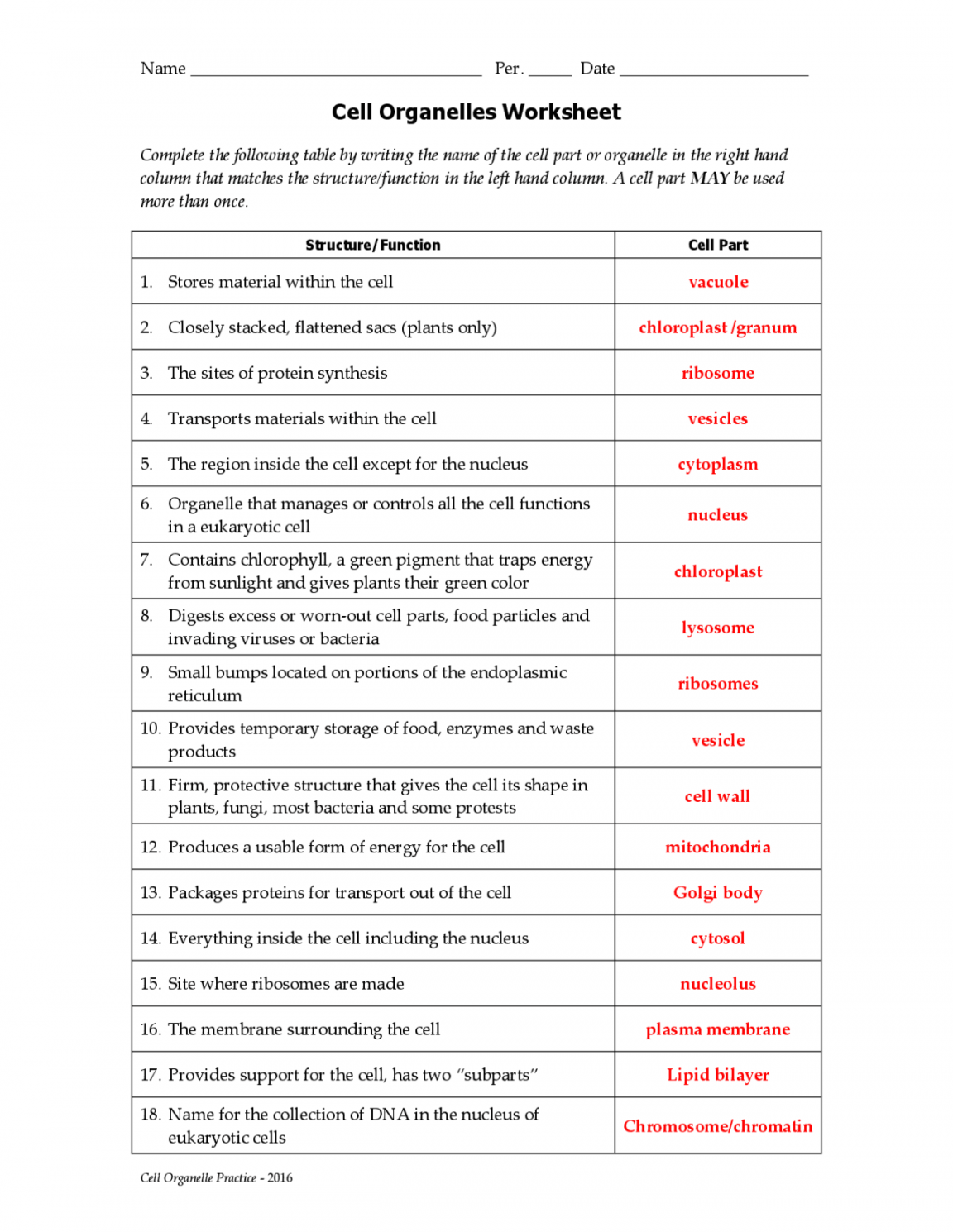
Biology Cell Organelles Worksheet is more than just a print‑out; it’s a powerful gateway that transforms passive learning into an interactive journey through the microscopic world of cells. By pairing colorful visuals with engaging prompts, these worksheets bring the complex functions of every organelle into clear, memorable focus for students of all ages.
Why a Cell Organelles Worksheet Matters

Understanding cell organelles is foundational for biology, yet many students struggle to keep the names and functions straight. A well‑designed worksheet acts as a scaffold that:
- Reinforces Memory: Repetitive placement and labeling help commit facts to long‑term storage.
- Builds Conceptual Links: Matching tasks show how organelles interact within the cell’s ecosystem.
- Encourages Active Learning: Students actively arrange and explain, moving beyond rote reading.
- Facilitates Assessment: Teachers can quickly gauge understanding and identify misconceptions.
- Adapts Across Grades: Worksheets can be scaled from middle school to high‑school and college levels.
Core Elements of an Effective Worksheet
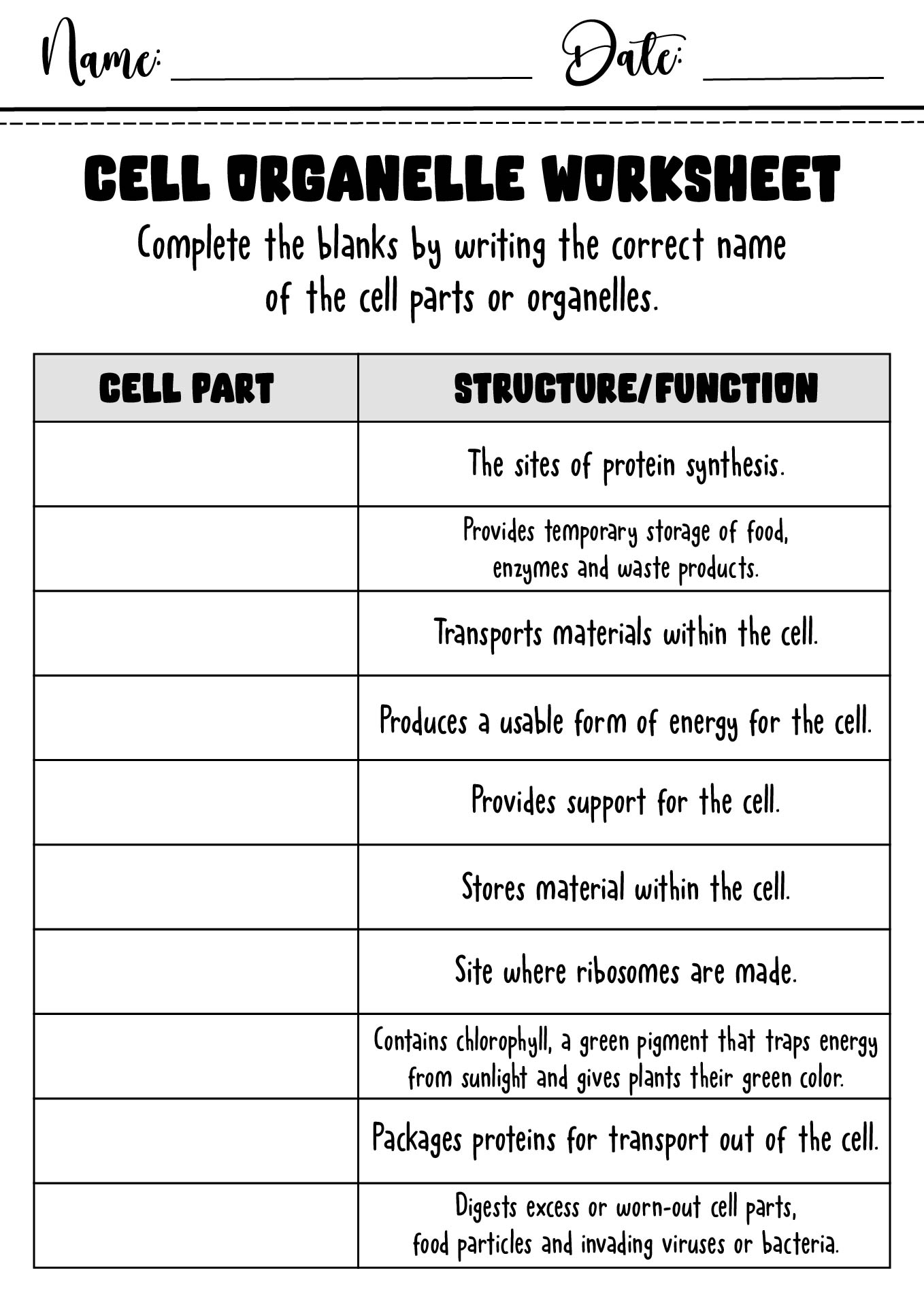
Clear, Illustrative Diagrams
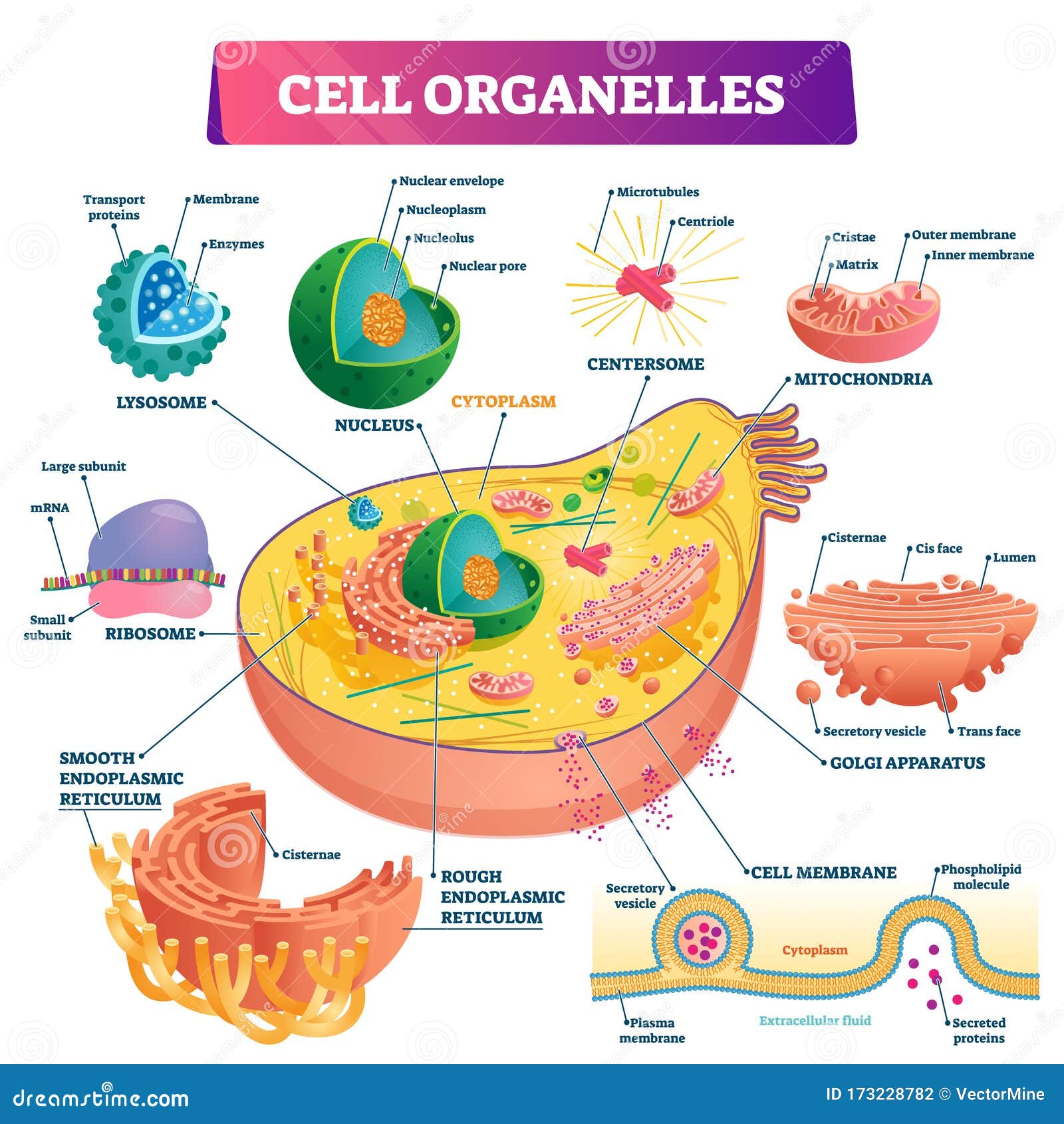
High‑resolution images with distinct labels allow students to visualize organelle shapes and positions. Use bright colors for each structure and provide a legend that explains symbols.
Targeted Learning Objectives
Each worksheet should list what students are expected to achieve: identify organelles, describe functions, explain inter‑organellar communication, and apply knowledge to real‑world scenarios such as cellular respiration or photosynthesis.
Engaging Activities
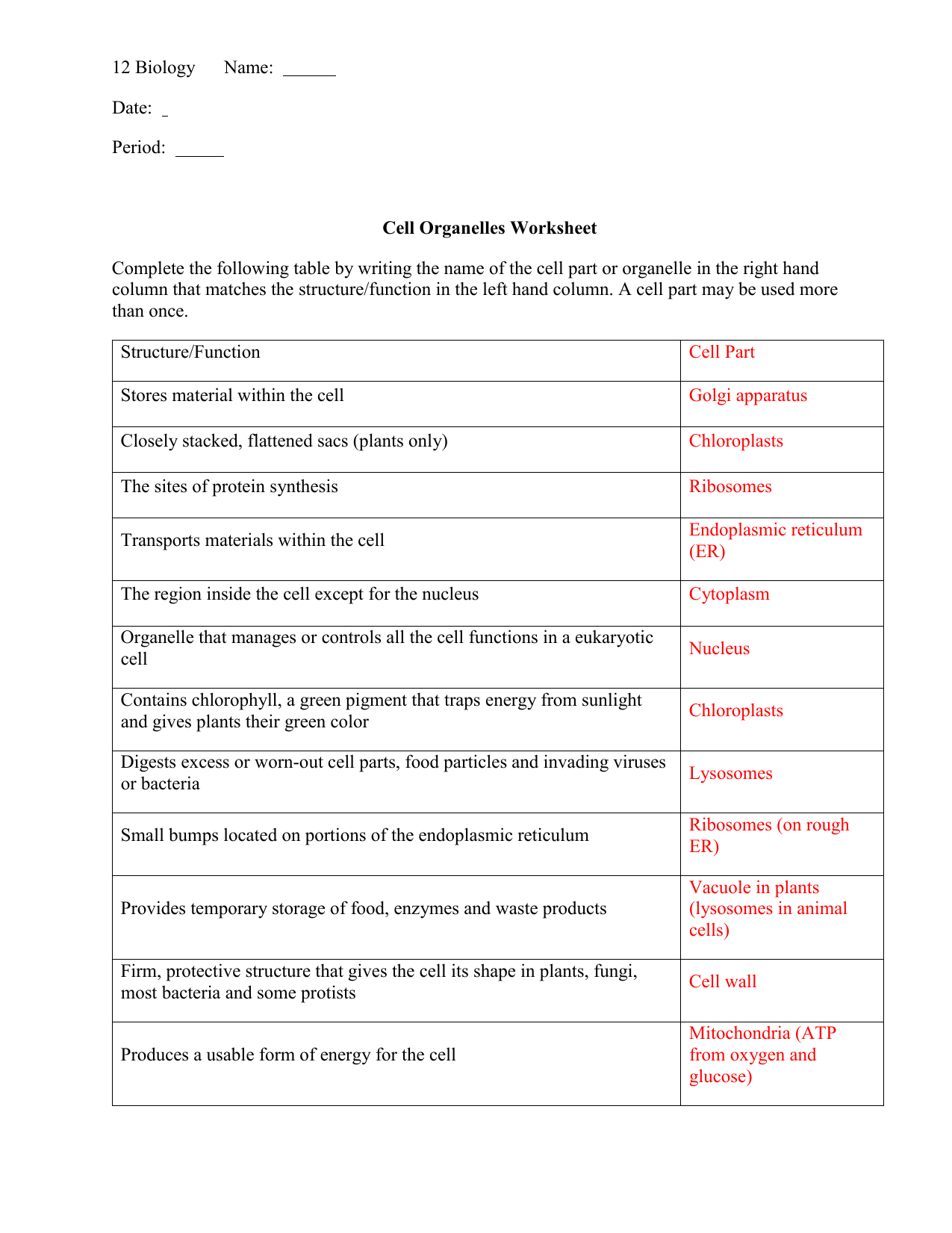
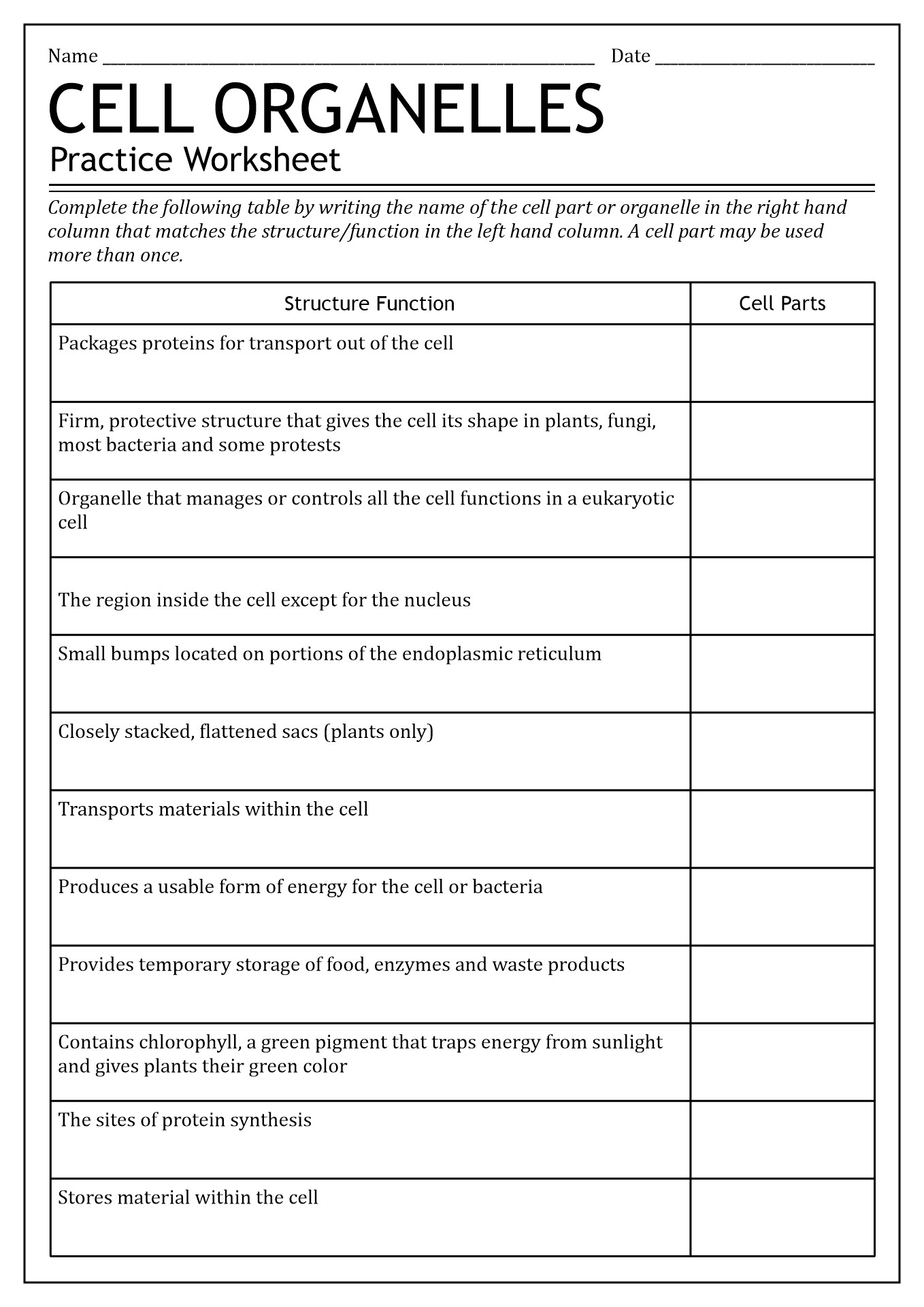
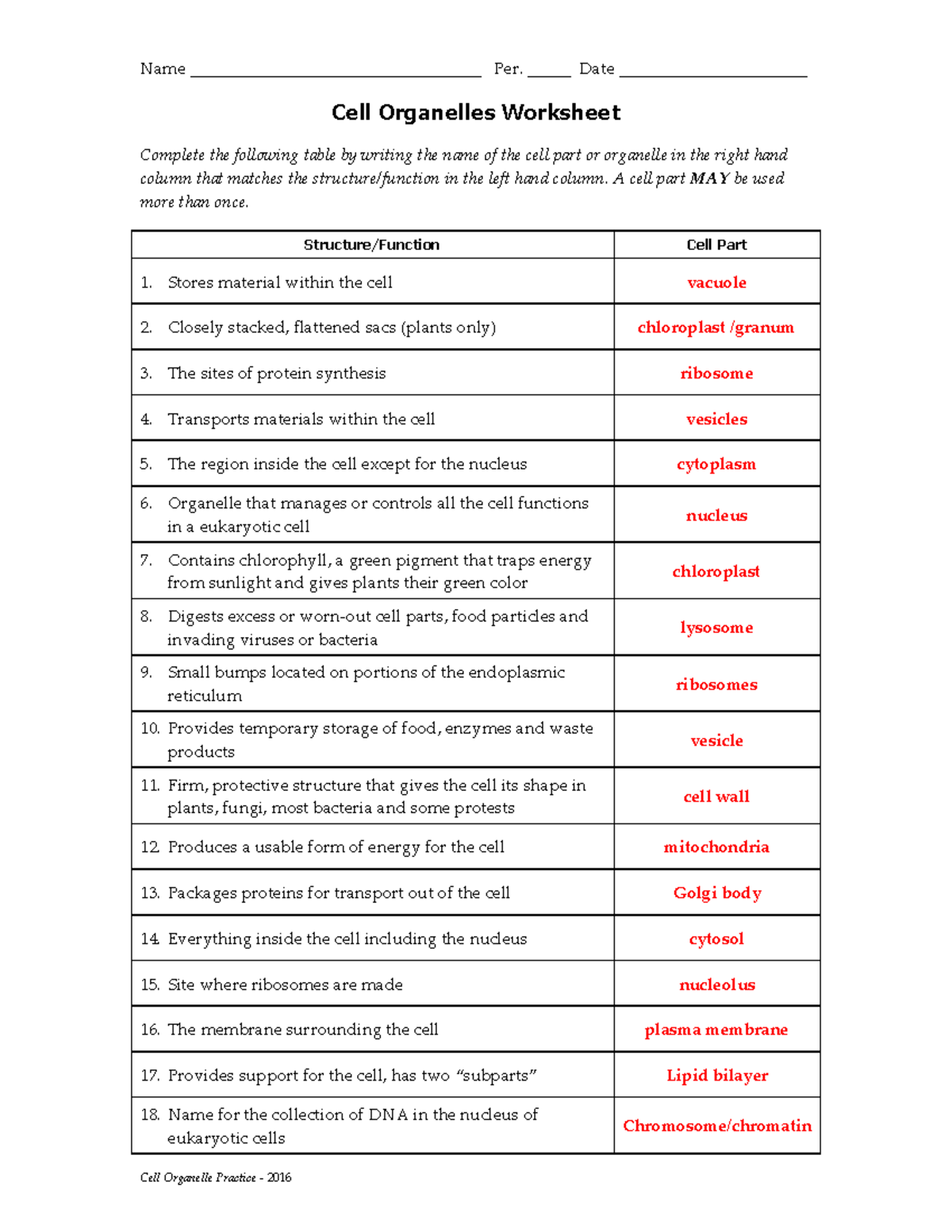
- Matching Games: Pair organelle names with functions or images.
- Fill‑In‑The‑Blank Labels: Challenge students to recall terminology.
- Case Studies: Mini‑scenarios asking how a malfunction in an organelle could affect a cell.
- Crossword or Quiz‑Style Questions: Test recall in a playful format.
- Creative Drawing Prompts: Draw and label an organelle with a fun twist, e.g., “Illustrate the mitochondrion as a power plant.”
Scaffolded Difficulty Levels
Begin with basic identification for younger learners and progress to complex functions, pathways, and comparisons for advanced students. This ensures that all learners can engage at their own pace.
Key Organelles to Cover

Nucleus
The nucleus houses DNA and orchestrates gene expression. Worksheets can ask students to identify the nucleolus, nuclear envelope, and discuss how the nuclear pore regulates molecular traffic.
Ribosomes
As the cell’s protein factories, ribosomes can be presented in a worksheet by contrasting free ribosomes in cytoplasm with those bound to the rough ER.
Endoplasmic Reticulum (Rough & Smooth)
Provide images that differentiate rough ER’s ribosomal “coating” from smooth ER’s role in lipid synthesis. Activities might include mapping the secretory pathway from ER to Golgi.
Golgi Apparatus
Students can track the journey of a protein from synthesis in the ER to modification in the Golgi, and finally to vesicular transport.
Lysosomes
Highlight lysosomes as the cell’s recycling centers, capable of digesting waste. A worksheet could ask students to explain their role in autophagy versus endocytosis.
Peroxisomes
These organelles break down fatty acids and detoxify hydrogen peroxide. Activities can involve linking peroxisomes to metabolic disorders such as Zellweger syndrome.
Mitochondria
Mitochondria are the powerhouses of the cell. Worksheets may include energy flow diagrams, the electron transport chain, and the concept of ATP production.
Chloroplasts
Only present in plant cells, chloroplasts are critical for photosynthesis. Students can be asked to identify thylakoid membranes, stroma, and the light‑dependent vs. light‑independent reactions.
Vacuoles
Large central vacuoles in plant cells store water and maintain turgor. In animal cells, smaller vesicular vacuoles are involved in storage and transport. Worksheets can compare these roles.
Cell Membrane
While not a traditional organelle, the plasma membrane functions as a gatekeeper. Worksheets can challenge students to map protein types (channels, transporters, receptors) and describe selective permeability.
Centrosomes & Cilia
These structures manage cell division and movement. Worksheets may ask students to draw the centrosome’s role in mitosis or the beating pattern of cilia in respiratory epithelium.
Designing Your Own Biology Cell Organelles Worksheet

Step 1 – Define Your Audience
Consider grade level, prior knowledge, and learning goals. Younger students benefit from bold labels and simple questions, whereas high schoolers can tackle multi‑step problems involving metabolic pathways.
Step 2 – Choose a Visual Template
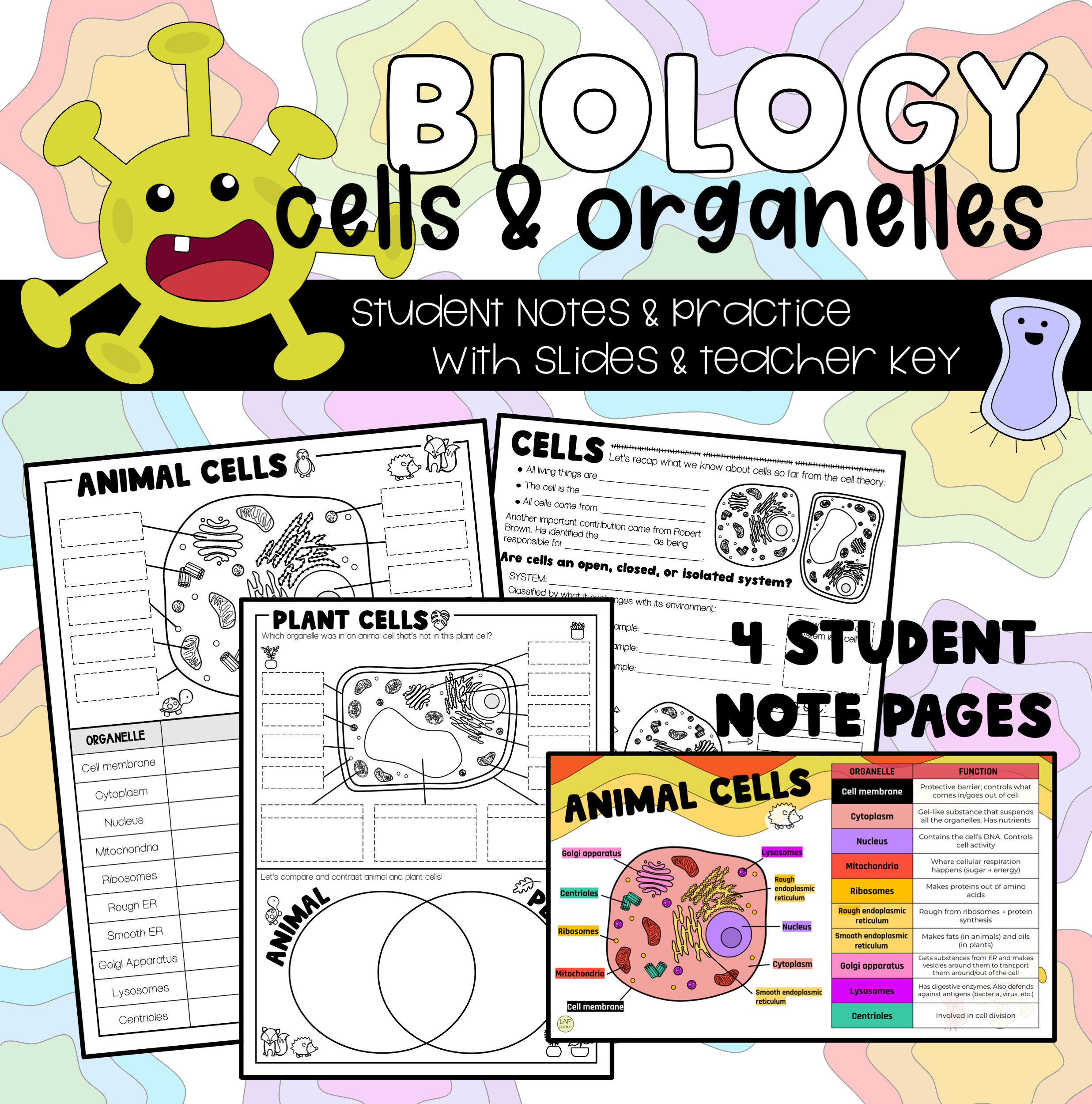
Select a clean diagram with enough empty spaces for annotations. Use high‑contrast colors to distinguish organelles clearly.
Step 3 – Draft Clear Instructions
Use concise language. For example: “Label the organelles in the diagram and write one key function for each.”
Step 4 – Incorporate Mixed Activity Types
Blend matching columns, fill‑ins, and short answer questions. This diversity keeps engagement high and assesses multiple skills.
Step 5 – Peer Review and Test
Run the worksheet with a small group to spot confusing wording or mislabeling. Adjust based on feedback before full deployment.
Using Worksheets in the Classroom

Pre‑Lesson Warm‑Ups
Start with a quick “organelles in a nutshell” matching game to activate prior knowledge.
During Lectures
Provide a worksheet as a silent activity while you explain a complex process, like mitochondrial respiration. Students can immediately apply what they hear.
Post‑Lesson Reinforcement
Assign the worksheet as homework or a group activity. Pair students to discuss their answers, fostering collaborative learning.
Assessment and Feedback
Collect completed worksheets for grading. Offer specific feedback on mislabeled organelles or misunderstood functions, turning errors into learning moments.
Digital Integration
Convert the worksheet into an interactive PDF or an online quiz. Features like drag‑and‑drop or instant grading can elevate student motivation.
Real‑World Applications of Organelles Knowledge

Medicine & Health
Understanding mitochondria is crucial for studying metabolic disorders like muscular dystrophy. Lysosome defects explain diseases such as lysosomal storage disorders.
Biotechnology
Ribosomes and the ER are harnessed in recombinant protein production. Knowledge of the Golgi is essential for modifying therapeutic antibodies.
Environmental Science
Chloroplast efficiency is a focal point in biofuel research. Peroxisome activity relates to plant stress tolerance in changing climates.
Tips for Making Worksheets More Fun
- Use Storylines: Embed a narrative such as “A day in the life of a plant cell” to contextualize functions.
- Gamify: Offer badges for correctly identifying all organelles or for explaining a pathway accurately.
- Include Trivia: Fun facts (e.g., mitochondria have their own DNA) can spark curiosity.
- Peer Teaching: Have students create their own mini‑worksheet for classmates.
Common Pitfalls and How to Avoid Them

Overloading Students with Information
Too many organelles in one sheet can overwhelm. Focus on the most essential ones and introduce extras gradually.
Vague Instructions
Unclear prompts lead to frustration. Write step‑by‑step directions and provide examples.
Ignoring Accessibility
Use large fonts, high contrast, and provide alternative text for images so all learners can benefit.
Neglecting Alignment with Curriculum
Ensure worksheet objectives align with learning standards. This guarantees relevance and easier grading.
Conclusion

A well‑crafted Biology Cell Organelles Worksheet transforms abstract concepts into tangible learning moments. By integrating vivid visuals, targeted tasks, and real‑world relevance, these tools empower students to see each organelle as a vital part of the living machine. Whether used in a high school lab, a middle‑school science club, or an online study group, the worksheet becomes a catalyst for curiosity, understanding, and scientific confidence. Let these engaging resources guide your students through the bustling inner city of the cell, where every organelle plays a starring role in the drama of life.