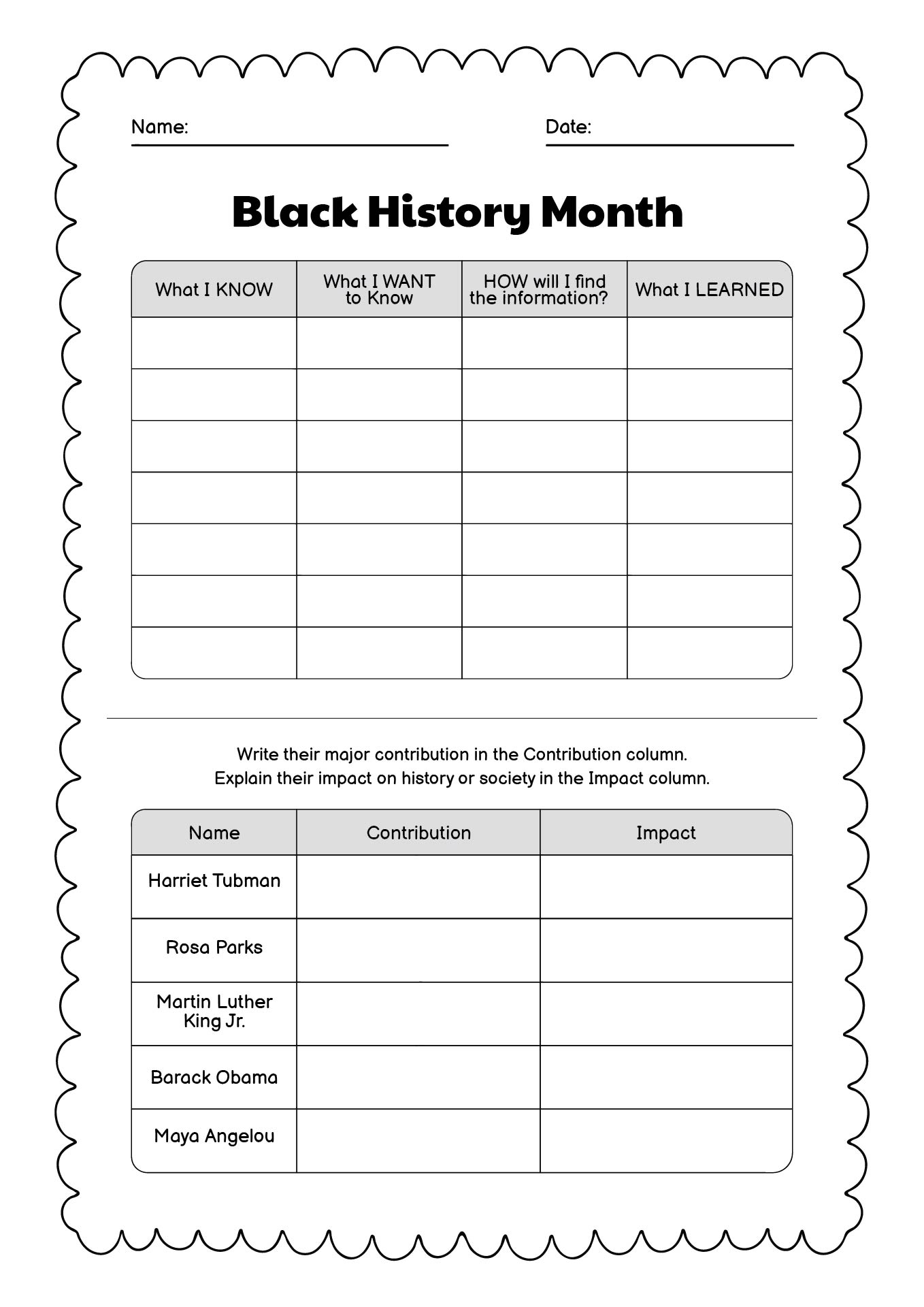
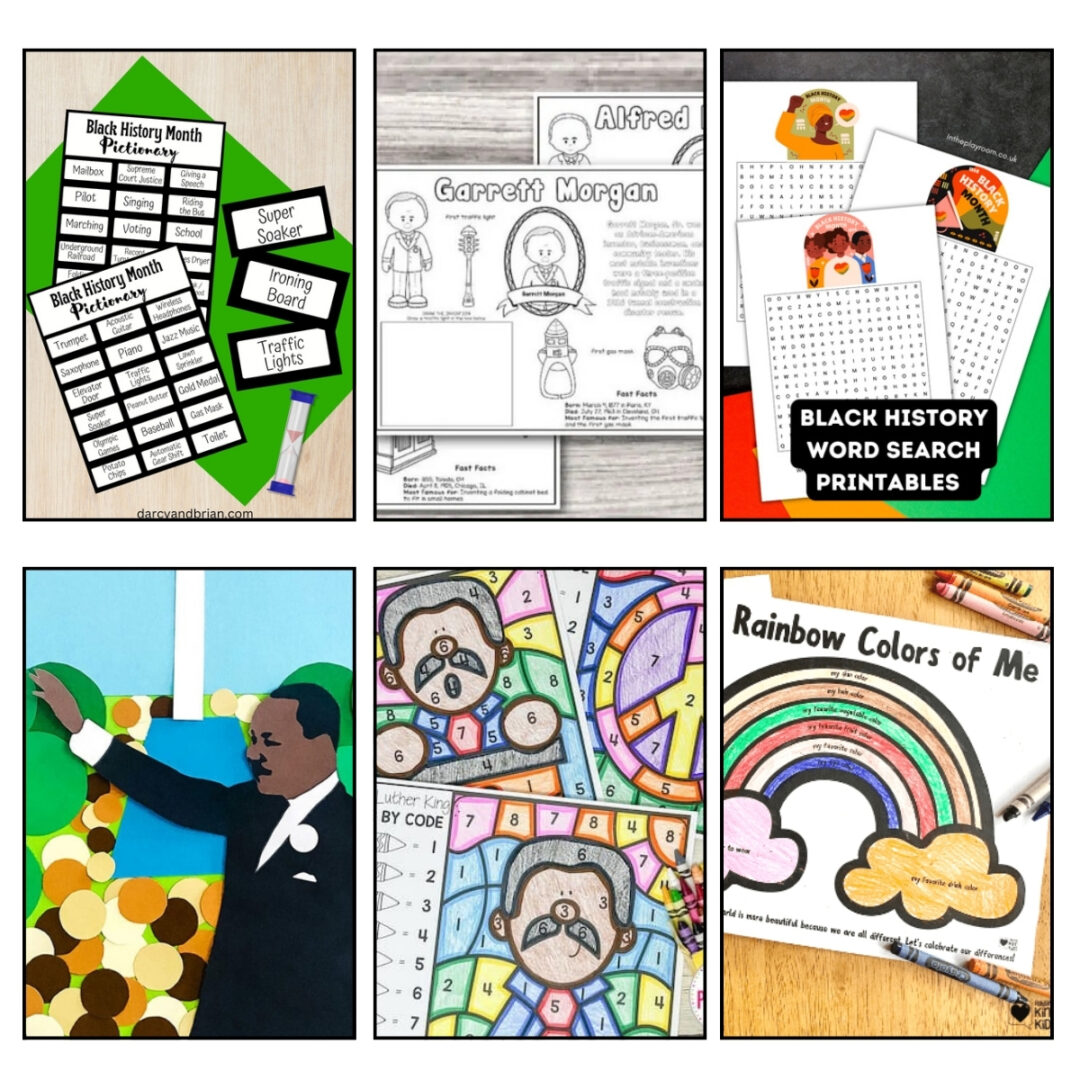
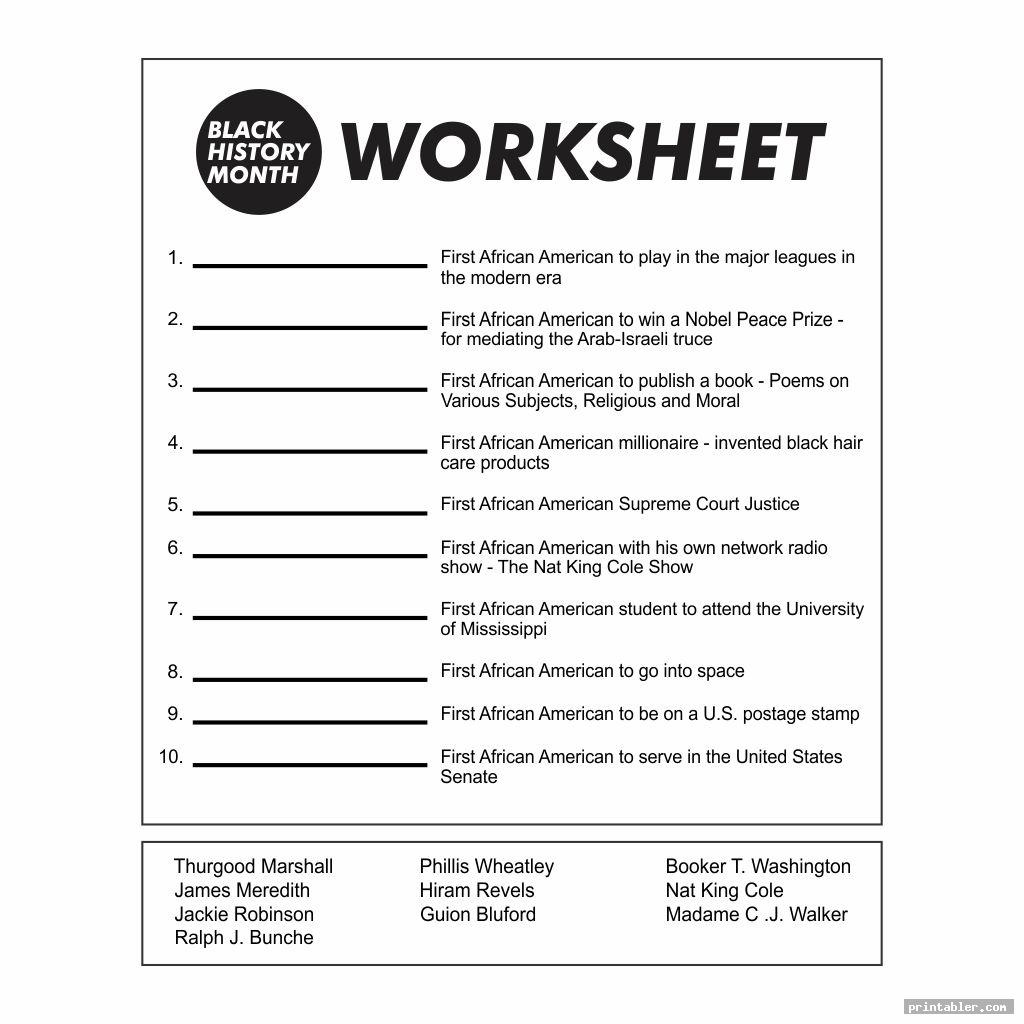
I always start my Black History Month lesson plans with a powerful set of Black History Month Worksheets that spark curiosity and invite discussion right from the first day of class. When students see a worksheet that connects them to real stories, they immediately feel ownership over the topic, and that momentum carries through the entire month.
Why Black History Month Worksheets Are Essential

Black History Month is more than a calendar event; it’s an opportunity to weave African American contributions into everyday learning. Worksheets act as the bridge between abstract concepts and tangible understanding. They provide:
- Structured Exploration – guiding learners to ask the right questions about key figures, movements, and cultural milestones.
- Active Participation – encouraging students to write, draw, and reflect rather than passively receive information.
- Assessment Points – offering quick check‑ins for teachers to gauge comprehension and adjust instruction in real time.
- Reinforcement – allowing students to revisit concepts at their own pace, cementing knowledge through repetition.
When worksheets are thoughtfully designed, they transform Black History Month from a single event into a sustained learning journey that reverberates throughout the school year.
Choosing the Right Themes and Topics

Selecting themes that resonate with your students is the first step toward creating engaging worksheets. Below are some popular themes that have proven effective in diverse classrooms:
Historical Milestones
From the Civil Rights Movement to the Harlem Renaissance, mapping pivotal moments helps students see cause and effect. For instance, a timeline worksheet can prompt learners to place events in chronological order while noting the broader social impact.
Celebrating Everyday Heroes
Highlighting unsung heroes such as local activists, educators, and artisans brings the story closer to home. A fill‑in‑the‑blank worksheet asking students to describe a local figure’s contributions can inspire pride and curiosity.
Art and Music Legacies
Music and visual arts offer an accessible entry point. A worksheet that asks students to identify the origins of jazz, blues, or hip‑hop can spark creative responses, like sketching a musical instrument or composing a short rhythm.
Science, Technology, and Innovation
Showcasing Black inventors, scientists, and engineers counters stereotypes and opens STEM pathways. Worksheets that present a problem and invite students to design a solution—modeled after real inventions—can be especially motivating.
Creating Engaging Worksheets for Different Age Groups
Adapting content complexity to age ensures that each student remains challenged yet supported. Below are strategies for three key age ranges:
Kindergarten to 2nd Grade
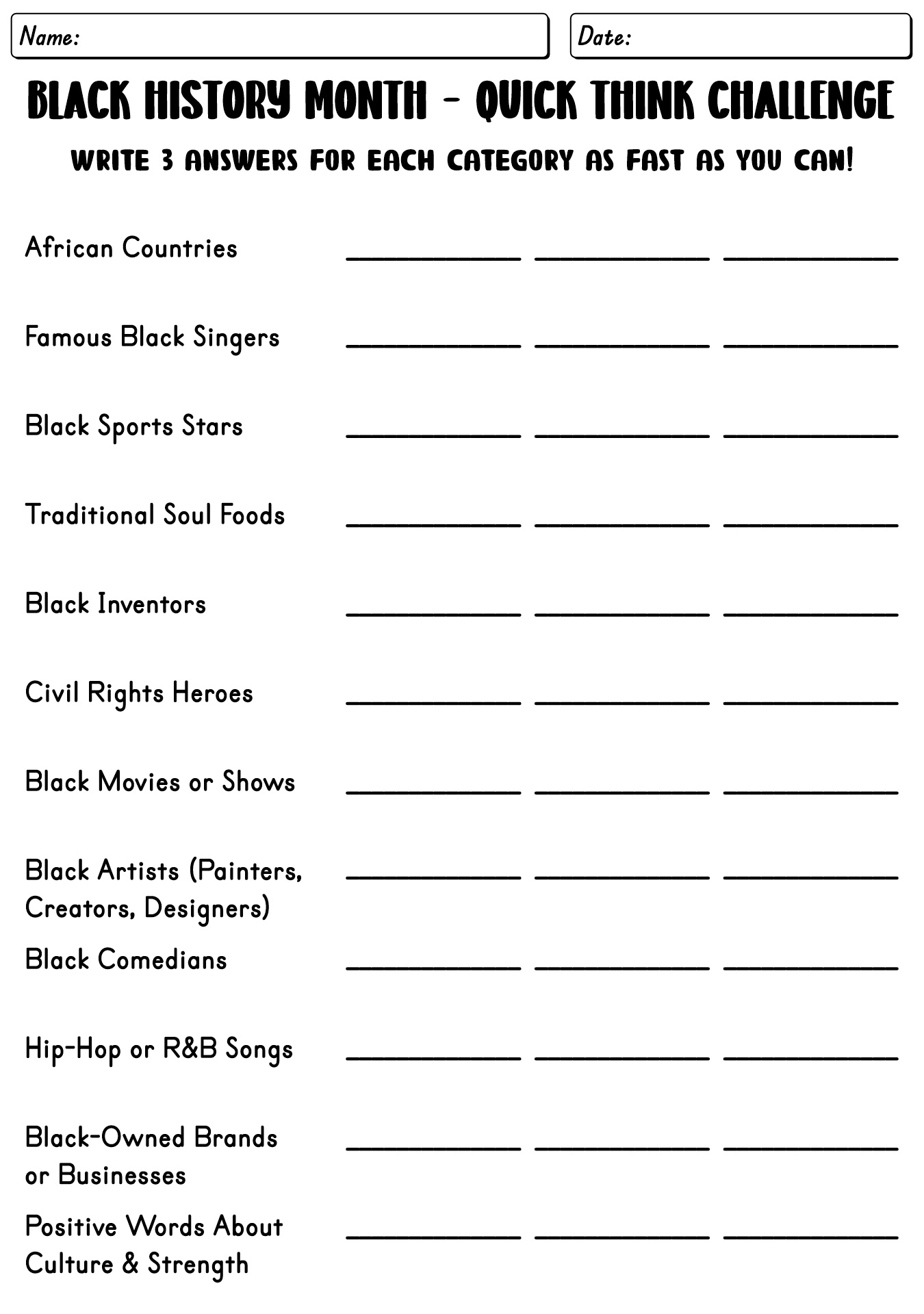
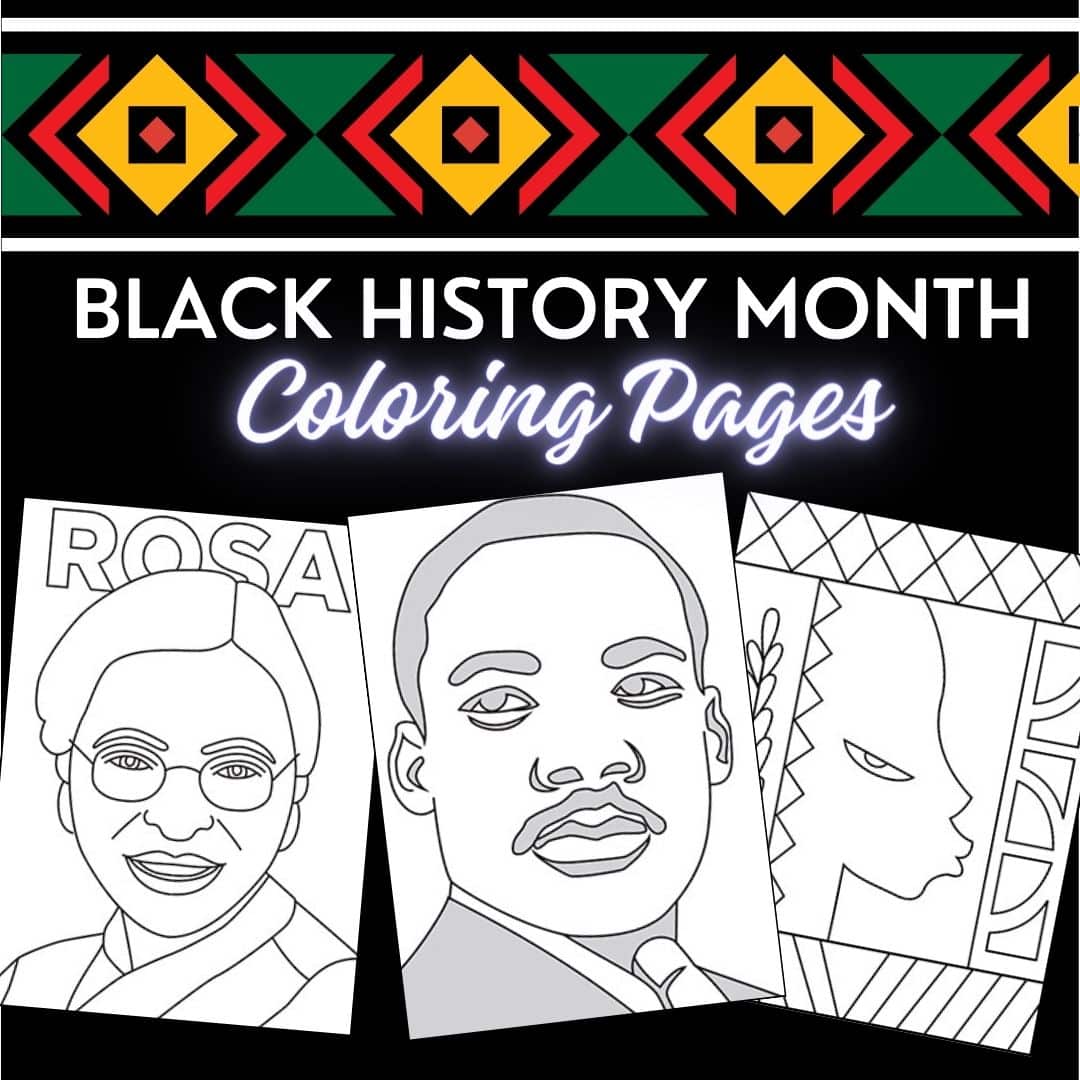
Use bright visuals and simple vocabulary. Include activities like matching pictures to names, color‑by‑theme coloring pages, and short, answerable questions. A worksheet might feature a photo collage of influential figures with a short sentence for each that students can underline or circle.
3rd to 5th Grade
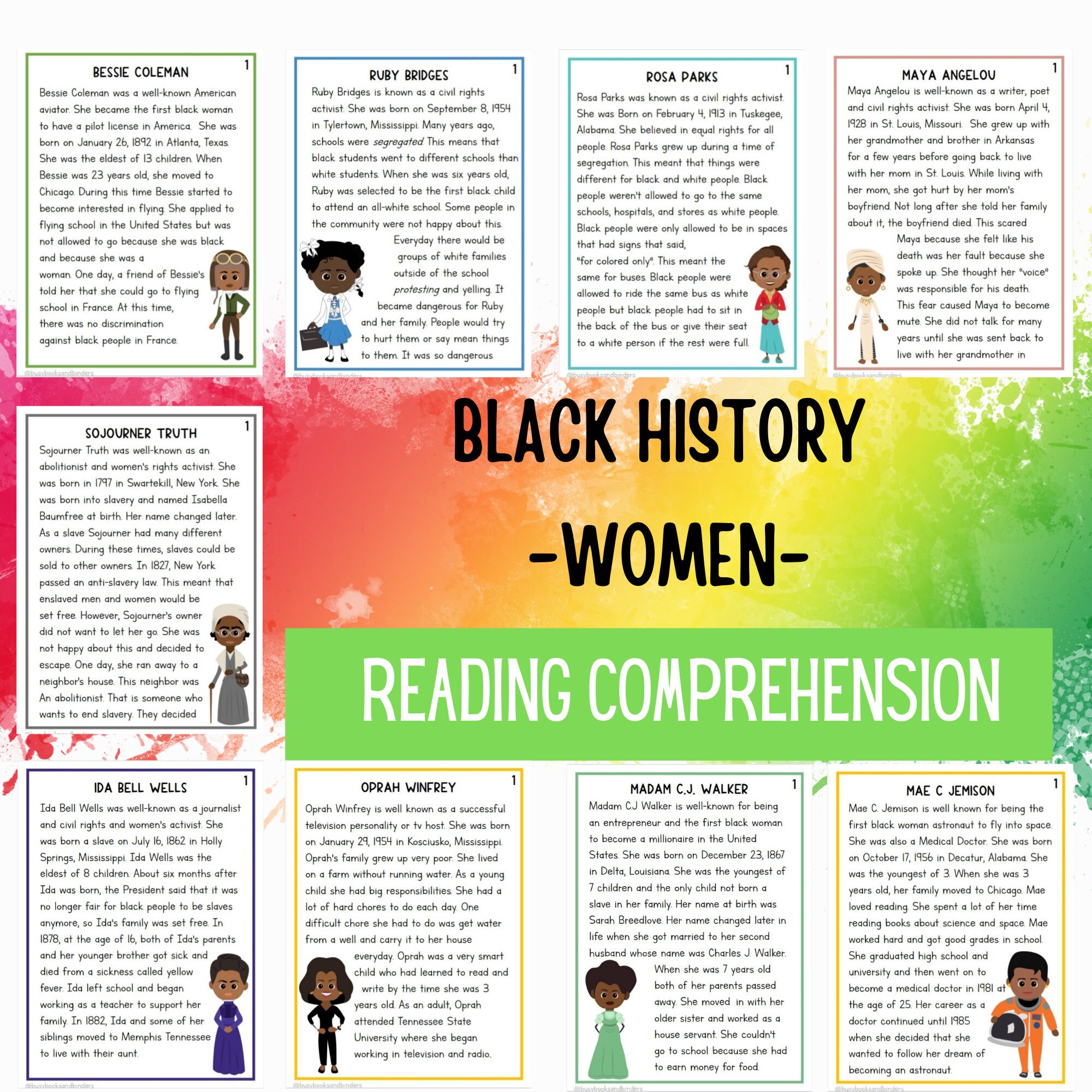
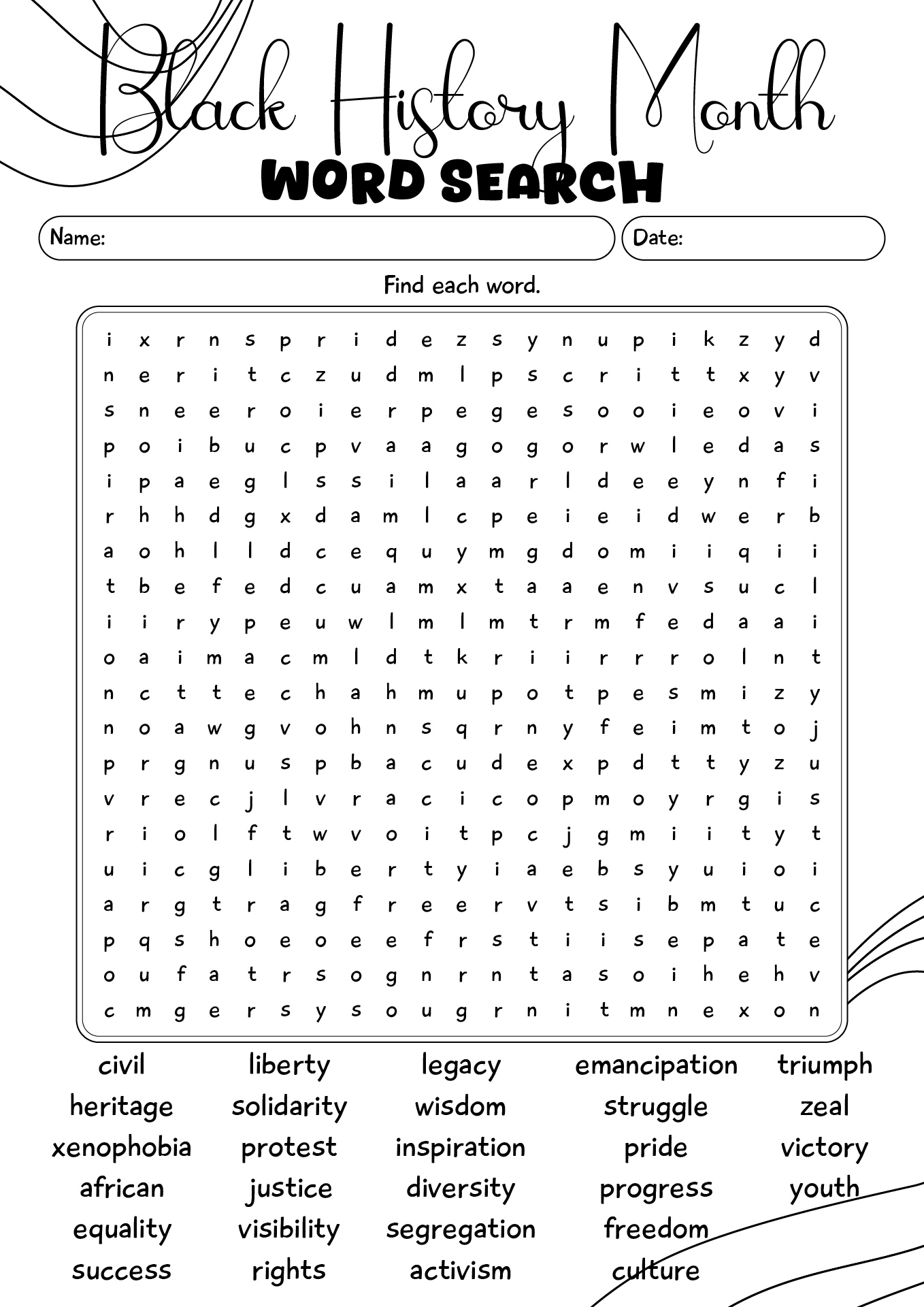
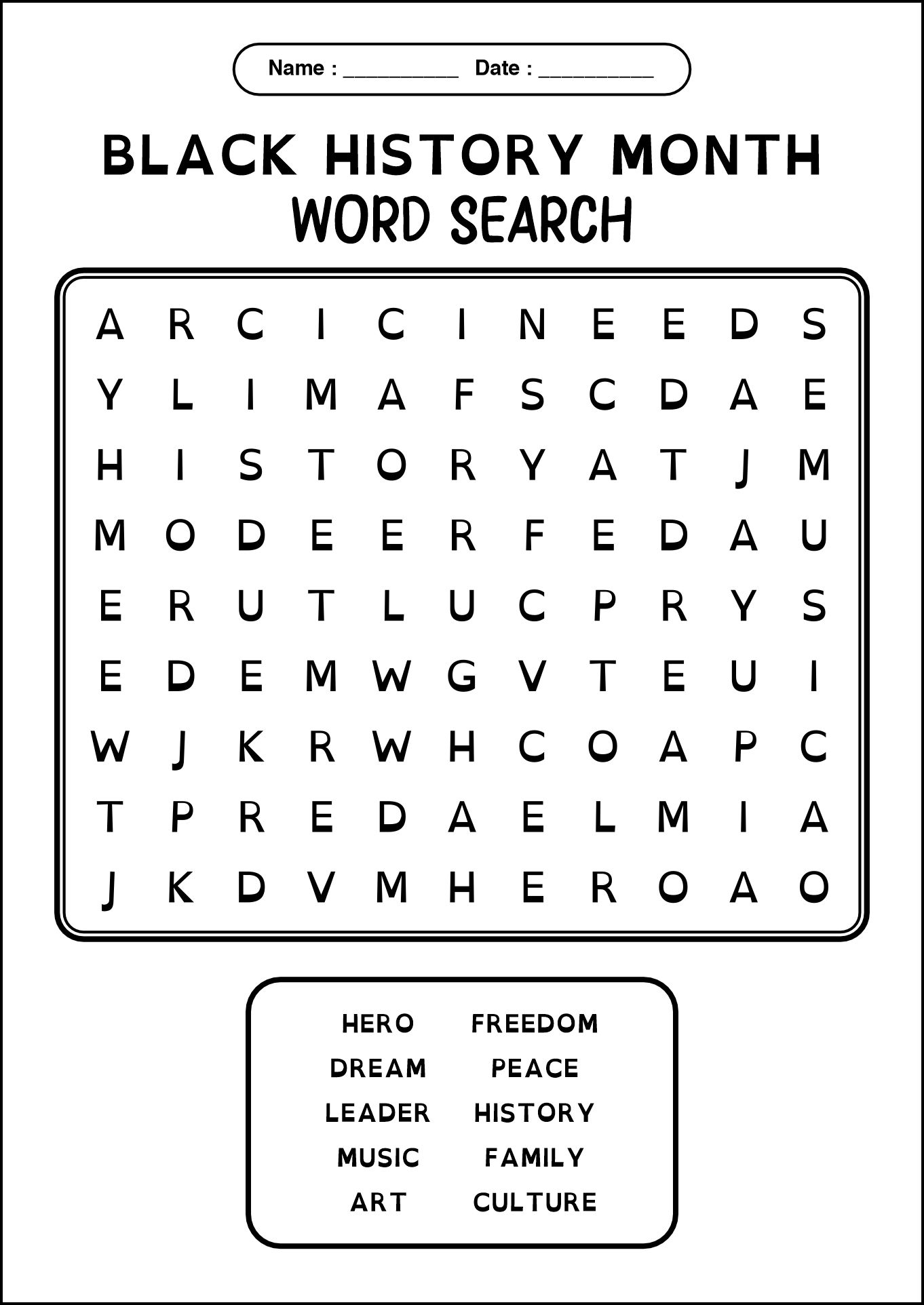
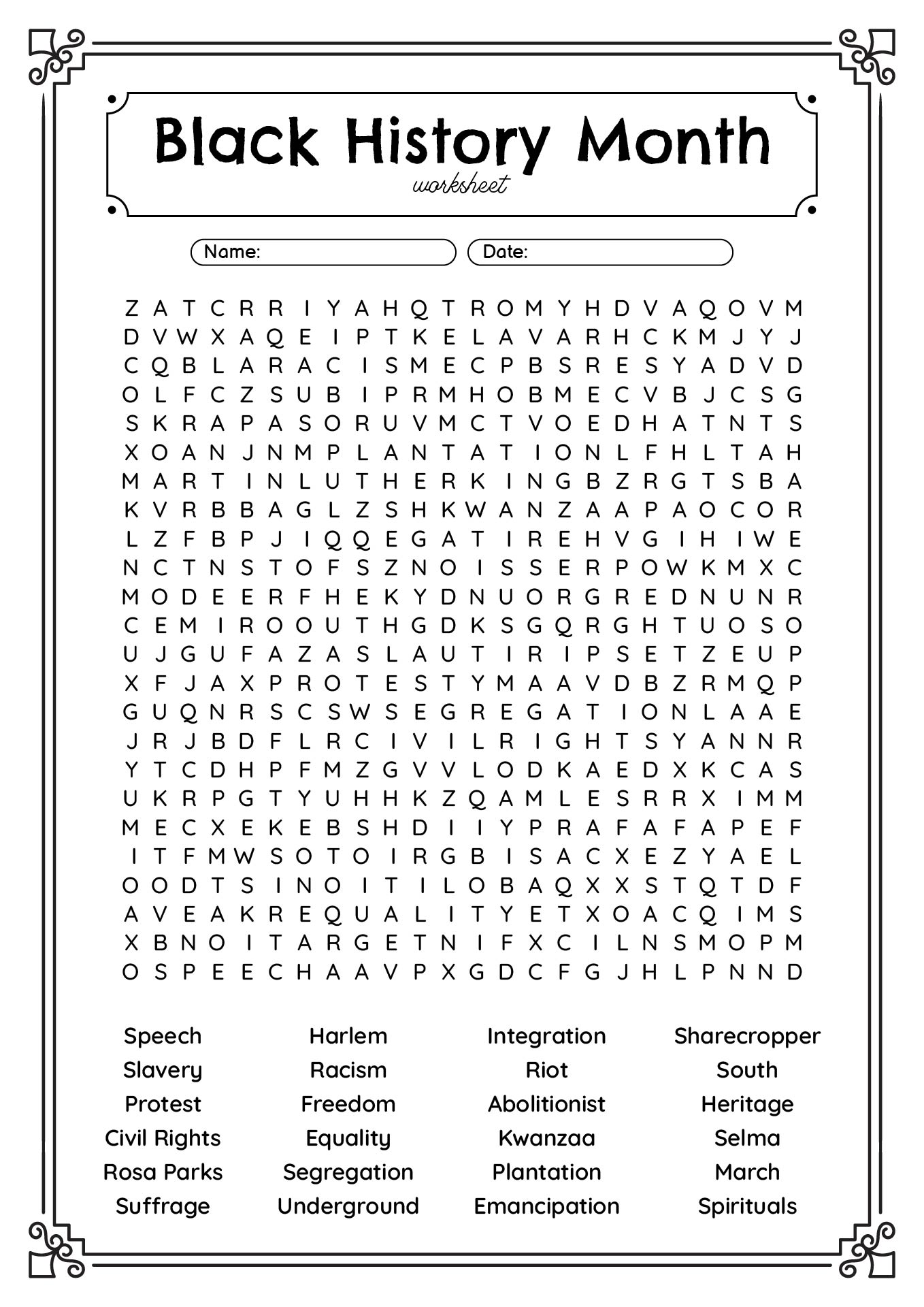
Introduce short reading passages, fact‑finding activities, and word puzzles. A crossword grid about key terms—“freedom,” “civil rights,” “inspiration”—can reinforce terminology while providing a fun challenge.
6th Grade and Beyond
Focus on critical analysis and project‑based tasks. Worksheets can ask students to compare two historical figures, write an argumentative paragraph, or create a digital poster using graphic design tools.
Integrating Worksheets into the Curriculum

To maximize impact, worksheets should complement other instructional strategies. Here’s a step‑by‑step approach to weaving them into your lesson plans:
- Pre‑Worksheet Warm‑Up – Begin with a brief discussion or video clip that introduces the topic.
- Worksheet Activity – Distribute worksheets during the lesson, allowing for individual or collaborative work.
- Post‑Worksheet Reflection – Facilitate a whole‑class debrief where students share insights and ask follow‑up questions.
- Extension Projects – Use the worksheet as a springboard for research papers, presentations, or creative art pieces.
By embedding worksheets in this cycle, you create a cohesive learning experience that deepens understanding and retention.
Digital vs. Print Worksheets

Both formats have distinct advantages. Consider the following when deciding:
Print Worksheets
They are easily accessible and don’t require technology. Printables also encourage tactile engagement—students can cut, paste, and highlight, which reinforces motor skills.
Digital Worksheets
Interactive platforms allow instant feedback, animation, and multimedia integration. Digital worksheets can adapt to student responses, providing differentiated difficulty levels on the fly.
For many classrooms, a hybrid model works best: print out critical worksheets for low‑tech settings, while offering digital versions for homework or extended research.
Sample Worksheet Ideas

Below are a few ready‑to‑use worksheet templates that can be customized to fit your class’s needs.
Timeline Creation
Students drag event cards onto a blank timeline, then write a brief description of each event’s significance.
Profile Match
A matching activity where students pair a name with a brief biography and an iconic image.
Debate Prompt
Students read a short article about a historical controversy and respond to guided prompts that outline arguments for and against a position.
Creative Poster
Using a blank template, students design a poster celebrating a Black historical figure, including key facts, images, and a personal reflection sentence.
Assessment and Feedback Strategies

Assessment is not only about grades; it’s an opportunity to deepen learning. Use these strategies to give meaningful feedback:
- Rubrics – Develop a clear rubric that outlines expectations for content accuracy, creativity, and presentation.
- Peer Review – Encourage students to evaluate each other’s work, fostering critical thinking and empathy.
- Self‑Assessment – Provide a reflection checklist where students self‑rate their understanding and identify areas for growth.
- Instant Feedback Tools – For digital worksheets, use platforms that provide automated grading or instant hints.
Combining these approaches creates a balanced assessment framework that celebrates effort while guiding improvement.
Tips for Teachers and Parents
Whether you’re a teacher, a homeschool parent, or a community volunteer, these practical tips can help you make the most of Black History Month worksheets:
- Start early – begin distributing worksheets weeks in advance to build anticipation.
- Make it interactive – incorporate group discussions or role‑playing after worksheet completion.
- Connect to current events – relate historical themes to contemporary issues, making learning relevant.
- Celebrate achievements – display student work in a classroom gallery or digital slideshow.
- Use varied media – supplement worksheets with books, podcasts, or short documentaries for multi‑sensory learning.
- Encourage family involvement – provide printable worksheets for parents to review at home and discuss with children.
By integrating these practices, you transform worksheets from simple handouts into catalysts for lifelong learning and cultural appreciation.
Conclusion
Black History Month Worksheets are far more than worksheets; they are thoughtfully crafted learning tools that unlock curiosity, foster critical thinking, and honor the rich tapestry of African American heritage. When thoughtfully chosen, designed, and integrated into a broader curriculum, they become a powerful bridge between history and everyday life. Embrace the opportunity to guide your students on a journey of discovery—one worksheet at a time—so that they leave the month not only informed but inspired to carry forward the legacy of resilience, innovation, and excellence that defines Black history.