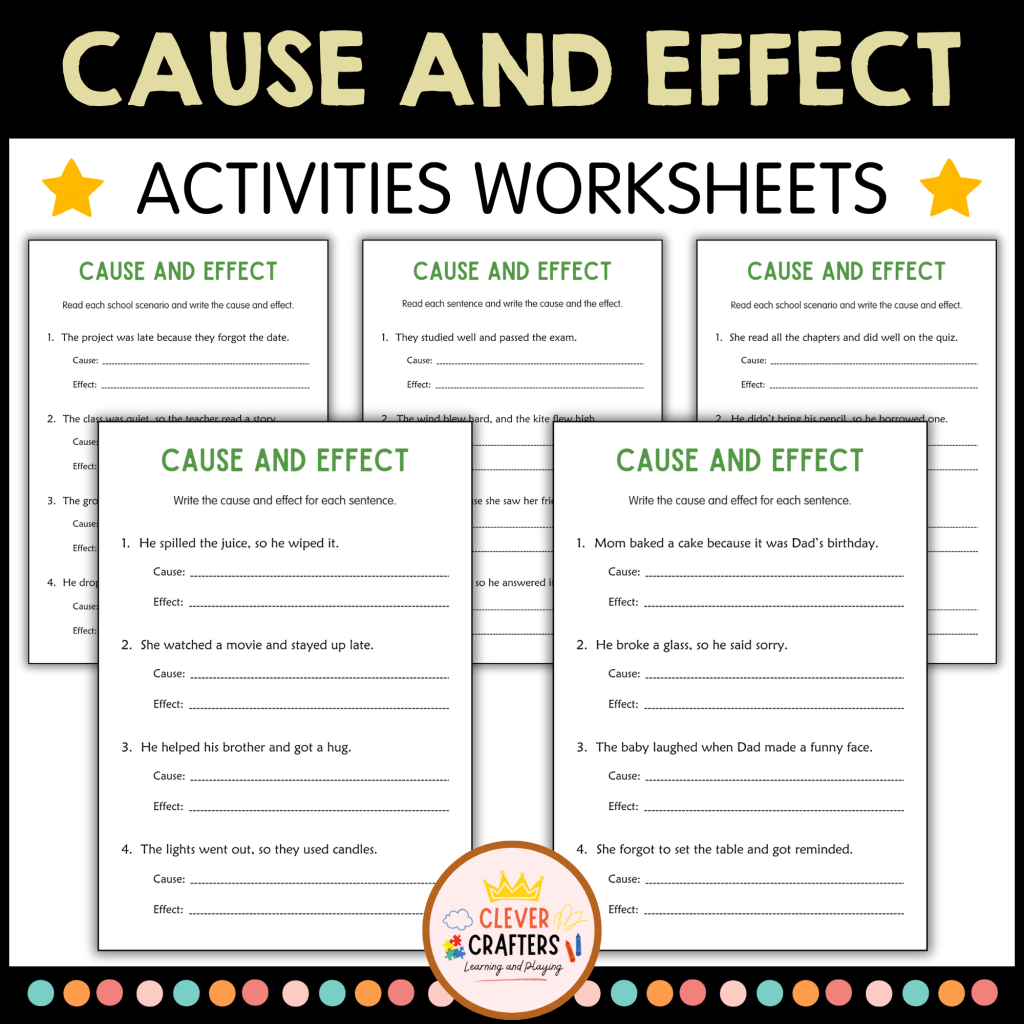
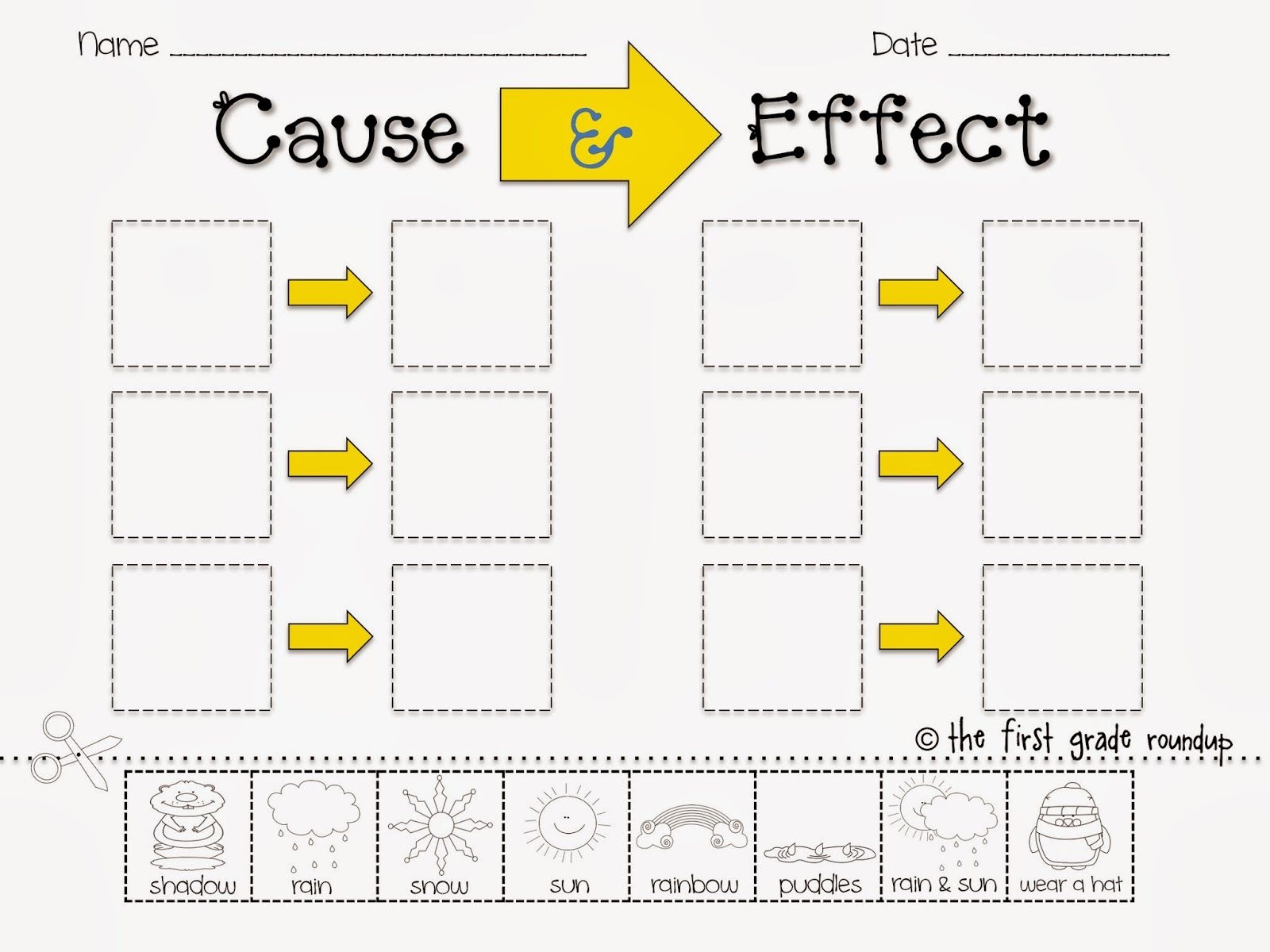
Cause And Effect Worksheet is an essential tool for helping students understand the logical relationships that underpin everyday reasoning, scientific explanations, and literary analysis. By guiding learners to identify a trigger and its resulting consequence, these worksheets reinforce critical thinking skills and deepen comprehension across subjects.
Why Cause and Effect Matters in the Classroom

When students can articulate why something happened, they move beyond surface-level memorization to meaningful analysis. This ability is fundamental for:
- Mathematics – solving equations requires understanding how variables affect outcomes.
- Science – experiments hinge on predicting how altering a factor changes results.
- English and Social Studies – evaluating narratives and historical events demands clear cause-effect reasoning.
By mastering this skill, learners can:
- Make logical connections across concepts.
- Develop stronger argumentative writing.
- Enhance problem‑solving and decision‑making abilities.
Designing an Effective Cause and Effect Worksheet

Creating a worksheet that genuinely challenges students requires thoughtful structure. Consider the following framework:
1. Clear Objectives
Define what students should learn. For instance:
- Identify primary and secondary causes.
- Differentiating between direct and indirect effects.
- Constructing cause‑effect sentences using appropriate transitional words.
2. Contextual Scenarios
Choose scenarios that align with the curriculum. Use real‑world situations or textbook passages to keep relevance high. Examples include:
- A student’s late arrival causing a missed lesson.
- A sudden rainstorm delaying a field trip.
- Increasing water temperature affecting plant growth.
3. Structured Questions
Questions should guide the learner through identification, analysis, and synthesis:
- What is the primary cause in the given situation?
- List at least two secondary effects.
- Explain how the cause leads to each effect.
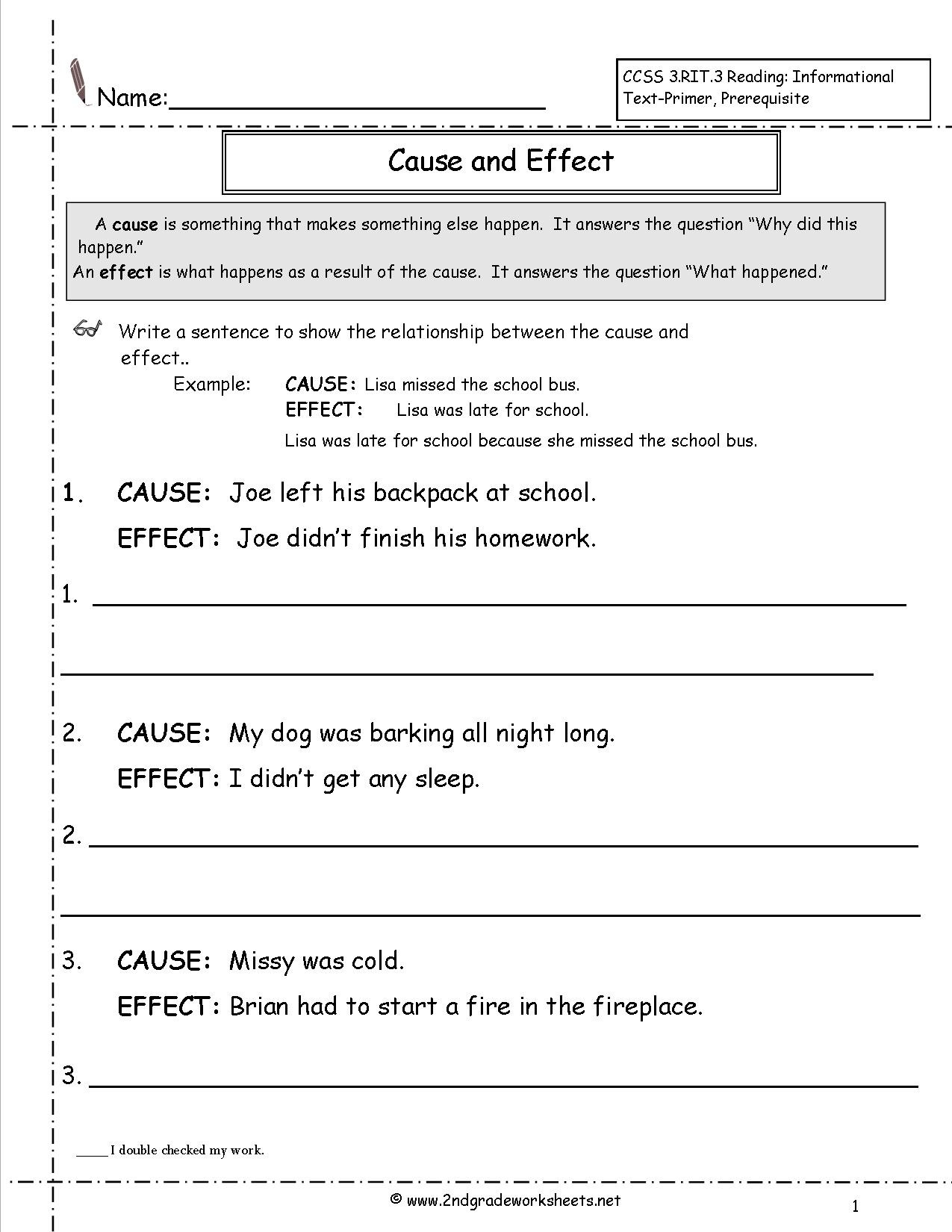
- Create a sentence that connects cause and effect using “because,” “as a result,” or “therefore.”
4. Progressive Difficulty
Start with simple, direct cause‑effect pairs, then introduce more complex chains. This scaffolding ensures confidence before tackling nuanced scenarios.
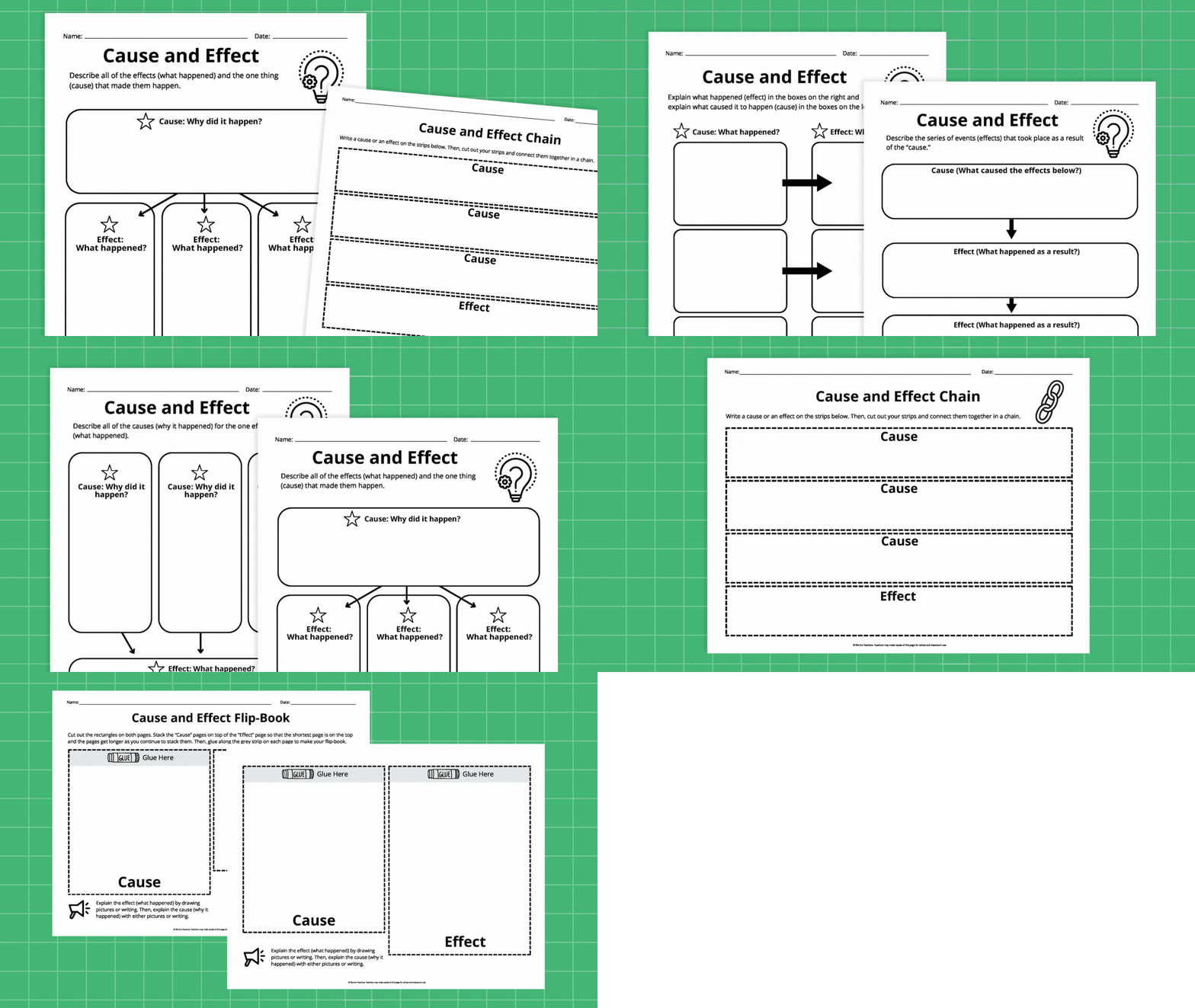
5. Visual Aids
Include diagrams or flowcharts when appropriate. Visual representation can help students map out relationships more clearly.
Integrating Digital Tools for Interactive Learning

While paper worksheets remain valuable, digital platforms can elevate engagement:
- Interactive Story Builders – students drag and drop causes and effects to create narrative sequences.
- Simulation Games – virtual experiments where students modify variables and observe outcomes.
- Online Quizzes – immediate feedback helps students correct misconceptions on the spot.
These tools provide instant assessment data, enabling teachers to tailor follow‑up activities to specific student needs.
Assessment Strategies Using Cause and Effect Worksheets

Effective assessment goes beyond checking answers; it evaluates depth of understanding. Here are key strategies:
Formative Assessment
Use quick exit tickets after a worksheet activity. Ask students to write one sentence summarizing the main cause and its effect.
Summative Assessment
Incorporate a multi‑step essay where students must: 1) Identify a historical event, 2) Outline its causes, 3) Predict its long‑term effects, and 4) Argue whether the outcome was positive or negative.
Peer Review
Students exchange worksheets, highlighting correct cause‑effect pairs and suggesting alternate explanations. This encourages critical reading and collaborative learning.
Differentiation Tips for Diverse Learners

Every classroom includes students with varying strengths. Tailor worksheets to meet all needs:
- Visual Learners – incorporate mind maps or causal diagrams.
- Reading/Writing Learners – provide longer passages with multiple cause‑effect relationships.
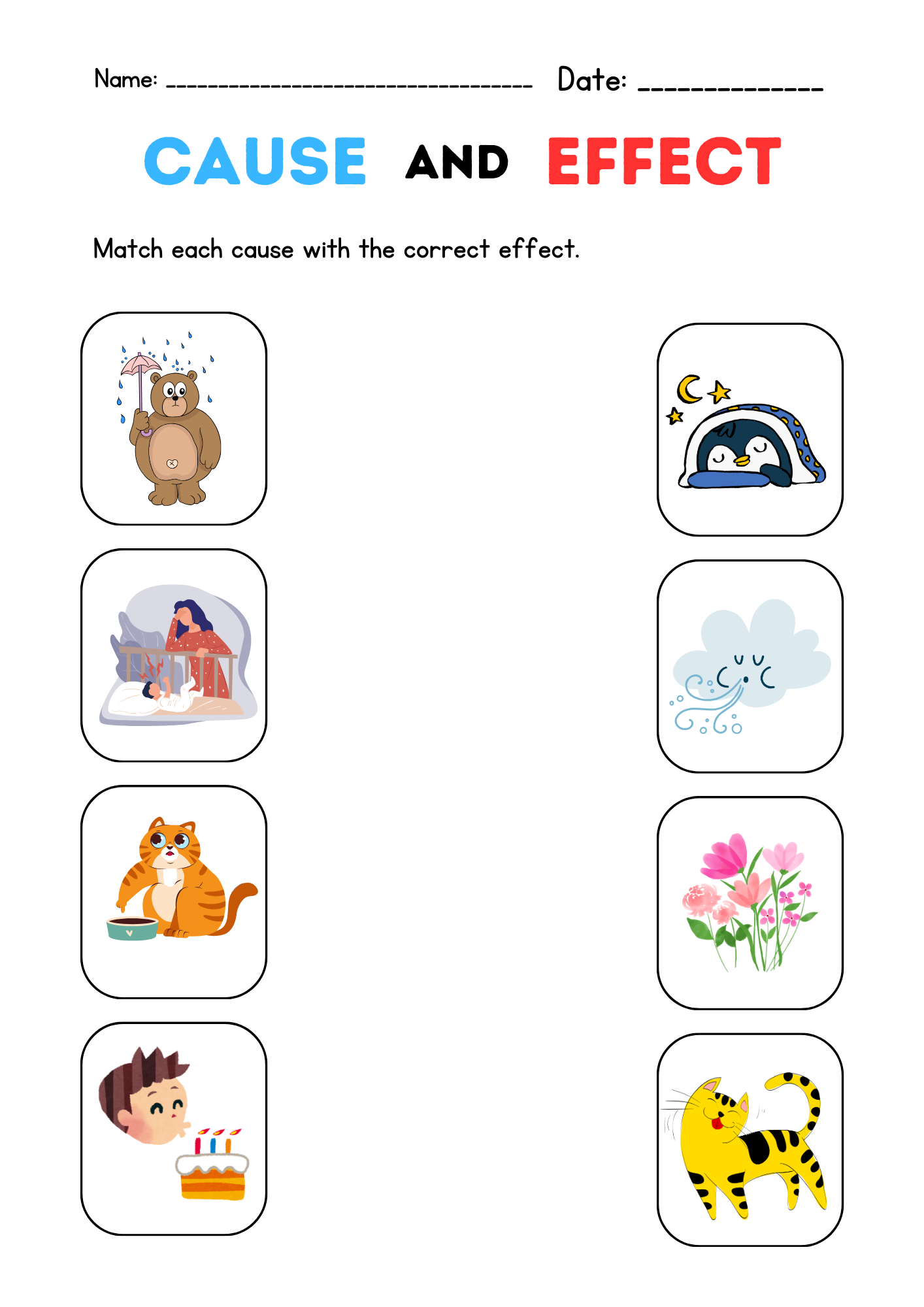
- Language‑Delayed Learners – use simplified sentences and picture prompts.
- Advanced Learners – introduce counterfactual reasoning, asking “What if the cause had been different?”
Common Pitfalls and How to Avoid Them

- Over‑simplification – too many “because” statements can feel mechanical. Encourage varied transitions such as “hence,” “consequently,” and “therefore.”
- Assuming Cause Equals Effect – teach that correlation does not always equal causation. Provide examples where two events coincide without a causal link.
- Neglecting Context – always anchor cause‑effect pairs in the broader narrative or data set.
- Limited Feedback – give detailed explanations of why a particular response is correct or not, rather than merely marking right or wrong.
Real‑World Applications Beyond the Classroom
Mastery of cause and effect prepares students for real‑life scenarios:
- Career Skills – problem‑solving in engineering, troubleshooting in IT, or strategic planning in business.
- Critical Media Literacy – evaluating news articles for bias and causal claims.
- Personal Decision‑Making – assessing the consequences of financial choices or health behaviors.
Final Thoughts on Implementing Cause and Effect Worksheets

When thoughtfully designed and strategically used, Cause and Effect Worksheets become a powerful conduit for deep learning. By guiding students through the identification of triggers, mapping of outcomes, and the construction of logical arguments, educators can nurture analytical thinkers who excel across disciplines. Consistent practice, varied contexts, and timely feedback will transform these worksheets from simple drills into dynamic learning experiences that resonate long after the final answer is recorded. The skill of connecting cause to effect is not merely an academic exercise—it is a cornerstone of informed citizenship, professional competence, and lifelong curiosity.