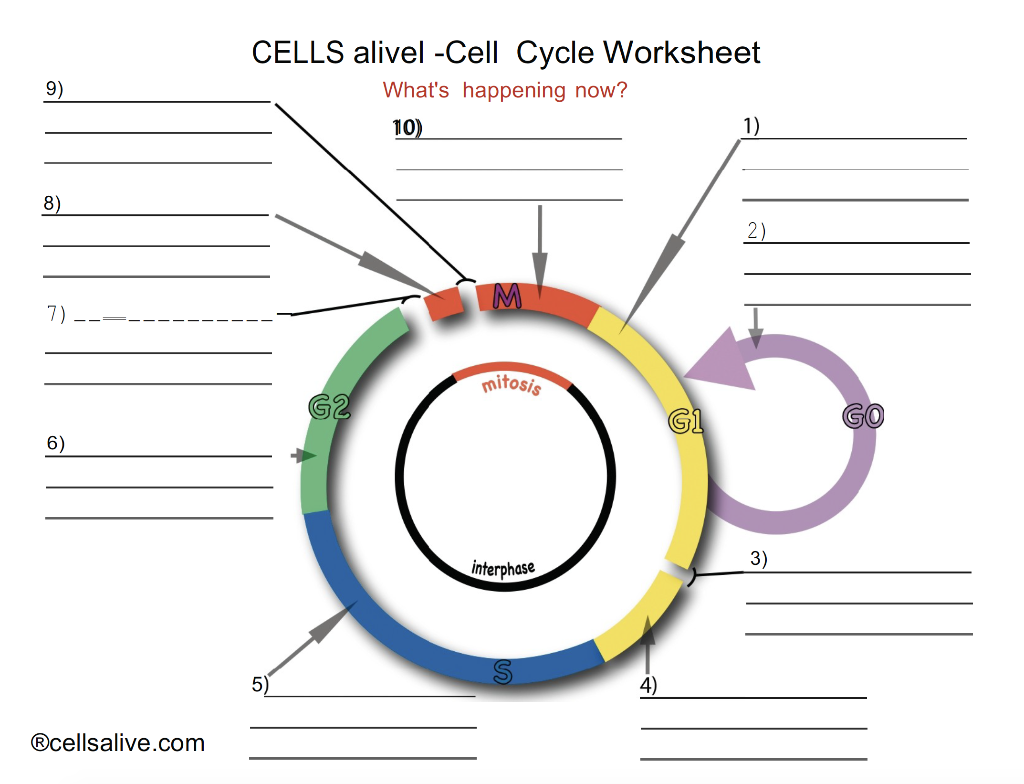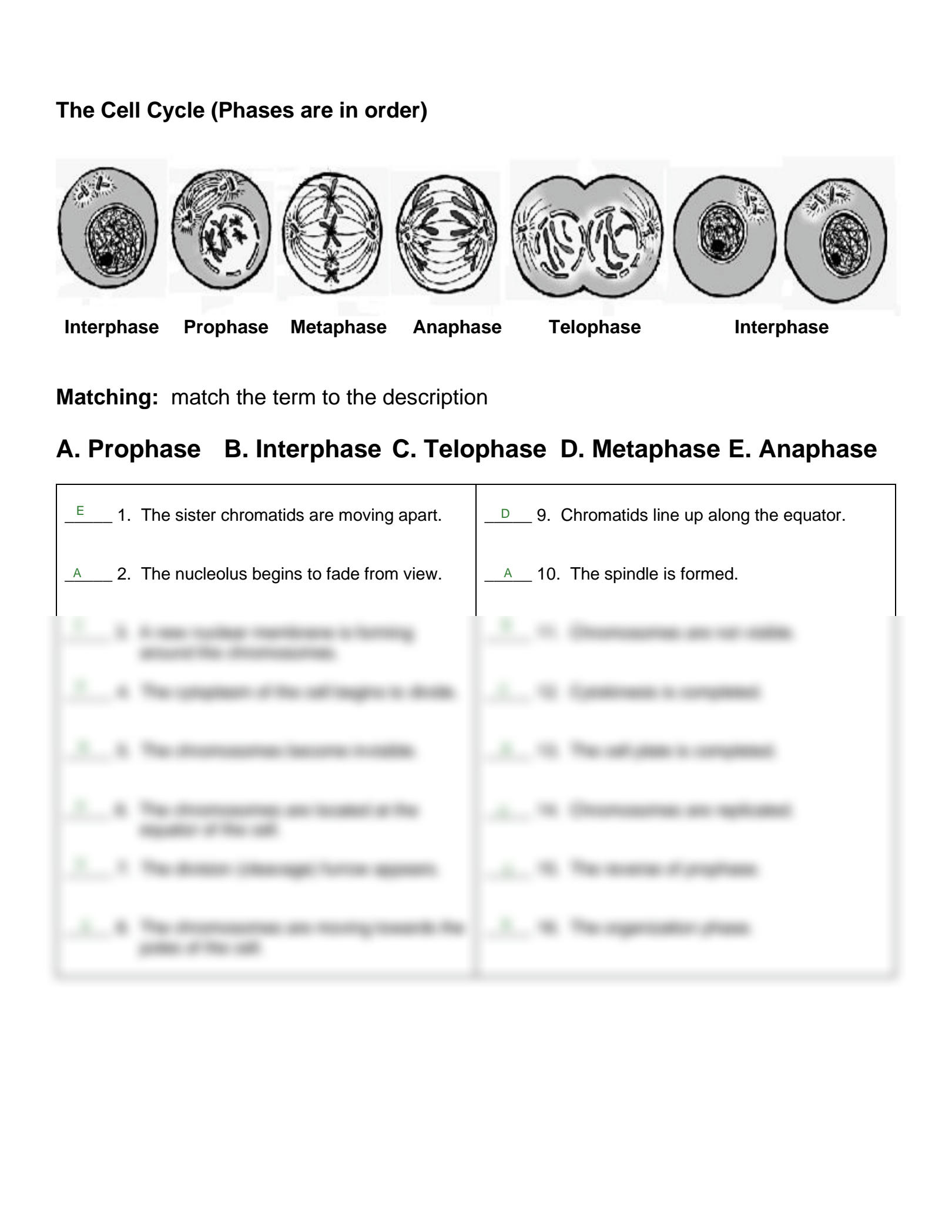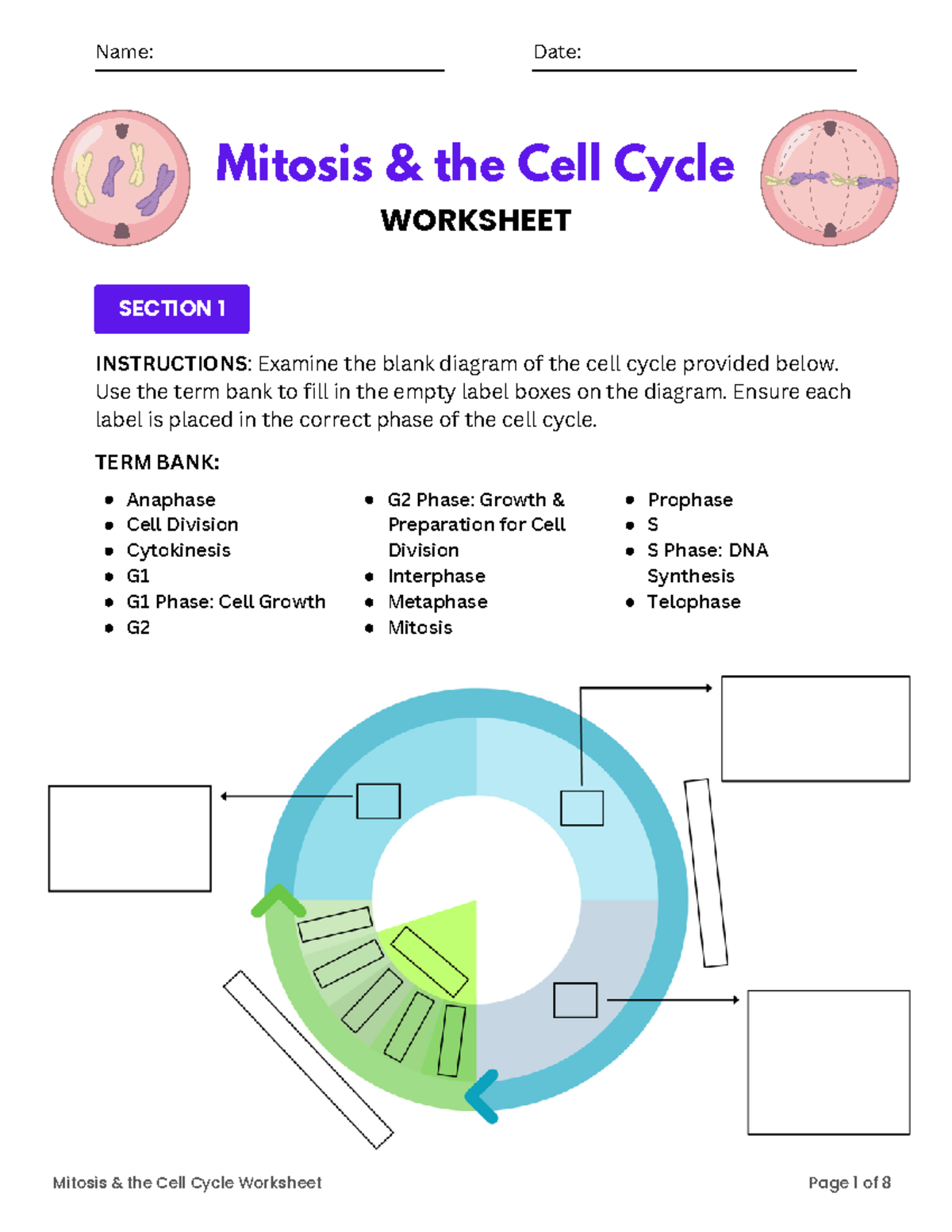
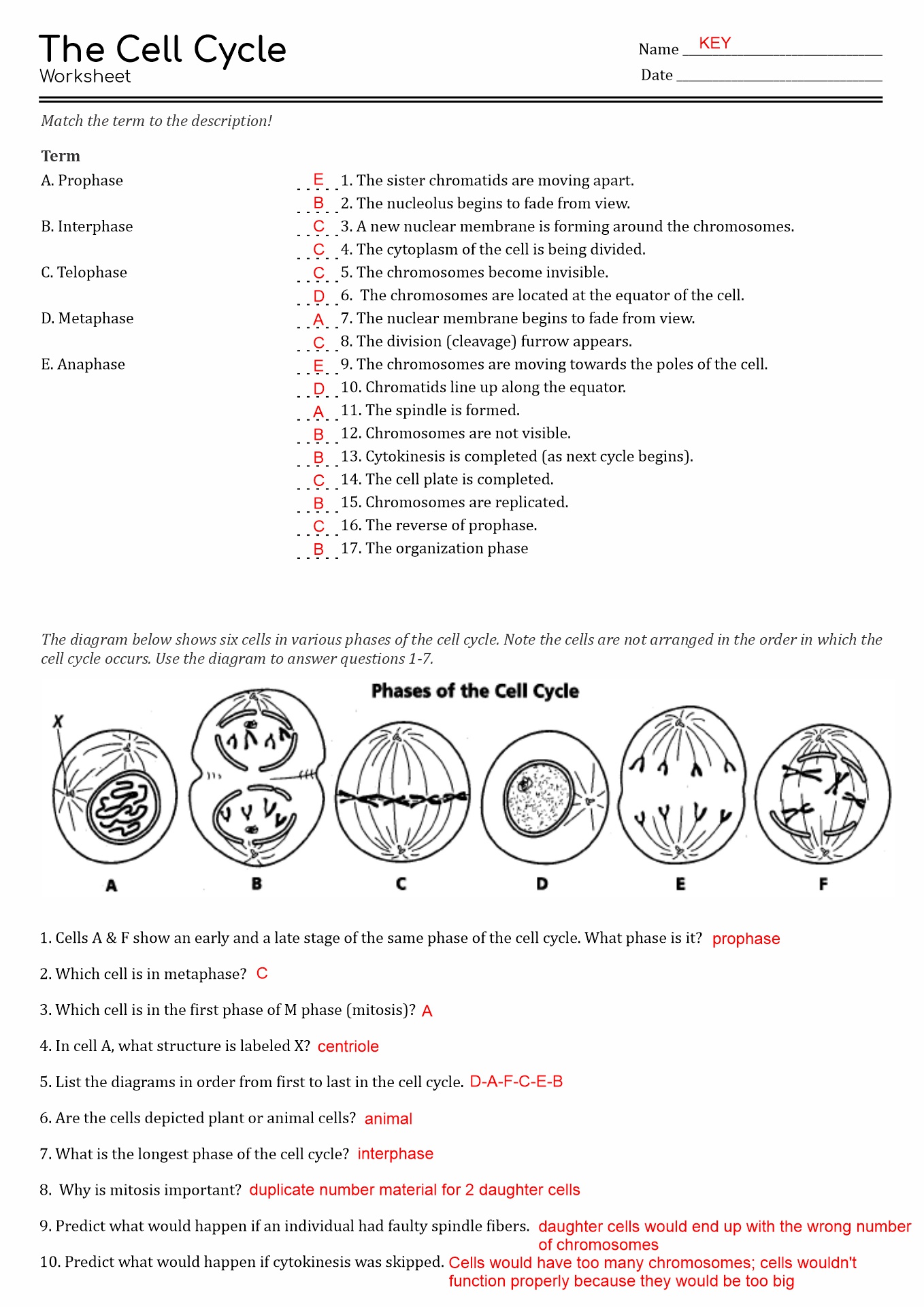
Cell Cycle Worksheet Answers play a pivotal role in reinforcing key concepts for students studying cellular biology, providing instant feedback and ensuring conceptual clarity. By offering accurate, well‑structured solutions, these worksheets become a bridge between theory and practice, enabling learners to grasp the intricacies of mitosis, meiosis, and the various checkpoints that govern cellular division.
Understanding the Core Concepts Behind the Answers
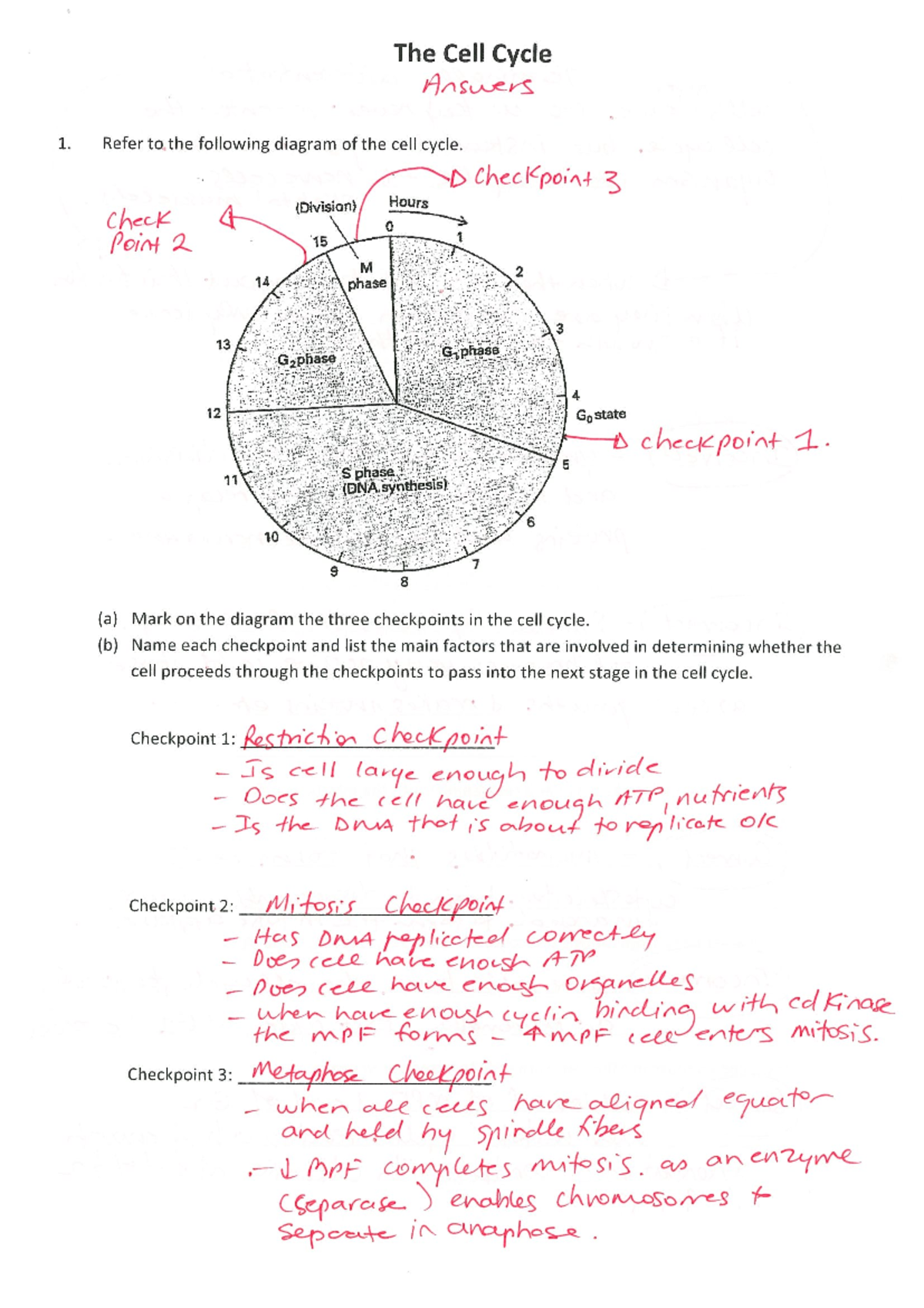
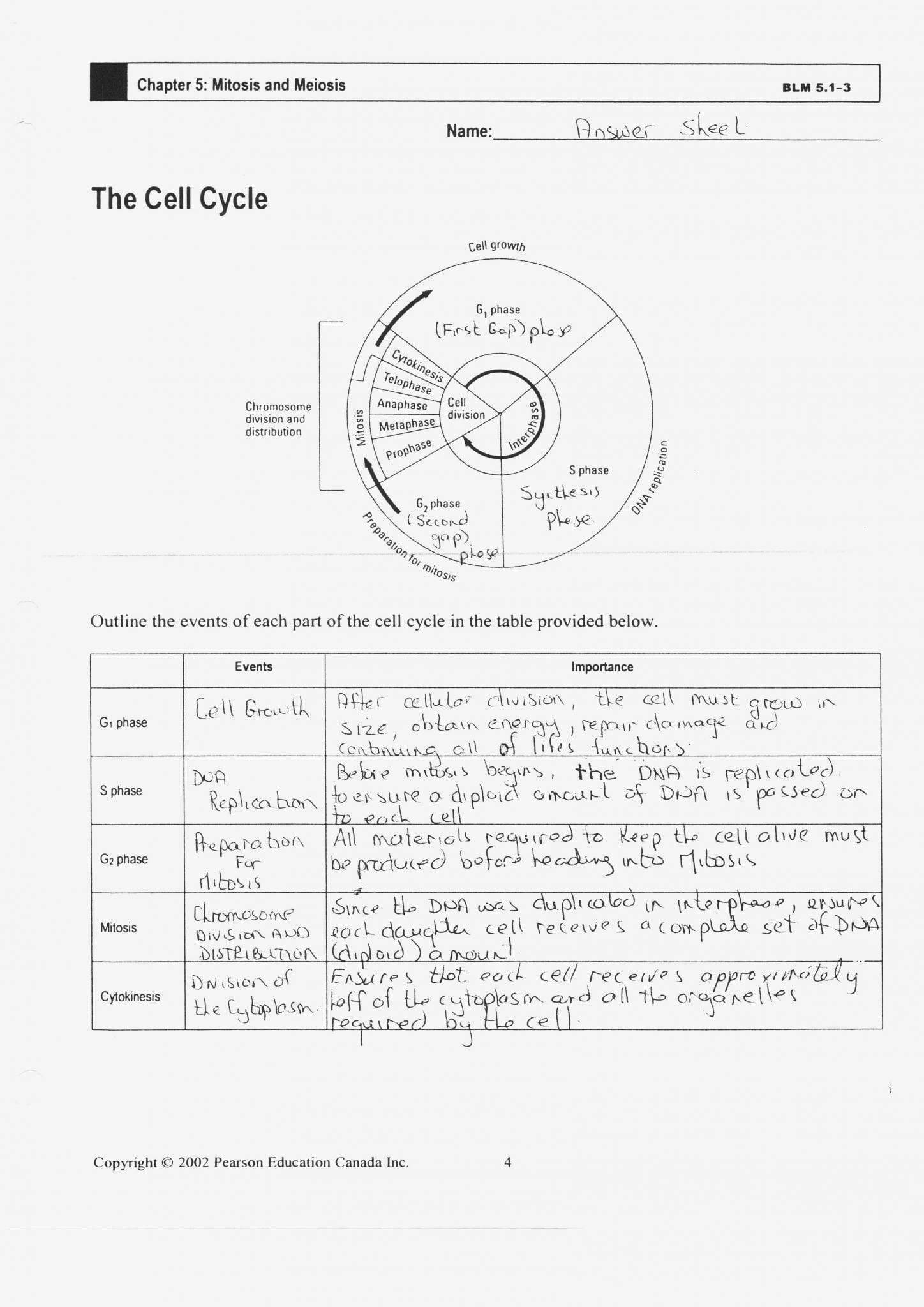
Before diving into answer keys, it’s essential to revisit the fundamental stages of the cell cycle: G1, S, G2, and M phases. Each phase has distinct cellular activities—growth, DNA synthesis, preparation for division, and the division itself. Recognizing the biological significance of checkpoints such as the G1/S transition or the spindle assembly checkpoint helps students understand why specific answers are correct and prevents them from merely memorizing facts.
Common Pitfalls That Students Face

Even advanced learners sometimes struggle with subtle distinctions in the cell cycle. Below are frequent misconceptions and how the answers can clarify them.
Mislabeling Cell Cycle Phases
Students often confuse G2 with G1 or mistype the duration of mitosis. The worksheet answers explicitly label each stage and provide visual timelines, making it clear where each transition occurs.
Incorrect Interpretation of Checkpoints
Checkpoints are sometimes depicted as rigid gates; in reality, they are regulatory mechanisms that can delay or arrest progression. Answer sheets illustrate scenarios where a checkpoint is activated due to DNA damage, fostering a nuanced understanding.
Overlooking the Role of Cyclins
Without proper emphasis on cyclins and CDKs, students may assume cell cycle progression is automatic. The answers include detailed explanations of cyclin dynamics and their impact on phase transitions.
Step‑by‑Step Guide to Using Worksheet Answers Effectively

To maximize learning, follow this structured approach when reviewing worksheet answers.
1. Read the Question Thoroughly
Ensure you understand what is being asked—whether it’s a definition, diagram labeling, or a multiple‑choice explanation.
2. Attempt the Question Independently
Writing down your answer before checking the key reinforces active learning and self‑assessment.
3. Compare with the Correct Answer
Highlight differences and note why your initial response may have been incomplete or incorrect.
4. Analyze the Explanation
Worksheet answers often contain concise reasoning. Read these explanations to cement the underlying biology.
5. Create Your Own Practice Questions
Use the answer explanations to craft new questions that test the same concept from a different angle.
Real‑World Applications of Mastering Cell Cycle Answers
Understanding the cell cycle is not confined to classroom exercises. Its relevance spans multiple professions and research areas.
Medical Research and Oncology
Oncologists rely on cell cycle knowledge to design chemotherapy regimens that target rapidly dividing cancer cells. Accurate worksheet answers help future medical professionals grasp drug mechanisms such as CDK inhibitors.
Pharmaceutical Development
Drug discovery teams often screen compounds that interfere with specific cycle checkpoints. Familiarity with the correct answers prepares chemists to interpret assay results accurately.
Genetic Counseling and Diagnostics
Geneticists analyze mutations affecting cyclins or checkpoint proteins. A solid foundation in cell cycle concepts allows them to explain inheritance patterns and disease risks to patients.
Biotechnology and Agriculture
Engineered crops may incorporate genes that modify cell division rates to improve yield. Knowing the cycle phases aids bioengineers in designing effective interventions.
Practical Tips for Teachers and Students

Both educators and learners benefit from strategic use of worksheet answers. Below are actionable pointers that can enhance teaching and learning experiences.
For Teachers
- Integrate Visual Aids: Pair answers with diagrams or animations to illustrate dynamic processes.
- Encourage Peer Review: Have students discuss their answers with classmates before checking the key.
- Use Formative Assessment: Deploy worksheets as low‑stakes quizzes to gauge understanding in real time.
- Provide Incremental Feedback: Highlight specific errors and guide students toward the correct reasoning.
- Update Content Regularly: Incorporate recent discoveries, such as new checkpoint proteins, to keep material current.
For Students
- Active Note Taking: Write the answer and then annotate why it is correct, linking to textbook chapters.
- Flashcard Creation: Turn answer explanations into flashcards for spaced repetition.
- Self‑Testing: Periodically cover the answer key and attempt recall before revealing it.
- Group Study Sessions: Discuss answers in small groups to uncover diverse perspectives.
- Real‑Time Application: Apply the concepts to case studies or lab observations.
Advanced Strategies for Mastery

Once basic comprehension is achieved, students can explore more sophisticated techniques to deepen their expertise.
Modeling Cell Cycle Dynamics
Using software tools to simulate the cell cycle can reveal how perturbations in cyclin levels or checkpoint delays affect overall progression. Answer keys can guide the construction of these models.
Linking Genetics to Phenotype
Map specific gene mutations to phenotypic outcomes—e.g., how a loss‑of‑function mutation in p53 influences the G1 checkpoint. Worksheet answers that include mutation impact tables help illustrate these connections.
Cross‑Disciplinary Integration
Combine cell cycle knowledge with topics such as stem cell biology, developmental biology, or immunology. Understanding how the cycle differs in stem cells versus differentiated cells opens new research avenues.
Frequently Asked Questions About Cell Cycle Worksheet Answers
Why are cell cycle worksheet answers considered essential for exam preparation?
They provide immediate validation of concepts, highlight common errors, and expose students to the reasoning expected by examiners.
Can I rely solely on worksheet answers for studying?
While they are invaluable, pairing them with textbook reading, lab practice, and discussion ensures comprehensive mastery.
Are these answers always correct given new discoveries?
Cell biology is dynamic, but core principles—such as the phases of the cycle and key checkpoints—remain stable. Always cross‑reference with current literature for cutting‑edge topics.
How frequently should I review worksheet answers?
Revisit them at least once before each major assessment and whenever you encounter a related concept in lectures or labs.
What should I do if I disagree with an answer?
Investigate the rationale provided. If a discrepancy remains, discuss it with your instructor; this dialogue fosters critical thinking.
Conclusion
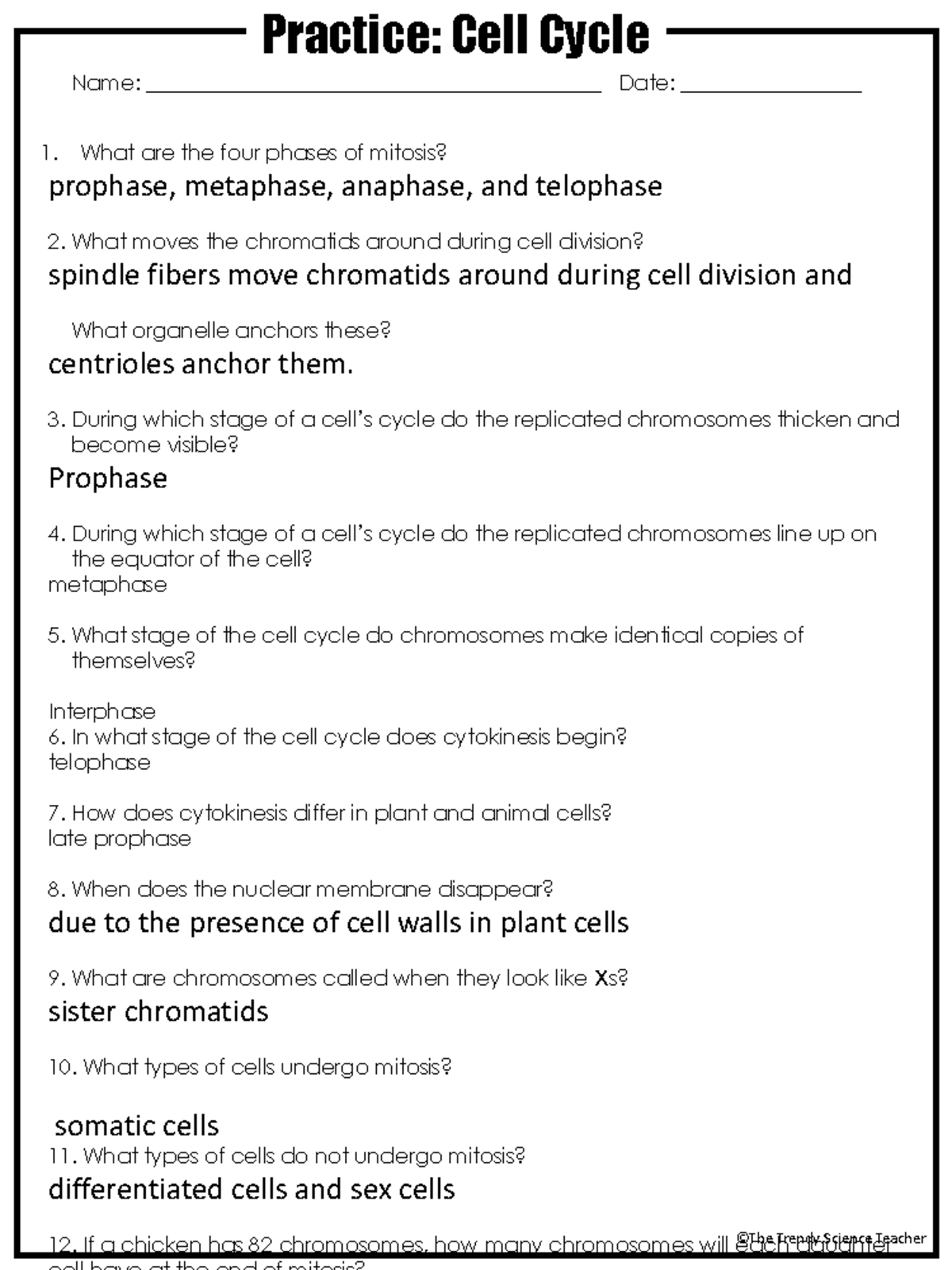
Mastering Cell Cycle Worksheet Answers is more than an academic exercise; it is a gateway to understanding the living processes that sustain life, inform medical treatment, and drive biotechnological innovation. By systematically reviewing each answer, recognizing common pitfalls, and applying the knowledge across real‑world contexts, students and professionals alike can solidify a robust foundation in cell biology. Use the strategies outlined above to transform worksheet practice into a powerful learning engine that propels you toward expertise, confidence, and future scientific contributions. The journey from question to answer is a stepping stone to mastery—embrace it, engage deeply, and watch your understanding of the cell cycle flourish.