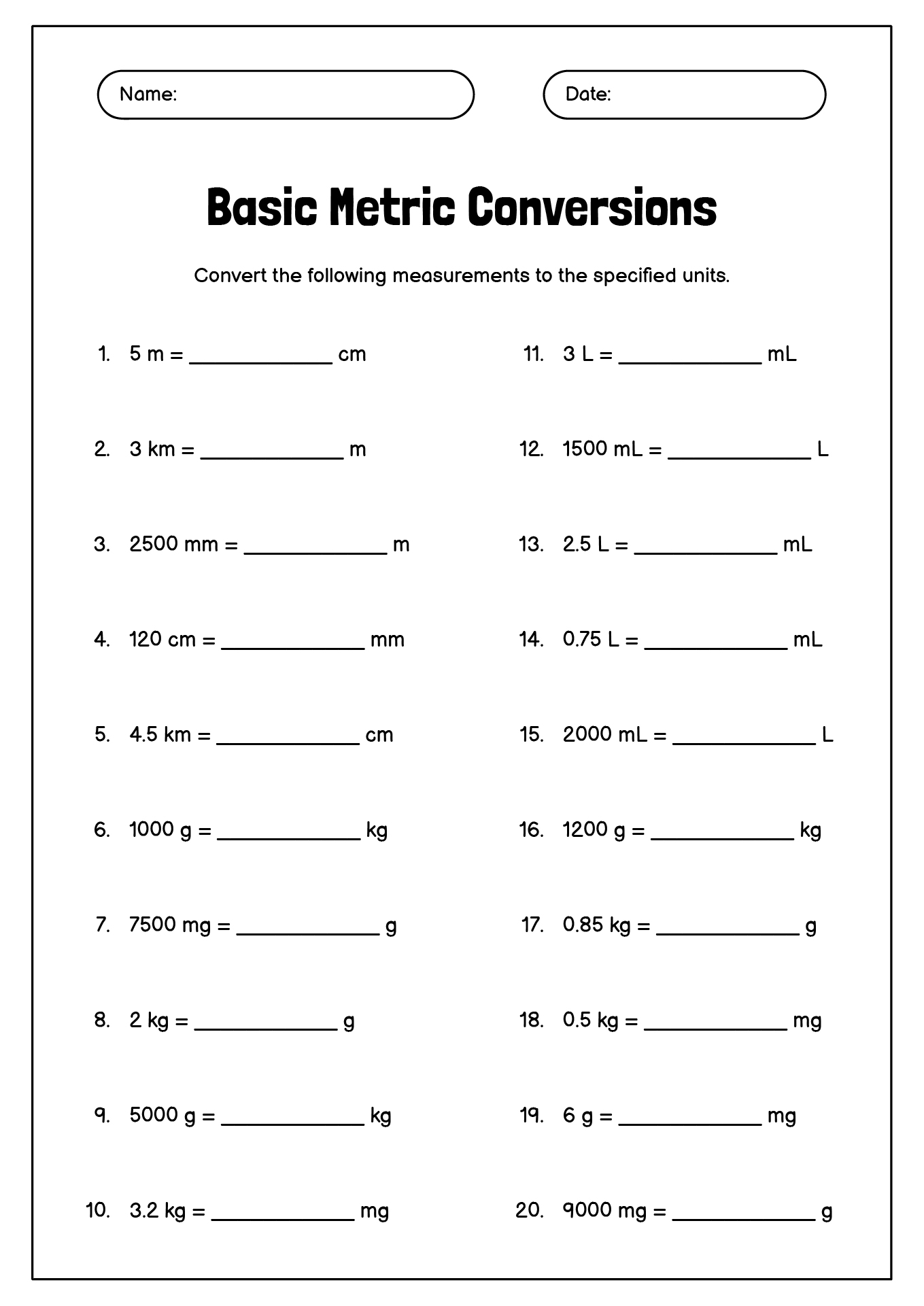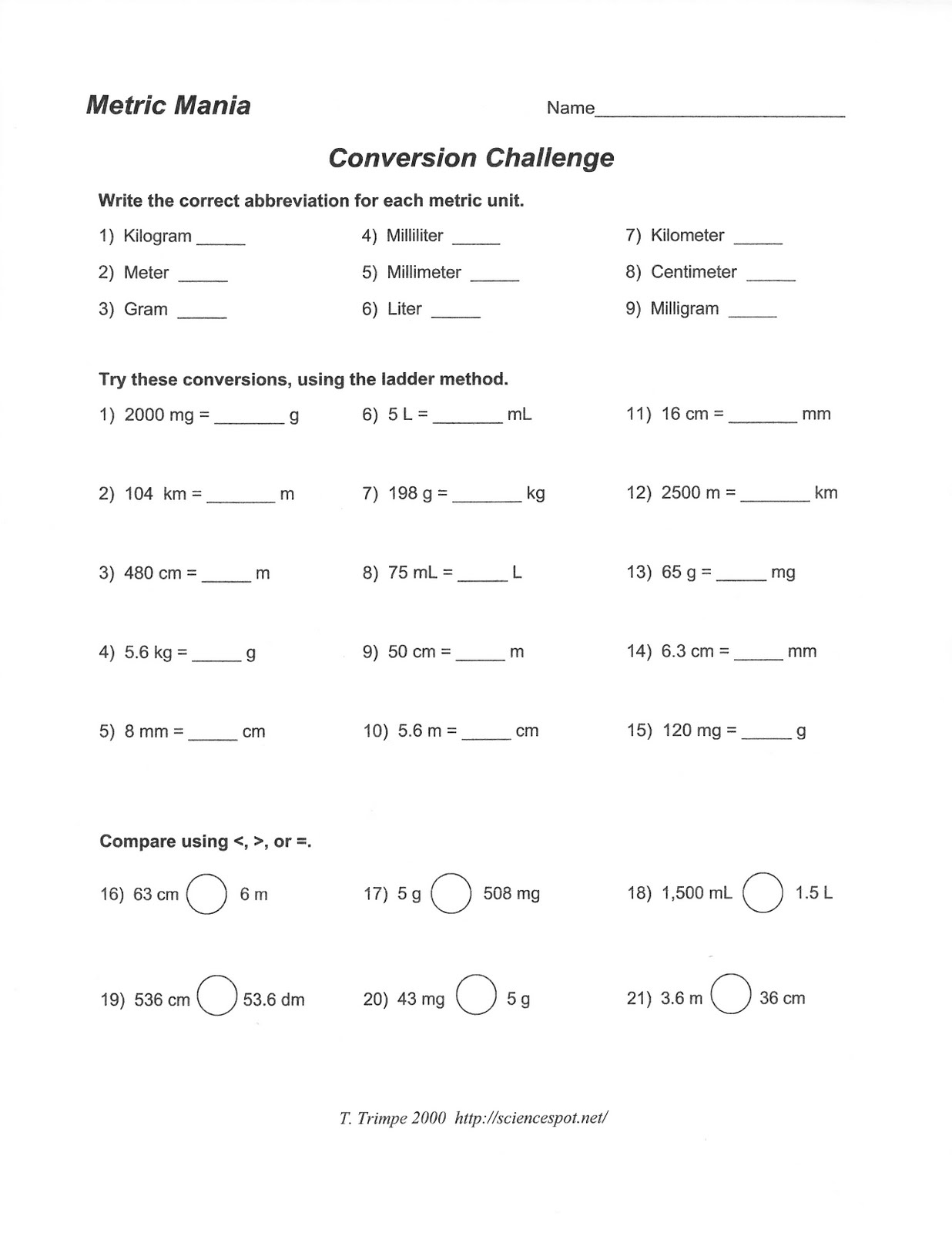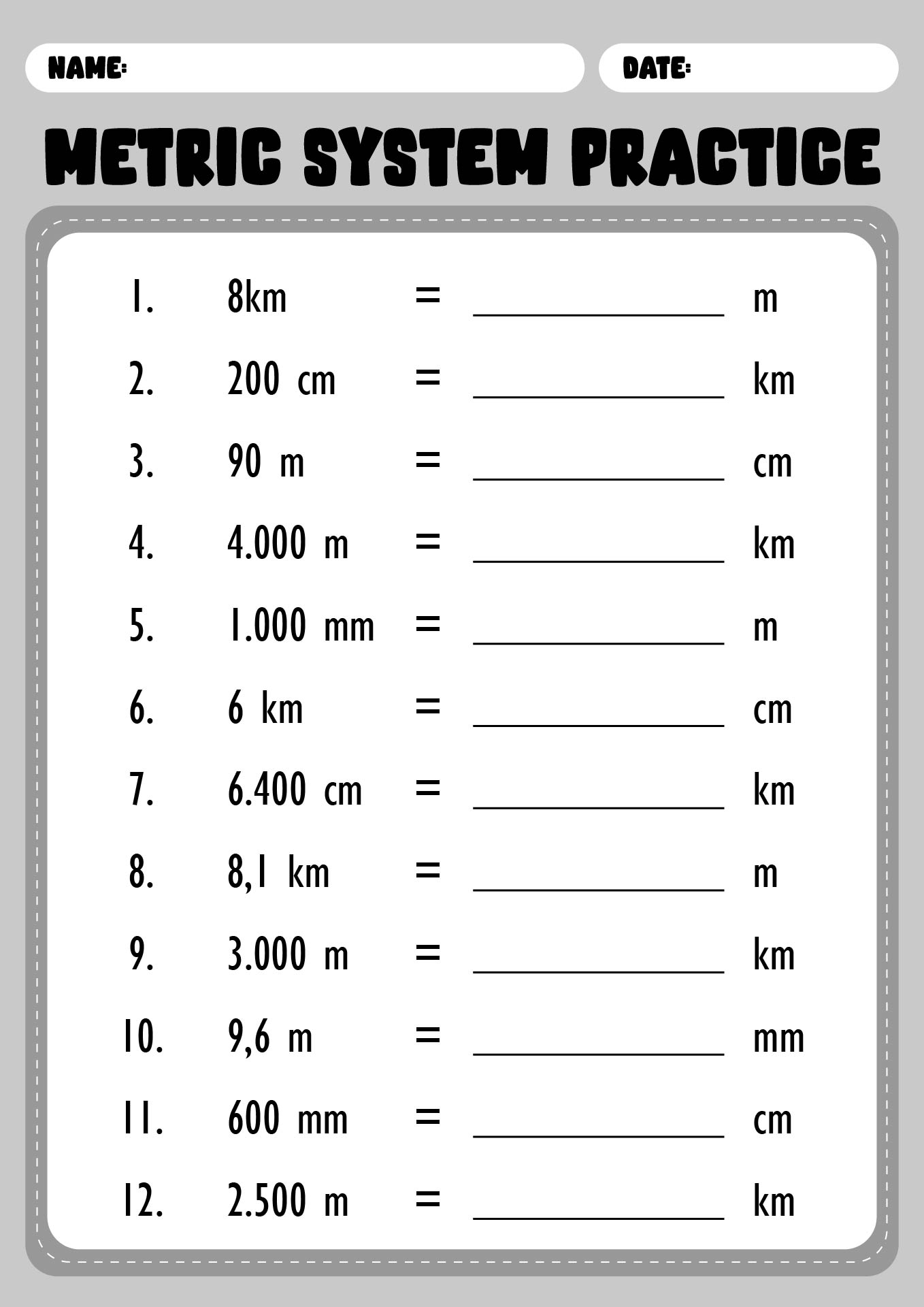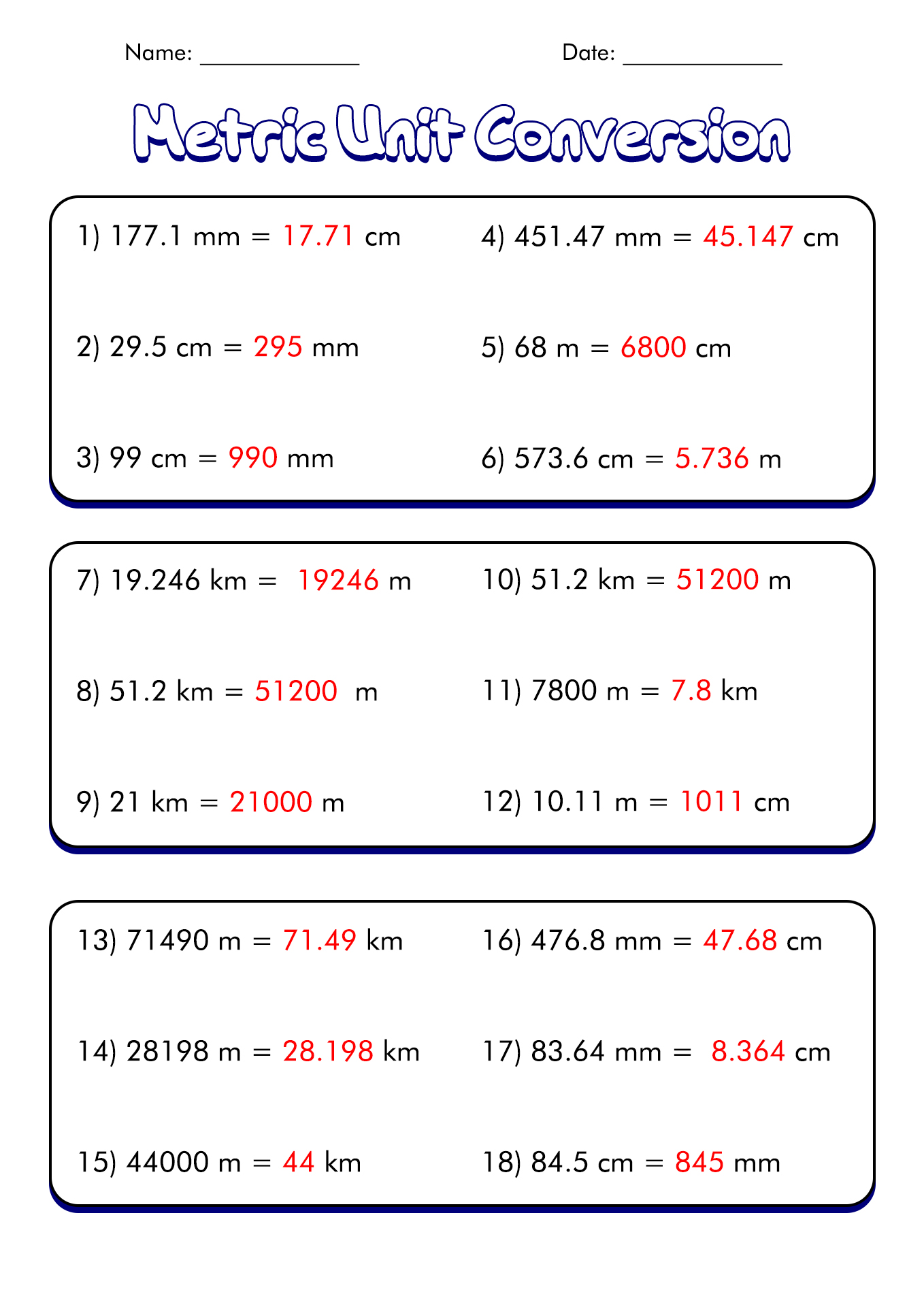
Conversion Of Metric System Worksheet is the cornerstone of mastering everyday measurements. In this post, I’ll walk you through the best ways to use these worksheets to boost confidence, clarify concepts, and make learning feel like a breeze.
Why Metric Matters

When you think about cooking, science experiments, or even packing for a trip, the metric system shows up in ways you might not notice at first. It’s a universal language that allows scientists, chefs, athletes, and travelers to communicate accurately across borders. By mastering conversions, you open doors to clearer communication, safer practices, and a deeper understanding of the world.
Common Challenges Students Face

Even though the metric system is built on a simple decimal structure, students often get stuck on a few pitfalls:
- Remembering the Prefixes – It’s easy to mix up kilo- and centi- or mega- and milli-.
- Visualizing the Scale – A thousand grams feels abstract compared to the 1000 meters of a marathon.
- Applying the “Move the Decimal” Rule – Students sometimes forget that moving the decimal point is the same as dividing or multiplying by powers of ten.
- Mixing Units Across Different Measures – Converting kilograms to ounces or liters to cups can trip up even seasoned learners.
How to Use a Worksheet Effectively

To get the most out of any Conversion Of Metric System Worksheet, you need a strategy that keeps learning engaging and reinforces memory.
1. Start With a Quick Warm‑Up
Before diving into the worksheet, spend a minute recalling the most common prefixes: kilo (10³), hecto (10²), deca (10¹), deci (10⁻¹), centi (10⁻²), milli (10⁻³). Write them down in a quick table or flashcard style. This mental refresher primes your brain for the tasks ahead.
2. Read the Problem Thoroughly
Each worksheet question often presents a scenario—like measuring a garden’s length or calculating a recipe’s yield. Take a moment to visualize the real‑world context; it grounds abstract numbers in a tangible situation.
3. Identify the Units Involved
Write down the initial unit and the desired unit next to the problem. Seeing both side‑by‑side reduces the chances of misreading.
4. Apply the “Move the Decimal” Rule
When converting kilo‑ to gram, move the decimal three places to the right. For centi‑ to meter, shift the decimal two places left. Practicing this rule on paper helps cement the logic.
5. Check Your Work With Estimation
After you arrive at a numeric answer, estimate whether it seems reasonable. If converting 3.2 kg to grams, you’d expect around 3,200 grams—much larger than the original decimal value. This sanity check catches silly errors.
Step‑by‑Step: A Sample Problem

Let’s walk through a common worksheet scenario: “Convert 4.5 liters to milliliters.”
Step 1: Recognize the Prefixes
Milliliters use the milli‑ prefix (10⁻³), while liters use the base unit (10⁰). To go from liters to milliliters, you need to multiply by 1,000.
Step 2: Shift the Decimal Point
Moving the decimal three places right turns 4.5 into 4,500. That’s the answer—4,500 milliliters.
Step 3: Verify
Since 1 liter equals 1,000 milliliters, 4.5 liters should indeed be 4,500 milliliters. The estimate matches our result, so we’re confident.
Real‑World Applications of Metric Conversions

Converting units isn’t just an academic exercise; it’s part of everyday life. Here are a few real‑world scenarios that highlight why mastery matters.
Cooking and Baking
Recipe adjustments often require converting grams to kilograms or milliliters to liters. For example, scaling a chocolate cake from a 12‑inch pan to an 18‑inch pan might involve increasing the flour from 200 g to 400 g—a simple double but crucial for maintaining texture.
Travel Planning
When packing, you might need to know how many kilograms your luggage weighs or how many liters your suitcase can hold. Understanding that 1 kilogram equals 2.2 pounds or 1 liter equals 0.264 gallon helps you stay within airline limits.
Health & Fitness
Tracking nutrition or workout metrics often involves converting units: converting a 75 kg body weight to pounds (176 lbs) or converting a 5 km run into miles (3.1 miles). Accurate conversions keep goals realistic.
School Projects
Physics projects, like measuring the speed of a toy car, require converting meters per second to kilometers per hour. A worksheet that asks students to convert 2.5 m/s to km/h reinforces the link between abstract math and tangible results.
Tips for Parents and Educators
Whether you’re a parent or a teacher, guiding students through metric worksheets can be both fun and effective. Here are some proven tactics.
1. Use Visual Aids
Draw a simple diagram of a 1‑meter stick, a 100‑gram weight, and a 1‑liter jug. Seeing the scale helps children internalize the differences.
2. Incorporate Everyday Items
Let students bring in a bottle of water and ask them to estimate its mass in grams. This hands‑on approach bridges theory and reality.
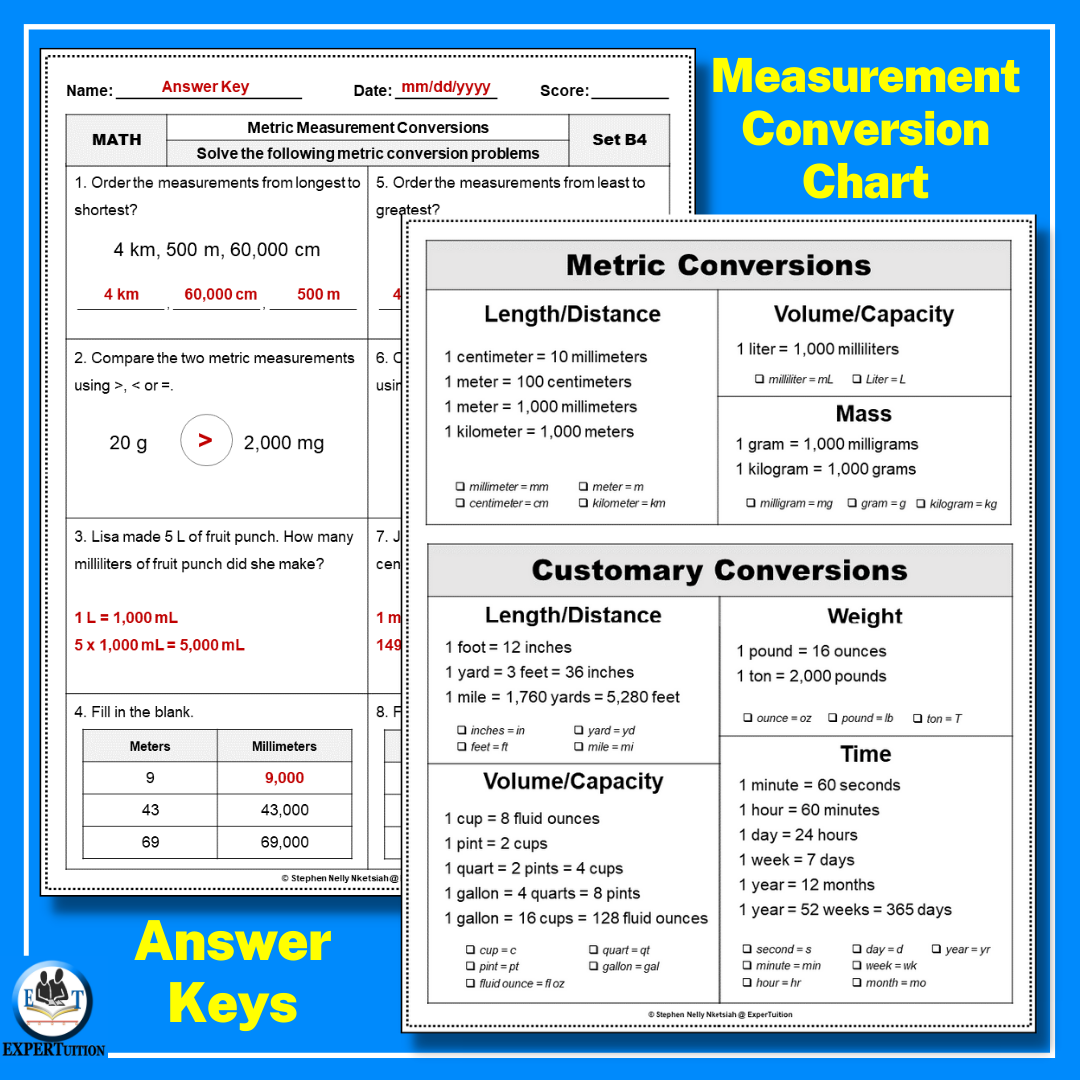
3. Create a Conversion Chart
Have students compile a chart of the most common conversions: kilograms to grams, liters to milliliters, meters to centimeters. A visual reference reduces calculation anxiety.
4. Encourage Peer Teaching
Pair students and let them explain a conversion to each other. Teaching reinforces understanding.
5. Celebrate Small Wins
After completing a worksheet, praise the effort. Recognizing progress boosts confidence, encouraging continued practice.
Advanced Practices for Enthusiasts
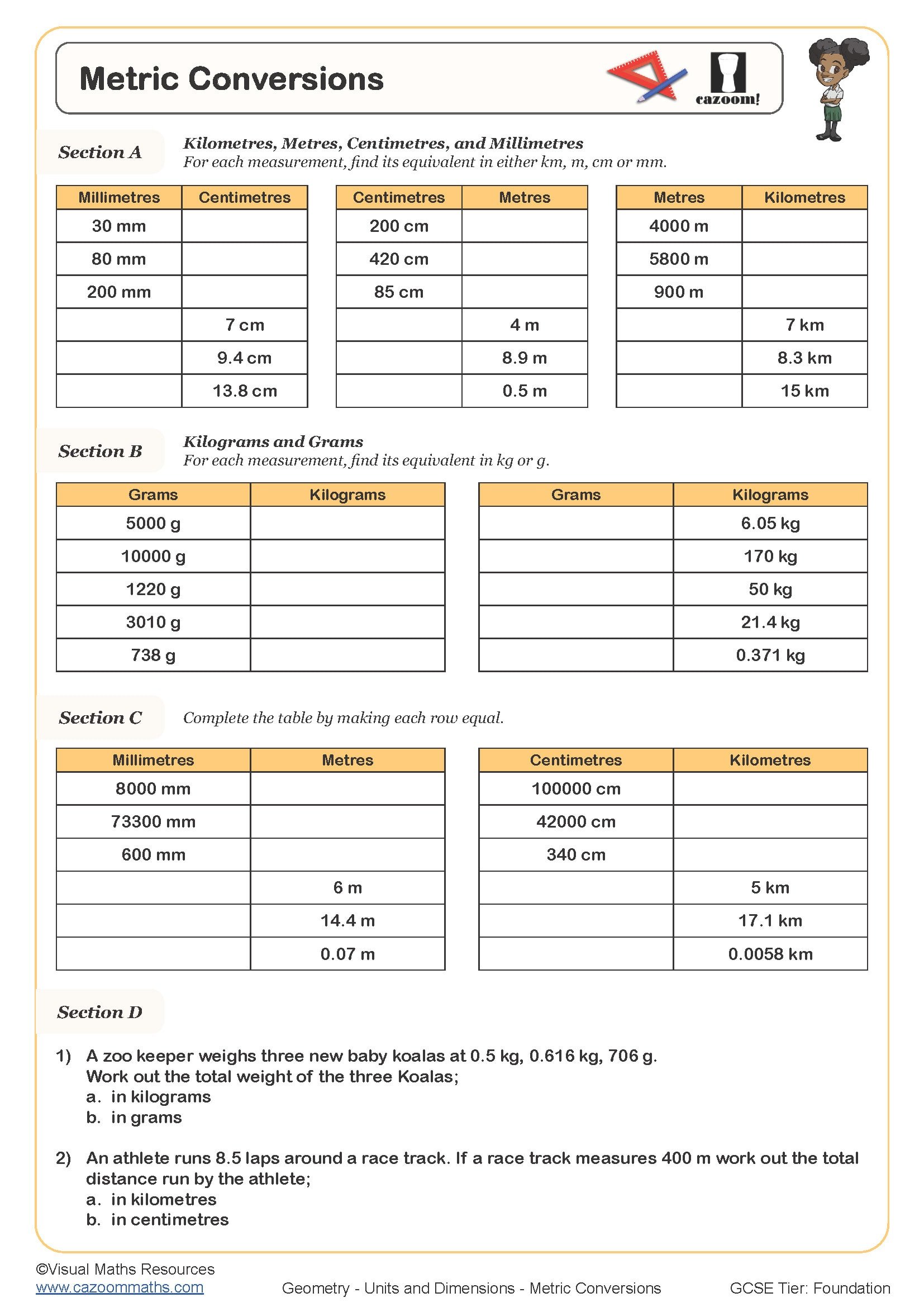
Once the fundamentals are solid, you can push boundaries. Advanced practice invites exploration of less common units and multi‑step conversions.
1. Imperial to Metric and Vice Versa
Adding a conversion to pounds, ounces, inches, or feet expands versatility. For example, converting 3.5 pounds to kilograms requires dividing by 2.20462.
2. Exponential Growth in Measurement
Teach students to use the metric system’s exponential nature. For instance, converting 1,200 milliliters to cubic meters involves dividing by 1,000,000.
3. Real‑Time Conversion Apps
Introduce simple smartphone apps that perform instant conversions. While practicing, students can cross‑check answers, reinforcing accuracy.
4. Incorporate Problem‑Based Learning
Present a project—say, designing a small garden. Students must calculate soil volume in cubic meters, convert fertilizer amounts, and estimate water needs. This holistic approach ties conversion skills to creativity.
Conclusion

Mastering the Conversion Of Metric System Worksheet isn’t just about getting the right answer; it’s about building a mental toolkit that translates across science, cooking, travel, and everyday life. By starting with clear steps—recognizing prefixes, shifting decimals, estimating, and verifying—you create a robust learning loop that keeps students engaged. Parents and educators can amplify success with visual aids, real‑world items, and encouraging peer interaction. For the curious learner, exploring advanced conversions opens a gateway to deeper scientific appreciation. As you practice and share these skills, you’ll discover that the metric system is not a distant abstract; it’s a practical, reliable companion in navigating the world.