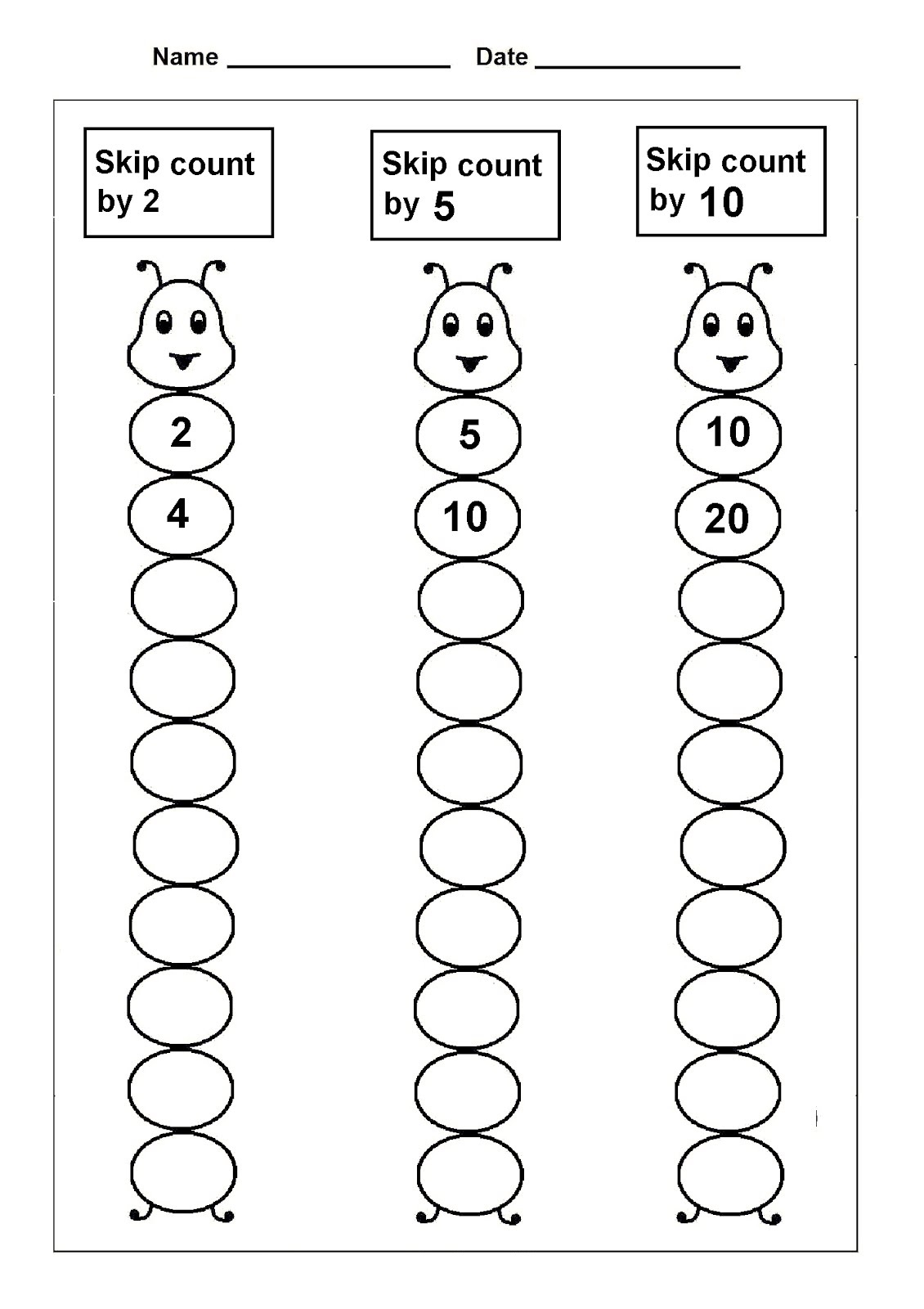
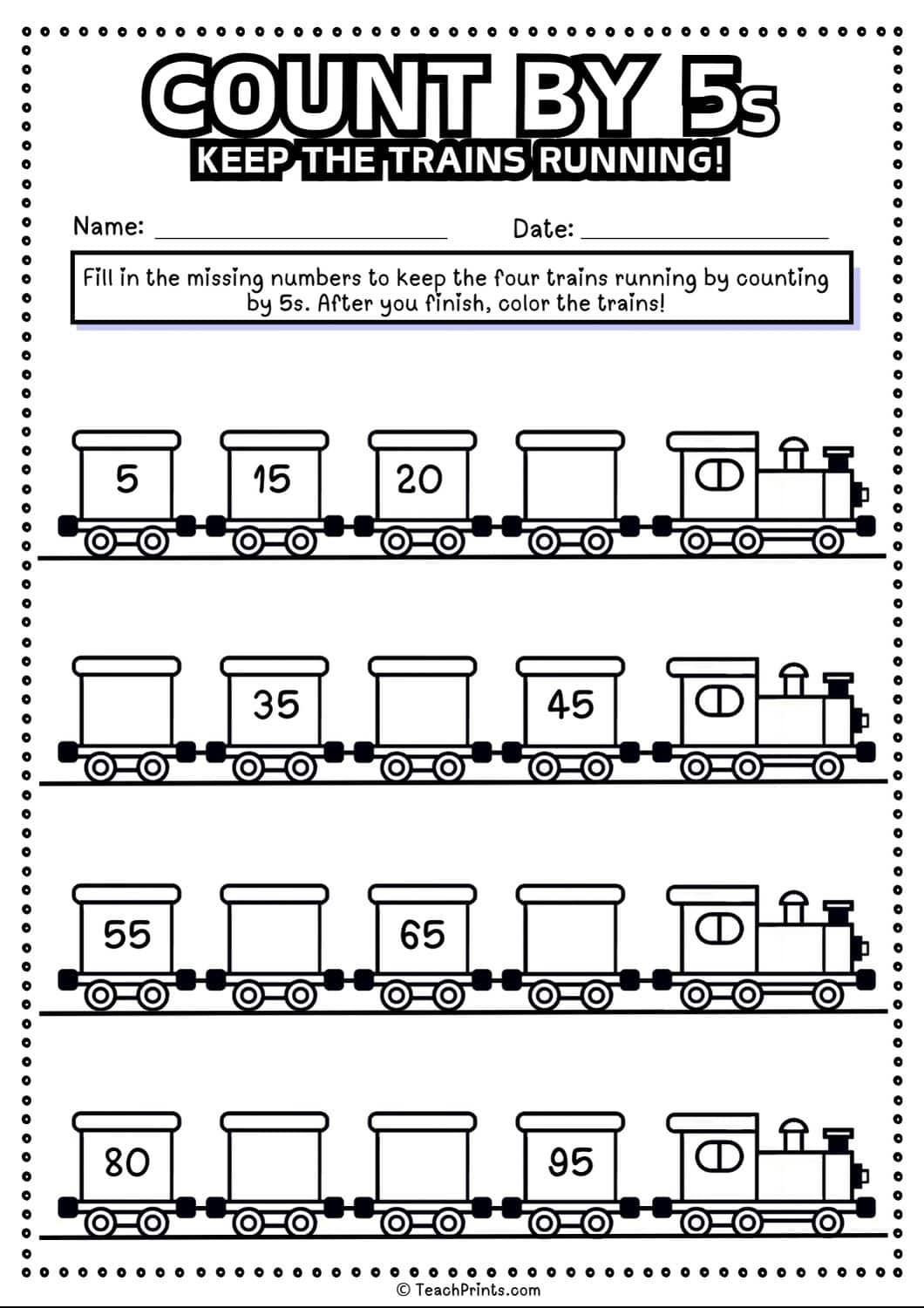
Count By 5 Worksheet is a versatile educational tool designed to help students master multiplication, skip counting, and number recognition—all while reinforcing critical thinking and number sense. By guiding learners through a series of engaging activities, this worksheet offers a clear pathway from basic counting to more advanced mathematical concepts, making it a favorite for teachers, homeschool parents, and tutors alike.
Why Count By 5 Worksheets Matter for Early Math Development

Counting by five is more than a simple skill; it is the foundation for understanding place value, pattern recognition, and arithmetic fluency. When students can confidently skip count by fives, they are better prepared for:
- Multiplication tables (e.g., 5×1 through 5×12).
- Division by five, fostering a deeper grasp of inverse operations.
- Pattern creation and analysis, essential for algebraic reasoning later in school.
- Estimation and mental math, as recognizing jumps of five speeds up calculation.
In addition, Count By 5 Worksheets provide a structured approach for assessing progress. By recording answers and tracking errors, educators can quickly identify misconceptions and tailor instruction to meet each child’s unique needs.
Key Benefits for Different Learners
- Visual Learners: Color-coded sequences or graphic organizers help them see the five-unit intervals.
- Hands‑On Learners: Interactive manipulatives, such as ten‑frame tiles or base‑ten blocks, make the concept tangible.
- Auditory Learners: Repeating the sequence aloud or using chants reinforces memory.
- Students with Learning Differences: Simplified prompts or extra visual cues can reduce cognitive load and increase confidence.
How to Structure a Lesson Using Count By 5 Worksheets

Designing an effective lesson involves a sequence of steps that build momentum and embed the skill. Below is a step‑by‑step framework that teachers can adapt to various classroom settings.
Step 1: Warm‑Up with a Quick Review
Begin with a brief 3‑minute warm‑up where students recite numbers from 1 to 100 in multiples of five. Encourage them to shout out the next number, creating a dynamic rhythm that sets the tone for the activity.
Step 2: Introduce the Worksheet Structure
Show students a sample page from the worksheet. Highlight:
- Blank spaces where they will write each number.
- Visual guides such as arrows or dots indicating the next number.
- Check‑boxes or stars to reward correct answers.
Explain that the goal is not to rush but to count accurately and confidently.
Step 3: Guided Practice
Distribute the worksheets and work through the first two pages together. Model the process:
- Start at 0 or 5.
- Count forward by five.
- Write the next number in the blank.
- Move on to the next prompt.
Encourage students to read each prompt aloud, reinforcing pronunciation and number sequencing.
Step 4: Independent Completion
Allow students to work on the remaining pages independently. Circulate to offer individualized support, checking for accuracy and pacing. Students should be able to finish each page within 5–10 minutes, depending on age and skill level.
Step 5: Reflection and Error Analysis
After completion, gather students for a brief discussion:
- Which numbers did they find challenging?
- Did they notice any patterns?
- What strategies helped them remember the next number?
Use this reflection to inform the next lesson, focusing on common error patterns like skipping a number or misplacing a digit.
Creative Ways to Extend the Count By 5 Worksheet Experience
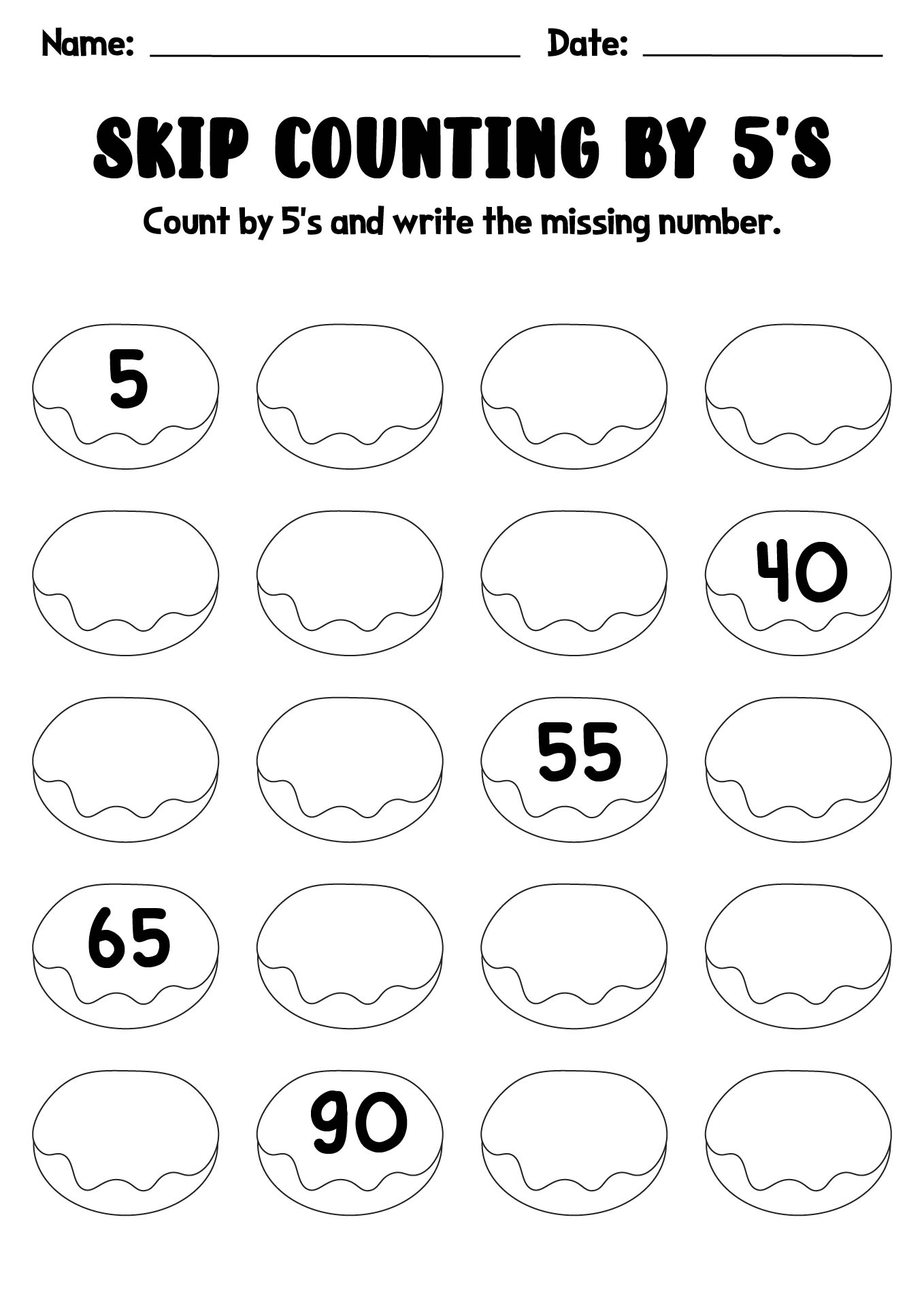
Once students master basic skip counting, you can layer additional complexity to keep the content fresh and engaging.
Introduce Reverse Counting
Ask students to count backwards from 100 to 0 in steps of five. This reverses the order, reinforcing the concept from a different perspective. Include reverse sequences in the worksheet for balanced practice.
Integrate Multiplication Facts
After counting a few steps, prompt students to write the multiplication fact. For example, after listing 25, 30, 35, ask, “What is 5 multiplied by 7?” This ties skip counting to real multiplication, deepening understanding.
Use Real‑World Contexts
Embed scenarios such as:
- “If a train travels 5 miles every hour, how far will it travel in 8 hours?”
- “There are 5 apples on each of 12 trees. How many apples are there in total?”
These contexts make the worksheet feel relevant and demonstrate practical applications.
Gamify the Activity
Transform the worksheet into a competition:
- Time trials: who can correctly fill a page the fastest?
- Team challenges: each group writes a sequence, and peers check for accuracy.
- Digital adaptation: use interactive whiteboard tools to drag numbers into place.
Gamification boosts motivation, especially for students who enjoy a healthy sense of competition.
Printable and Digital Resources for Count By 5 Worksheets
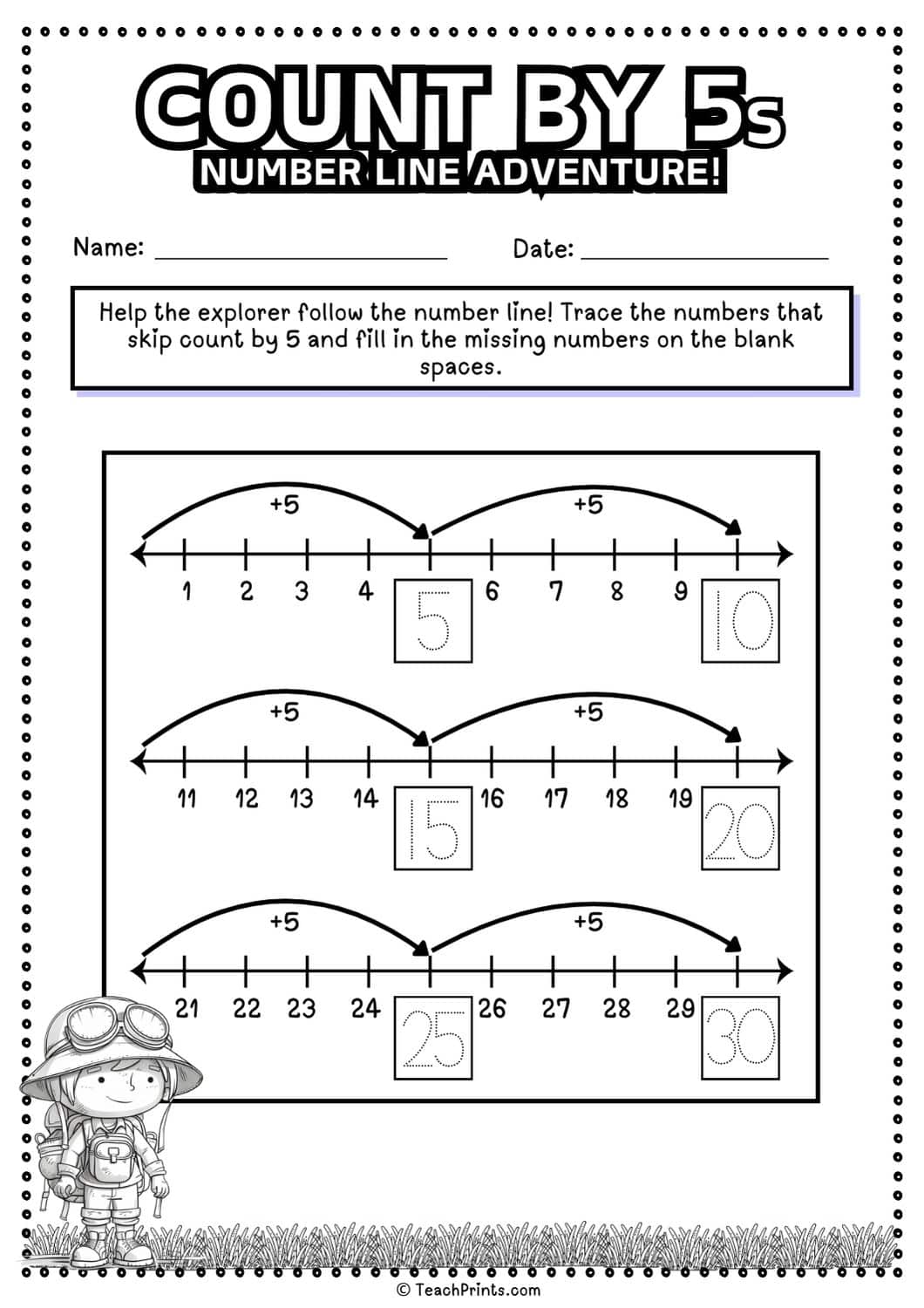
Teachers and parents can access a wide range of resources to diversify practice. While many sites offer free downloads, you can also create custom worksheets using simple tools:
- Google Docs or Microsoft Word templates with pre‑filled sequences.
- Spreadsheet programs where formulas automatically generate multiples of five.
- Online worksheet generators that allow you to choose difficulty levels.
When choosing resources, look for:
- Clear layout with ample space for handwriting.
- Visual cues such as color blocks or arrows.
- Optional answer keys for quick assessment.
Creating Your Own Custom Worksheet
Follow these steps to personalize a worksheet that aligns with your curriculum goals:
- Select a starting number (e.g., 0, 5, or 10).
- Decide on the endpoint (e.g., 50, 100, or 200).
- Use a table format: 5 columns by 5 rows for a 25‑number sequence.
- Add a row at the bottom for multiplication facts or short problems.
- Print on standard 8.5”×11” paper, or laminate for repeated use.
This hands‑on approach gives students ownership and allows educators to tailor content to specific learning objectives.
Assessment Strategies Using Count By 5 Worksheets

Assessment should be ongoing and multifaceted. Here are proven strategies:
Formative Assessment During the Lesson
While students work, ask quick questions: “Why is the next number 30?” or “How many steps do you take to reach 50?” Immediate feedback helps clarify misconceptions before they become ingrained.
Summative Assessment at Lesson End
Give a timed worksheet that includes both forward and reverse sequences. Score based on accuracy and speed. Use the results to categorize students into mastery, practice, or enrichment groups.
Self‑Assessment Prompts
Include a checklist on the back of the worksheet:
- Did I count by fives correctly?
- Did I use the correct number of zeros for each digit?
- Can I explain how I found the next number?
Self‑reflection encourages metacognition, a key component of mathematical learning.
Common Mistakes and How to Address Them

Even proficient students can slip up. Below are typical errors and strategies to correct them.
Skipping a Number or Adding an Extra Five
Solution: Use a visual aid like a number line or a physical count of five blocks. Repeated visual reinforcement helps solidify the pattern.
Misreading the Question Prompt
Solution: Have students read the prompt aloud before writing. Pair the reading with a finger or pointer to track progress.
Forgetting the Zero in Multi‑Digit Numbers
Solution: Practice writing numbers like 10, 20, 30 with emphasis on the zero. Use manipulatives to represent the place value.
Speed Over Accuracy
Solution: Emphasize quality over quantity. Allow students to review their work before marking it as complete. Offer “accuracy first” reminders.
Integrating Technology: Apps and Interactive Tools

In today’s digital classrooms, pairing traditional worksheets with technology enhances engagement. Consider these tools:
- Digital Number Lines: Interactive slides where students drag numbers into place.
- Apps like Mathseeds or ABCmouse that include skip‑counting games.
- Online quizzes on platforms such as Quizizz or Kahoot! to test sequencing.
- Spreadsheet macros that auto‑fill multiples of five for quick generation.
These tech solutions allow for immediate feedback and adaptive difficulty, making learning more responsive to individual progress.
Practical Classroom Implementation: A Sample Schedule

Below is a 5‑day schedule that integrates Count By 5 Worksheets with other math activities. Adapt the timing to fit your classroom’s rhythm.
| Day | Activity | Duration |
|---|---|---|
| Monday | Warm‑up chant + worksheet intro | 10 min |
| Tuesday | Guided practice + reverse counting | 15 min |
| Wednesday | Multiplication integration + self‑assessment | 20 min |
| Thursday | Gamified competition + review | 15 min |
| Friday | Summative quiz + reflection circle | 20 min |
Consistency in practice ensures mastery, while varied activities maintain engagement.
Conclusion: The Lasting Impact of Count By 5 Worksheets

Count By 5 Worksheets are more than just a counting exercise—they are a gateway to foundational math skills, critical thinking, and confidence in number sense. By integrating structured lessons, creative extensions, assessment techniques, and technology, educators can transform a simple worksheet into a dynamic learning experience that scales across grade levels. The consistent practice of counting by five not only cements multiplication facts but also builds a framework for future algebraic reasoning, problem‑solving, and real‑world application. Embrace the power of skip counting, and watch students develop a lifelong love for numbers.