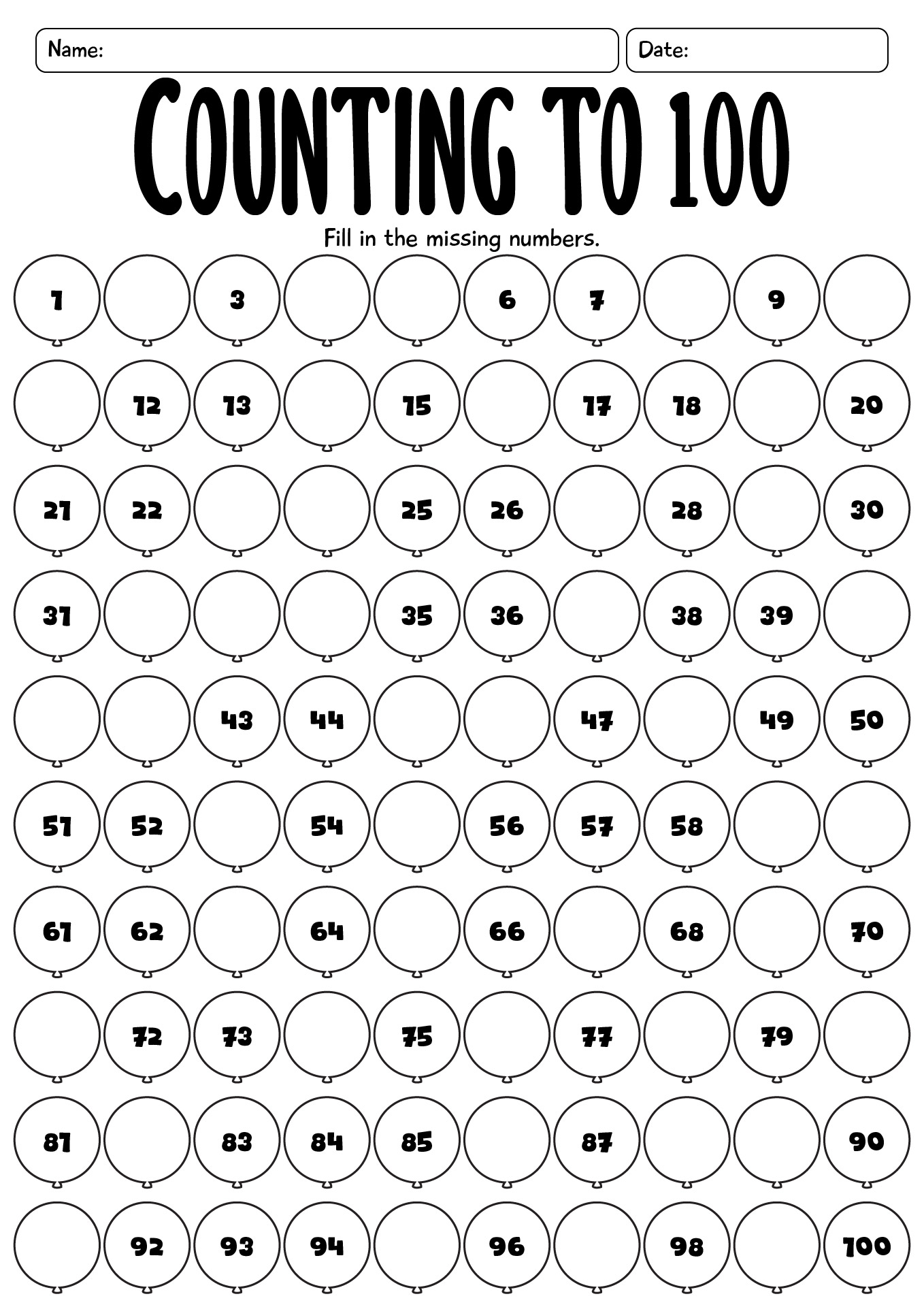
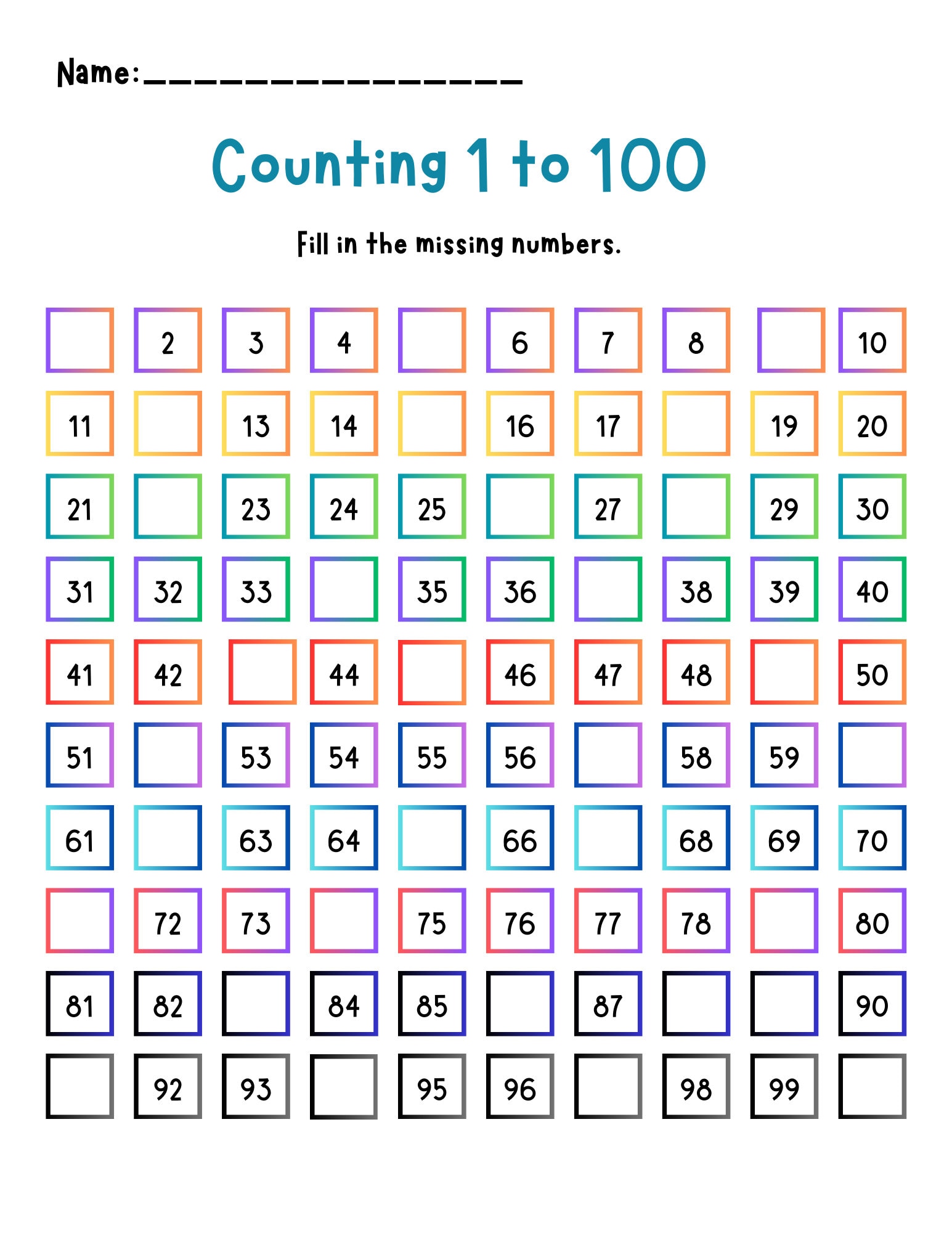
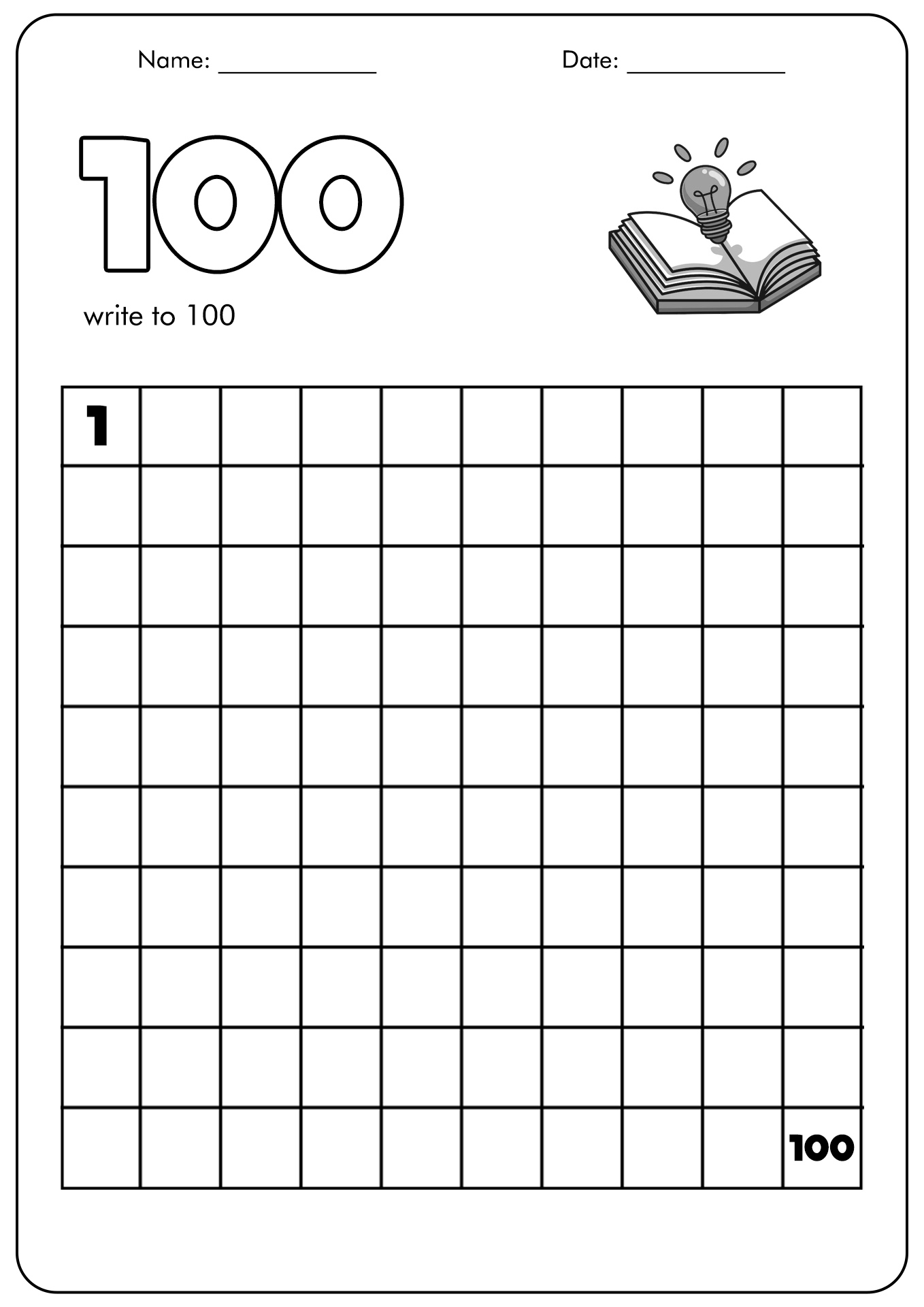
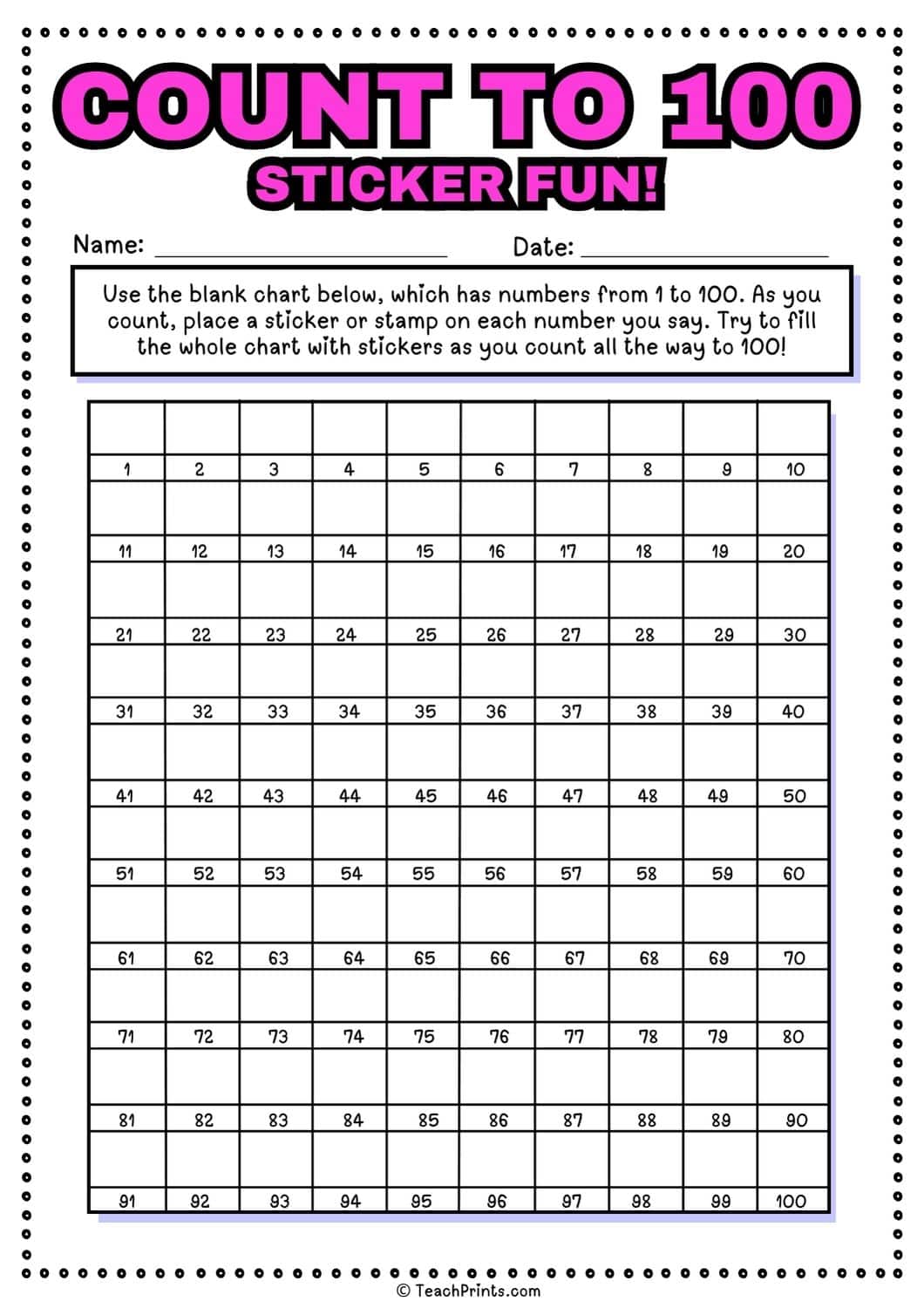
Counting To 100 Worksheet is a cornerstone tool for young learners stepping into the world of numbers. By providing a clear, structured path from one to one hundred, it turns abstract numeracy into a concrete, visual experience that kids can navigate independently or with guidance. Whether you’re a parent, a teacher, or a homeschooling enthusiast, understanding how to effectively use and adapt this worksheet can turn simple practice into a powerful foundation for future math concepts.
Why Counting To 100 Is a Milestone

Building Number Sense
When children count to 100, they not only memorize the sequence but also internalize the relative size and order of numbers. This “number sense” is the bedrock for addition, subtraction, and eventually algebra. A well-crafted worksheet encourages them to see patterns—like the consistent tens and units digits—which helps in recognizing place value early.
Developing Handwriting and Motor Skills
Writing each number in a spaced column promotes fine‑motor development. The repetitive act of writing from 1 to 100 in neat, consistent form trains a child’s hand muscle memory, improving overall writing legibility and confidence.
Fostering Concentration and Persistence
Completing a 100‑number line requires focus. The worksheet becomes a micro‑lesson in staying engaged over a longer period, teaching children that perseverance can be rewarded with clear progress visible at each step.
Choosing the Right Worksheet Format
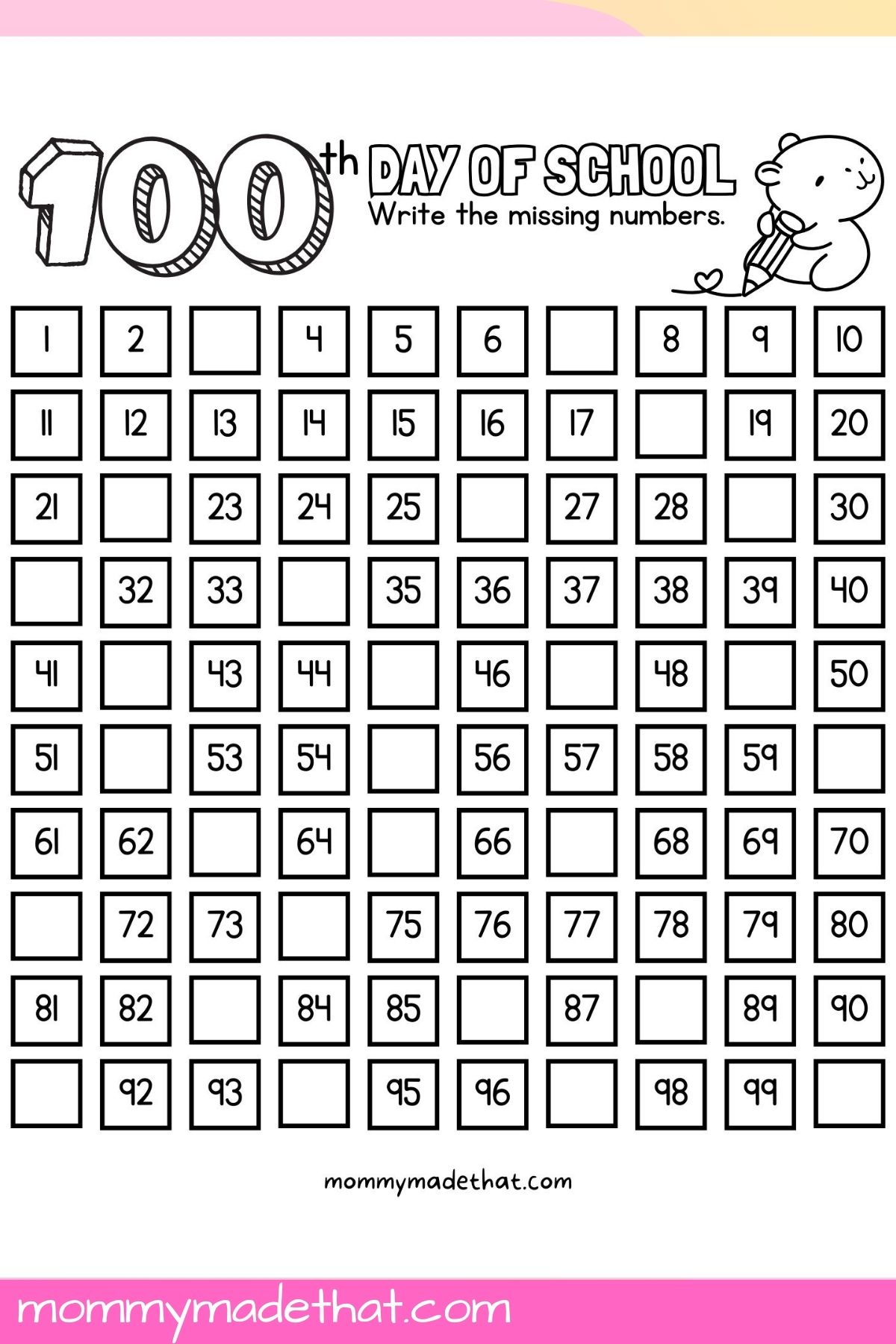
Plain Number Lines
These worksheets feature a simple, linear layout—numbers written from 1 to 100 with ample space between each. They’re ideal for beginners who need to see every number distinctly.
Grouped or Decade Templates
Group numbers in fives or tens. For instance, a line might start with 1–5, then 6–10, and so on. This format helps students spot the “decade” structure of number ordering.
Interactive Color‑Coding Sheets
Adding colors to each decade or number group turns a basic worksheet into a visual aid. Bright colors help with memory retention and add a playful element that keeps learners excited.
Printable Digital Versions
Digital worksheets can be downloaded, printed, or even used on tablets. The ability to manipulate text size, add annotations, and reuse the template multiple times adds flexibility for various learning environments.
Step‑by‑Step: How to Use a Counting To 100 Worksheet Effectively

1. Preview the Whole Worksheet
Before a child starts writing, have them glance over the entire line. This creates a mental map of the task and sets a clear goal: reach the number 100.
2. Warm‑Up with Oral Counting
Engage in a quick oral counting session. Say “one, two, three, …” together, allowing the child to repeat and build rhythm.
3. Introduce the Writing Process
Show the child how to start at the first number and write each subsequent number in order. Highlight the importance of spacing and neatness.
4. Practice in Small Batches
Rather than tackling all 100 numbers at once, break them into segments—say, 10 or 20 numbers per session. This reduces cognitive load and allows for frequent checkpoints.
5. Use Incremental Rewards
Give a small sticker, applause, or a quick game after each batch completes. Rewards reinforce motivation and celebrate progress.
6. Encourage Self‑Checking
After writing a segment, have the child read back the numbers aloud. This immediate feedback loop helps catch mistakes early and reinforces learning.
7. Transition to Related Activities
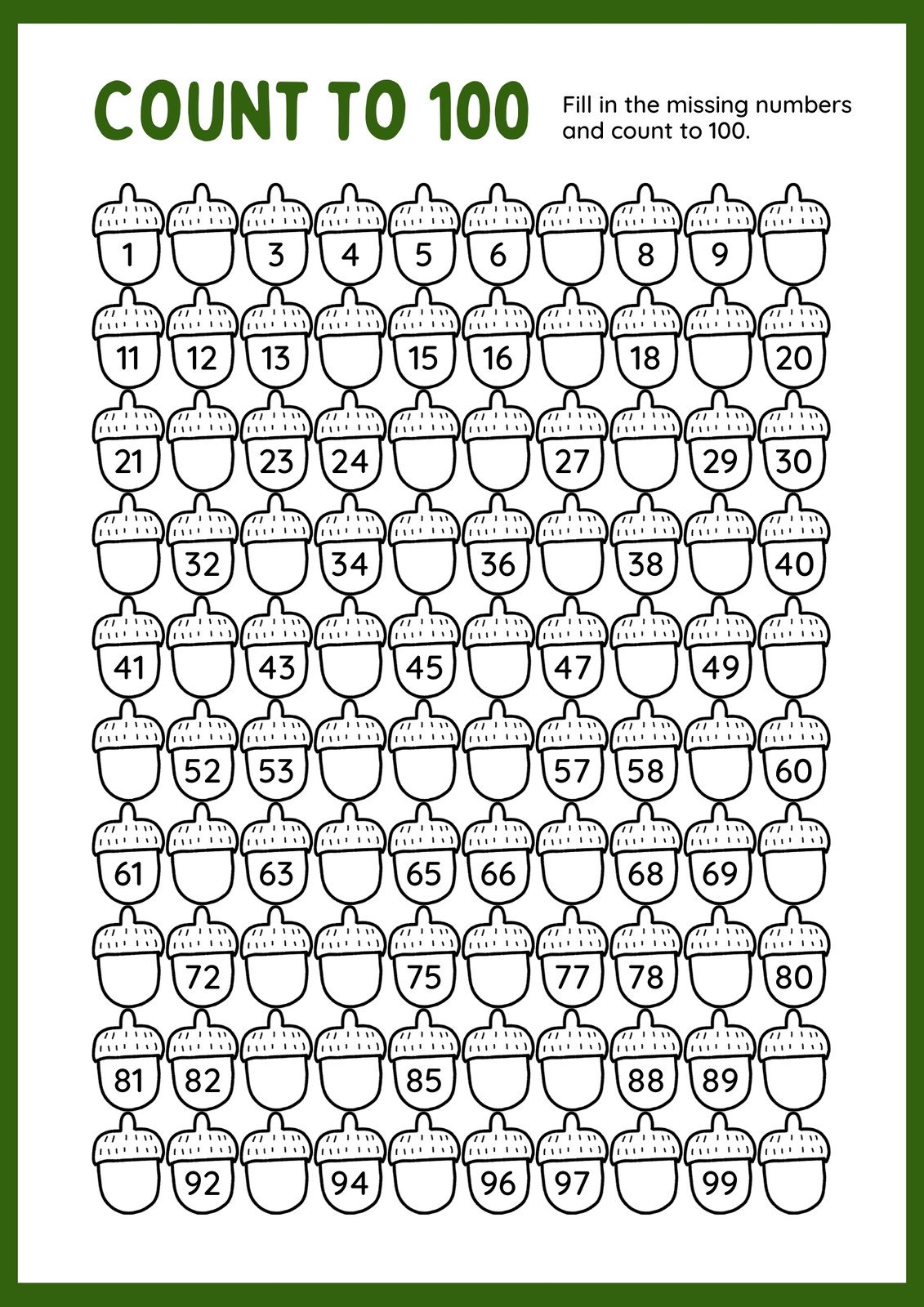
Once a child comfortably counts to 100, challenge them with related tasks such as filling in missing numbers, counting backwards, or skipping by twos, fives, or tens.
Real‑World Applications of Counting To 100

Connecting Numbers to Everyday Objects
Use items like counting beads, toy cars, or even snack portions to align the worksheet with real objects. For example, pair each number with a corresponding number of crayons in a box.
Incorporating Technology
Apps that allow kids to drag and drop numbers into place can supplement the worksheet. Digital feedback helps in correcting errors instantly and adds a gamified layer to the learning process.
Exploring Patterns and Sequences
Highlight that numbers 10, 20, 30, … follow a pattern. Show how this is useful when learning multiplication or even in everyday situations like telling time.
Developing Estimation Skills
Ask questions such as, “What number do you think comes before 57?” or “Estimate how many numbers are between 20 and 80.” These exercises use the worksheet as a springboard for higher‑level thinking.
Common Challenges and How to Overcome Them
Repetitive Strain or Fatigue
Long sessions may cause hand fatigue. Encourage short breaks every 10–15 minutes and provide hand‑stretching exercises.
Number Sequence Confusion
Some children mix up numbers like 12 and 21. Use visual markers, such as color borders or bold outlines, to emphasize correct order.
Loss of Focus
Integrate movement breaks or quick puzzles to keep the mind active. A 2‑minute hop‑scotch break can refresh concentration before returning to the worksheet.
Inconsistent Writing Style
Offer a lined template and demonstrate proper spacing. Encourage consistent letter shapes by practicing in a separate handwriting drill sheet.
Integrating Counting To 100 Worksheets Into a Curriculum
Elementary Classrooms
- Use as an assessment tool at the end of the first grade.
- Incorporate into a “Number Wall” where students add to the 100 count weekly.
- Pair with a storytelling activity where each number corresponds to a sentence or action.
Home‑Schooling Strategies
- Set a daily goal of adding ten new numbers each morning.
- Use a reward chart that marks progress toward 100 in a fun visual way.
- Rotate worksheets between counting in ascending order, descending order, and random gaps for comprehensive practice.
Online Learning Platforms
- Embed worksheets within interactive modules that track completion.
- Provide instant feedback with highlighted mistakes and suggested corrections.
- Use analytics to identify patterns of difficulty and adjust instruction accordingly.
Creative Ways to Make Counting To 100 More Engaging

Story‑Based Number Trails
Create a short adventure where each number represents a step or a character. Children follow the trail by writing the correct number sequence, turning practice into a narrative quest.
Music and Rhythm
Sing counting songs that emphasize the sequence up to 100. Rhythm helps children remember the flow of numbers, especially in a classroom setting.
Art Projects
After completing the worksheet, allow children to decorate each number with colors, patterns, or images that reflect the number’s identity (e.g., 25 with a square of five dots).
Competitive Games
Use a game board where each spot corresponds to a number. Players move forward by correctly writing numbers on the worksheet, blending chance with skill.
Maintaining Long‑Term Engagement

Progressive Difficulty
Once a child masters counting to 100, introduce counting in steps of twos, fives, or tens to deepen understanding.
Cross‑Curricular Connections
Integrate counting into science (e.g., measuring lengths in centimeters), geography (e.g., distance from one city to another), or art (e.g., arranging patterns in groups of ten).
Parental Involvement
Encourage parents to join in by setting up a “home counting corner” where the child can practice daily, fostering a supportive learning environment.
Conclusion

Mastering a Counting To 100 Worksheet is more than just memorizing a sequence—it is an investment in foundational math skills, motor development, and cognitive endurance. By choosing the right format, employing structured yet flexible teaching strategies, and weaving real‑world relevance into the practice, educators and parents can transform a simple counting task into a dynamic learning adventure. Consistent practice, creative reinforcement, and thoughtful reflection will ensure that counting to 100 becomes a confident, enjoyable milestone rather than a rote exercise. Embrace the worksheet as a gateway to endless numerical exploration and watch your learners grow into confident problem‑solvers ready for the next steps in their mathematical journey.