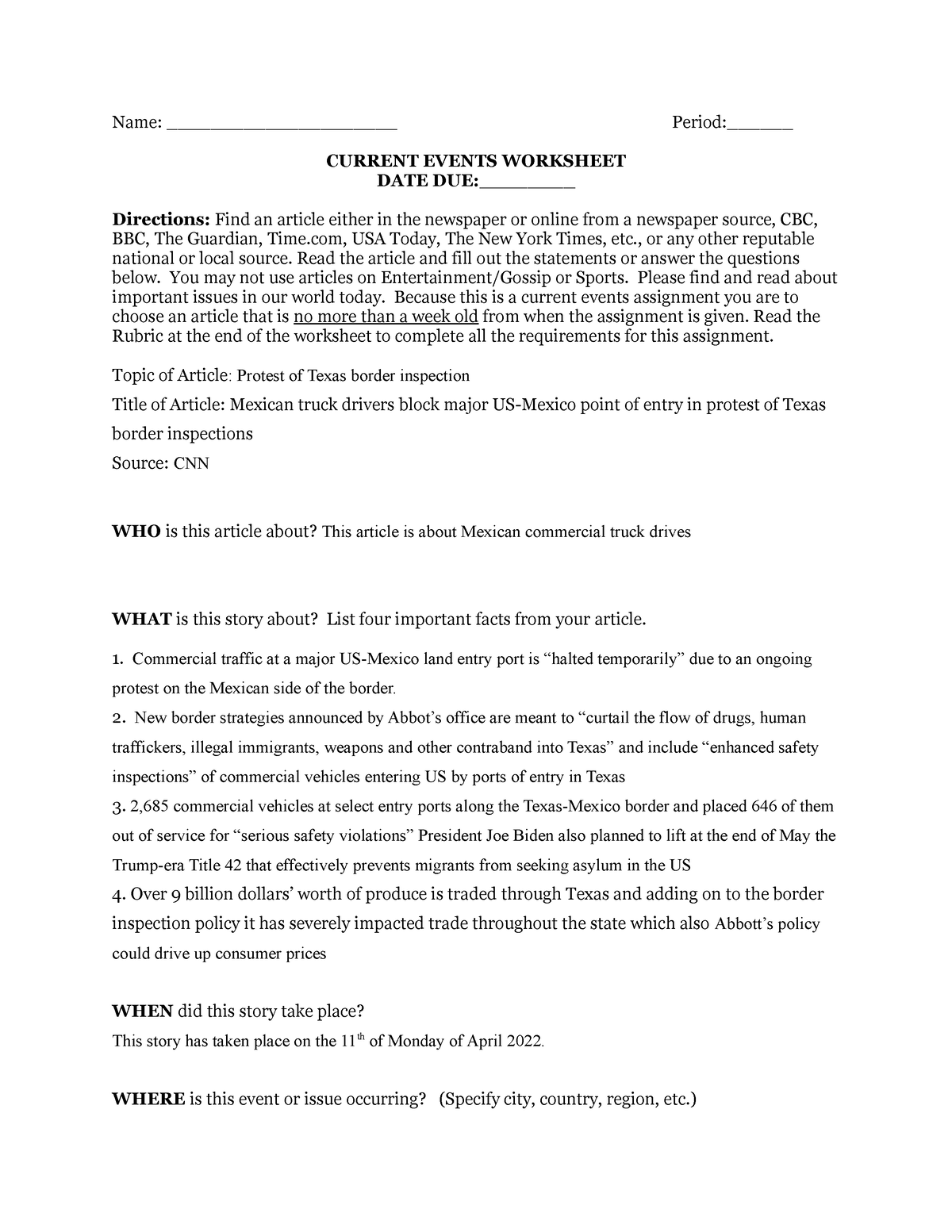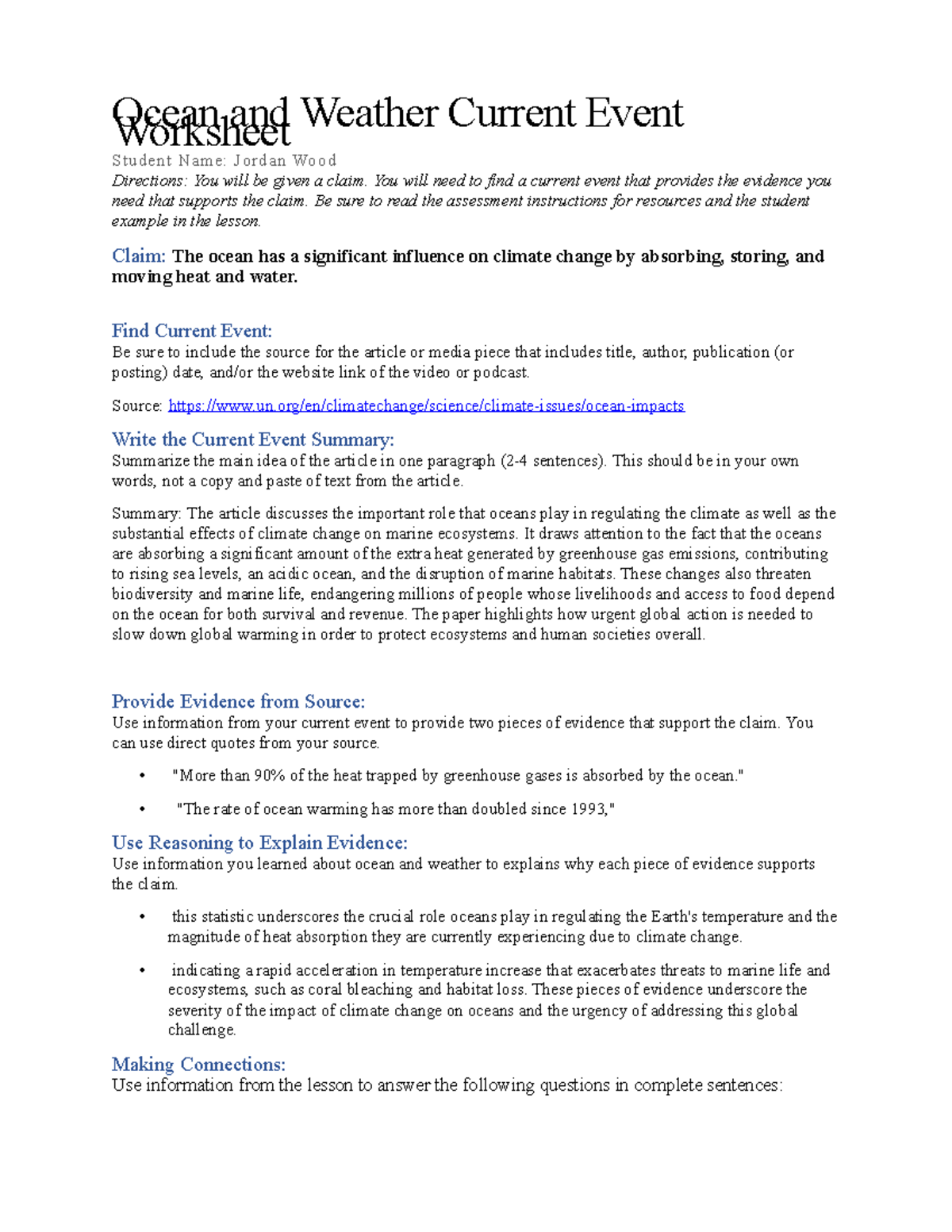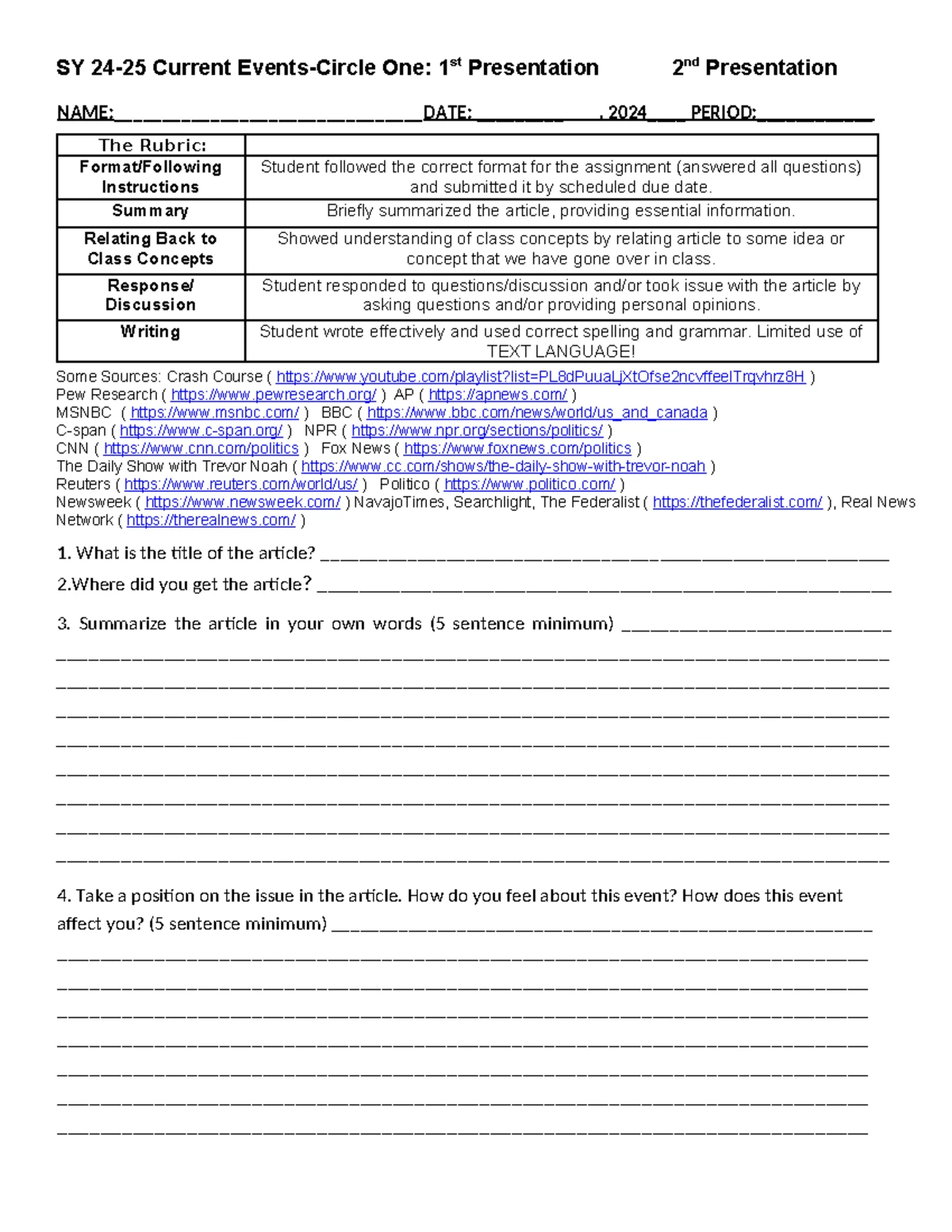
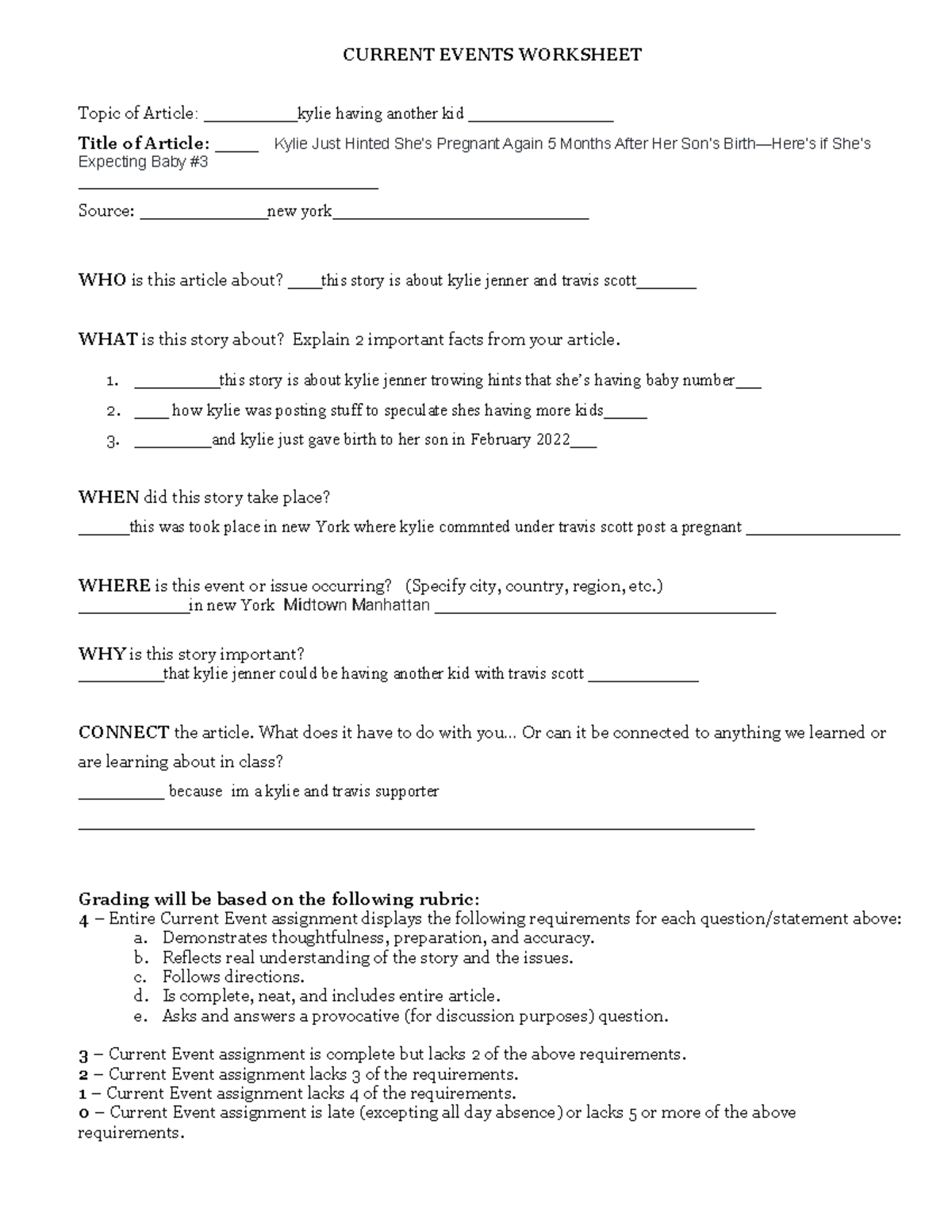
Current Events Worksheet Answers 2018 serve as a critical compass for students navigating the turbulent seas of recent history. In a world where news cycles move faster than the blink of an eye, having a reliable, concise answer key is a lifeline that keeps learners grounded and informed. This guide dives deep into the anatomy of those answers, offering educators and parents a practical roadmap to harnessing their full potential while maintaining a sharp, engaging classroom tone.
Understanding the 2018 Landscape

The year 2018 was a whirlwind of geopolitical shifts, technological breakthroughs, and cultural milestones. From the escalating tensions in the South China Sea to the historic U.S. congressional election of 2018, the world was a moving target. When crafting or evaluating worksheets, recognizing the broader context of each event ensures that answers are not just correct, but insightful.
Key Global Events to Highlight
- U.S. midterm elections and the shift in congressional power.
- Brexit negotiations and their ripple effects on the European Union.
- The rise of the #MeToo movement and its impact on social media discourse.
- Technological leaps: 5G rollout, autonomous vehicle testing, and the expansion of AI ethics debates.
- Climate change initiatives, including the U.S. withdrawal from the Paris Agreement and subsequent global responses.
Each of these moments carries a wealth of material for critical analysis and reflection. A well-structured worksheet can dissect these topics into digestible chunks, while the answer key offers precise, evidence-based responses.
Why Worksheet Answers Matter in Education
Answer keys are not merely a repository of correct answers; they are a bridge between rote memorization and analytical thinking. By providing clear, context-rich responses, educators can:
- Facilitate immediate feedback, reducing student anxiety.
- Encourage self-assessment, fostering independence.
- Identify common misconceptions, allowing targeted reteaching.
- Enhance the credibility of the instructional material.
When students see that the answers stem from reputable sources and are articulated with clarity, their trust in the learning process deepens, reinforcing a culture of academic rigor.
Constructing an Effective Answer Key

Designing a robust answer key requires a blend of precision, depth, and pedagogical strategy. Below is a step-by-step framework to ensure your key stands out.
Step 1: Align with Learning Objectives
Every answer must directly map to the objectives outlined in the lesson plan. For example, if the goal is to evaluate the impact of trade sanctions, the answer should include economic indicators, policy implications, and real-world outcomes.
Step 2: Provide Contextual Detail
Instead of a bare statement, enrich answers with supporting facts, dates, and figures. This practice helps students internalize information rather than simply memorizing it.
Step 3: Incorporate Diverse Perspectives
Current events are rarely black and white. Offering multiple viewpoints—such as international, domestic, and grassroots perspectives—prepares students for nuanced discussions.
Step 4: Cite Sources Subtly
While URLs are disallowed, indicating the type of source (e.g., “Official Government Report,” “Peer-Reviewed Journal,” “Reputable News Outlet”) adds credibility without violating guidelines.
Step 5: Keep Language Accessible
A balanced tone that is neither too technical nor overly simplistic keeps learners engaged. Use active voice, clear terminology, and avoid jargon unless it’s explicitly taught.
Common Pitfalls to Avoid
Even seasoned educators can inadvertently slip into mistakes that dilute the value of answer keys. Recognizing and correcting these pitfalls ensures that worksheets remain a powerful learning tool.
Overloading with Trivia
Answer keys that cram excessive trivia can overwhelm students. Focus on core concepts and essential data points.
Neglecting Follow-Up Questions
Without prompts for deeper analysis, students may treat answers as final. Pair each answer with a reflective question, such as “Why is this significant?” or “What alternative outcomes might have occurred?”
Using Passive Language
Passive constructions can dilute the urgency of critical events. Convert “The policy was implemented” to “The policy was implemented by X.”
Ignoring Cultural Sensitivity
When covering international events, be mindful of cultural nuances. Ensure that descriptions are respectful and fact-based.
Sample Worksheet Breakdown
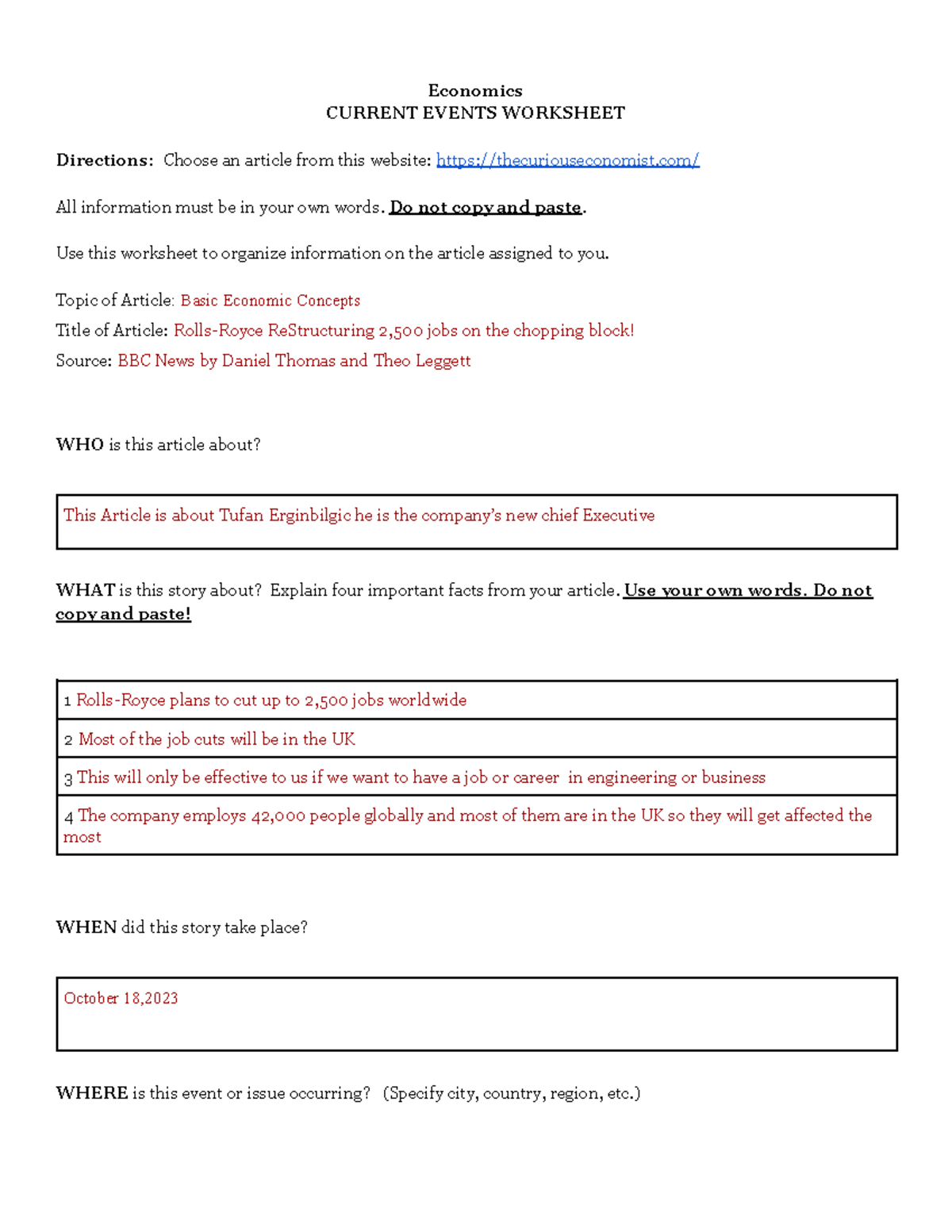
Below is a concise example of how a 2018 worksheet question might be paired with a top-tier answer key. This illustration demonstrates best practices in clarity, depth, and engagement.
Worksheet Question
Explain the primary reasons behind the United States’ decision to withdraw from the Paris Climate Accord in 2018, and discuss the international ramifications of that move.
Answer Key
The U.S. decision was driven by a combination of political ideology, economic arguments, and a strategic reassessment of international commitments. Key motivations included:
- Political Ideology: The administration cited a belief that the Accord imposed disproportionate costs on American industry without commensurate benefits.
- Economic Arguments: Concerns over job loss in manufacturing sectors and the perceived burden on federal budgets were central.
- Strategic Reassessment: The belief that unilateral action could spur other nations to adopt more flexible or market-driven climate strategies.
The ramifications were swift and wide-ranging:
- International Response: Several nations reaffirmed their commitment to the Accord, signaling a potential schism in global climate governance.
- Economic Impact: Global markets experienced volatility, especially in commodities tied to renewable energy investments.
- Public Perception: Public opinion in the U.S. became increasingly polarized, with environmental groups intensifying advocacy efforts.
Reflection Prompt: How might the U.S. withdrawal have altered the trajectory of global climate negotiations? Consider both short-term and long-term perspectives.
Strategies for Teachers and Parents

Beyond crafting answer keys, educators must foster an environment where students can internalize and apply knowledge.
Encourage Peer Review
After students attempt the worksheet, have them exchange answers for peer evaluation. This practice enhances critical thinking and promotes collaborative learning.
Integrate Multimedia Resources
Complement textual answers with relevant videos, infographics, or podcasts. Visual aids can reinforce complex concepts and keep engagement high.
Use Formative Assessments
Deploy quick quizzes or exit tickets that reference worksheet content. This ongoing assessment strategy provides real-time insight into student understanding.
Promote Socratic Questioning
After reviewing the answers, ask open-ended questions that challenge assumptions—“What would happen if the policy had been implemented differently?” This encourages deeper analysis.
Apply Real-World Projects
Assign projects where students create policy briefs, debate scenarios, or design simulation models based on the events covered. Application solidifies knowledge and hones skills.
Advanced Techniques for Deeper Engagement
For classrooms aiming to push beyond surface-level comprehension, several advanced methods can be integrated.
Scenario Analysis
Present hypothetical alterations—such as “What if the U.S. had maintained its Paris Accord commitment?”—and ask students to project possible outcomes.
Cross-Curricular Connections
Link current events to subjects like economics, literature, or science. For instance, connect climate change to biology classes by discussing ecosystem impacts.
Data Literacy Integration
Teach students how to interpret charts, graphs, and statistical reports related to the events. Data literacy is increasingly vital in an information-rich age.
Reflective Journaling
Encourage students to maintain journals where they record their evolving thoughts on each event. Reflection nurtures empathy and critical self-awareness.
Conclusion

Mastering Current Events Worksheet Answers 2018 is more than a lesson in correctness—it’s an invitation to cultivate analytical acumen, empathy, and informed citizenship. By aligning answer keys with clear learning goals, enriching them with contextual depth, and embedding them within dynamic, interactive learning experiences, educators empower students to navigate an ever-changing world with confidence and insight. As the classroom evolves, these worksheets remain a steadfast companion, turning fleeting headlines into lasting lessons that echo well beyond the year 2018.