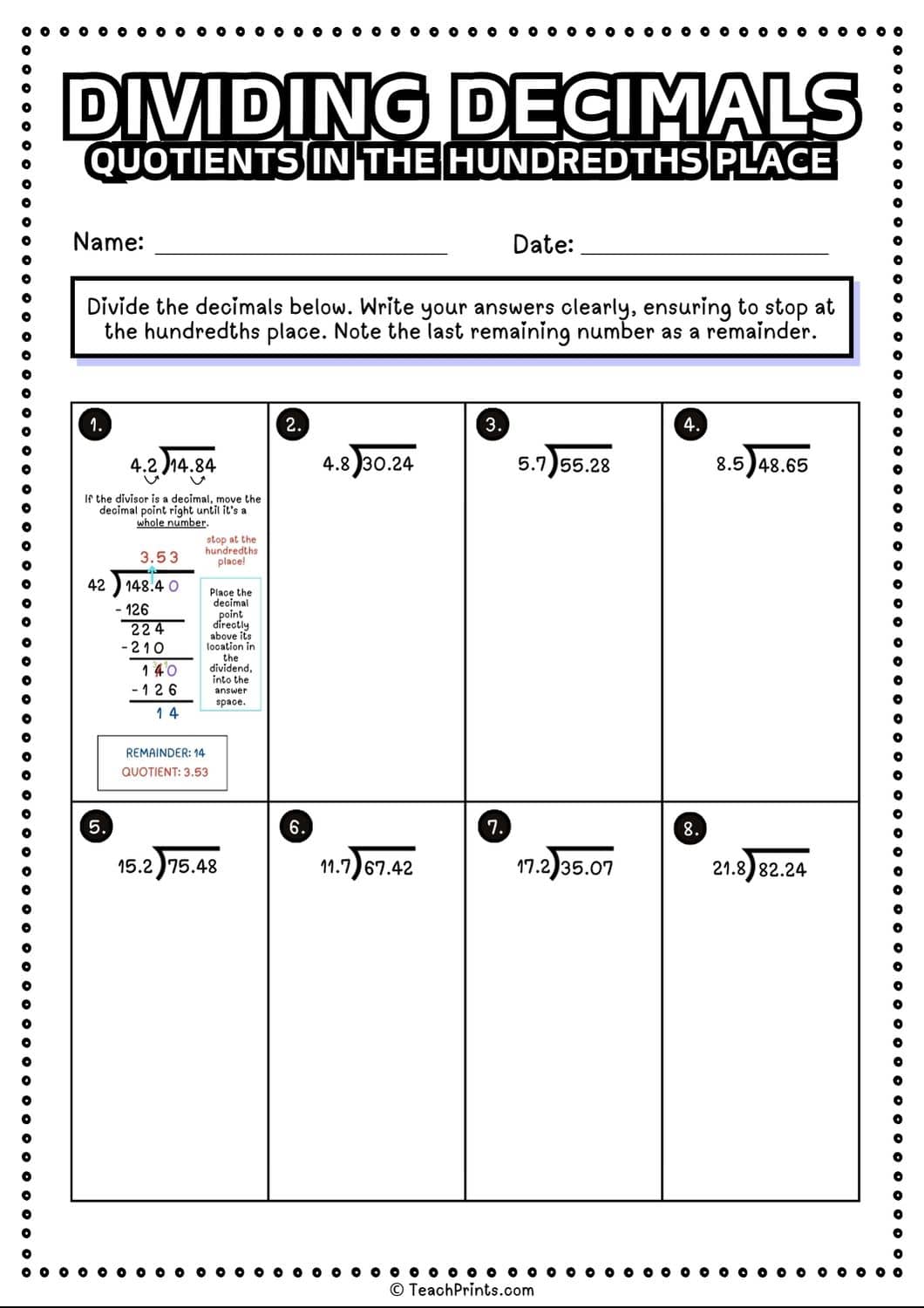
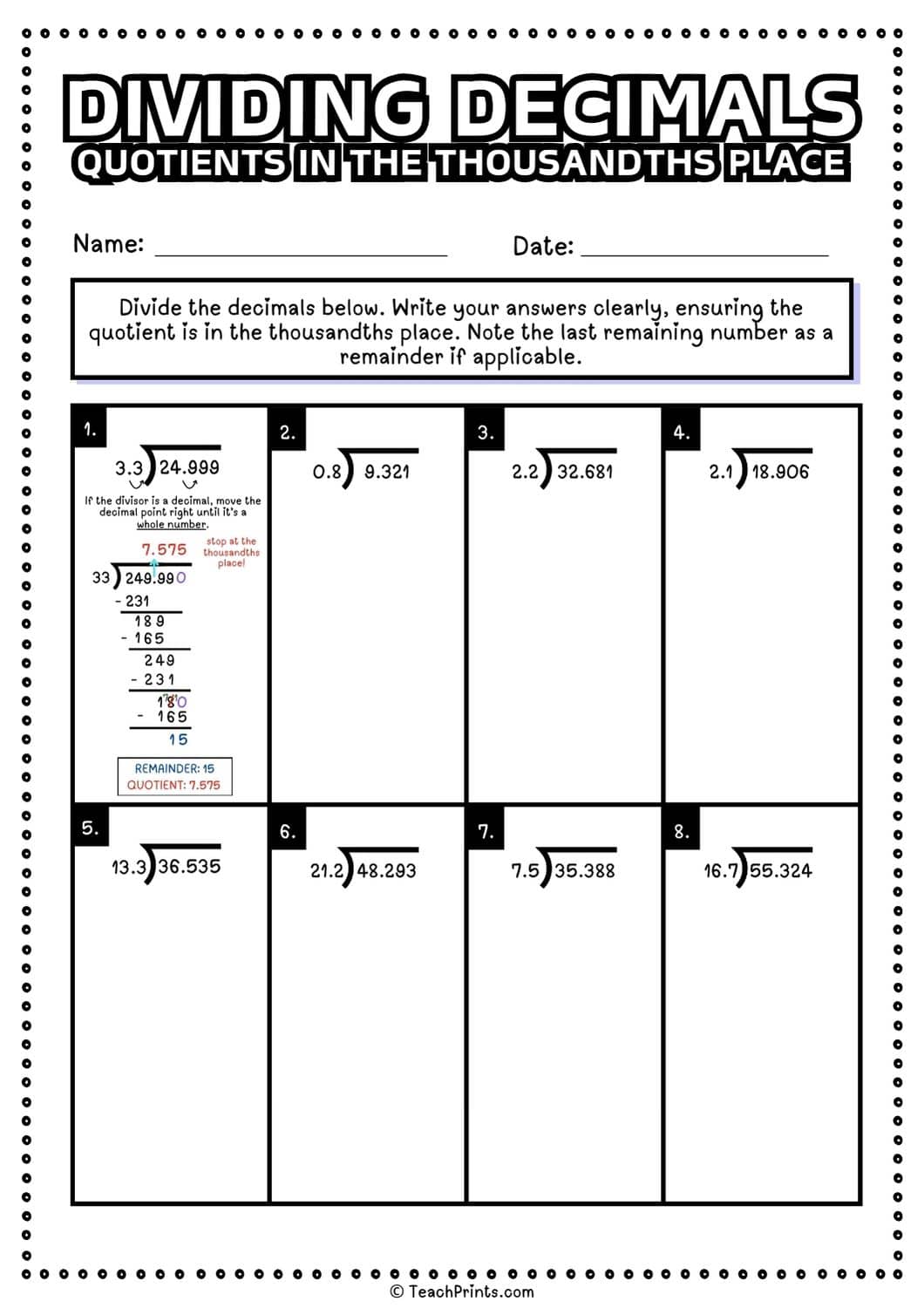
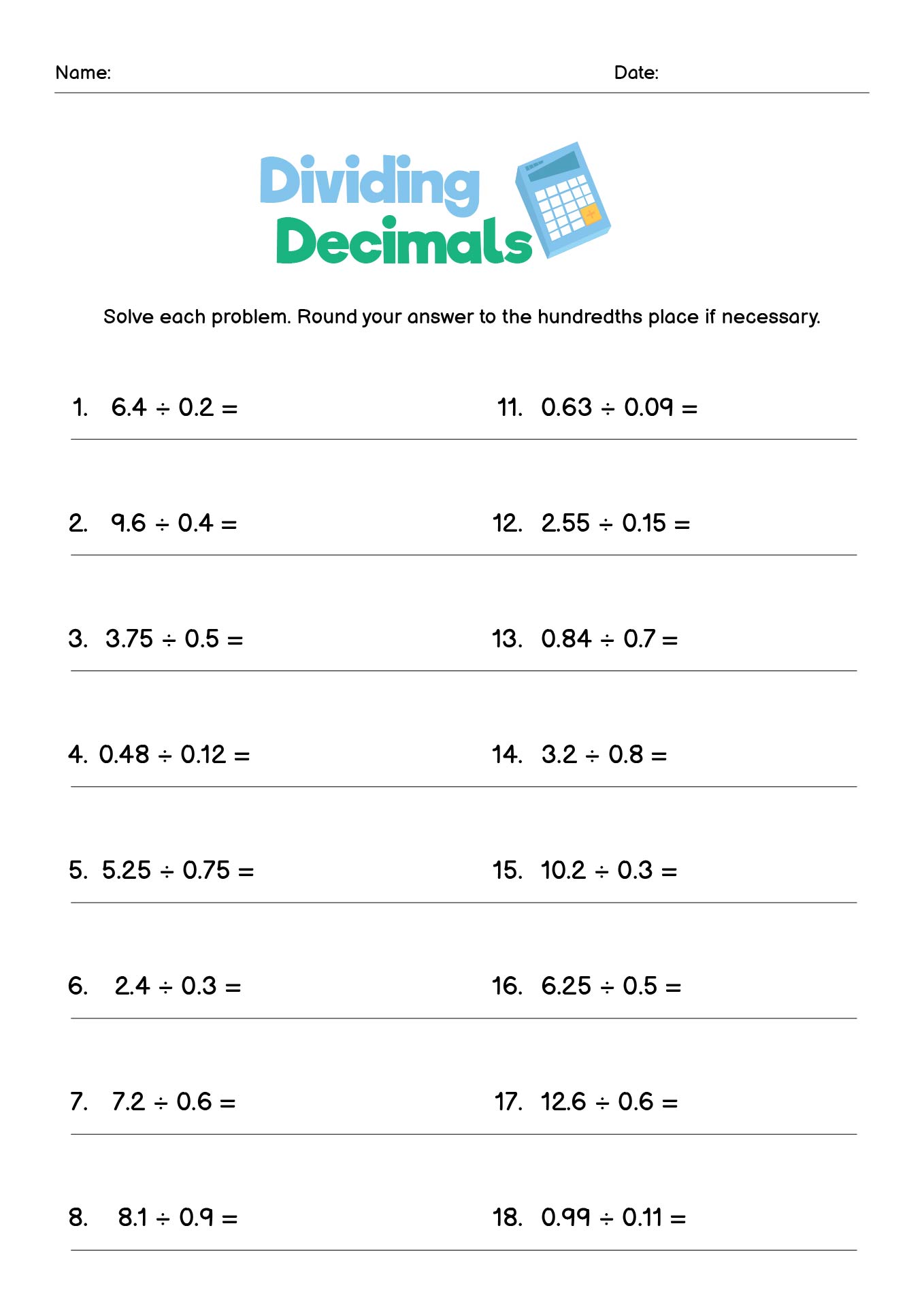
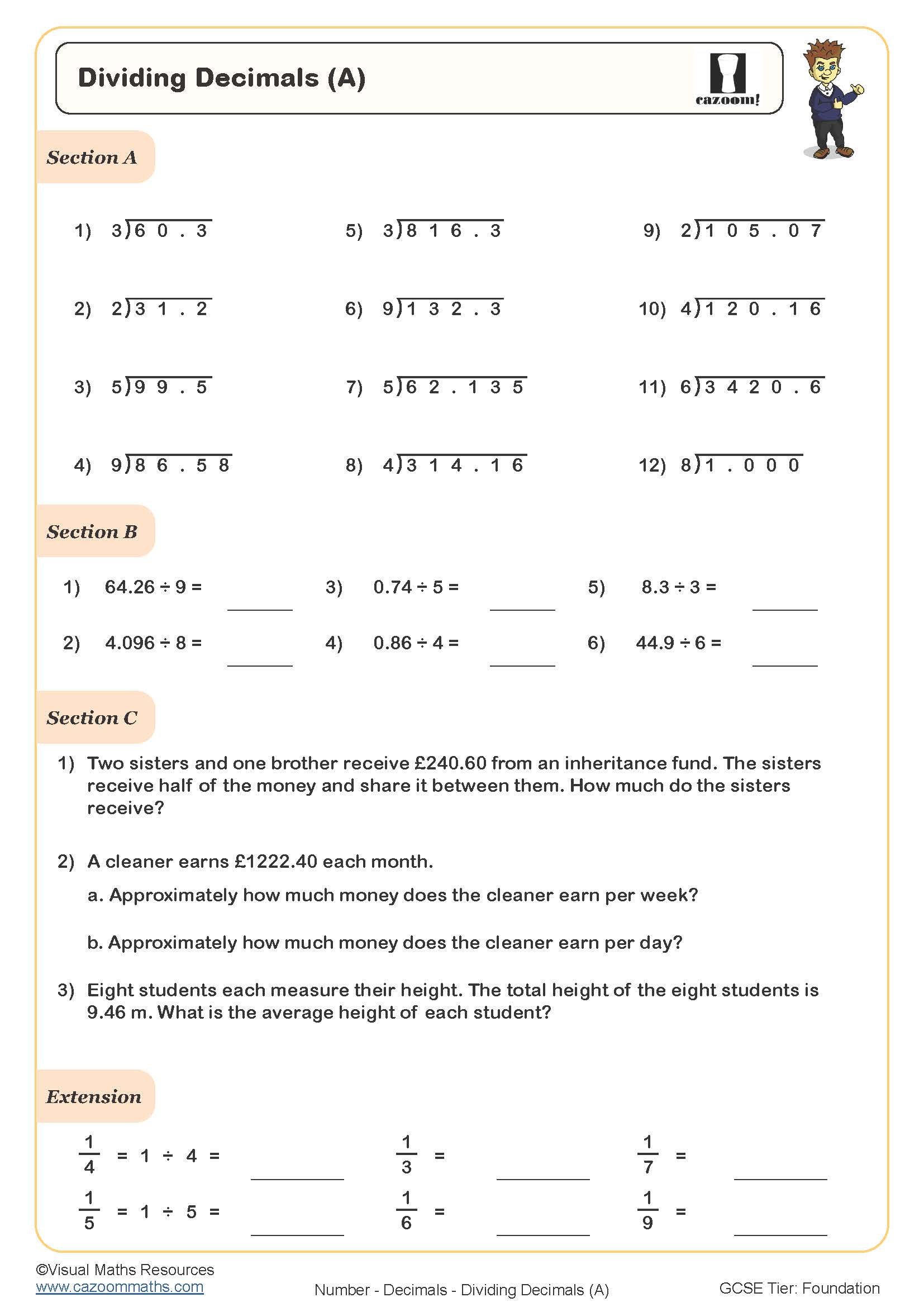
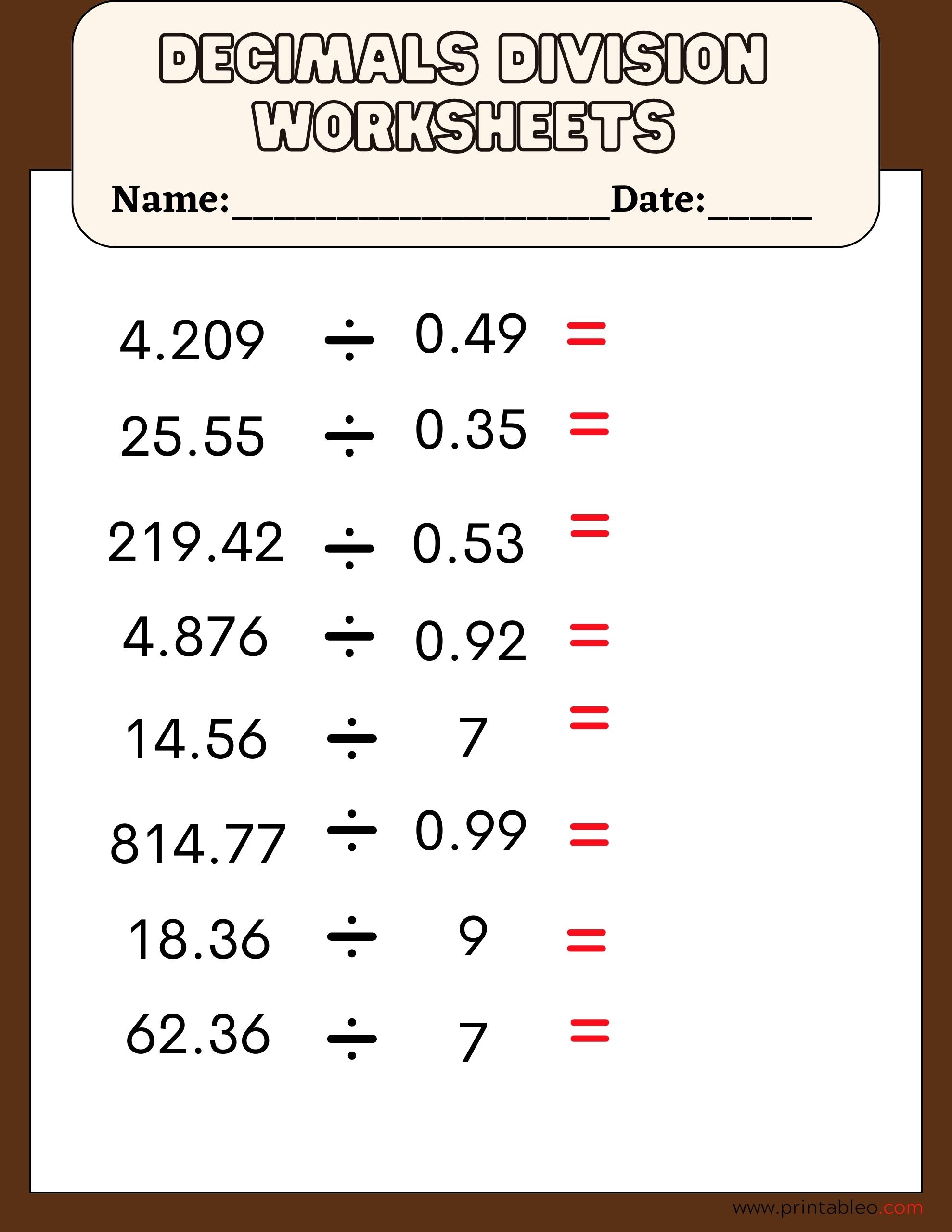
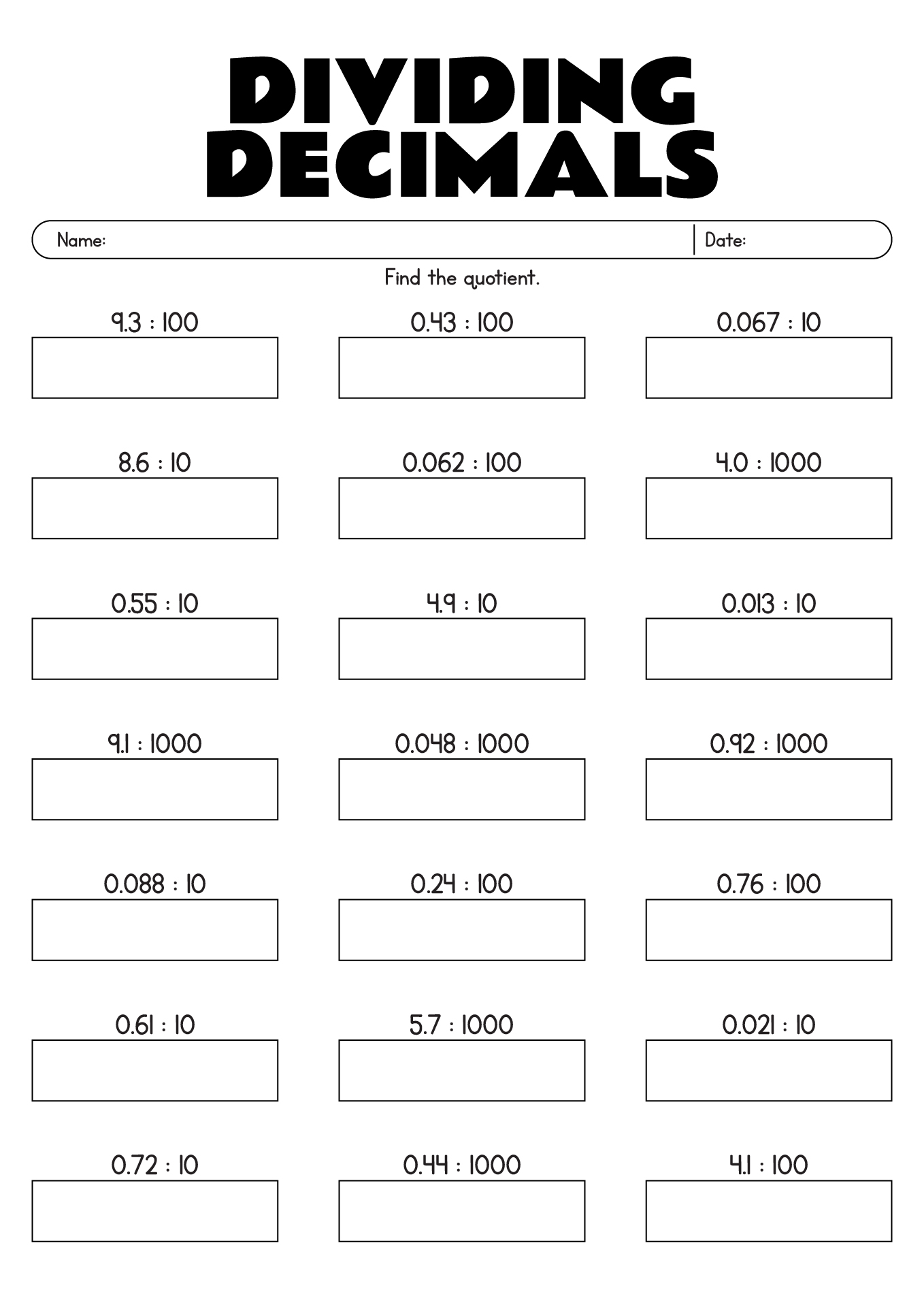
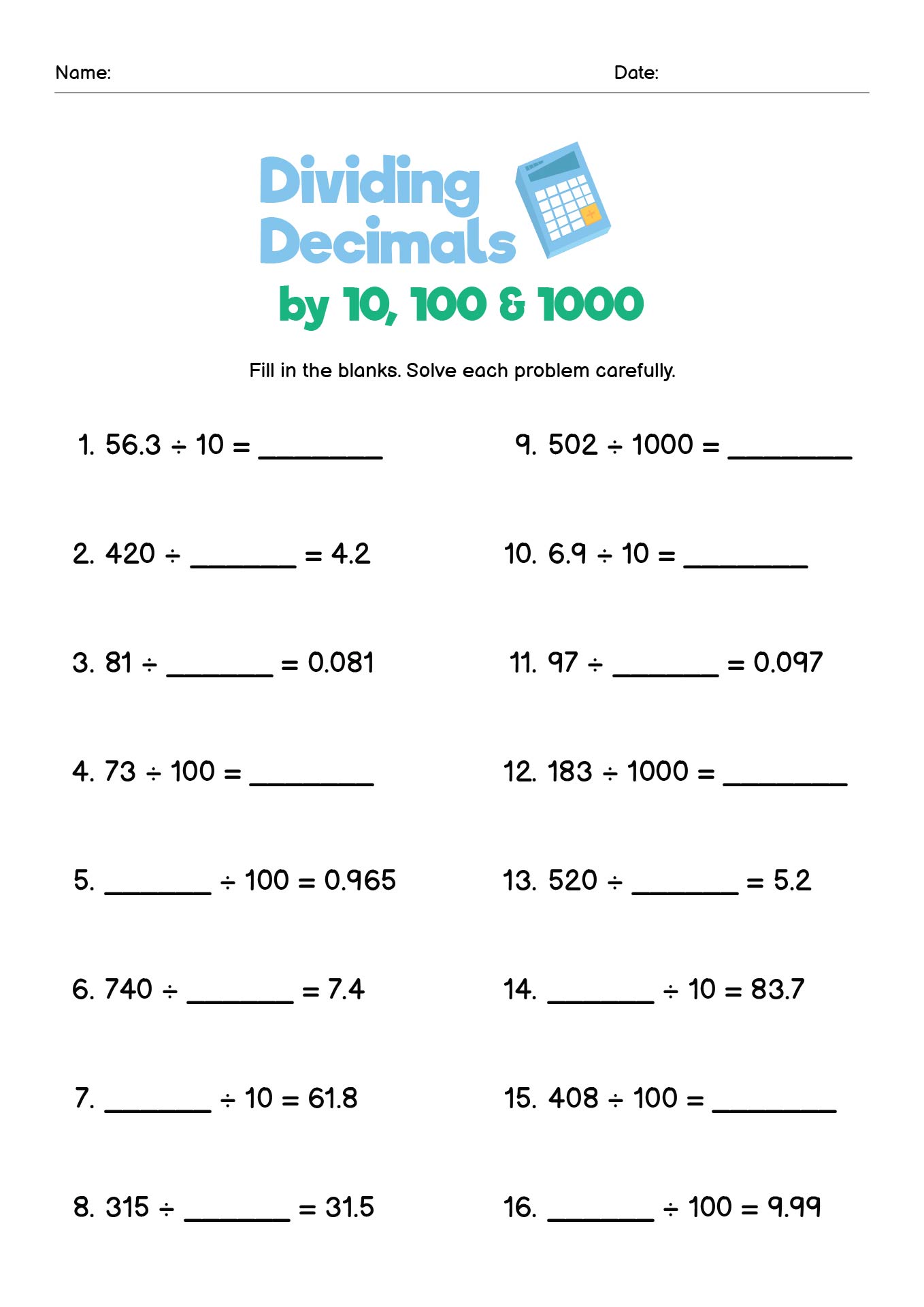
Division Of Decimals Worksheet is the ultimate playground where math geeks meet their decimal friends for a wild adventure in numbers. Picture this: a brave student, a mischievous decimal point, and a worksheet that whispers, “Let’s split the pizza, but make it fancy with fractions!” That’s the vibe we’re talking about.
Understanding the Basics of Decimal Division

What Are Decimals?
Decimals are just fancy fractions that have slipped into a neat, tidy line. Instead of “¾,” they say “0.75.” They’re the tiny rebels that allow us to measure things with a precision that fractions can only dream of. In a decimal division worksheet, these rebels line up side by side, ready to split and conquer.
Why Division Is Important
Dividing decimals is the secret sauce in everything from calculating your lunch budget to figuring out the speed of a rocket. When you can split a number cleanly, you can also split your responsibilities, split your snacks, and split your time between homework and binge‑watching.
Common Mistakes and How to Avoid Them

Misplacing the Decimal Point
When you move the decimal point too far, you end up with a number that looks like it’s trying to escape. Imagine dividing 12.5 by 3 and accidentally writing 1.25 instead of 4.166… The trick? Treat the decimal as a small compass – always keep your sense of direction.
Forgetting to Cancel Decimals
Every decimal division comes with a secret rule: “Cancel the decimals in the divisor and the dividend before you do the math.” Think of it as a magic spell. If you skip it, your numbers get stuck in a decimal jail. The result? A totally wrong answer that will make your teacher raise an eyebrow.
Carrying Over Wrong
When you’re dividing like whole numbers, you might feel like a wizard who’s pulled the wrong spell. Don’t carry the wrong digits; always double‑check your “carry‑over” steps. A misplaced carry‑over is like putting a ketchup packet in the wrong fridge – it spoils everything.
Step‑by‑Step Guide to Tackling Decimal Divisions

Identify Dividend and Divisor
The dividend is the number you’re splitting, and the divisor is the number of parts you’re splitting into. In 7.5 ÷ 2.5, 7.5 is the dividend and 2.5 is the divisor. Treat them like two best friends who need to share a pizza equally.
Shift Decimal Points
Move the decimal point in both numbers until the divisor becomes a whole number. For example, 7.5 ÷ 2.5 becomes 75 ÷ 25. Each shift is a step closer to the finish line.
Divide Like Whole Numbers
Now that the divisor is whole, you can do a straight‑forward division. 75 ÷ 25 = 3. This step is the same as the old “school math” division you learned in kindergarten.
Convert Result Back to Decimal
Since you shifted the decimal points, you must shift them back in the result. In our example, we didn’t shift the dividend, so the result stays 3. If you had shifted the dividend as well, you’d need to move the decimal back accordingly.
Real‑World Scenarios Where Decimal Division Comes In
Splitting a Pizza with Friends
Imagine a pizza with a diameter of 10.5 inches. You and four friends want to share it equally. Use a division worksheet to calculate each slice’s diameter: 10.5 ÷ 5 = 2.1 inches per slice. That’s a nice slice, not too big, not too small.
Calculating Fuel Efficiency
Suppose your car travels 125.6 miles on 6.4 gallons of fuel. Divide 125.6 by 6.4 to get miles per gallon. The answer 19.625 gives you a real‑world sense of how efficient your car is compared to the rest of the neighborhood.
Budgeting for a Road Trip
You plan a road trip covering 450.8 kilometers and want to split the cost among three friends, with a total cost of $279.60. To find the cost per friend per kilometer: 279.60 ÷ 3 ÷ 450.8 = $0.207 per km. That’s a manageable number to keep track of.
Fun Worksheet Ideas to Practice

Classic “Divide and Conquer” Problems
Take classic problems but add a twist. For example: “Divide 12.75 by 0.25 and then multiply the result by 3. How many minutes will it take to finish the task?” This keeps the worksheet fresh and tests both division and multiplication skills.
Money Madness
Create a scenario where the student has $20.45 and wants to split it among 4 friends. The worksheet can ask for the amount each friend receives, the remainder left over, and the percentage each friend gets of the total. That’s real‑world budgeting with decimals.
Science Fair Challenge
Ask students to calculate the speed of a lightbulb filament when it emits 0.003 watts of heat per 2.5 seconds. The worksheet can challenge students to calculate watts per second, then per minute. This encourages applying division in scientific contexts.
Tips to Keep Your Mind Fresh While Tackling Decimal Worksheets

Take Funny Breaks
Every 10 minutes, do a quick “decimal dance.” Imagine the decimal point doing a little jig while you stare at the numbers. It keeps the brain from getting too rigid.
Use Mnemonics
Remember “Move, Shift, Divide, Repeat.” This simple phrase will keep the steps clear and reduce errors. Each time you see “Move” you shift the decimal, “Shift” the points, “Divide” like a wizard, and “Repeat” until you’re done.
Reward Yourself
After finishing a set of 10 problems, reward yourself with a cookie or a five‑minute game. The reward system turns the worksheet from a chore into an adventure.
Final Thoughts

Division Of Decimals Worksheet is not just a math assignment; it’s a gateway to understanding the world around us. From slicing pizzas to calculating travel costs, decimal division equips you with the tools to navigate real‑life challenges with confidence and a touch of humor. Embrace the process, laugh at your mistakes, and keep practicing—each division brings you one step closer to becoming a decimal‑division master. The next time you open a worksheet, remember: the decimal point is not just a dot—it’s your ticket to a smoother, smarter, and slightly sillier mathematical journey.