Elements Of Art Worksheet serves as a bridge between theoretical concepts of visual aesthetics and practical application, allowing learners to explore color, line, shape, and other foundational components in a structured yet creative manner. By engaging with these worksheets, students can translate abstract ideas into tangible artwork, building confidence and skill across a spectrum of artistic mediums.
Understanding the Core Elements of Art

Line: The First Voice of Visual Storytelling
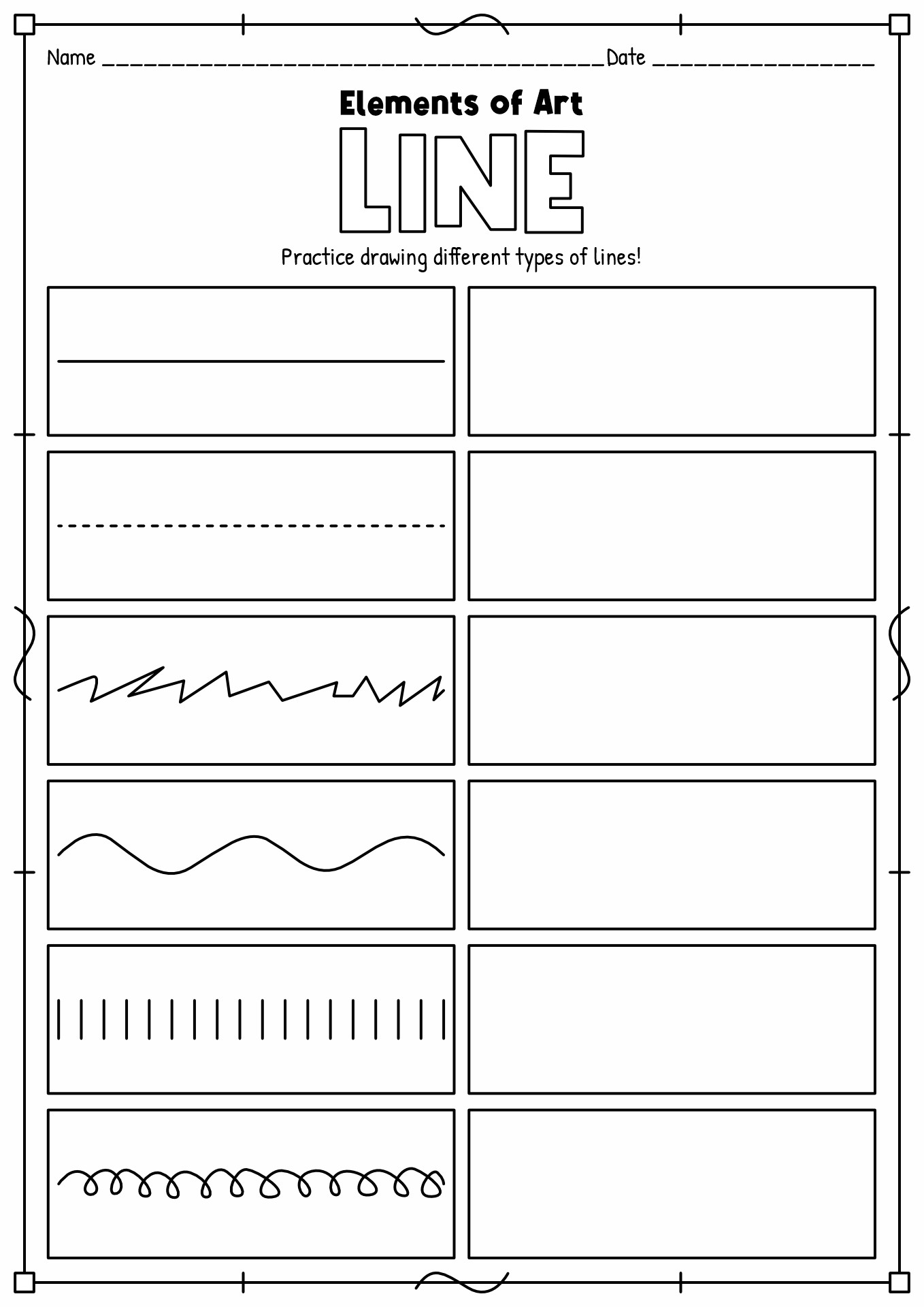
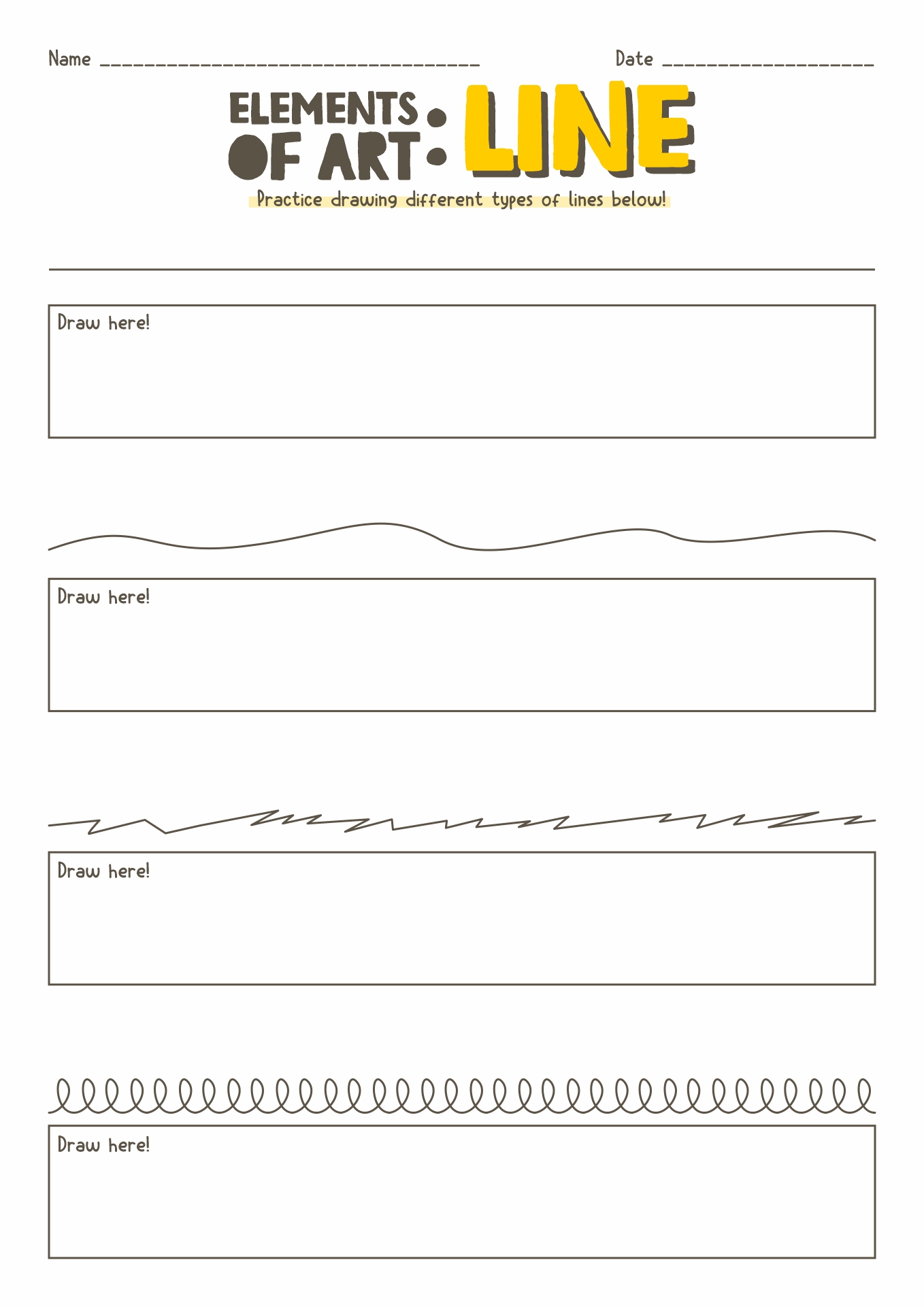
Lines, whether bold, delicate, or rhythmic, guide the viewer’s eye and set the pace of a composition. A worksheet dedicated to line exercises might ask participants to draw continuous versus broken lines, varying in thickness and direction. Students learn that a simple upward line can suggest optimism, while a jagged downward line may convey tension or decline.
Shape and Form: The Building Blocks of Space
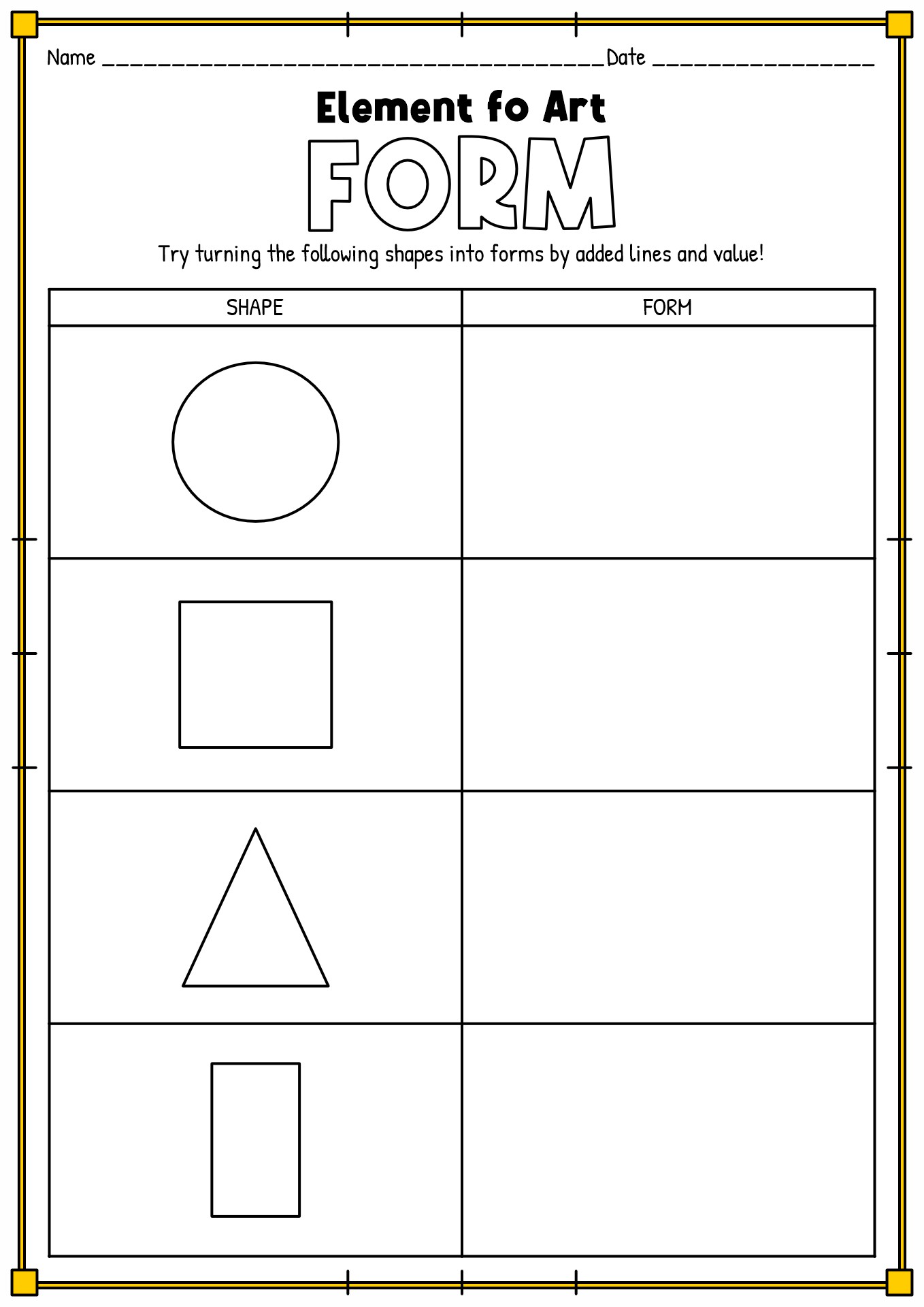
Shapes—geometric or organic—provide the structure within a piece. Worksheets that challenge learners to identify and recreate shapes found in nature help them recognize how forms create volume and depth. By shading a cube, a student discovers the difference between a flat rectangle and a three‑dimensional object, bridging the gap between two‑dimensional drawings and realistic representations.
Color: The Emotional Engine
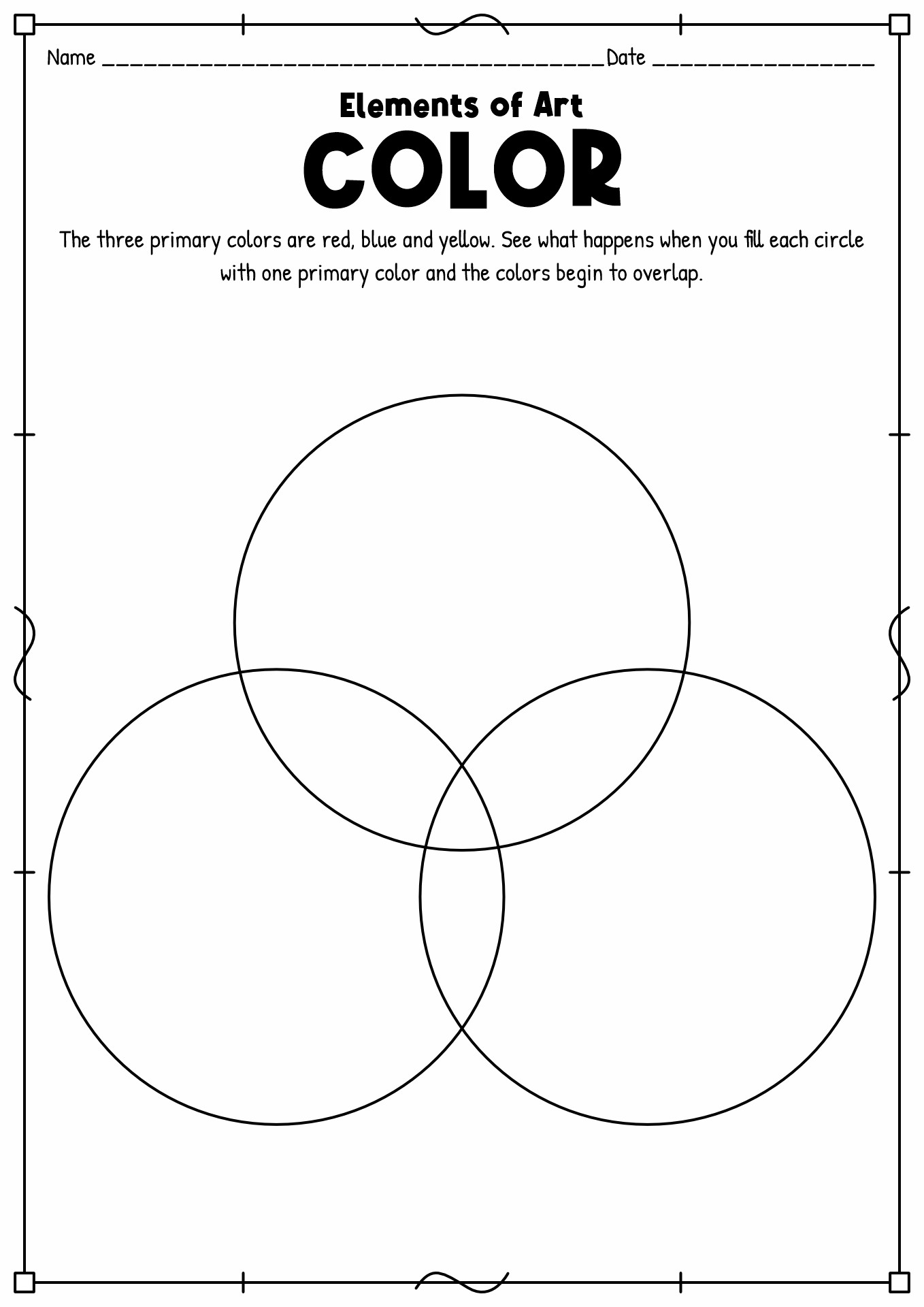
Color theory is often the most emotionally resonant aspect of art. Worksheets featuring color wheels, complementary pairings, and temperature variations encourage learners to experiment with hues that evoke specific moods. For example, a worksheet might prompt students to repaint a landscape using only cool tones, observing how the shift in temperature changes the piece’s overall feel.
Texture and Pattern: The Tactile Layer of Visual Art
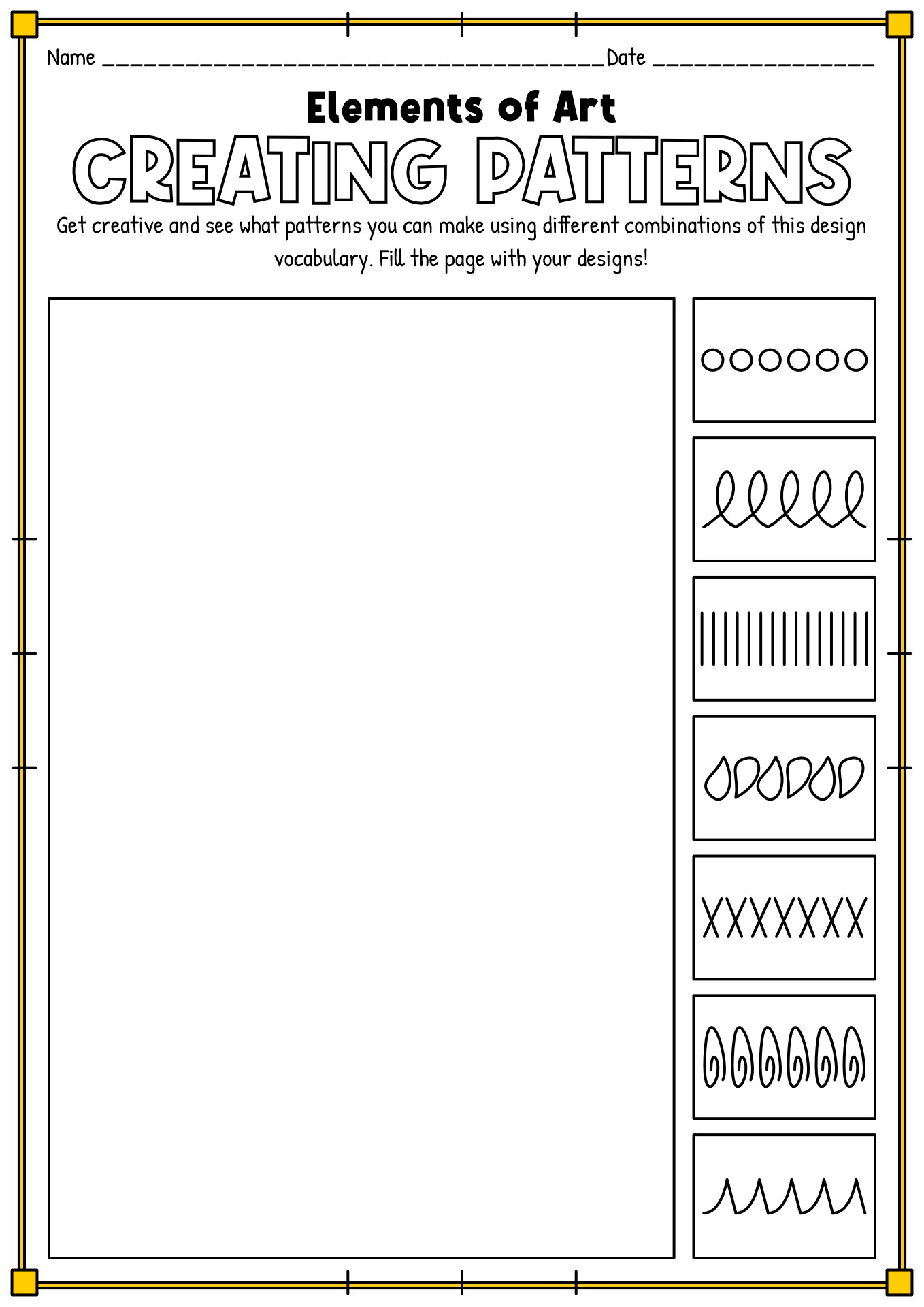
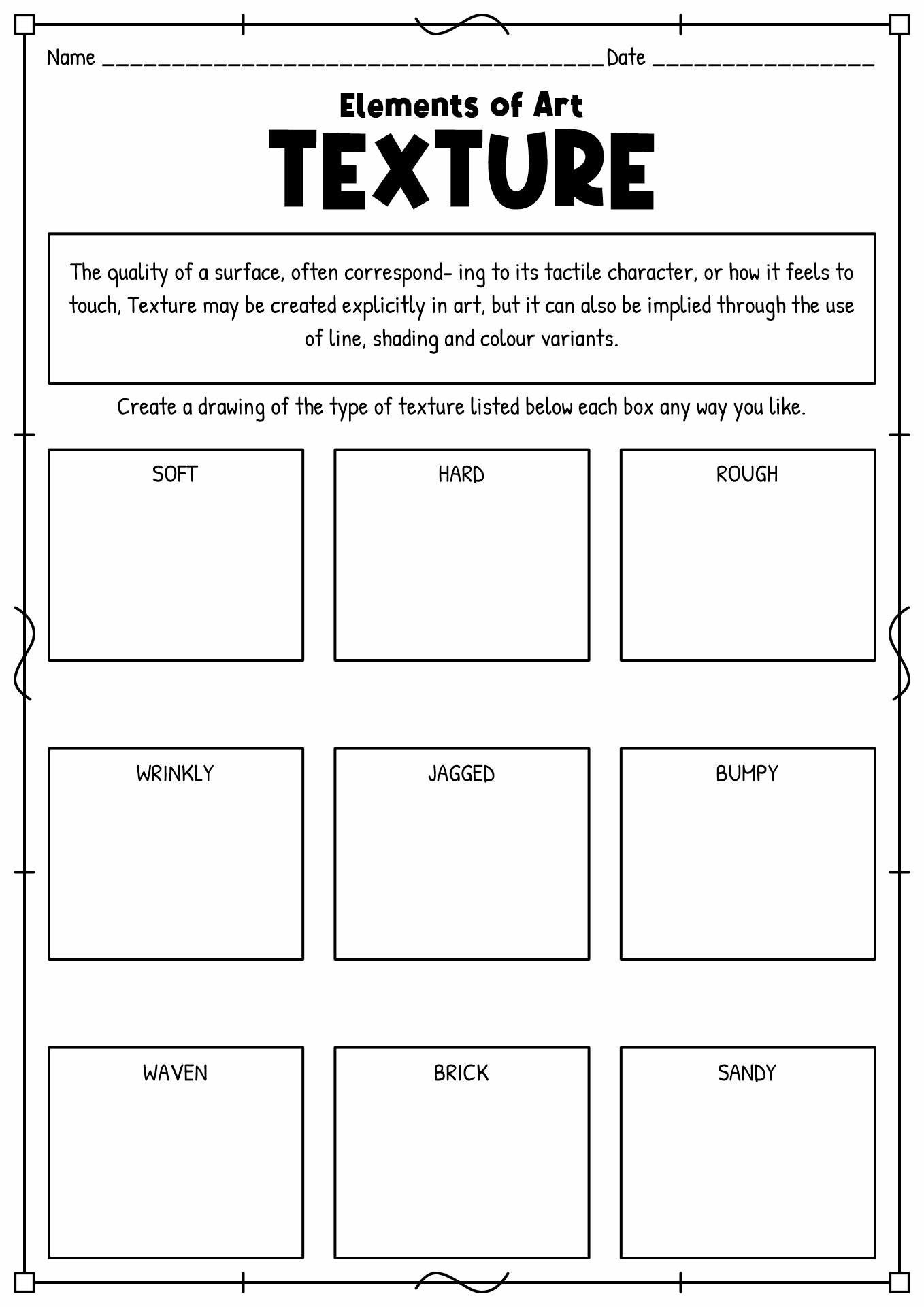
Texture can be depicted through deliberate brushwork or by integrating actual materials. Worksheets that require students to create tactile surfaces—using sand, yarn, or paper collage—demonstrate how sensory experiences are translated into visual cues. Pattern worksheets further explore repetition and rhythm, teaching students how to create harmony or tension within a composition.
Value and Contrast: The Light–Dark Dialogue
Value refers to the relative lightness or darkness of a color. Worksheets that challenge students to shade a simple shape from light to dark illustrate how value establishes depth, volume, and focal points. Contrasting high‑value elements against low‑value backgrounds can create drama and guide the viewer’s attention.
Space: The Invisible Canvas
Space refers to the area around, between, and within objects. Worksheets often ask learners to practice foreground, midground, and background placement, using size, overlap, and perspective to convey spatial relationships. By mastering these techniques, students can transform flat sketches into immersive scenes.
How to Use an Elements Of Art Worksheet Effectively

Set Clear Objectives Before Beginning
Decide which element you want the student to focus on—line, color, texture, etc.—and choose a worksheet that isolates that element. Clear objectives help avoid confusion and allow for measurable progress.
Create a Comfortable Learning Environment
Provide ample natural light, a stable surface, and a clutter‑free area. When students feel physically comfortable, they are more likely to experiment and take creative risks.
Encourage Observation and Critical Thinking
Before drawing, ask students to observe real‑world examples: a leaf’s veins, a city’s skyline, or a kitchen’s layout. This habit of observation nurtures attention to detail, a crucial skill for mastering art fundamentals.
Use Guided Prompts Instead of Blank Spaces
Prompt-based worksheets (e.g., “Draw a line that conveys excitement”) give direction while still allowing freedom. This balance helps beginners build confidence without feeling overwhelmed.
Incorporate Peer Review Sessions
After completing a worksheet, let students share their work with classmates. Constructive feedback fosters a growth mindset and sharpens analytical skills.
Step‑by‑Step Guide to Completing an Elements Of Art Worksheet

1. Read the Instructions Carefully
Most worksheets start with a brief description of the task. Taking a moment to parse these instructions ensures you’re working toward the intended outcome.
2. Gather Your Materials
Depending on the worksheet, you may need pencils, colored pencils, markers, charcoal, watercolors, or mixed media supplies. Having everything ready eliminates downtime and keeps the creative flow steady.
3. Start With Rough Sketches
Use light strokes to map the overall composition. Rough sketches allow you to experiment with placement, scale, and balance before committing to darker lines.
4. Apply the Element of Focus
Whether it’s line, color, or texture, this step is where you intentionally manipulate the chosen element. For example, if you’re working on a line exercise, try varying thickness, direction, and continuity to convey different emotions.
5. Add Detail and Texture
Once the main element is solid, introduce secondary details that enhance realism or artistic expression. Texture can be hinted at with cross‑hatching or dotting, while color can be layered to create depth.
6. Evaluate and Refine
Step back, assess the piece against the worksheet’s goal, and adjust as needed. Refinement is essential for developing a keen eye for composition.
7. Reflect on the Process
After completing the worksheet, jot down what you learned, what worked well, and what you’d try differently next time. Reflection turns practice into lasting knowledge.
Practical Examples from Asian Art Traditions
Japanese Ukiyo‑E: Mastery of Line
Ukiyo‑e prints showcase delicate, fluid lines that capture movement and emotion. An Elements Of Art worksheet that mimics this style invites students to draw a scene with minimal strokes, emphasizing how line alone can convey narrative depth.
Chinese Ink Wash Painting: The Dance of Value and Space
Traditional Chinese ink wash uses varying ink densities to create nuanced value gradients. A worksheet focused on value gradients challenges students to replicate a misty landscape, teaching them to blend light and dark to evoke atmosphere.
Indian Miniature Art: Intricate Texture and Pattern
Indian miniature paintings are renowned for their meticulous patterns and textures. Worksheets that ask students to replicate floral motifs or architectural details foster attention to repetitive designs and the rhythmic arrangement of elements.
Korean Fan Painting: Space and Perspective
Fan paintings often incorporate dramatic perspective to create expansive landscapes. By assigning students to draw a mountain vista on a fan-shaped canvas, worksheets can illustrate how space can be manipulated within unconventional formats.
Tips for Teachers and Parents to Maximize Learning

Integrate Cross‑Disciplinary Connections
Link art concepts to history, science, or literature. For example, discuss how color symbolism varies across cultures or how perspective relates to optical physics. This approach enriches the learning experience.
Use Incremental Skill Building
Start with simple worksheets focusing on a single element, then progress to multi‑element challenges. Gradual complexity prevents overwhelm and builds confidence.
Celebrate Small Wins
Recognize students’ progress, even if subtle. Praise for a well‑rendered line or a balanced color choice encourages continued effort.
Encourage Personal Expression
While worksheets provide structure, allow students to infuse personal stories or cultural references into their work. This personalization deepens engagement and ownership.
Provide Resources for Further Exploration
Suggest books, online tutorials, or local galleries that align with the worksheet’s focus. Exposure to diverse art forms inspires continued curiosity.
Common Mistakes and How to Avoid Them

Overloading the Canvas with Too Many Elements
Students often feel pressured to include every possible element. Encourage simplicity; a strong composition can rely on a few well‑executed elements rather than a cluttered design.
Ignoring the Instructional Prompt
When worksheets provide a specific task, deviating too far can dilute the learning goal. Remind learners to stay within the scope of the prompt while still exploring creative variations.
Neglecting the Observation Step
Skipping the observational phase can lead to generic or inaccurate representations. Stress the importance of studying real‑life references before sketching.
Using Low‑Quality Materials
Inadequate pencils, paper, or paints can hinder the execution of fine details or color blending. Invest in decent supplies to fully realize the worksheet’s potential.
Not Reflecting on the Finished Work
Students often finish a worksheet and move on without evaluating the outcome. Reflection turns practice into a learning loop, reinforcing concepts and identifying growth areas.
Conclusion: Turning Worksheets into Lifelong Artistic Habits
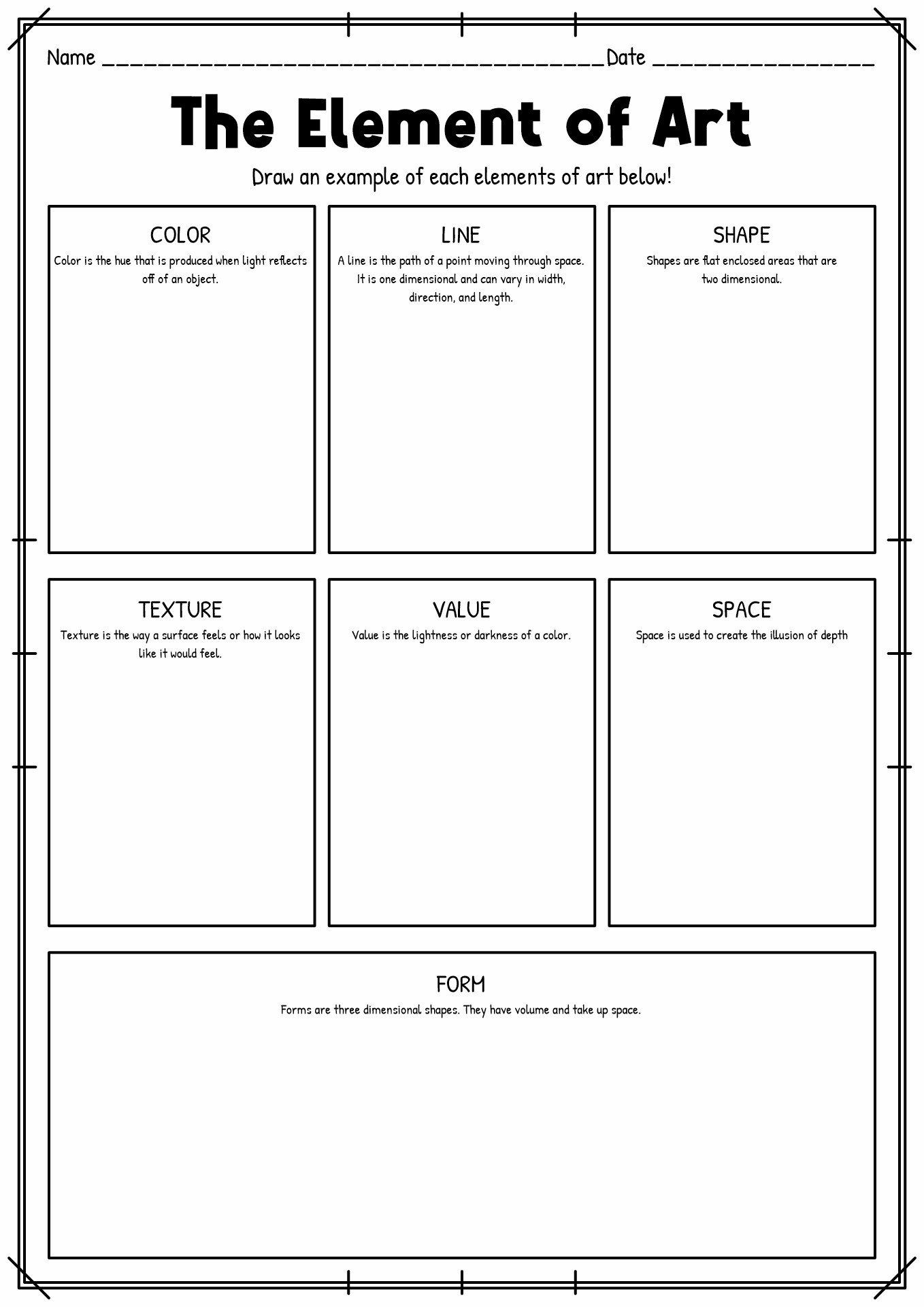
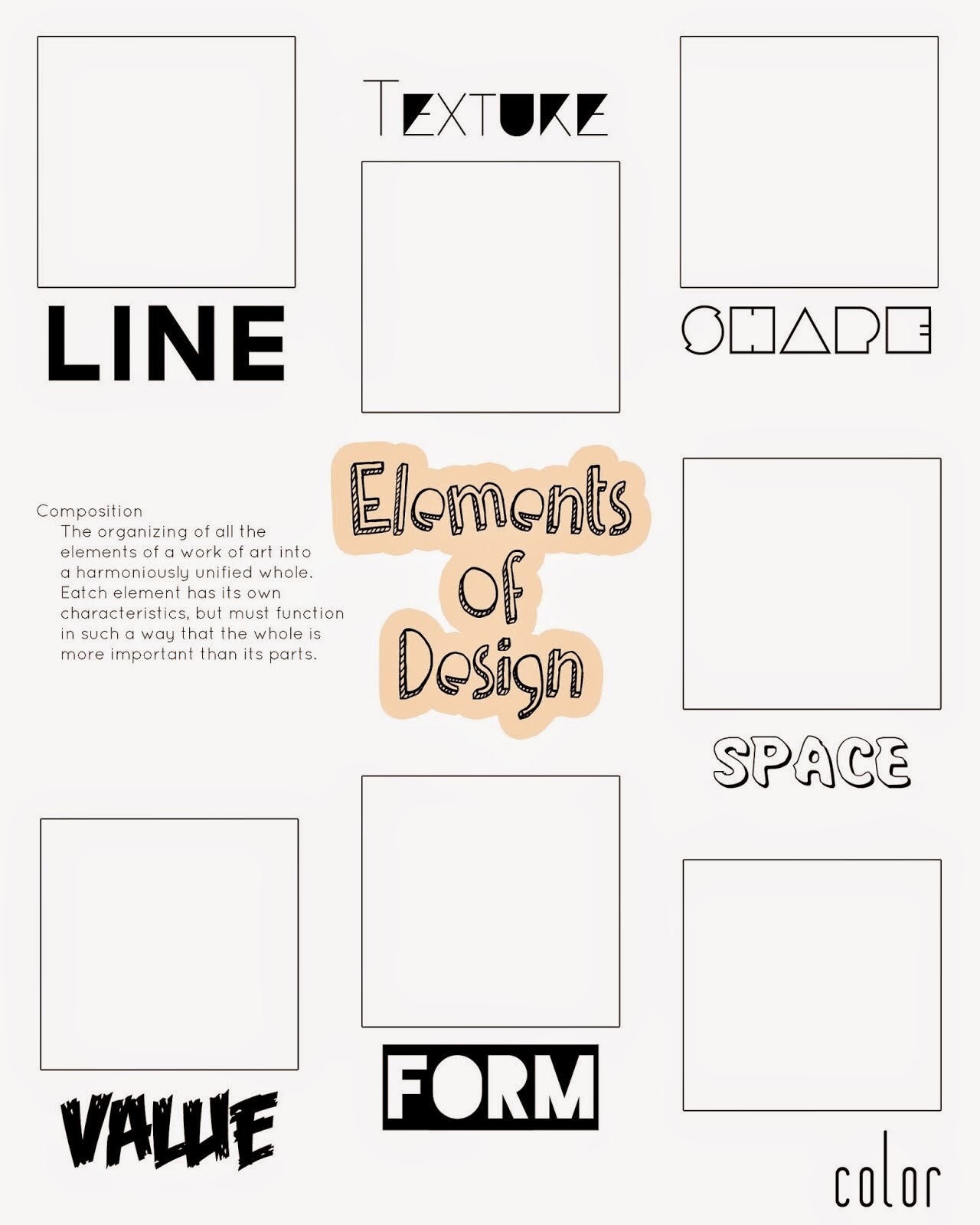
Elements Of Art worksheets are more than simple exercises; they are stepping stones that transform abstract theory into tangible skill sets. By mastering line, shape, color, texture, value, and space through guided practice, learners build a solid foundation that supports advanced artistic endeavors. When integrated thoughtfully into classrooms or home‑based learning, these worksheets foster critical observation, disciplined execution, and creative freedom. With persistent practice, reflection, and a willingness to explore cultural traditions, students can evolve from novice sketchers to confident creators, equipped with the timeless vocabulary of visual art that transcends borders and generations.