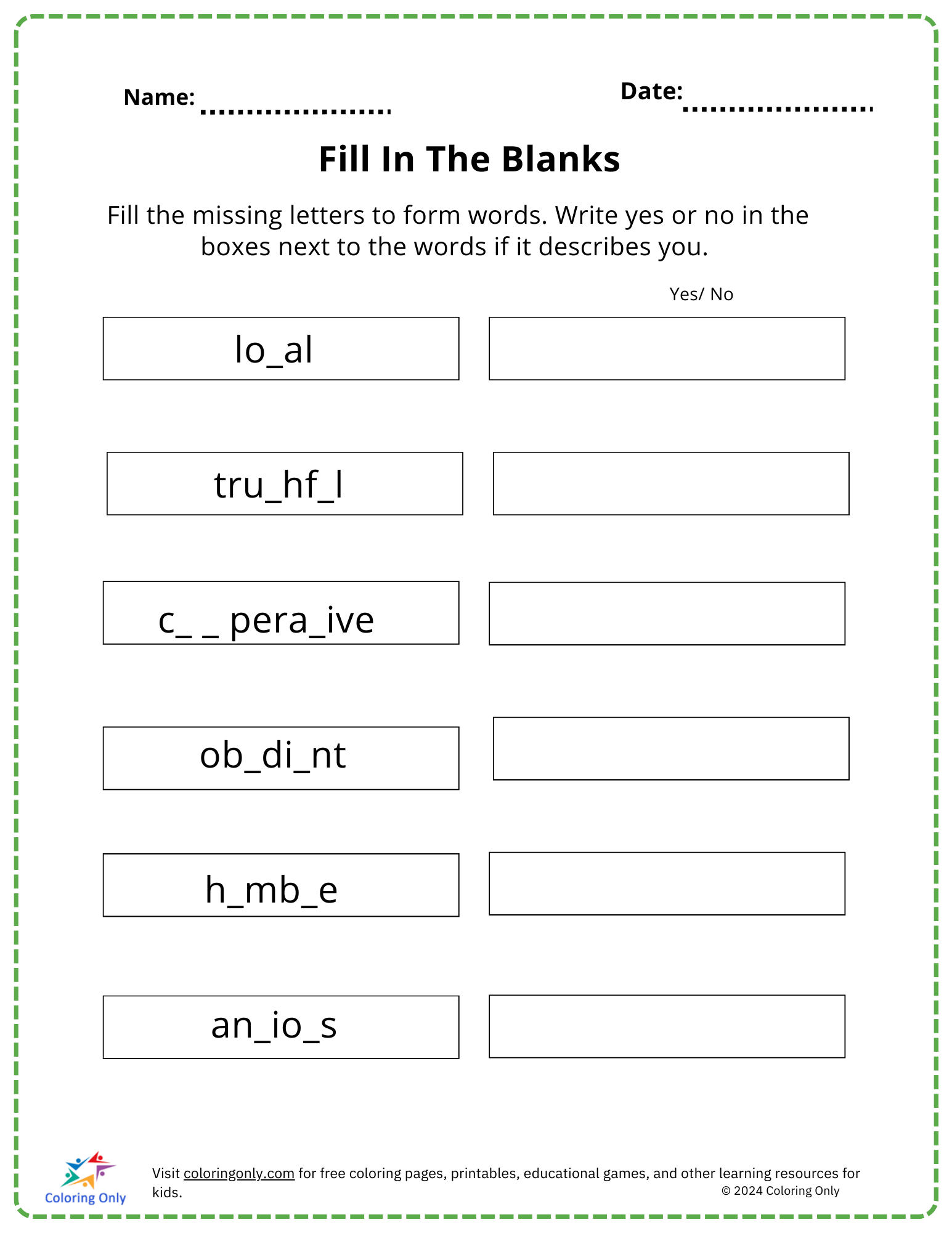
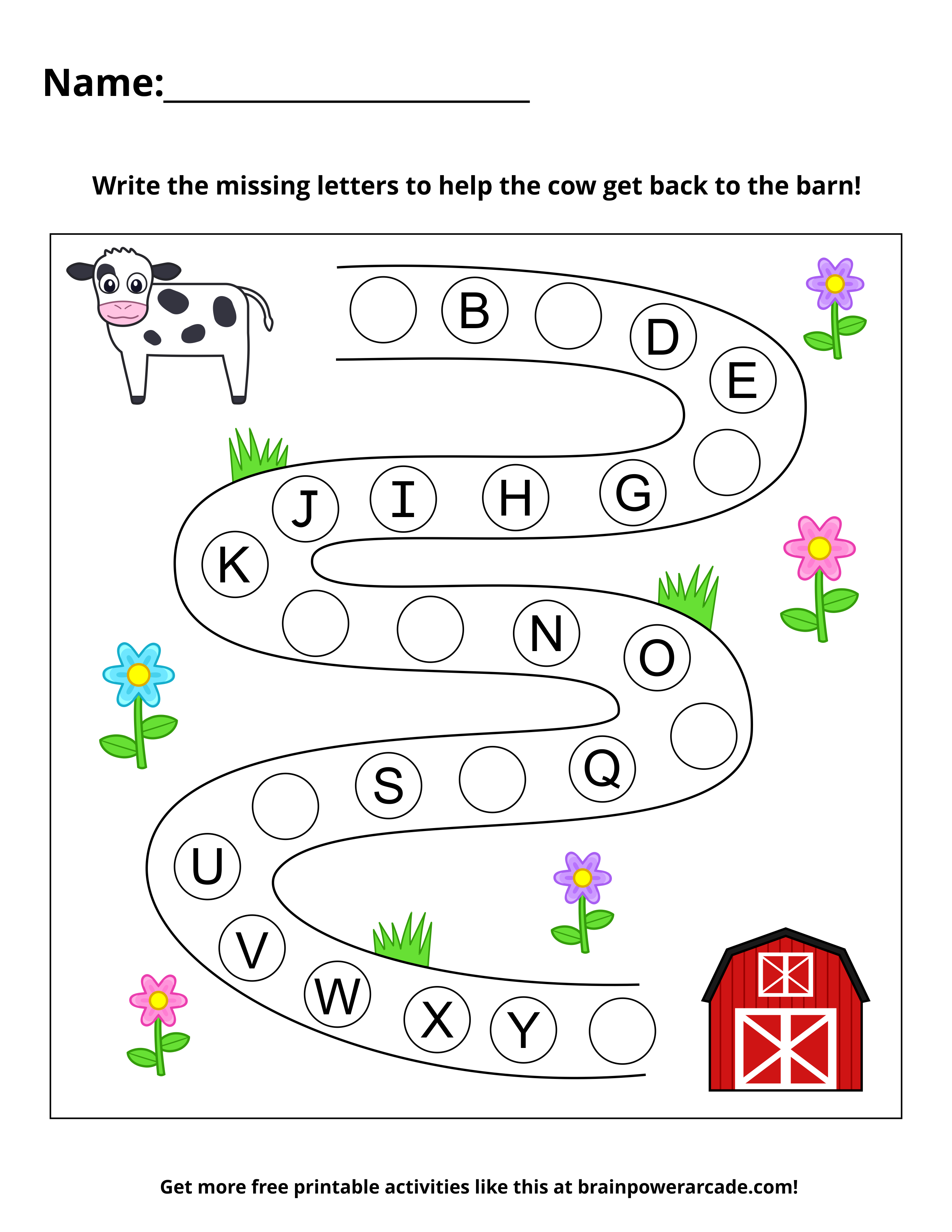
Fill In The Blank Worksheets are a timeless classroom staple that blend simplicity with powerful learning outcomes, making them an essential resource for teachers, tutors, and homeschooling parents alike. Whether you’re reinforcing phonics, practicing math facts, or assessing reading comprehension, these worksheets provide a focused, low‑stress way for students to demonstrate mastery while encouraging independent thinking. In this guide we’ll explore why they work so well, how to create engaging and differentiated versions, and practical tips for integrating them seamlessly into any curriculum. By the end, you’ll have a toolbox of strategies to design, deliver, and evaluate fill‑in‑the‑blank activities that keep learners motivated and educators confident.
Why Fill In The Blank Worksheets Matter

Targeted Skill Reinforcement
Fill in the blank formats isolate a specific concept—such as a spelling rule, a math operation, or a vocabulary definition—and give students a clear target. This focus helps cement neural pathways because the brain isn’t distracted by extraneous information. When the blank is the only variable, learners can concentrate on the underlying rule or pattern, leading to stronger retention.
Ease of Grading and Feedback
Because answers are short and often factual, teachers can grade quickly, either manually or with scanning software. Rapid feedback loops mean students know immediately whether they’ve mastered a skill, allowing for timely reteaching. The simplicity also reduces grading bias, ensuring consistency across large classes.
Flexibility Across Subjects
From language arts to science, the fill‑in‑the‑blank model adapts effortlessly. In a history lesson, you might leave the name of a treaty blank; in a science unit, you could omit a key term in a definition. This versatility makes the worksheet a universal tool that supports interdisciplinary learning.
Key Benefits for Students

Active Recall Practice
Research shows that actively retrieving information improves memory more than passive review. When students write the missing word or number, they engage in retrieval practice, strengthening recall pathways for future tests.
Confidence Building
Because each blank offers a single correct answer, students can experience quick wins. These small successes boost self‑efficacy, especially for struggling learners who need frequent reinforcement.
Development of Contextual Understanding
Well‑designed blanks are placed within a meaningful sentence or problem scenario, prompting learners to use context clues. This nurtures critical thinking as students decide which answer best fits the surrounding information.
Designing Effective Fill In The Blank Worksheets
Start with Clear Learning Objectives
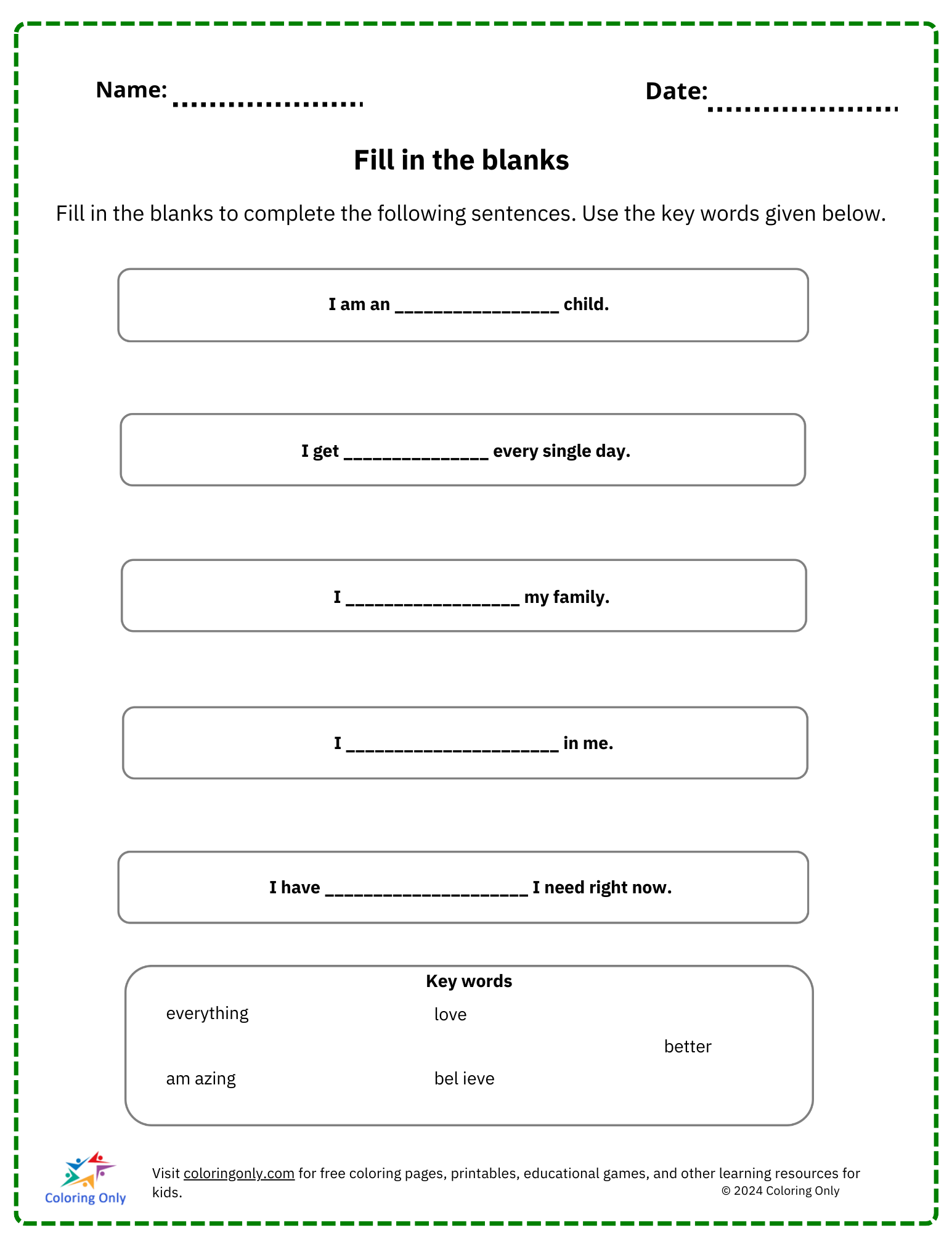
Identify the exact skill or concept you want students to practice. Write a concise objective (e.g., “Students will apply the rule ‘i before e except after c’ to correctly spell 10 words”). Every blank should directly support that objective.
Choose the Right Level of Difficulty
Balance challenge and accessibility. For early readers, limit blanks to one‑syllable words. For advanced learners, use multi‑step problems that require synthesis of information. Consider a gradual increase in difficulty across a worksheet series.
Use Contextual Sentences
Never isolate a blank without surrounding text. A sentence like “The cat ___ on the mat” provides grammatical cues that guide the student. In math, embed the blank within a word problem to maintain relevance.
Provide Word Banks When Appropriate
A word bank can scaffold lower‑level learners while still prompting recall. Ensure the bank contains distractors—words that are plausible but incorrect—to keep the task challenging.
Incorporate Visual Elements
Images, diagrams, or color‑coded blanks can make the worksheet more engaging. For a science worksheet on the water cycle, place blanks next to labeled diagram parts, linking visual memory to textual recall.
Leave Space for Writing
Give students enough room to write legibly. Crowded blanks lead to frustration and illegible answers, undermining the assessment’s purpose.
Adapting Worksheets for Different Grades and Subjects

Early Childhood and Kindergarten
Focus on phonemic awareness and sight words. Use large fonts, colorful pictures, and simple sentences. Example: “The ___ (cat/dog) is brown.” Include a picture to reinforce the answer.
Elementary Grades (1‑5)
Introduce subject‑specific content. In reading, use short paragraphs with blanks for key vocabulary. In math, provide basic addition or subtraction problems with one missing operand. Scaffold by gradually removing word banks.
Middle School (6‑8)
Increase complexity with multi‑step problems. In science, present a paragraph describing a process and leave blanks for critical terminology. In language arts, use context clues for synonyms or antonyms.
High School (9‑12)
Employ analytical blanks. For literature, ask students to fill in a missing theme or literary device. In algebra, require solving for an unknown variable within a larger equation. Encourage higher‑order thinking by integrating blanks that require synthesis of multiple concepts.
Tips for Keeping Students Engaged

- Gamify the Experience: Turn a worksheet into a race against the clock or a points‑based challenge. Offer stickers or digital badges for perfect scores.
- Mix Media: Alternate between printable sheets and interactive online platforms. Digital tools can provide instant feedback and hints.
- Personalize Content: Insert student names, favorite hobbies, or class events into the sentences to make the material feel relevant.
- Collaborative Fill‑In‑The‑Blank Sessions: Pair students to discuss possible answers before writing them down, fostering peer teaching.
- Progressive Difficulty: Begin with easy blanks, then gradually introduce more ambiguous or abstract ones within the same worksheet.
Digital Versus Printable Options

Advantages of Digital Worksheets
Digital formats allow for automatic grading, adaptive difficulty, and multimedia integration. Teachers can embed audio clips for language pronunciation or video snippets for science concepts, enriching the learning experience.
Strengths of Printable Worksheets
Printables are tactile, which benefits kinesthetic learners who retain information better through writing. They are also accessible in low‑tech environments and can be used during hands‑on activities like lab stations.
Hybrid Approach
Combine both: assign a printable worksheet for home practice and use a digital version for in‑class quick checks. This dual strategy ensures all learners receive the format that best supports their needs.
Assessment and Feedback Strategies

Rubrics for Partial Credit
Even simple blanks can merit partial credit. Award points for correct spelling, appropriate use of context, or logical reasoning, especially when distractors are plausible.
Immediate Feedback Loops
Use answer keys or digital auto‑scoring to provide instant results. Follow up with a brief class discussion that reviews common errors and reinforces the correct rule.
Data‑Driven Instruction
Collect scores across multiple worksheets to identify trends. If a significant portion of the class misses the same blank, it signals a concept that needs reteaching.
Common Mistakes to Avoid

- Overloading the Worksheet: Too many blanks can overwhelm students and dilute focus. Aim for 8‑12 well‑crafted items per sheet.
- Ambiguous Sentences: Ensure that the surrounding context leads to one clear answer. Vague phrasing creates confusion and inaccurate assessment.
- Inconsistent Formatting: Keep fonts, spacing, and blank sizes uniform. Inconsistent design distracts learners and complicates grading.
- Neglecting Differentiation: Provide varied difficulty levels or optional challenge questions to meet the needs of diverse learners.
- Skipping Review: Never hand back a worksheet without discussing the correct answers and underlying concepts.
Conclusion

When thoughtfully designed, Fill In The Blank Worksheets become more than a rote exercise—they transform into a dynamic vehicle for skill mastery, confidence building, and targeted assessment. By aligning each blank with clear objectives, tailoring difficulty to grade level, and incorporating engaging elements such as visuals, word banks, and gamified feedback, educators can harness the full potential of this versatile tool. Whether you choose printable pages for tactile learning or digital versions for instant scoring, the key lies in purposeful design and reflective use of student data. Implement the strategies outlined above, avoid common pitfalls, and watch your learners’ proficiency—and enthusiasm—grow with every completed blank.