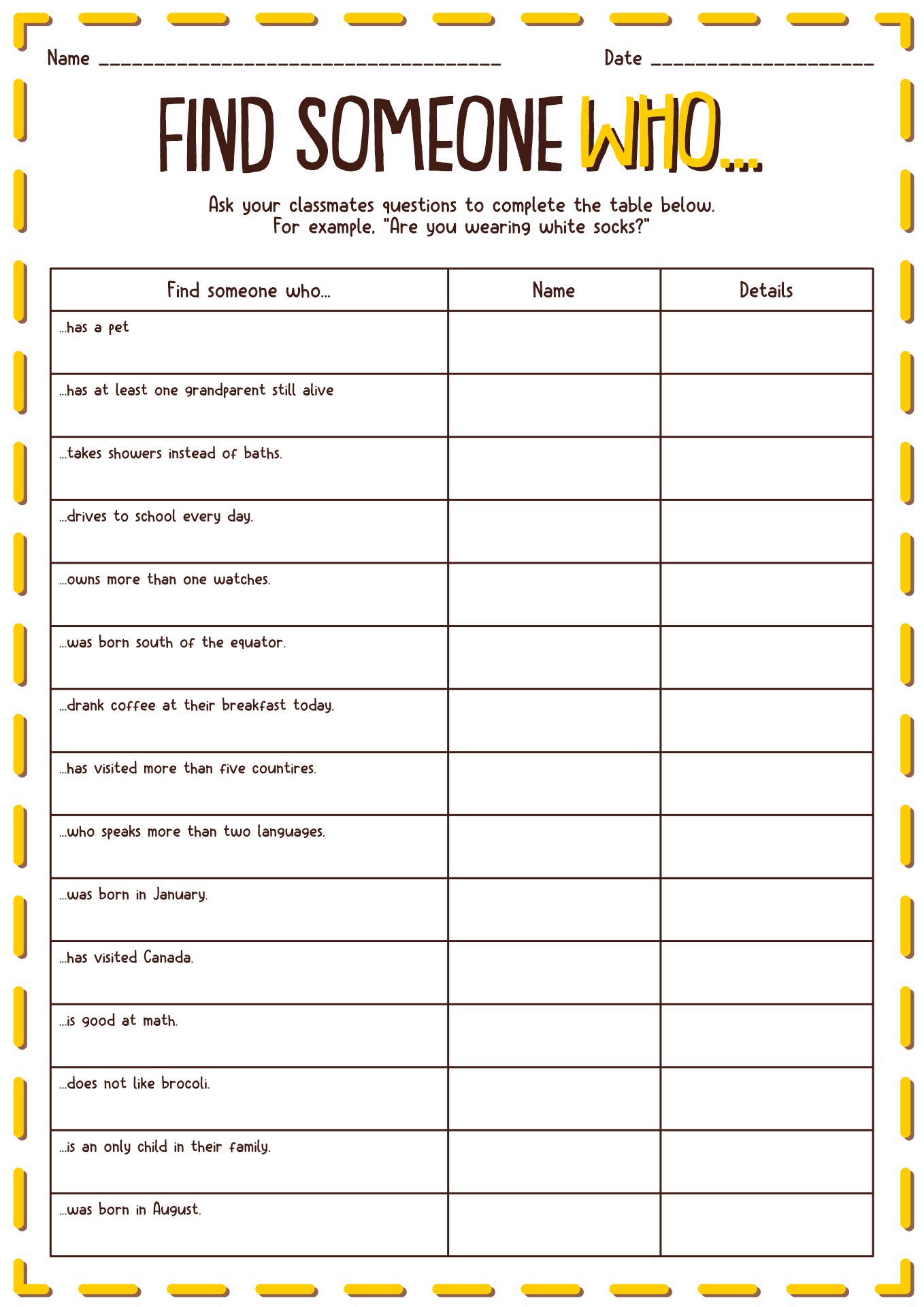
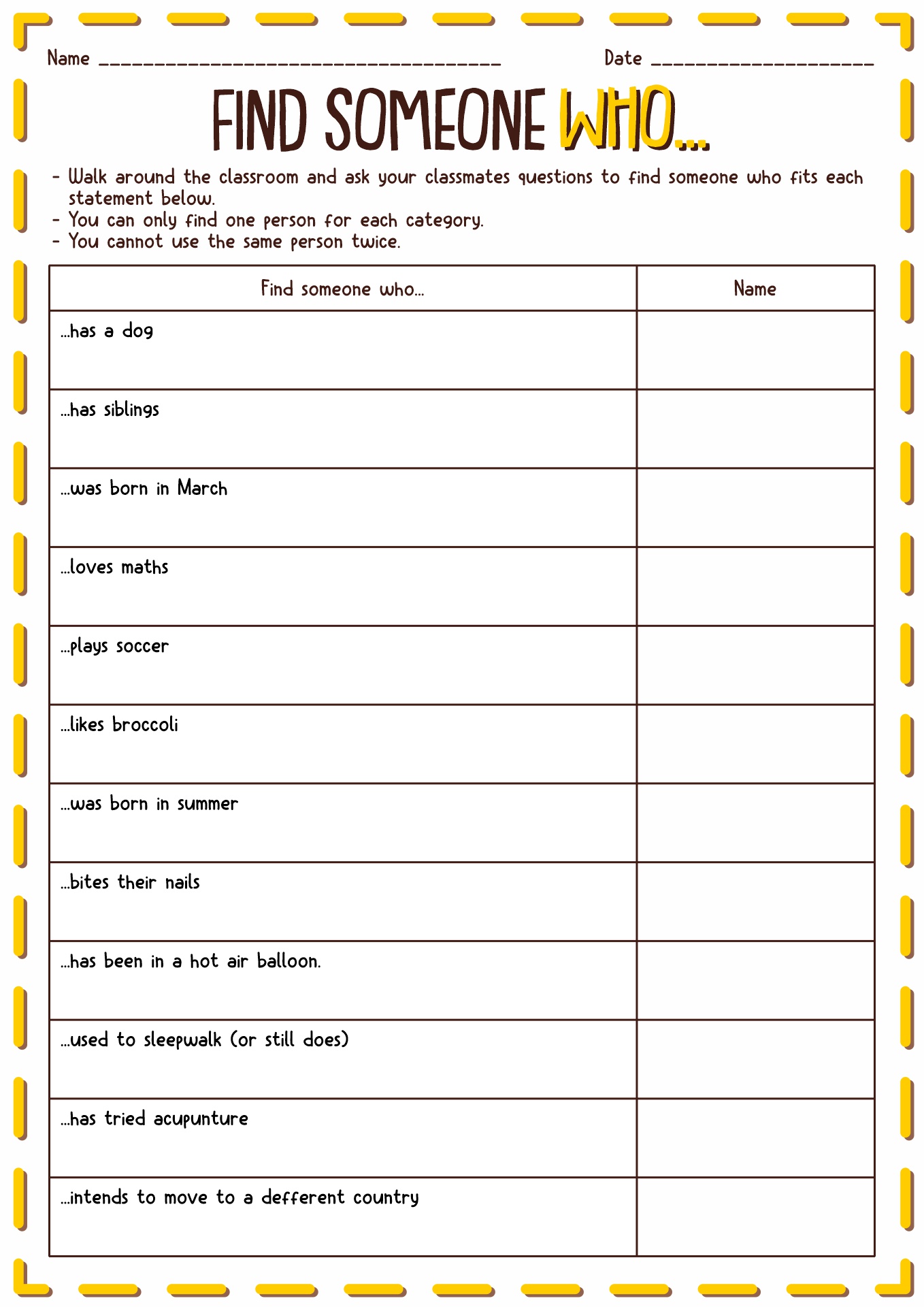
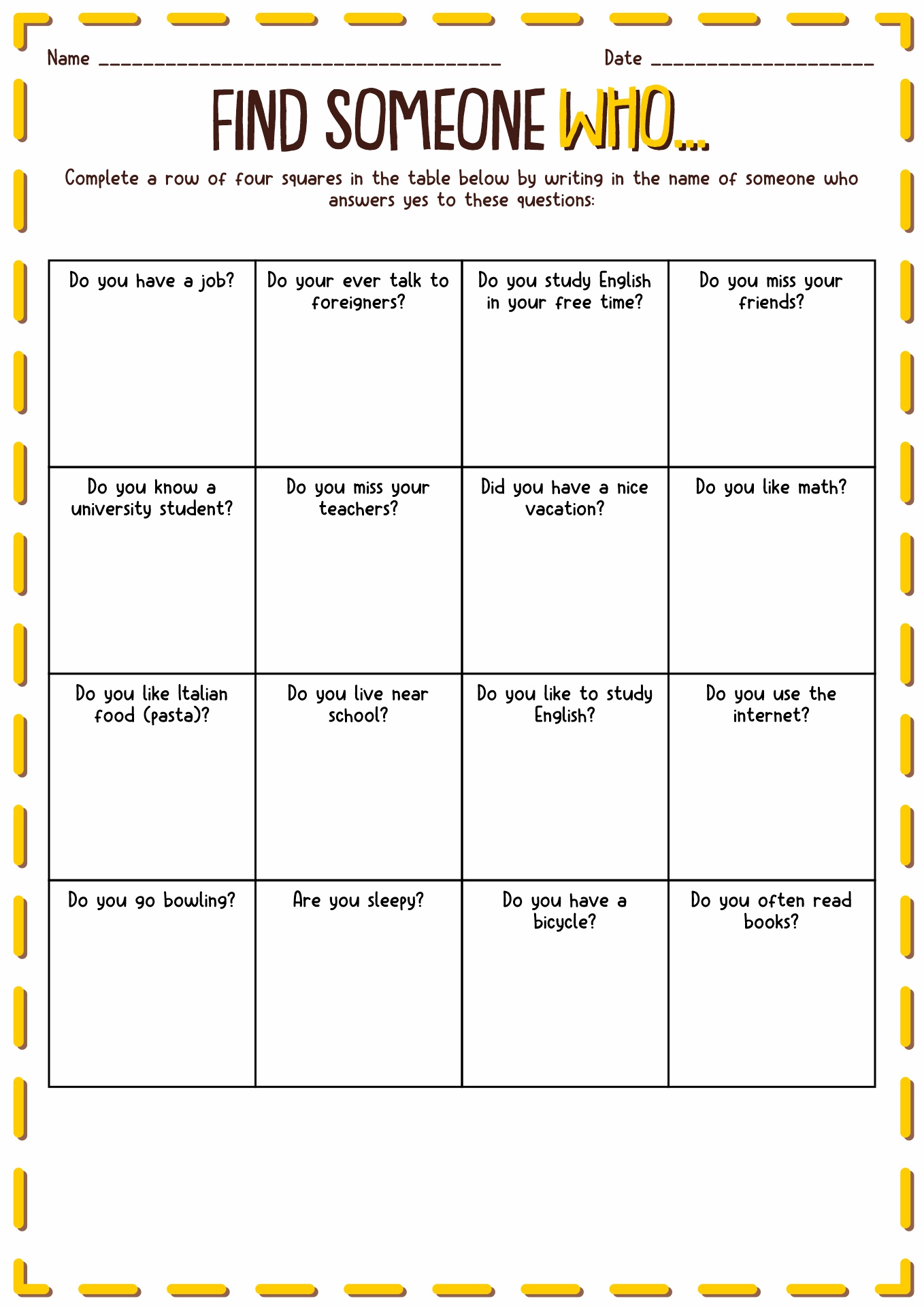
If you’re looking to spark curiosity and encourage social interaction, Find Someone Who Worksheet can be a powerful tool that blends discovery with learning objectives across a wide range of subjects.
Overview of Find Someone Who Worksheet

At its core, a Find Someone Who Worksheet invites students to investigate their peers or the surrounding environment to discover specific facts, characteristics, or experiences. The format typically consists of a list of statements such as “Find someone who has traveled to another continent” or “Find someone who can name three presidents.” Students must then write the name of a classmate who meets each criterion, fostering both inquiry and collaboration.
Purpose and Educational Value
Beyond simple data gathering, this activity cultivates essential 21st‑century skills. First, it encourages active listening as students ask clarifying questions. Second, it promotes critical thinking when learners assess whether someone truly fits a criterion. Third, it enhances communication skills by requiring concise, respectful questions. Finally, it offers a natural context for practicing social-emotional learning, as students navigate diverse backgrounds and perspectives.
Key Features
- Flexibility: The worksheet can be adapted for any age group or subject area.
- Low‑Cost: Printed sheets require minimal materials; digital versions can be generated quickly.
- Student Ownership: Learners decide who to approach and how to phrase their questions.
- Assessment Readiness: Instructors can grade accuracy, creativity, and engagement.
How to Create a Find Someone Who Worksheet

Designing an effective worksheet starts with clear intent. Identify the learning goal—whether it is language development, science facts, or social awareness—and then craft statements that align with that objective.
Choosing the Right Theme
Align the theme with curriculum standards. For a language arts unit on adjectives, statements like “Find someone who describes their favorite food using three adjectives” directly reinforce target structures. For a social studies unit on global cultures, “Find someone who speaks a language other than English” connects to real‑world diversity.
Designing Engaging Questions
Questions should be specific yet open enough to generate discussion. Use verbs that prompt active inquiry: “Name,” “Identify,” “Describe.” Avoid vague prompts that can be answered with a simple yes or no. For example, transform “Find someone who likes pizza” into “Find someone who likes pizza and can describe why it’s their favorite topping.”
Balancing Difficulty and Accessibility
Mix easy and challenging items. Easy items help build confidence and allow quick wins, while challenging items stimulate deeper thinking. Consider incorporating a “challenge” column for advanced learners—students can provide a more detailed explanation or an additional example.
Best Practices for Implementation in the Classroom

Deploying a Find Someone Who Worksheet successfully requires thoughtful preparation and supportive scaffolding.
Preparing Students for Success
Before starting, model how to ask a question, listen actively, and record a name. Run a quick practice round with a small group, then debrief strategies that worked. Provide students with a checklist of respectful inquiry techniques to ensure a safe, inclusive environment.
Using Digital vs. Print Formats
Print versions are straightforward and tactile, ideal for younger learners or settings with limited technology. Digital worksheets—created in Google Docs, Microsoft Forms, or specialized educational apps—offer real‑time data collection and can automatically collate responses for the teacher. Both formats can be blended; for instance, start with a paper sheet to build rapport, then transition to a shared digital document for analysis.
Assessment and Feedback Techniques
Assessment can be formative, focusing on student participation and the quality of questions asked. Provide rubrics that value curiosity, specificity, and peer respect. After completion, facilitate a reflection session where students discuss what they learned about classmates and the content, reinforcing the educational purpose.
Examples of Successful Use Cases

Real‑world implementation demonstrates the versatility of this worksheet across educational settings.
Elementary Classroom
In a fifth‑grade social studies unit, students completed a worksheet titled “Find Someone Who.” They identified classmates who had visited a national park, could name a bird species, or had a family tradition. The activity served as a warm‑up before exploring ecosystems, and it built a sense of community.
Middle School Social Studies
A ninth‑grade class used Find Someone Who to prepare for a debate on immigration. Students located peers who had relatives who immigrated, those who studied a foreign language, or individuals who could recount a cultural story. This personal connection enriched the debate and highlighted the human aspect of policy discussion.
High School Language Arts
During a literature unit on character analysis, a Find Someone Who Worksheet prompted students to discover classmates who could name a literary device, recall a favorite quote, or identify a character’s motivation in a novel. The gathered data fed into a collaborative character map that the class presented in a gallery walk.
Common Mistakes and How to Avoid Them

Even well‑intended worksheets can fall short if common pitfalls are not addressed.
Overloading the Worksheet
Too many items can overwhelm students and reduce engagement. Aim for 10–15 thoughtfully curated questions, and consider offering a “bonus” list for extra credit rather than making it mandatory.
Neglecting Clear Instructions
Ambiguous guidelines leave students guessing. Provide a concise instruction sheet: explain the objective, demonstrate a sample exchange, clarify how to record answers, and outline expected etiquette.
Customizing for Different Learning Needs

Inclusivity is key to maximizing the worksheet’s impact. Adapt the activity to accommodate diverse learners and learning styles.
Accommodations for Students with ADHD
Offer a timer to manage focus, break the worksheet into smaller segments, and allow movement breaks. Visual prompts or color‑coded sections can help maintain attention.
Integrating with Technology Tools
Use QR codes linking to short videos or interactive quizzes that supplement the worksheet. For English language learners, embed voice‑to‑text tools so students can record questions verbally before writing them down.
Conclusion: Maximizing Impact with Find Someone Who Worksheets

When thoughtfully crafted, a Find Someone Who Worksheet becomes more than a simple classroom activity; it evolves into a dynamic learning experience that fosters curiosity, communication, and community. By aligning questions with curriculum goals, balancing challenge levels, and providing clear scaffolding, educators can harness this format to deepen student engagement and enrich social learning. Whether printed or digital, the worksheet’s adaptability ensures it remains a valuable resource across grades, subjects, and learning contexts. By continually refining prompts, integrating technology, and celebrating diverse responses, teachers can sustain a vibrant, interactive classroom culture that truly brings knowledge to life.