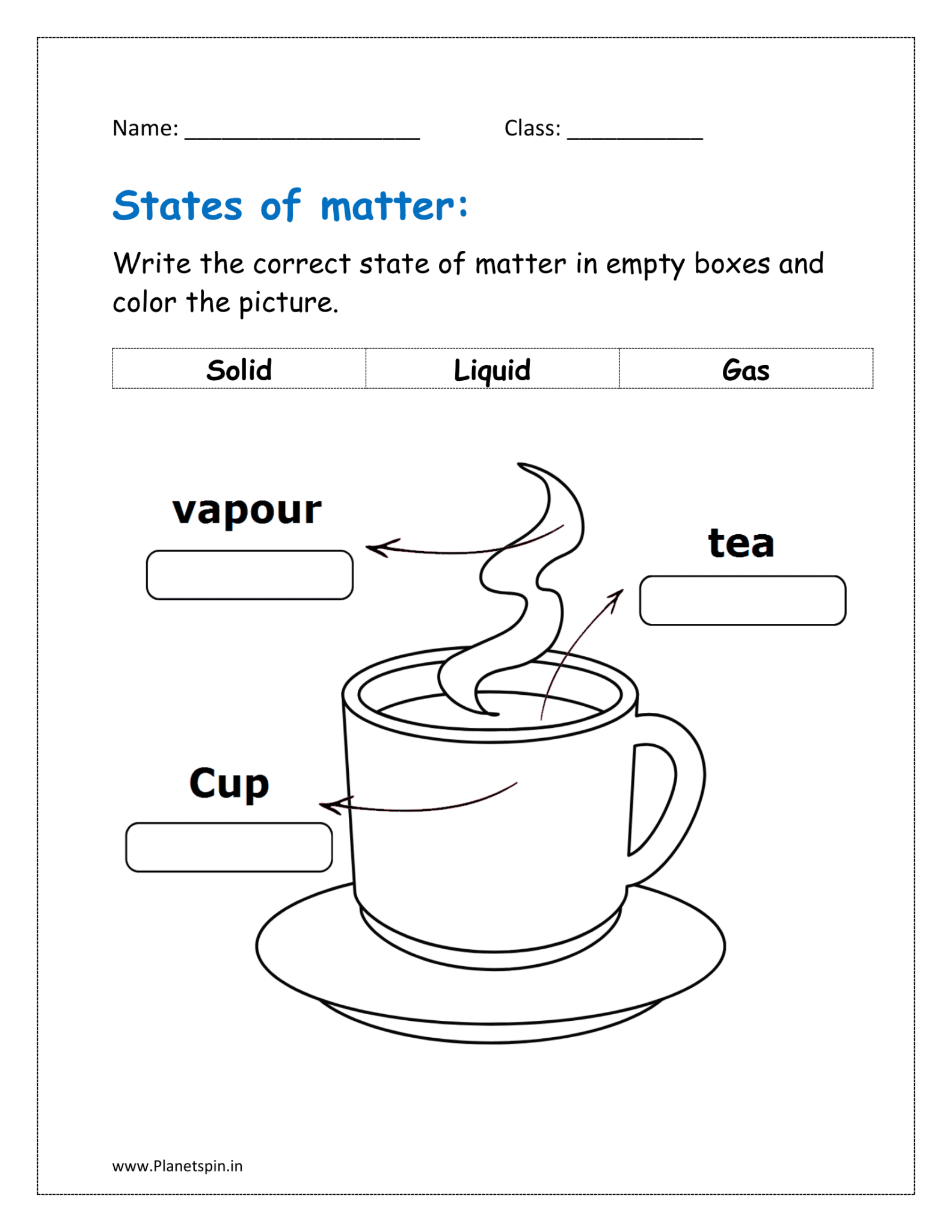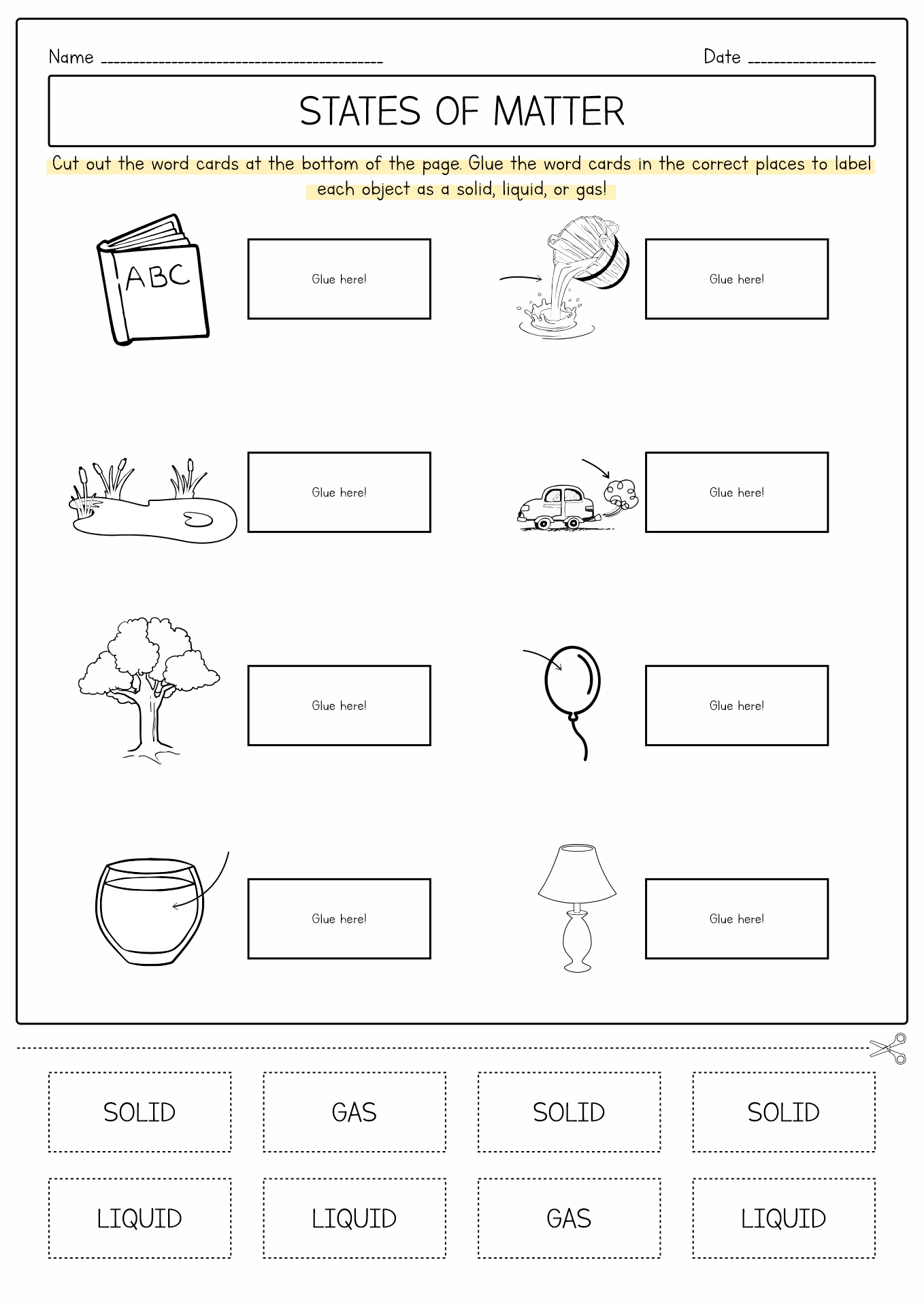
Forms Of Matter Worksheet activities are a cornerstone for building foundational science knowledge in elementary classrooms, offering students hands‑on opportunities to explore solids, liquids, gases, and plasma through visual cues, classification tasks, and real‑world connections. By integrating these worksheets into daily lessons, teachers can transform abstract concepts into tangible learning experiences that support critical thinking, vocabulary development, and scientific inquiry.
Why Worksheets Remain Essential for Teaching Matter
Even in an era dominated by digital tools, printable worksheets retain distinct advantages that align with diverse classroom needs. They provide a low‑tech, tactile medium that reinforces learning for kinesthetic and visual learners, allow for quick formative assessment without the need for complex software, and serve as a portable resource for homeschooling or remote instruction. Moreover, worksheets can be easily customized to match curriculum standards, making them adaptable across districts and grade levels.
Research consistently shows that the act of writing or marking responses enhances memory retention. When students physically draw a water droplet to represent a liquid or circle a picture of an ice cube as a solid, they create a neural link between the visual symbol and the underlying scientific concept. This multimodal engagement accelerates comprehension and prepares students for more advanced topics such as states of matter changes, phase transitions, and molecular behavior.
Core Concepts Covered in Forms Of Matter Worksheets

Effective worksheets address a spectrum of ideas that collectively build a robust understanding of matter. Below are the primary learning targets most educators aim to achieve:
- Identification of States: Recognizing and naming solids, liquids, gases, and plasma.
- Properties of Each State: Describing shape, volume, compressibility, and particle arrangement.
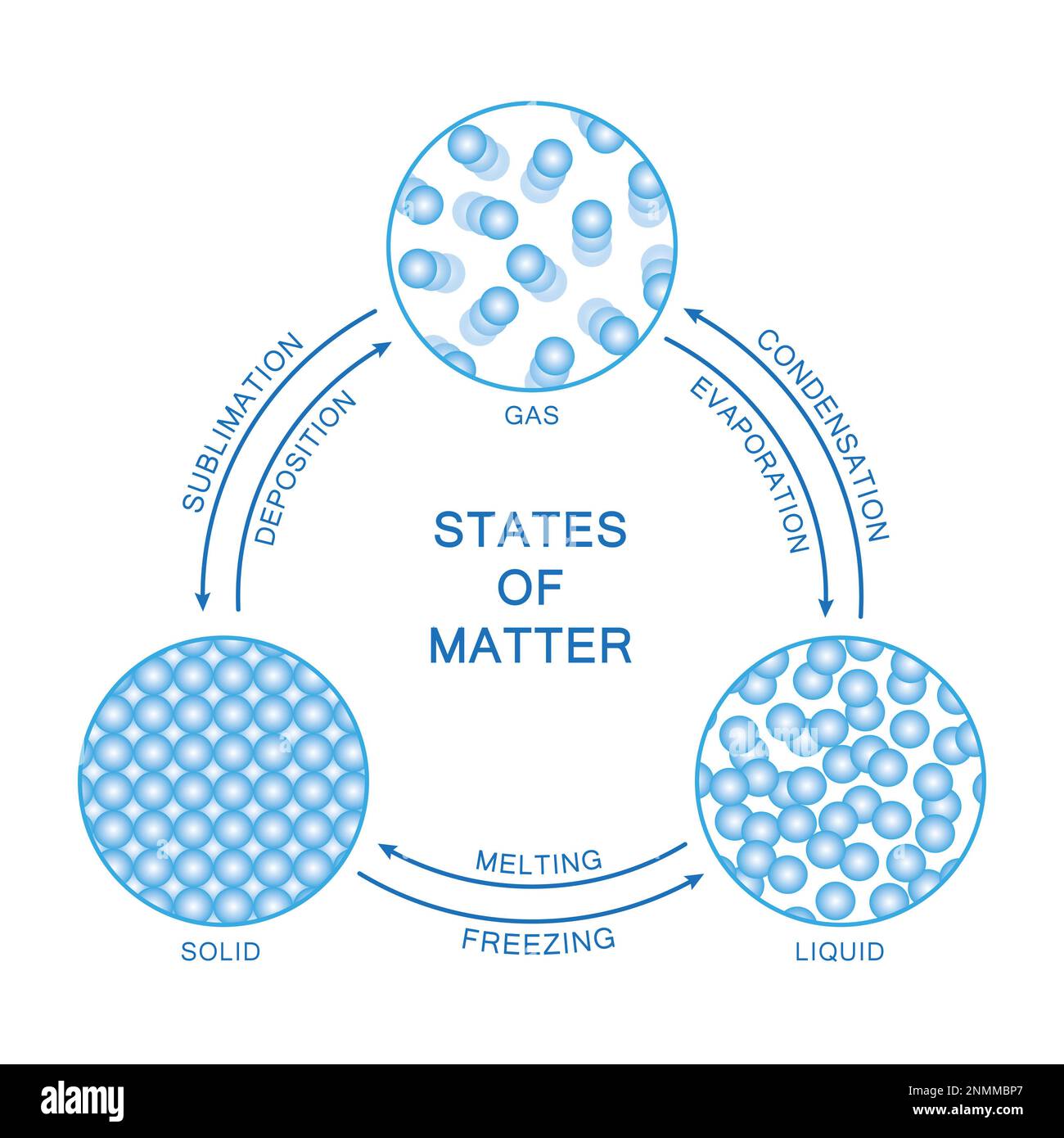
- Phase Changes: Explaining melting, freezing, condensation, evaporation, sublimation, and deposition.
- Real‑World Examples: Connecting classroom concepts to everyday items like ice cream, steam, balloons, and neon signs.
- Scientific Vocabulary: Using terms such as “molecule,” “energy,” “temperature,” and “density” correctly in context.
By systematically covering these topics, worksheets act as scaffolding that supports deeper inquiry, experimental design, and cross‑disciplinary projects later in the academic year.
Designing an Effective Forms Of Matter Worksheet
Creating a worksheet that captivates and educates requires intentional design choices. Below are best‑practice guidelines to help you develop materials that are both engaging and pedagogically sound.
Clear Learning Objectives
Start each worksheet with a concise statement of what students will know or be able to do after completion. For example, “Students will differentiate between solids, liquids, and gases based on shape and volume.” This focus directs both instruction and assessment.
Visually Appealing Layout
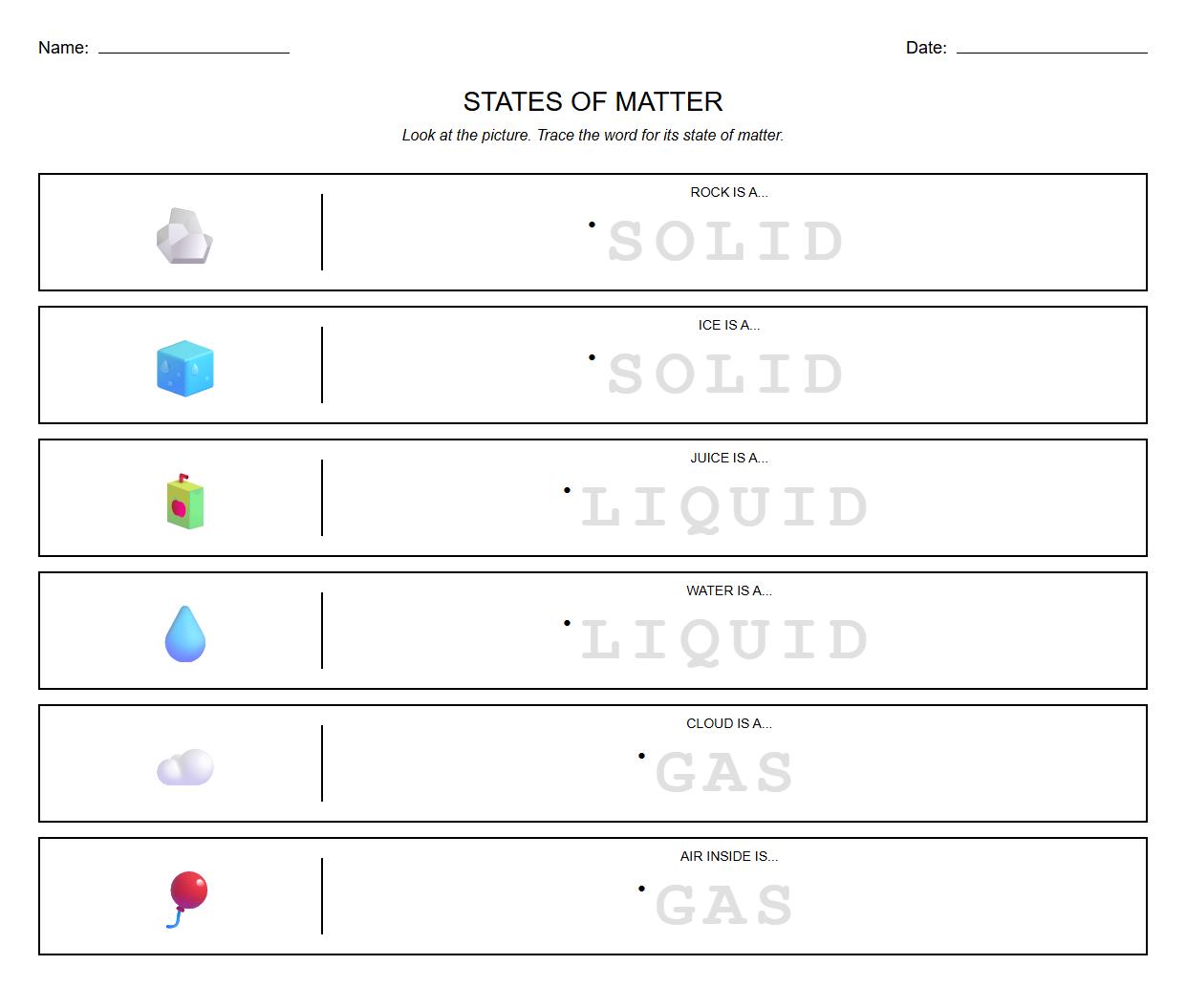
Incorporate high‑quality images, color‑coded sections, and ample white space. Visuals not only break up text but also aid comprehension for young learners. For instance, the worksheet below includes a vivid illustration of an ice cube and a steam cloud, each labeled for easy reference:
Varied Question Types
Mix multiple‑choice, short answer, matching, and drawing prompts to keep students actively involved. Open‑ended questions like “Describe what happens to water when it freezes” encourage expressive language, while matching columns reinforce quick recall.
Progressive Difficulty
Arrange tasks from simple identification to more complex analysis. Early items might ask students to circle pictures of solids, while later sections could require them to predict the state of matter after a temperature change.
Alignment with Standards
Reference state standards such as the Next Generation Science Standards (NGSS) or Common Core for Literacy in Science. Explicitly noting the standard (e.g., “MS‑PS1‑2”) helps teachers justify the worksheet’s inclusion in lesson plans and ensures compliance during audits.
Step‑by‑Step Guide to Using a Worksheet in the Classroom

Integrating a worksheet seamlessly into a lesson plan maximizes its instructional impact. Follow these steps for a smooth implementation:
- Pre‑Lesson Warm‑Up: Begin with a short discussion or demonstration (e.g., melting an ice cube) to spark curiosity and activate prior knowledge.
- Introduce Objectives: Clearly articulate the goals for the worksheet, linking them to the demonstration.
- Guided Practice: Walk through the first few items together, modeling how to interpret images and use scientific vocabulary.
- Independent Work: Allow students to complete the remaining sections individually or in pairs, circulating to provide formative feedback.
- Review and Reflect: Collect worksheets, then review answers as a class, highlighting common misconceptions and correct reasoning.
- Extension Activities: Use the worksheet as a springboard for experiments, such as observing condensation on a cold glass.
Adapting Worksheets for Different Learning Levels

One of the greatest strengths of printable worksheets is their flexibility. Below are strategies for differentiating the same core material for varied abilities:
For Emerging Readers
- Replace complex text with simple labels and icons.
- Provide a word bank of key terms.
- Use larger fonts and high‑contrast colors.
For Advanced Students
- Introduce inquiry‑based questions that require explanation of molecular motion.
- Include data tables where students record temperature changes during a phase transition experiment.
- Challenge them to research less common states, such as Bose‑Einstein condensates.
For English Language Learners (ELL)
- Pair visual cues with bilingual glossaries.
- Encourage collaborative completion, allowing peers to discuss answers in their native language before translating.
- Use sentence stems (“The solid is … because …”) to scaffold written responses.
Integrating Digital and Printable Resources

While printed worksheets remain valuable, blending them with digital tools can further enrich learning. Consider the following hybrid approaches:
- Interactive PDFs: Convert worksheets into fillable PDFs that students can complete on tablets, allowing instant feedback through embedded answer keys.
- Online Quiz Platforms: Upload multiple‑choice sections to tools like Kahoot! or Quizizz for gamified review.
- Virtual Labs: Pair the worksheet with a simulation (e.g., PhET “States of Matter”) where students observe particle behavior and then record observations on the printed sheet.
- Collaborative Documents: Use Google Slides to let small groups annotate a shared worksheet in real time, fostering discussion and peer teaching.
The accompanying image from a popular educational blog illustrates a well‑structured anchor chart that can be scanned and incorporated into both print and digital formats:
Assessing Student Understanding Through Worksheets

Worksheets serve not only as instructional tools but also as reliable assessment instruments. To extract meaningful data, follow these best practices:
Rubric Development
Create a concise rubric that evaluates accuracy, completeness, scientific terminology, and presentation. For example, award points for correctly labeling each state, providing accurate definitions, and illustrating phase changes with clear drawings.
Immediate Feedback
During class, use a quick “exit ticket” version of the worksheet where students answer one or two key questions before leaving. This provides instant insight into class-wide comprehension.
Data Tracking
Record scores in a spreadsheet, categorizing results by concept (e.g., identification vs. explanation). Analyzing trends over multiple worksheets helps identify persistent misconceptions that may require reteaching.
Student Self‑Assessment
Include a reflective section where learners rate their confidence on each topic and note areas needing clarification. This promotes metacognition and empowers students to take ownership of their learning journey.
Common Mistakes and How to Avoid Them

Even the most well‑designed worksheets can fall short if common pitfalls are overlooked. Below are frequent errors and actionable solutions:
Overloading with Text
Too much reading material can overwhelm early graders. Keep instructions concise—prefer bullet points and visual icons over paragraphs.
Lack of Real‑World Context
Students often struggle to see relevance. Incorporate everyday examples, such as describing the steam from a kettle as a gas, to bridge classroom learning with home experiences.
Inconsistent Terminology
Using synonyms like “fluid” and “liquid” interchangeably can confuse learners. Stick to a single term per concept and define it clearly on the worksheet.
Neglecting Accessibility
Ensure font size is readable, color contrast meets WCAG standards, and alternative text is provided for all images. This guarantees inclusivity for students with visual impairments.
Insufficient Differentiation
One‑size‑fits‑all worksheets may not meet the needs of diverse learners. Offer tiered versions or optional challenge questions to maintain engagement across proficiency levels.
Conclusion

Incorporating a well‑crafted Forms Of Matter Worksheet into science instruction provides a dynamic platform for students to explore, visualize, and articulate the fundamental properties of matter. By aligning worksheets with clear objectives, integrating compelling visuals, and adapting them for varied abilities, teachers can foster deep conceptual understanding while simultaneously gathering valuable assessment data. Whether used in a traditional classroom, a hybrid learning environment, or a home‑school setting, these worksheets remain a versatile, evidence‑based resource that bridges theory and practice, preparing young learners for the scientific challenges of tomorrow.