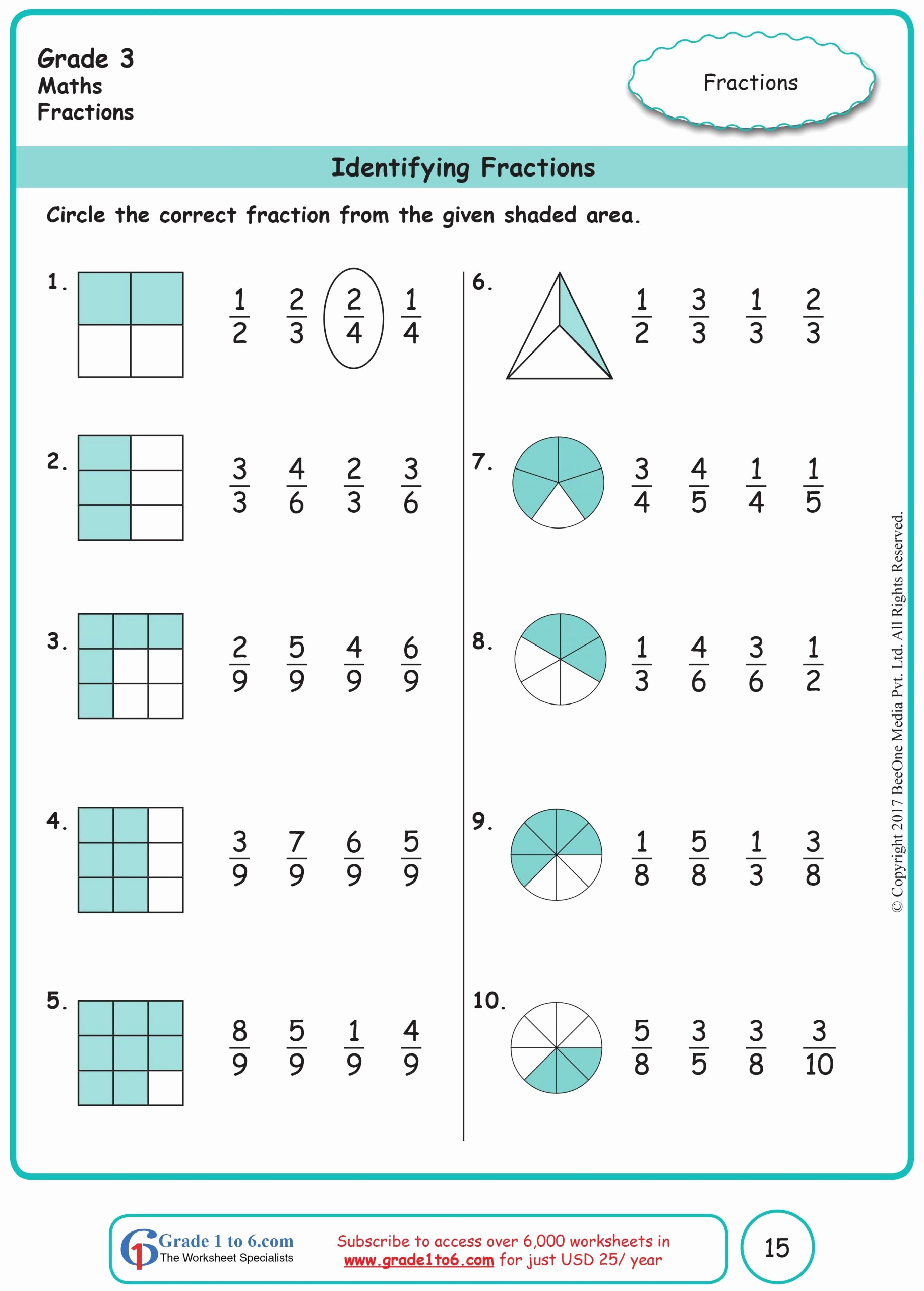
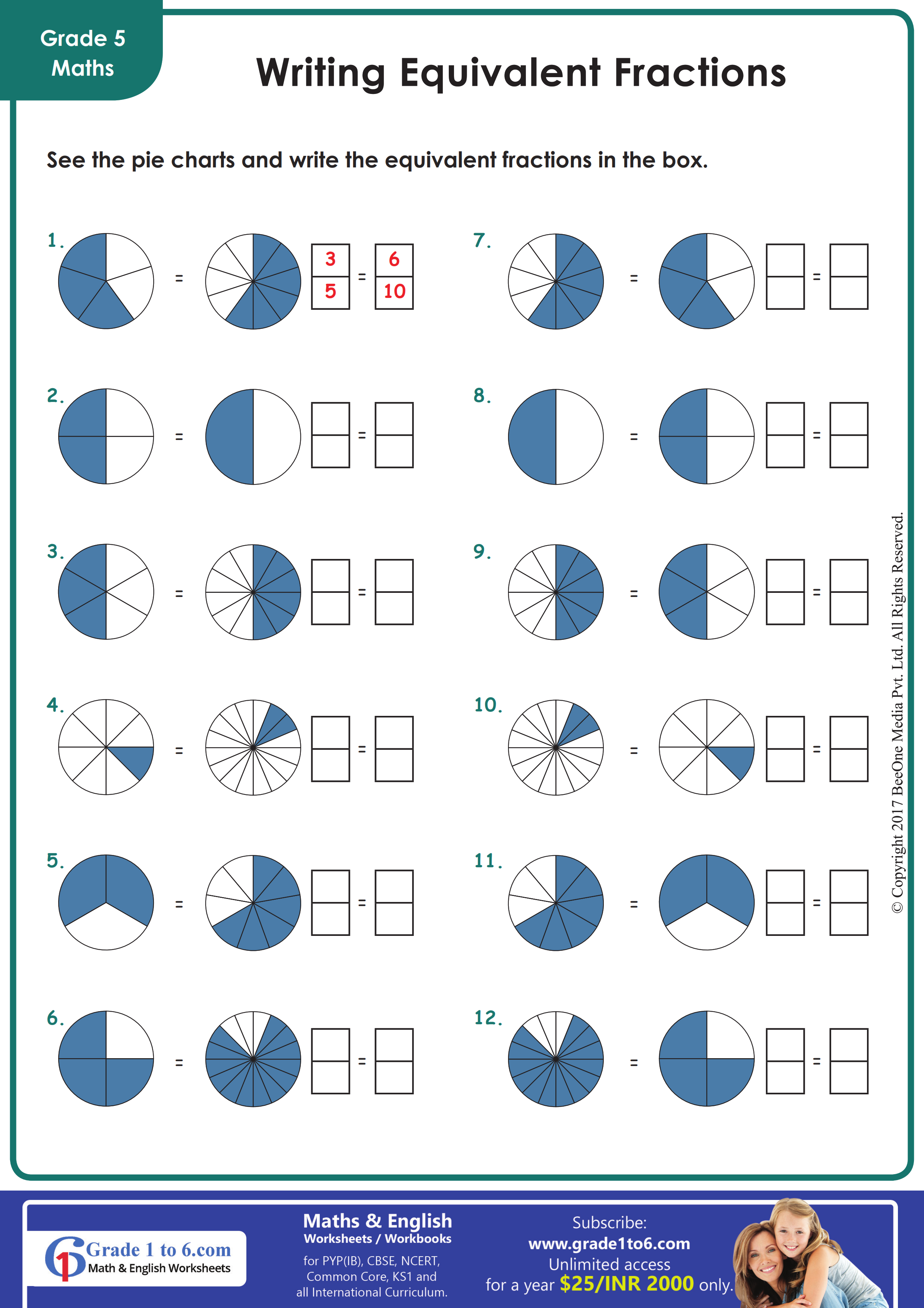
Fractions Worksheets Grade 2 are more than just a handful of pictures and numbers; they are the crucible where early number sense is forged, and the first true encounter children have with the concept of part‑to‑whole relationships. In a world that demands quantitative fluency from the moment we step into a classroom, these worksheets act as silent mentors, shaping how a second‑grader perceives division, equality, and proportion. The following guide dives deep into the anatomy of effective fraction practice, offering educators and parents a roadmap to turn ordinary worksheets into powerful learning experiences.
Why Fractions Matter in Second Grade

At the second‑grade level, children are transitioning from concrete counting to abstract reasoning. Fractions serve as the bridge between whole‑number operations and the more sophisticated algebraic concepts they will encounter later. Mastery of fractions at this stage does three critical things:
- Strengthens mental models: Recognizing that ½ is the same as 2/4 or 3/6 helps kids internalize the idea that numbers can be expressed in multiple ways.
- Builds problem‑solving stamina: Fraction problems often require children to visualize, compare, and manipulate parts, sharpening their analytical muscles.
- Prepares for real‑world math: Everyday situations—splitting a snack, measuring ingredients, or sharing supplies—rely on an intuitive grasp of fractions.
Core Elements of an Effective Fraction Worksheet

Not every printable page qualifies as a high‑impact learning tool. The most effective worksheets share a handful of essential characteristics that keep students engaged while reinforcing key concepts.
Clear Visuals
Second graders still rely heavily on visual cues. Simple shapes—circles, squares, and rectangles—partitioned into equal parts provide a concrete reference point. Avoid overly busy graphics that can distract from the core task.
Progressive Difficulty
Start with one‑step problems, such as identifying the shaded half of a circle, then gradually introduce two‑step challenges like comparing ¼ and ⅓. This scaffolding mirrors cognitive development, preventing frustration while encouraging growth.
Contextual Language
Embedding fractions in relatable scenarios—“If you have 4 apples and give away half, how many remain?”—helps children see the purpose behind the numbers. Context also improves retention because the brain links the abstract symbol to a lived experience.
Balanced Assessment
Include a mix of multiple‑choice, short‑answer, and drawing tasks. Multiple‑choice checks quick recognition, short‑answer tests recall, and drawing reinforces visual‑spatial reasoning.
Types of Fraction Worksheets for Grade 2

Variety prevents monotony and addresses different learning styles. Below are the most common worksheet formats, each serving a distinct pedagogical purpose.
Shade‑and‑Identify
Students color or shade a portion of a shape and then write the fraction that represents the shaded area. This activity cements the visual‑to‑symbol connection.
Number‑Line Placement
Using a simple 0‑1 number line, learners place fractions like ¼, ½, and ¾ in the correct position. The number line subtly introduces the concept of fraction magnitude.
Equal‑Parts Comparison
Worksheets that juxtapose two shapes—one divided into 3 equal parts, the other into 4—challenge students to decide which represents a larger fraction without converting to decimals.
Real‑World Word Problems
Scenarios such as “Sam ate 2 out of 4 slices of pizza” encourage kids to translate narrative information into fraction notation, a skill essential for later word‑problem solving.
Fraction Matching
Pairs of cards or columns require students to match visual representations (e.g., a half‑shaded circle) with the correct numeric fraction, reinforcing recognition speed.
How to Deploy Worksheets for Maximum Impact

Even the best worksheet can fall flat without a strategic delivery plan. Below is a step‑by‑step framework for teachers and parents.
Preparation
Review the worksheet ahead of time. Identify the learning objective and anticipate where students might stumble. Prepare manipulatives—fraction strips, cut‑out circles, or digital equivalents—to reinforce concepts.
Guided Practice
Begin with a whole‑class walkthrough. Model the process aloud, verbalizing each decision (“I’m looking at the circle, I see four equal parts, two are shaded, so that’s 2/4, which simplifies to ½”). Encourage students to ask questions and voice reasoning.
Independent Work
Distribute the worksheet and give a clear time limit. Allow children to use the manipulatives if needed, but encourage mental visualization to strengthen internal models. Circulate the room, offering targeted prompts rather than answers.
Immediate Feedback
After completion, review the answers collectively. Highlight common errors and ask students to explain why a particular answer is correct. This debrief converts mistakes into learning moments.
Assessment and Follow‑Up
Use a short quiz or oral questioning to gauge retention. If gaps appear, revisit the problematic worksheet section with a fresh activity or a digital interactive that reinforces the same skill.
Practical Tips for Parents Supporting Fraction Learning at Home

Parents can extend classroom learning without turning the kitchen into a math lab. Here are actionable strategies that blend seamlessly into daily routines.
- Cook Together: Use measuring cups to discuss halves, quarters, and thirds while preparing a simple recipe.
- Snack Division: When sharing a bag of crackers, ask your child to split it into equal parts and label each portion as a fraction.
- Play Board Games: Games that involve dividing resources (e.g., “Settlers of Catan” style resource cards) naturally introduce fraction thinking.
- Use Everyday Objects: A pizza box, a set of crayons, or a stack of books can become a visual aid for shading and counting fractions.
- Set Mini‑Challenges: Ask “If we have 8 oranges and give away 3, what fraction did we give away?” encouraging quick mental calculations.
Common Mistakes and How to Correct Them

Understanding where students typically falter helps educators intervene early.
Confusing Numerator and Denominator
Students may think the larger number is always on top. Use the phrase “top tells how many parts you have; bottom tells how many equal parts make a whole.” Visual aids that label each part reinforce this rule.
Ignoring Simplification
Second‑graders often stop at 2/4 instead of recognizing it as ½. Introduce simplification through “matching games” where 2/4 is paired with ½, emphasizing that they represent the same amount.
Overlooking Whole‑Number Context
When a problem says “3 out of 6 cookies,” some children answer “3” instead of “½.” Emphasize that the answer must be a fraction describing the part‑to‑whole relationship, not just the count.
Misreading Visuals
Shaded areas can be ambiguous if not clearly divided. Ensure worksheets use crisp, evenly spaced partitions and ask students to count the total sections before identifying the shaded ones.
Digital Versus Printable Worksheets: Choosing the Right Format

Both formats have merits, but the choice depends on classroom resources, learning objectives, and student preferences.
Printable Advantages
Physical worksheets allow tactile interaction—cutting, shading, and rearranging pieces. This kinesthetic element is especially powerful for young learners who benefit from hands‑on manipulation.
Digital Advantages
Interactive apps can provide instant feedback, adaptive difficulty, and engaging animations. They also reduce paper waste and make it easy to track progress across multiple sessions.
Hybrid Approach
Combine the two: start with a printable for initial concept introduction, then transition to a digital activity that reinforces the same skill through games or timed challenges. This blend keeps the learning experience fresh and comprehensive.
Free Resources for High‑Quality Fraction Worksheets
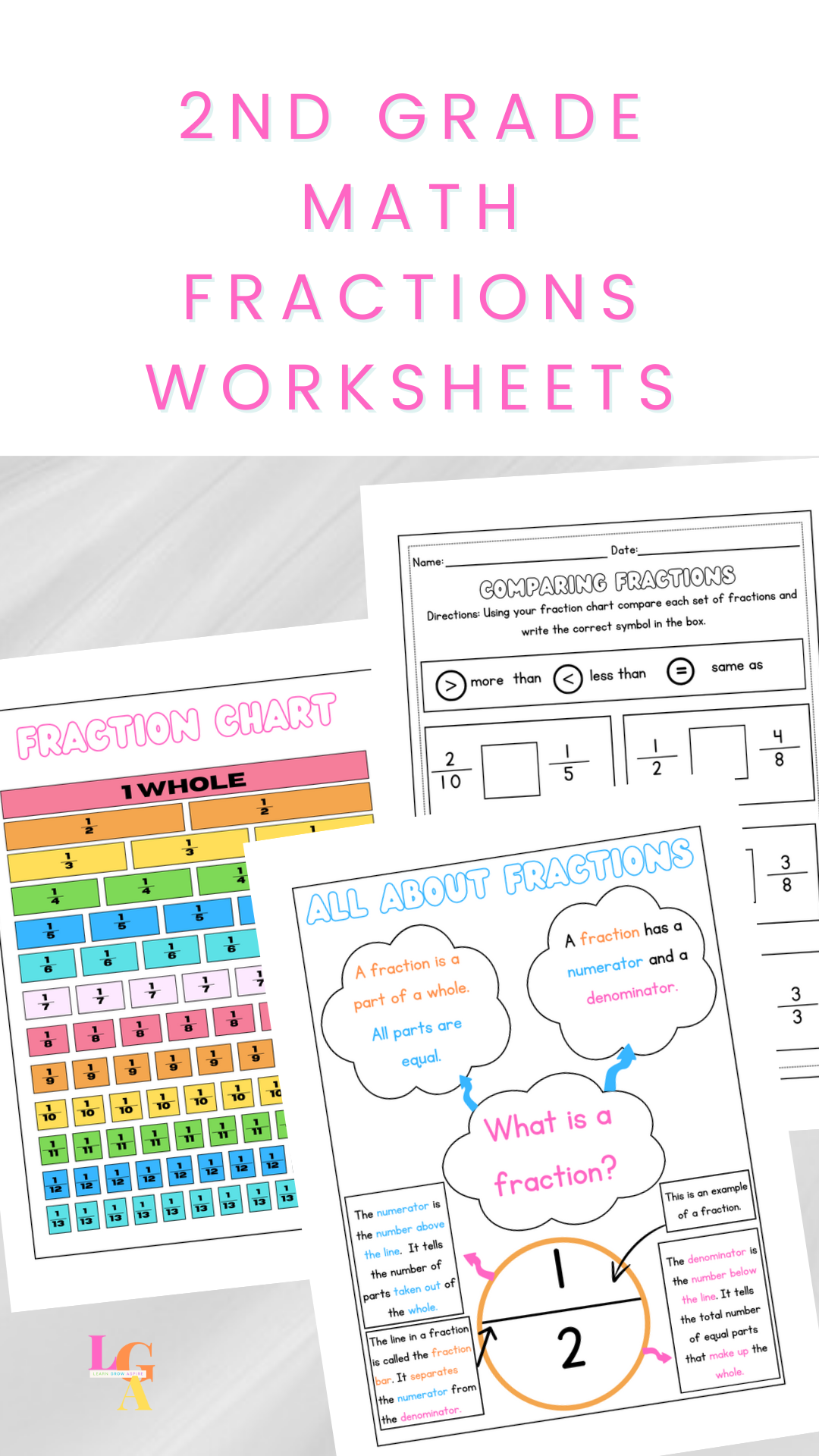
While countless worksheets circulate online, only a select few meet the rigorous standards needed for second‑grade mastery. Look for resources that explicitly state alignment with Common Core standards, offer teacher notes, and include answer keys for quick verification. Many educational websites provide downloadable PDFs that feature the visual clarity, progressive difficulty, and contextual language outlined earlier.
Conclusion

In the relentless march toward mathematical proficiency, Fractions Worksheets Grade 2 stand as foundational building blocks. By selecting worksheets that blend clear visuals, incremental challenge, and real‑world relevance, educators can ignite a lasting curiosity about parts and wholes. Pairing these tools with thoughtful instruction—guided practice, independent work, and immediate feedback—ensures that children not only complete a worksheet but internalize the underlying concepts. Parents, armed with everyday strategies, can reinforce classroom lessons, turning dinner tables and snack times into informal math labs. Whether you opt for printable sheets or interactive digital platforms, the goal remains the same: to equip every second‑grader with the confidence and competence to navigate a world where fractions are everywhere. When the right worksheet meets the right approach, the result is a generation of learners who see numbers not as abstract symbols, but as meaningful pieces of a larger, understandable whole.