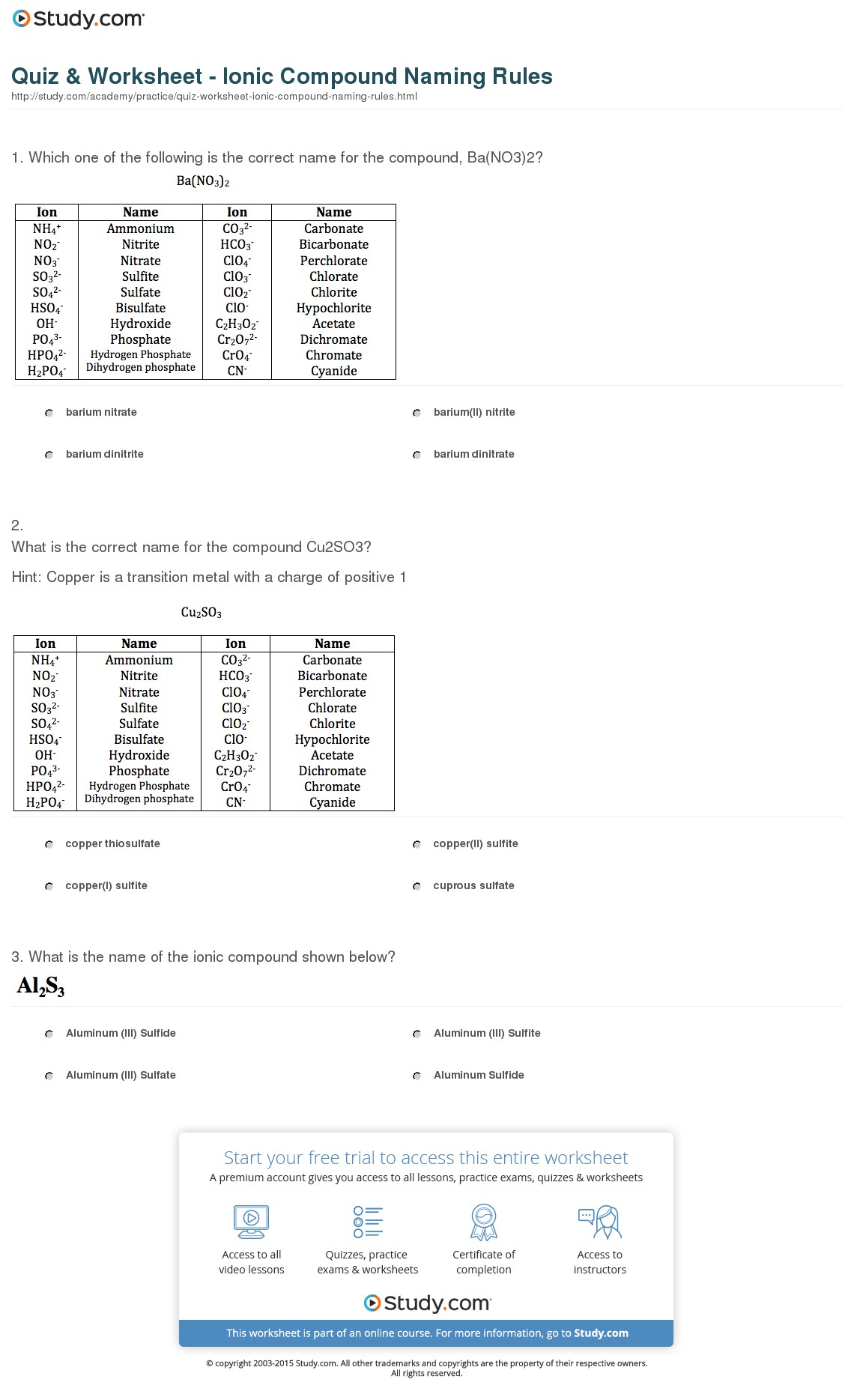
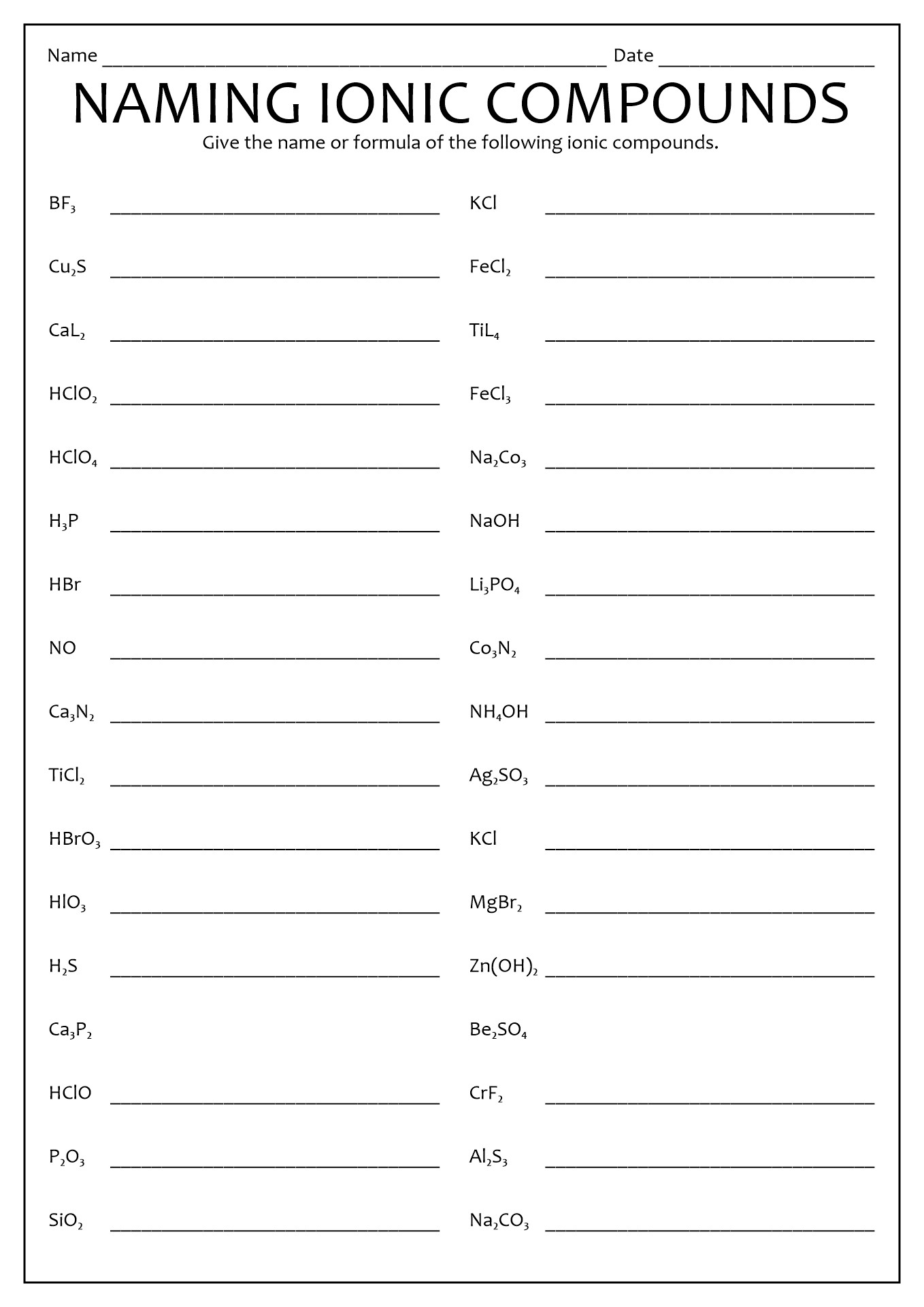
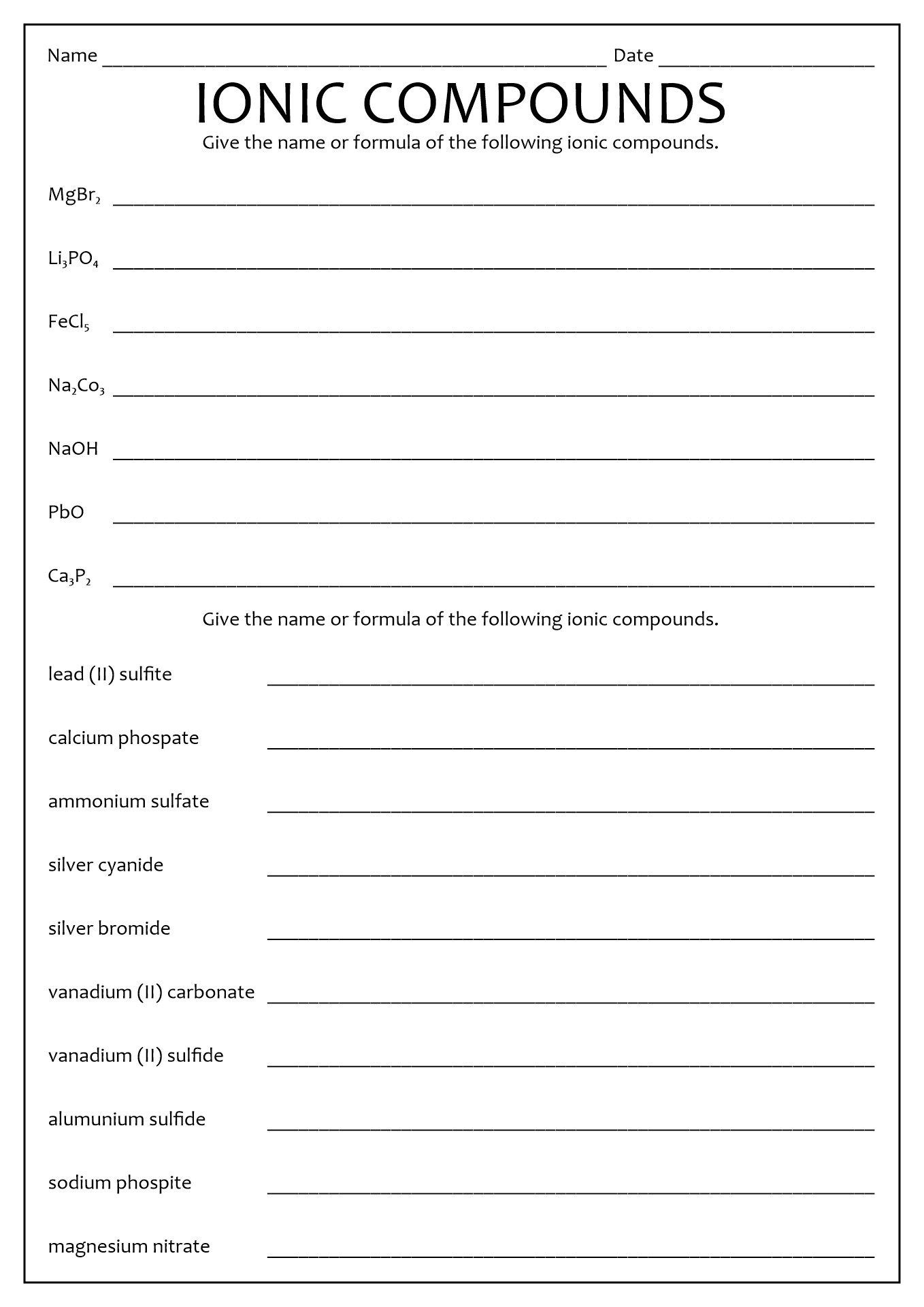
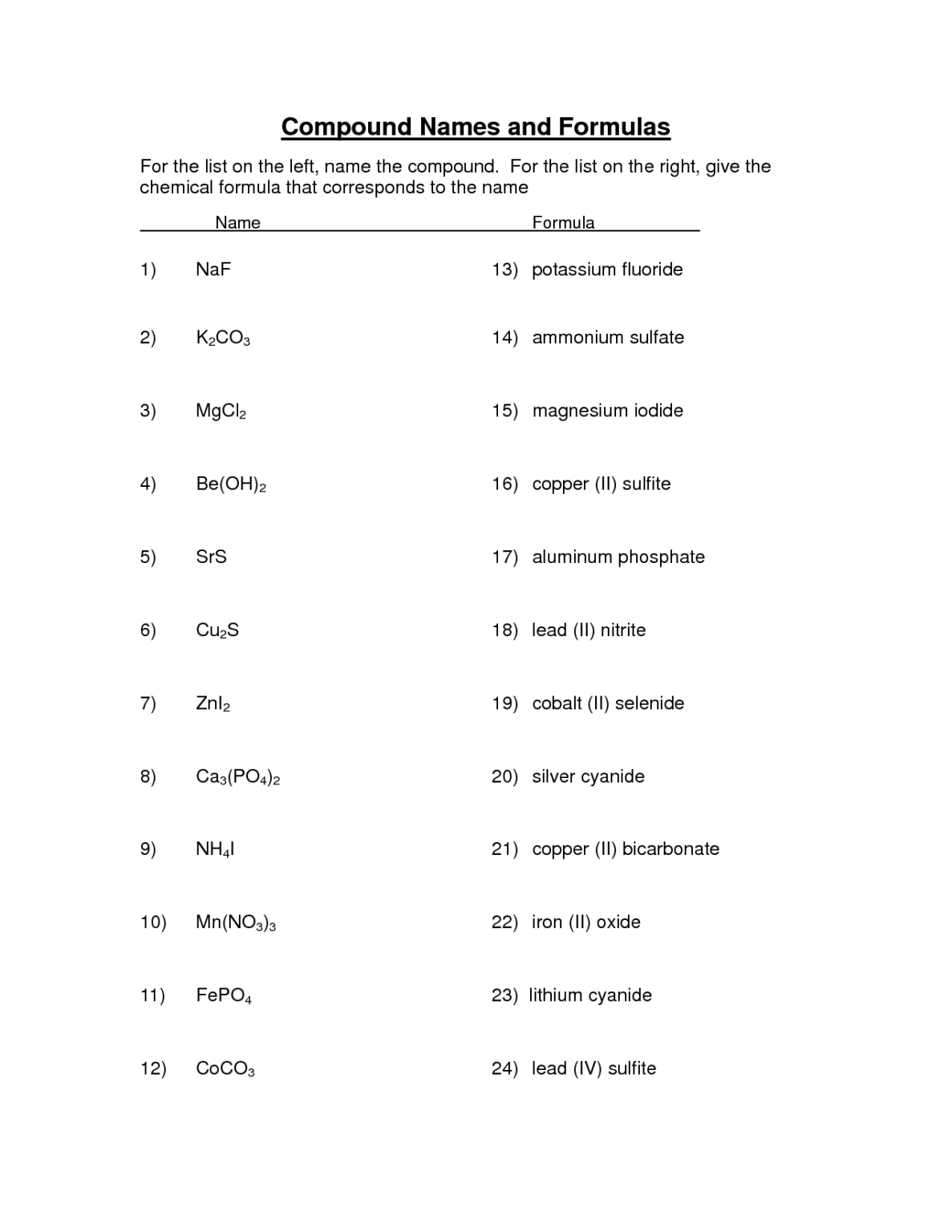
Ionic Compound Naming Worksheet is a cornerstone tool that transforms abstract chemical rules into tangible practice for students and teachers alike. As I flipped through my own high school textbook, I realized how these worksheets bridge theory and real-life application, turning memorization into intuitive understanding. This post dives into how to make the most of these worksheets, the science behind naming ionic compounds, and the best strategies for mastering the art of chemical nomenclature.
Why Ionic Compound Naming Matters in Modern Chemistry

In every laboratory and classroom, the language of compounds is a shared vocabulary that scientists, engineers, and innovators rely on daily. Naming ionic compounds isn’t just a school assignment; it’s the foundation for identifying materials in medicine, electronics, and environmental science. A clear understanding of how to name a compound allows one to decode a product label, understand a research paper, or even troubleshoot a lab experiment. That’s why investing time in Ionic Compound Naming Worksheet practice pays dividends in both academic performance and practical skill.
Common Challenges Students Face

1. Transition Metal Cations and Their Charges
Transition metals often change oxidation states. Students frequently mislabel compounds because they ignore the metal’s charge. Worksheets that include a table of common oxidation numbers help reinforce the pattern: for example, Fe²⁺ and Fe³⁺ produce iron(II) and iron(III) compounds.
2. Polyatomic Ions with Variable Charges
Polyatomic ions such as sulfate (SO₄²⁻), carbonate (CO₃²⁻), and ammonium (NH₄⁺) keep learners on their toes. A worksheet that pairs each ion with its correct formula reduces guesswork and reinforces the rule that the negative ion’s charge balances the positive ion’s charge.
3. Naming Conventions for Binary Oxides
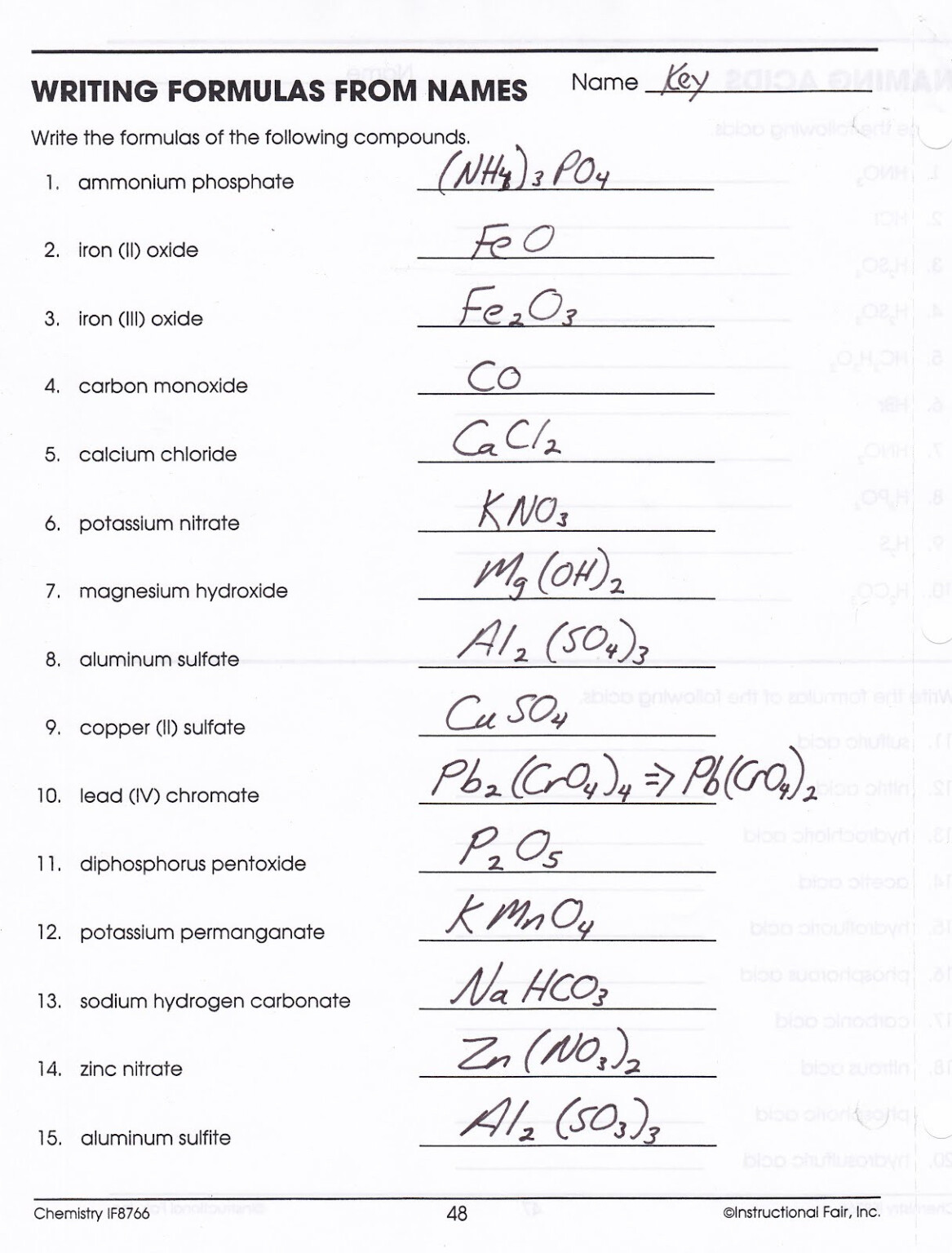
Binary oxides of nonmetals require the addition of -ide, while those of metals use Roman numerals to denote the metal’s oxidation state. Worksheets that ask students to convert formulas like Na₂O to sodium oxide or Fe₂O₃ to iron(III) oxide sharpen recognition skills.
Step‑by‑Step Guide to Mastering Naming Workbooks

1. Start with a Quick Reference Chart
Before tackling the worksheet, print a compact chart of the most common anions and cations. Keep it next to your desk so you can quickly cross‑reference an ion’s name and charge. This reduces cognitive overload and builds confidence.
2. Read the Formula Thoroughly
Look for the overall charge neutrality first. If a formula contains a metal with a variable charge (e.g., Cu₂O), calculate the total charge by multiplying the ion’s subscript by its known charge. Then, adjust the subscript of the other ion until neutrality is achieved. This calculation often appears as a sub‑step in worksheets.
3. Identify the Cation and Anion
In an ionic compound, the cation is the metal or positively charged ion that appears first in the formula. The anion is the nonmetal or negatively charged ion. Worksheets may ask you to bold the cation or underline the anion to reinforce this practice.
4. Apply the Nomenclature Rules
- Binary Compounds: Combine the cation name with the anion name modified by adding -ide.
- Binary Oxides: Use “oxide” as the suffix; for metals, include Roman numerals.
- Polyatomic Ions: Keep the ion name unchanged; add a suffix if the ion carries a charge that differs from the one listed.
5. Write the Full Name with Correct Parentheses
When the metal has a variable charge, place the Roman numeral in parentheses immediately after the metal’s name and before the ion name, e.g., copper(II) sulfate. Worksheets often contain a blank for the Roman numeral, forcing students to recall the metal’s oxidation state from context.
6. Double‑Check Your Work
Re‑calculate the charge balance. If you started with a formula that had a net charge of zero, the final name should reflect that neutrality. A quick mental check helps catch errors early.
Real‑World Examples to Motivate Practice
Cooking with Sodium Chloride
When you see table salt, you’re looking at NaCl. A worksheet that asks you to name “sodium chloride” helps students connect classroom concepts with everyday life. Expanding this, consider how sodium bicarbonate (NaHCO₃) is used in baking and how the naming conventions guide your understanding of its chemical behavior.
Medicine: Aspirin’s Active Ingredient
Aspirin’s chemical formula is C₉H₈O₄. Though not strictly ionic, learning to break down complex formulas in worksheets prepares students for pharmaceutical naming where ionic intermediates often play a role. Understanding the base structure helps in predicting solubility, reactivity, and dosage calculations.
Electronics: Aluminum Oxide in Semiconductors
Al₂O₃, known as aluminum oxide or alumina, is a key insulator in semiconductor fabrication. Naming worksheets that include such compounds expose students to industry terminology, bridging the gap between academia and technology.
Strategies for Using Worksheets Effectively
1. Interactive Group Sessions
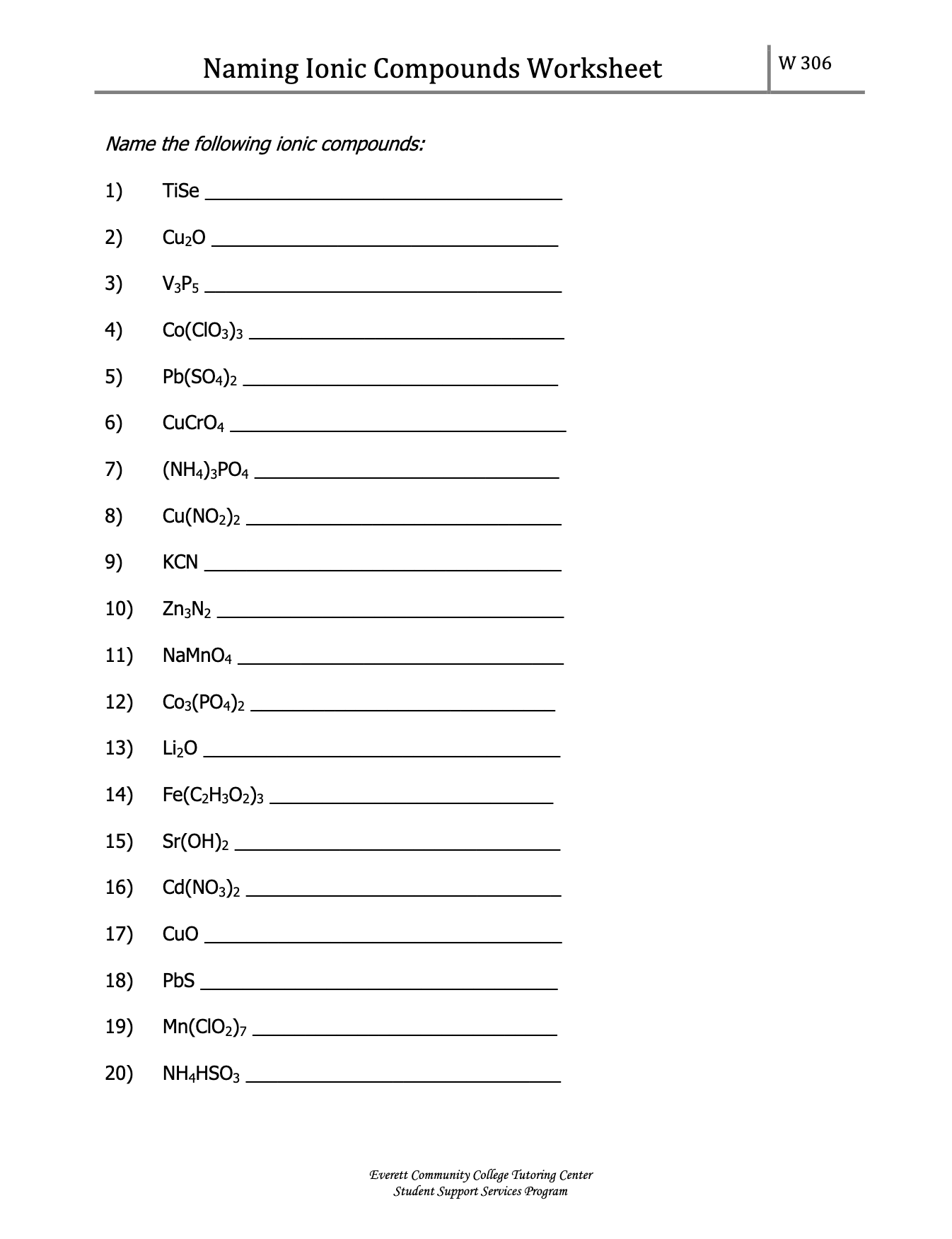
Pair up students and let them quiz each other. A worksheet can be turned into a game by timing each pair and awarding points for accuracy. This competitive element boosts engagement.
2. Use Visual Aids
Color‑coding ions—red for cations and blue for anions—makes the formula easier to parse. Some worksheets incorporate these visual cues, reinforcing spatial memory.
3. Incorporate Flashcards
Create flashcards from worksheet answers. Review them daily; spaced repetition is proven to cement chemical knowledge.
4. Integrate Real‑Time Feedback
When a teacher checks worksheets, provide immediate explanations for wrong answers. Explaining why Na₂O is sodium oxide rather than sodium oxonium clarifies common misconceptions.
Digital vs. Print Resources: Choosing the Right Format

While traditional print worksheets are tangible and easy to annotate, digital worksheets offer interactive features like instant grading, auto‑highlighting of errors, and multimedia explanations. Many educational platforms host customizable worksheets, allowing teachers to tailor difficulty levels. However, the tactile experience of writing by hand still plays a critical role in memory retention, making a hybrid approach optimal.
Student Success Stories: Turning Struggle into Mastery

Emma, a sophomore, struggled with transition metal nomenclature until she began using a series of worksheets that progressively introduced more complex ions. Within two weeks, she could name compounds like chromium(III) nitrate and manganese(II) sulfate with ease. By incorporating the step‑by‑step guide above, Emma’s confidence surged, and her quiz scores improved from 60% to 92% in the same semester.
Marcus, a high‑school chemistry teacher, revamped his curriculum by integrating a “Worksheet of the Week” that focused on a single rule each lesson. His students reported that the consistent practice made the seemingly daunting task of naming compounds feel like a logical puzzle.
Conclusion: Making Naming Workbooks a Cornerstone of Chemistry Education
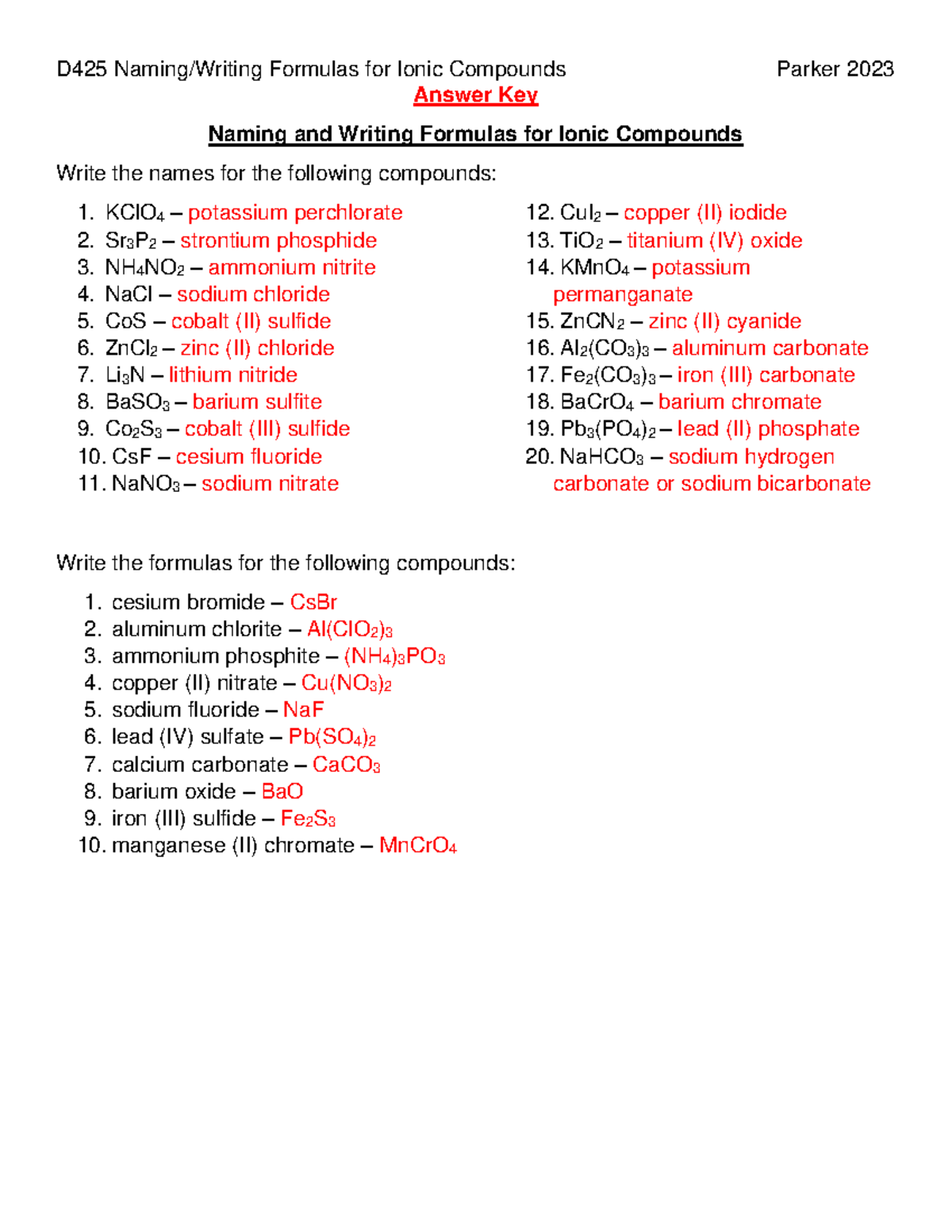
Mastering the Ionic Compound Naming Worksheet is more than a classroom exercise—it’s a gateway to clear scientific communication and real‑world application. By understanding the common challenges, following a structured step‑by‑step method, and connecting each compound to everyday contexts, students transform rote learning into meaningful knowledge. Whether you choose digital or print formats, group activities or solitary practice, the key is consistent, thoughtful engagement. With the tools and strategies outlined above, you’ll not only ace your exams but also develop a deeper appreciation for the language that drives modern chemistry.