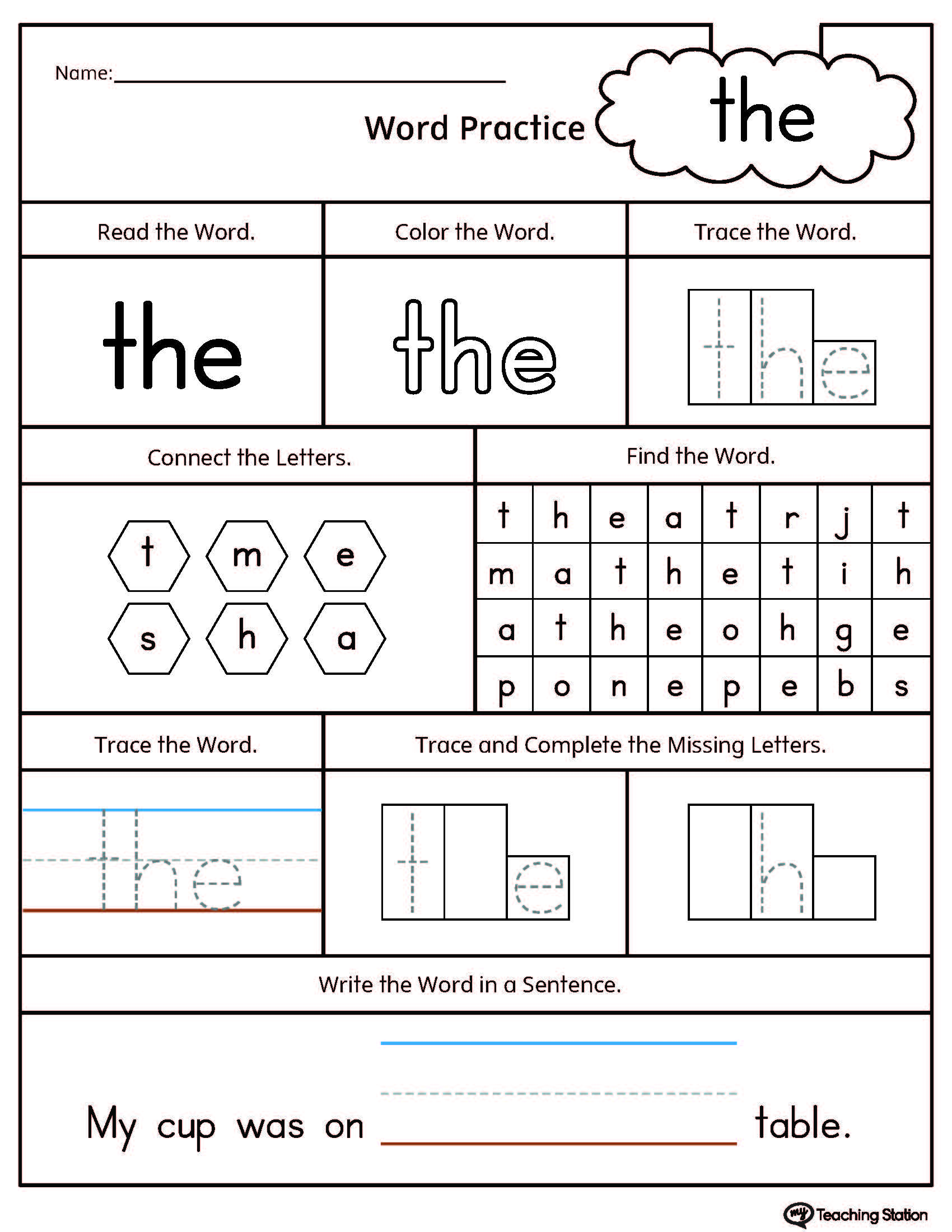
Kindergarten Sight Word Worksheet is the magical unicorn of early literacy—sparkly, slightly confusing, and somehow always showing up when you need it most, usually right after the third cup of coffee. If you’ve ever tried to convince a five‑year‑old that “the” is not a secret code for “pizza,” you know the struggle is real. This blog post will whisk you through the why, what, and how of sight word worksheets, sprinkle in some giggle‑worthy anecdotes, and hand you a treasure trove of practical tips that even the most sleep‑deprived parent can follow without turning into a zombie.
Why Sight Words Matter More Than Your Kid’s Favorite Cartoon

Before we dive into the glittery worksheets, let’s get the fundamentals straight. Sight words are the high‑frequency words that appear over and over in English texts—think “a,” “and,” “is,” “the.” Kids who can recognize these instantly stop stumbling over every single word like it’s a Lego piece in their shoe. In other words, sight word mastery is the shortcut that turns “I can read!” into “I can read *fast*,” leaving more time for the important things like dinosaur roars and snack breaks.
Research shows that early fluency with sight words correlates with higher comprehension scores later on. When your child isn’t stuck decoding “the” for the tenth time on the same page, they can focus on the story’s plot, characters, and, most importantly, the moral about sharing cookies.
What Makes a Great Kindergarten Sight Word Worksheet?

Not all worksheets are created equal. Some look like they were designed by a bored accountant, while others could win an award for “Most Likely to Make a Kid Laugh.” Here’s the checklist for a worksheet that’s both educational and entertaining:
- Clear, large fonts: Kids’ eyes are still learning to focus, so a 24‑point font in a friendly sans‑serif works best.
- Visual cues: Cute illustrations, colored borders, or even a tiny dinosaur mascot can keep attention from drifting to the window.
- Variety of activities: Mixing tracing, matching, and fill‑in‑the‑blank keeps the brain guessing (in a good way).
- Progressive difficulty: Start with the “Dolch” or “Fry” first‑grade list and gently introduce new words each session.
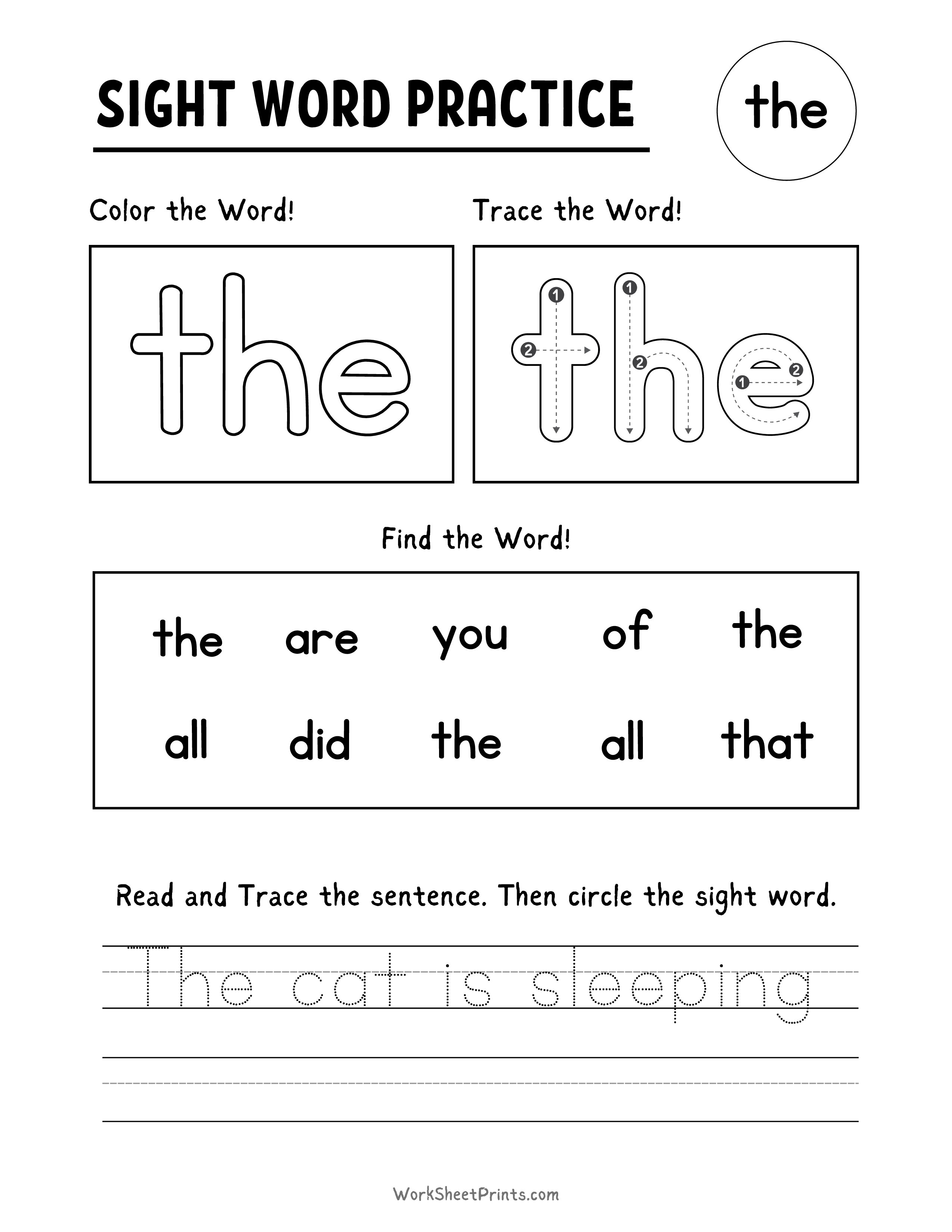
- Humor: A funny sentence like “The cat ate the pizza while the dog danced” makes learning memorable.
How to Use Sight Word Worksheets Without Losing Your Sanity
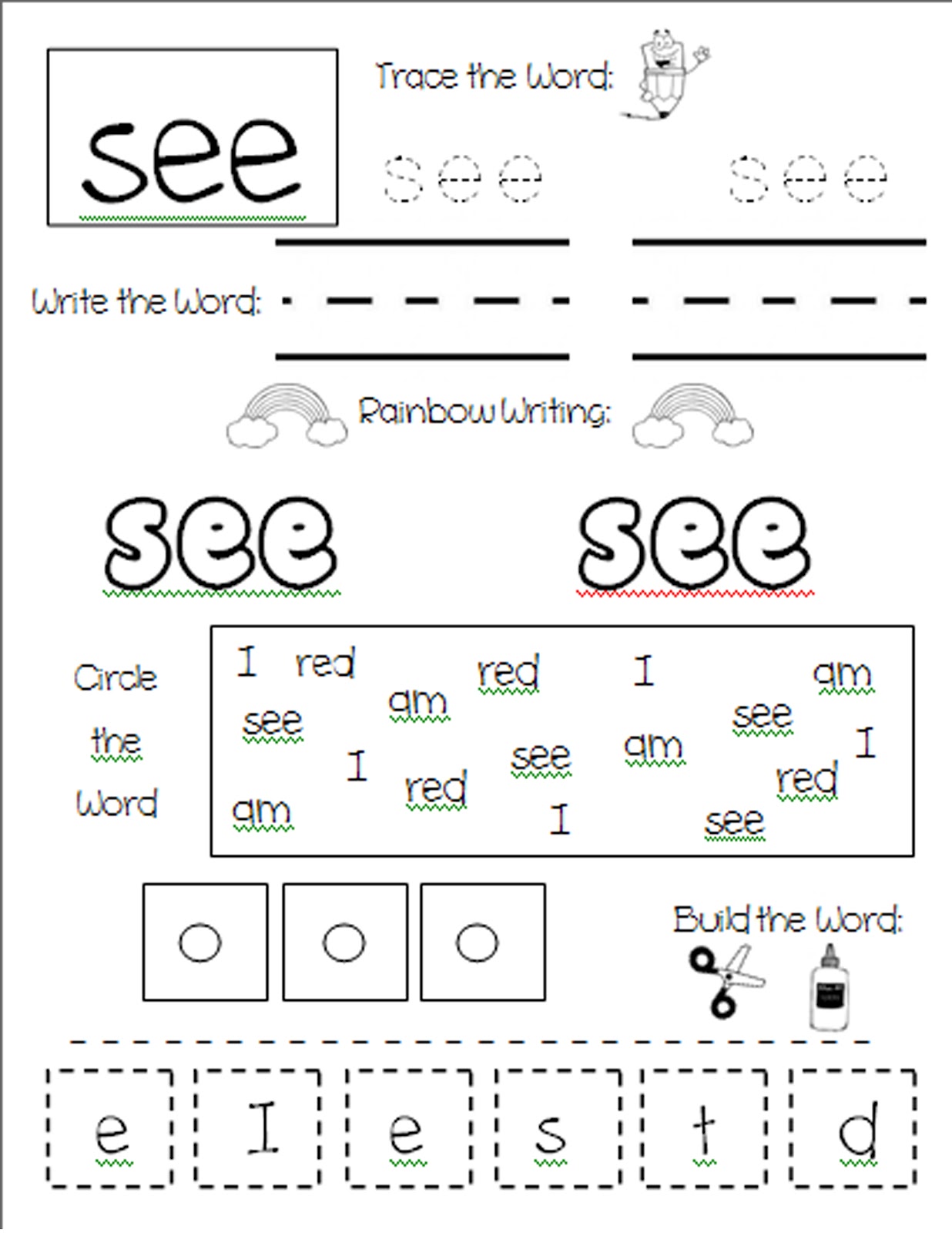
Set the Scene Like a Mini Classroom
Turn the kitchen table into a “learning zone” with a colorful rug, a jar of stickers, and a timer that looks like a spaceship countdown. Kids love rituals, and a designated spot signals, “It’s time to be a reading astronaut!”
Keep Sessions Short and Sweet
Attention spans at age five are roughly the length of a short commercial break—about 10‑15 minutes. Aim for three rounds: a quick warm‑up, the main worksheet, and a celebratory wrap‑up with a sticker or high‑five.
Model the Process First
Demonstrate how to trace a word, then say it out loud. Use exaggerated expressions: “Look, ‘and’ looks like a tiny snake slithering across the page!” This not only clarifies the task but also adds a dash of silliness that sticks.
Incorporate Movement
After completing a line, have your child jump three times or do a “sight word dance.” Physical activity reinforces memory and burns off that extra burst of energy that usually results in a sudden urge to draw on the walls.
Reward Progress, Not Perfection
Celebrate every correctly identified word with a sticker, a goofy applause, or a “gold star” certificate. The goal is to build confidence, not to create a tiny perfectionist who refuses to write “the” unless it’s perfectly centered.
Free Printable Resources You Can’t Miss

While there are countless paid packages, the internet is a goldmine of free, high‑quality worksheets that will keep your child engaged without draining your wallet. Look for PDFs that include:
- Large, bold letters for tracing.
- Color‑coded sections for different word families.
- Fun themes such as “Space Adventure,” “Under the Sea,” or “Dinosaur Dig.”
- Answer keys for quick self‑checking.
Download a set, print on cardstock for durability, and store them in a “Sight Word Treasure Chest” (a decorated shoe box works wonders). Rotate the worksheets weekly to keep the novelty factor alive.
Creative Twist Ideas to Supercharge Learning

Word Hunt Treasure Maps
Draw a simple map of your living room with “X” marks where sight words are hidden on sticky notes. Let your child follow the clues, read each word aloud, and collect a “gold coin” (a chocolate chip) for each correct read. This combines reading practice with a classic treasure hunt.
DIY Sight Word Bingo
Create a 5×5 grid filled with sight words instead of numbers. Call out words randomly; the first to complete a row shouts “Bingo!” and gets a goofy prize like “One extra bedtime story.” This game reinforces word recognition while adding competitive excitement.
Story Mash‑Up
Give your child a short, simple story missing several sight words. Provide a word bank and let them fill in the blanks. The result is a slightly wobbly narrative that still makes sense, and the giggles that follow when a word like “the” ends up in a weird spot are priceless.
Interactive Digital Flipbooks
If you prefer a screen‑free approach, print out a series of sight word cards, fold them into a mini‑book, and let your child flip through while you narrate a story that uses each word. The tactile feel of turning pages mimics real books and strengthens fine motor skills.
Common Mistakes Parents Make (And How to Avoid Them)
- Over‑loading with words: Introducing ten new words in one session overwhelms the brain. Stick to three to five new words and review the rest.
- Skipping the review: Forgetting to revisit previously learned words erodes retention. Schedule a quick “flashback” at the start of each session.
- Using only worksheets: Variety is the spice of learning. Mix in games, songs, and real‑world reading (like cereal boxes) to keep things fresh.
- Getting frustrated: If a child struggles, take a break, offer a snack, or switch to a different activity. Positive emotions are the fuel for memory formation.
Tracking Progress Without Turning Into a Spreadsheet Nerd

Keeping tabs on improvement doesn’t have to involve Excel columns and endless color‑coding. Here are three parent‑friendly methods:
- Sticker Chart: Place a star sticker on a chart for each word mastered. When the chart is full, reward your child with a “Super Reader” ceremony.
- Word Wall: Designate a wall space for magnetic letters. Add a new word each week; as words accumulate, your child sees a visual proof of their growing vocabulary.
- Audio Log: Record short clips of your child reading the same list of sight words every week. Playback shows audible progress and can be a fun “then vs. now” video for family gatherings.
Integrating Sight Words Into Everyday Life

Worksheets are only part of the equation. Reinforce learning throughout the day with these low‑effort hacks:
- Label the House: Stick paper labels on doors, cabinets, and furniture with sight words (“door,” “sink,” “bed”). Kids will start reading signs as they move about.
- Snack Time Reading: Write sight words on crackers or fruit slices using edible markers. As they munch, they’ll be practicing word recognition.
- Road Trip Signs: Spot sight words on billboards or street signs during car rides. Turn it into a game: “Who can find ‘and’ first?”
- Bath Time Books: Use waterproof cards with sight words that stick to the tub walls. The water can’t wash away learning.
When to Move Beyond Worksheets

Once your child confidently reads the core list of sight words (usually around 40‑50 words), it’s time to expand the horizon. Introduce simple sentence strips that combine sight words with phonetic words (“The cat sat.”). Encourage them to create their own short stories using a mix of familiar and new words. This transition from isolated words to contextual reading solidifies comprehension and prepares them for the next grade level.
Conclusion

Mastering the Kindergarten Sight Word Worksheet is less about endless scribbles and more about turning reading into an adventure that feels as fun as a playground slide. By selecting engaging worksheets, embedding humor, mixing in games, and weaving sight words into daily routines, you’ll help your child develop a strong reading foundation without losing your mind—or your sanity. Remember, each “the” they conquer is a stepping stone toward becoming a confident, independent reader who can tackle anything from fairy tales to science books (and maybe even the pizza menu). Keep the momentum rolling, celebrate every tiny victory, and enjoy the inevitable chorus of “I can read!” echoing through your home.