Letter X Worksheets For Preschool can feel like a sneaky ninja in the alphabet world—easy to overlook but oh so essential when it comes to spelling, spelling, and spelling! If you’re a parent, teacher, or simply a word‑whisperer in a toddler’s life, you’ll want to give the letter X the spotlight it deserves. Grab your crayons, dust off those worksheets, and let’s turn the little “x” into a big, bold hero of learning—without losing our sense of humor along the way.
Why Letter X Is a Hidden Gem

It’s Not Just a Shape
The X shape is more than a cross—it’s a portal to imagination. Picture a secret treasure map: the X marks the spot, the X marks the spot! Teaching kids this letter gives them a tangible connection to adventure, mystery, and the thrill of discovery. Plus, it’s a great way to introduce the concept of variables in basic algebra (yes, even preschoolers can see the power of the “unknown”!).
Pronunciation and Phonics Fun
Unlike the more common “a” or “m,” X has a sharp, sibilant sound that can be tricky for little mouths. By practicing the /k/ (as in “kicks”) and /s/ (as in “socks”) sounds on worksheets, children gain confidence in making their own distinct consonant sounds. And when they finally pronounce it correctly, the look on their face is priceless—like a kid who just found the perfect pair of sneakers in the shoe rack.
Building Fine Motor Skills
Tracing X shapes requires precise finger control—an excellent exercise for developing fine motor skills. The cross’s symmetrical lines are a perfect challenge: enough complexity to keep them engaged, but simple enough to not overwhelm. Every stroke becomes a tiny workout for their wrists and fingers—think of it as a tiny Pilates session for future writers.
How to Get Your Kids Excited About X

Turn the Letter Into a Superhero
Give X a persona. “X‑Man” is the fearless explorer who can solve any puzzle, or “X‑Ranger” who guards the alphabet forest. When the worksheet asks “What does X stand for?” kids can answer “X‑Man saves the day!” This personification adds a layer of storytelling that makes learning feel like play.
Use Colorful Themes
Color is a powerful motivator. Provide worksheets that incorporate vibrant colors—red for excitement, blue for calmness, yellow for sunshine. Mix in some glitter or stickers as rewards for completing a page, and watch motivation skyrocket. Just be careful to keep the background simple enough that the X shapes stand out.
Incorporate Real‑World Scenarios
Ask kids to trace an X in a real context: “Trace the X that marks the treasure on the map.” Or, “Trace the X that indicates the secret entrance to the playhouse.” By linking the activity to a familiar setting, children see the letter’s relevance and feel like they’re actively participating in a story.
Creative X Tracing Techniques

Trace with Different Tools
- Crayons and pencils: Classic choice. The waxy feel of crayons helps children control pressure.
- Water‑based markers: A fun alternative that dries fast, preventing smudges on the next worksheet.
- Colored pencils: Perfect for introducing shading and depth while practicing X shapes.
- Finger paint: Great for sensory learning; kids trace X with their finger, feeling the paint’s texture.
Use “X” as a Drawing Starter
Provide a half‑completed X and ask kids to finish it. This helps them understand how the letter is constructed from a single stroke. They learn to plan the final segment, reinforcing spatial reasoning skills.
Incorporate Technology
There are many printable X worksheets available online—just a quick search, and you’ll find PDF files that teachers can print or share digitally. Use a tablet with a stylus to trace the X on screen, which can provide immediate visual feedback. Some apps even play a celebratory sound when the shape is completed correctly, turning learning into a mini‑party.
Interactive X Games

X‑Treasure Hunt
Create a simple treasure map on a sheet of paper, with an X marking the spot. Let kids trace the X and then search for the “treasure”—a small toy or a sticker. This turns a worksheet into an adventure, combining physical movement with fine‑motor practice.
“Who’s the X?” Bingo
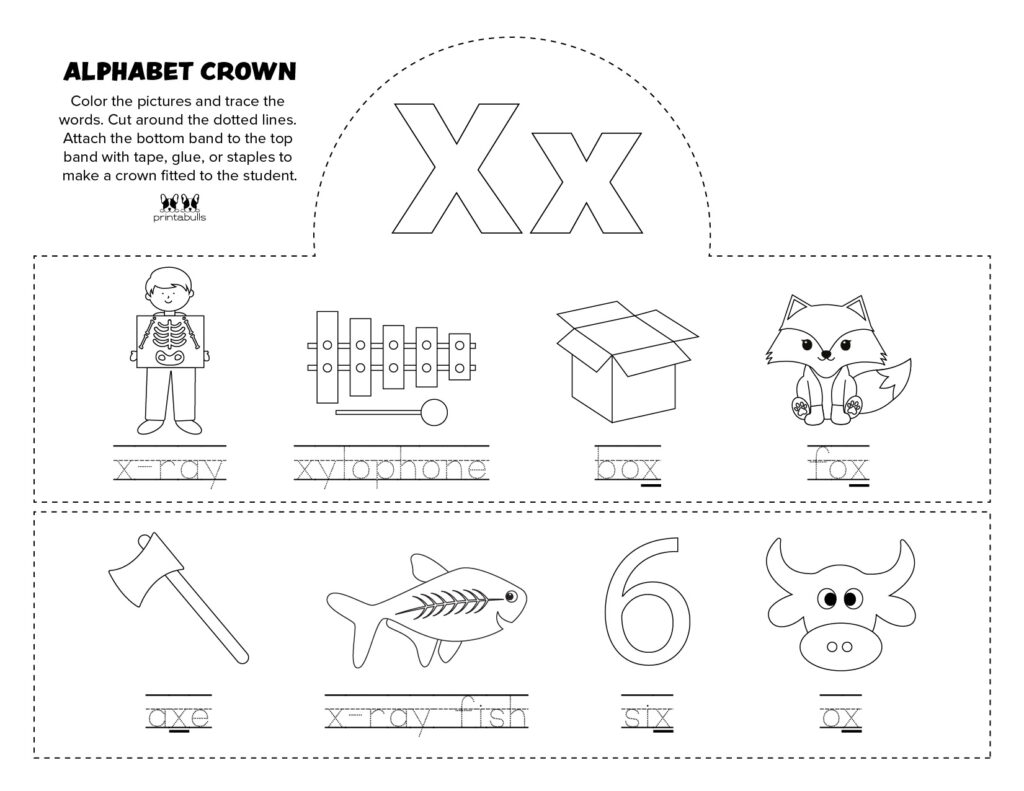
Make a bingo card where each square has a different word that starts with X (e.g., “Xylophone,” “X‑Ray”). Kids trace each X on the worksheet and then mark the word on their card. The first to complete a line wins a small prize. It’s a great way to reinforce vocabulary while still focusing on the letter.
Memory Match with X Shapes
Print out cards that have X shapes on one side and pictures of objects that start with X on the other. Kids flip two cards at a time, matching the shape to its corresponding object. This game improves memory, matching skills, and recognition of the letter’s sound.
Printable X Worksheets That Work

Lowercase X Tracing Worksheet
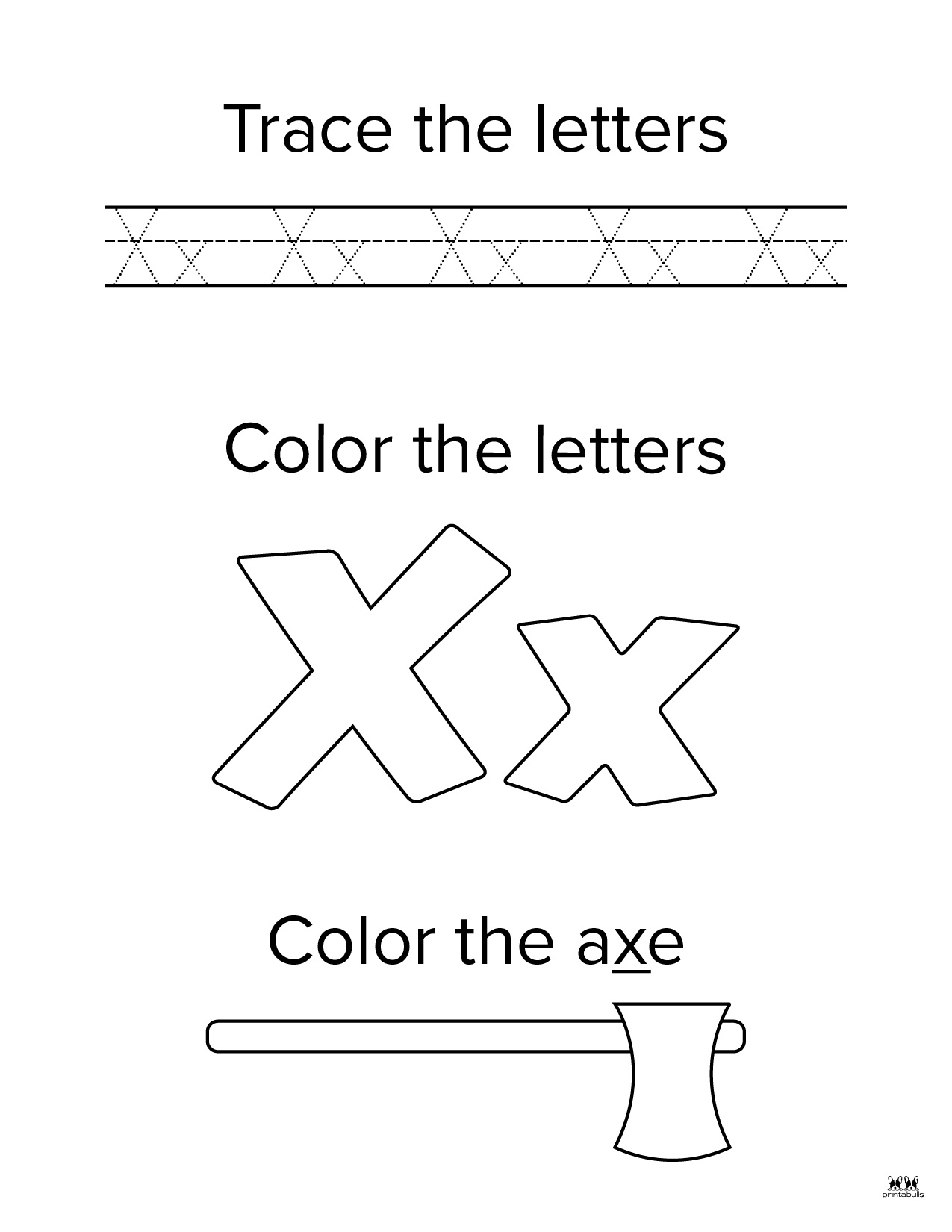
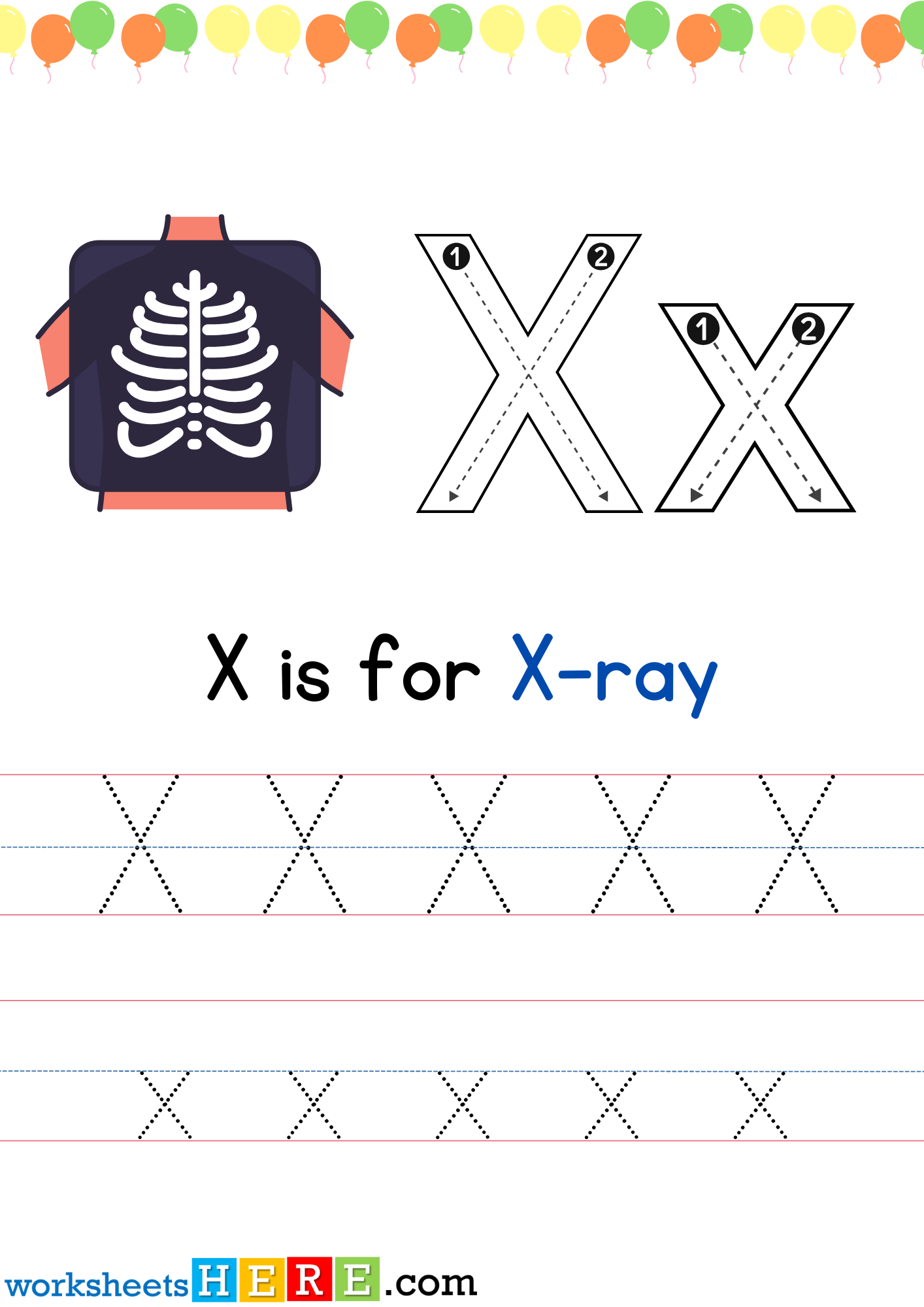
This worksheet is perfect for preschoolers who are just beginning to trace. It includes a large, bold X with thick lines, making it easy for small fingers to follow. The design often features a subtle background (like a light sky or forest) to keep the focus on the shape.
Uppercase X Tracing Worksheet
Uppercase X worksheets challenge older preschoolers who are ready to handle a more complex shape. The cross typically has more defined angles, encouraging precise control of the pencil. These worksheets can be combined with a color‑by‑number activity to add a layer of engagement.
Mixed‑Letter X Activity Sheets
Some worksheets present a page of mixed letters, with X highlighted. Children must trace all the X’s among a sea of other letters. This not only practices fine motor control but also sharpens letter discrimination—an essential pre‑reading skill.
Creative X Craft Templates
Printable templates that let kids cut out X shapes and glue them onto a poster board create a tactile learning experience. They can color each segment with a different hue, learning about color combinations while mastering the letter.
Parent & Teacher Tips

Keep Sessions Short and Sweet
Preschoolers have limited attention spans. Aim for 5‑10 minute sessions, focusing on one activity at a time. If the child shows signs of fatigue, transition to a different, less intense task.
Celebrate Every Success
Positive reinforcement goes a long way. Offer verbal praise, stickers, or a high‑five whenever a child completes a worksheet correctly. Even a simple “Great job, X‑Master!” can boost confidence and encourage repetition.
Integrate X Into Daily Routines
Ask kids to point out X’s around the house—on a cereal box, a toy, or a door sign. This real‑world connection reinforces the letter’s relevance and helps them see it beyond the page.
Use a Variety of Materials
Different textures stimulate sensory learning: paper, foam, felt, and even sand paper. Kids who trace X’s in sand (using a small rake or finger) experience a different tactile sensation that can make the activity memorable.
Involve the Whole Family
Turn worksheet time into a family activity. Parents can trace the X alongside their kids, turning it into a bonding moment. This also models learning as a positive, shared experience.
Conclusion

Mastering Letter X Worksheets For Preschool isn’t just about getting a correct shape on paper; it’s about unlocking a world of adventure, creativity, and essential early literacy skills. By turning the X into a superhero, incorporating vibrant colors, and adding playful games, you give your child a powerful, engaging introduction to this often‑overlooked letter. Remember to keep activities short, celebrate progress, and integrate the X into everyday life. With the right blend of humor, creativity, and structure, the humble X will become a favorite tool in your child’s educational journey—one that’s as fun to teach as it is to learn.