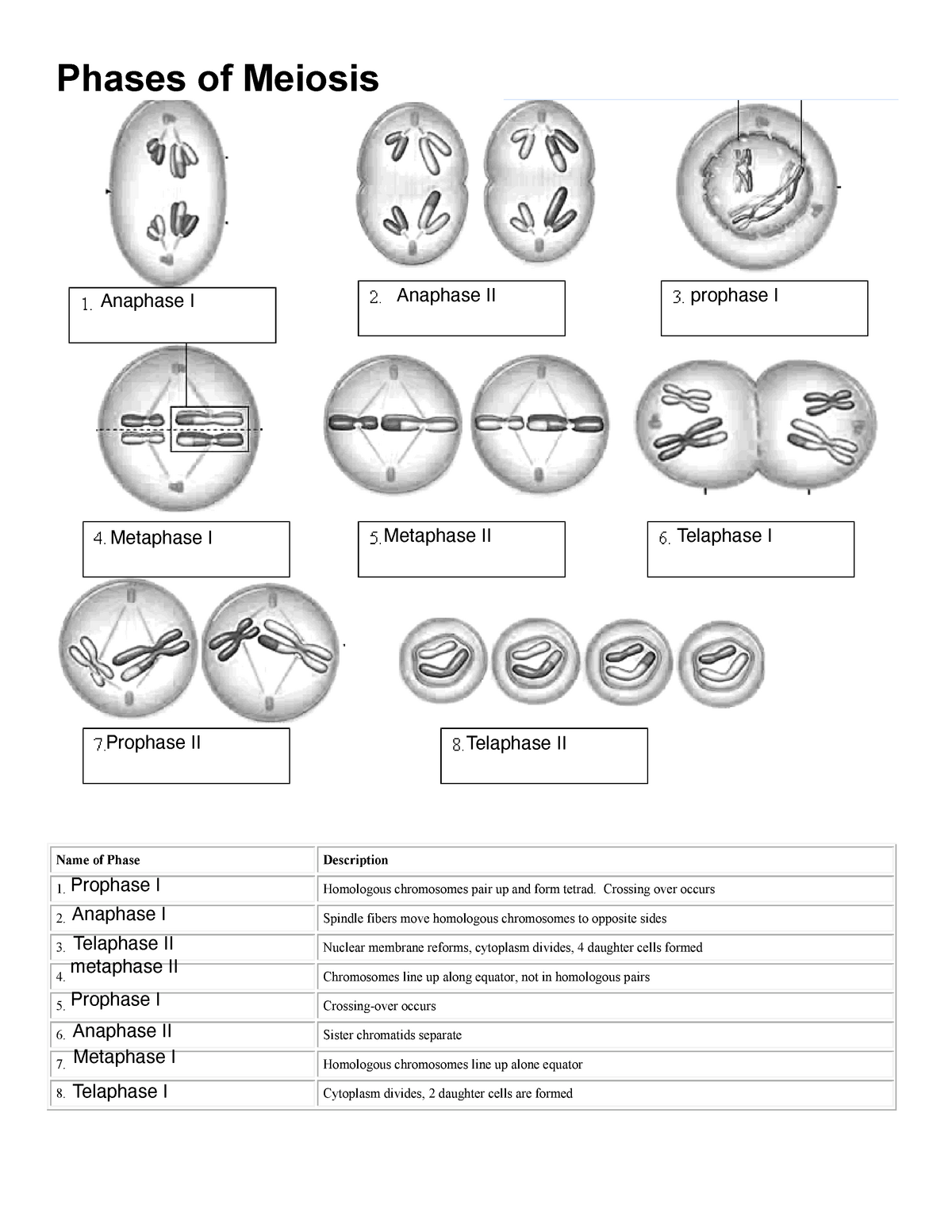
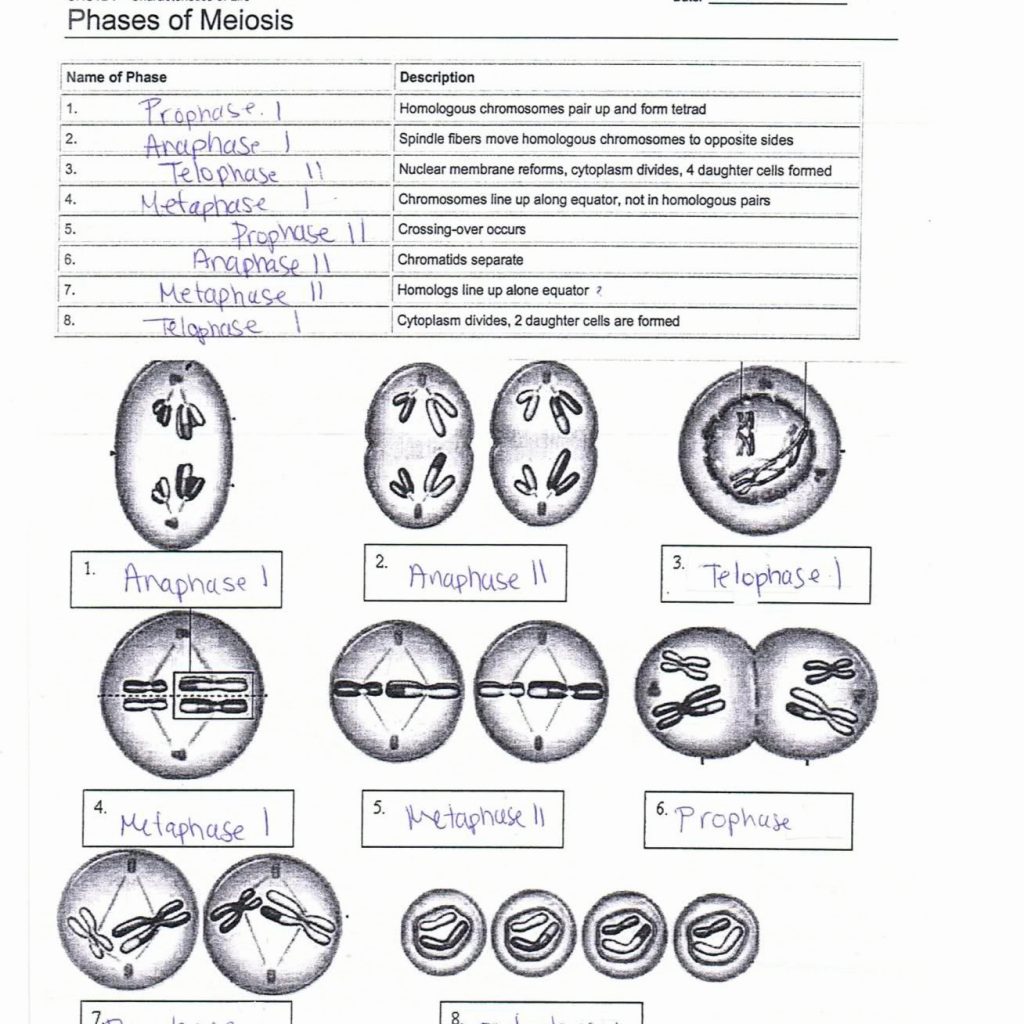
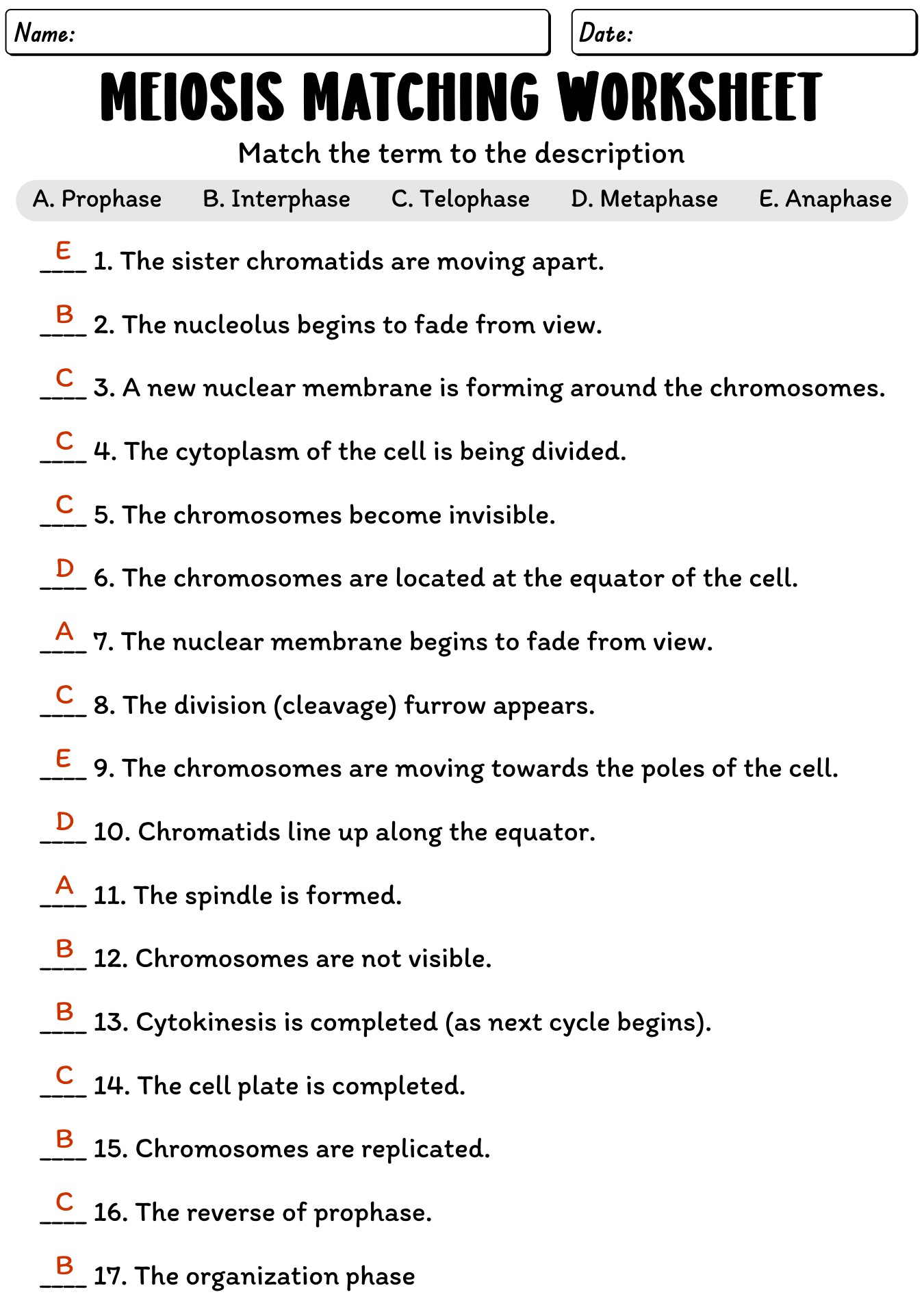
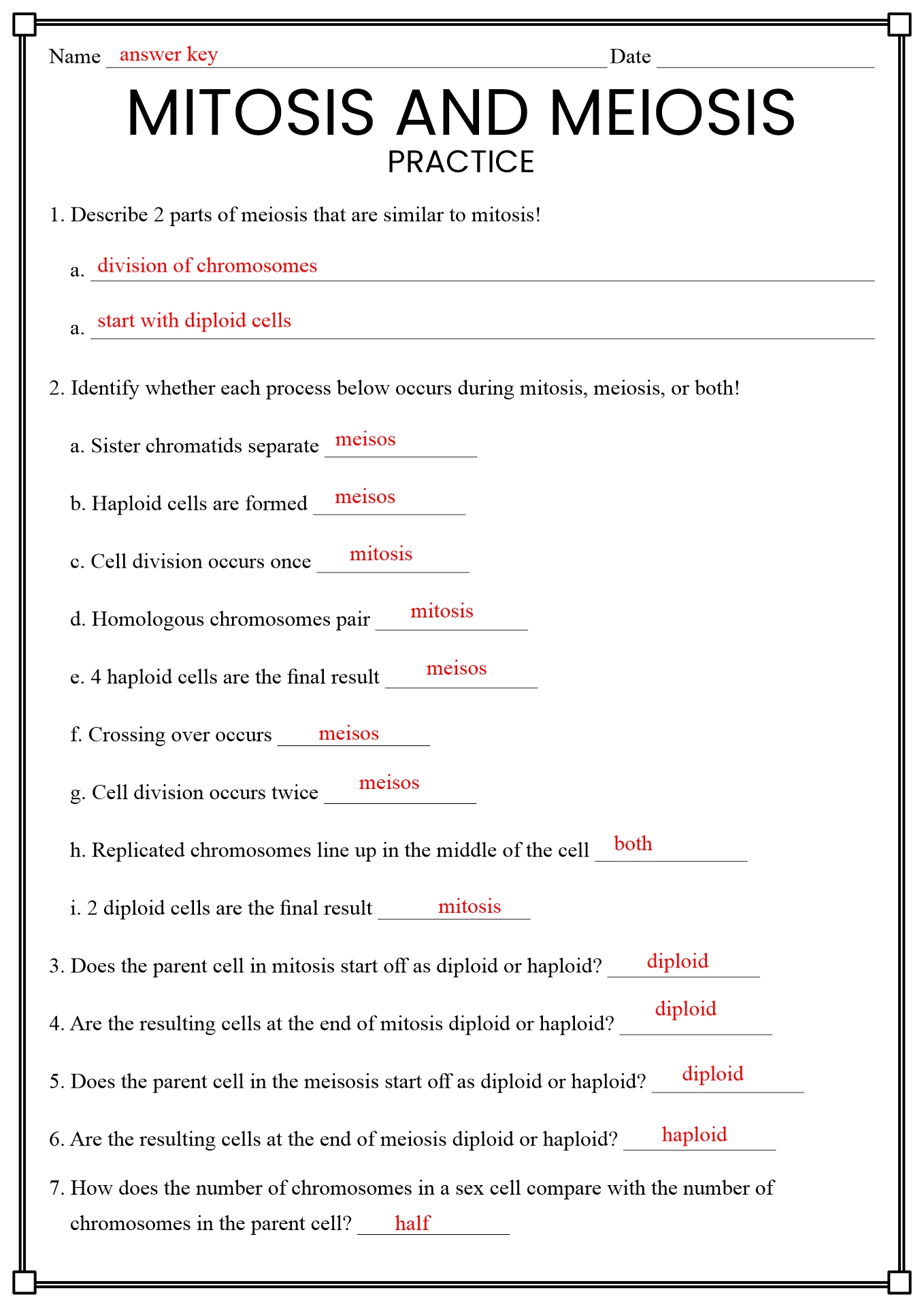
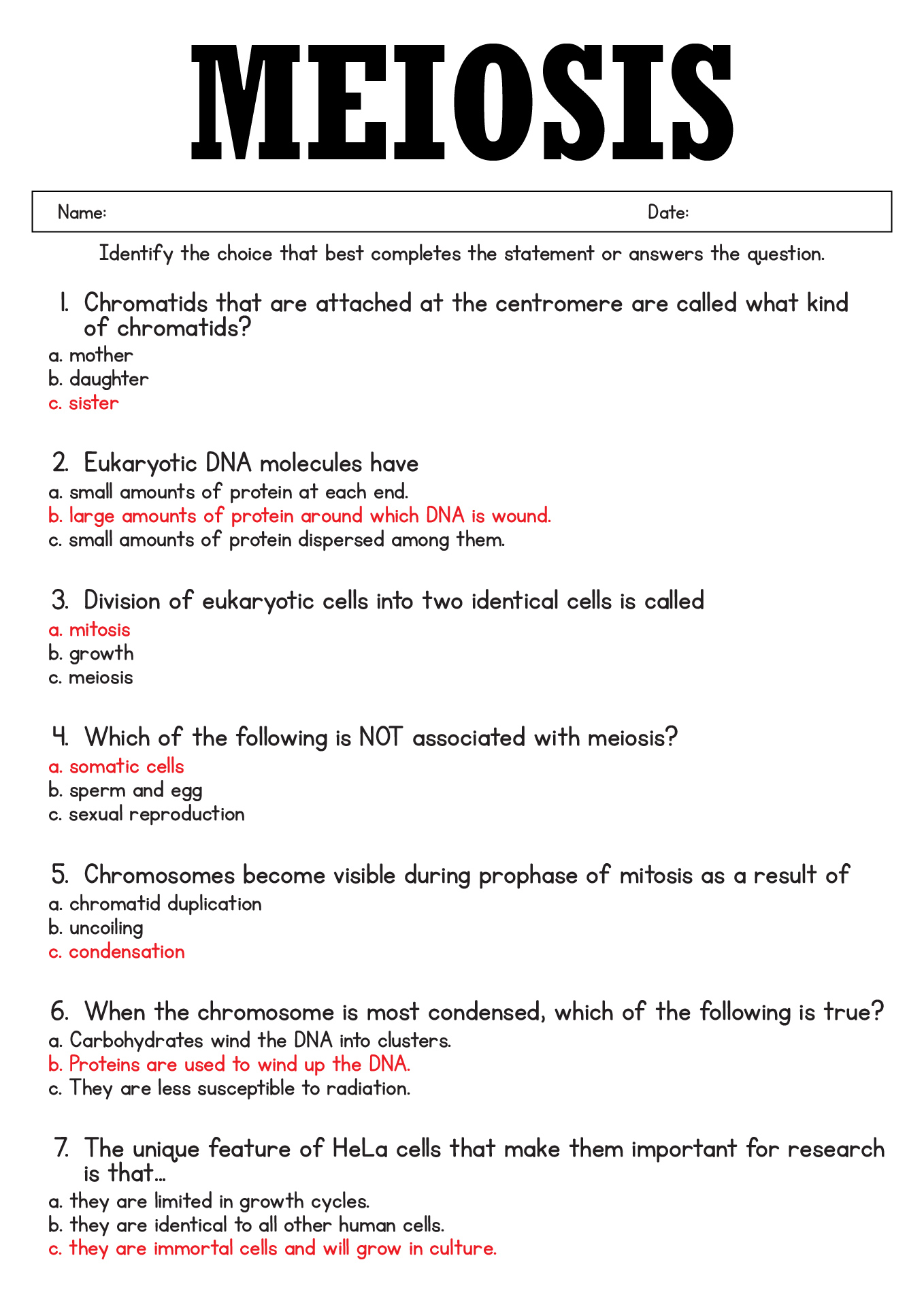
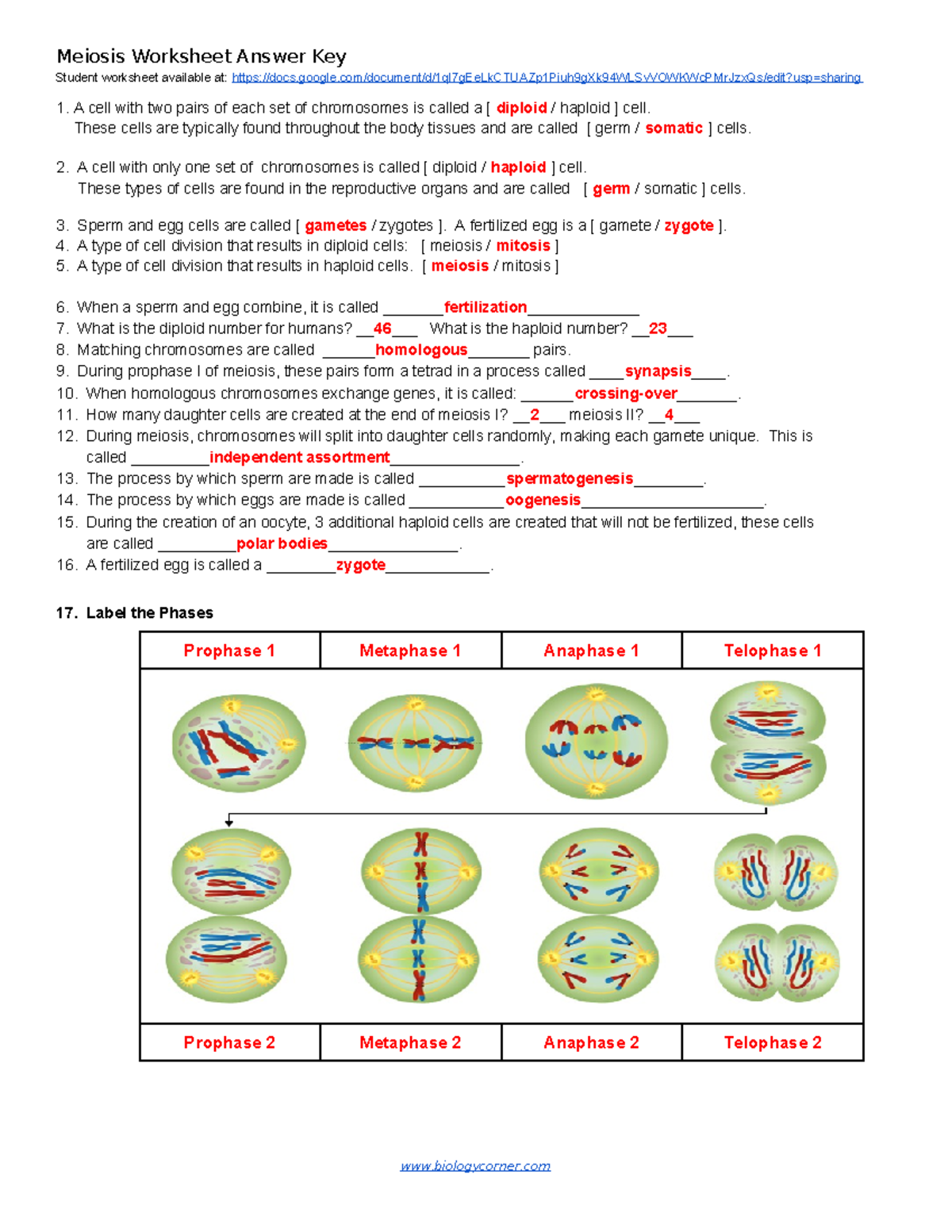
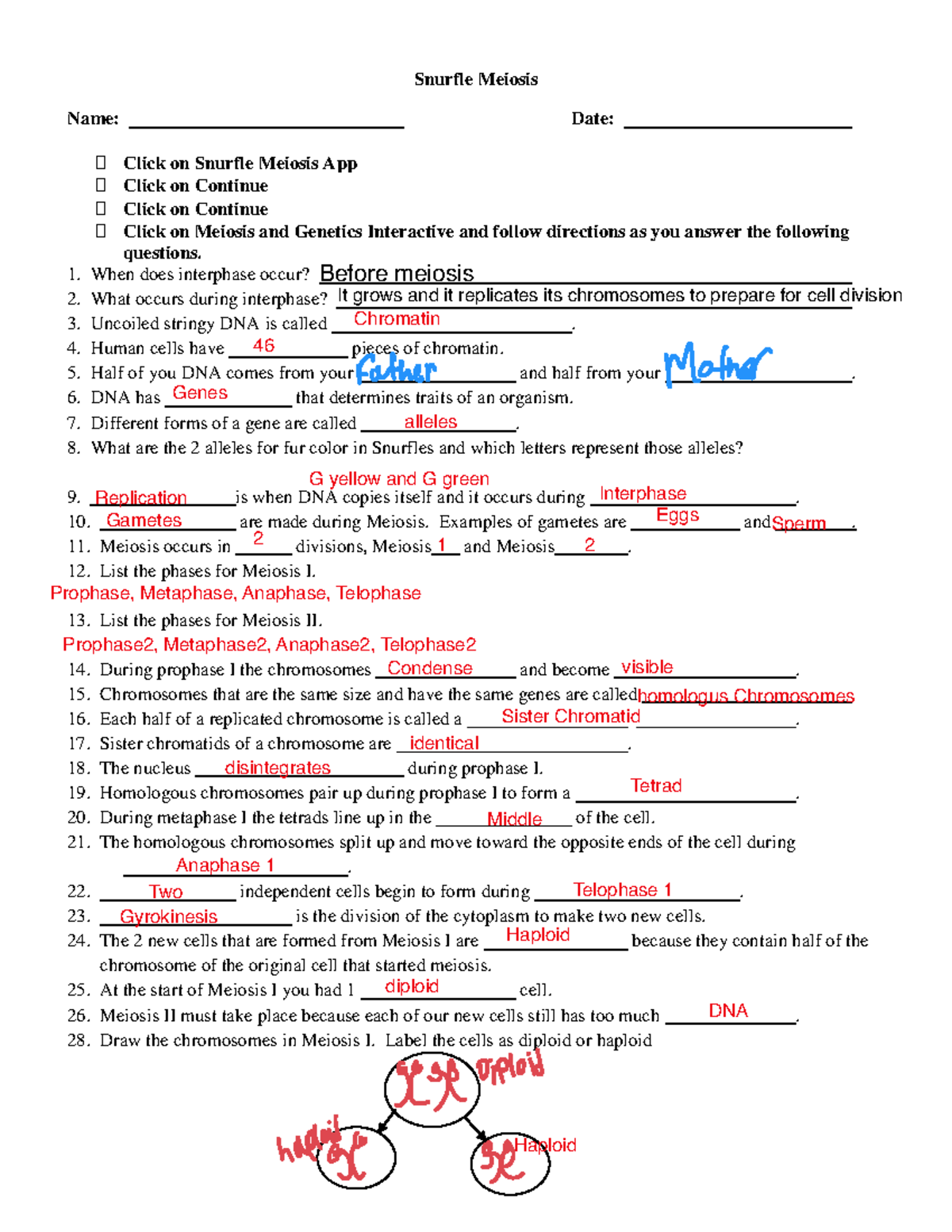
Meiosis Worksheet Answer Key serves as a critical tool for educators and students alike, providing a reliable reference to verify concepts, identify mistakes, and reinforce the complex series of events that define meiotic division. In this guide, we’ll explore why a comprehensive answer key is essential, how to leverage it for maximum educational benefit, and offer real-world examples and actionable strategies to transform a standard worksheet into an engaging learning experience.
Understanding the Importance of a Meiosis Worksheet Answer Key
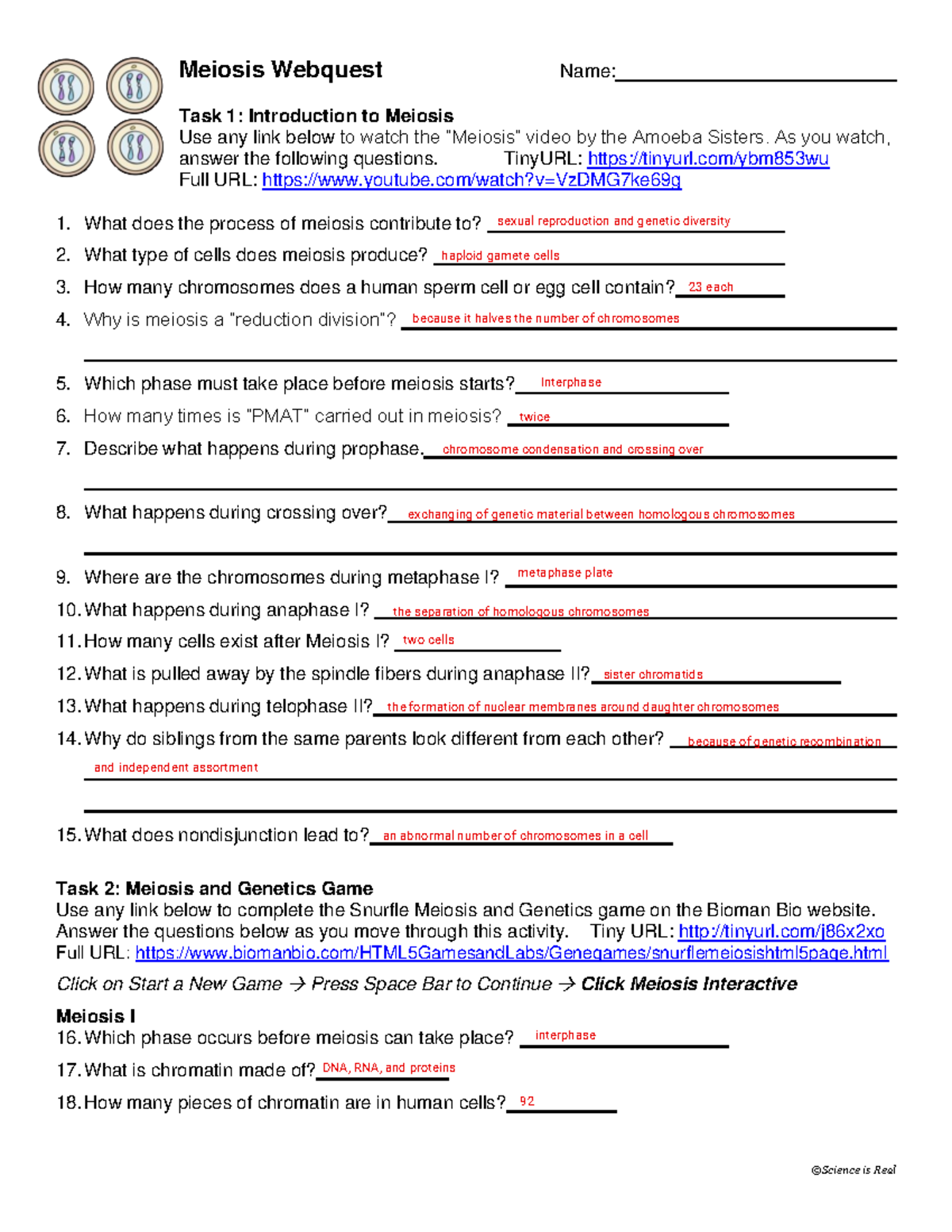
Meiosis, the process by which gametes are formed, is foundational for genetics, inheritance, and biodiversity. Yet the pathway involves multiple stages—prophase I, metaphase I, anaphase I, telophase I, followed by a second round of division. Each step carries nuances that can easily confuse students. A well-crafted answer key not only confirms correctness but also clarifies the reasoning behind each answer, bridging theory and practice.
Why Answer Keys Matter in Biology Education
1. Immediate Feedback: Students receive instant confirmation of their work, allowing them to correct misconceptions while the material is fresh in their minds.
2. Benchmarking Progress: Teachers can assess class performance, identify trends, and adjust instruction accordingly.
3. Curriculum Alignment: Answer keys ensure that worksheets align with learning objectives, state standards, and textbook content.
4. Resource for Peer Review: Students can cross-check answers, fostering collaborative learning and critical thinking.
Common Challenges Students Face
Despite clear explanations, students often struggle with: chromosome counting errors, mislabeling stages, and misapplying genetic terminology. These issues can cascade, resulting in lower scores and a weakened grasp of inheritance patterns. An answer key that anticipates common pitfalls and explains them explicitly becomes a powerful remedial tool.
How to Use the Answer Key Effectively
Step-by-Step Guide
- Distribute the worksheet and answer key simultaneously. This ensures students have the reference needed to self-check immediately.
- Encourage self-assessment before the teacher reviews. Students should first attempt to solve each question independently.
- Facilitate a class discussion on discrepancies. Highlight where most students erred and clarify the underlying concept.
- Assign a reflective task. Ask students to write a brief explanation for each mistake they made and how the answer key helped them understand it.
- Use data from the key to inform future lessons. If many students mislabel metaphase I, plan a targeted review activity.
Tips for Teachers
- Design answer keys with detailed explanations. Avoid single-letter responses; instead, provide concise reasoning.
- Include alternative correct responses where appropriate. For example, if a diagram can be labeled in two ways, mention both.
- Integrate technology. Use QR codes that link to animated walkthroughs of each meiotic stage.
- Keep answer keys confidential. This discourages cheating and ensures students engage with the material before consulting the key.
Tips for Students
- Don’t rely on the key alone. Use it as a verification tool after attempting the question.
- Annotate the key. Highlight sections that challenge you for future review.
- Practice spaced repetition. Revisit the key after a day, a week, and a month to cement concepts.
- Discuss with peers. Collaborative analysis deepens understanding.
Sample Meiosis Worksheet Answers
Multiple Choice Questions
Below is an example of a multiple choice answer key with explanations:
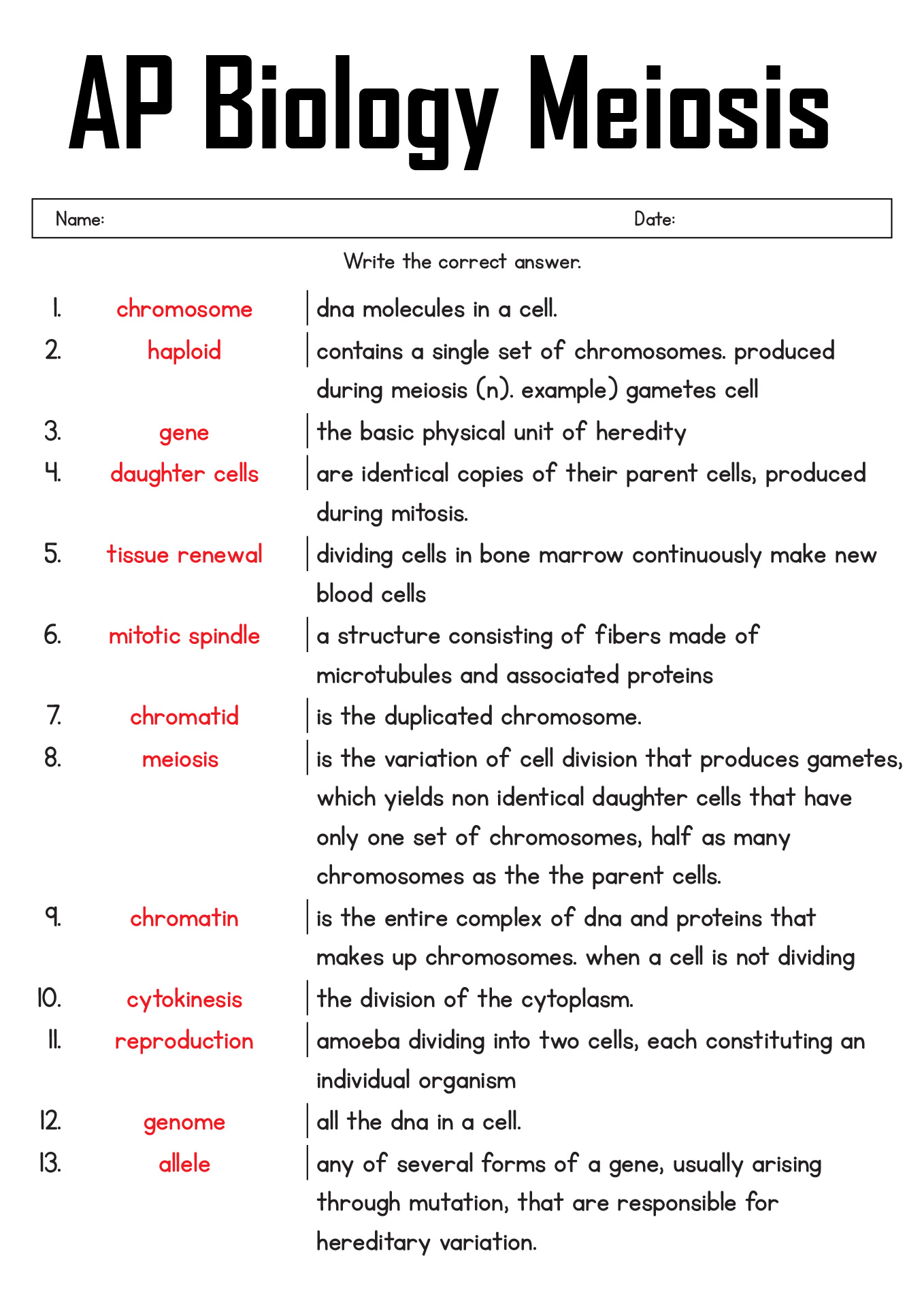
- Q1: During prophase I, what event occurs? Answer: Synapsis and crossing over of homologous chromosomes. Rationale: This stage initiates genetic recombination.
- Q2: How many chromatids are present in a diploid organism after meiosis II? Answer: Four chromatids per cell. Rationale: Each chromosome splits twice, producing four daughter cells with single chromatids.
Short Answer Sections
Short answer keys should be detailed. For example:
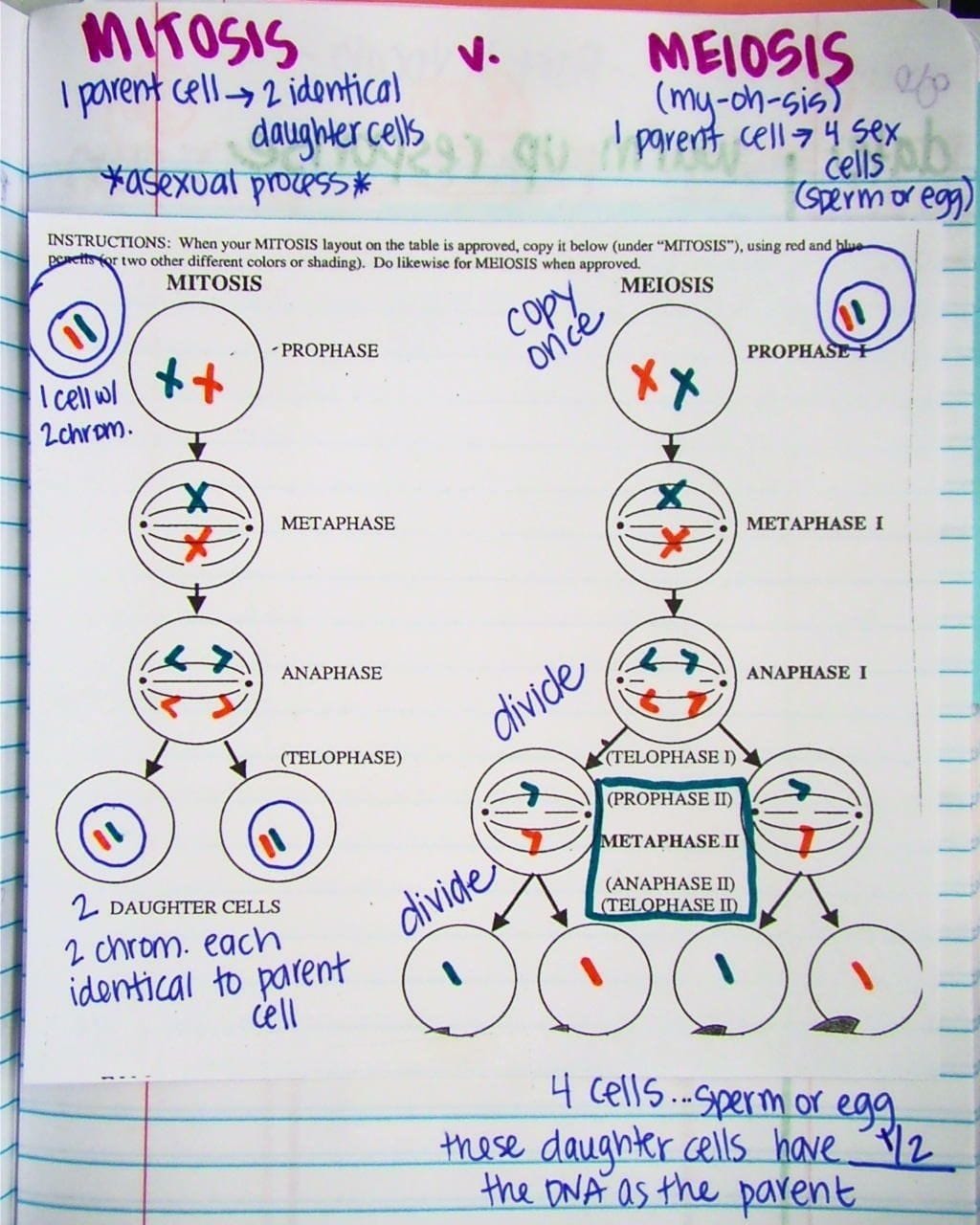
- Explain the difference between meiosis I and meiosis II. Answer: Meiosis I reduces the chromosome number by separating homologous pairs; meiosis II resembles mitosis, separating sister chromatids. Key Points: Number reduction, recombination, and genetic diversity.
Diagrams and Labeling
Diagram keys must clearly identify each structure. For instance:
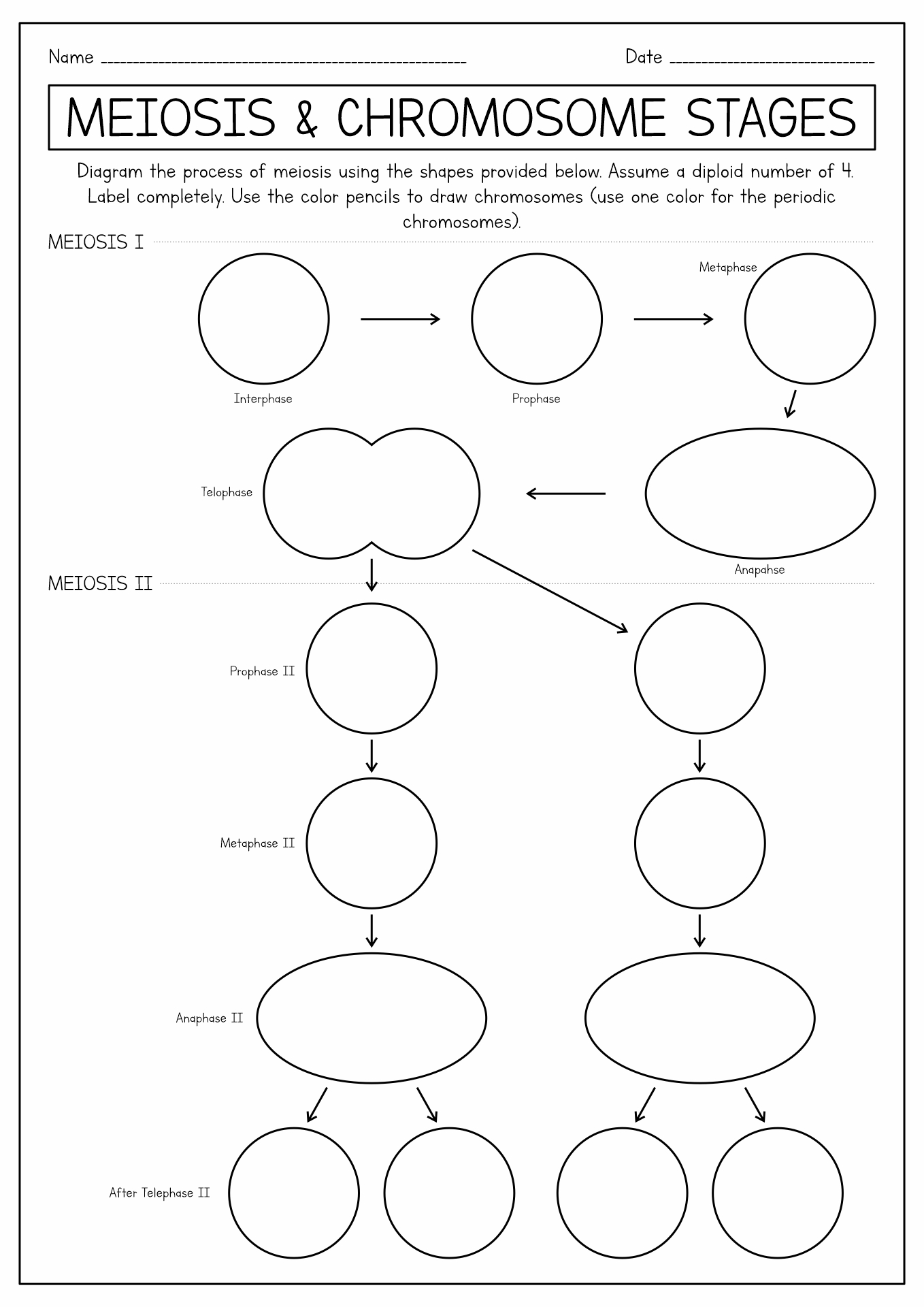
- Stage: Metaphase I – Label “Homologous chromosome pairs” at the metaphase plate.
- Stage: Anaphase II – Highlight “Separation of sister chromatids.”
Provide a legend and ensure labels correspond to color-coded representations used in the worksheet.
Common Mistakes and How to Avoid Them

Misinterpreting Chromosome Counting
Students frequently miscount chromosomes after division. The answer key should clarify that a diploid cell starts with 2n chromosomes, while a haploid gamete ends with n. A visual comparison can solidify this concept.
Confusing Meiosis I and II
Many learners treat both rounds as identical to mitosis. An explicit comparison chart in the key—highlighting that meiosis I reduces ploidy while meiosis II does not—helps eliminate this error.
Enhancing Learning with Interactive Tools
Digital Worksheets
Online platforms allow dynamic checking: students drag labels to correct spots, and the answer key verifies in real time. This immediate feedback loop reinforces accuracy.
Gamified Review Sessions
Incorporate quizzes where each correct answer reveals a piece of a puzzle related to gametes. The answer key can provide the “correct puzzle solution” after the session, allowing students to compare their assembly with the official layout.
Integrating the Answer Key into Lesson Plans

Pre-Lesson Activities
Start with a quick warm‑up: ask students to write down what they remember about meiosis stages. Use the answer key later to gauge baseline knowledge and adjust depth.
Post-Lesson Assessments
After teaching a complex topic like crossing over, hand out a worksheet and require students to use the answer key afterward. Follow up with a reflective journal entry linking the key’s explanations to real-life genetic scenarios, such as heredity of blood type.
Frequently Asked Questions

Are answer keys always accurate?
Answer keys should be reviewed by subject matter experts. However, if a mistake appears, acknowledge it promptly and clarify the correction in a follow‑up lesson.
Can I share the answer key with classmates?
While collaborative learning is valuable, sharing answer keys prematurely undermines the learning process. Encourage students to first attempt questions independently and use the key only after self‑assessment.
Conclusion
A comprehensive Meiosis Worksheet Answer Key is more than a set of correct answers; it is a pedagogical bridge between theory and application. By providing detailed explanations, anticipating common pitfalls, and integrating interactive elements, teachers can turn a simple worksheet into a dynamic learning journey. Students, armed with a clear reference, can self‑diagnose mistakes, deepen comprehension, and ultimately gain confidence in tackling the intricacies of meiotic division. Whether used for in‑class review or home study, an answer key that is thoughtfully designed and strategically deployed will elevate both teaching effectiveness and student mastery of genetics.