
Merit Badge Personal Management Worksheet is more than a simple checklist—it is a strategic tool that helps Scouts organize, track, and successfully complete the requirements for a wide range of merit badges, especially those demanding careful time management and documentation. By turning a potentially chaotic process into a clear, step‑by‑step roadmap, the worksheet empowers both youth and adult leaders to stay focused, meet deadlines, and celebrate each milestone along the journey. In this article we explore why the worksheet matters, how to use it effectively, and real‑world tips to maximize its impact for every Scout aiming to earn their badges with confidence.
Understanding the Merit Badge Personal Management Worksheet

The Merit Badge Personal Management Worksheet is designed to serve as a personal project manager for a Scout’s merit badge pursuits. It typically includes sections for badge name, required tasks, deadlines, evidence collection, and reflection notes. While the format can vary among packs, the core components remain consistent: a clear list of requirements, a timeline, and a space for documenting completion evidence such as signatures, photos, or written reports. This structure mirrors the planning techniques used in business and education, translating professional project‑management principles into a youth‑friendly format.
Key benefits of the worksheet include:
- Clarity: Every requirement is listed in one place, eliminating the need to flip through multiple handbooks.
- Accountability: Deadlines and checkboxes hold the Scout responsible for progress.
- Evidence Tracking: Space for signatures or digital proof ensures that the Scout meets the BSA’s verification standards.
- Reflection: A dedicated area to capture lessons learned reinforces the educational value of each badge.
Why Personal Management Matters for Merit Badges

Scouts often juggle school, sports, family commitments, and multiple merit badges simultaneously. Without a systematic approach, it’s easy to miss a requirement, lose a required signature, or postpone a badge until the end of the year, creating unnecessary stress. Personal management skills—time allocation, goal setting, and progress monitoring—are precisely the competencies the Boy Scouts of America seeks to develop in its members. By using the worksheet, Scouts practice these competencies in a tangible, rewarding context.
Moreover, adult leaders appreciate the worksheet because it provides a transparent record of a Scout’s journey. When a merit badge board reviews a completed badge, the worksheet serves as a concise, organized portfolio, speeding up the approval process and reducing paperwork errors.
Getting Started: Setting Up Your Worksheet

Selecting the Right Badge
Begin by choosing the merit badge you intend to earn. Whether it’s a core badge like First Aid, an outdoor skill such as Archery, or a personal growth badge like Personal Management, the worksheet should be tailored to that specific badge’s requirements. Download the official merit badge pamphlet from the BSA website, then use the worksheet to map each requirement directly onto the pamphlet’s numbering system.
Gathering Materials
Essential supplies include a printed or digital copy of the worksheet, a notebook for field notes, a folder for receipts and signatures, and a reliable calendar—either paper or electronic. Many packs now integrate the worksheet into scout apps, allowing real‑time updates and cloud backup.
Creating a Timeline
Break the badge requirements into manageable chunks and assign realistic deadlines. For a three‑month badge like Personal Management, a typical timeline might look like:
- Week 1–2: Review badge pamphlet and set personal goals.
- Week 3–4: Complete initial research and gather required equipment.
- Week 5–6: Conduct field activities and collect evidence.
- Week 7–8: Review progress, fill out reflection section, and obtain required signatures.
- Week 9: Final review with merit badge counselor and submit worksheet.
Adjust these intervals based on your own schedule, but always aim to leave a buffer week before the final deadline for any unexpected delays.
Step‑By‑Step Guide to Using the Worksheet Effectively

Step 1: List All Requirements
Copy each requirement verbatim into the worksheet’s “Requirement” column. Use the exact language from the pamphlet to avoid confusion later. If the badge has sub‑requirements (e.g., “A1, A2, A3”), list each sub‑item on its own line.
Step 2: Define Action Items
For every requirement, write a specific action item in the “Action” column. For example, if the requirement is “Demonstrate proper knot tying,” the action might read “Practice and record three different knots with a partner, then submit a video.” Clear action items turn abstract goals into concrete tasks.
Step 3: Set Deadlines and Milestones
Assign a target date for each action in the “Due Date” column. Use a calendar system that sends reminders—Google Calendar, a scout app, or a physical planner. Mark milestones (e.g., “Halfway review”) to gauge overall progress.
Step 4: Collect Evidence Promptly
As you complete each action, attach the required evidence directly to the worksheet. This may include:
- Signed forms from a merit badge counselor.
- Photographs of a completed project.
- Digital files like PDFs or video links.
- Written reflections or logs.
Storing evidence immediately prevents the dreaded “I can’t find my signature” scenario.
Step 5: Reflect and Adjust
After each completed requirement, write a brief reflection in the “Notes” column. Ask yourself what went well, what challenges arose, and how you can improve. This habit not only satisfies the worksheet’s reflective component but also deepens learning, making the badge more meaningful.
Step 6: Review with Your Counselor
Schedule a midway check‑in with your merit badge counselor. Bring the worksheet, evidence, and any questions. The counselor can verify that you’re on track, suggest improvements, and ensure that you understand each requirement fully before moving forward.
Step 7: Final Submission
When all requirements are checked off and evidence is attached, perform a final review. Confirm that each requirement has a corresponding signature or proof, that all dates are accurate, and that the reflection section is complete. Submit the worksheet according to your pack’s guidelines—usually in person at the next meeting or via a digital upload.
Real‑World Examples of Success
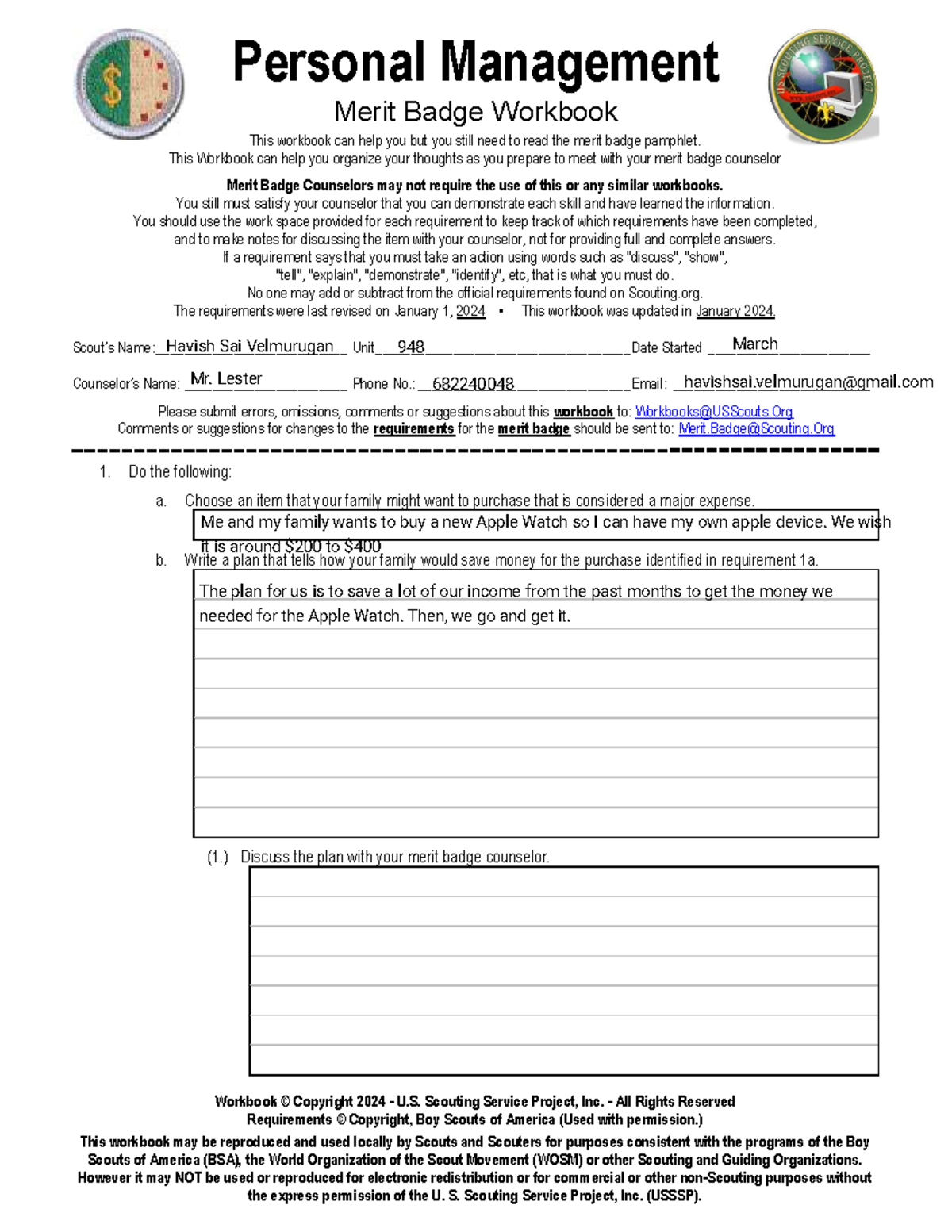
Case Study: Centerville Scouts’ Three‑Month Badge Sprint
In a recent three‑month sprint, the Centerville Scout troop selected three merit badges—Personal Management, First Aid, and Archery—to complete simultaneously. Each Scout used a personalized worksheet that included a color‑coded timeline: green for on‑track, yellow for at‑risk, and red for overdue. By holding weekly “worksheet huddles,” the troop identified bottlenecks early, reallocated resources, and celebrated every completed requirement with a small ceremony. As a result, 95% of the Scouts earned all three badges within the deadline, a record achievement for the pack.
Case Study: Rural Pack’s Digital Integration
A rural pack with limited meeting space turned to a free scout app that allowed each Scout to fill out the Merit Badge Personal Management Worksheet on a tablet. The app synced data to a cloud folder accessible to both the Scout and their counselor. This eliminated the need for physical paperwork and enabled instant feedback. Scouts reported a 30% reduction in time spent searching for signatures, and counselors praised the streamlined review process.
Tips for Maximizing Worksheet Efficiency

- Keep It Visible: Post a copy of your worksheet on a wall calendar or a digital dashboard where you can see it daily.
- Use Checkboxes: Physically checking off completed items provides a psychological boost and visual progress.
- Set Mini‑Deadlines: Break larger tasks into sub‑tasks with their own due dates to avoid procrastination.
- Leverage Technology: Scan signatures with a smartphone app and attach PDFs directly to a digital worksheet.
- Partner Up: Pair with another Scout to hold each other accountable and share evidence collection tips.
- Celebrate Milestones: Recognize each completed requirement with a badge, a small treat, or a shout‑out during meetings.
Common Pitfalls and How to Avoid Them

Procrastination
Leaving requirements until the last minute often leads to rushed work and missing signatures. Counter this by scheduling “focus blocks” of 30 minutes each day dedicated solely to the worksheet.
Incomplete Evidence
Some Scouts assume a verbal confirmation is enough. The BSA requires documented proof. Always attach a signed form or a photo that clearly shows the completed task.
Overlooking Reflection
The reflection component isn’t filler; it’s a core learning outcome. Skipping it reduces the badge’s educational impact. Allocate time after each activity to write a concise, thoughtful reflection.
Ignoring Counselor Feedback
Feedback from the merit badge counselor is a gold mine. If you receive suggestions, integrate them immediately rather than postponing.
Integrating the Worksheet Into Pack Routine

For packs looking to adopt the Merit Badge Personal Management Worksheet as a standard tool, consider the following approach:
- Introduce the Concept: During a troop meeting, explain the purpose of the worksheet and demonstrate a sample fill‑out.
- Provide Templates: Distribute printed or digital templates tailored to the upcoming badge calendar.
- Schedule Regular Check‑Ins: Set a monthly “worksheet review” session where Scouts update progress and receive counselor input.
- Reward Consistency: Offer small incentives, such as a “Worksheet Warrior” pin, for Scouts who maintain a 100% completion rate.
- Track Pack Success: Keep a master log of all completed worksheets to showcase pack achievement at council meetings.
Beyond the Badge: Lifelong Skills Gained

The process of managing a merit badge through a personal worksheet builds competencies that extend far beyond scouting. Scouts develop:
- Project Planning: Defining scope, setting milestones, and allocating resources.
- Time Management: Prioritizing tasks and adhering to deadlines.
- Documentation Skills: Recording evidence, maintaining organized files, and presenting information clearly.
- Self‑Reflection: Evaluating personal growth and identifying areas for improvement.
- Collaboration: Working with counselors, peers, and community members to achieve shared goals.
These skills are directly transferable to academic projects, workplace assignments, and personal endeavors, making the Merit Badge Personal Management Worksheet a true investment in a Scout’s future.
Conclusion

The Merit Badge Personal Management Worksheet transforms the merit badge journey from a scattered set of tasks into a disciplined, rewarding project. By providing clear requirements, a structured timeline, evidence tracking, and reflective spaces, the worksheet equips Scouts with the tools they need to succeed while fostering essential life skills. Whether used in a traditional paper format or integrated into a digital app, the worksheet’s core principles remain the same: clarity, accountability, and reflection. Packs that embed this tool into their routine see higher badge completion rates, smoother counselor reviews, and more engaged Scouts. For any Scout aiming to earn badges efficiently and meaningfully, mastering the personal management worksheet is the first—and most powerful—step toward lasting achievement.


