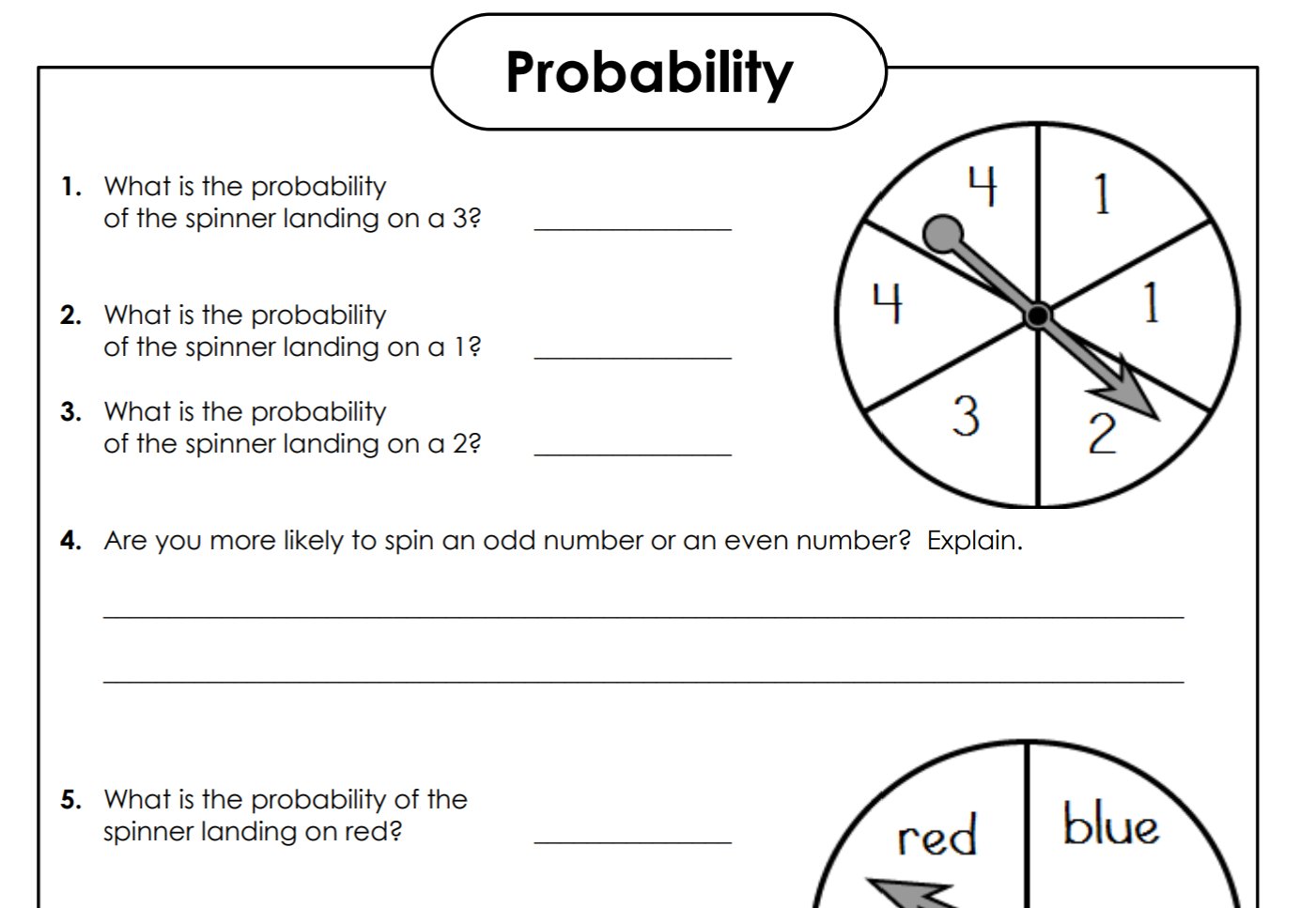
Middle School Probability Worksheet isn’t just another snooze‑inducing handout – it’s the secret sauce that turns “maybe” into “maybe‑yeah!” for seventh‑graders who think dice are only for board games and not for brain‑training. Think of it as the comic‑book cape for budding statisticians, ready to whisk them away on a whirlwind tour of odds, chances, and the occasional “what‑the‑heck‑just‑happened?” moment that makes math feel like a sitcom episode.
Why Probability Worksheets Matter More Than a Pizza Party

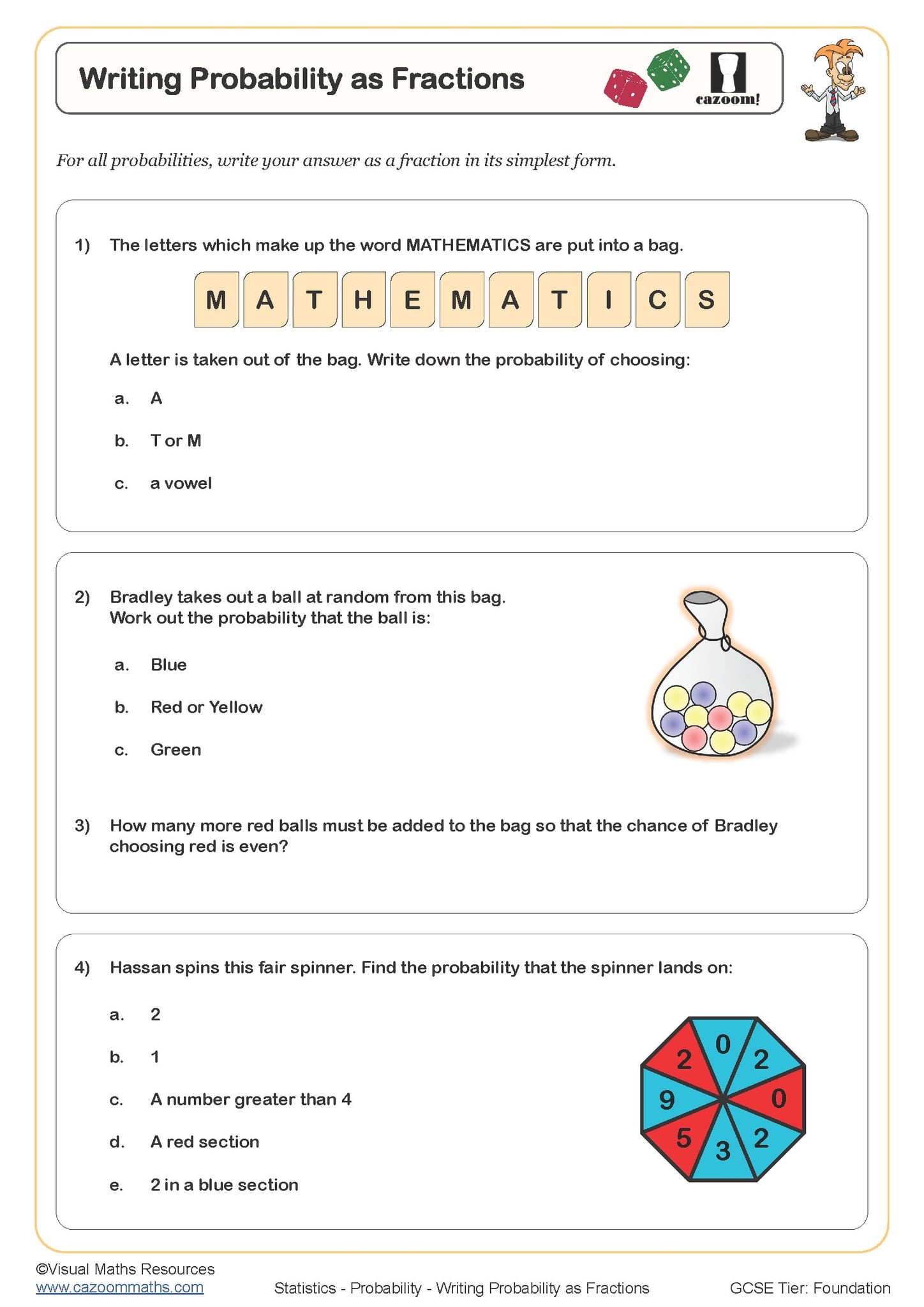
Let’s face it: kids love pizza, but they also love the thrill of not knowing whether the next slice will be pepperoni or plain cheese. Probability worksheets give them that same suspense, only with numbers instead of toppings. When students tackle real‑world scenarios – like predicting the chance of drawing a red marble from a bag of multicolored chaos – they develop critical thinking, decision‑making, and a tolerance for uncertainty that no cafeteria can provide.
Moreover, a well‑crafted worksheet does three things simultaneously:
- Reinforces core concepts: Repetition with variation cements the idea that probability isn’t just a formula, it’s a way of seeing the world.
- Builds confidence: Solving bite‑size problems gives a dopamine hit comparable to leveling up in a video game.
- Prepares for higher math: Mastery now means smoother sailing when they later meet permutations, binomial theorems, and that dreaded “expected value” monster.
Key Concepts Covered in a Stellar Worksheet
The Basics: Sample Space and Events
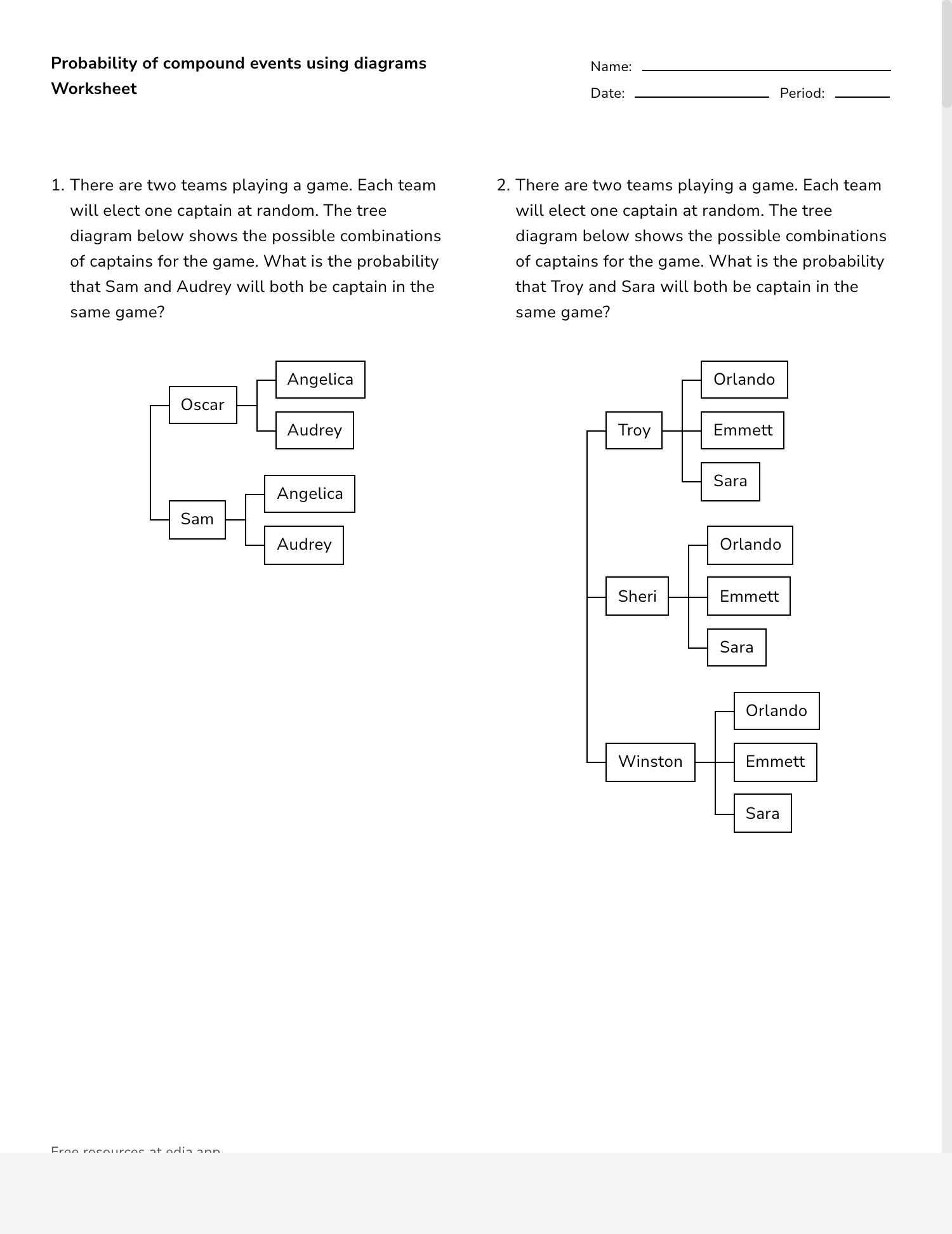
Every probability adventure starts with a sample space – the full roster of possible outcomes. A worksheet might ask, “If you flip two coins, what’s the sample space?” Students list HH, HT, TH, TT, learning that even though “HT” and “TH” look different, they’re distinct events. This early exposure demystifies the jargon and sets the stage for deeper topics.
Experimental vs. Theoretical Probability
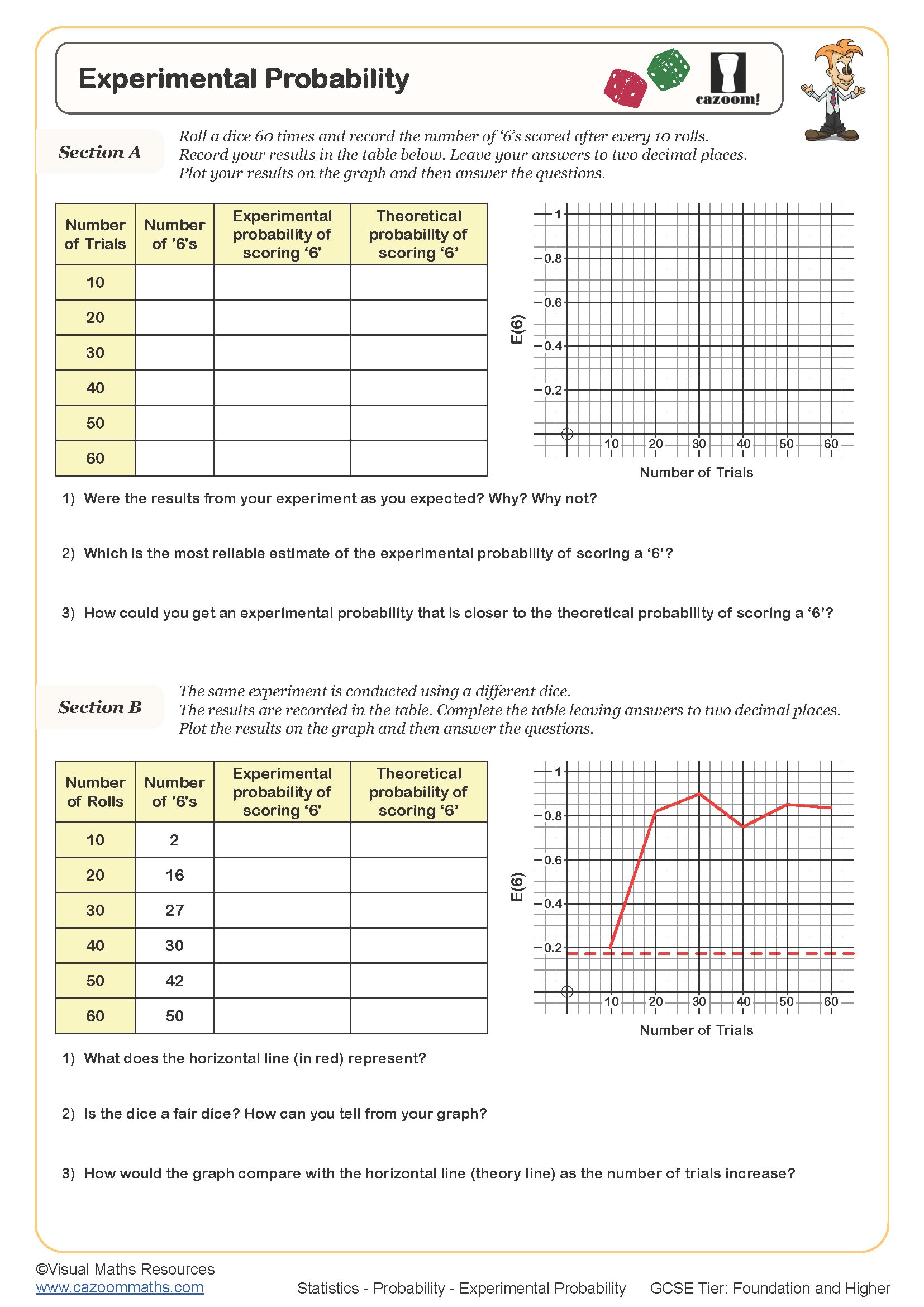
Kids love experiments. One worksheet could have them roll a die 20 times and record results, then compare the experimental probability (actual frequency) to the theoretical probability (1/6). The inevitable “Why isn’t it exactly 1/6?” moment opens a dialogue about randomness, sample size, and the law of large numbers – all while they’re busy scribbling numbers like a secret agent decoding a mission.
Compound Probability and the “And”/“Or” Drama
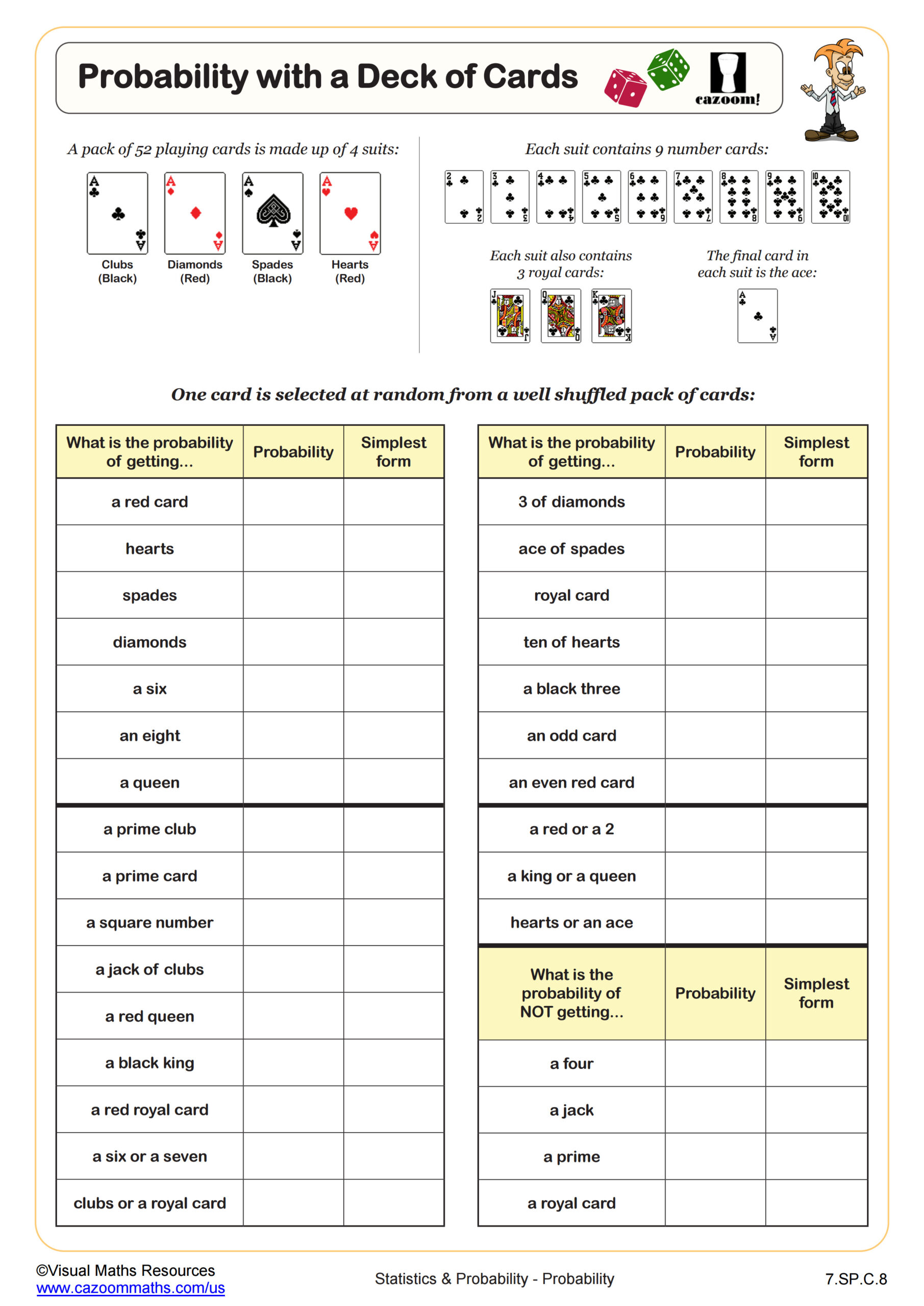
Here’s where the worksheet really flexes its comedic muscles. Students learn to calculate the probability of two independent events happening together (“and”) or at least one of them happening (“or”). For example, “What’s the chance of drawing a red card from a deck and then flipping heads?” The answer involves multiplying probabilities, which feels like math magic. A funny twist: ask them to imagine a superhero whose powers are determined by these odds – “Super‑Stat can only fly if the dice show a 6 AND the coin lands heads!” – making the abstract concrete.
Conditional Probability: The “If‑Then” Thriller
Conditional probability gets a playful spin with scenarios like “If it’s raining, what’s the chance that you’ll need an umbrella?” Students calculate P(Umbrella|Rain) by dividing the joint probability by the probability of rain. It’s a subtle way to teach them that context matters – just like how you can’t judge a pizza by its toppings alone.
Expected Value: The Fortune‑Teller’s Toolbox
Even middle schoolers can handle a taste of expected value with simple games. A worksheet might present a “wheel of fortune” with different cash prizes and ask, “Is it worth spinning?” Students multiply each outcome’s value by its probability and sum the results. The result often surprises them: a game that looks fun on the surface may have a negative expected value, teaching prudence in a delightfully mathematical way.
How to Use the Worksheet in Class Without Turning Into a Monotone Robot
Warm‑Up with a Mini‑Game
Start with a quick, low‑stakes game that mirrors the worksheet’s theme. For instance, have students toss a coin and guess the outcome. After a few rounds, ask them to predict the ratio of heads to tails. This sets the stage, and the inevitable “I got three heads in a row!” outburst becomes a perfect segue into discussing probability versus luck.
Guided Walkthrough with Humor
When you walk through the first problem, sprinkle jokes like, “If you think probability is boring, you clearly haven’t tried predicting whether my cat will knock over the water bottle today.” This light‑hearted approach keeps attention high and lowers the intimidation factor of math symbols.
Collaborative Problem‑Solving
Pair students and give each duo a different section of the worksheet. Let them become “probability detectives” and present their findings to the class. The collaborative element mirrors real‑world teamwork and gives you a chance to showcase a variety of problem‑solving strategies – from the “draw a picture” method to the “quick‑multiply” shortcut.
Instant Feedback Loop
Use answer keys or digital check‑offs to give immediate feedback. When a student gets a problem wrong, frame it as a “plot twist” rather than a failure. For example, “Ah, you fell into the trap of forgetting to divide by the total outcomes – classic villain move!” Then guide them to the correct solution, reinforcing the concept with a chuckle.
Homework That Doesn’t Feel Like Homework
Turn the worksheet into a “probability scavenger hunt” for home. Ask students to record real‑life odds they encounter – like the probability of getting a green traffic light on the way home, or the chance their sibling will steal the last slice of pizza. They bring back their data, and you discuss how the worksheet concepts map onto everyday life.
Creative Activities to Boost Engagement

Probability Comic Strips
Let students create a short comic where the hero solves a mystery using probability. Each panel can illustrate a different concept – sample space, independent events, expected value. This artistic twist cements the material in their brains while giving the classroom a gallery of math‑themed art.
DIY Probability Boards
Provide poster board, markers, and dice. Have groups design a “Probability Board Game” where each space requires calculating odds before moving forward. The best games get played during free time, and the winner receives a gold star (or a pizza coupon – because we all love pizza).
Live Polls with Clickers or Apps
Use a quick poll tool to ask a probability question, like “What’s the chance the teacher will wear a superhero T‑shirt tomorrow?” Students vote, you reveal the actual odds (perhaps 0% but that’s a joke), and then discuss how to compute such a probability if you had data. The instant interactivity spikes engagement.
Probability Karaoke
Challenge students to rewrite the lyrics of a popular song to include probability terms. Imagine a chorus that goes, “I’m rolling the dice, 1 out of 6, hoping for a six, that’s my fix!” Performances add humor, reinforce vocabulary, and make the lesson unforgettable.
Common Pitfalls and How to Dodge Them

Confusing Independent and Dependent Events
Students often assume that drawing a red marble and then a blue marble are independent just because the colors differ. Emphasize that independence means the outcome of one event doesn’t affect the other – and use a bag of marbles with replacement vs. without replacement to illustrate the difference.
Forgetting to Reduce Fractions
When probabilities are expressed as fractions, kids sometimes leave them unreduced, leading to messy answers. A quick reminder: “Always simplify, unless you’re aiming for a ‘fraction freakout.’” Provide a cheat‑sheet of common simplifications.
Misreading “Or” as “And”
“Or” in probability usually means “inclusive or,” which includes the case where both events happen. Students sometimes calculate P(A or B) as P(A) + P(B) without subtracting the overlap. Use Venn diagrams to visually demonstrate why the overlap matters.
Overlooking Sample Space Completeness
Skipping an outcome in the sample space leads to incorrect probabilities. Have students double‑check their lists, perhaps by shouting “Check!” after each entry – a classroom chant that becomes a habit.
Digital vs. Print: Which Wins the Probability Battle?

Both formats have merit. Print worksheets are tactile, allowing students to doodle, circle, and physically flip pages – perfect for kinesthetic learners. Digital versions, on the other hand, enable instant grading, interactive simulations, and the occasional meme‑injection for extra giggles.
Here’s a quick decision matrix:
- Print: Best for hands‑on activities, classroom stations, and when you want students to feel the paper crunch of probability.
- Digital: Ideal for remote learning, data collection, and when you want to embed videos that explain compound probability with cartoon characters.
- Hybrid: Combine both – let students solve the first half on paper, then submit answers via a Google Form that auto‑grades and provides immediate feedback.
Tips for Parents and Tutors Who Want to Keep the Fun Rolling at Home
Turn Snacks Into Statistics
Grab a bag of gummy bears, ask your child to estimate the probability of pulling a red one, then test it out. The edible reward makes the lesson sticky – literally.
Use Everyday Decisions
When deciding whether to watch a movie or play a board game, ask, “What’s the probability that the next episode of our favorite show will be released this week?” This frames probability as a natural part of decision‑making.
Encourage Journaling
Provide a simple “Probability Log” where kids write down odds they notice – like the chance of seeing a squirrel on a walk. Over a week, they’ll see patterns and develop a data‑mindset without realizing they’re doing math homework.
Celebrate Mistakes
When a prediction goes wrong, turn it into a celebration: “Congrats! You just discovered an outlier!” This attitude reduces anxiety around error and reinforces that probability is about learning from randomness, not about being perfect.
Conclusion: Wrapping Up the Probability Party

In the grand circus of middle school education, the Middle School Probability Worksheet is the ringmaster that keeps the audience (students) on the edge of their seats, laughing, guessing, and ultimately mastering the language of chance. By blending solid concepts – sample spaces, compound events, expected value – with humor, real‑world applications, and interactive activities, educators can transform a seemingly dry subject into a memorable adventure. Whether you hand out printed pages, launch a digital quiz, or turn your kitchen into a probability lab, the key is to keep the tone light, the examples relatable, and the feedback swift. When students realize that probability isn’t just about numbers but about everyday mysteries – from pizza toppings to superhero powers – they’ll carry that curiosity into higher math and beyond. So go ahead, unleash the worksheet, sprinkle in some jokes, and watch the odds of engagement skyrocket!