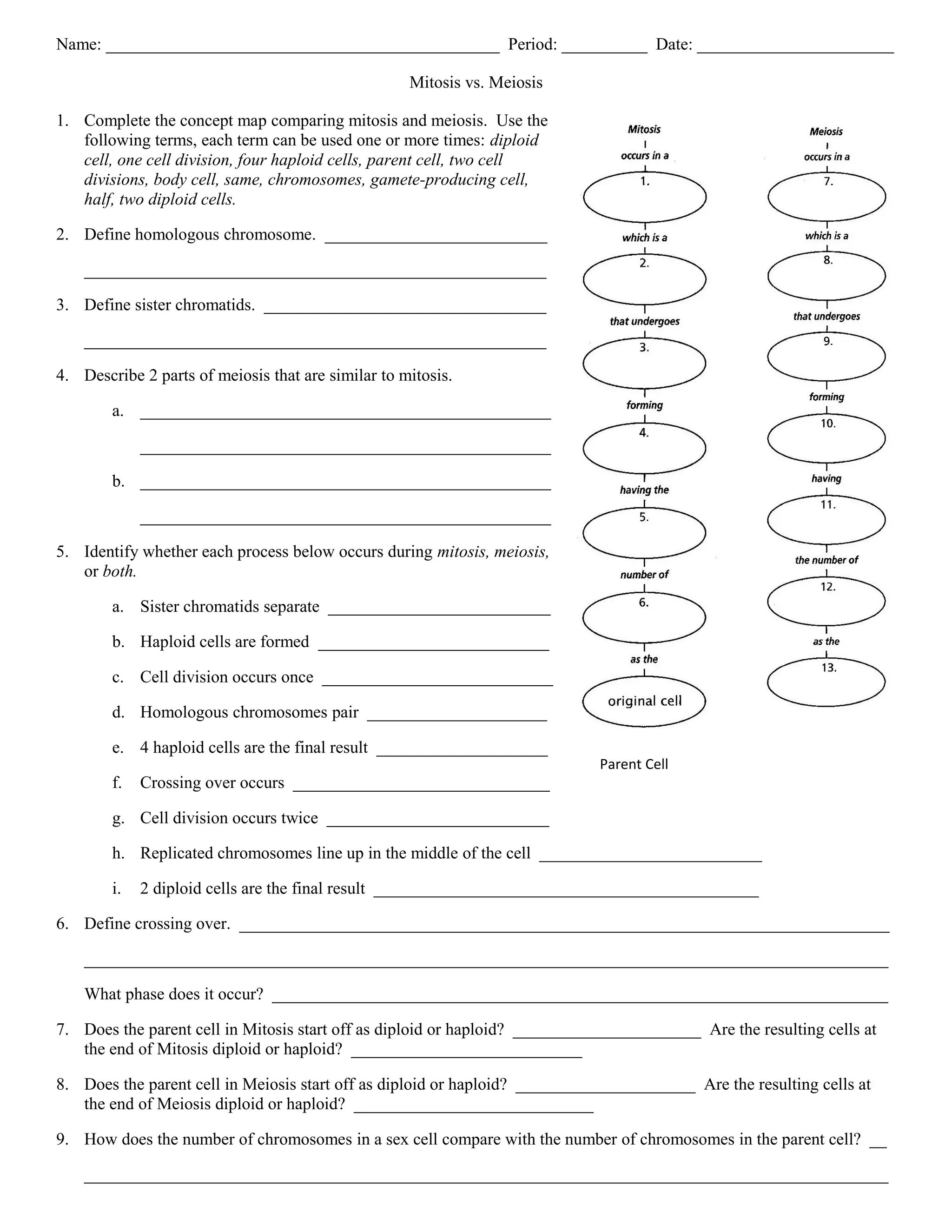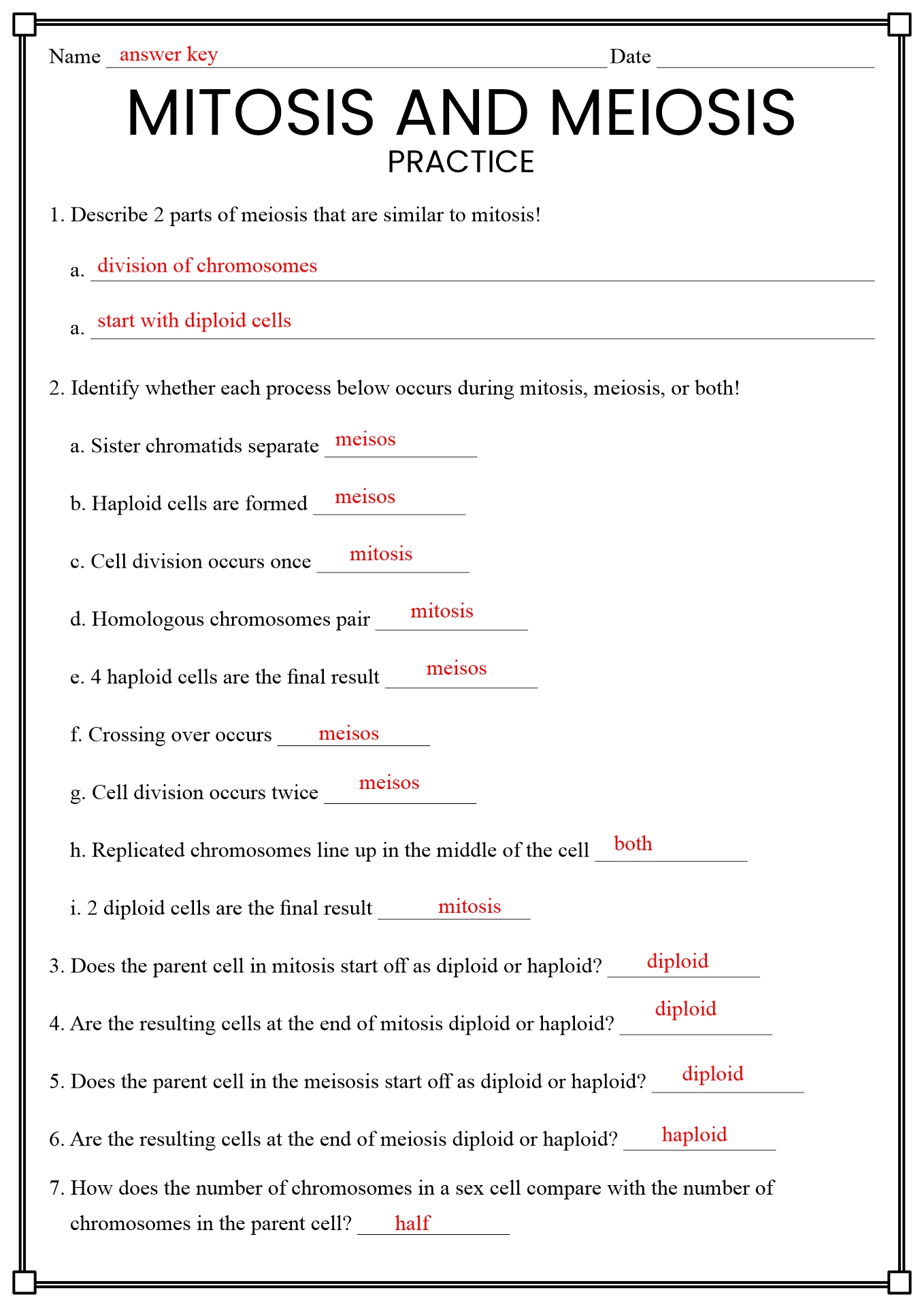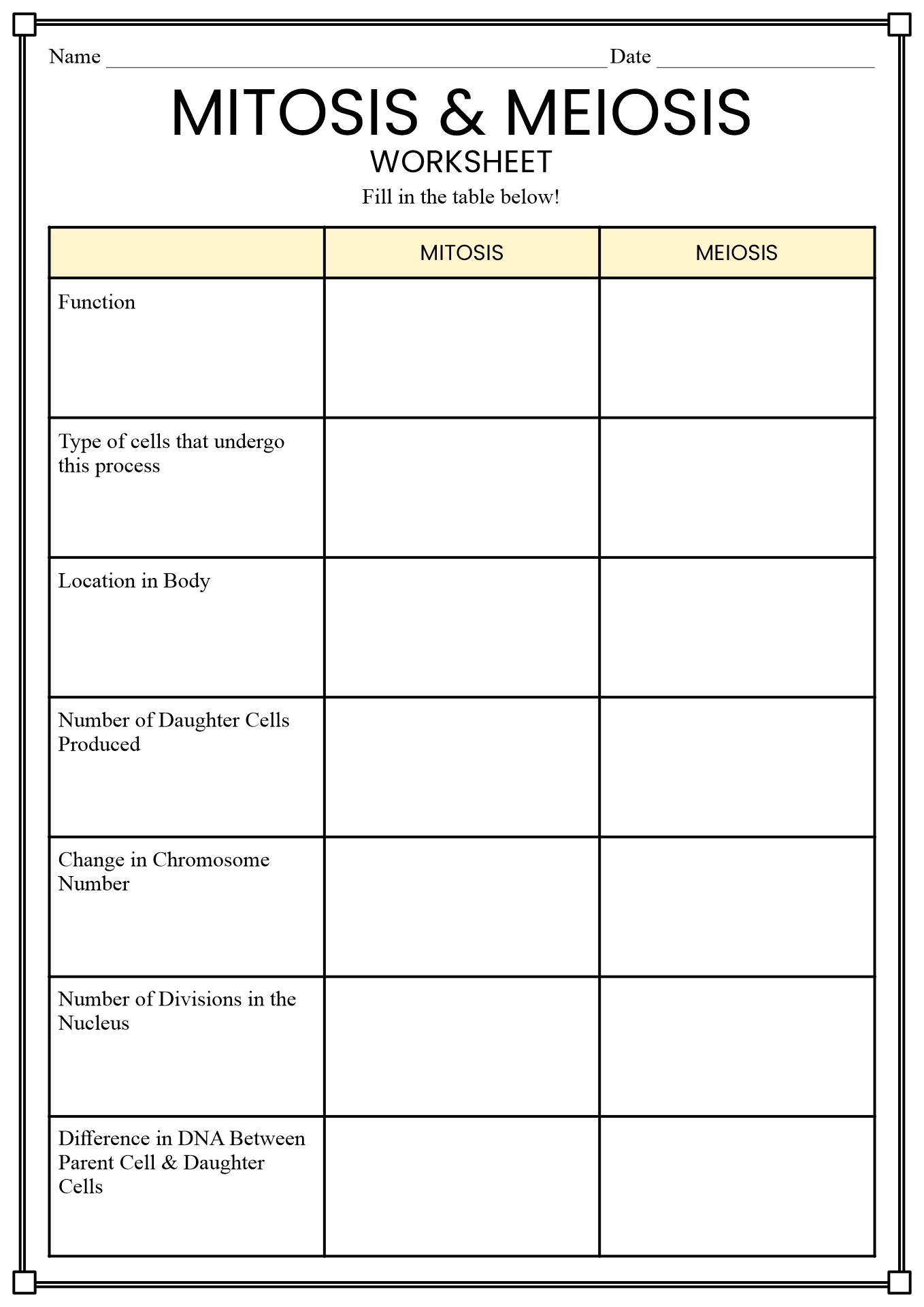
Mitosis Versus Meiosis Worksheet provides an essential bridge between textbook concepts and classroom interaction, turning abstract cellular processes into tangible learning tools. By combining visual prompts, guided questions, and immediate feedback, students can actively engage with the intricacies of cell division and better retain the differences that drive life’s diversity.
Understanding the Core Differences
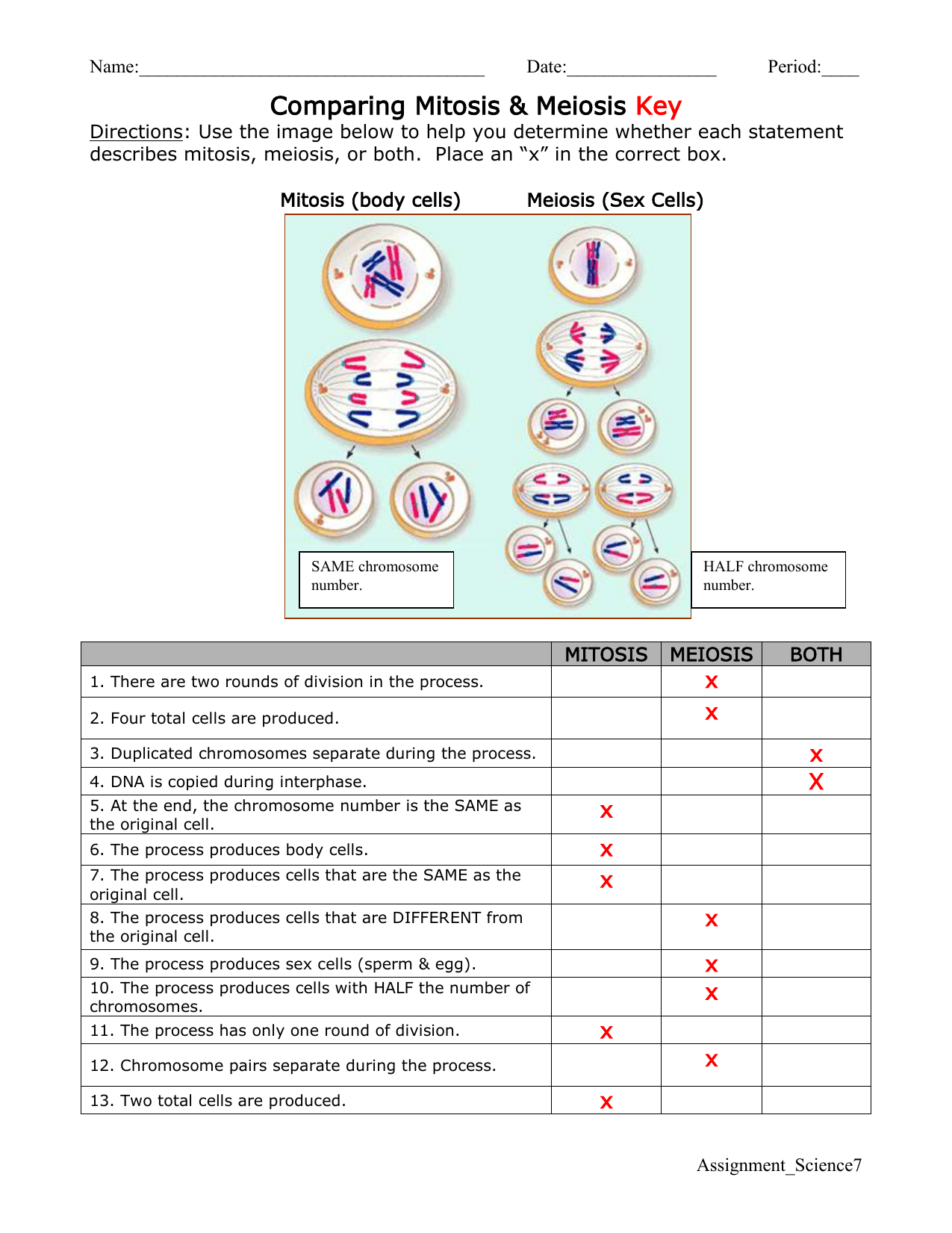
Before diving into worksheet design, it helps to clarify what truly separates mitosis and meiosis. Both are mechanisms of cell division, yet they serve distinct biological purposes and follow unique protocols. A solid grasp of these differences will guide the development of targeted questions and accurate answer keys.
Mitosis
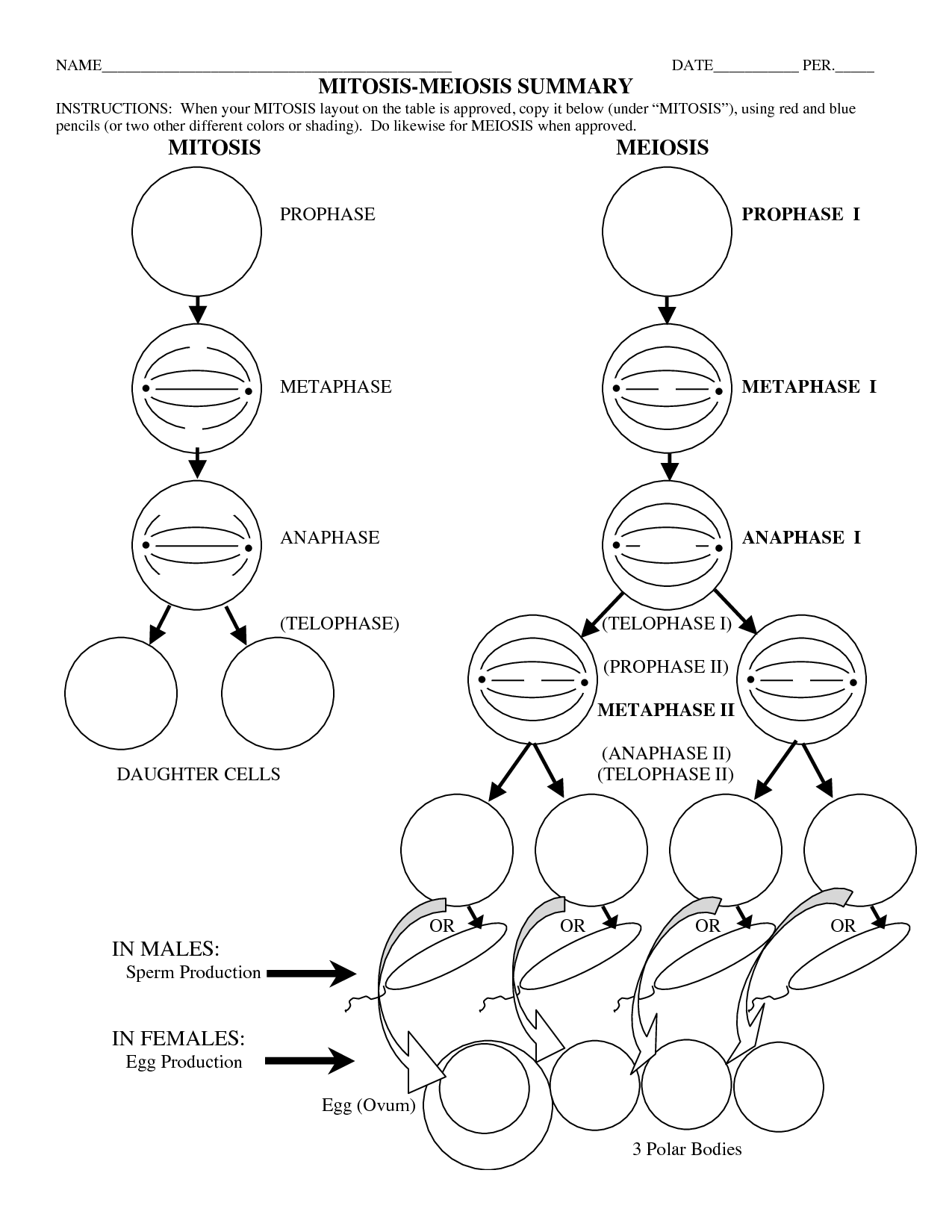
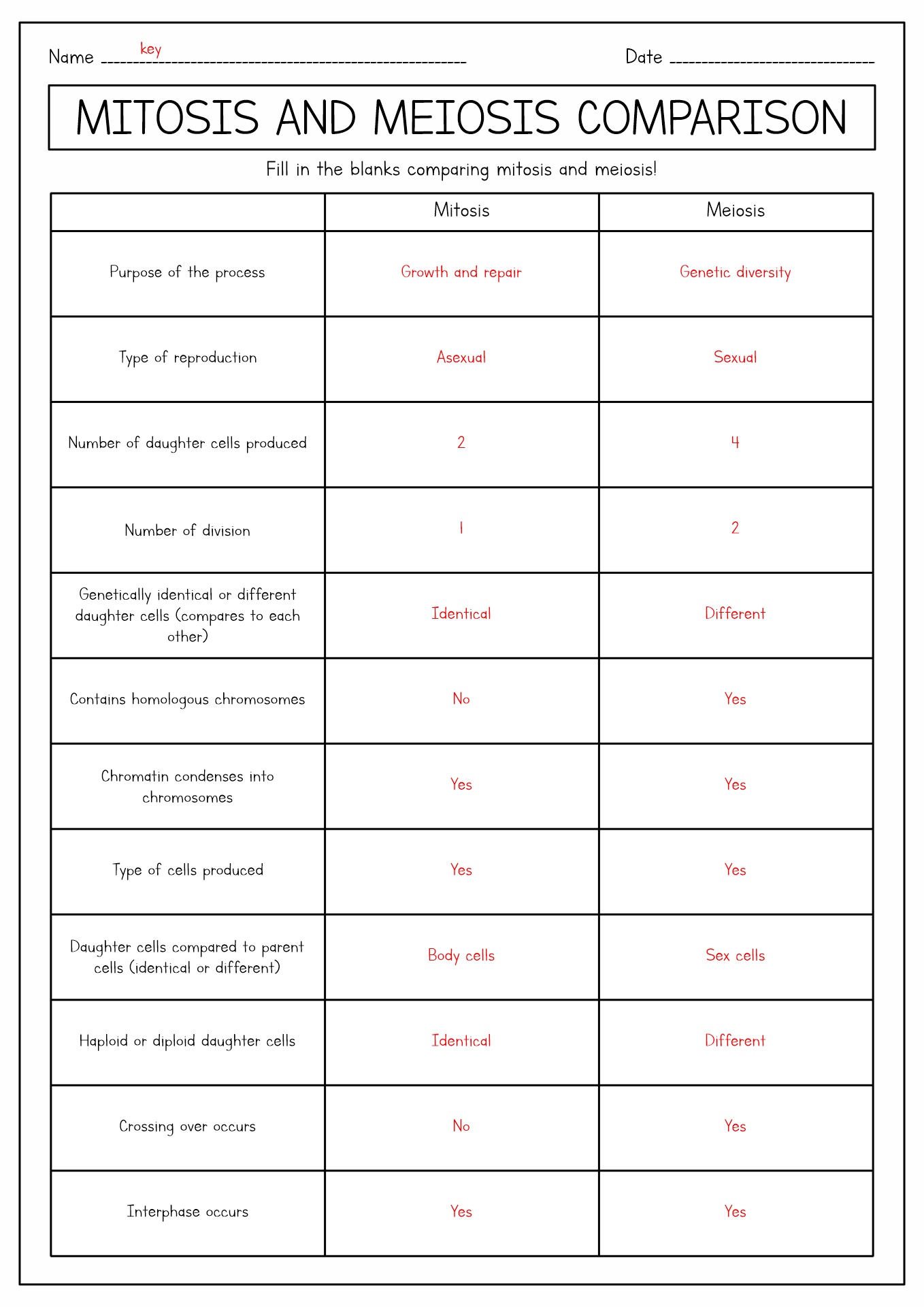
Mitosis is a single division cycle that produces two genetically identical daughter cells. It is the primary method of growth, repair, and asexual reproduction in multicellular organisms. Key stages—prophase, metaphase, anaphase, and telophase—ensure faithful chromosome segregation, maintaining the original chromosome number (2n) in each daughter cell.
Meiosis
Meiosis involves two consecutive division cycles—meiosis I and meiosis II—resulting in four haploid (n) daughter cells. This reduction is crucial for sexual reproduction, introducing genetic variation through crossing over and independent assortment. The outcome is a diverse set of gametes, each carrying half the genetic material of the parent.
Why Worksheets Matter
Students often struggle to differentiate between mitosis and meiosis when presented with isolated facts. Worksheets transform passive reading into active problem‑solving. They provide:
- Immediate Application: Students test their knowledge by applying definitions to diagrams or scenario questions.
- Reinforcement Through Repetition: Repeated exposure to core concepts cements understanding.
- Assessment for Learning: Teachers gain quick insights into misconceptions and adjust instruction accordingly.
Designing an Effective Mitosis Versus Meiosis Worksheet

Creating a high‑impact worksheet involves balancing clarity, challenge, and instructional value. Consider the following components to elevate the learning experience.
Key Components
- Clear Objective Statements: Each worksheet should open with a concise learning goal, such as “Identify the stage-specific characteristics of mitosis and meiosis.”
- Varied Question Types: Mix multiple choice, short answer, matching, and diagram labeling to address diverse learning styles.
- Progressive Difficulty: Begin with fundamental recognition tasks before advancing to analytical or synthesis questions.
Visual Aids
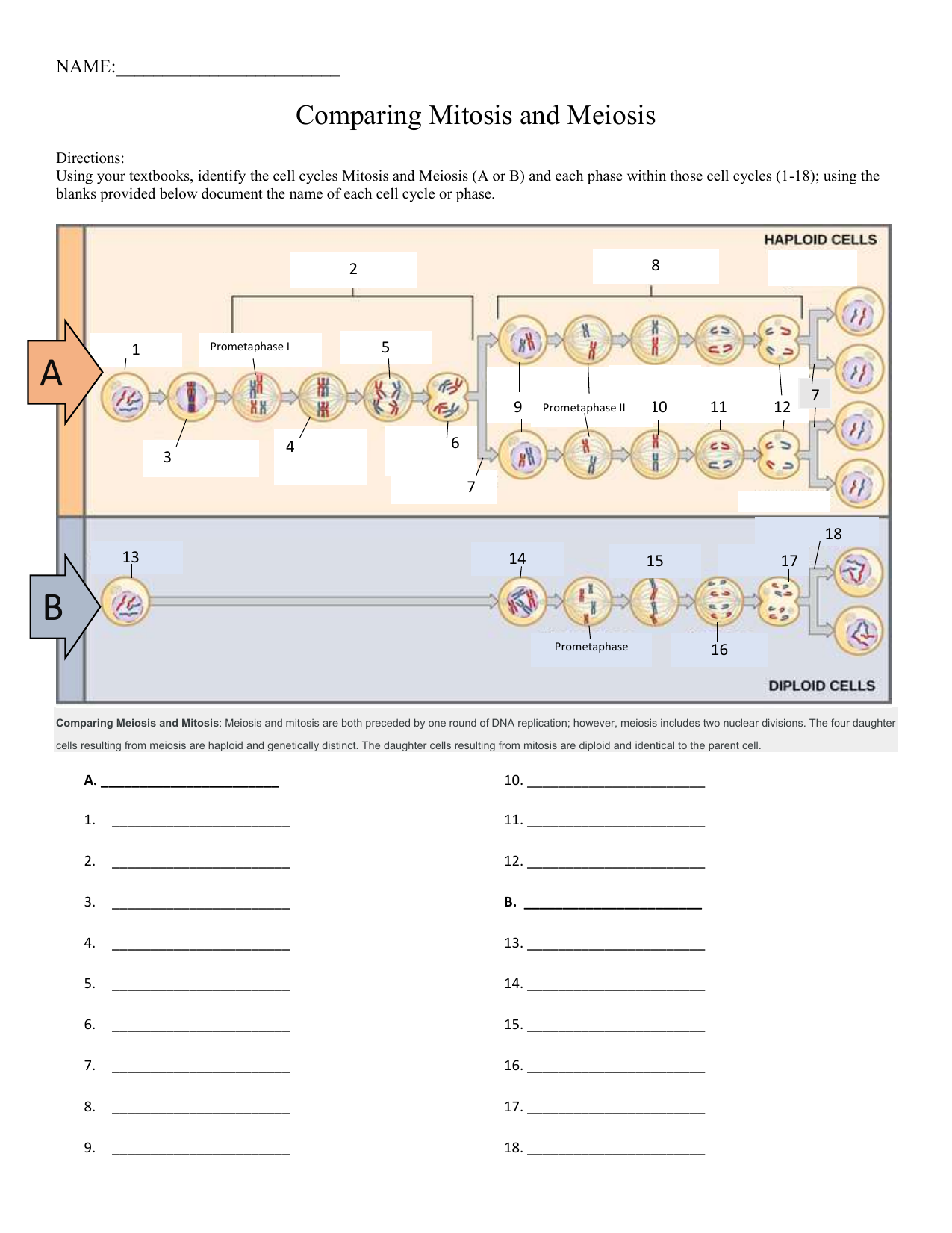
- Annotated Diagrams: Provide labeled cell images where students must identify phases or pinpoint chromosomal events.
- Infographics: Use side‑by‑side comparison charts to highlight key contrasts, making the differences immediately visible.
- Encourage students to create their own simplified diagrams as a creative reinforcement strategy.
Assessment Strategies
- Immediate Feedback: Include answer keys that explain reasoning, turning the worksheet into a self‑grading tool.
- Peer Review: Pair students to critique each other’s diagram labels, fostering collaborative learning.
- Reflective Prompts: End with questions like “How would a mistake in chromosome segregation affect an organism?” to deepen critical thinking.
Sample Worksheet Breakdown
A well‑structured worksheet follows a logical flow that mirrors the learning trajectory—from recognition to application.
Question Types
- Multiple‑choice questions assess quick recall of definitions.
- Fill‑in‑the‑blank tasks require students to match terminology to phase names.
- Diagram labeling challenges students to apply visual recognition skills.
- Short‑answer questions ask students to explain the significance of crossing over or independent assortment.
- True/false statements test conceptual understanding and expose common myths.
Answer Key Structure
- Provide concise, correct answers accompanied by brief explanations.
- Include citations of key terms in the cell cycle to reinforce vocabulary.
- Offer an optional “advanced explanation” section for students who wish to dig deeper.
Tips for Teachers and Students
Effective use of worksheets requires thoughtful preparation and guided practice. Below are actionable strategies for both educators and learners.
Teaching Tips
- Introduce the worksheet during a live discussion to prime students on what to look for.
- Use the worksheet as a formative assessment before moving to labs or simulations.
- Set time limits to mimic real test conditions, encouraging focused work.
- Collect completed worksheets to identify persistent misconceptions and revisit problematic concepts.
Studying Tips
- Review the objective statements before starting to align focus.
- Answer the questions in order of increasing difficulty to build confidence.
- Cross‑check your answers with the provided key; note any discrepancies for later review.
- Explain each answer aloud to a peer or to yourself, reinforcing understanding through articulation.
Real-World Applications

Illustrating how mitosis and meiosis operate beyond the classroom amplifies relevance and engagement.
Medical Genetics
- Chromosomal abnormalities like trisomy 21 arise from errors in meiotic segregation.
- Understanding cell cycle checkpoints helps explain cancer development and treatment strategies.
- Genetic counseling relies on accurate predictions of gamete composition.
Agriculture
- Plant breeding programs harness meiosis to introduce desirable traits into crops.
- Hybrid vigor, or heterosis, is a direct result of meiotic recombination.
- Genomic selection tools depend on accurate models of meiosis‑generated genetic variation.
Everyday Life
- Rapid skin cell turnover after a sunburn demonstrates mitosis in action.
- Reproductive planning involves understanding how meiosis creates unique sperm and egg cells.
- Cell culture experiments in everyday labs depend on predictable mitotic division for protein production.
Common Mistakes to Avoid

Even seasoned instructors can unintentionally embed pitfalls into worksheets. Awareness of these common errors ensures higher quality learning materials.
Over‑Simplification
- Presenting mitosis and meiosis as identical processes without highlighting phase differences can confuse students.
- Avoid generic statements like “Both produce new cells”; instead, specify the number and genetic composition.
Lack of Context
- Questions that isolate facts from biological significance may leave students with rote memorization.
- Include scenario‑based prompts that require students to apply knowledge to real‑life problems.
Conclusion

By thoughtfully integrating diagrams, diverse question formats, and clear assessment criteria, a Mitosis Versus Meiosis Worksheet becomes more than a simple quiz—it transforms into a dynamic educational tool. When educators align worksheet content with real‑world applications and scaffold difficulty appropriately, students develop a robust, long‑lasting comprehension of cell division. This deepened understanding not only prepares them for exams but also equips them with scientific literacy that extends far beyond the classroom. Armed with these strategies, both teachers and learners can harness the full potential of worksheet-based instruction, ensuring that the vital distinctions between mitosis and meiosis are understood, remembered, and applied in every future scientific endeavor.