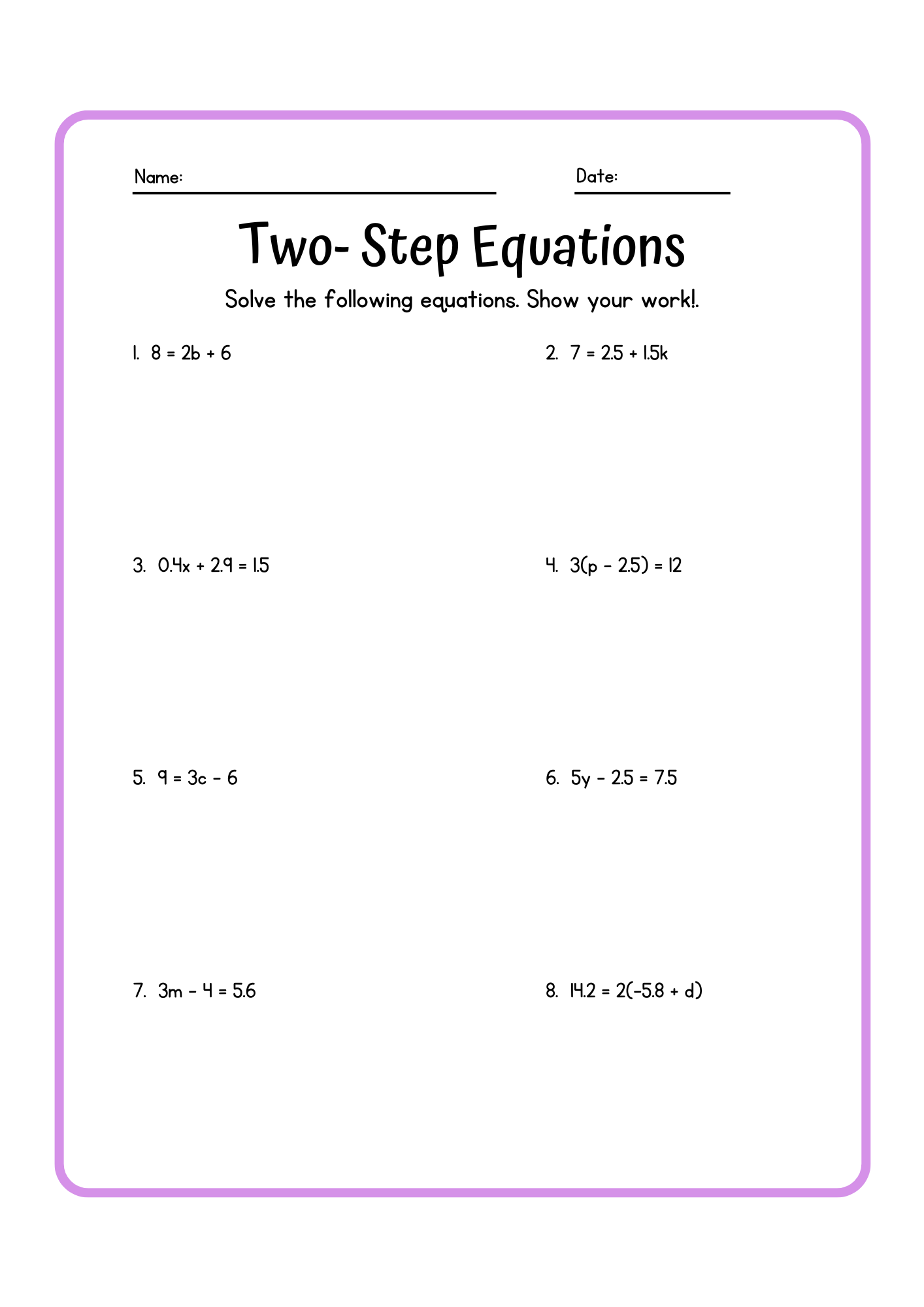
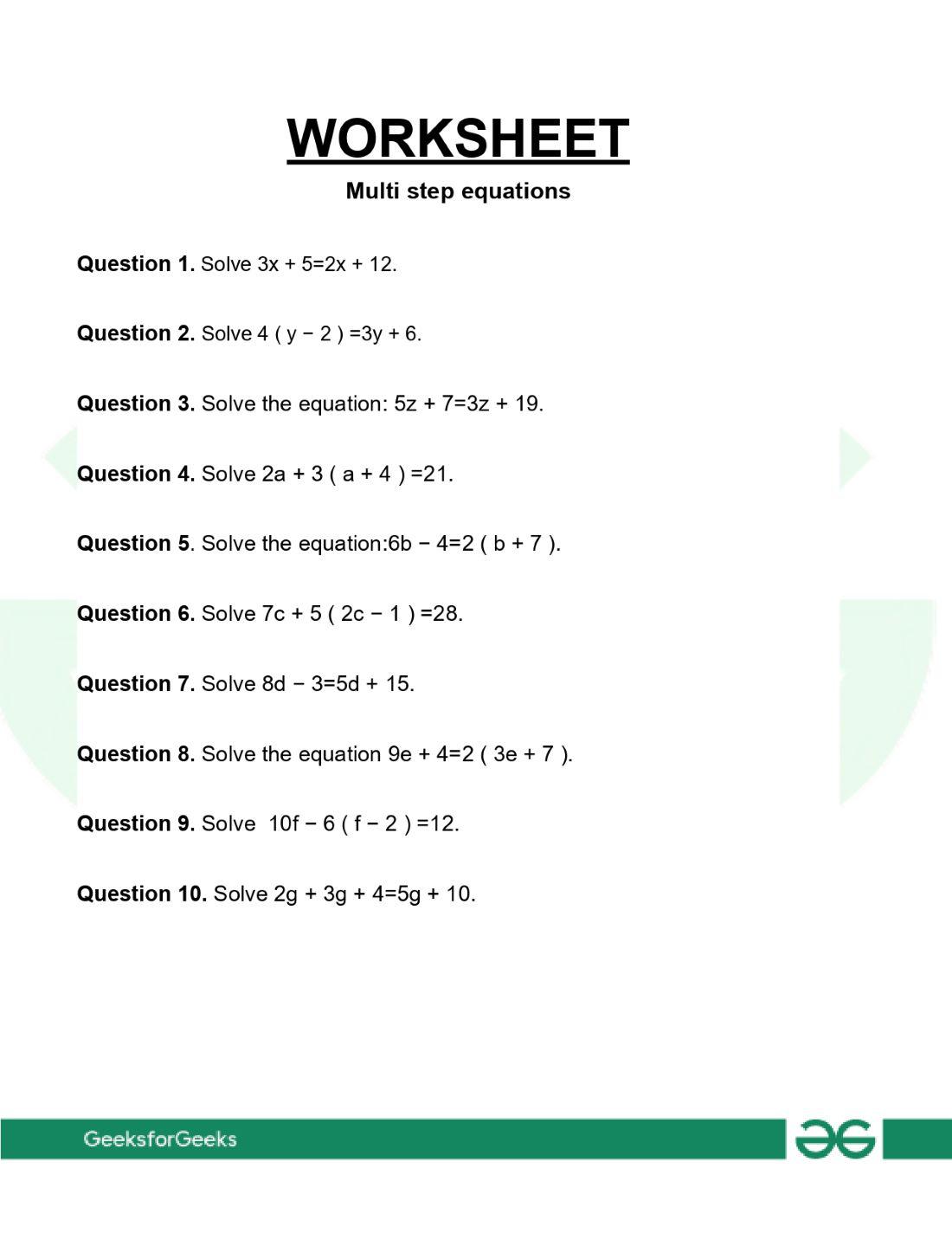
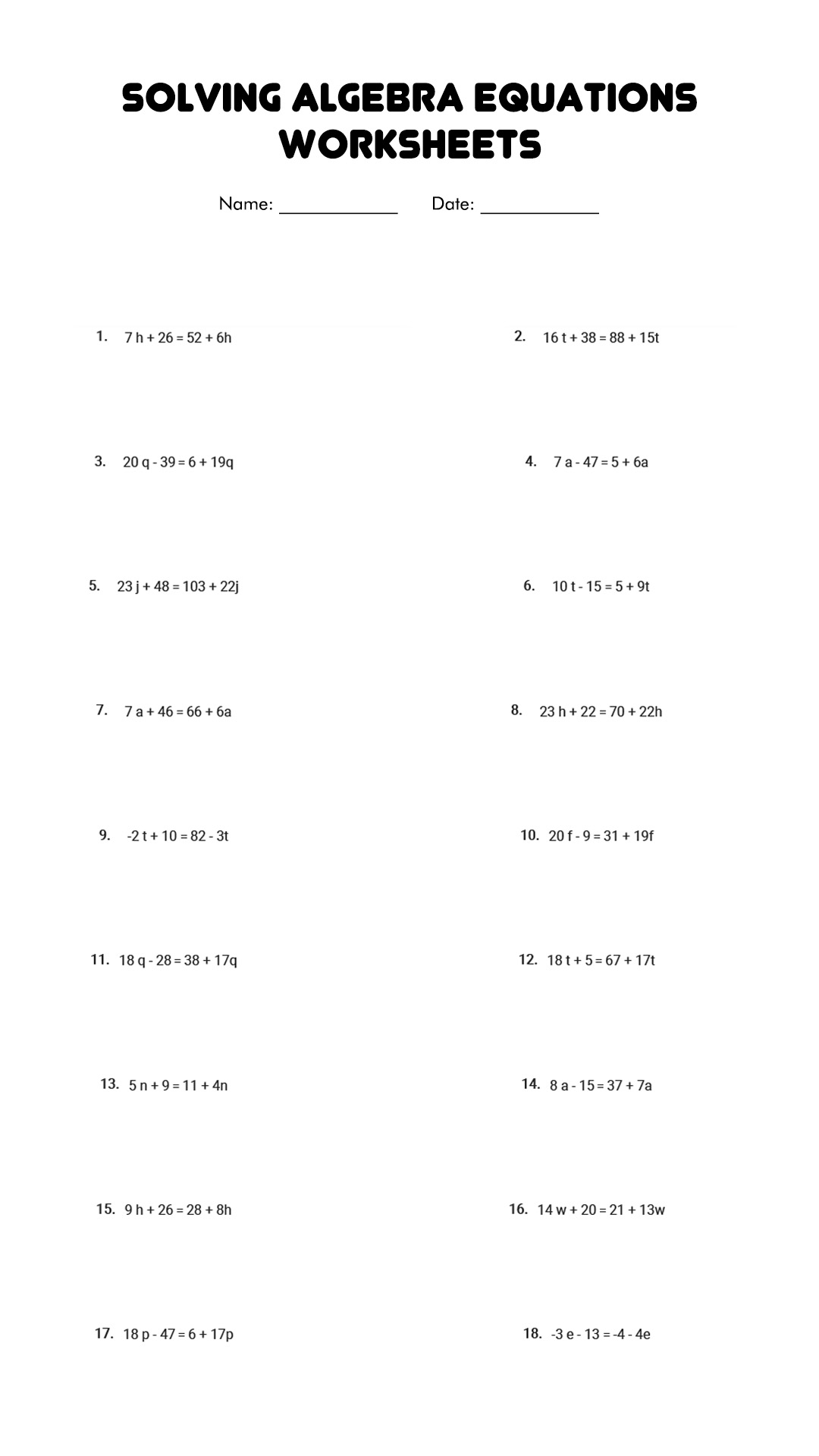
Multi Step Solving Equations Worksheet is the unsung hero of algebra, turning brain‑twisters into delightful puzzles—think of it as a mental obstacle course where every step is a chance to flex your math muscles and your sense of humor.
What Makes a Multi Step Solving Equations Worksheet a Masterpiece?
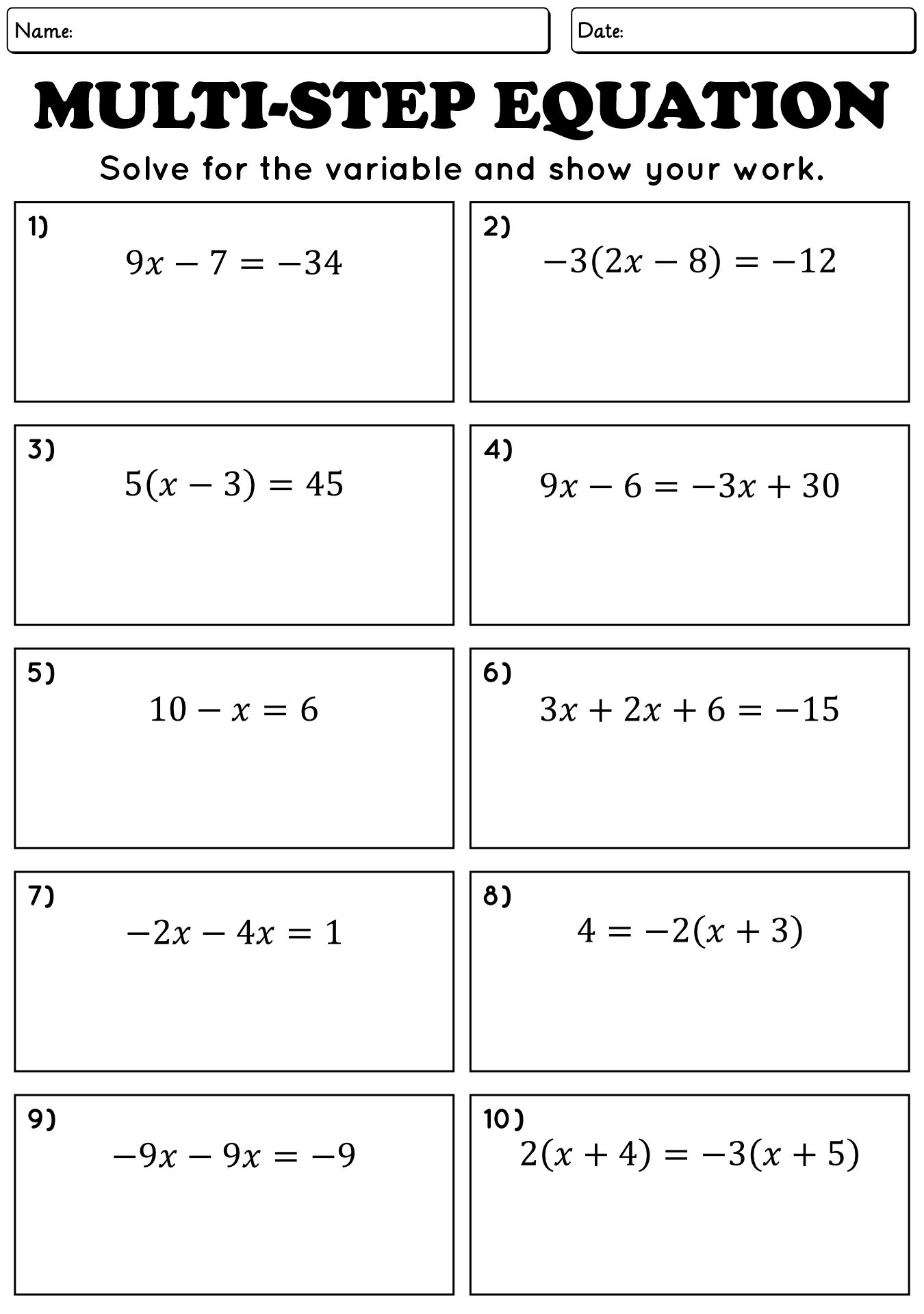
Imagine a worksheet that feels like a choose‑your‑own‑adventure book, but with numbers instead of dragons. A truly great worksheet balances challenge and clarity, offering problems that require more than a single operation—addition, subtraction, multiplication, division, and sometimes exponents or fractions—yet keeps the path to the solution visible.
Key ingredients include:
- Clear objectives: Each page states what skills students will practice—solving for the unknown, simplifying expressions, or balancing equations.
- Progressive difficulty: Starting with a simple two‑step equation and gradually adding layers so learners feel the satisfaction of incremental mastery.
- Engaging themes: From superhero budgets to pizza slices, themed problems make the abstract tangible.
- Visual cues: Color‑coded steps, arrows, or icons that guide students through the logic ladder.
- Answer keys and explanations: Not just “here’s the answer” but a walk‑through that turns mistakes into learning moments.
When these elements merge, the worksheet transforms from a chore into a treasure hunt where every solved problem earns you a triumphant high‑five from your brain.
Common Pitfalls Students Encounter

Even seasoned algebra students stumble when the worksheet throws a curveball. Recognizing these pitfalls lets teachers preempt them and keeps the learning momentum strong.
1. Overlooking the Need to Isolate the Variable
Students often perform the correct arithmetic but forget to keep the unknown on one side of the equation. A quick visual: “Keep the x on the left, the rest on the right.” A simple diagram on the worksheet can reinforce this rule.
2. Neglecting to Distribute Properly
When encountering terms like 3(2x – 5), some students multiply only the first number inside the parentheses. Highlighting the distribution step with bold numbers or a small graphic helps avoid this error.
3. Forgetting to Balance Both Sides
After simplifying one side, some learners skip checking the other side for equality. A double‑check bubble that prompts “Is it still balanced?” ensures accuracy.
4. Misreading the Order of Operations
Especially in multi‑step equations that mix operations, the classic PEMDAS rule can trip up. Embedding a tiny “P.E.M.D.A.S.” mnemonic in the worksheet’s corner is a gentle reminder.
Step‑by‑Step Strategy: From Confusion to Clarity
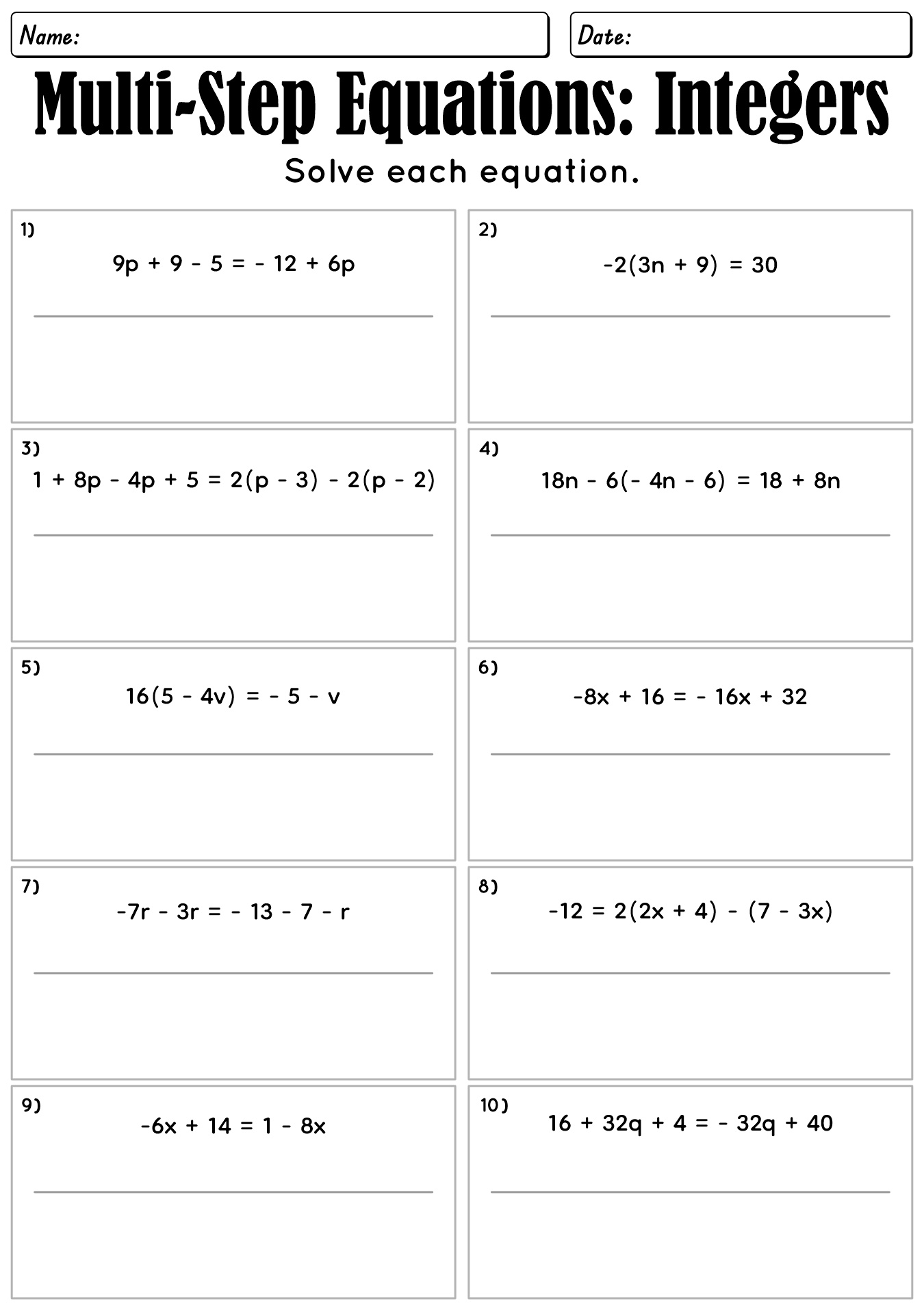
Below is a systematic approach that teachers can embed into worksheets, and students can adopt to conquer any multi‑step challenge.
Step 1: Read the Problem Carefully
Students should first read the entire sentence, noting the variable, constants, and the operation required. Encouraging the practice of reading aloud can reveal hidden words like “add” versus “subtract.”
Step 2: Identify the Variable and Isolate It
Write the equation, then use a colored highlighter on the side where the variable sits. The worksheet can include a “move the X” prompt to remind students to keep the unknown on one side.
Step 3: Apply the Inverse Operation
To cancel out terms, use the inverse operation. For instance, if the variable term is multiplied, divide; if added, subtract. The worksheet can show a “undo” icon next to each operation.
Step 4: Simplify Both Sides
Combine like terms, distribute parentheses, and reduce fractions if needed. A mini‑checklist inside the worksheet can prompt students to “combine, distribute, simplify.”
Step 5: Verify the Solution
After solving, plug the value back into the original equation to confirm the equality. This final check is a vital habit and can be highlighted with a “double‑check” icon.
Real‑World Analogies That Make Equations Taste Like Cake

When students see real‑life relevance, the abstract nature of algebra dissolves. Here are a few analogies that can be sprinkled throughout a worksheet:
- The Cookie Share: “If you have 3 cookies and each friend gets 2, how many friends can you share them with?” This introduces division and unknowns.
- The Travel Budget: “You have $120 left for a trip. If each night costs $25, how many nights can you stay?” This sets up a linear equation with a real monetary context.
- The Pizza Party: “You order a pizza and each slice costs $3. If you want to spend $27, how many slices did you buy?” A quick way to practice multiplication and division.
- The Plant Growth: “A plant grows 2 inches per week. If it’s currently 8 inches tall, how many weeks until it reaches 20 inches?” This introduces rate and time variables.
Using these analogies, teachers can create worksheets where each problem tells a small story, giving students an emotional connection to the math.
How Teachers Can Spice Up Worksheets
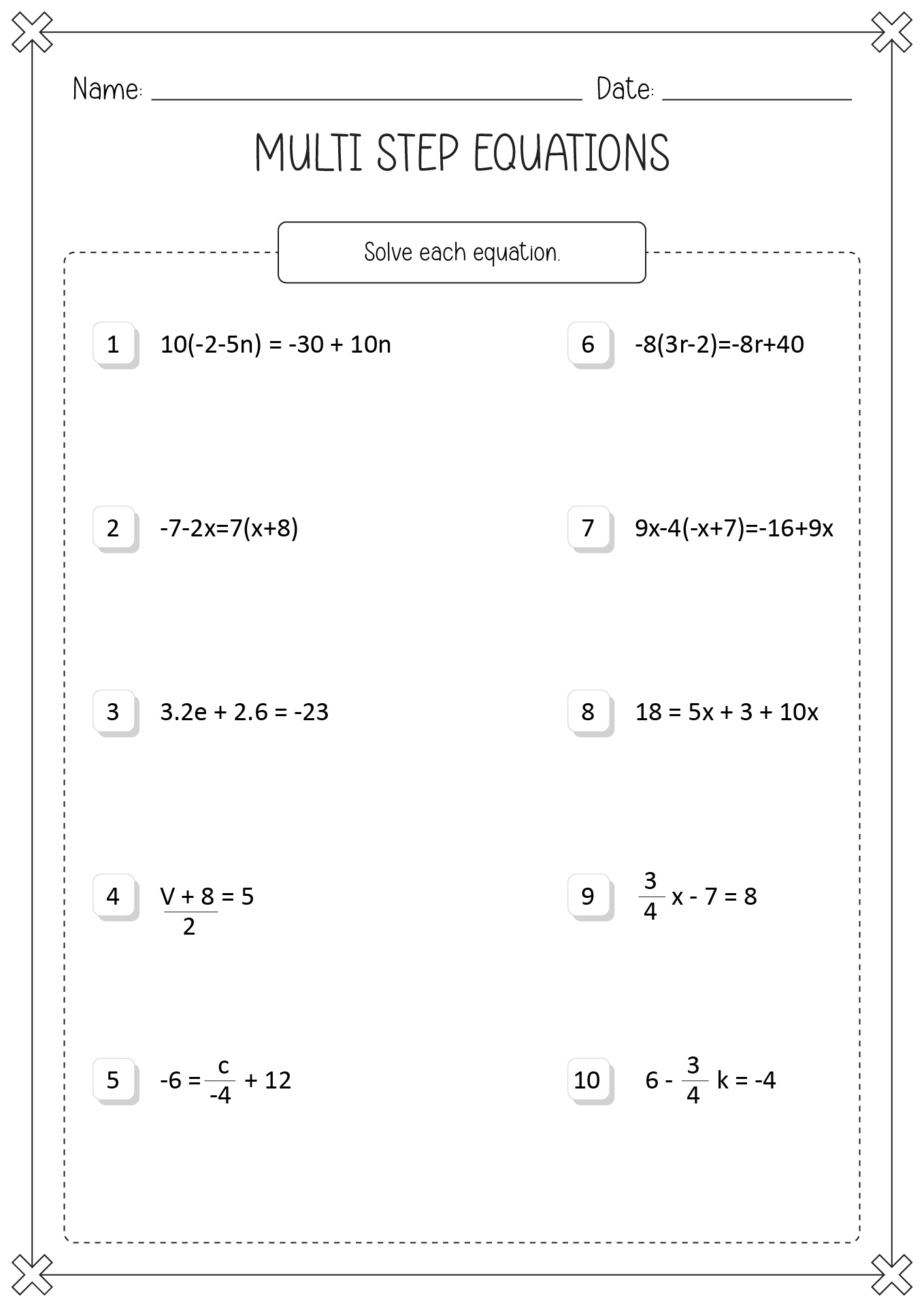
Designing engaging worksheets is both an art and a science. Here are actionable tips:
1. Incorporate Visual Storytelling
Use comic strip frames or simple illustrations to frame each problem. A short narrative can anchor the equation in a memorable context.
2. Offer Multiple Paths to the Solution
Sometimes a problem can be approached in more than one way. Include a side note: “Try solving by adding first, or by distributing first.” This encourages flexibility.
3. Provide Interactive Elements
When possible, integrate QR codes (outside the scope of this article) that link to animated step‑by‑step videos. Even a printable worksheet can simulate interaction by leaving blank spaces for students to write interim steps.
4. Reward Progress Visually
Include a progress bar that fills as students complete steps. Even a simple line with boxes that get checked off keeps motivation high.
5. Encourage Peer Collaboration
Design some problems that require pairs to compare answers and explain reasoning. This turns worksheet time into a social learning activity.
Parents & Students: A Joint Adventure

Homework can be a battleground, but it can also be a bonding experience. Here are ways parents can turn worksheet time into quality parent‑child time.
1. Set a Timer Together
Challenge each other to finish a set of problems before the timer ends. The clock adds excitement and a sense of urgency.
2. Use a “Math Buddy” System
Parents read the problem aloud while the student writes, then swap. This alternation keeps both engaged and allows for instant feedback.
3. Celebrate Small Wins
Every time a problem is solved correctly, reward with a sticker or a high‑five. Positive reinforcement keeps motivation soaring.
4. Reflect on Real-Life Impact
After completing a worksheet, discuss how the skills learned apply outside the classroom—budgeting, cooking, or even video game strategy.
Bonus: Quick Quiz to Test Your Equation Skills

Try the following mini‑quiz to see how well you’ve internalized the multi‑step strategies. No answer keys—challenge yourself!
- 2(3x + 4) – 5 = 19. Find x.
- 5y / 2 + 7 = 17. Find y.
- If 4z – 9 = 3(2z + 1), what is z?
- 12 – 3(2a + 1) = 5. Solve for a.
Work through each step, then cross‑check by plugging back into the original equations. Good luck!
Final Thoughts
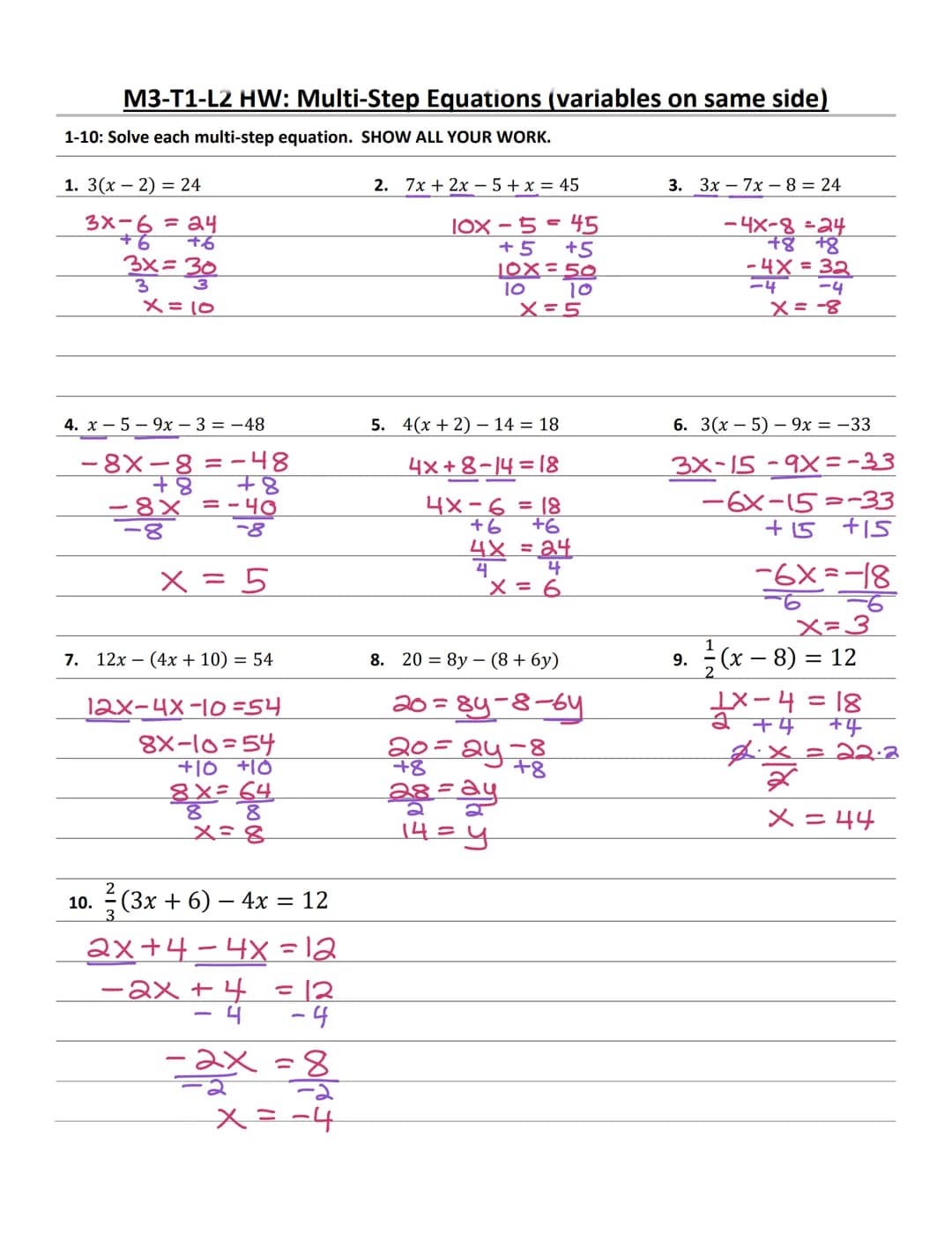
Multi step equations are like a good comedy routine: you need timing, structure, and a clear punchline. By crafting worksheets that blend humor, real‑world context, and step‑by‑step guidance, teachers can transform a potential algebra headache into an engaging adventure. Students gain confidence, parents become partners, and the entire classroom feels lighter and more playful—all while mastering the art of solving for the unknown.