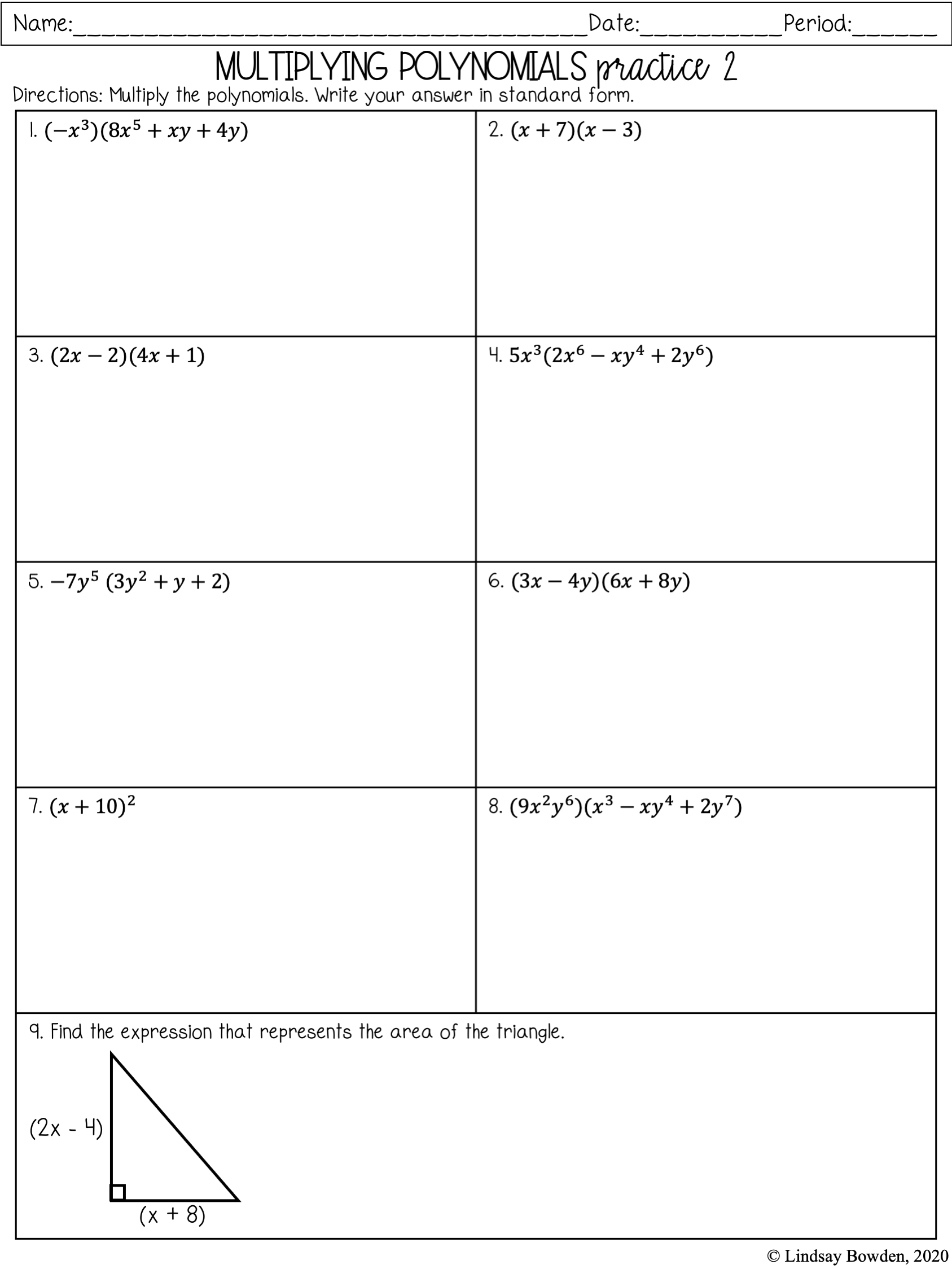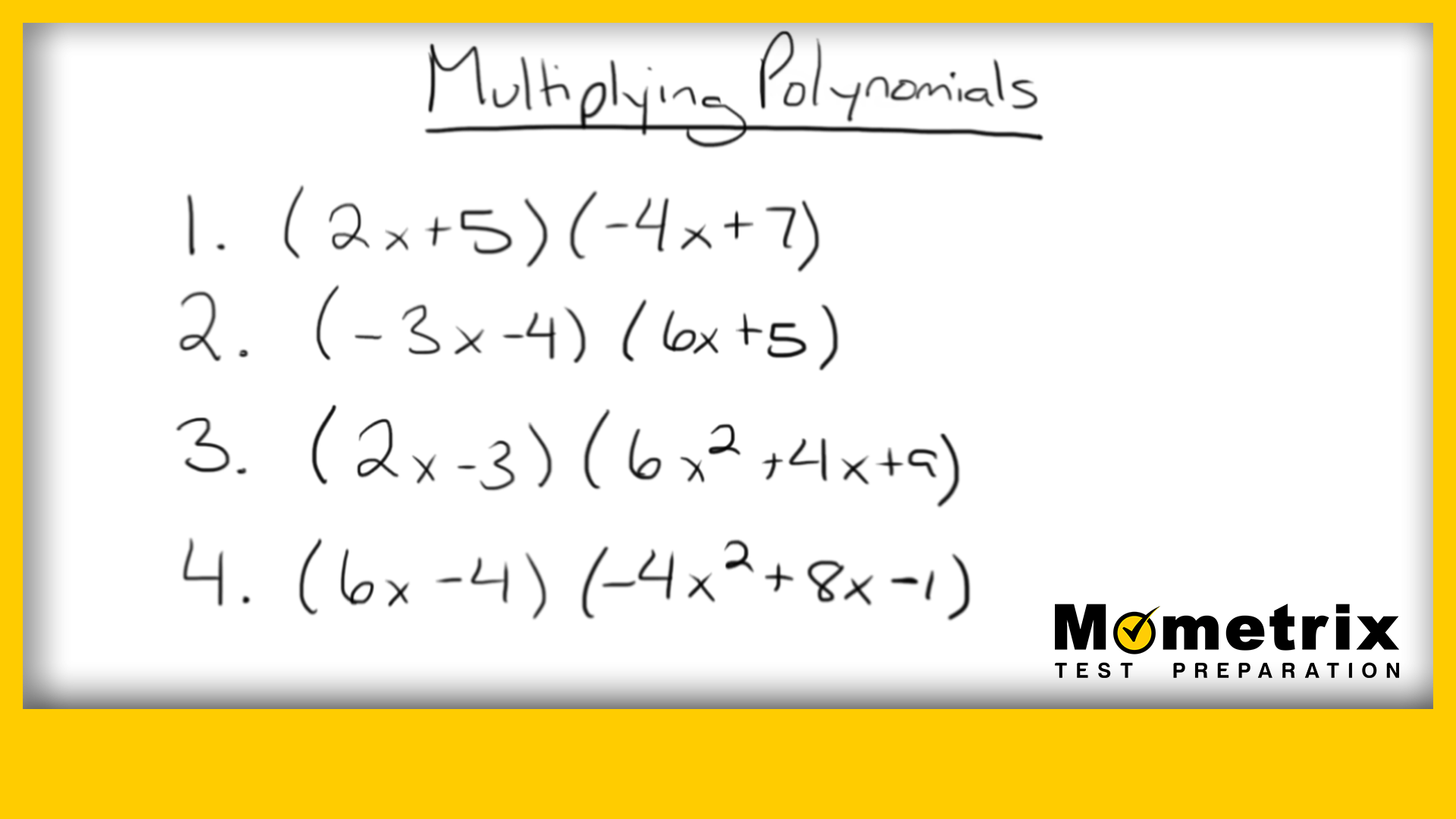
Multiplication Of Polynomials Worksheet is the crucible where abstract algebra meets gritty classroom reality, demanding not just rote memorization but a ruthless command of every term, sign, and distributive nuance; the moment you open the page, the black ink of the problems stares back, daring you to untangle the chaos of variables and coefficients and emerge with a clean, correct product.
Why Polynomial Multiplication Matters
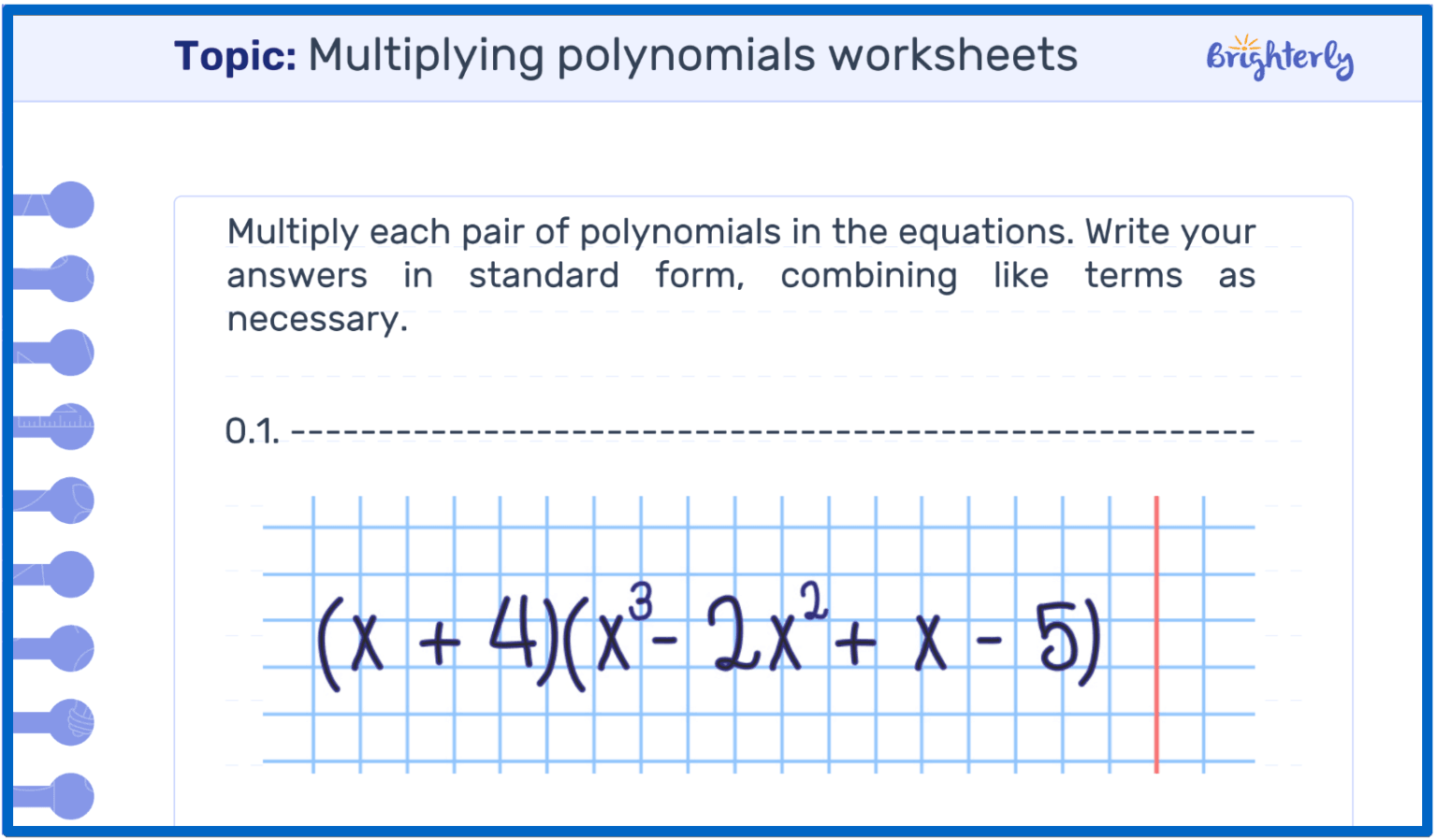
In the underbelly of mathematics, polynomial multiplication is the engine that powers everything from cryptographic algorithms to physics simulations. Without it, the elegant models that predict stock market swings, design aerospace structures, or encrypt personal data would collapse into a heap of unsolvable equations. The worksheet is not a benign practice tool; it is a battlefield where students sharpen the weapons they’ll later wield in college‑level calculus, engineering, and computer science.
Foundational Role in Higher Mathematics
Every advanced topic—rational functions, polynomial division, calculus limits—relies on a firm grasp of how to expand and simplify products. The worksheet forces you to internalize the distributive property to the point where it becomes second nature, a prerequisite for tackling the chain rule or the binomial theorem without hesitation.
Professional Relevance
Software developers who write algorithms for computer‑aided design (CAD) or machine‑learning pipelines constantly translate geometric transformations into polynomial form. Engineers calculate stress‑strain relationships using polynomial approximations. In each case, the ability to multiply polynomials accurately is the silent backbone of reliable, real‑world solutions.
Understanding the Basics

Before the worksheet can be conquered, the fundamental concepts must be dissected and reassembled like a dark puzzle.
Variables, Coefficients, and Terms
A term in a polynomial is a product of a coefficient and one or more variables raised to non‑negative integer powers. The coefficient carries the weight—positive or negative—while the variables determine the dimensionality of the expression. Recognizing each component at a glance is essential for preventing sign errors that can cascade into catastrophic miscalculations.
The Distributive Property in Depth
Multiplying two polynomials, say (ax + b)(cx² + d), requires you to distribute every term of the first factor across every term of the second. This yields acx³ + adx + bcx² + bd. The process seems mechanical, but a black‑tone approach treats each distribution as an act of domination—every term must be fully accounted for, no term left behind.
Combining Like Terms
After distribution, the resultant expression often contains like terms—terms that share the same variable part. Consolidating them reduces the polynomial to its simplest form. Skipping this step or mishandling it introduces hidden errors that can sabotage the entire worksheet.
Step‑by‑Step Guide to Solving Worksheets

The following methodology transforms a chaotic worksheet into a series of controlled operations, each step executed with ruthless precision.
1. Scan the Problem for Structure
Identify the degree of each polynomial, count the number of terms, and note any negative signs or zero coefficients. This quick reconnaissance informs how many distributive operations you’ll need and where potential traps lie.
2. Write Out the Full Distribution Grid
Set up a grid or table where rows represent terms from the first polynomial and columns represent terms from the second. Fill each cell with the product of the intersecting terms. This visual scaffold prevents missed multiplications and clarifies the flow of signs.
3. Execute the Multiplications
Multiply coefficients and add exponents for like variables. Pay special attention to negative signs: a negative times a negative yields a positive, but a negative times a positive remains negative. Record each product exactly as it appears in the grid.
4. Transfer Products to a Linear Form
Read the grid row by row, writing each product sequentially. This step converts the two‑dimensional layout into a linear polynomial ready for simplification.
5. Combine Like Terms Systematically
Group terms with identical variable parts, then add or subtract their coefficients. Use a separate column to keep track of the cumulative sum for each variable power, ensuring no term is inadvertently omitted.
6. Double‑Check Signs and Coefficients
Re‑examine each original term and its product, confirming that every sign matches the expected outcome. A single mis‑signed term can flip the entire polynomial’s sign, leading to a disastrous final answer.
7. Verify with Reverse Engineering
If time permits, factor the resulting polynomial back into its original components. Successful factoring proves that the multiplication was executed correctly; failure signals a hidden mistake that must be tracked down.
Common Pitfalls and How to Avoid Them

Even seasoned students fall prey to recurring errors; awareness is the first line of defense.
Neglecting Negative Signs
Negative coefficients are the most treacherous. Adopt a habit of writing each sign explicitly, never assuming an implied plus. When in doubt, place a “+” before every positive term to maintain visual symmetry.
Misaligning Exponents
Adding exponents is straightforward, but the temptation to overlook a variable completely is strong, especially in multi‑variable polynomials. Highlight the variable part of each product before combining like terms to keep exponent tracking transparent.
Skipping the Grid
Rushing directly to mental multiplication invites omissions. The grid, though seemingly tedious, is a safeguard that forces you to confront each term head‑on.
Overlooking Zero Coefficients
A term with a zero coefficient contributes nothing, yet it can cause confusion if left in the intermediate steps. Remove or cross out zero‑coefficient products immediately to keep the workspace clean.
Real‑World Applications

The abstract darkness of polynomial multiplication shines brightly in practical scenarios.
Signal Processing
Convolution—a core operation in digital signal processing—is essentially the multiplication of polynomial representations of signals. Engineers use worksheets to practice the underlying algebra before deploying algorithms that filter noise from audio or medical imaging data.
Economics and Finance
Polynomial models forecast growth trends, calculate compound interest, and assess risk. Accurate multiplication of these models ensures that financial projections remain reliable, preventing costly miscalculations.
Computer Graphics
Bezier curves, the backbone of vector graphics and animation, are defined by polynomial equations. Multiplying these polynomials determines curve intersections and surface rendering, making the worksheet a silent mentor to graphic designers.
Tips for Mastery and Practice Strategies

Turning the worksheet from a source of dread into a tool for mastery requires disciplined practice and strategic reinforcement.
Daily Micro‑Drills
Set aside five minutes each day to solve a single, randomly selected polynomial multiplication problem. Consistency builds muscle memory, and the brevity keeps the practice from becoming overwhelming.
Use Colored Pens for Sign Management
Assign a color to positive signs (e.g., blue) and another to negatives (e.g., red). This visual cue forces you to confront sign changes directly, reducing careless errors.
Teach the Process to a Peer
Explaining each step out loud to someone else forces you to articulate the logic behind every operation, exposing any gaps in your understanding.
Challenge Yourself with Higher‑Degree Polynomials
Once comfortable with quadratics, graduate to cubics and quartics. The increased complexity reinforces the distributive principle and prepares you for calculus‑level manipulations.
Incorporate Technology Wisely
Use algebra software to verify your answers, but never rely on it to perform the work. The verification step is a safety net, not a crutch; the real learning happens in the manual process.
Conclusion

Mastering the Multiplication Of Polynomials Worksheet is a rite of passage that transforms a hesitant learner into a confident problem‑solver, capable of navigating the darkest corners of mathematics and emerging with precise, reliable results. By respecting the structure of each polynomial, employing systematic distribution grids, vigilantly managing signs, and reinforcing skills through disciplined practice, students turn a seemingly intimidating worksheet into a powerful tool for academic and professional success. The black tone of relentless focus and unflinching attention to detail is not a stylistic choice but a necessity—only through such disciplined rigor can the true potential of polynomial multiplication be unlocked and applied to the myriad real‑world challenges that await beyond the classroom.