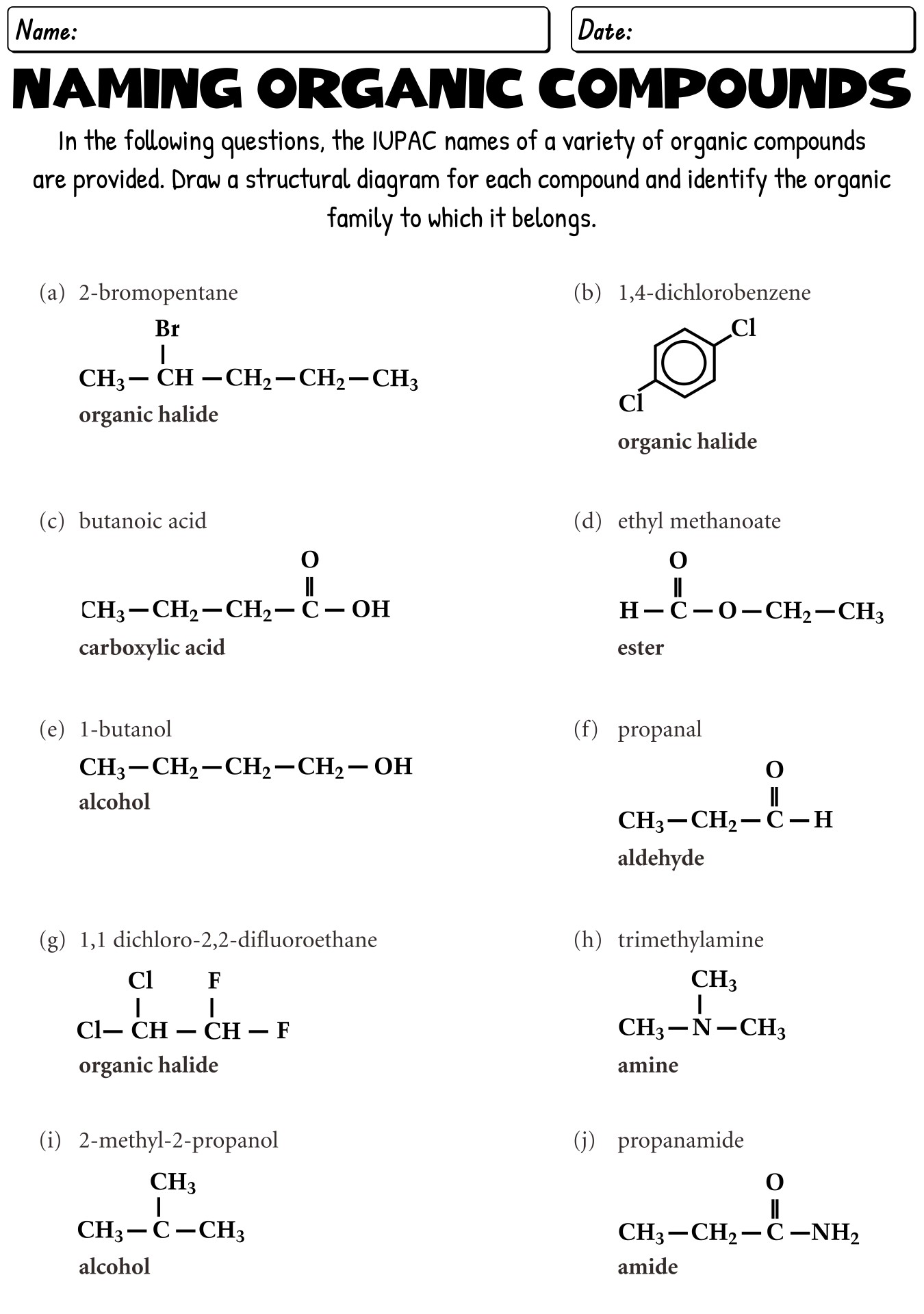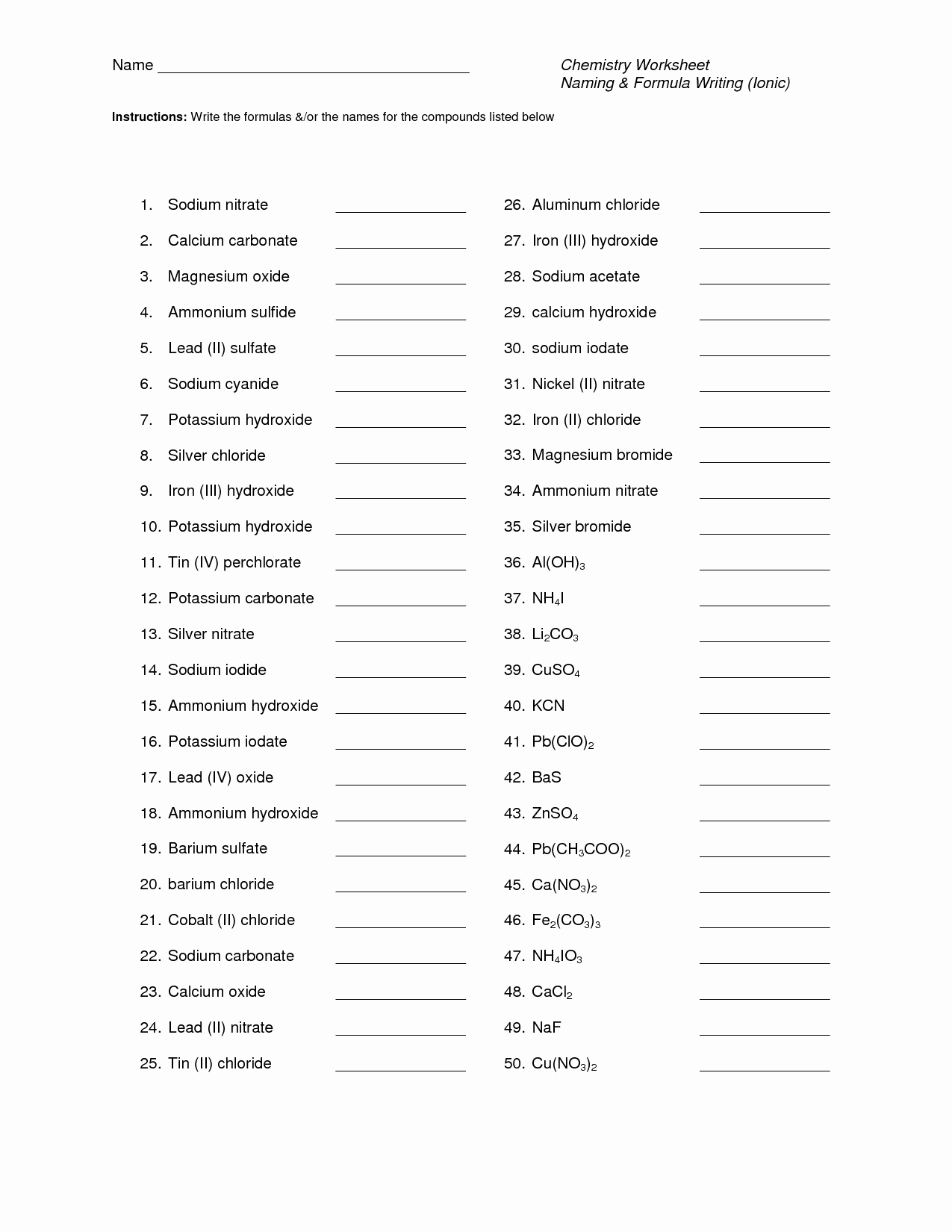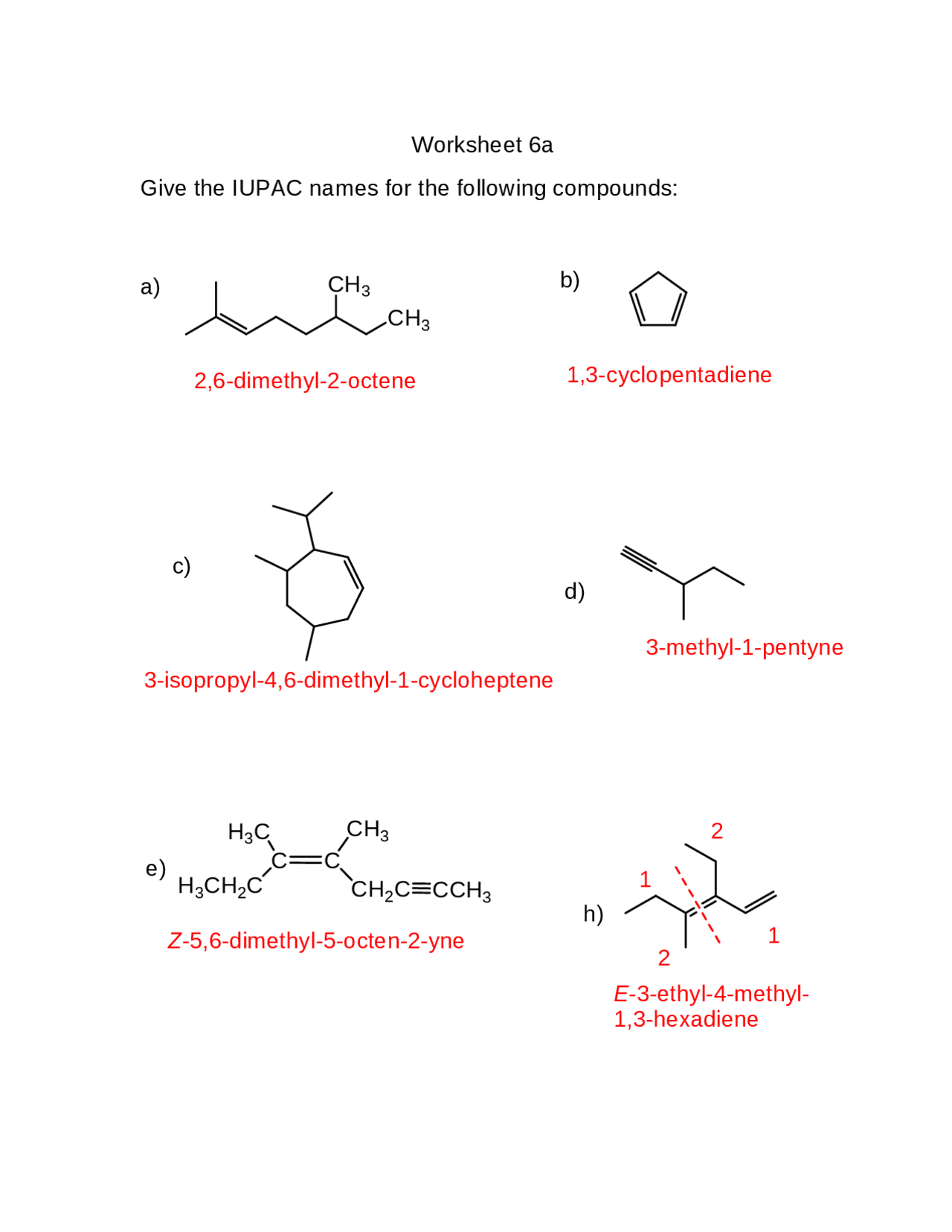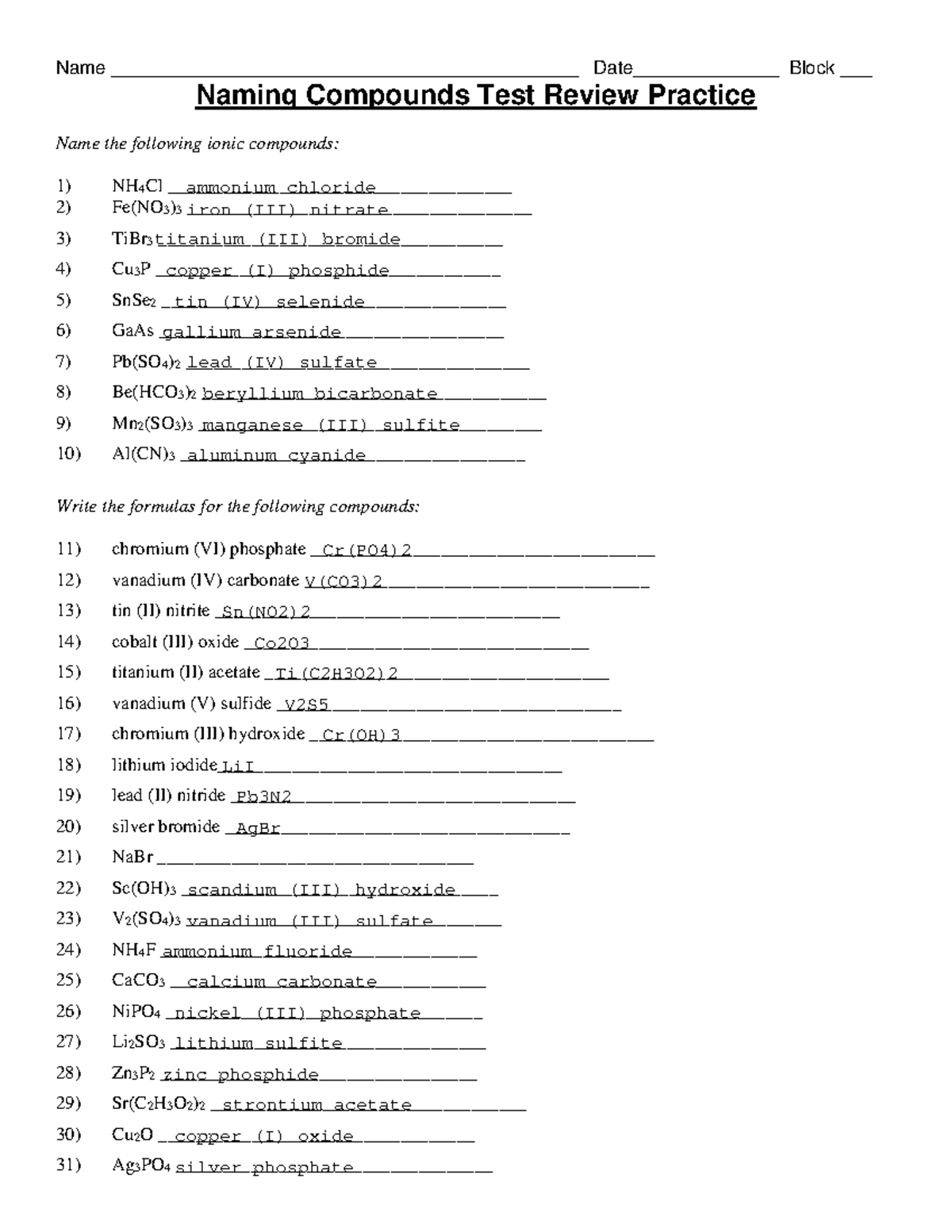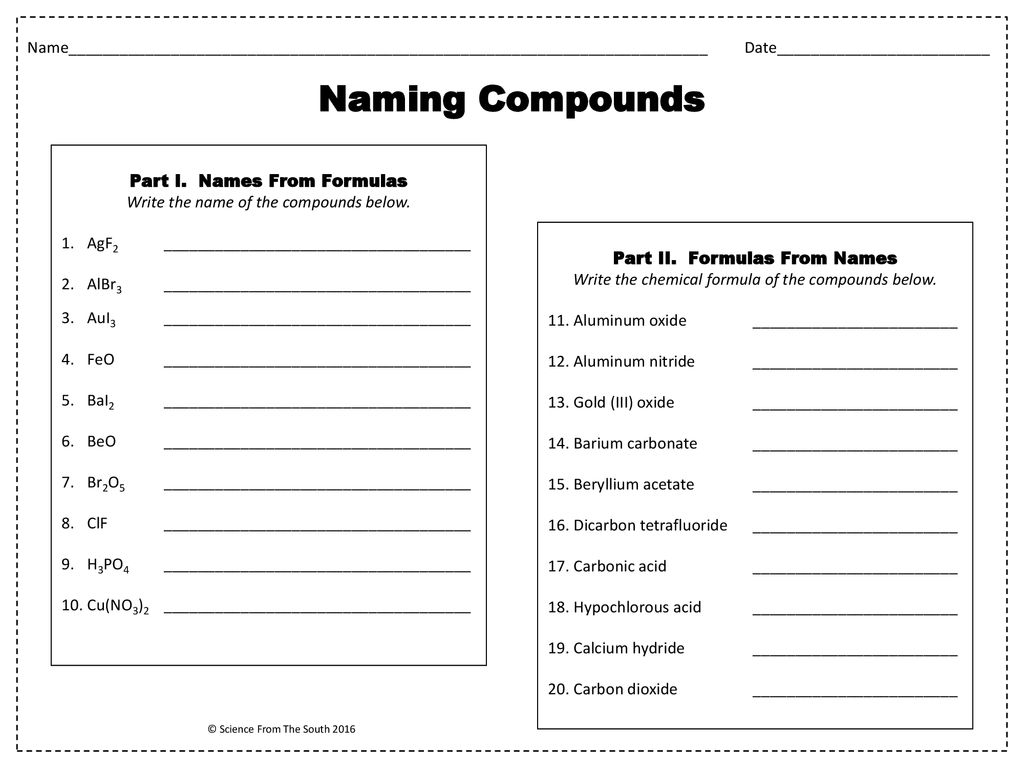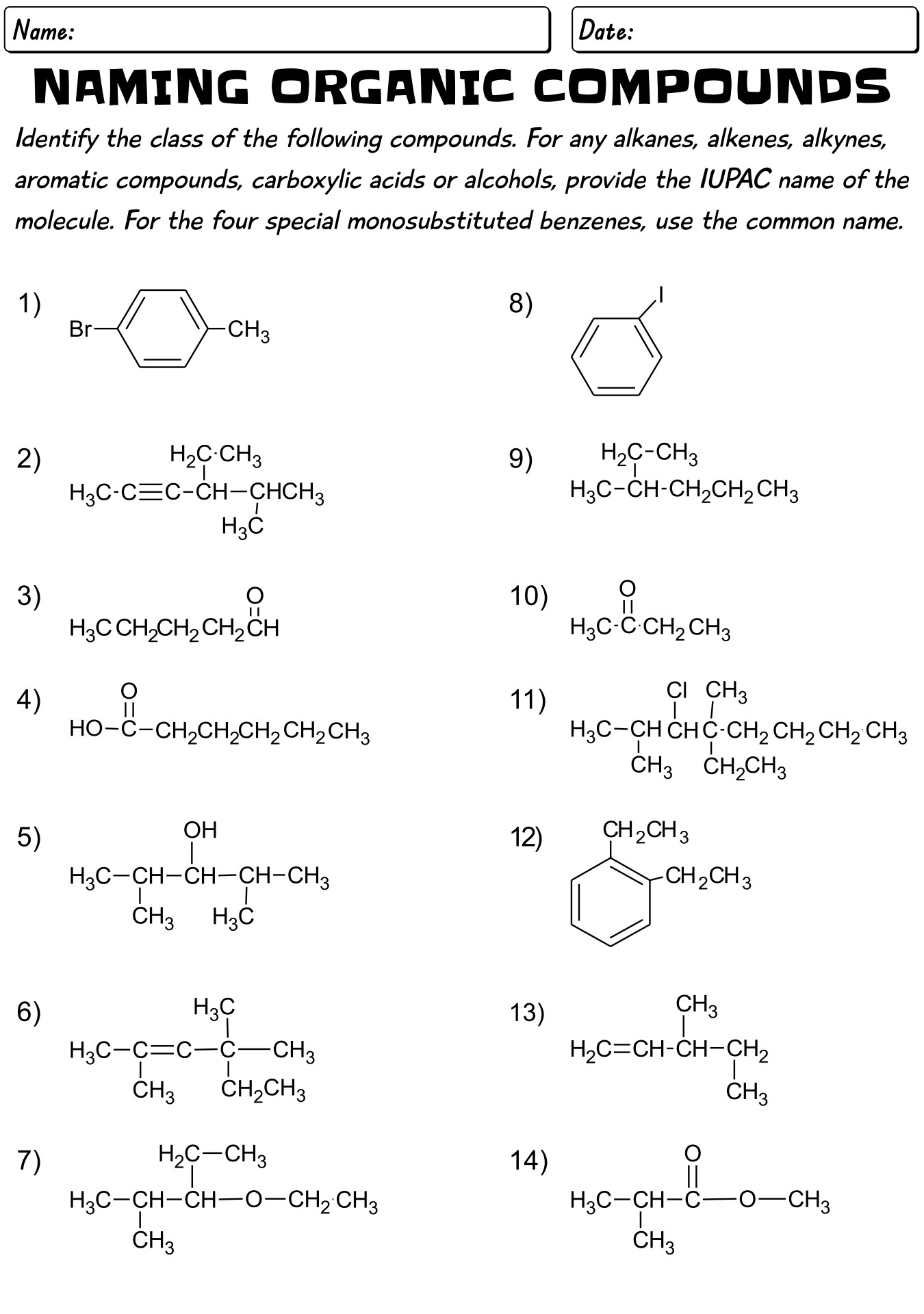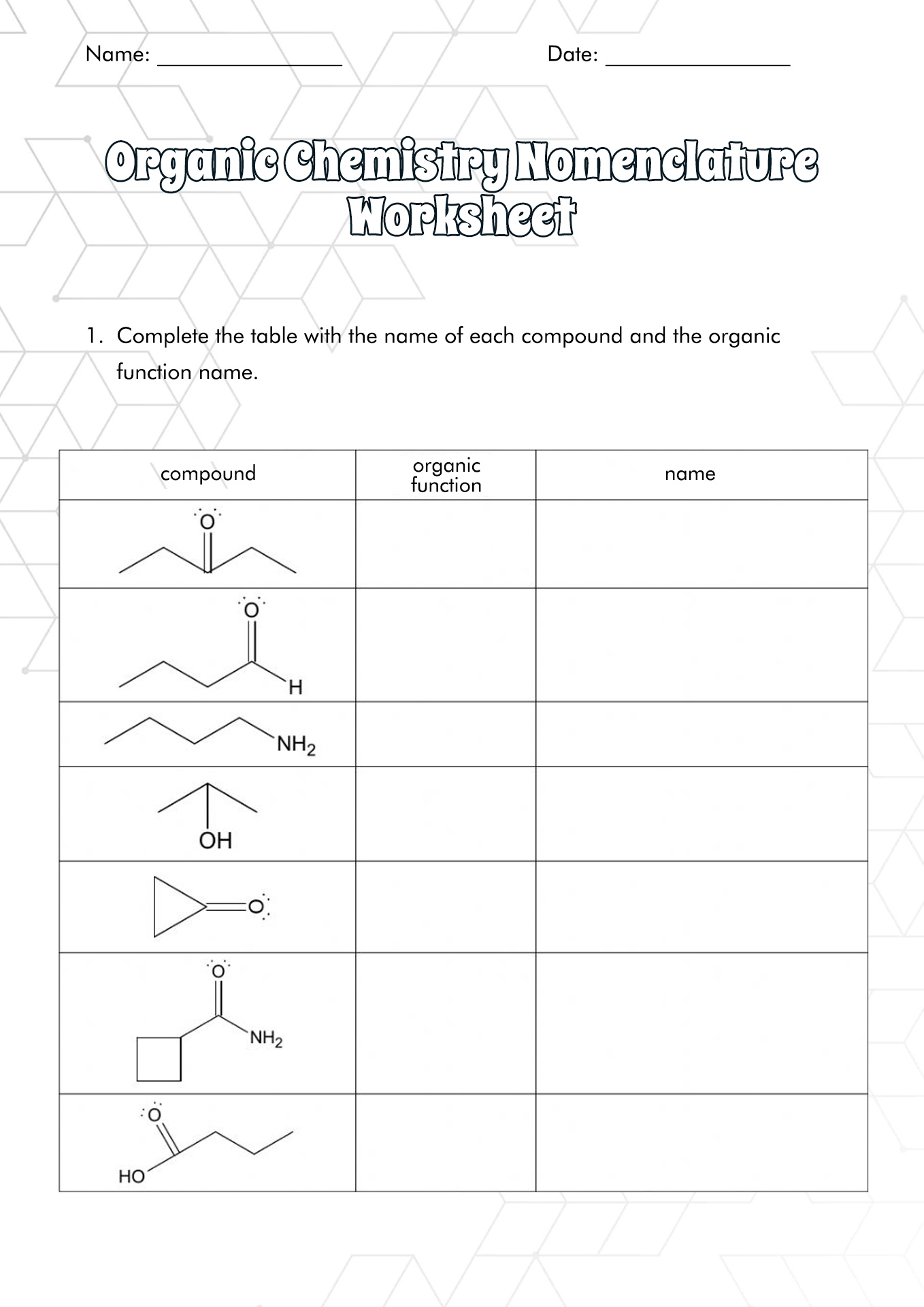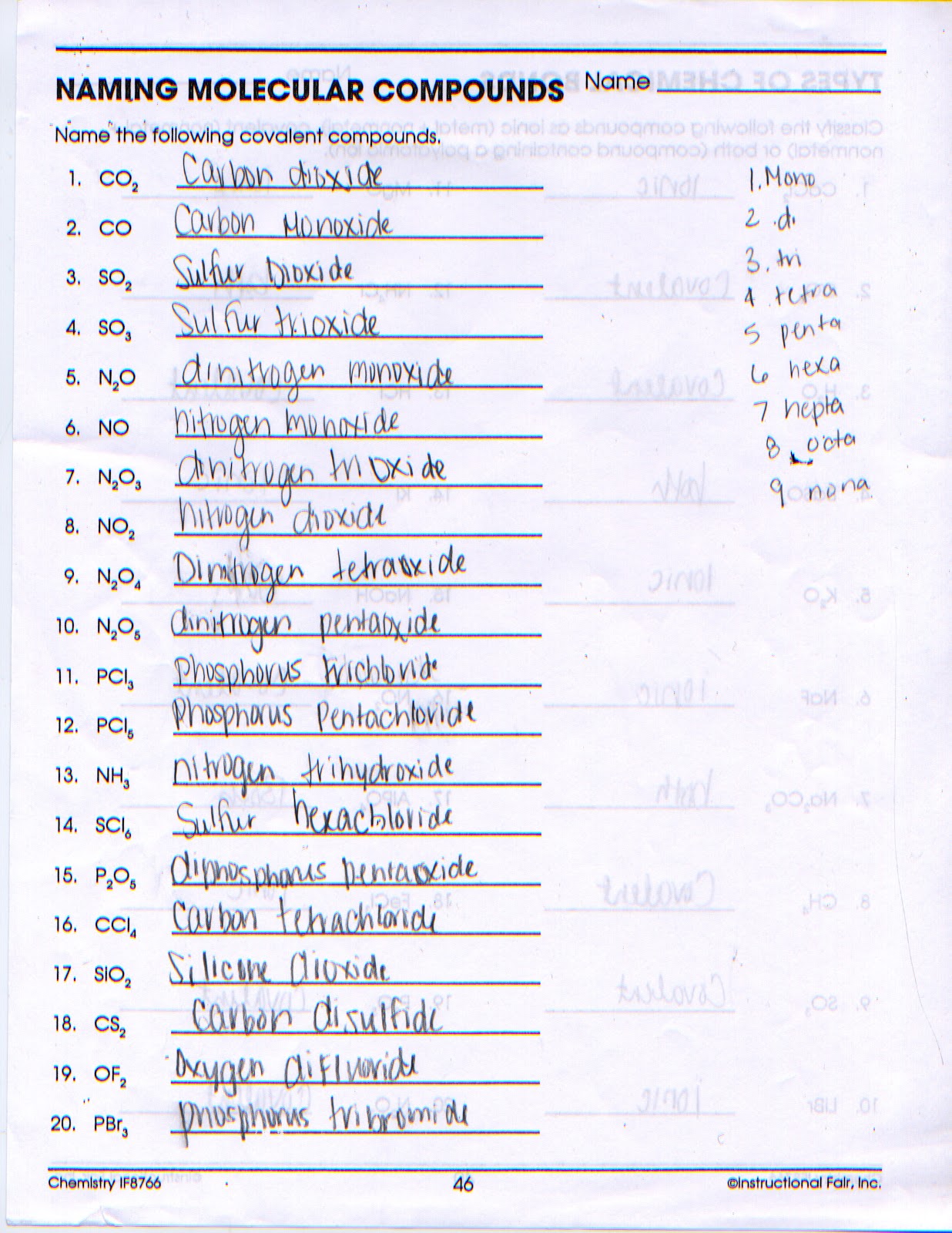
Naming Chemical Compounds Worksheet resources have become essential tools for students and educators looking to demystify the language of chemistry and build confidence in systematic naming conventions. Whether you are a high school teacher preparing a new lesson plan, a college student polishing your study routine, or a homeschool parent seeking clear, structured practice, a well‑designed worksheet can turn abstract rules into concrete, repeatable skills. This article explores every facet of effective worksheets—from the pedagogical principles that make them work, to practical steps for creating your own, and proven strategies for using them in the classroom or at home.
Why Worksheets Matter for Mastering Chemical Nomenclature

Active learning over passive reading
Research consistently shows that students retain information better when they actively manipulate concepts rather than simply rereading textbook passages. A Naming Chemical Compounds Worksheet forces learners to apply naming rules, identify patterns, and correct mistakes in real time, which reinforces neural pathways associated with recall. This hands‑on approach also encourages metacognition: students become aware of where they struggle and can target those gaps immediately.
Immediate feedback loops
Including an answer key or self‑checking section at the end of the worksheet creates a rapid feedback cycle. When a learner writes the name of NaCl as “sodium chloride” and then confirms it against the key, the brain registers the correct response, strengthening memory. Conversely, spotting an error—such as misidentifying a polyatomic ion—triggers a corrective learning moment that is far more durable than a delayed correction.
Scaffolding complex concepts
Chemical nomenclature involves multiple layers: ionic versus covalent compounds, prefixes for the number of atoms, oxidation states, and the use of polyatomic ion names. A thoughtfully sequenced worksheet starts with simple binary ionic compounds, gradually introduces covalent naming, then challenges students with acids, hydrates, and coordination complexes. This scaffolded progression mirrors the way cognitive load theory recommends building knowledge—starting simple, then adding complexity only after mastery of foundational concepts.
Key Components of an Effective Naming Chemical Compounds Worksheet

Clear objectives and learning outcomes
Every worksheet should begin with a concise statement of what the learner will accomplish. For example: “By the end of this worksheet, you will be able to correctly name binary ionic compounds, apply Greek prefixes to covalent molecules, and differentiate between acids and their corresponding anions.” Stating objectives aligns expectations and helps students self‑assess progress.
Progressive difficulty levels
Arrange problems in a logical order: start with straightforward examples (e.g., KBr → potassium bromide), then move to slightly more challenging tasks that require prefixes (e.g., CO₂ → carbon dioxide), and finally present mixed‑type questions that combine polyatomic ions and oxidation numbers (e.g., Fe₂(SO₄)₃ → iron(III) sulfate). This gradual increase keeps learners motivated while ensuring they are not overwhelmed.
Variety of question formats
- Fill‑in‑the‑blank: Provide the chemical formula and ask for the systematic name.
- Multiple choice: Offer plausible distractors that target common misconceptions, such as confusing “oxide” with “peroxide.”
- Matching: Pair a list of formulas with a list of names to reinforce visual recognition.
- Short answer: Pose a scenario where a student must write a balanced chemical equation and then name the product.
Answer key with explanations
Beyond simply listing the correct answer, include a brief rationale for each response. For instance, explain why “nitrogen monoxide” is preferred over “nitrous oxide” for NO, citing the oxidation state rule. These explanations transform the answer key into a mini‑tutorial, enabling independent study.
Step‑by‑Step Guide to Creating Your Own Naming Chemical Compounds Worksheet

1. Define the target audience and scope
Identify whether the worksheet is for middle school, high school, or introductory college chemistry. Younger students may only need binary ionic and covalent compounds, while advanced learners might require sections on coordination chemistry and organic nomenclature. The scope determines the depth of rules you will cover.
2. Compile a master list of compounds
Gather a balanced mix of compounds that align with your learning objectives. Use reputable chemistry textbooks or reputable online databases to ensure formula accuracy. Aim for 10–15 simple items, 8–12 moderate items, and 5–8 challenging items for a 30‑question worksheet.
3. Write clear, concise prompts
Each question should state the task unambiguously. Example: “Write the systematic name for the compound with the formula Al₂O₃.” Avoid unnecessary wording that could distract from the core skill.
4. Incorporate visual aids where helpful
For complex polyatomic ions, include a small diagram or a table that lists the ion’s composition (e.g., SO₄²⁻ – sulfate). Visual references reduce cognitive overload and keep the worksheet focused on naming rather than memorizing ion formulas.
5. Design the answer key with stepwise logic
Break down each naming decision: identify the cation, determine its charge, select the appropriate anion name, apply any necessary prefixes or suffixes, and note oxidation states when required. This stepwise presentation mirrors the mental process students should internalize.
6. Test the worksheet
Before distribution, have a colleague or a small group of students complete the worksheet. Collect feedback on clarity, difficulty balance, and any ambiguous wording. Revise accordingly to ensure smooth execution.
Common Pitfalls and How to Avoid Them

Confusing oxidation states with naming prefixes
Students often mistake the “‑ium” suffix for a metal’s oxidation state. Reinforce the rule that oxidation states are indicated in parentheses only for transition metals with variable charges (e.g., iron(II) vs. iron(III)).
Overlooking polyatomic ion names
When a compound contains a polyatomic ion, the ion’s name replaces the typical element name. For instance, KNO₃ is “potassium nitrate,” not “potassium nitrite.” Provide a reference table of common polyatomic ions within the worksheet to prevent this error.
Misapplying Greek prefixes
Greek prefixes apply only to covalent compounds, not ionic ones. A common mistake is naming Na₂O as “sodium dioxides.” Emphasize the distinction with side‑by‑side examples that contrast ionic and covalent naming.
Neglecting the “hydro‑” prefix for binary acids
Binary acids follow the pattern “hydro‑[anion root]‑ic acid” (e.g., HCl → “hydrochloric acid”). Include a dedicated mini‑section that highlights this rule and provides several practice items.
Real‑World Applications: Connecting Worksheet Practice to Lab Work

Preparing for titration and solution preparation
Accurate naming is vital when measuring reagents for titrations. Misidentifying “sodium sulfate” as “sodium sulfite” could lead to incorrect stoichiometric calculations and failed experiments. Worksheets that simulate lab scenarios—such as “You need 0.5 M sodium nitrate for a precipitation reaction; write the correct compound name and formula”—bridge theory and practice.
Understanding safety data sheets (SDS)
Safety documentation lists chemicals by their systematic names. Familiarity gained from worksheets enables students to quickly locate hazard information for “ammonium nitrate” versus “ammonium nitrite,” reducing the risk of mishandling dangerous substances.
Interpreting research articles
Scientific literature rarely uses common names; instead, it relies on IUPAC nomenclature. A solid foundation from naming worksheets empowers students to read primary research, extract relevant chemical information, and engage in meaningful discussions.
Tips for Teachers and Students to Maximize Learning

Integrate peer review
After completing a worksheet, have students exchange papers and critique each other’s naming decisions. This collaborative review reinforces concepts and builds communication skills.
Use timed drills for fluency
Set a short timer (2–3 minutes) for a batch of five formulas. Rapid recall drills improve speed, which is especially beneficial for standardized tests where time is limited.
Employ digital tools
Platforms such as Google Forms or Kahoot can host the worksheet in an interactive format, providing instant feedback and analytics on common error patterns. Digital worksheets also allow for easy updates and randomization of questions.
Link naming to real‑life examples
Discuss everyday chemicals—table salt (sodium chloride), baking soda (sodium bicarbonate), or aspirin (acetylsalicylic acid)—and ask students to write both the common name and the systematic name. This relevance deepens engagement.
Encourage reflective journaling
After each worksheet session, have students write a brief reflection: “Which naming rule was most challenging today, and how did I overcome it?” Reflection solidifies learning and helps teachers identify topics that need reteaching.
Conclusion
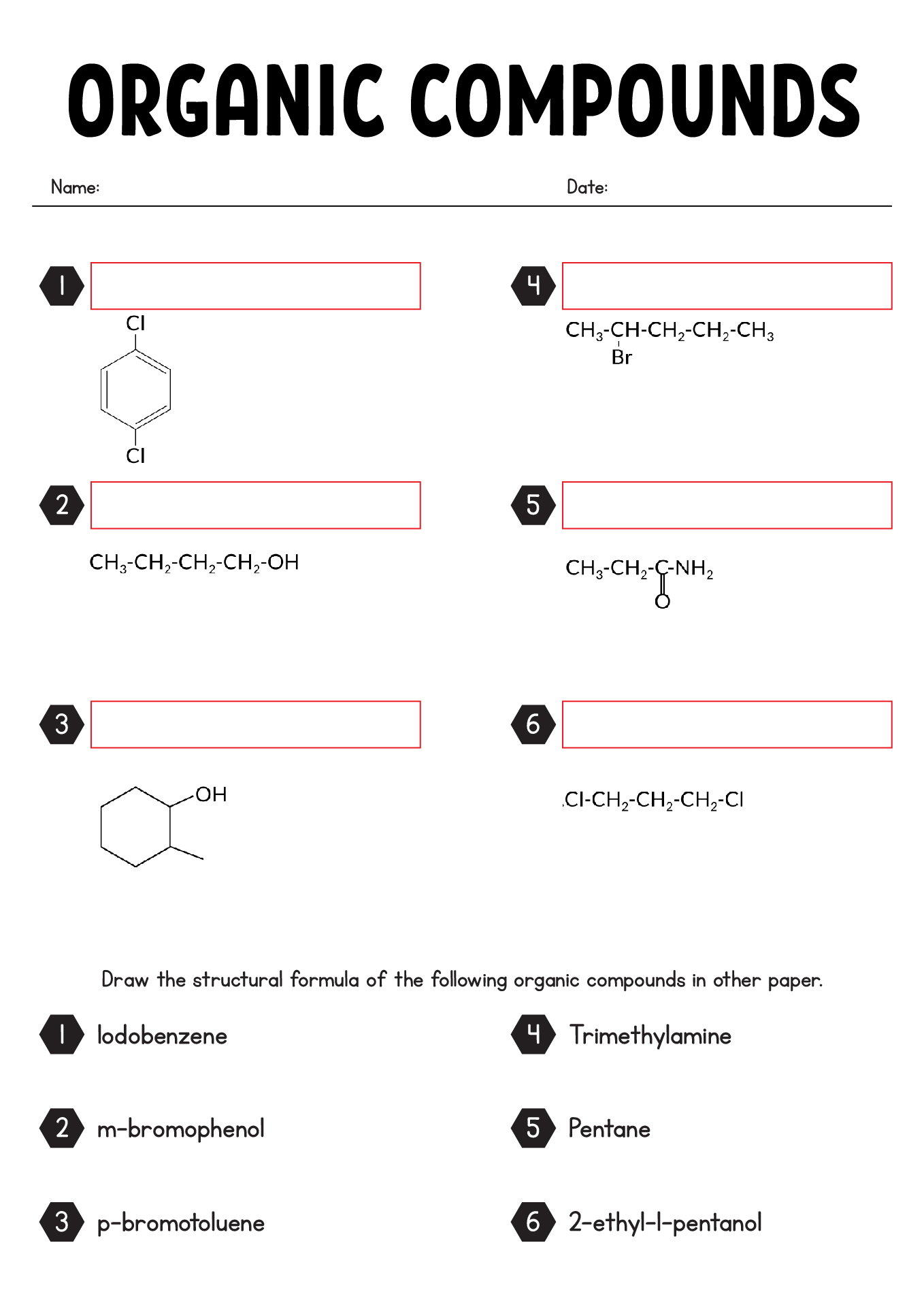
Incorporating a well‑crafted Naming Chemical Compounds Worksheet into any chemistry curriculum transforms abstract naming rules into tangible, repeatable skills. By aligning clear objectives, progressive difficulty, varied question formats, and thorough answer explanations, educators can create a powerful learning scaffold that supports active engagement, immediate feedback, and long‑term retention. Avoiding common pitfalls—such as misusing oxidation states or overlooking polyatomic ion names—ensures that practice translates directly to laboratory competence and real‑world chemical literacy. Whether you are designing a custom worksheet from scratch or selecting an existing resource, the strategies outlined here will help you maximize instructional impact, boost student confidence, and cultivate a deeper appreciation for the language that underpins every chemical reaction.