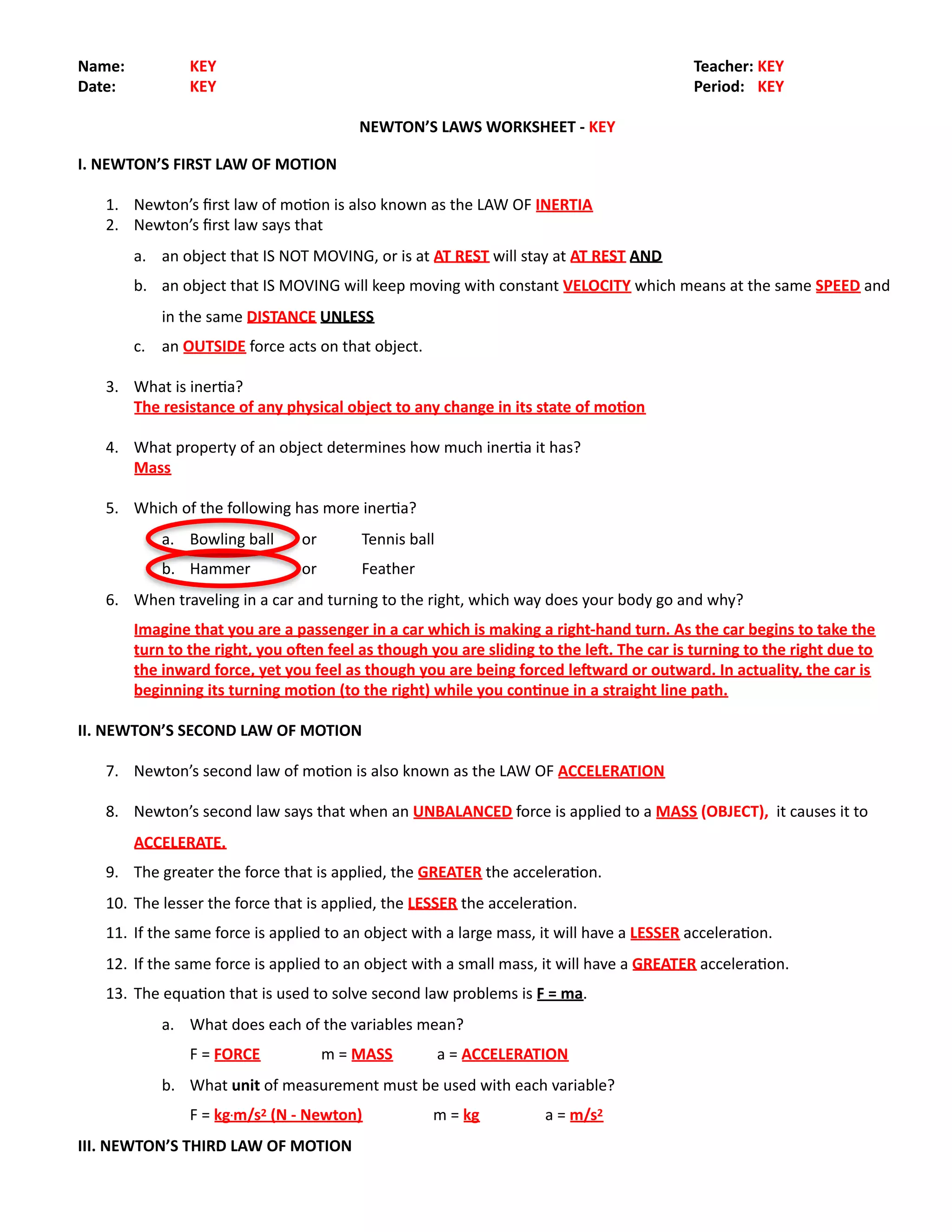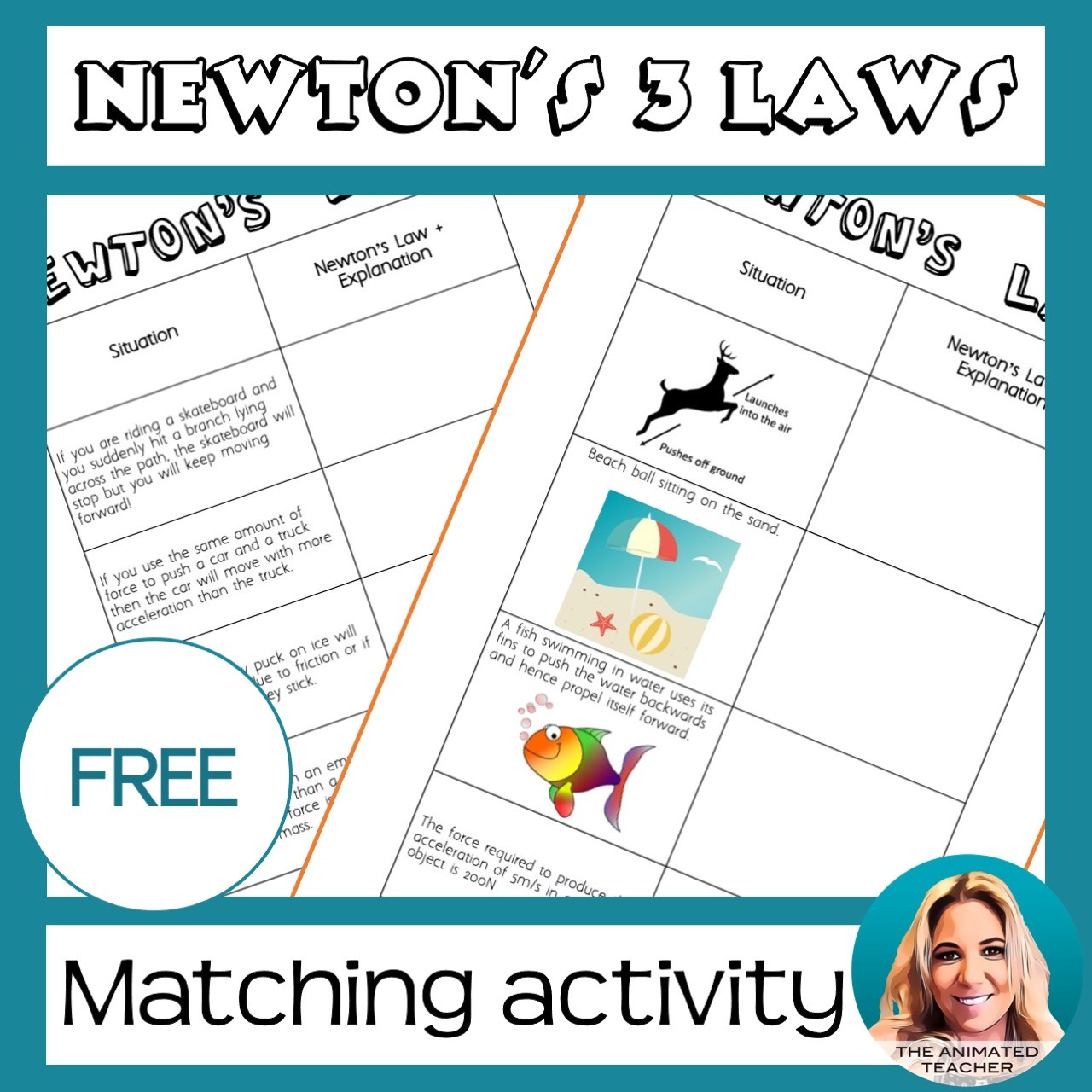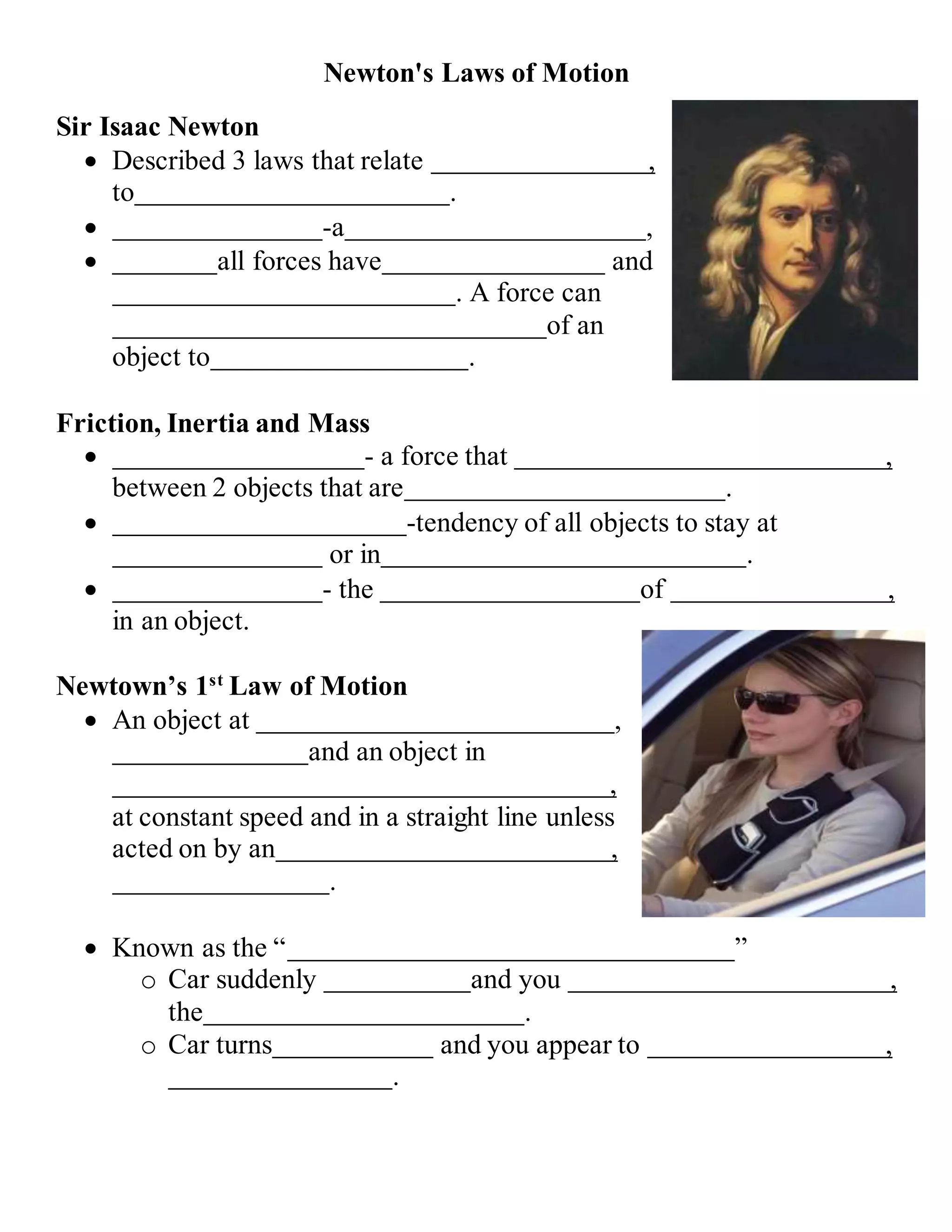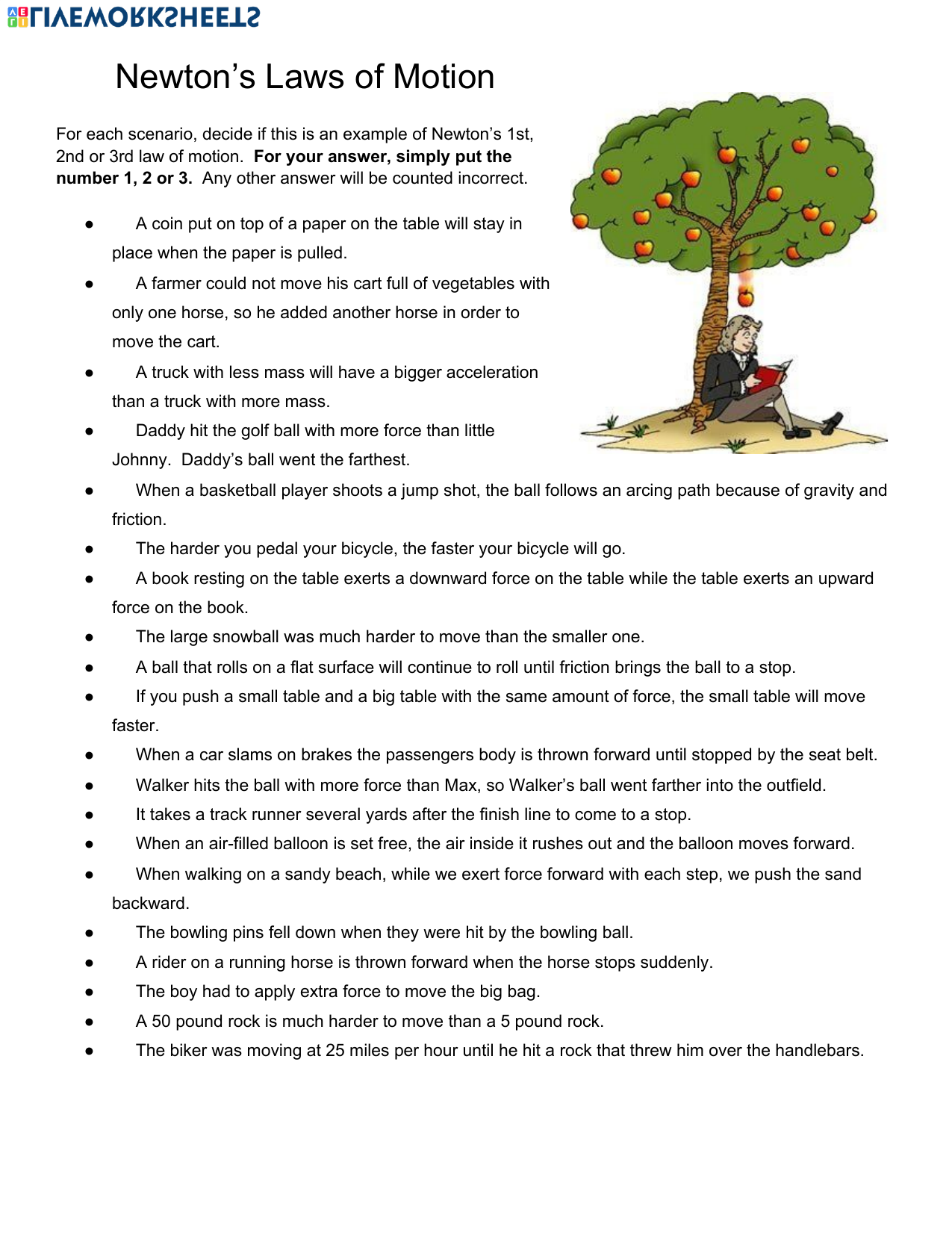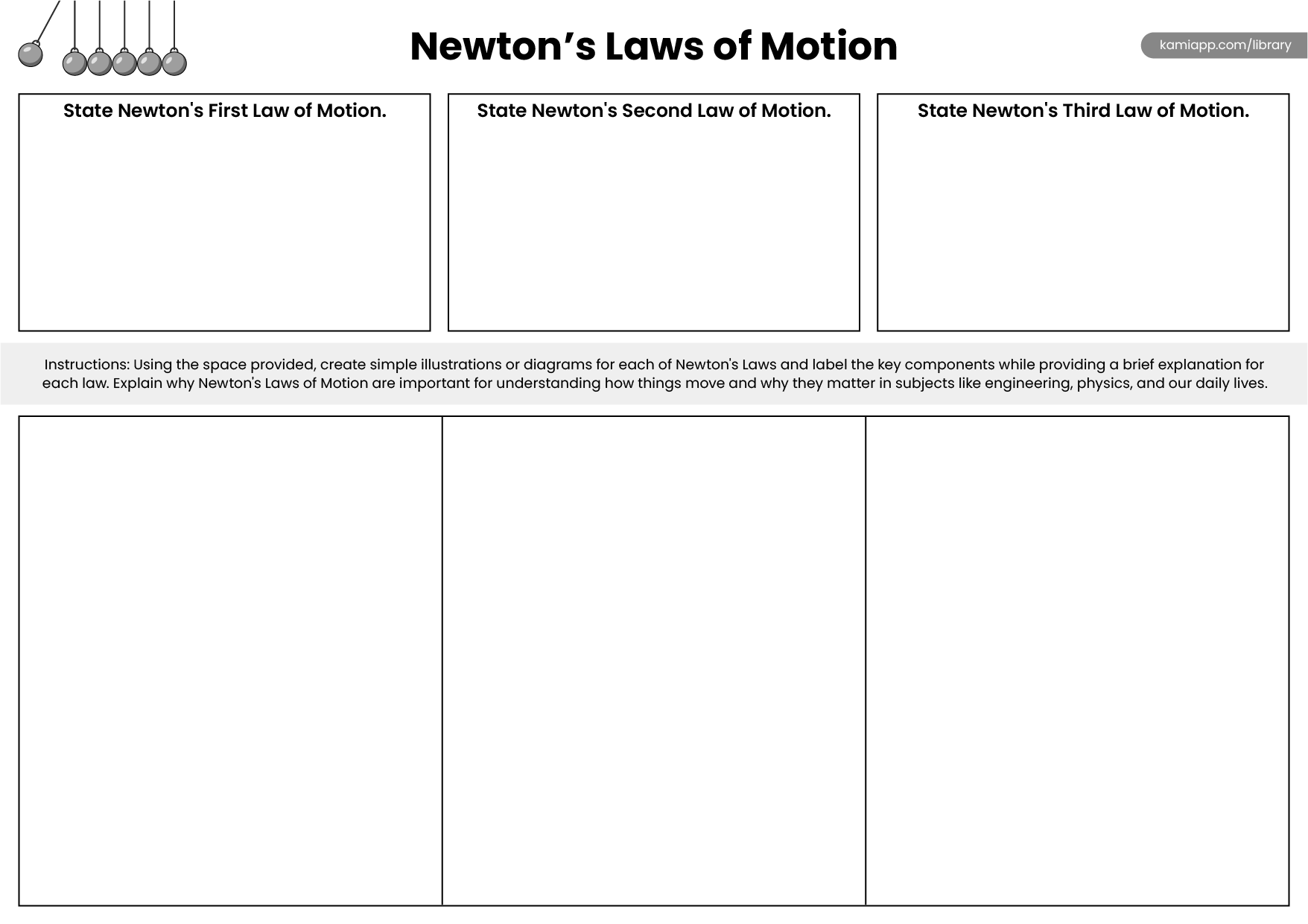
Newton’s Laws Of Motion Worksheet offers a vibrant gateway for students to explore the timeless principles that govern our universe while enjoying a learning experience flavored with Asian cultural nuances that resonate with curious minds across the United States. By weaving together clear visuals, step‑by‑step problems, and real‑world scenarios drawn from everyday life in bustling Asian markets, cherry blossom festivals, and high‑tech labs, this worksheet transforms abstract physics into tangible stories that students can picture, discuss, and master. Whether you are a classroom teacher, a homeschooling parent, or a tutor seeking a fresh, culturally enriched approach, the worksheet provides a structured yet flexible framework that sparks curiosity, deepens conceptual understanding, and prepares learners for success on tests, projects, and beyond.
Understanding the Core Principles Behind the Worksheet
Newton’s three laws form the backbone of classical mechanics, and the worksheet is designed to unpack each law with clarity and cultural relevance. The first law, often called the law of inertia, explains why a sushi roll on a moving conveyor belt continues its motion until a force—like a hand—stops it. The second law, expressed as F = ma, connects force, mass, and acceleration, illustrated through a scenario where a rickshaw driver in Kyoto accelerates a heavy load of lanterns. The third law, “for every action, there is an equal and opposite reaction,” comes alive with the example of a martial artist’s punch meeting a padded board, showcasing how forces interact in opposite directions. By grounding each principle in vivid, Asian‑inspired contexts, the worksheet helps students internalize the concepts without feeling detached from their everyday experiences.
Why Cultural Context Enhances Comprehension
Research shows that learners retain information better when new ideas are linked to familiar cultural narratives. When students see a familiar setting—like a bustling night market in Taipei or a serene tea ceremony in Kyoto—they can more readily visualize how forces act and react. This approach also honors the diverse backgrounds of many U.S. classrooms, fostering inclusion while reinforcing scientific rigor. The worksheet’s illustrations, such as a dragon kite soaring against the wind, serve as visual anchors that make abstract formulas feel concrete and approachable.
How the Worksheet Aligns with Classroom Goals and Standards
Teachers seeking to meet Common Core State Standards (CCSS) and Next Generation Science Standards (NGSS) will find the worksheet meticulously aligned with performance expectations. For example, NGSS standard MS‑PS2‑1 requires students to “apply Newton’s Third Law to design a solution to a problem involving the motion of two colliding objects.” The worksheet includes a hands‑on activity where learners calculate the forces involved when two bamboo sticks strike each other during a traditional drumming performance, directly satisfying this benchmark. Additionally, the worksheet’s problem sets support CCSS.Math.Content.HSF.IF.B.6 by requiring students to interpret linear relationships between force and acceleration, reinforcing both science and mathematics integration.
Assessment Opportunities Embedded in the Worksheet
Each section concludes with formative assessment questions, ranging from multiple‑choice items to open‑ended reflection prompts. Teachers can quickly gauge student understanding by having learners explain, in their own words, why a koi fish’s movement in a pond exemplifies inertia. The worksheet also provides rubric‑ready criteria for evaluating lab reports that involve constructing simple models—such as a mini‑bridge made from matchsticks—where students must predict and test the forces at play. This dual focus on conceptual mastery and practical application supports differentiated assessment strategies.
Step‑by‑Step Guide to Using the Worksheet Effectively

Successful implementation of the Newton’s Laws Of Motion Worksheet hinges on thoughtful pacing, interactive discussion, and opportunities for hands‑on experimentation. Below is a detailed roadmap for educators to follow, ensuring each learning objective is met while keeping students engaged.
Preparation Phase
- Print high‑resolution copies of the worksheet or distribute the digital PDF via a learning management system.
- Gather simple classroom supplies: marbles, ramps, small carts, spring scales, and culturally themed props such as origami cranes or miniature lanterns.
- Review the background notes on each Asian scenario to anticipate student questions and provide additional context.
Introduction (10–15 minutes)
- Begin with a short storytelling moment: describe a bustling street food stall where a vendor pushes a cart loaded with dumplings. Ask students what forces are at play.
- Introduce the three laws using the story, highlighting key vocabulary: inertia, net force, reaction.
- Show the corresponding worksheet diagrams and explain how each visual connects to the narrative.
Exploratory Activities (30–40 minutes)
- Divide the class into small groups and assign each a law to investigate through a mini‑experiment.
- For the first law, have students roll a ball down a sloped board and observe how it continues moving until friction stops it.
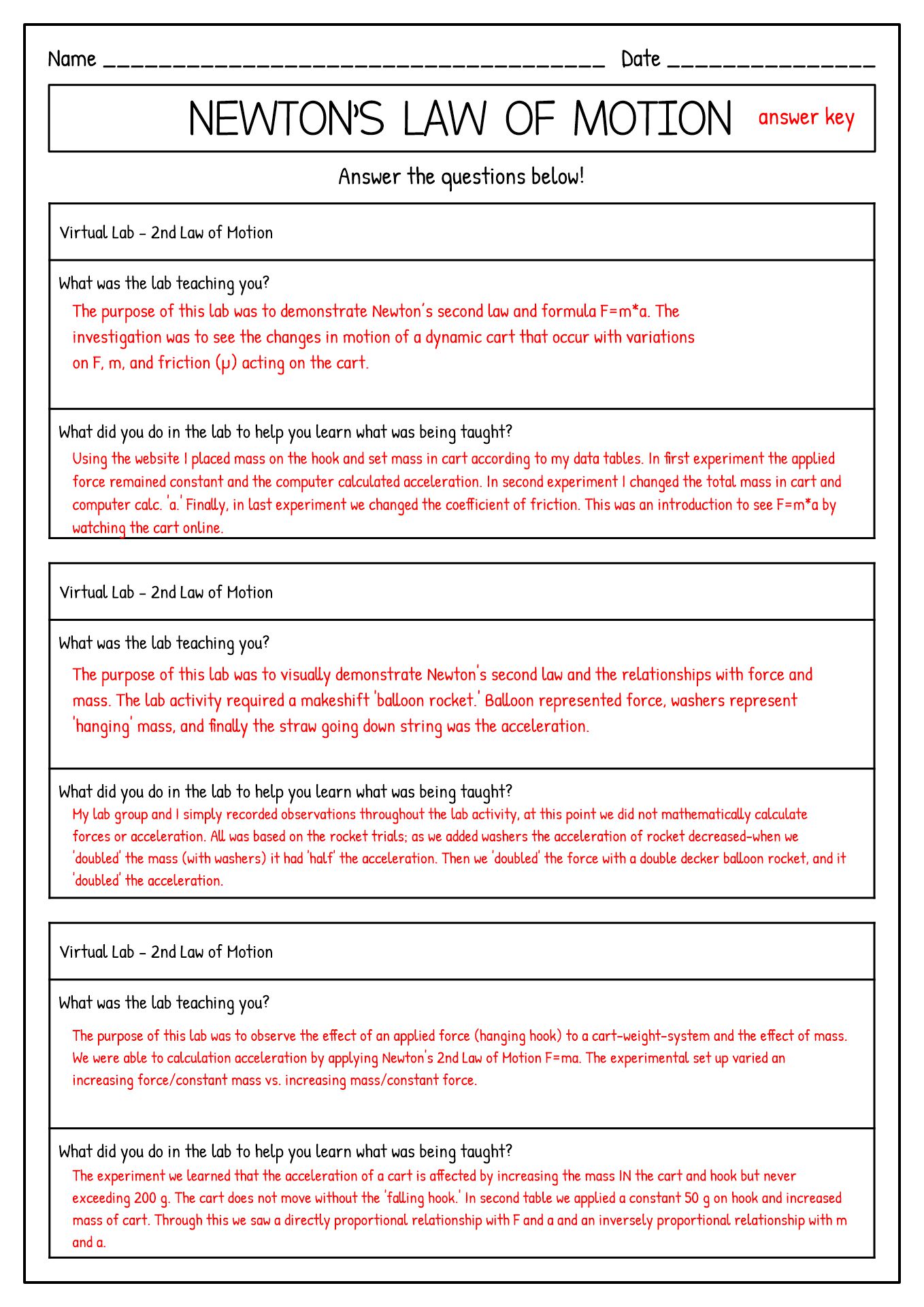
- For the second law, use spring scales to measure the force required to accelerate a cart of varying masses, recording data in a table provided on the worksheet.
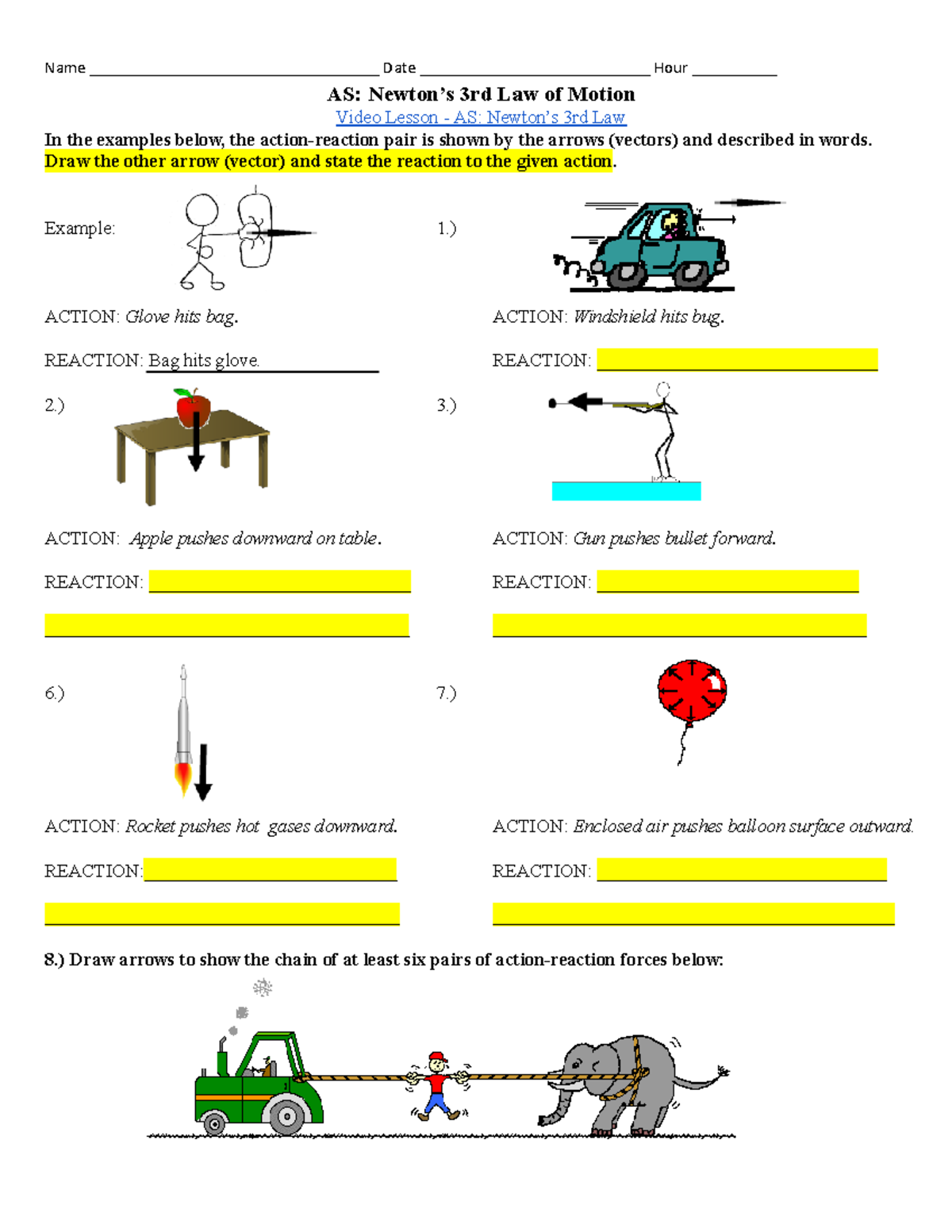
- For the third law, set up a simple “rocket” using a balloon attached to a straw that travels along a string, demonstrating action‑reaction forces.
Worksheet Completion (20–25 minutes)
- Students return to their seats and work through the worksheet problems, applying data collected during experiments.
- Encourage them to annotate the diagrams with culturally relevant notes, such as “the lantern’s weight represents mass” or “the fan’s breeze provides the external force.”
- Circulate to provide scaffolding, prompting deeper reasoning: “What would happen if we doubled the mass of the lantern?”
Reflection and Assessment (10–15 minutes)
- Facilitate a class discussion where each group shares findings, connecting back to the opening story.
- Assign a quick exit ticket asking learners to write one real‑life example of each law from their own cultural experiences.
- Collect worksheets for grading, using the built‑in rubric to assess conceptual accuracy and application of the Asian context.
Real‑World Applications for an Asian‑Inspired Learning Experience

Bringing physics to life through culturally resonant examples not only deepens understanding but also highlights the universal relevance of Newton’s laws. Below are several authentic scenarios that educators can integrate alongside the worksheet to broaden students’ perspectives.
Transportation and Urban Planning
In many Asian megacities, high‑speed trains glide along tracks with remarkable efficiency. Explaining how the trains maintain constant velocity on level tracks (first law) and how engineers calculate the required propulsion force to achieve rapid acceleration (second law) provides a modern, relatable case study. The worksheet’s problem set can be adapted to ask students to estimate the force needed for a model train to climb a slight incline, mirroring real‑world engineering challenges.
Traditional Sports and Martial Arts
Consider the fluid motion of a Tai Chi practitioner moving through a series of slow, deliberate poses. Each movement demonstrates inertia and controlled application of force. By analyzing the forces involved when a practitioner shifts weight from one foot to another, students can calculate the net force and acceleration, linking the second law to graceful motion. The worksheet includes a diagram of a Tai Chi stance that students can annotate with force vectors.
Festival Engineering
During the Lantern Festival, thousands of paper lanterns are released into the night sky. The ascent of each lantern is governed by buoyant force versus gravitational pull, a practical illustration of the third law when the hot air inside pushes against the surrounding air. Teachers can ask students to compute the net upward force required for a lantern of a given mass, reinforcing the interplay of action and reaction forces.
Tips for Differentiated Instruction Using the Worksheet

To ensure that every learner—whether English language learner, gifted student, or someone needing additional support—benefits from the Newton’s Laws Of Motion Worksheet, consider the following differentiation strategies.
Language Scaffolds
- Provide bilingual glossaries that define key physics terms in both English and the students’ native Asian languages.
- Use visual sentence frames, such as “When ___ (object) is acted upon by ___ (force), it ___ (response).”
Complexity Adjustments
- For advanced learners, add multi‑step problems that require simultaneous application of two laws, such as calculating the reaction force when a rolling cart collides with a stationary object.
- For struggling students, simplify numeric values and focus on conceptual questions that ask “What will happen if…?” rather than requiring detailed calculations.
Learning Modalities
- Visual learners benefit from the worksheet’s richly illustrated diagrams and can be encouraged to color‑code force vectors.
- Kinesthetic learners thrive when paired with the hands‑on experiments outlined in the guide, allowing them to feel forces directly.
- Auditory learners can discuss the worksheet’s scenarios in small groups, verbalizing their reasoning and hearing alternative perspectives.
Digital and Print Options for Modern Classrooms
While the worksheet’s print version is ideal for hands‑on activities, a digital version offers interactive features that can further engage tech‑savvy students. The online PDF includes clickable answer fields, drag‑and‑drop force vector tools, and embedded videos demonstrating each Asian cultural scenario in action. Teachers can project the digital worksheet on interactive whiteboards, allowing the whole class to collaboratively solve problems in real time. For remote or hybrid learning environments, the digital version can be assigned as a homework module, with automatic grading for multiple‑choice sections and teacher‑reviewed short answers.
Printing Best Practices
When printing, use high‑quality paper to preserve the vivid colors of the cultural illustrations. Consider laminating the worksheets for repeated use during lab stations, especially if students will be handling the sheets while performing experiments. Laminated sheets also allow for reusable dry‑erase markers, making it easy to update answers or annotate observations directly on the worksheet.
Integrating Technology
Pair the worksheet with free physics simulation tools such as PhET Interactive Simulations. Students can replicate the worksheet’s scenarios—like a cart on an incline—within the simulation, adjusting mass and force parameters to see immediate visual feedback. This blend of tangible experiments and virtual modeling reinforces learning and accommodates varied classroom resources.
Conclusion

The Newton’s Laws Of Motion Worksheet stands out as a culturally enriched, standards‑aligned resource that brings the elegance of physics into the everyday lives of students across the United States. By embedding Asian‑inspired narratives, vivid illustrations, and hands‑on experiments, the worksheet transforms abstract laws into relatable stories that inspire curiosity and deep understanding. Its flexible design supports differentiated instruction, aligns with key educational standards, and offers both print and digital formats to suit modern classrooms. Whether guiding a novice learner through the basics of inertia or challenging an advanced student to solve complex force interactions, this worksheet equips educators with a powerful tool to foster scientific literacy and appreciation for the universal principles that move our world.