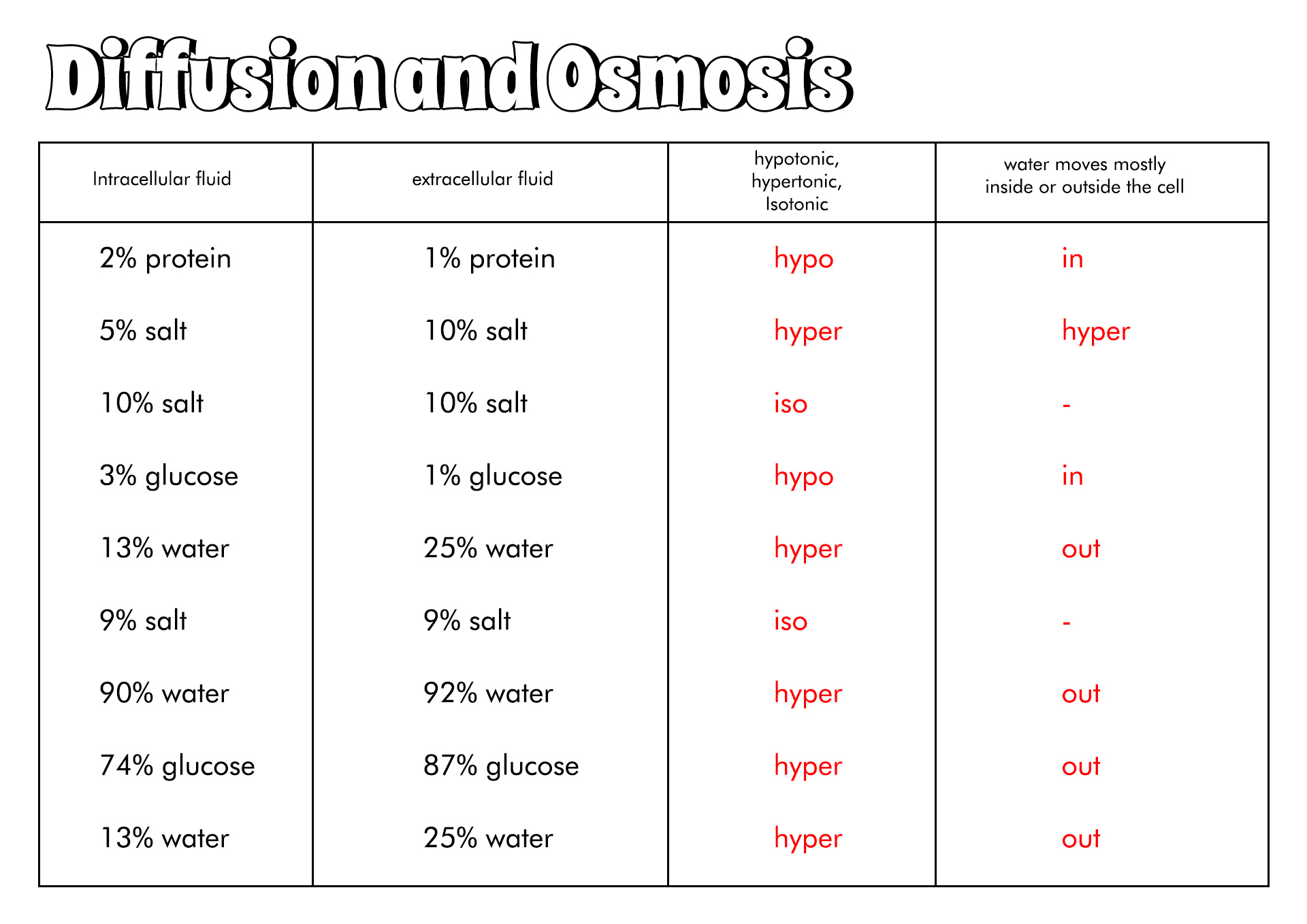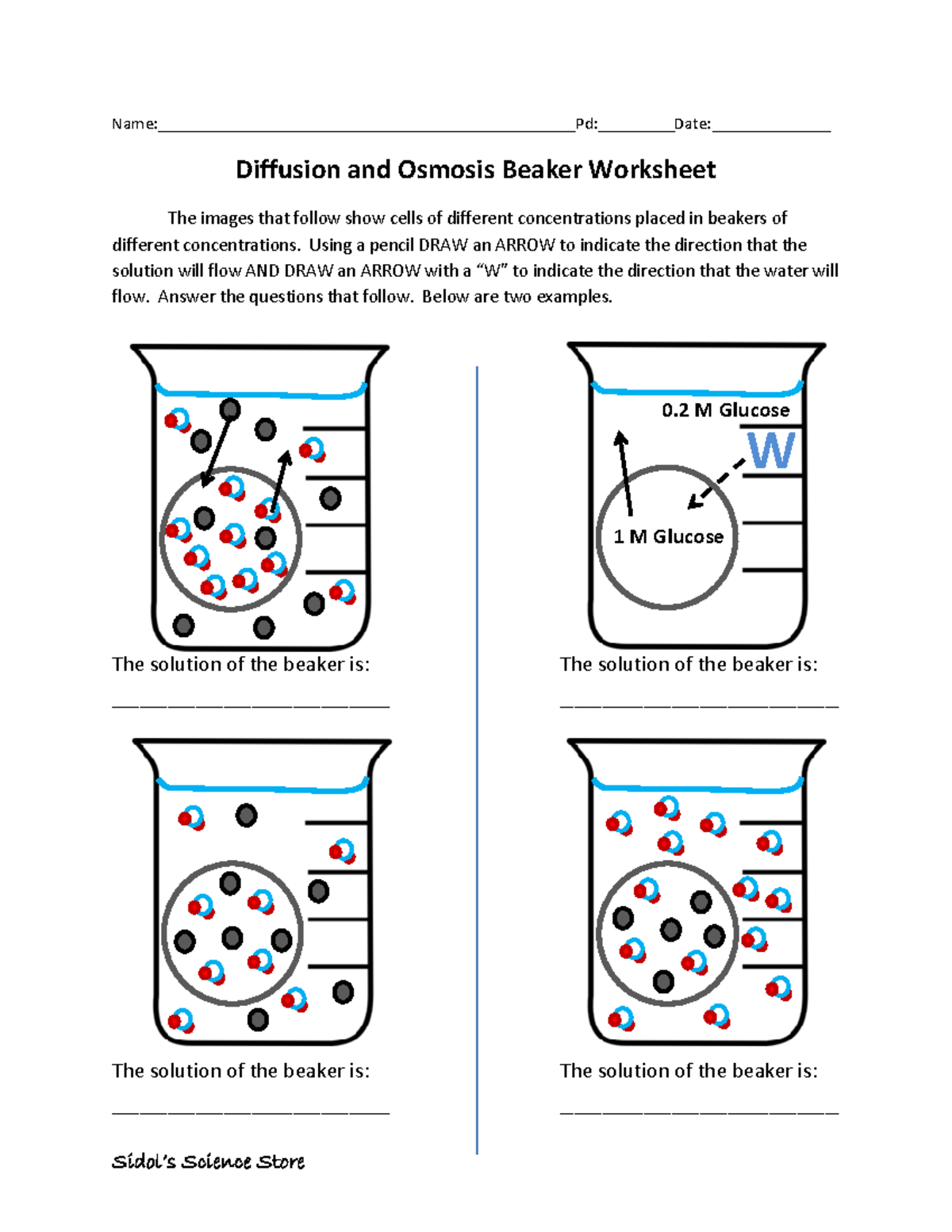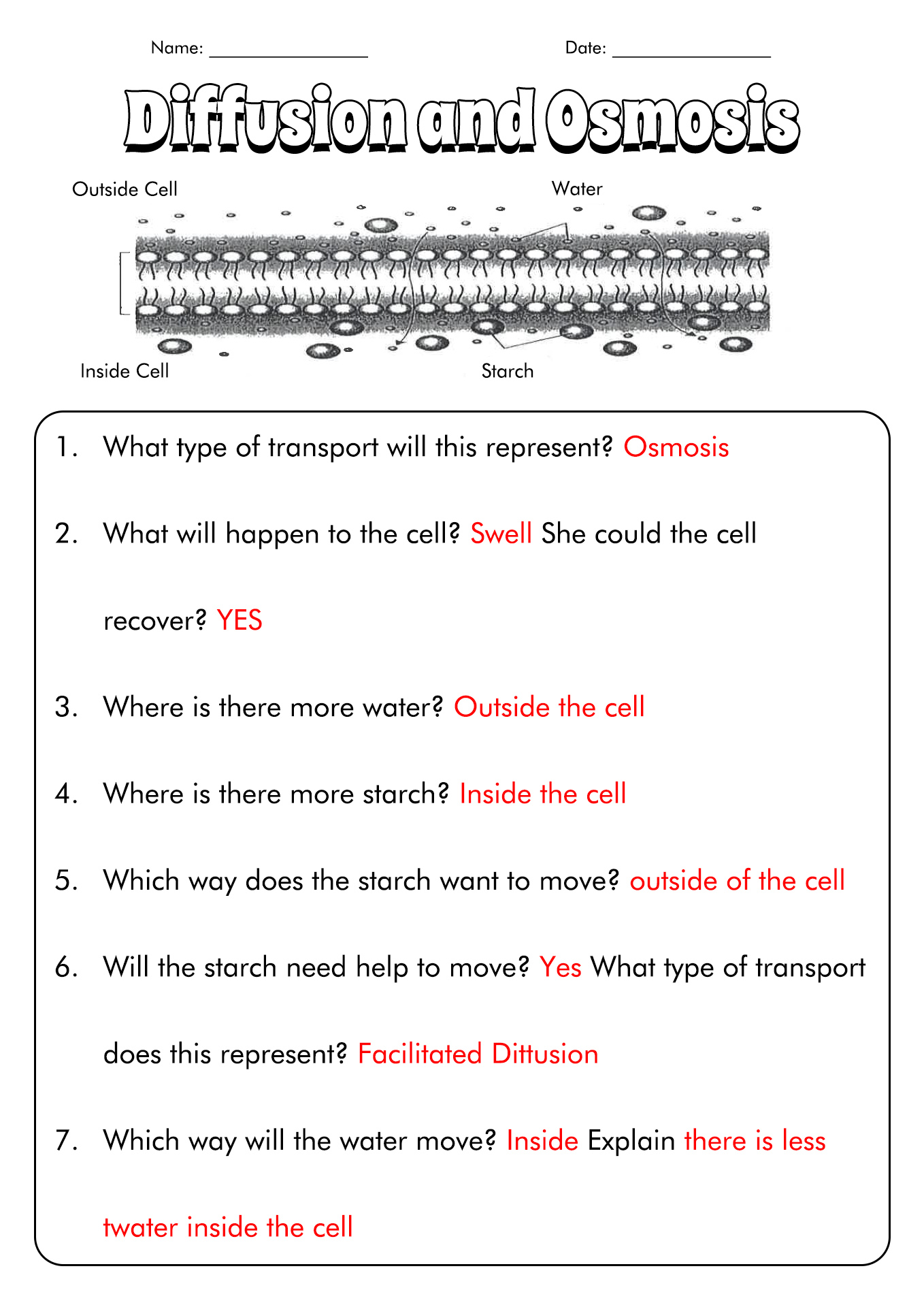
Osmosis Worksheet Answer Key serves as the ultimate compass for students navigating the subtle dance of water molecules across semi‑permeable membranes. Whether you’re a curious learner, a seasoned biology teacher, or a parent helping with homework, a clear, detailed answer key demystifies the tricky questions that often turn a simple worksheet into a stumbling block. In this post, we’ll explore why these keys are indispensable, break down the core concepts they cover, and give you practical tips to use, create, and maximize learning from them.
Understanding the Core of Osmosis Worksheets
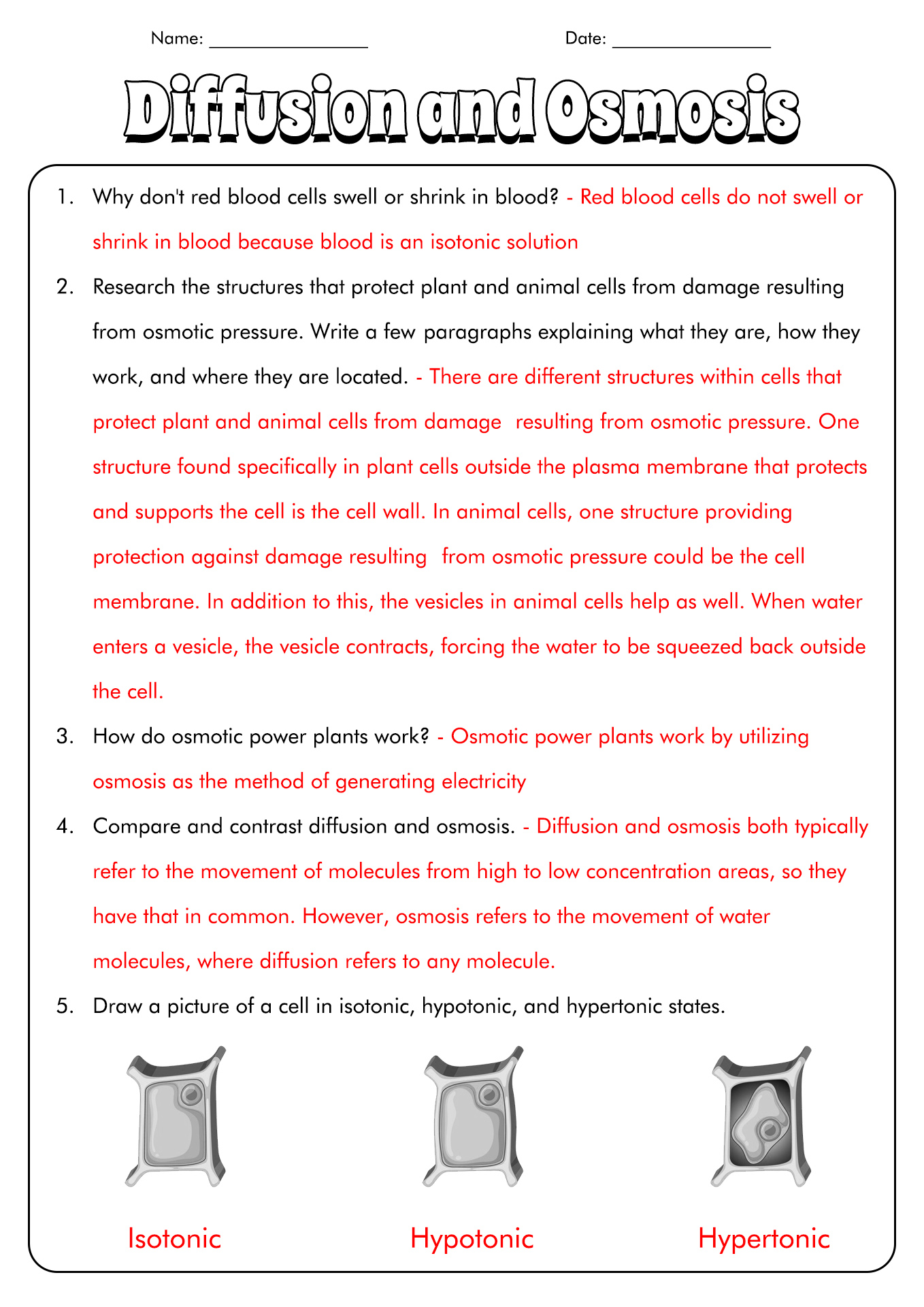
Osmosis worksheets are designed to test your grasp of several foundational topics: the direction of water movement, the role of concentration gradients, and the influence of selective permeability. Typical questions range from multiple-choice scenarios about plant cells in a hypertonic solution to short‑answer problems calculating equilibrium states in a simple system. A well‑structured answer key will not only provide the correct answers but also explain the reasoning behind each choice.
Key Concepts Covered
- Definition of Osmosis: The passive flow of water through a semi‑permeable membrane from an area of lower solute concentration to higher solute concentration.
- Isotonic, Hypertonic, and Hypotonic Solutions: Understanding how each affects cell shape and turgor pressure.
- Osmotic Pressure: Quantifying the force required to stop water movement.
- Real‑world Examples: From kidney filtration to salad preservation, these contexts help anchor theory.
Why the Answer Key Matters in Learning

Simply having the correct answer is not enough; the answer key should be a learning tool that clarifies misunderstandings and reinforces critical thinking. A high‑quality key does the following:
- Provides detailed explanations that show step‑by‑step logic.
- Highlights common pitfalls such as confusing diffusion with osmosis.
- Encourages self‑assessment by allowing students to compare their reasoning to the authoritative solution.
Using the Answer Key Effectively
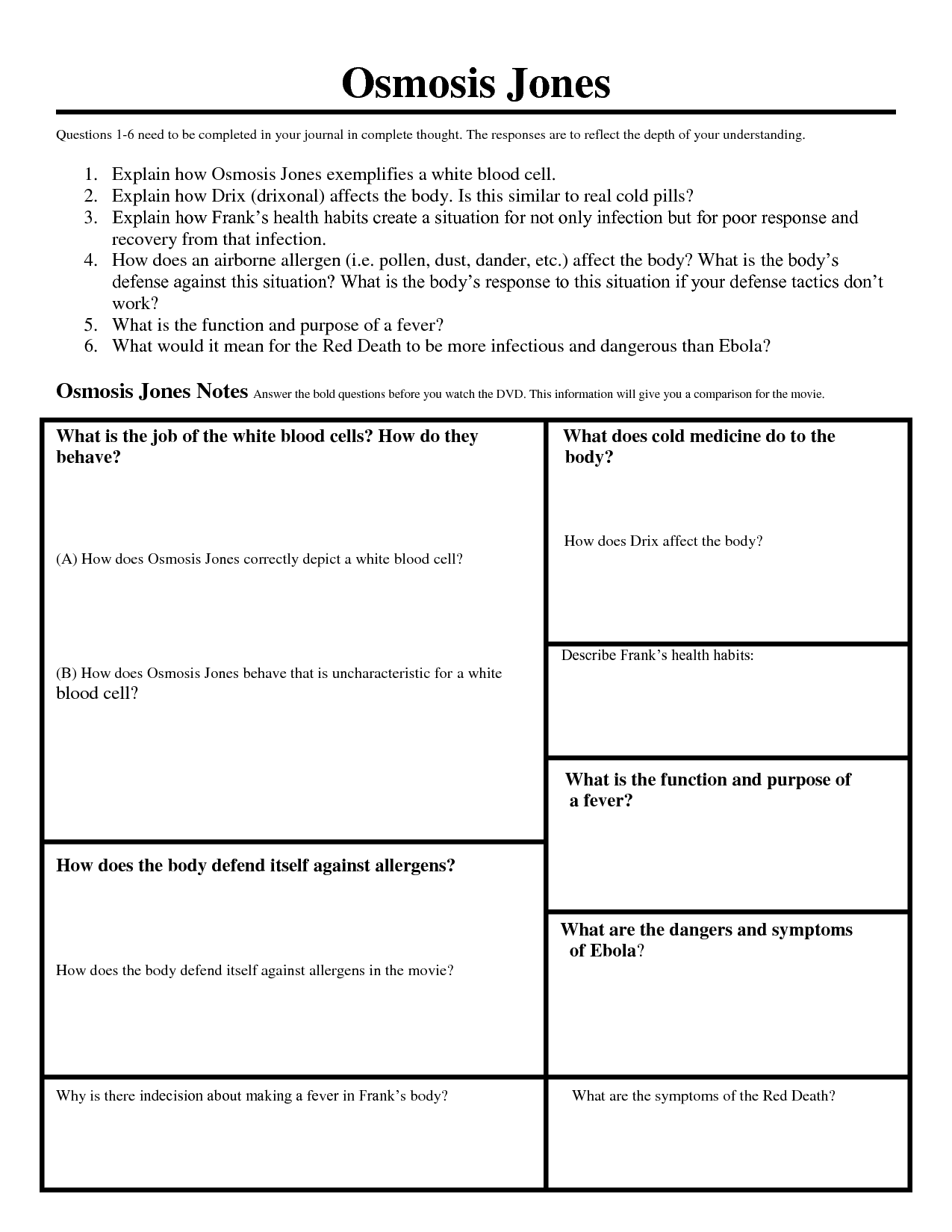
Below is a practical, step‑by‑step guide for students and teachers alike to harness the full potential of an osmosis worksheet answer key.
Step 1: Attempt the Worksheet First
Before opening the key, tackle each question on your own. This initial effort builds confidence and forces you to engage actively with the material.
Step 2: Check Each Answer Against the Key
- Read the official answer carefully.
- Identify whether you matched the logic or only the result.
- Note any deviations in reasoning.
Step 3: Dive into the Explanation
Most keys provide a brief rationale. If the explanation is too terse, pause and try to fill in the missing steps mentally. This practice sharpens your analytical skills.
Step 4: Recreate the Problem
After reviewing, attempt to solve a similar problem without the key. This tests whether you truly internalized the concept.
Common Misconceptions Addressed by the Answer Key

Misunderstandings often arise because osmosis and diffusion are frequently conflated. Answer keys help clarify these distinctions by illustrating specific scenarios.
Misconception 1: Osmosis Requires Energy
Osmosis is a passive process; it does not consume ATP. An answer key will often show a diagram of water molecules moving across a membrane without energy input, countering this false belief.
Misconception 2: All Cells Respond the Same Way
Plant and animal cells react differently to hypertonic or hypotonic environments. A robust answer key will discuss the structural differences—cell walls in plants vs. lack of them in animal cells—and how these affect water movement.
Misconception 3: Solute Concentration Is All That Matters
While solute concentration drives osmosis, membrane permeability and temperature also play roles. Keys that include advanced questions may bring these factors into play, encouraging a more nuanced understanding.
Creating Your Own Osmosis Worksheet Answer Key

If you’re a teacher looking to craft an original worksheet or a student wanting to verify your answers, follow these guidelines to produce a reliable key.
1. Define Each Question’s Expected Solution
Write down the correct answer, but also the logic that leads to it. Use diagrams where necessary to show directional arrows or concentration gradients.
2. Include Calculation Steps for Quantitative Problems
Show how to calculate osmotic pressure using van’t Hoff’s law or how to determine molarity changes in a dilution scenario. This transparency aids deeper learning.
3. Provide Multiple Correct Approaches
Sometimes a problem can be solved using different methods—chemical equations, graphs, or conceptual reasoning. List these options to expose students to varied problem‑solving strategies.
4. Cross‑Reference Related Concepts
Link each answer to related topics, such as diffusion, selective permeability, or active transport. This interconnectivity mirrors real biological systems.
5. Test the Key for Accuracy
Before distributing, double‑check each answer against trusted textbooks or peer review. A single mistake can propagate confusion.
Real‑World Applications Highlighted by the Key

Connecting classroom theory to everyday life solidifies retention. Here are some real‑world scenarios that an osmosis worksheet answer key might reference:
- Preserving Foods: Salted or sugared preserves rely on osmosis to draw water out of bacterial cells, inhibiting growth.
- Kidney Function: Filtration of blood into urine involves selective membranes where water movement follows concentration gradients.
- Desalination: Reverse osmosis removes salt from seawater, a crucial process for freshwater production.
- Medical Treatments: Intravenous fluids must be isotonic with blood to avoid cell swelling or shrinking.
Maximizing Learning Outcomes with the Answer Key

Teachers can transform a standard worksheet into an interactive lesson by incorporating the answer key into classroom activities.
1. Peer Review Sessions
Have students compare their answers with the key in small groups. Encourage discussion on why certain choices were correct or incorrect.
2. Reflection Journals
Ask students to write a short paragraph explaining why they answered a particular question incorrectly before reviewing the key. This self‑reflection strengthens metacognition.
3. Interactive Quizzes
Use the key to create multiple‑choice or fill‑in quizzes that reinforce the same concepts but allow for instant feedback.
4. Real‑Time Problem Solving
During lab sessions, present students with a live demonstration—such as a plant cell in different solutions—and ask them to predict outcomes using the key’s principles.
Conclusion: The Osmosis Worksheet Answer Key as a Learning Catalyst

A well-crafted Osmosis Worksheet Answer Key transcends mere correct answers; it acts as a bridge between rote memorization and genuine understanding. By integrating thorough explanations, real‑world connections, and step‑by‑step logic, it empowers learners to grasp the dynamics of water movement, a cornerstone of biology. Whether you use an existing key, build your own, or blend both approaches into your study routine, the ultimate benefit lies in turning passive review into active discovery. Armed with these tools, students and teachers alike can navigate the intricate waters of osmosis with confidence and curiosity, ready to tackle more complex biological challenges ahead.