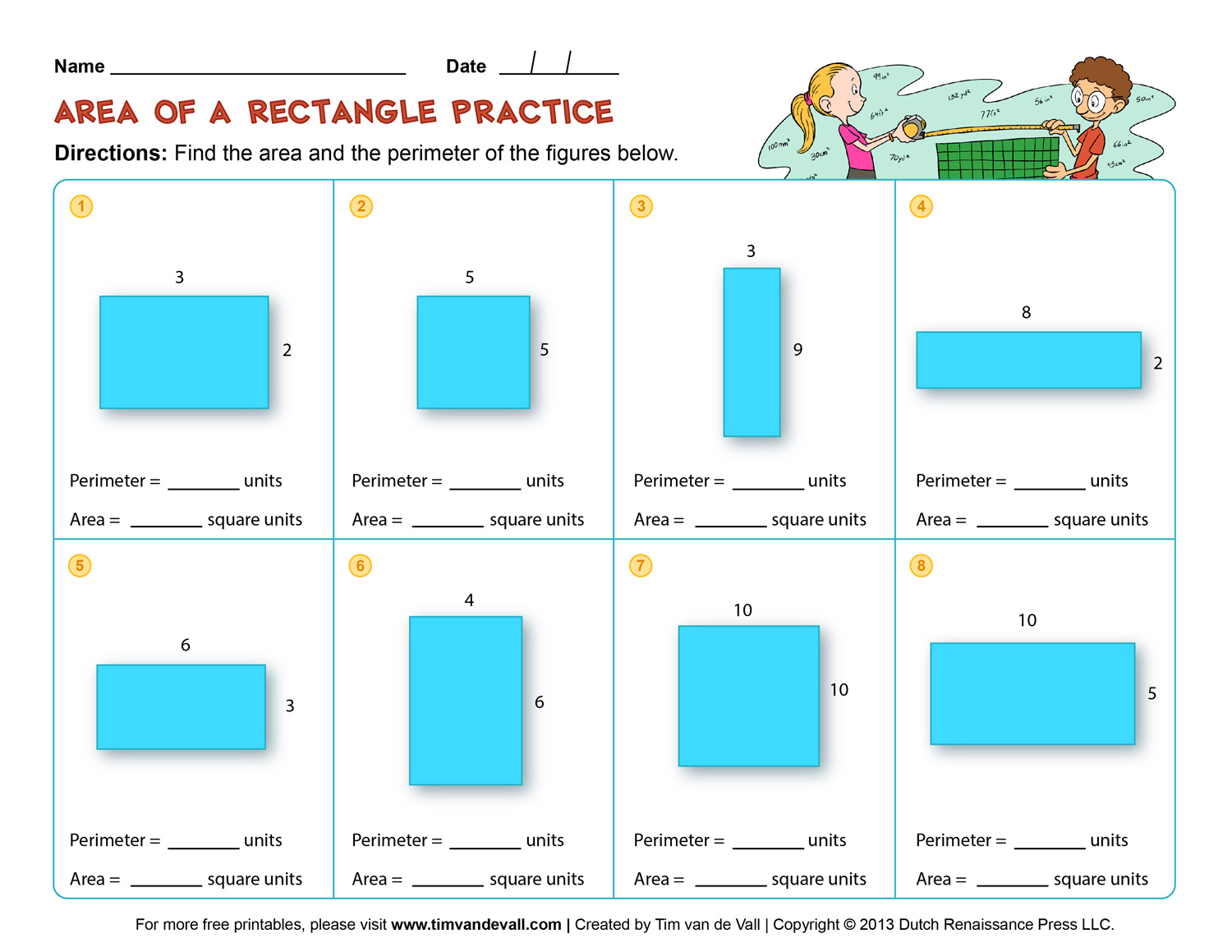
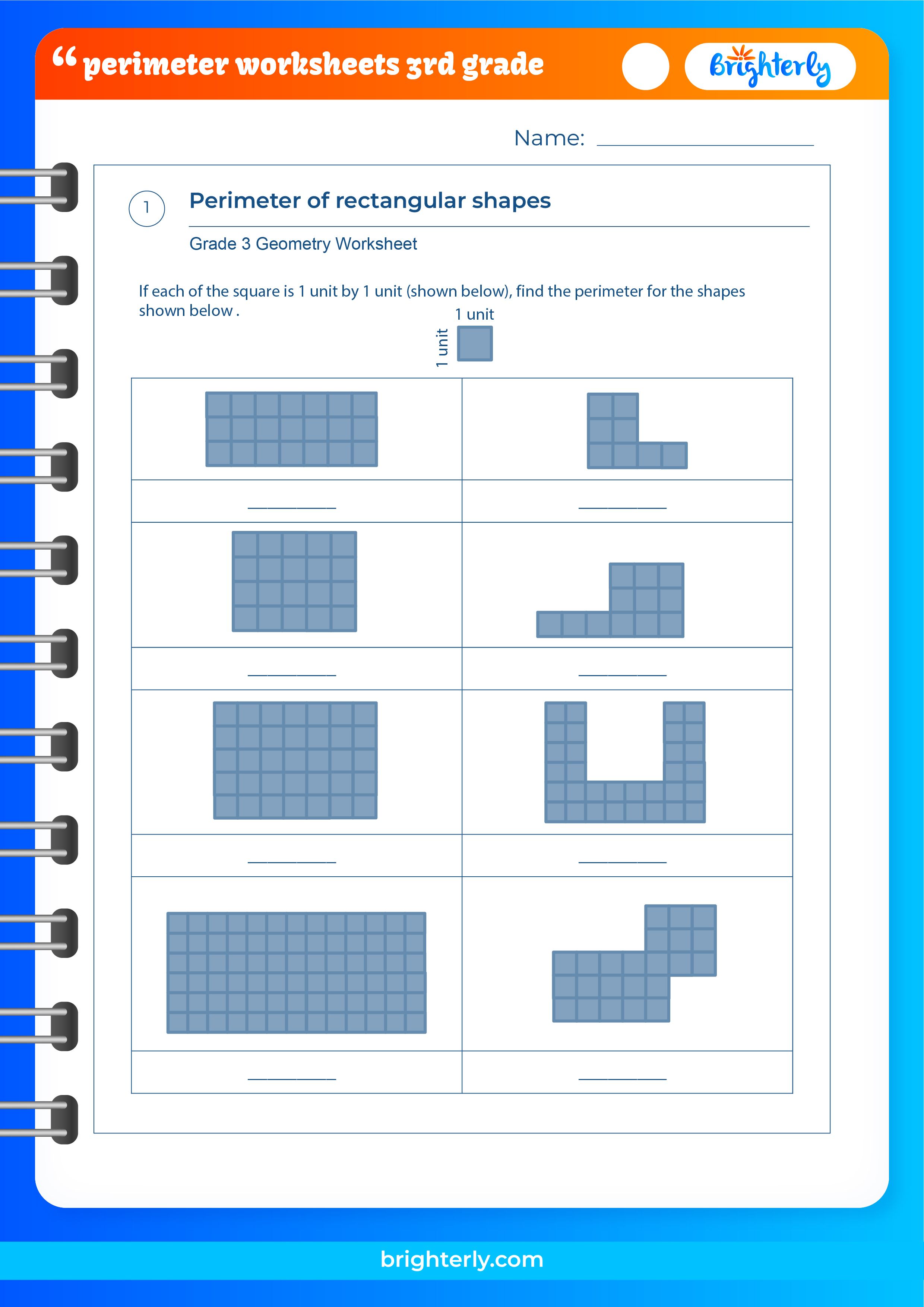
Perimeter Worksheets 3rd Grade serve as essential tools for reinforcing key geometry concepts while promoting problem‑solving skills in young learners. By engaging students with thoughtfully designed tasks, these worksheets help build a solid foundation for future math challenges and foster confidence in measuring and calculating the boundary of shapes.
Why Perimeter Focus Matters in Third Grade

Conceptual Foundations
In the third grade, students transition from basic counting to more complex spatial reasoning. Understanding perimeter—the total distance around a shape—encourages them to see objects as collections of line segments rather than merely points or angles. This shift in perspective is critical for mastering later topics such as area, volume, and geometry proofs.
Skill Development Benefits
Working with perimeter worksheets cultivates a range of skills: accurate addition, mental math, pattern recognition, and logical sequencing. It also sharpens attention to detail, as students must correctly identify each side and avoid double‑counting overlaps. These competencies extend beyond math, aiding in reading comprehension, science experiments, and everyday planning.
Types of Perimeter Worksheets for Third Graders
Simple Shapes and Basic Calculations
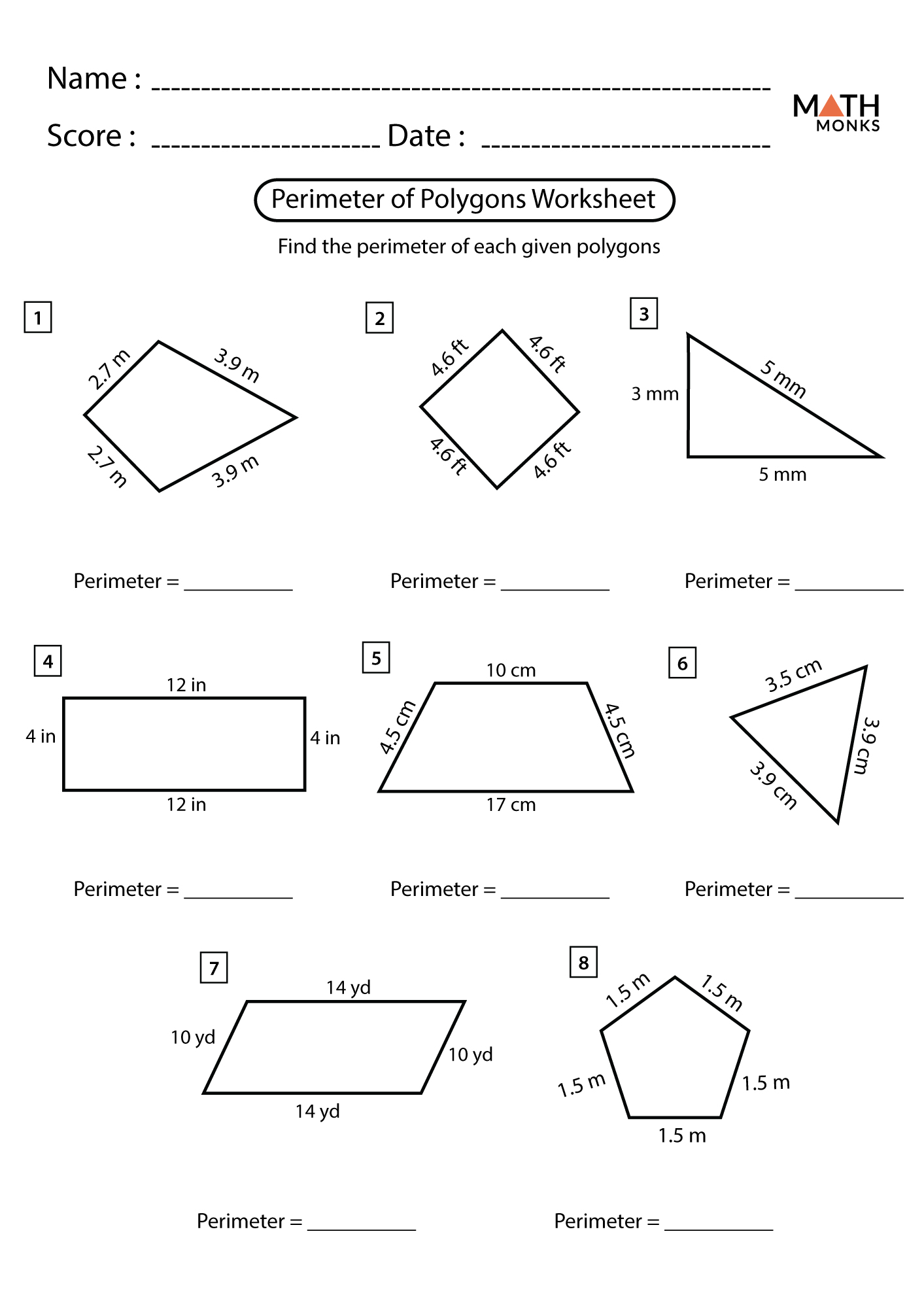
Start with elementary shapes—squares, rectangles, triangles—and ask students to measure each side using a ruler or given numerical values. Example: “A rectangle has a length of 8 cm and a width of 5 cm. What is its perimeter?” This reinforces the formula 2(length + width) while keeping the problem approachable.
Multi‑Shape Problems
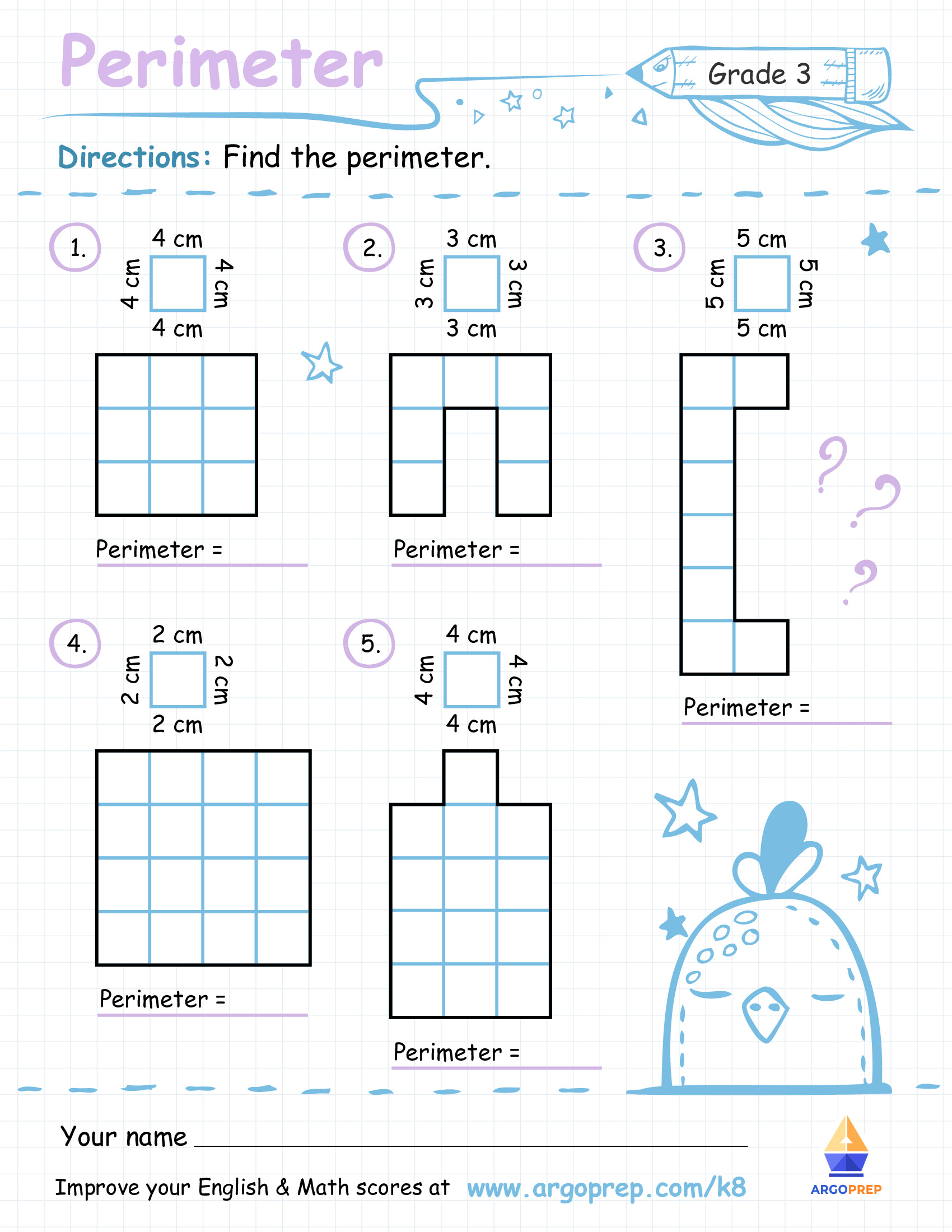
Introduce composite figures made of connected shapes, such as a rectangle joined to a square. Students must identify shared edges and avoid counting them twice. A typical worksheet might present a figure with a total of ten sides and require students to calculate the perimeter by adding the unique side lengths.
Real‑World Contexts and Story Problems
Embedding perimeter tasks in everyday scenarios—fencing a garden, wrapping a rectangular gift, or measuring the perimeter of a classroom wall—makes the math feel tangible. For instance: “Mrs. Lee wants to put a decorative border around her classroom, which measures 12 m by 9 m. How many meters of border material does she need?”
Graphic‑Organizer Worksheets
Utilizing charts, tables, or graphic organizers helps visual learners track side lengths and calculations. Students can fill in a table that lists each side, its measurement, and the subtotal, which builds clarity before summing to the final perimeter.
Designing Effective Perimeter Worksheets

Aligning with Learning Standards
Ensure that worksheets reference state or national standards for geometry. For example, the Common Core standard for third grade expects students to understand the concept of perimeter and apply it to find the perimeter of given shapes. Mapping each worksheet to a standard clarifies learning goals for educators.
Incorporating Clear Instructions and Visuals
Use concise, step‑by‑step prompts and clear diagrams. Highlight the sides to be measured with color or arrows. Visual clarity reduces misinterpretation and speeds up the completion process.
Progressive Difficulty Levels
Structure worksheets into tiers: Tier 1 for quick practice, Tier 2 for moderate challenge, and Tier 3 for complex, multi‑step problems. This scaffolding supports differentiation and maintains motivation as students advance.
Using Interactive Elements and Technology
Digital worksheets can embed drag‑and‑drop side labels, dynamic rulers, or instant feedback. Interactive activities keep students engaged and provide real‑time error correction, which is especially beneficial for self‑paced learning.
Tips for Teachers to Maximize Learning
Differentiating Instruction
Assign worksheets that match each student’s skill level. For high‑achievers, incorporate additional challenges such as converting units (inches to centimeters) or creating their own shapes. For learners needing support, provide guided worksheets with step‑by‑step instructions and pre‑filled templates.
Formative Assessment Through Worksheets
Use quick quizzes or exit tickets that involve perimeter calculations. Analyze common errors—such as forgetting to double‑count a shared edge—and adjust future instruction accordingly.
Peer Collaboration and Group Work
Pair students to solve a perimeter problem together, encouraging discussion about counting sides and verifying calculations. Collaborative work develops communication skills and allows learners to learn from each other’s reasoning.
Feedback Strategies
Offer explicit, constructive feedback. Highlight correct logic, point out common misconceptions, and suggest strategies to correct mistakes. Prompt students to self‑review by checking their totals against a provided answer key.
Tips for Parents and Guardians
Creating a Positive Home Learning Environment
Allocate a quiet space with necessary supplies—a ruler, graph paper, and pencils. Encourage a consistent schedule, such as 15 minutes of math practice each day, to reinforce routine without causing burnout.
Encouraging Problem‑Solving Mindset
Ask open‑ended questions: “How might you measure the perimeter of this shape without a ruler?” This invites creativity and demonstrates that math involves multiple approaches.
Using Everyday Situations to Practice Perimeter
Turn daily chores into practice opportunities. Measure the perimeter of a pizza box before cutting it, or calculate the fence length needed for a backyard rectangle. Relating math to real life enhances retention.
Common Challenges and How to Overcome Them

Misconceptions About Perimeter
Students often think that counting all sides, including shared edges, is required. To correct this, use diagrams that clearly mark shared edges in a single color and provide step‑by‑step guidance on excluding duplicates.
Difficulty with Unit Conversion
When worksheets involve inches or centimeters, provide a conversion chart. Practice simple conversion tasks—e.g., “Convert 4 inches to centimeters (1 inch = 2.54 cm).” Reinforcement builds confidence in handling mixed units.
Maintaining Engagement
Integrate games or competitive elements, such as timed challenges or leaderboard tracking. Gamification keeps students motivated and creates a healthy sense of achievement.
Sample Perimeter Worksheet Ideas

Worksheet 1: Counting Sides
Students identify each side of a figure, write its length, and sum to find the perimeter. Example diagram: a rectangle 7 cm by 5 cm. Provide a blank table for students to fill: Side 1: ___, Side 2: ___, Side 3: ___, Side 4: ___, Perimeter: ___.
Worksheet 2: Perimeter of Composite Shapes
Present a figure composed of a rectangle attached to a triangle. Students must recognize the shared side and calculate the perimeter accordingly. Include a short explanation: “Do not double‑count the side that both shapes share.”
Worksheet 3: Real‑World Application – Garden Fence
Describe a backyard as a rectangle measuring 12 m by 8 m. Pose the question: “If a fence costs $10 per meter, how much will it cost to enclose the entire backyard?” This adds multiplication to reinforce the perimeter concept.
Conclusion
Integrating Perimeter Worksheets 3rd Grade into lesson plans offers a structured, engaging approach to mastering geometry fundamentals. By combining clear instruction, varied problem types, and thoughtful assessment strategies, teachers and parents can create an environment where students feel confident, curious, and capable of tackling perimeter challenges. Consistent practice, real‑world relevance, and supportive feedback turn abstract measurements into everyday skills, ensuring that third‑grade learners build a strong, lasting foundation for all future mathematical endeavors.