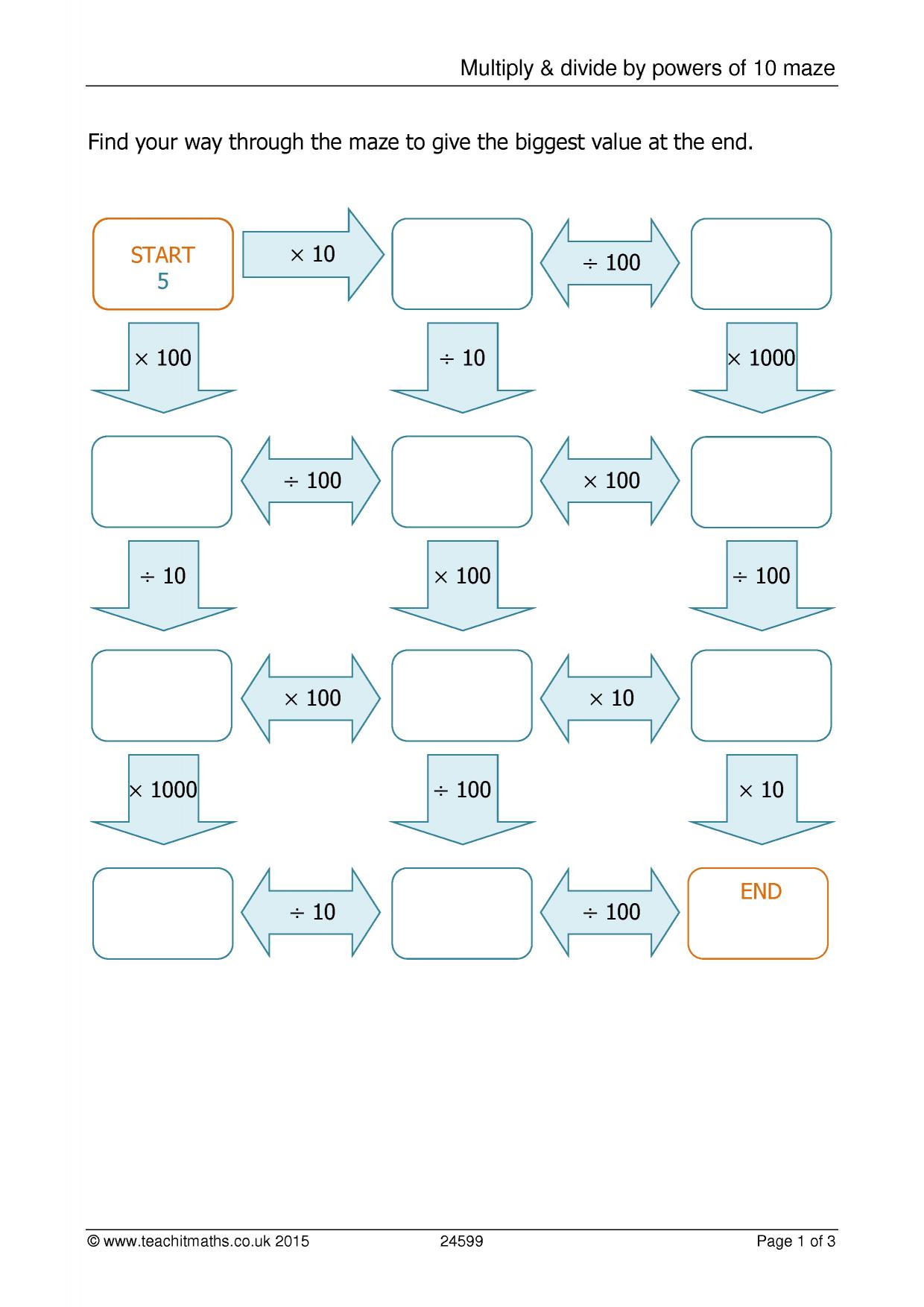
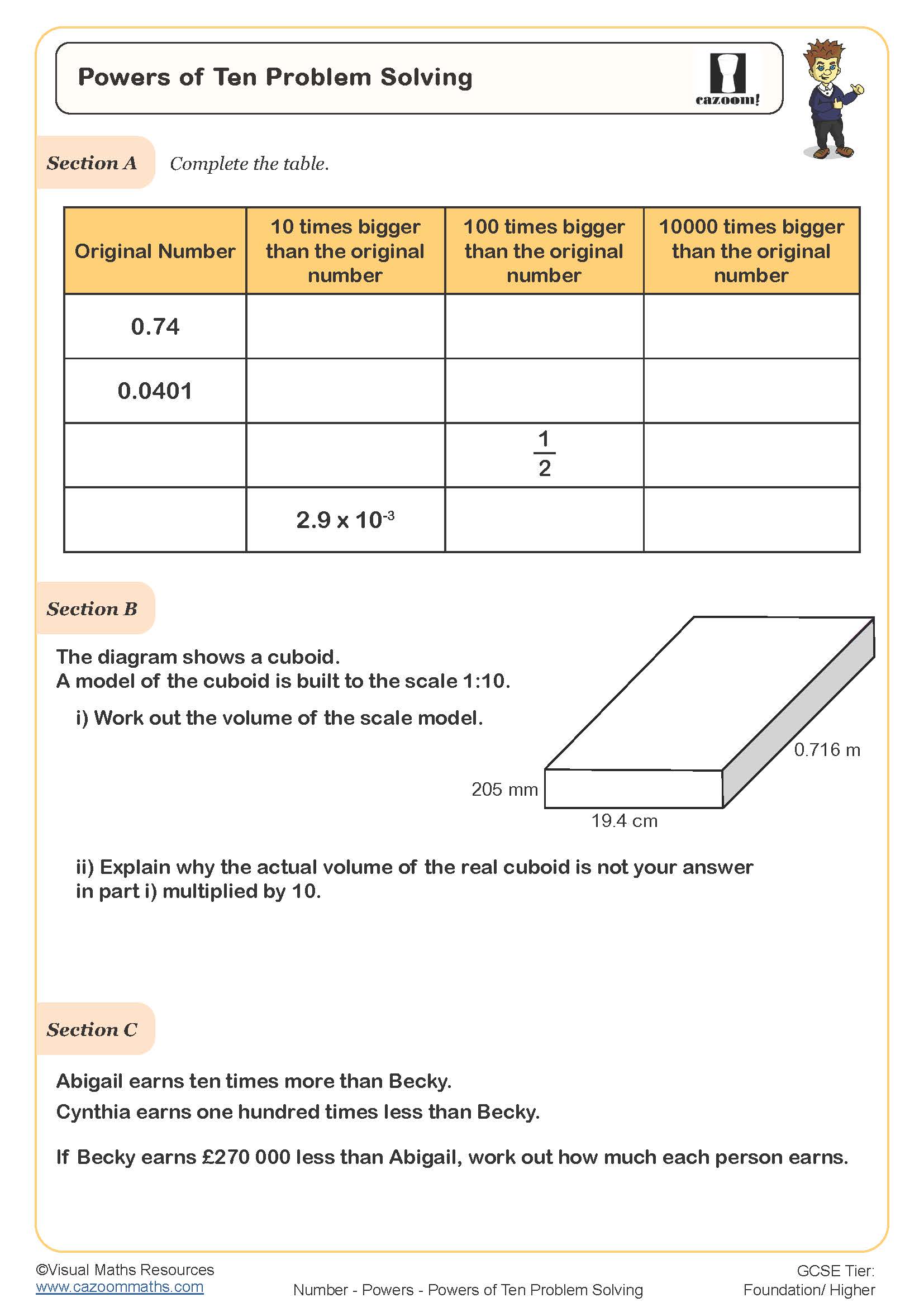
Powers Of Ten Worksheet serves as a cornerstone tool for students exploring exponential growth, scientific notation, and the foundations of number theory. By presenting numbers in a concise, scalable format, these worksheets help learners visualize how a single digit can represent vast quantities, from the microscopic to the cosmic.
Understanding Powers of Ten

Before diving into practice, it is essential to grasp why powers of ten matter. Every time a number is multiplied by 10, its value shifts one place to the left, changing its magnitude dramatically. For instance, 10¹ equals 10, 10² equals 100, and 10⁶ equals one million. This exponential pattern forms the backbone of scientific measurement, financial scaling, and digital data representation.
Mathematical Foundations
In algebra, a power of ten is expressed as 10ⁿ, where “n” is the exponent indicating how many times 10 is multiplied by itself. Negative exponents, such as 10⁻³, denote fractions (0.001), while zero exponent (10⁰) equals one. Mastery of these concepts allows students to decode equations like 5 × 10³ or convert scientific notations such as 3.5 × 10⁵.
Real-World Connections
From describing the size of an electron (≈10⁻¹⁹ meters) to estimating the distance to the nearest star (≈10¹⁵ kilometers), powers of ten translate complex numbers into readable formats. These worksheets translate abstract theory into tangible exercises that mirror real-life applications.
Educational Benefits

Powers of Ten worksheets offer multiple learning advantages. They sharpen numerical fluency, reinforce multiplication and division rules, and encourage critical thinking.
Cognitive Skill Development
Students must recognize patterns, anticipate outcomes, and apply rules consistently. This cognitive exercise supports memory retention and analytical reasoning.
Cross-Curricular Integration
Science teachers can use the same worksheets to explain astronomical distances or molecular masses, while math teachers focus on exponent manipulation. The versatility of these worksheets makes them a valuable asset across curricula.
Assessment Readiness
Standardized tests often include exponent questions. Regular exposure to well-structured worksheets prepares students to tackle such problems with confidence.
Choosing the Right Worksheet Format

Effective worksheets vary in style and difficulty. Selecting an appropriate format ensures progressive learning.
Level-Based Design
Beginner worksheets emphasize simple multiplication or conversion of 10¹ to 10⁴. Intermediate sheets introduce negative exponents, while advanced worksheets combine exponents with algebraic expressions.
Visual Aids
Graphical representations—such as number lines or bar charts—help visual learners internalize the exponential scale. Worksheets that include visual elements often lead to higher engagement.
Interactive Elements
Digital worksheets with drag‑and‑drop or instant feedback mechanisms can enhance motivation. However, traditional paper formats remain invaluable for developing handwriting and calculation skills.
Step‑by‑Step Guide to Using Powers Of Ten Worksheets

Below is a practical framework for educators and parents to maximize worksheet effectiveness.
Preparing the Materials
- Print a set of worksheets tailored to the class’s level.
- Gather pencils, erasers, and calculators for quick reference.
- Set up a quiet, organized workspace.
Introducing the Concept
Begin with a brief lecture on what a power of ten is, using examples like 10, 100, and 1,000. Highlight how each step multiplies the value by ten.
Guided Practice
Walk through a few sample problems together, ensuring students understand the notation and the steps to solve.
Independent Work
Allow students to complete worksheet sections independently. Circulate to provide targeted support.
Assessment and Feedback
Collect worksheets after completion. Offer individualized feedback, focusing on common misconceptions such as confusing positive and negative exponents.
Common Mistakes and How to Avoid Them

Identifying frequent errors allows teachers to preemptively address gaps in understanding.
Confusing Exponents with Multiplication
Students may treat 10³ as 10 × 3 rather than 10 × 10 × 10. Clarify that the exponent is a power, not a simple multiplication factor.
Ignoring Scientific Notation Rules
Some learners forget that moving the decimal point to the right decreases the exponent and to the left increases it. Practice with clear examples.
Overreliance on Calculator
While calculators expedite calculations, overuse can impede mental math skills. Encourage mental estimation before verifying with a device.
Digital vs Paper Worksheets

The choice between digital and paper worksheets depends on learning goals and resource availability.
Paper Worksheets
Advantages include tactile engagement, reduced screen time, and the ability to practice handwriting.
Digital Worksheets
Features such as drag‑and‑drop, real‑time grading, and interactive quizzes foster engagement, particularly for tech‑savvy learners.
Bespoke Customization
Digital platforms allow quick tailoring of difficulty levels, while paper formats can be manually adjusted for specific student needs.
Creative Extensions

Enhance the learning experience with activities that build upon worksheet fundamentals.
Number Line Projects
Students create large-scale number lines marking every power of ten, visually representing magnitude gaps.
Scientific Notation Scavenger Hunt
Assign real‑world items to be expressed in scientific notation, such as the distance between planets or the size of a grain of sand.
Exponent Storytelling
Encourage students to write short narratives explaining why powers of ten are useful in everyday scenarios.
Integrating Technology

Modern tools can elevate worksheet usage beyond static printouts.
Online Quizzing Platforms
Platforms like Kahoot or Quizizz offer instant feedback and gamified learning.
Spreadsheet Modeling
Teach students to use Excel or Google Sheets to manipulate exponent tables, reinforcing calculation skills.
Augmented Reality Apps
Some AR applications visualize exponential growth, allowing learners to see 10¹, 10², 10³ in a three‑dimensional context.
Teacher Resources

To support implementation, consider the following resource categories.
Professional Development
Workshops on exponential notation can refresh educators’ understanding and provide new teaching strategies.
Collaborative Communities
Online forums enable teachers to exchange worksheets, grading rubrics, and lesson plans.
Open‑Source Materials
Many educational institutions offer free, high‑quality worksheets that can be downloaded and adapted.
Conclusion
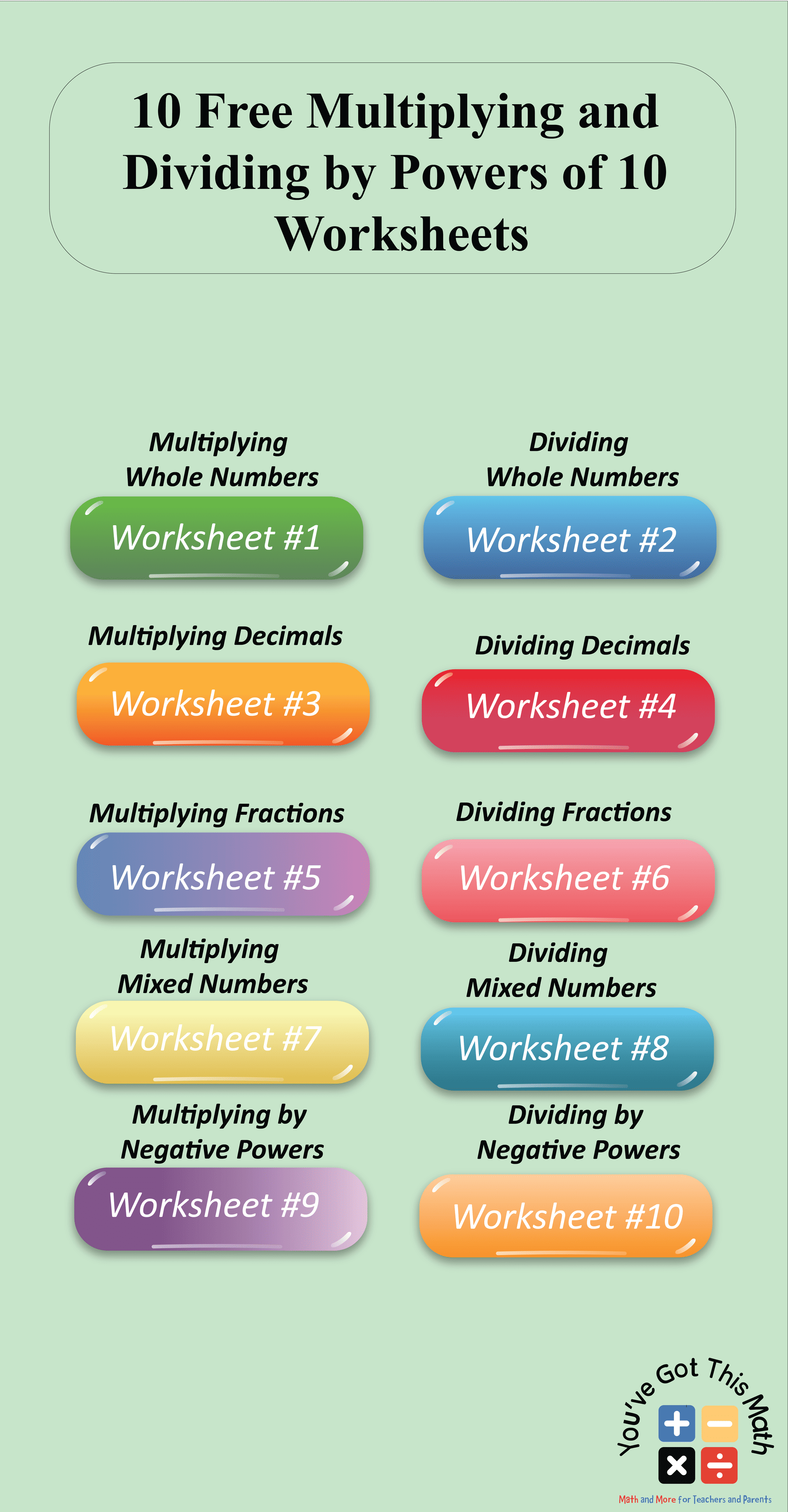
Powers Of Ten Worksheets are more than just a set of exercises; they are gateways to mathematical fluency, scientific literacy, and critical thinking. By understanding the underlying concepts, selecting appropriate formats, and applying systematic teaching methods, educators can unlock the full potential of these tools. Whether through traditional paper, dynamic digital platforms, or creative extensions, the power of exponential learning lies in consistent practice and thoughtful application. Embracing this resource equips students to navigate a world defined by numbers that stretch far beyond the ordinary, preparing them for success in academics and beyond.