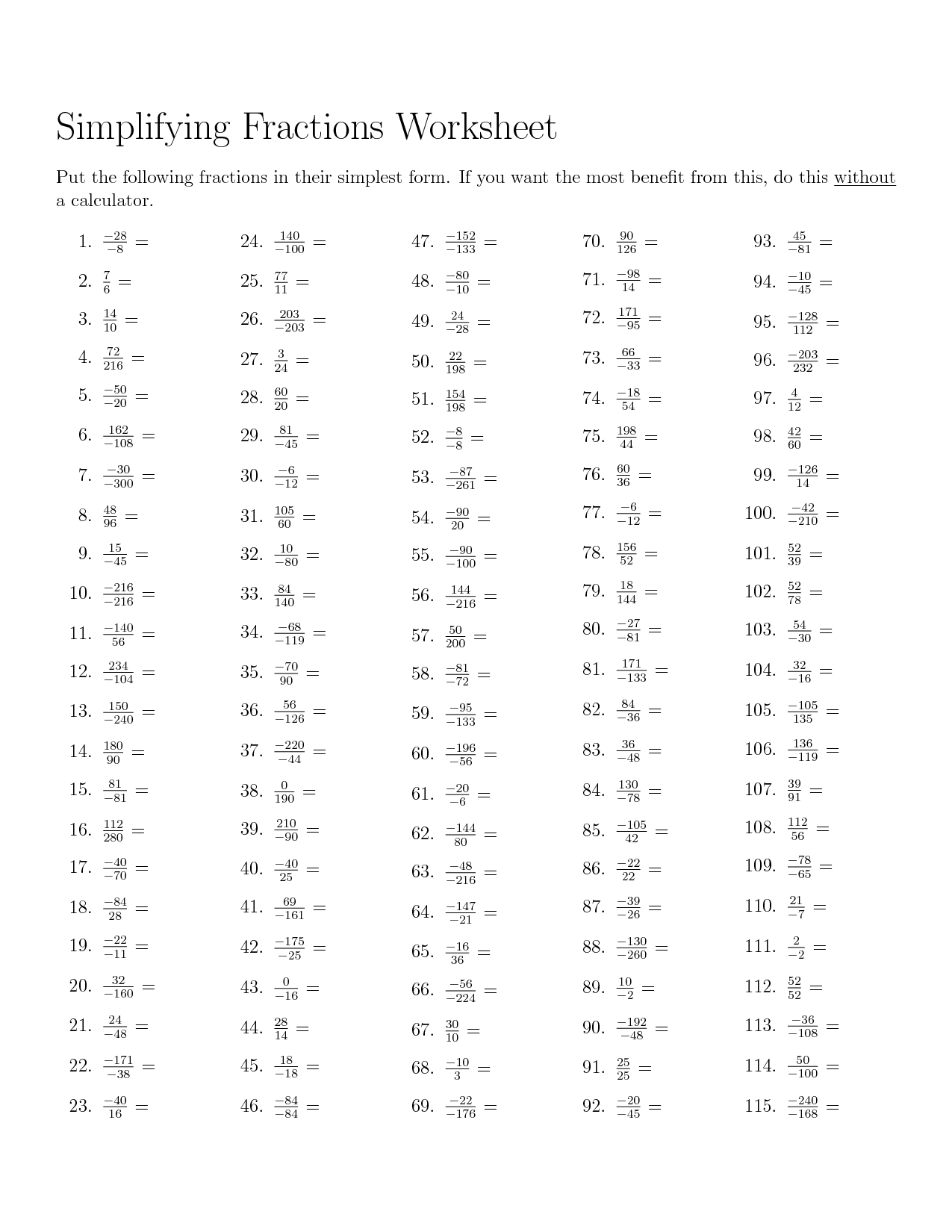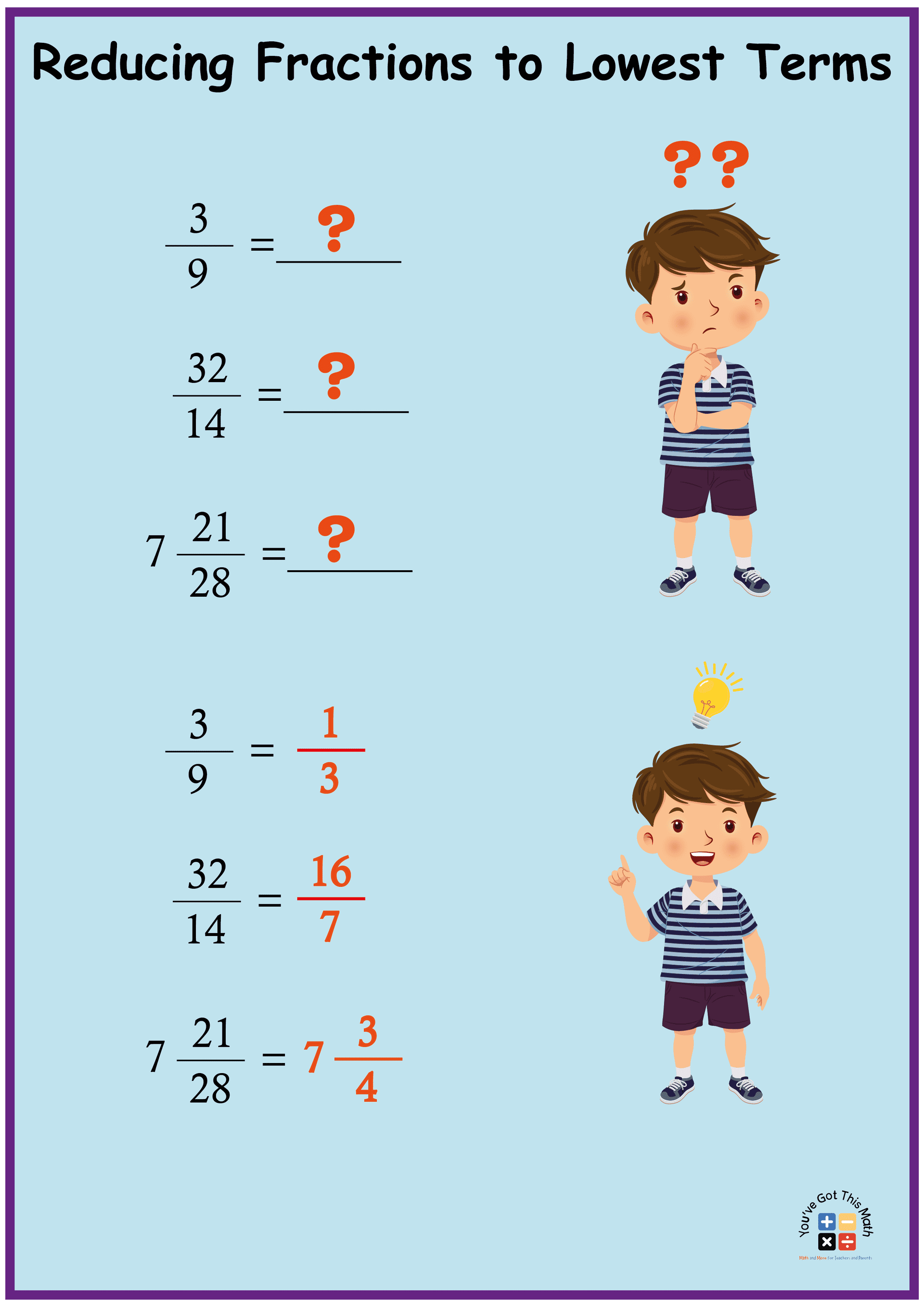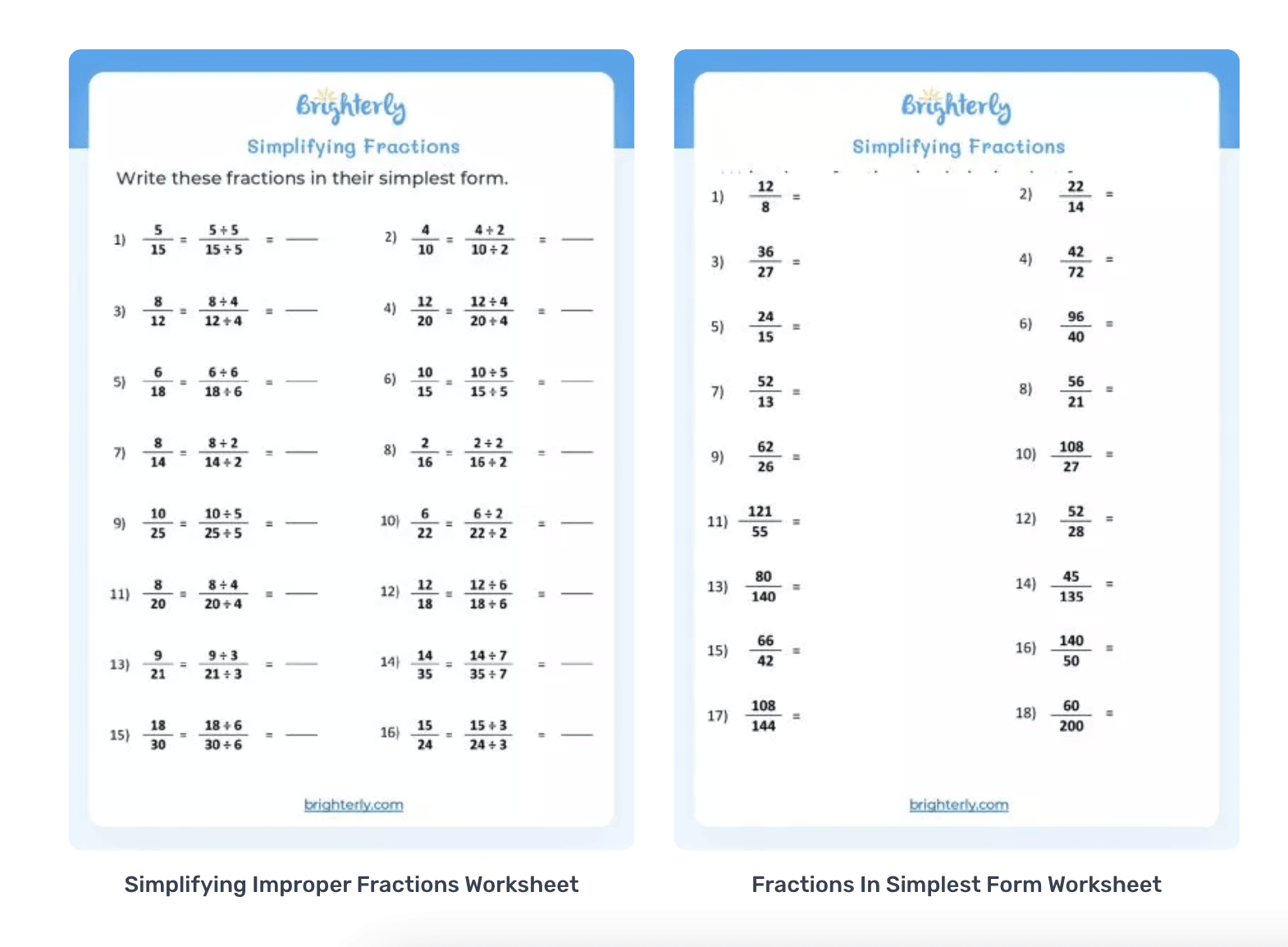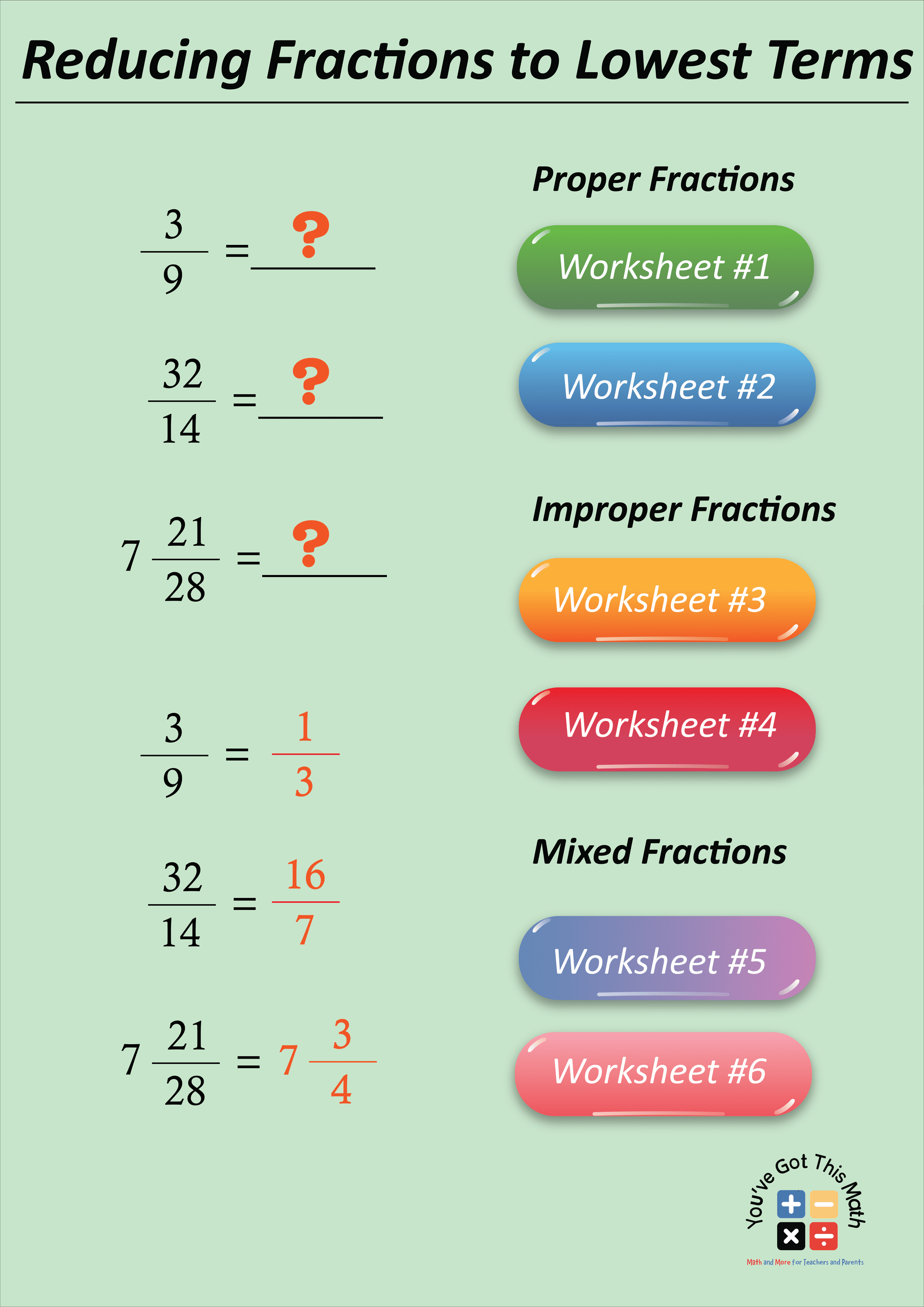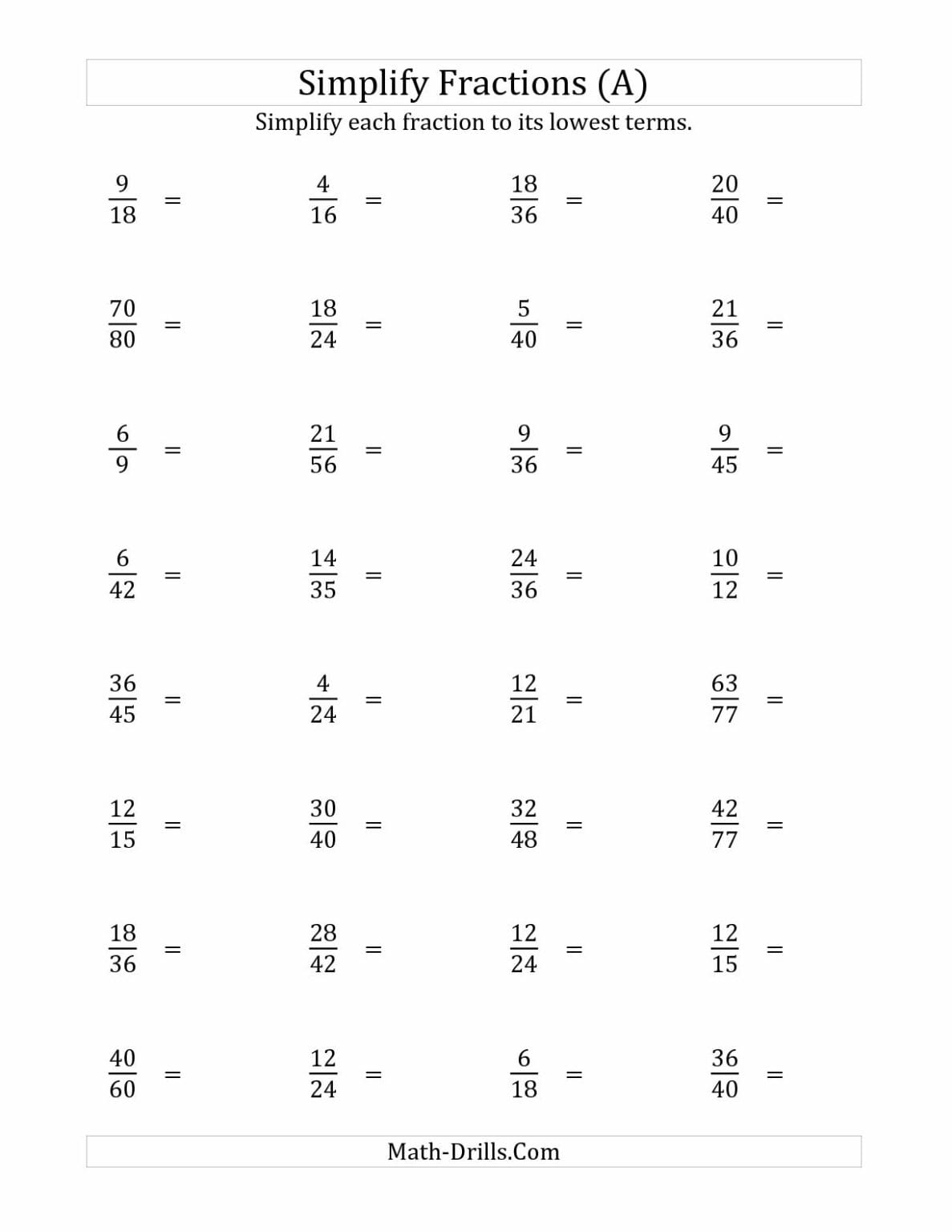
Reducing Fractions A Worksheet offers students a focused, hands‑on way to master the essential skill of simplifying fractions, a cornerstone of elementary mathematics that builds confidence for more advanced concepts such as ratios, proportions, and algebraic expressions. By presenting a structured series of problems that gradually increase in difficulty, a well‑designed worksheet not only reinforces procedural fluency but also nurtures critical thinking, problem‑solving perseverance, and mathematical communication. This article explores every facet of creating, implementing, and maximizing the impact of reducing fractions worksheets for learners in grades 3 through 5, providing actionable strategies for teachers, parents, and homeschooling educators.
Why Reducing Fractions Matters

Understanding how to simplify fractions is more than an isolated classroom activity; it is a foundational skill that underpins a wide array of mathematical concepts. When students can reduce a fraction to its lowest terms, they develop a deeper sense of number sense, recognize equivalence, and gain the ability to compare and order rational numbers with ease. These competencies translate directly into real‑world situations such as measuring ingredients, budgeting, and interpreting data visualizations, making the skill both academically and practically valuable.
Connecting to Number Sense
Reducing fractions requires students to identify common factors, which reinforces prime factorization and the concept of greatest common divisors (GCD). This process strengthens their internal representation of numbers, helping them see patterns and relationships that are crucial for later topics like fractions of fractions, mixed numbers, and even polynomial factorization.
Facilitating Algebraic Thinking
In algebra, simplifying expressions often mirrors the reduction of fractions. Mastery of fraction reduction equips students with a procedural template for canceling common factors in rational expressions, making the transition to algebra smoother and less intimidating.
Key Components of an Effective Reducing Fractions Worksheet

An effective worksheet balances clarity, progression, and engagement. Below are the essential elements that should be present in every reducing fractions worksheet designed for elementary learners.
- Clear Instructions: Simple, concise directions that tell students exactly what to do (e.g., “Write each fraction in its simplest form.”).
- Varied Problem Types: Include straightforward reduction tasks, word problems, visual fraction models, and mixed‑number conversions to cater to different learning styles.
- Progressive Difficulty: Start with fractions that have obvious common factors and gradually introduce more challenging examples requiring multi‑step factorization.
- Answer Key or Self‑Check Section: Provide a space for students to verify their work, encouraging independent correction and confidence building.
- Visual Aids: Incorporate fraction bars, circles, or number lines to help visual learners understand why a fraction is equivalent to a simpler form.
- Real‑World Context: Use scenarios like sharing pizza slices or measuring liquids to demonstrate the relevance of reducing fractions beyond the classroom.
Designing a Progressive Worksheet Sequence

To maximize learning outcomes, educators should arrange worksheets in a logical sequence that scaffolds knowledge. Below is a recommended progression that can be adapted to different classroom tempos.
Stage One: Recognizing Simple Common Factors
Introduce fractions where the numerator and denominator share an obvious factor, such as 4/8 or 6/9. Provide a brief reminder of the GCD concept and ask students to divide both parts of the fraction by that factor.
Stage Two: Using Prime Factor Trees
Guide students to break down each number into its prime components. For example, to simplify 18/24, students would list the prime factors (18 = 2 × 3², 24 = 2³ × 3) and then cancel the common prime factors (2 × 3). This reinforces factorization skills and deepens conceptual understanding.
Stage Three: Multi‑Step Reductions
Present fractions that require more than one division step, such as 45/60. Students first identify the GCD (15) and then divide both numerator and denominator, arriving at 3/4. Emphasize the importance of checking for additional common factors after the first reduction.
Stage Four: Word Problems and Real‑Life Scenarios
Incorporate contextual problems that require students to reduce fractions before solving the overall question. Example: “A recipe calls for 3/6 cup of sugar. How much sugar is actually needed after simplifying the fraction?” This stage connects procedural fluency with practical application.
Stage Five: Mixed Numbers and Improper Fractions
Challenge students to convert improper fractions to mixed numbers, reduce the fractional part, and then possibly reconvert to an improper fraction for further operations. For instance, simplify 14/6 to 2 ⅔, then verify the simplified form by returning to an improper fraction (8/3).
Effective Teaching Strategies for Worksheet Implementation
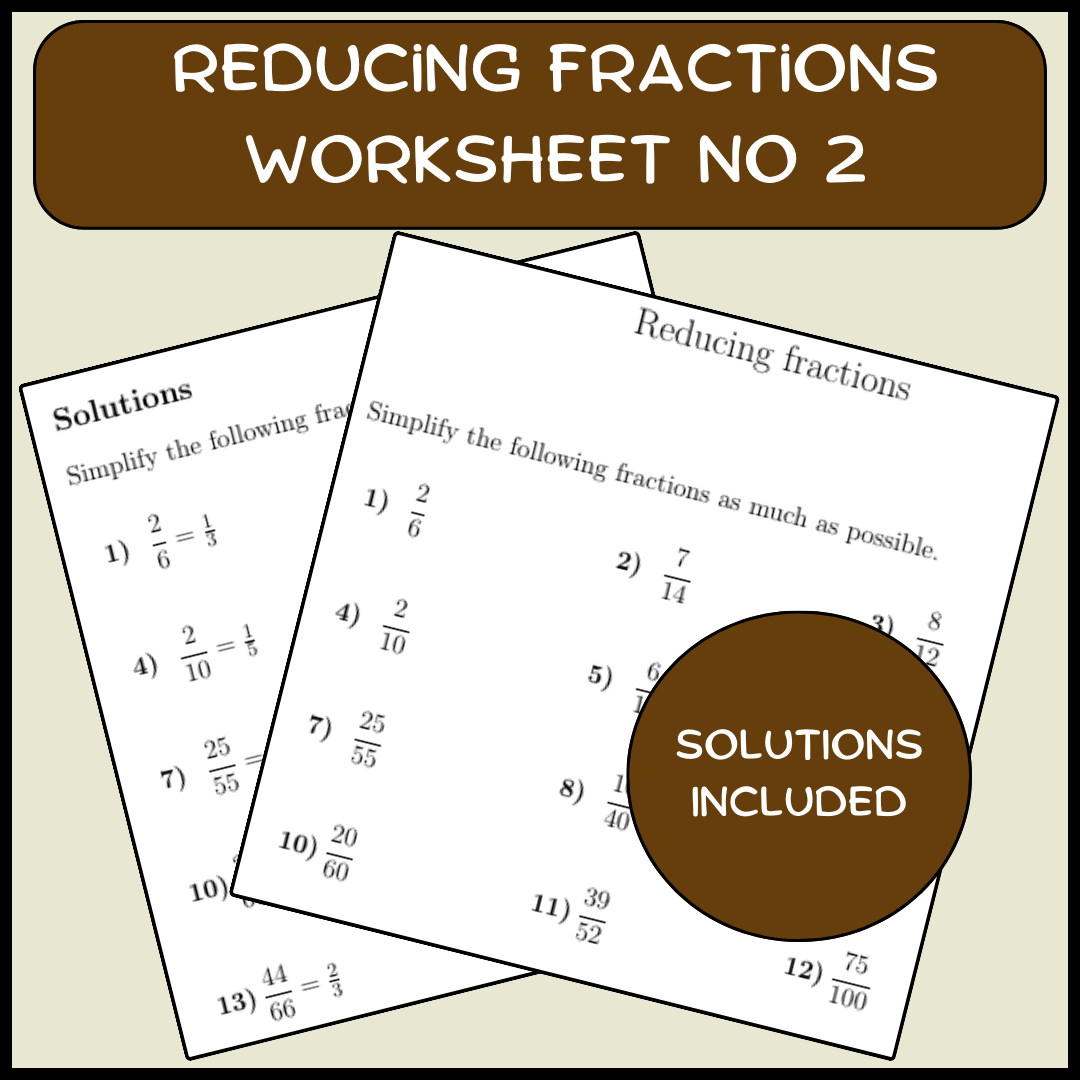
Merely handing out worksheets does not guarantee mastery. Educators must employ strategic instructional techniques to ensure that learners engage meaningfully with the material.
Guided Practice Before Independent Work
Begin each worksheet session with a brief, teacher‑led demonstration of a few examples. Model the thought process aloud, emphasizing why a particular factor is chosen and how the division simplifies the fraction. This primes students for independent attempts.
Think‑Aloud Protocols
Encourage students to verbalize their reasoning while working through problems. Phrases such as “I notice that both 12 and 18 are divisible by 6, so I’ll divide both by 6” help solidify procedural language and provide insight into student thinking for teachers.
Peer Review and Collaborative Check‑Ins
Pair students to compare answers and discuss any discrepancies. This collaborative approach fosters mathematical discourse, allowing learners to articulate and defend their methods while exposing them to alternative strategies.
Immediate Feedback Loops
Use answer keys, digital check tools, or quick teacher circulations to provide timely feedback. Prompt correction helps prevent the reinforcement of misconceptions and encourages a growth mindset.
Common Mistakes and How to Address Them
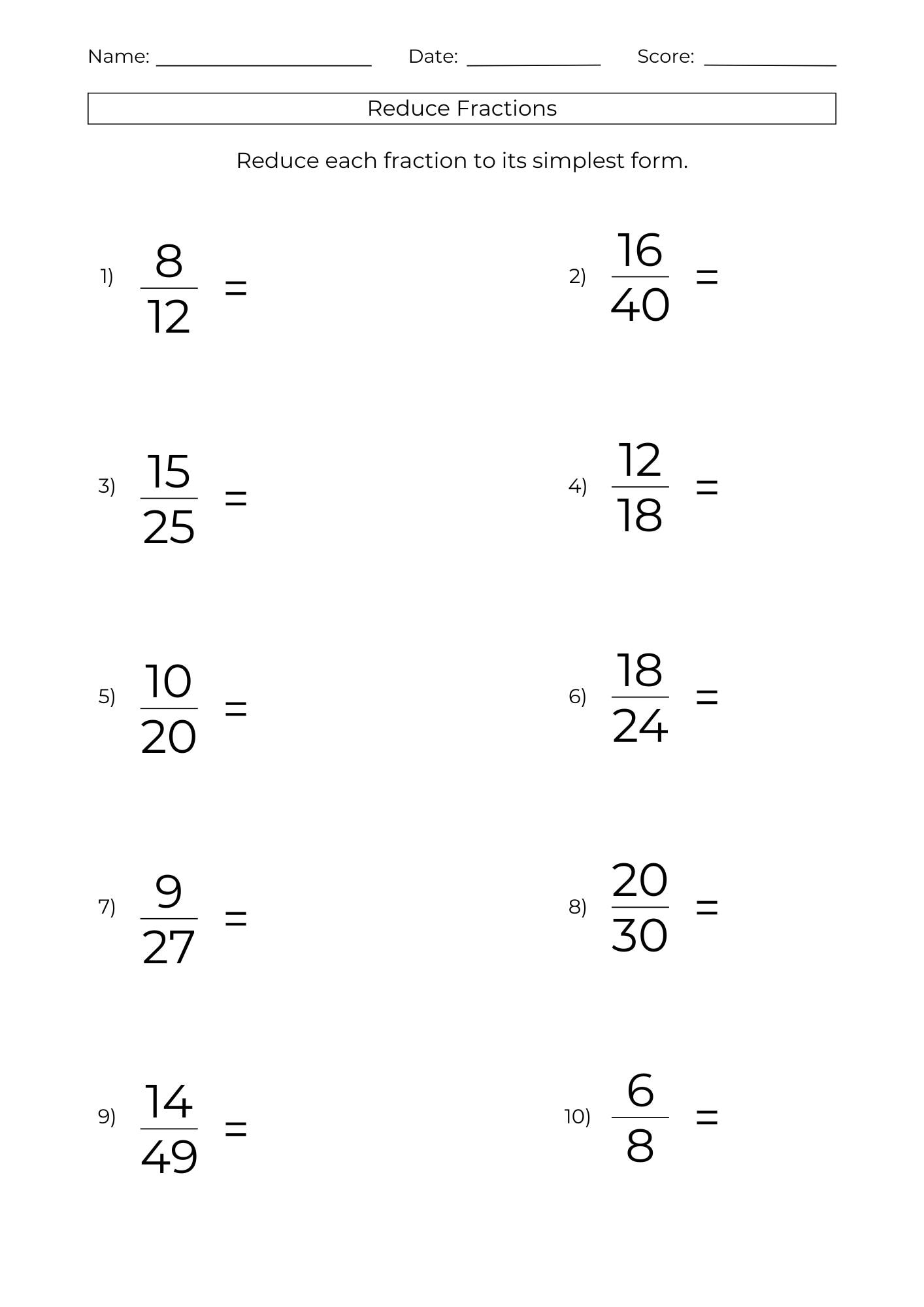
Even diligent students can fall into predictable traps when simplifying fractions. Recognizing these pitfalls early enables targeted interventions.
- Over‑Reducing: Dividing by a factor that is not common to both numbers, leading to an incorrect fraction. Reinforce the need for a shared divisor.
- Missing the Greatest Common Divisor: Settling for a partially reduced fraction (e.g., reducing 12/18 to 6/9 instead of 2/3). Teach students to verify whether further reduction is possible.
- Neglecting to Simplify Negative Fractions: Forgetting that the negative sign can be placed in the numerator, denominator, or front of the fraction. Emphasize consistent notation.
- Incorrect Cancellation of Terms: Cancelling numbers that appear in the numerator and denominator but are not factors (e.g., “cancel 4 in 14/28 because both have a 4”). Highlight the difference between common factors and shared digits.
- Failure to Reduce Whole Numbers in Mixed Numbers: Overlooking the need to simplify the fractional part after converting an improper fraction. Reinforce a two‑step process: convert, then reduce.
Remediation Techniques
When a student makes a mistake, guide them through a reflective questioning sequence: “What factor did you choose? Why is that factor common to both numbers? Can you check if a larger factor exists?” This metacognitive approach encourages self‑correction and deeper comprehension.
Integrating Technology and Digital Worksheets

In the digital age, interactive worksheets can augment traditional paper‑based practice. Online platforms allow for instant feedback, adaptive difficulty, and engaging visuals that keep students motivated.
Advantages of Digital Worksheets
- Immediate Scoring: Automatic grading frees up teacher time for targeted instruction.
- Adaptive Learning Paths: Systems can present easier or harder problems based on student performance, ensuring an optimal challenge level.
- Multimedia Support: Animated fraction models and drag‑and‑drop activities reinforce conceptual understanding.
- Data Analytics: Teachers can track progress, identify common error patterns, and personalize interventions.
Recommended Digital Features
When selecting or designing a digital reducing fractions worksheet, look for features such as step‑by‑step hints, a “show work” option, and the ability to print a hard copy for offline practice. These options provide flexibility for blended learning environments.
Differentiation: Tailoring Worksheets for Diverse Learners

Students enter the classroom with varied skill levels, learning preferences, and language proficiencies. Effective differentiation ensures that each learner can engage with reducing fractions at an appropriate level of challenge.
For Emerging Readers
Use visual fraction strips and simple language. Pair each problem with an image that represents the fraction, reducing the reliance on textual instructions.
For Advanced Learners
Introduce multi‑step problems that incorporate mixed numbers, decimal equivalents, or require the use of the Euclidean algorithm to find the GCD. Challenge them to create their own reducing fractions problems, fostering creativity and deeper mastery.
English Language Learners (ELL)
Provide bilingual glossaries for key terms such as “numerator,” “denominator,” and “simplify.” Use consistent phrasing and repeat instructions both verbally and in print to reinforce comprehension.
Students with Special Educational Needs
Offer worksheets with larger fonts, high‑contrast colors, and ample spacing. Include tactile manipulatives like fraction circles that can be used alongside the printed problems to support kinesthetic learning.
Assessing Mastery Through Worksheet Analysis
Effective assessment goes beyond checking whether a student arrives at the correct answer; it examines the reasoning process and the ability to transfer skills to new contexts.
Formative Assessment Strategies
- Work Samples: Collect completed worksheets and review the steps shown, noting where students correctly identified common factors.
- Exit Tickets: After a worksheet session, ask students to write one short explanation of how they decided on the GCD for a given fraction.
- Think‑Pair‑Share Reflections: Have students discuss a particularly tricky problem and share the strategies that led to the solution.
Summative Assessment Options
Design a culminating test that mixes traditional reduction problems with application scenarios, such as “If a recipe calls for 9/12 cup of oil, how much oil do you actually need after simplifying?” This ensures students can both compute and interpret simplified fractions.
Practical Tips for Teachers and Parents

Whether you are a classroom teacher or a parent supporting home learning, the following practical suggestions can help you get the most out of reducing fractions worksheets.
Set Clear Learning Objectives
Begin each worksheet session by stating the specific goal, e.g., “Today we will practice finding the greatest common divisor to simplify fractions with two‑digit numerators.” This focus aligns instruction with assessment.
Use Real‑World Materials
Incorporate everyday objects such as measuring cups, pizza slices, or chocolate bars. Have students physically divide the items and then record the simplified fraction, bridging abstract numbers with tangible experiences.
Schedule Regular, Short Practice Sessions
Frequent, brief practice (10‑15 minutes) is more effective than occasional lengthy drills. Consistency reinforces procedural memory and reduces math anxiety.
Celebrate Successes
Recognize milestones such as “first correctly simplified three‑digit fraction” with verbal praise or a small reward. Positive reinforcement encourages continued effort.
Maintain a Mistake Log
Encourage students to keep a notebook of errors they made on worksheets, along with corrected solutions and reflections on why the mistake occurred. Reviewing this log periodically helps solidify learning.
Extending Learning Beyond the Worksheet

While worksheets are a powerful tool, they are most effective when integrated into a broader curriculum that includes discussion, exploration, and real‑life application.
Fraction Games and Activities
Incorporate games such as “Fraction Bingo” where students match simplified fractions to their unsimplified counterparts, or “Factor Hunt” where they identify common factors in a timed challenge.
Cross‑Curricular Connections
Link reducing fractions to science experiments (e.g., mixing solutions in specific ratios) or art projects (e.g., creating patterns using fraction‑based measurements). These interdisciplinary links reinforce relevance.
Project‑Based Learning
Assign a mini‑project where students design a simple recipe, determine the required ingredient amounts in fractional form, simplify those fractions, and present the final recipe to the class. This authentic task demands both procedural skill and creativity.
Conclusion

Reducing fractions is a foundational skill that opens the door to advanced mathematical reasoning and everyday problem solving. A thoughtfully crafted worksheet—complete with clear instructions, progressive challenges, visual supports, and real‑world contexts—serves as a powerful conduit for mastering this concept. By integrating guided practice, collaborative review, differentiated resources, and technology‑enhanced activities, educators can ensure that each learner not only reduces fractions accurately but also understands the underlying logic. Ongoing assessment, reflective error analysis, and extension activities cement this knowledge, turning procedural fluency into lasting mathematical confidence. Embrace these strategies, and watch students transform from tentative calculators into confident fraction experts, ready to tackle the next layer of mathematical discovery.