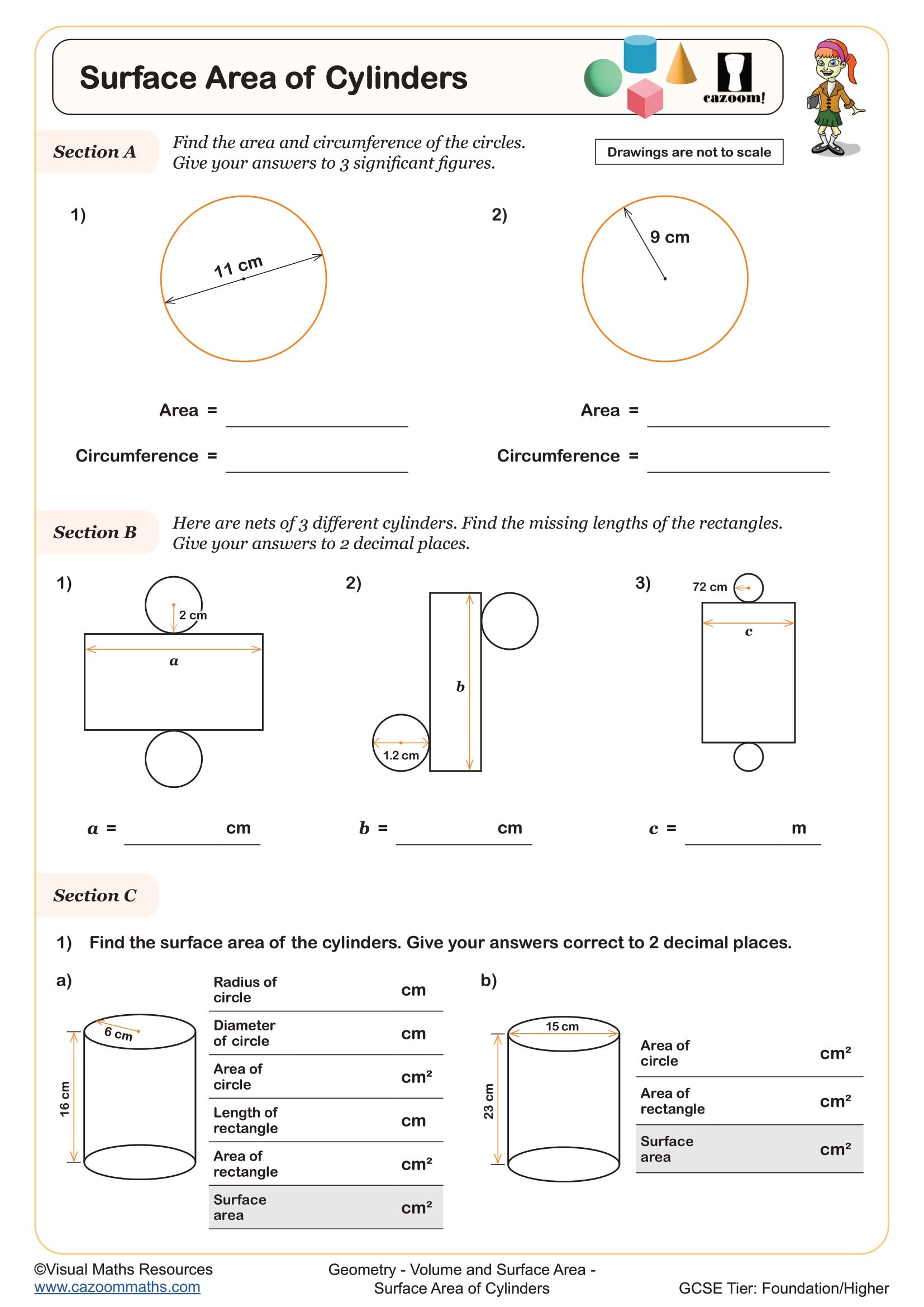
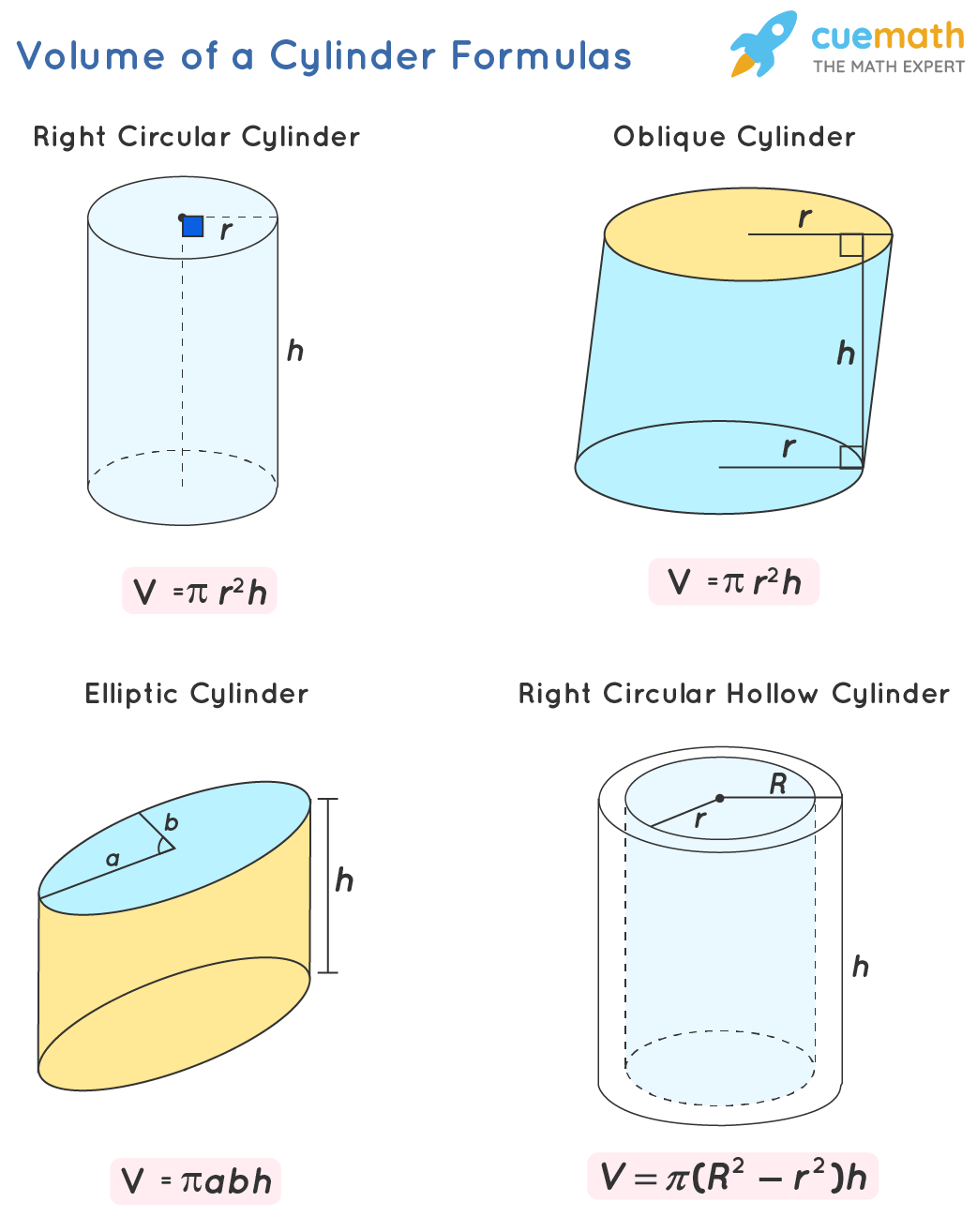
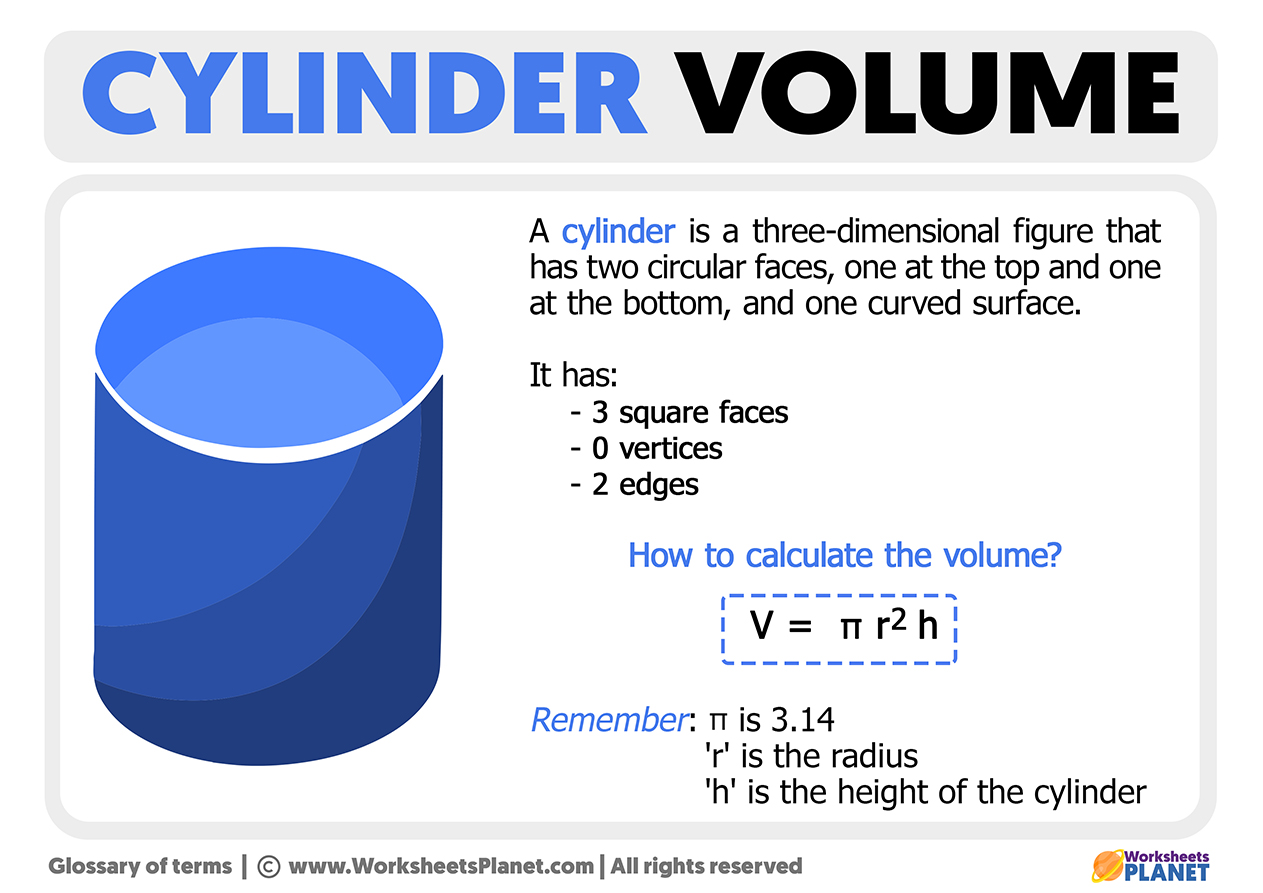
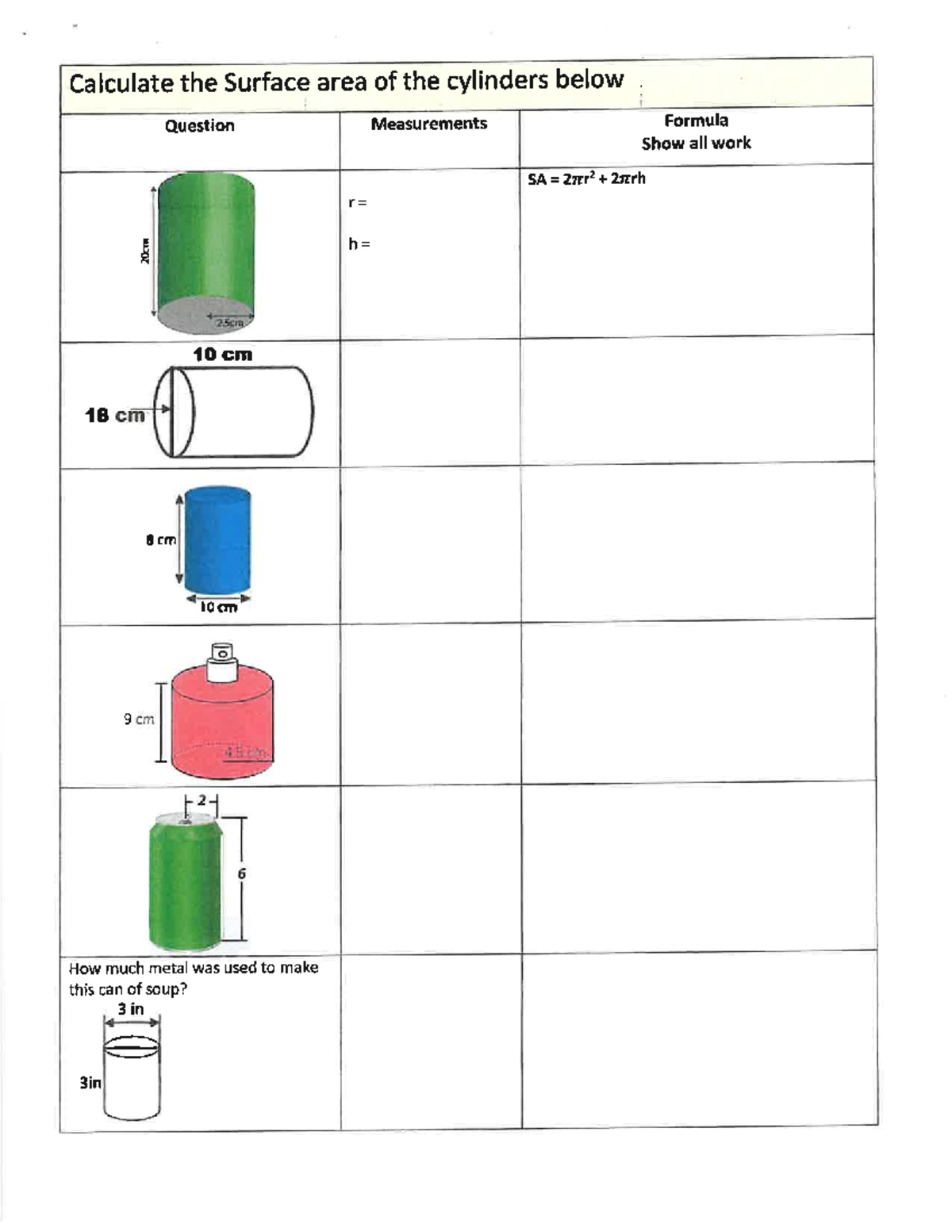
Volume Of Cylinder Worksheet is a cornerstone resource for students mastering the geometry of circular cylinders, whether in middle school labs or college engineering classes. By tackling a variety of problems—from simple radius and height calculations to multi‑step scenarios involving compound units—learners build confidence and precision that translate into real‑world engineering, architecture, and even everyday problem‑solving.
Understanding the Basics

Definition of a Cylinder
A right circular cylinder consists of two congruent circular bases connected by a lateral surface that is perpendicular to the bases. The height is the distance between the planes of the bases, and the radius is the distance from the center of a base to any point on its circumference. Recognizing these components is essential before diving into formulas.
Why Volume Matters
In practical terms, knowing the volume of a cylinder helps determine material needs for containers, calculate the amount of fluid a tank can hold, or estimate the capacity of a storage silo. It also underpins concepts in fluid dynamics and heat transfer, making it a versatile tool across disciplines.
Visualizing the Shape
Imagine a soda can. The top and bottom represent the circular bases, while the side is the lateral surface. When you hold the can, the height is the length from top to bottom, and the radius is the distance from the center of the can to its rim. Visual cues like these aid in remembering the geometric relationships.
Key Formulas and How to Use Them

Volume Formula
The classic volume formula for a cylinder is:
V = πr²h.
Here, π (pi) approximates 3.14159, r is the radius, and h is the height. Calculating the radius squared (r²) gives the area of one base; multiplying by the height gives the total enclosed space.
Surface Area Breakdown
Although the focus is volume, many worksheets also ask for surface area to reinforce related skills. Surface area consists of two base areas and the lateral area:
SA = 2πr² + 2πrh.
The first term covers both bases, while the second term covers the side surface.
Using Units Consistently
When solving worksheet problems, always keep units consistent. If the radius is given in centimeters and the height in meters, convert one to match the other before computing. Common pitfalls involve mixing centimeters with inches or feet, leading to wrong answers.
Step‑by‑Step Worksheet Tips

Read the Question Thoroughly
Start by identifying all given variables: radius, height, diameter, or even volume. Look for qualifiers like “if the height is double the radius” or “if the radius increases by 5%.” These qualifiers often indicate a two‑step problem where you first solve for one variable before plugging it into the volume formula.
Sketch the Cylinder
Drawing a quick diagram can clarify ambiguous wording. Label the radius, height, and any additional dimensions. A sketch helps confirm that the problem involves a right circular cylinder rather than a conical or frustum shape.
Convert Units Early
Convert all measurements to a single unit before doing arithmetic. For example, if the radius is in inches and the height in feet, convert feet to inches or inches to feet. This eliminates conversion errors during later steps.
Compute the Base Area First
Calculate πr² before multiplying by the height. Many worksheets present the radius in a form like “√(36)” or “12/√3.” Simplify these expressions to a numeric radius before squaring.
Use a Calculator Strategically
While many schools allow manual calculation, using a calculator reduces rounding errors. Keep as many decimal places as your calculator allows until the final step, where you round according to the problem’s requirement (usually to the nearest whole number or to one decimal place).
Check for Realism
After you get an answer, mentally verify its plausibility. If you calculate a volume of 2,000 cubic centimeters for a soda can, that seems too large; typical soda cans hold about 355 mL (or 355 cubic centimeters). This sanity check helps spot missteps.
Document Every Step
When filling out worksheets, show all intermediate calculations. Many teachers mark partial credit for correctly written work even if the final answer is wrong, because it demonstrates understanding of the process.
Common Mistakes to Avoid

Squaring the Height Instead of the Radius
Students often misinterpret the formula and square the height. Remember: only the radius is squared, not the height. The height is simply multiplied by the base area.
Forgetting the π Constant
Skipping the π term leads to drastically underestimated volumes. When unsure, use 3.14 or 3.14159 depending on the precision requested.
Unit Inconsistencies
Mixing meters and centimeters, inches and feet, or even mixing metric and imperial units without conversion is a frequent source of error. Always convert everything to the same system before plugging numbers into the formula.
Misreading “Radius” for “Diameter”
Some problems provide the diameter. Divide by two to get the radius before using the volume formula. Forgetting this step can produce double‑size errors.
Not Using Parentheses Correctly
When solving multi‑step problems, use parentheses to group operations. For example, if the radius is “3 + 2” centimeters, first compute 3 + 2 = 5, then square to get 25.
Real‑World Applications

Designing Beverage Containers
Manufacturers design bottles to hold specific volumes. A volume worksheet helps calculate the required dimensions for a new bottle design, ensuring it fits packaging standards while maximizing space efficiency.
Architectural Storage Spaces
In warehouses, cylindrical storage tanks hold chemicals or grains. Engineers use volume calculations to determine the capacity of a new tank, ensuring compliance with safety regulations and storage needs.
Engineering and Mechanical Design
Many mechanical components—like piston cylinders—have cylindrical shapes. Engineers must calculate volumes to determine displacement, fluid flow, and pressure dynamics in engines or hydraulic systems.
Environmental Modeling
Scientists estimate the volume of cylindrical sections of ocean trenches or underground storage caverns to model pollutant dispersion or geothermal energy extraction.
Practice Problems and Resources

Progressive Difficulty Levels
Start with simple problems that provide radius and height directly. As confidence grows, tackle problems that introduce indirect measurements, such as a known volume and a ratio between radius and height. Advanced worksheets may involve calculus, asking for volumes of cylinders with slanted ends or variable radii.
Interactive Online Tools
Several educational platforms allow students to input dimensions and instantly see the resulting volume and surface area. These tools give immediate feedback and help learners see the impact of changing one variable.
Real-World Data Sets
Gather dimensions of everyday cylindrical objects—cans, bottles, columns—and calculate their volumes. Comparing theoretical results with measured volumes (using water displacement) reinforces the practical relevance of the formulas.
Peer Collaboration
Working in study groups to solve cylinder worksheets encourages discussion about different solving strategies, common pitfalls, and ways to double‑check answers. Explaining the process to a peer is an excellent way to cement understanding.
Teacher‑Provided Feedback
Submit completed worksheets to a teacher or tutor for detailed feedback. Focus on understanding where errors occurred, whether in calculations, unit conversions, or interpretation of the problem statement.
Conclusion

Mastering a Volume Of Cylinder Worksheet equips students with a powerful mathematical tool that extends far beyond the classroom. By grasping the geometric fundamentals, applying the correct formulas, and avoiding common pitfalls, learners develop analytical skills that are essential in engineering, design, and everyday problem solving. Consistent practice, coupled with real‑world application, turns abstract formulas into tangible, useful knowledge. Armed with these insights, students will tackle any cylindrical volume challenge with confidence, accuracy, and a deeper appreciation for the elegance of geometry.