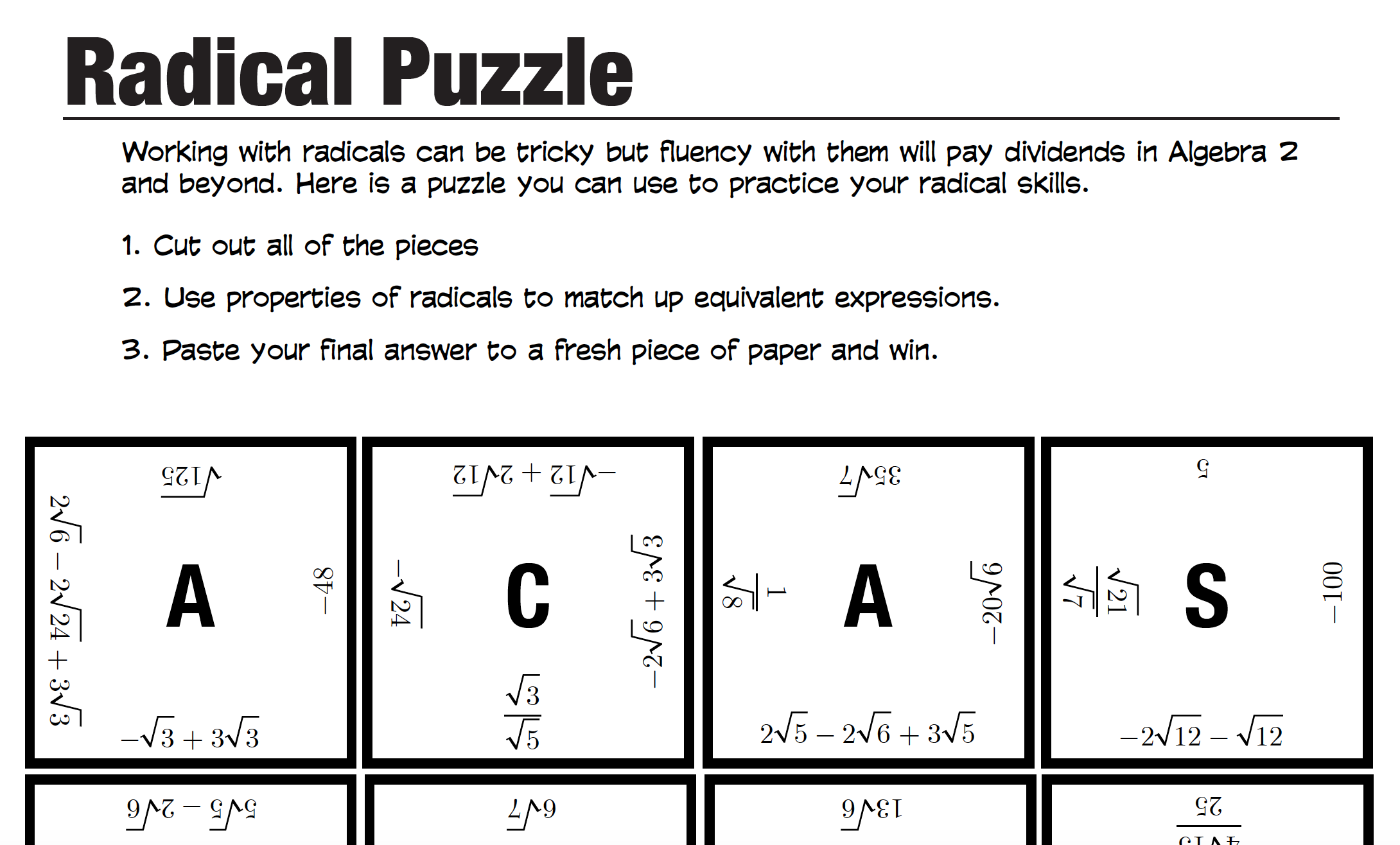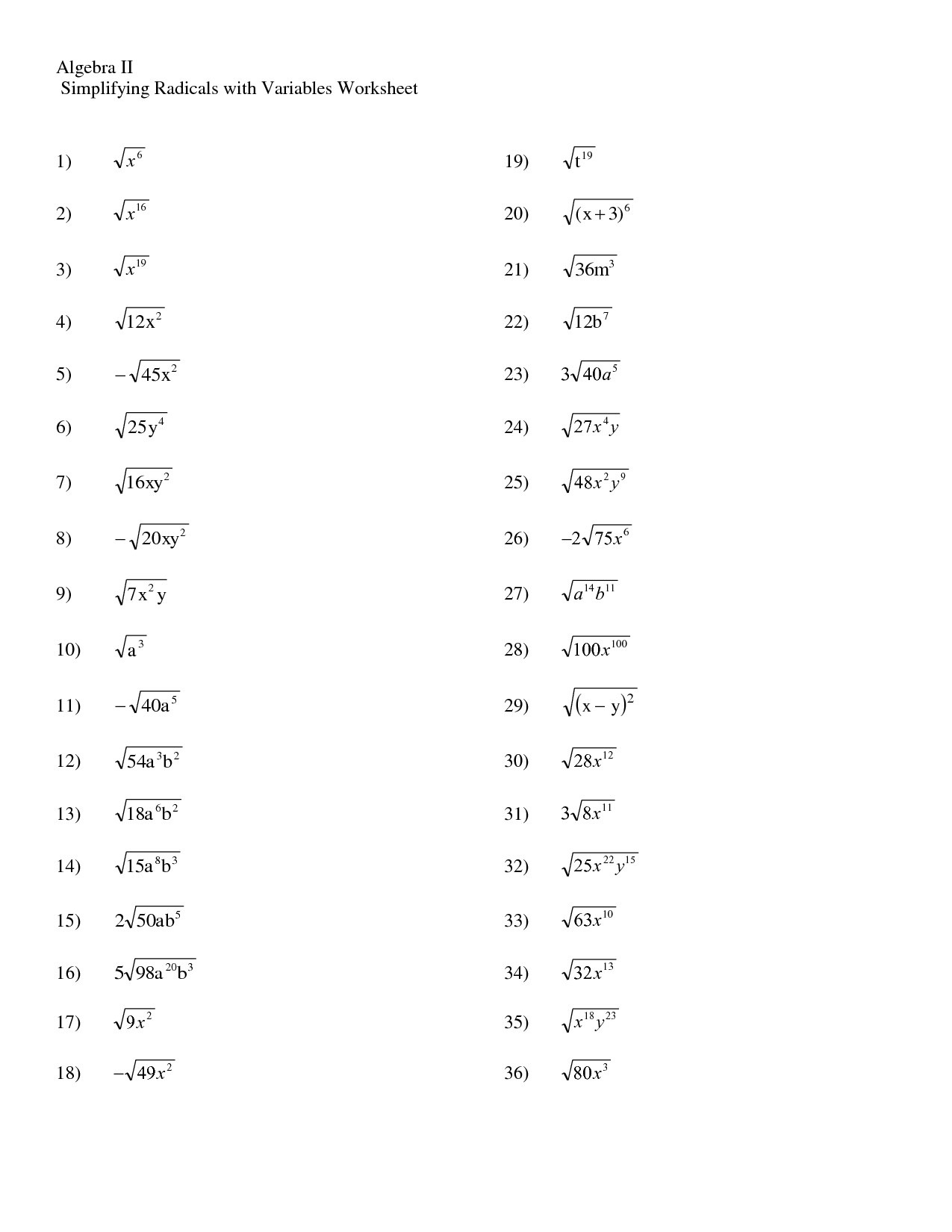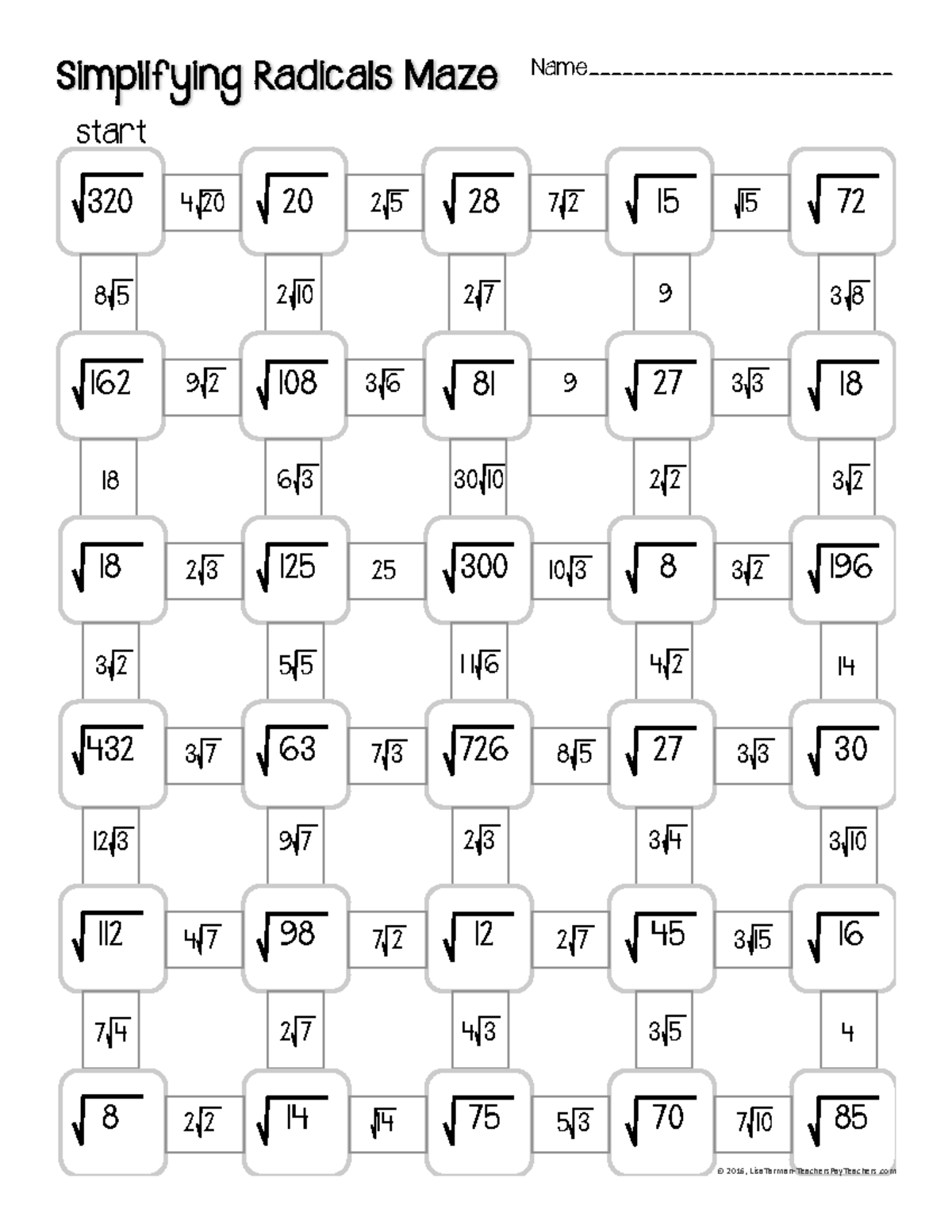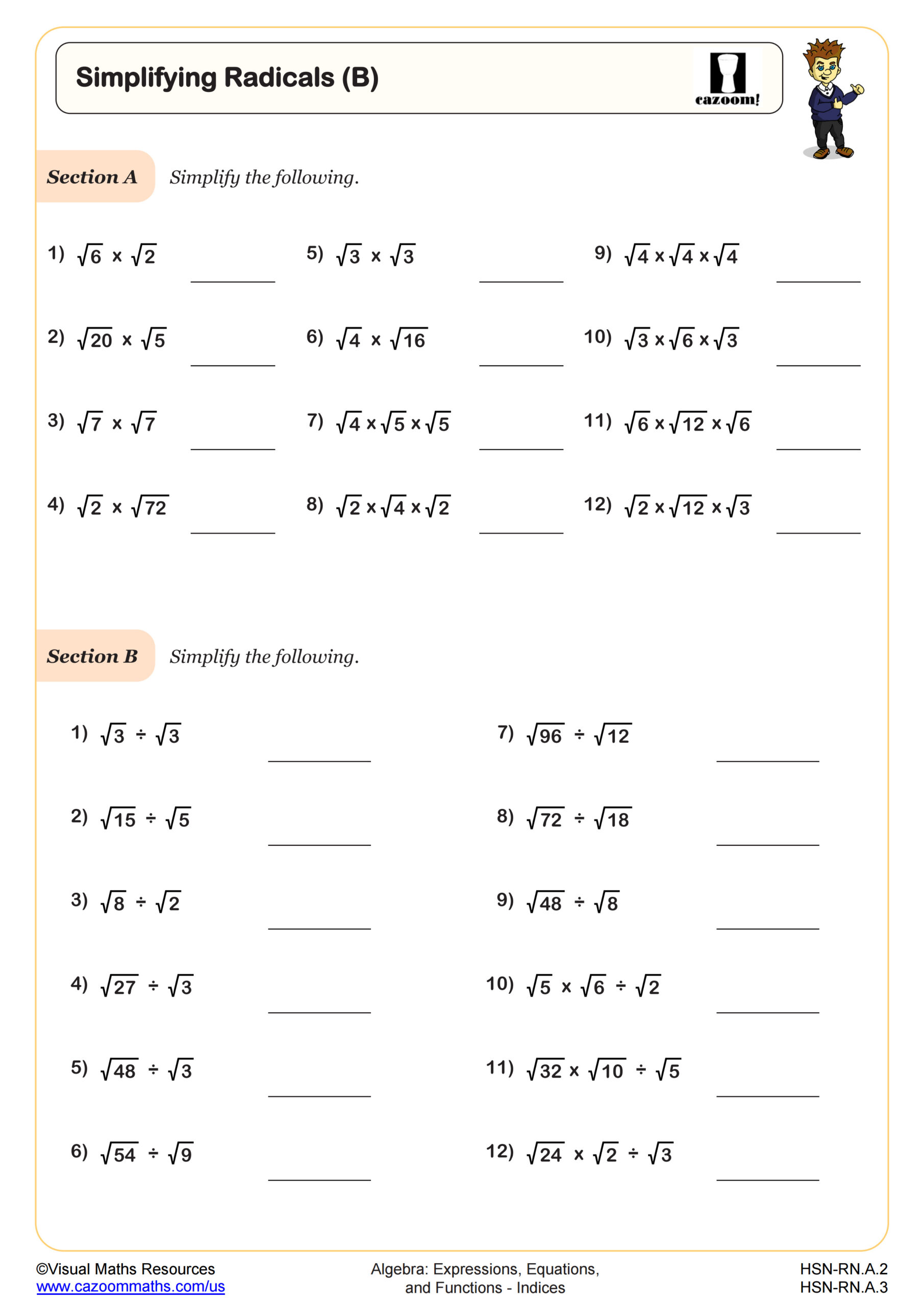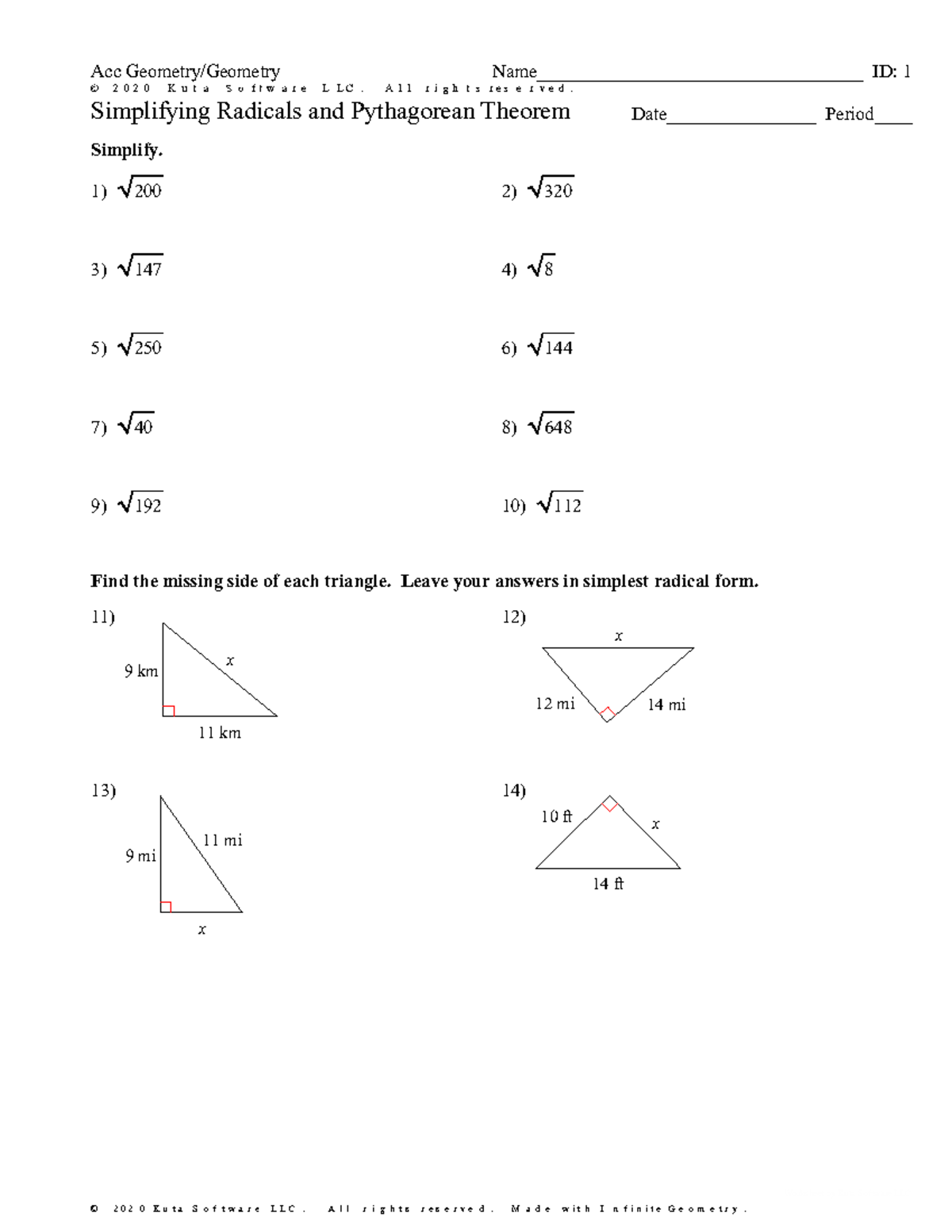
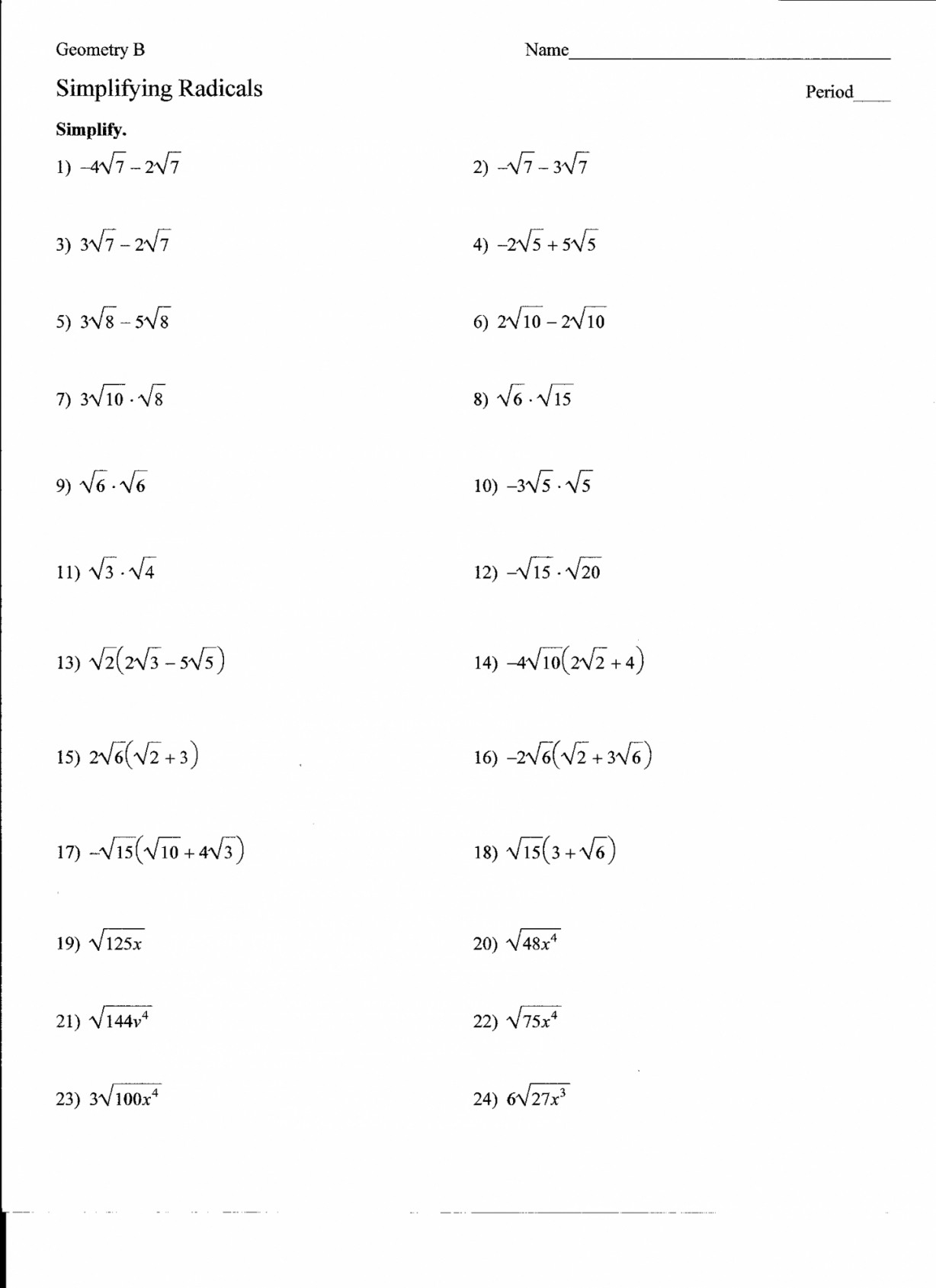
Worksheet For Simplifying Radicals is the perfect blend of practice, challenge, and confidence‑building that every middle‑school math student needs to master the art of radical simplification, and I’m excited to walk you through why this resource can become a game‑changer in your learning journey.
Why Simplifying Radicals Matters

Before you dive into a worksheet, it helps to understand the why behind the what. Simplifying radicals isn’t just a box‑checking activity; it lays the groundwork for higher‑level concepts like algebraic equations, geometry, and even calculus. When you can express a radical in its simplest form, you free up mental bandwidth to focus on problem‑solving strategies rather than getting tangled in messy numbers.
Moreover, a well‑designed worksheet reinforces the procedural fluency that makes complex calculations feel natural. Consistent practice builds muscle memory, so when a test question asks you to rationalize a denominator or combine like radicals, the steps feel automatic. This confidence translates into better performance across the math curriculum and a deeper appreciation for the logical beauty of mathematics.
Understanding the Basics of Radicals

What Is a Radical?
A radical is an expression that includes a root symbol (√) and represents the principal root of a number. For example, √9 equals 3 because 3² = 9. The number under the root sign is called the radicand, and the index (if written) tells you which root you’re taking—square root, cube root, etc.
Prime Factorization and Perfect Squares
The key to simplifying a radical is spotting perfect squares (or perfect cubes, depending on the index) within the radicand. Prime factorization breaks a number down into its prime components, revealing pairs of identical factors that can be pulled out of the root.
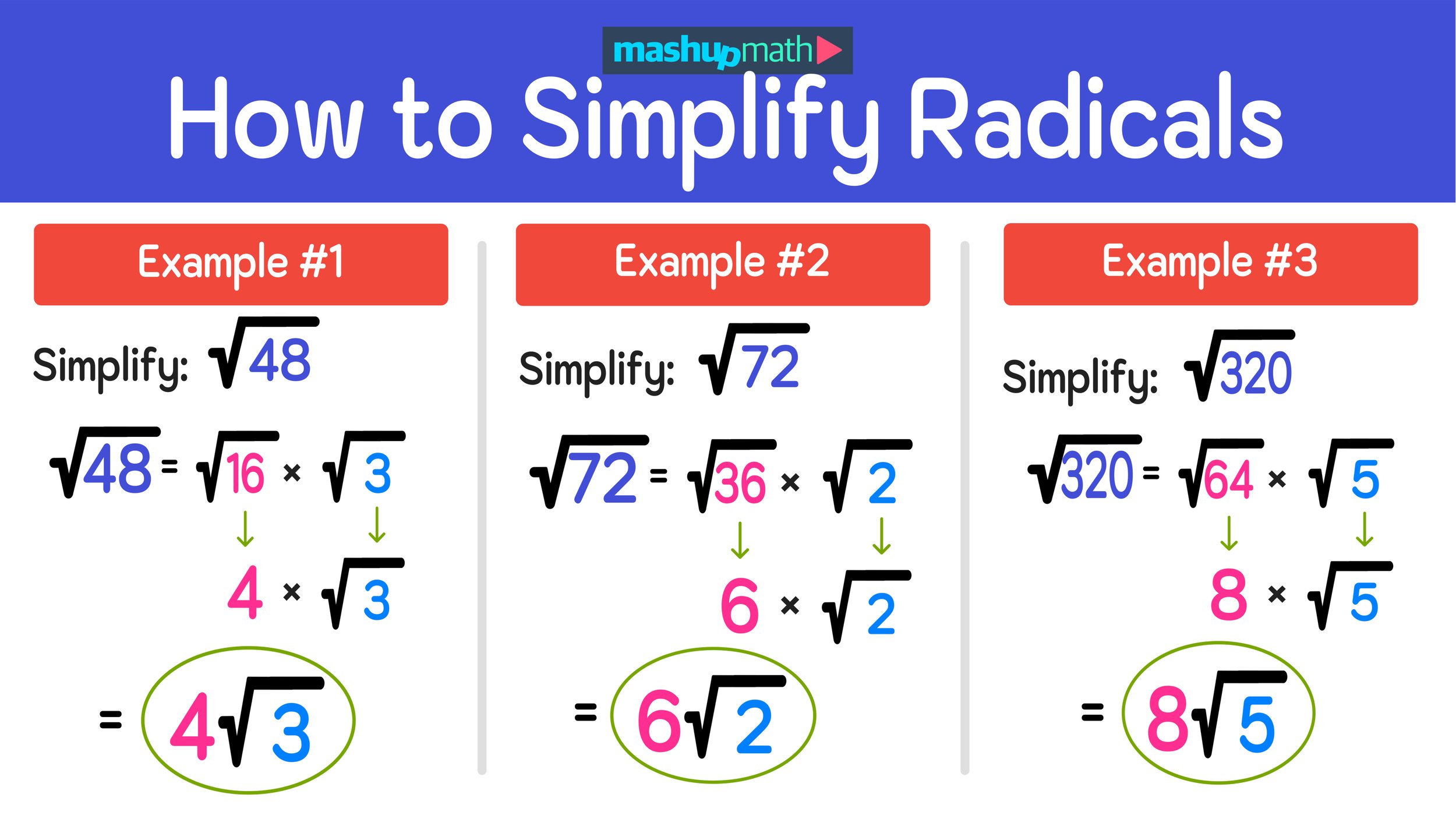
Take √72 as an example. Its prime factorization is 2 × 2 × 2 × 3 × 3. Pair the 2’s and the 3’s: (2 × 2) and (3 × 3) become 2 and 3 outside the radical, leaving a single 2 inside. The simplified form is 6√2.
Radical Rules to Keep Handy
- Product Rule: √a × √b = √(a × b).
- Quotient Rule: √a ÷ √b = √(a ÷ b), provided b ≠ 0.
- Power Rule: (√a)ⁿ = a^(n/2).
- Rationalizing Denominators: Multiply numerator and denominator by a suitable radical to eliminate radicals from the denominator.
Step‑by‑Step Guide to Simplifying Radicals
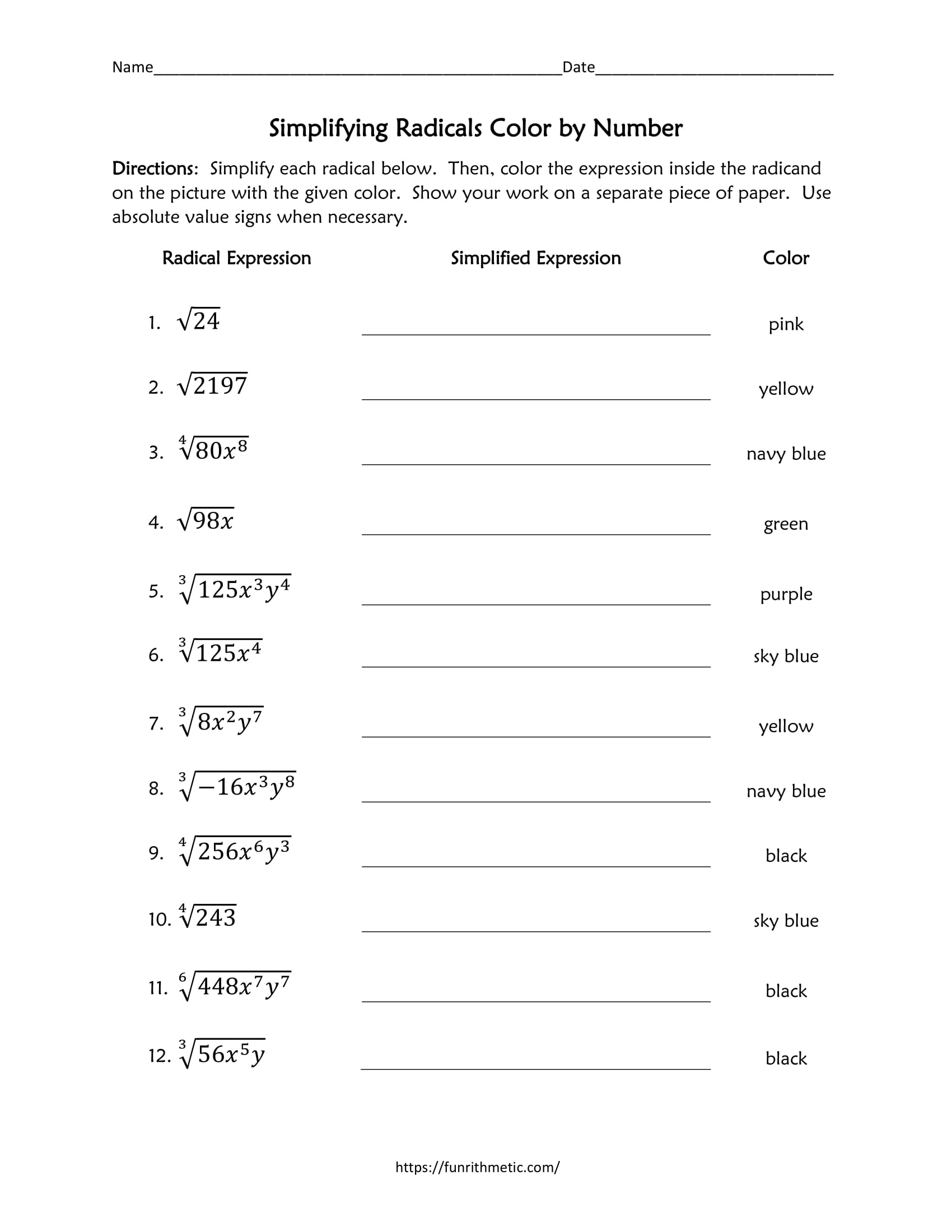
Step 1: Identify the Radicand and Its Index
Start by noting the number under the root sign and the root’s index. If the index isn’t written, it’s a square root by default. For a cube root, the index is 3, and so on.
Step 2: Perform Prime Factorization
Break the radicand down into prime factors. This can be done quickly with a factor tree or by repeatedly dividing by small primes (2, 3, 5, 7…). Write the factors in a list so you can easily spot pairs (for square roots) or triples (for cube roots).
Step 3: Extract Perfect Powers
For square roots, each pair of identical prime factors can be moved outside the radical as a single factor. For cube roots, each set of three identical primes moves outside as one factor. The remaining unpaired factors stay inside.
Example: Simplify ∛540. Prime factorization: 2 × 2 × 3 × 3 × 3 × 5. Group triples: (3 × 3 × 3) is a perfect cube, so 3 comes out. The leftover 2 × 2 × 5 stays inside, giving 3∛20.
Step 4: Simplify Coefficients
If the radical is multiplied by a coefficient, combine it with any factors you’ve moved outside the root. For instance, 4√18 becomes 4 × 3√2 = 12√2 after simplifying √18 to 3√2.
Step 5: Rationalize the Denominator (If Needed)
When a radical appears in the denominator, multiply the entire fraction by a form of 1 that will eliminate the radical. For a simple √a denominator, multiply by √a/√a. For a binomial denominator like (√a + √b), use its conjugate (√a − √b).
Example: Rationalize 5/(√2 + √3). Multiply numerator and denominator by (√2 − √3):
5(√2 − √3) / [(√2 + √3)(√2 − √3)] = 5(√2 − √3) / (2 − 3) = ‑5(√2 − √3).
The denominator is now a rational number (‑1), and the expression is simplified.
Step 6: Verify Your Work
Square (or cube) the simplified expression to see if you recover the original radicand. This quick check helps catch mistakes early, especially when dealing with larger numbers or multiple radicals.
Common Mistakes and How to Avoid Them
Leaving a Factor Inside the Radical
One frequent slip is forgetting to pull out every perfect square (or cube). Double‑check your factor pairs; a missed pair means the radical isn’t fully simplified.
Incorrect Use of the Quotient Rule
Applying √a ÷ √b = √(a ÷ b) only works when both a and b are perfect squares (or share the same index). Otherwise, you risk creating an irrational denominator or an incorrect expression.
Rationalizing the Wrong Way
When dealing with binomials, always use the conjugate. Multiplying by the same binomial (instead of its conjugate) will often make the denominator more complicated rather than simplifying it.
Sign Errors in Conjugates
The conjugate of (a + b) is (a ‑ b), and vice versa. Switching the sign can flip the entire result, turning a positive answer negative or vice versa.
Overlooking Negative Radicands
Real‑number radicals are undefined for negative radicands when the index is even. If you encounter √‑9, recognize that it belongs to the complex number system, which is beyond the scope of a standard simplifying radicals worksheet.
Real‑World Applications of Simplified Radicals
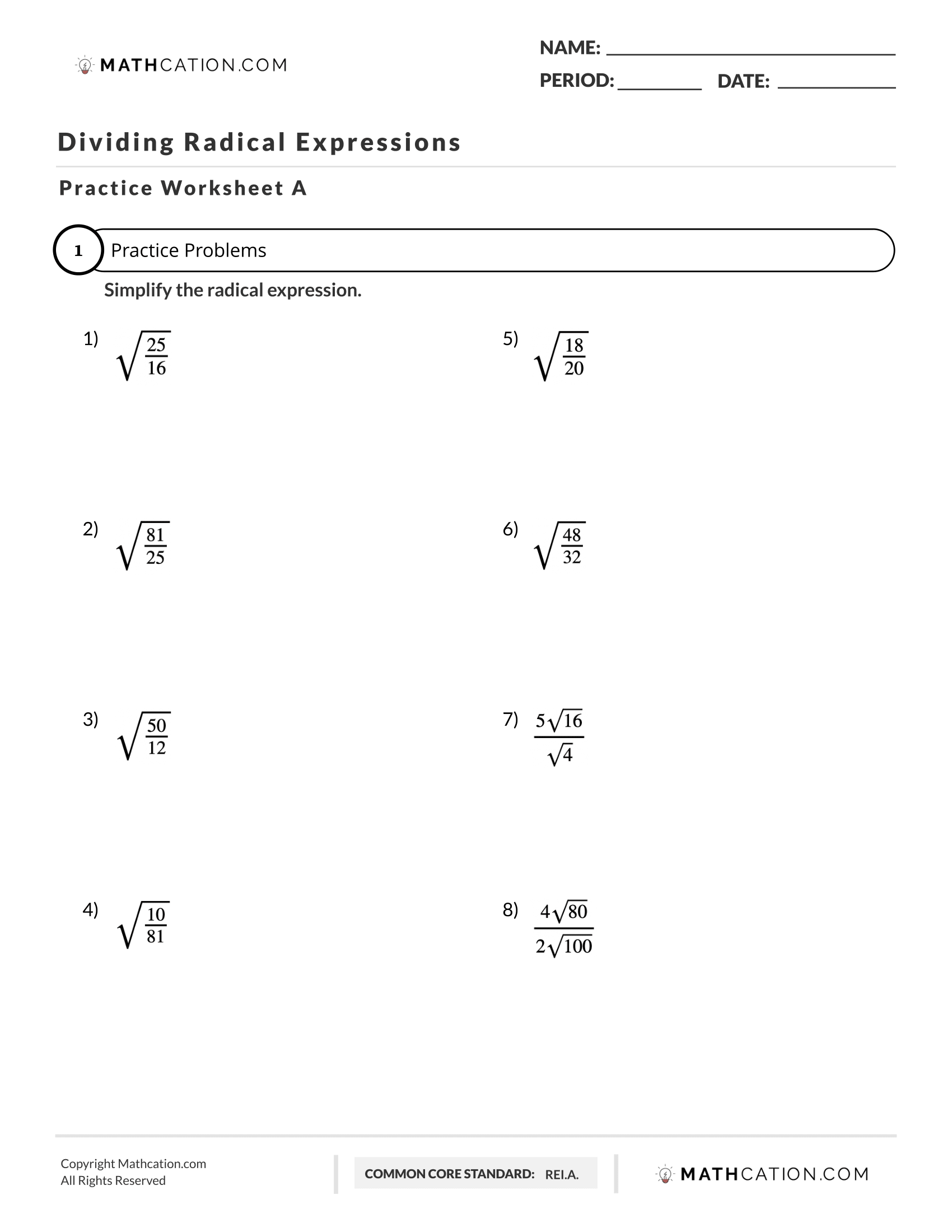
Although radicals might feel abstract, they pop up in everyday scenarios. Architects use √2 to calculate diagonal lengths of square rooms. Engineers rely on simplified radicals when determining stress forces in truss bridges. Even video game developers use them to compute distances in 3‑D space, where the distance formula involves √(Δx² + Δy² + Δz²). By mastering radical simplification, you’re equipping yourself with a tool that transcends the classroom.
Tips for Using the Worksheet Effectively
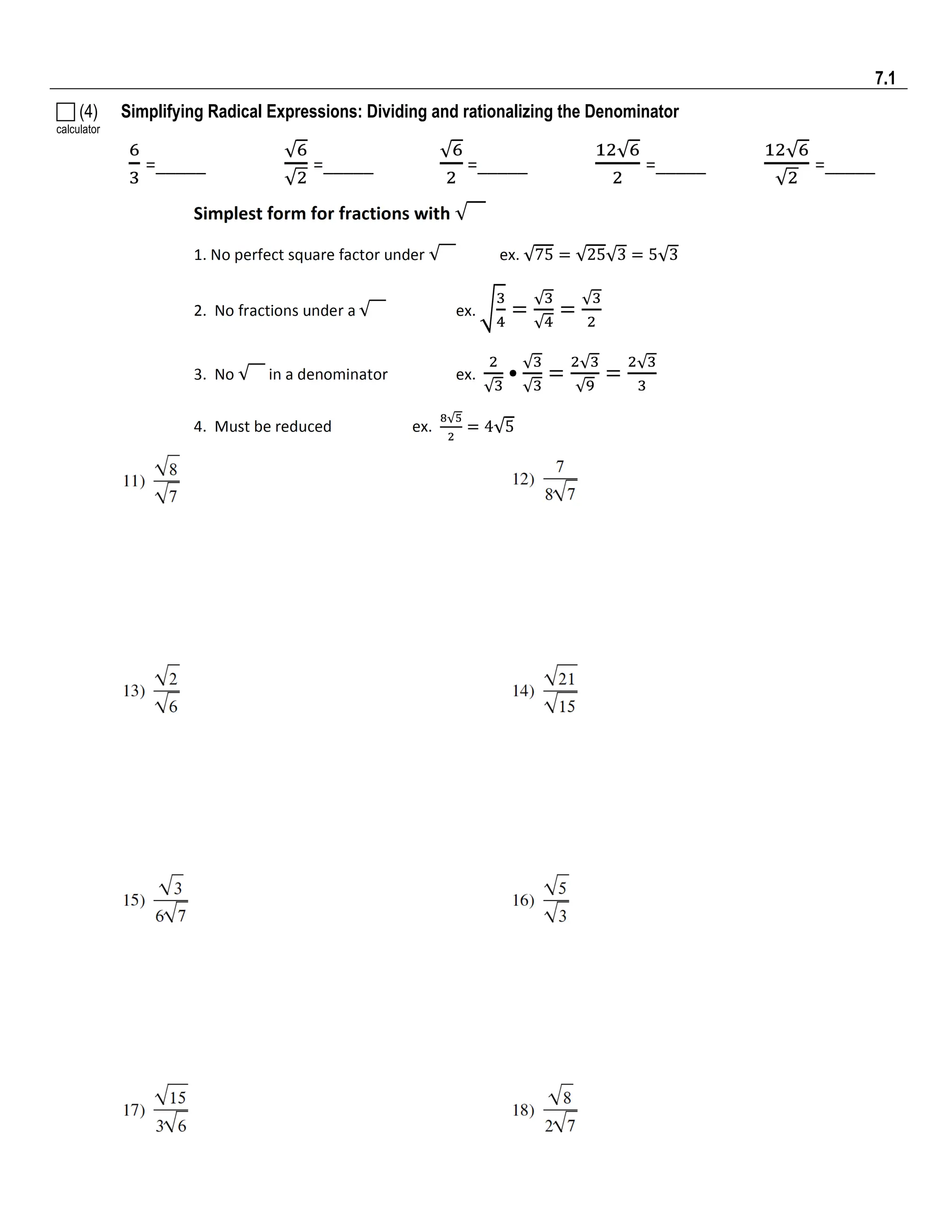
Set a Purpose Before You Begin
Decide whether you’re focusing on speed, accuracy, or conceptual understanding. For speed, set a timer for each problem. For accuracy, double‑check each step. For deep understanding, write a brief explanation beside each answer.
Use a Two‑Column Approach
In the left column, write the original problem. In the right column, record each simplification step. This visual separation makes it easier to trace your reasoning and spot errors.
Incorporate Visual Aids
Sketch factor trees or use color‑coded circles to group pairs of factors. Visual cues reinforce the process and help you remember the pairing rule during exams.
Mix in Word Problems
After you finish the pure‑numeric section, challenge yourself with word problems that require radical simplification. This bridges the gap between abstract manipulation and practical application.
Review with a Peer
Explaining your solution to a classmate or family member forces you to articulate each step clearly. Teaching is a powerful way to solidify your own understanding.
Answer Key and Self‑Assessment Strategies
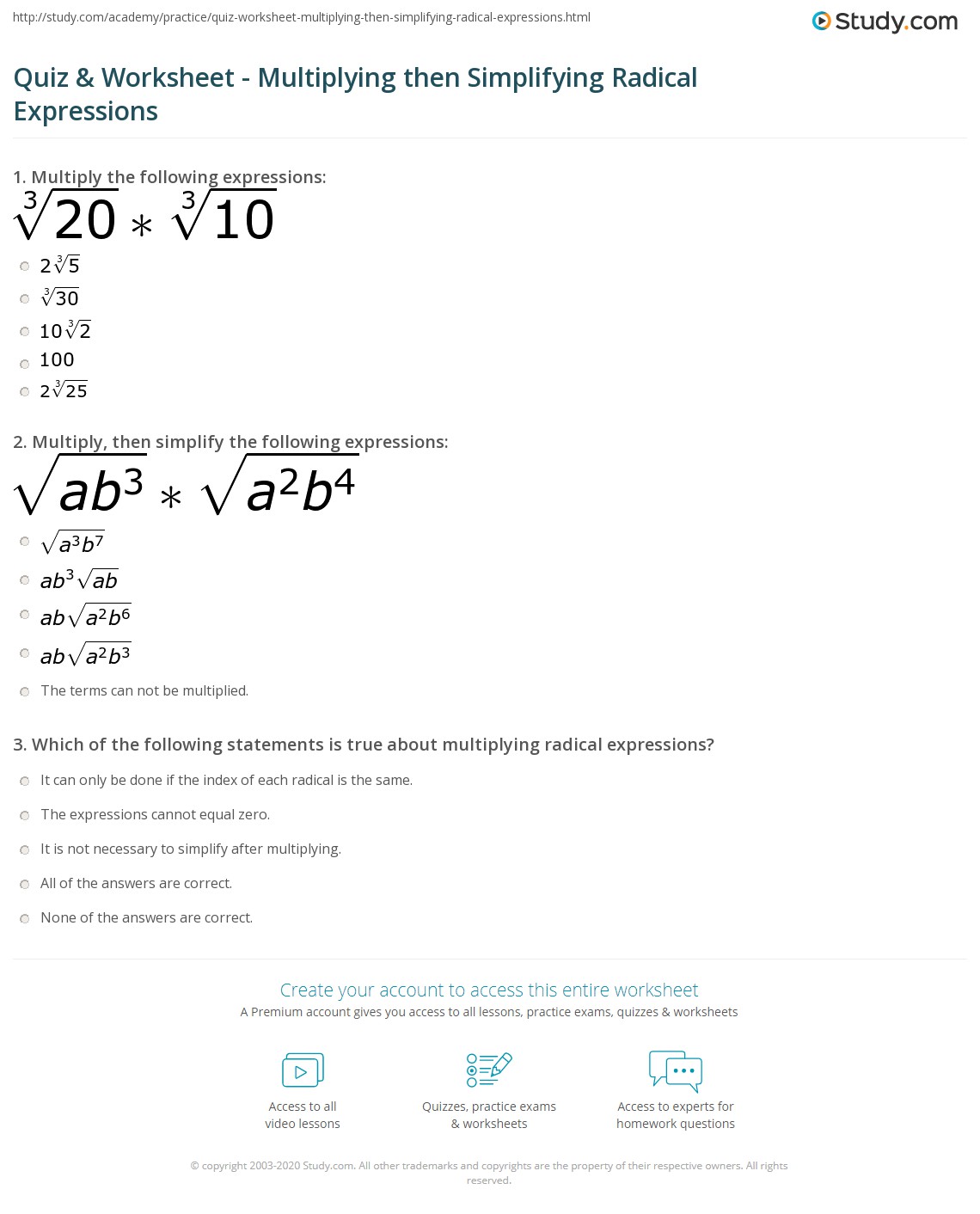
An answer key is invaluable, but the goal isn’t just to check boxes. After you complete a worksheet, compare your answers with the key, then answer these reflective questions:
- Which steps took the longest, and why?
- Did any particular type of radicand (e.g., those with large prime factors) cause difficulty?
- How many errors were due to arithmetic versus conceptual misunderstandings?
- Can you rewrite any problem in a different form that makes the simplification easier?
Documenting your reflections in a math journal helps track progress over time. When you revisit older worksheets, you’ll see tangible growth, which fuels motivation.
Conclusion

Working through a Worksheet For Simplifying Radicals offers more than rote practice; it builds a foundation for confident problem solving across mathematics and real‑world contexts. By mastering the core steps—identifying the radicand, performing prime factorization, extracting perfect powers, rationalizing denominators, and verifying results—you’ll transform intimidating radicals into manageable expressions.
Remember to watch out for common pitfalls, use strategic study habits, and reflect on each session to turn mistakes into learning opportunities. As you apply these techniques to geometry, physics, and even everyday design challenges, you’ll discover that simplifying radicals isn’t just a classroom requirement—it’s a versatile skill that sharpens analytical thinking and opens doors to countless STEM pursuits.