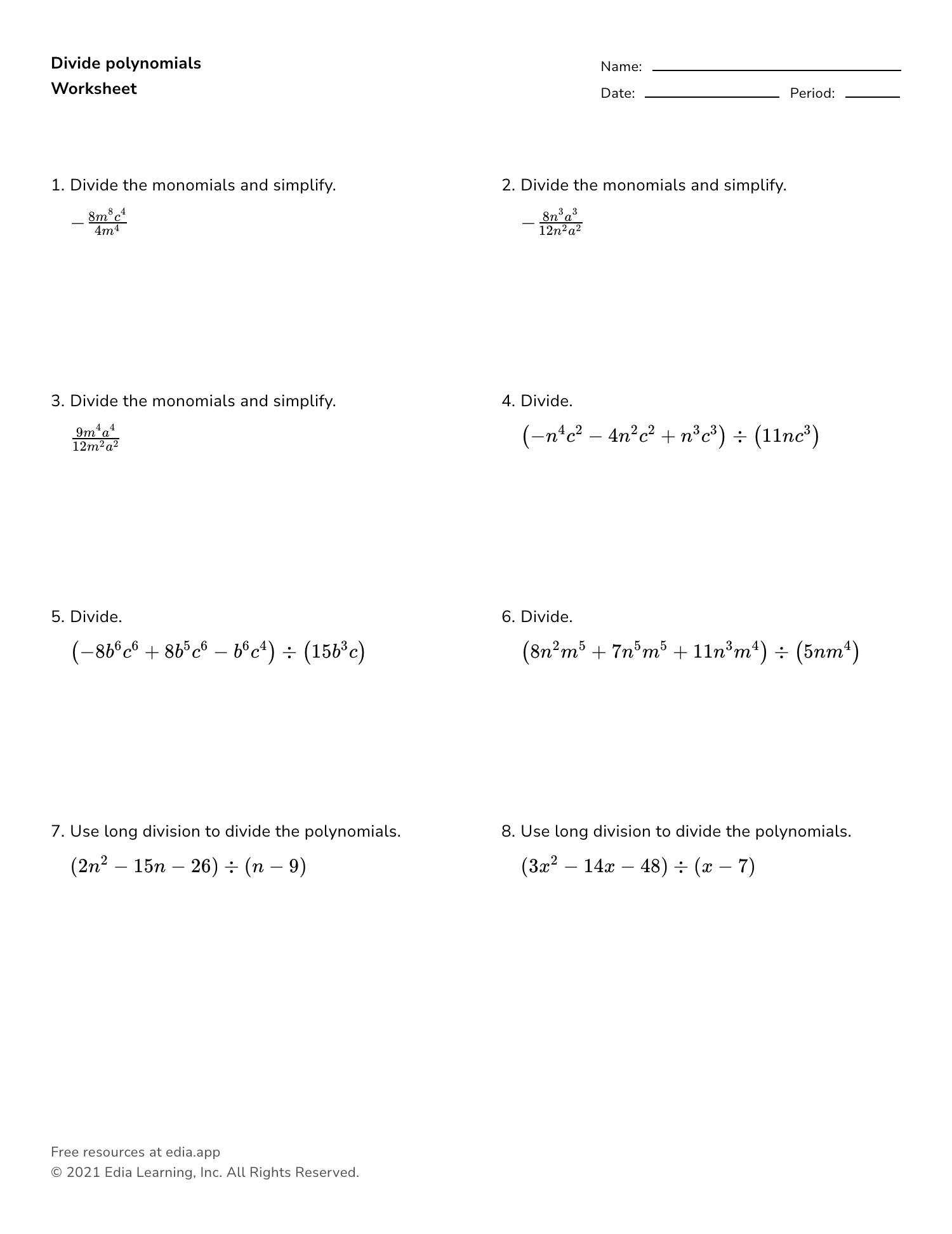
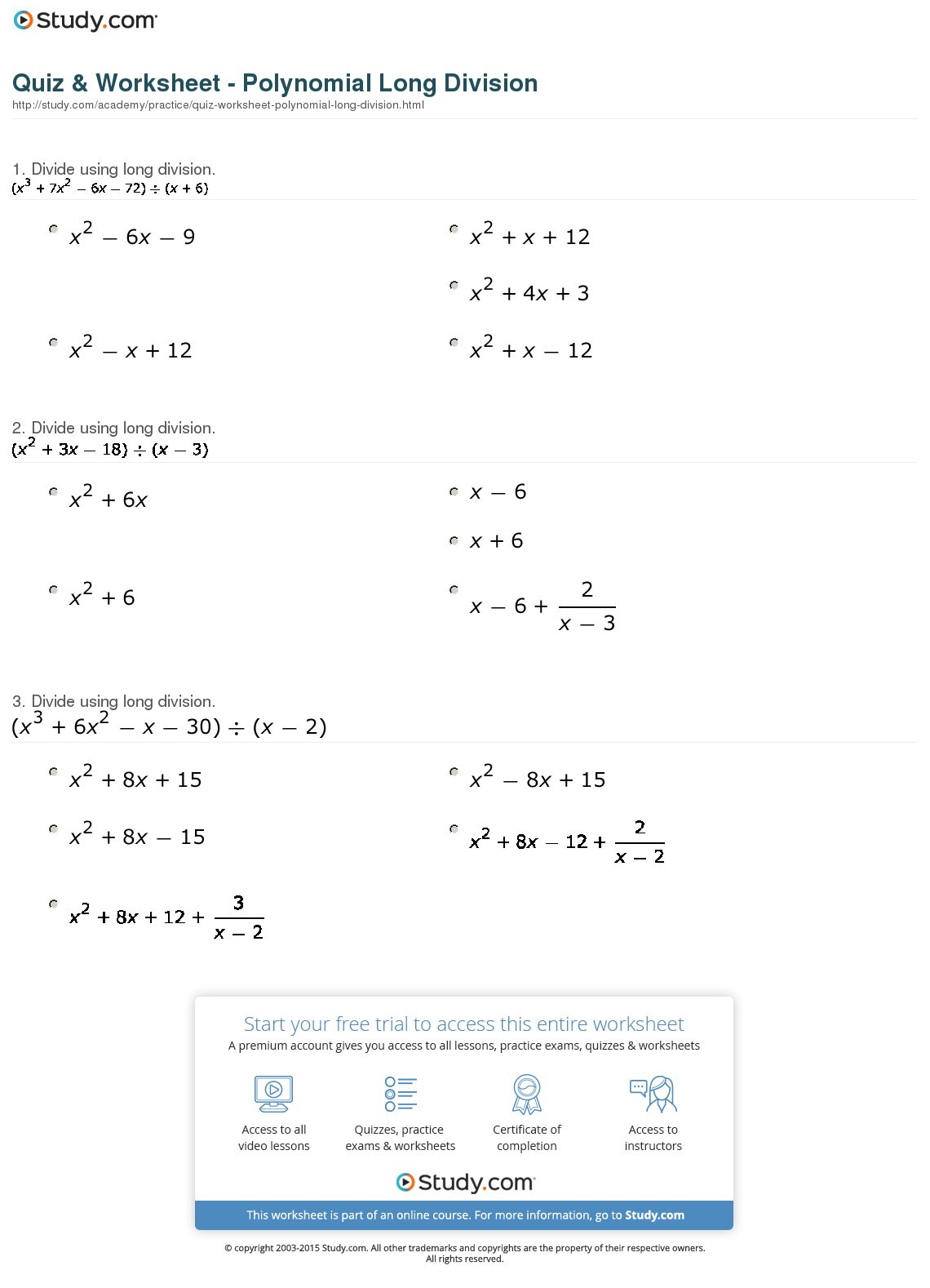
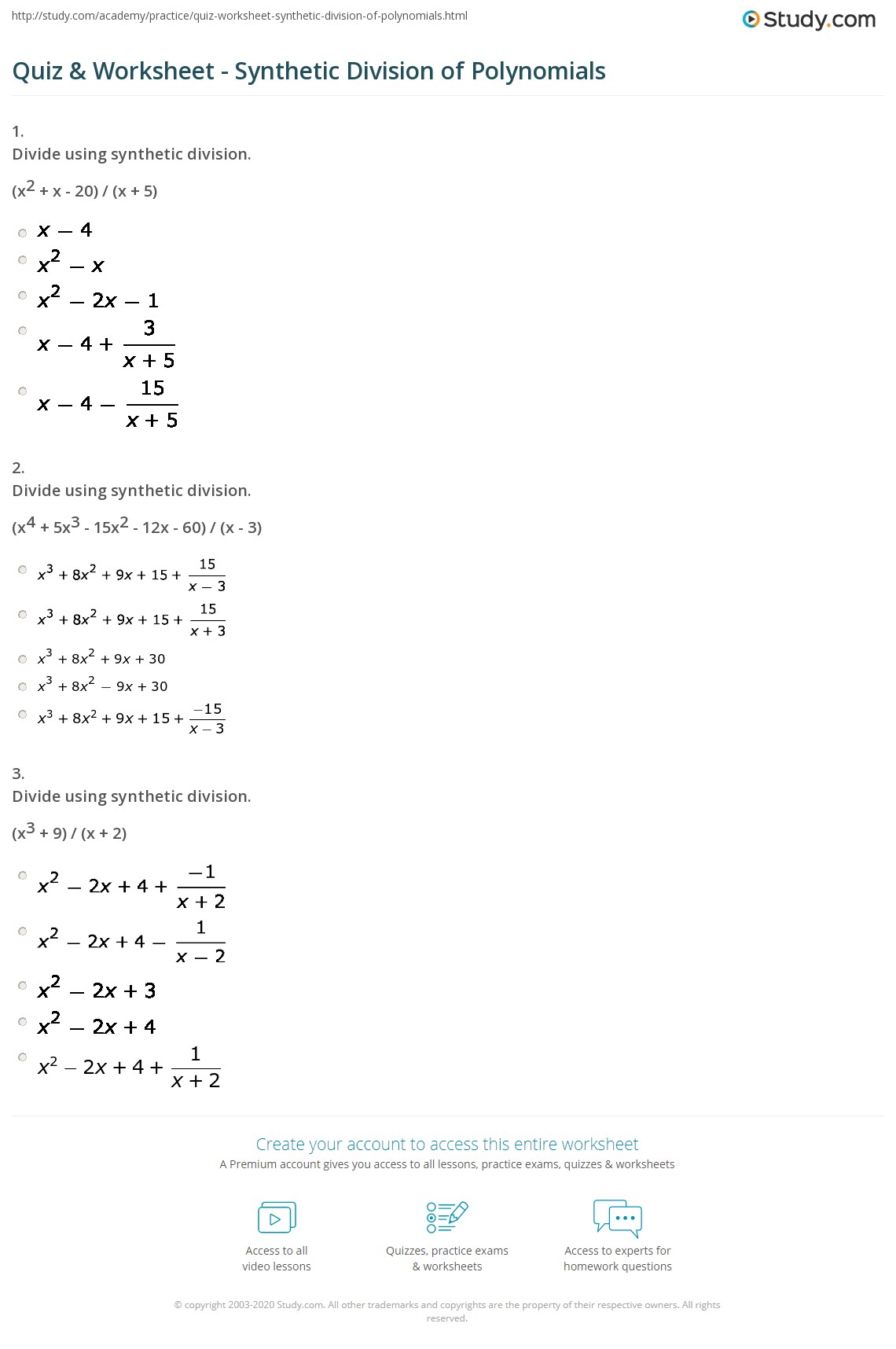
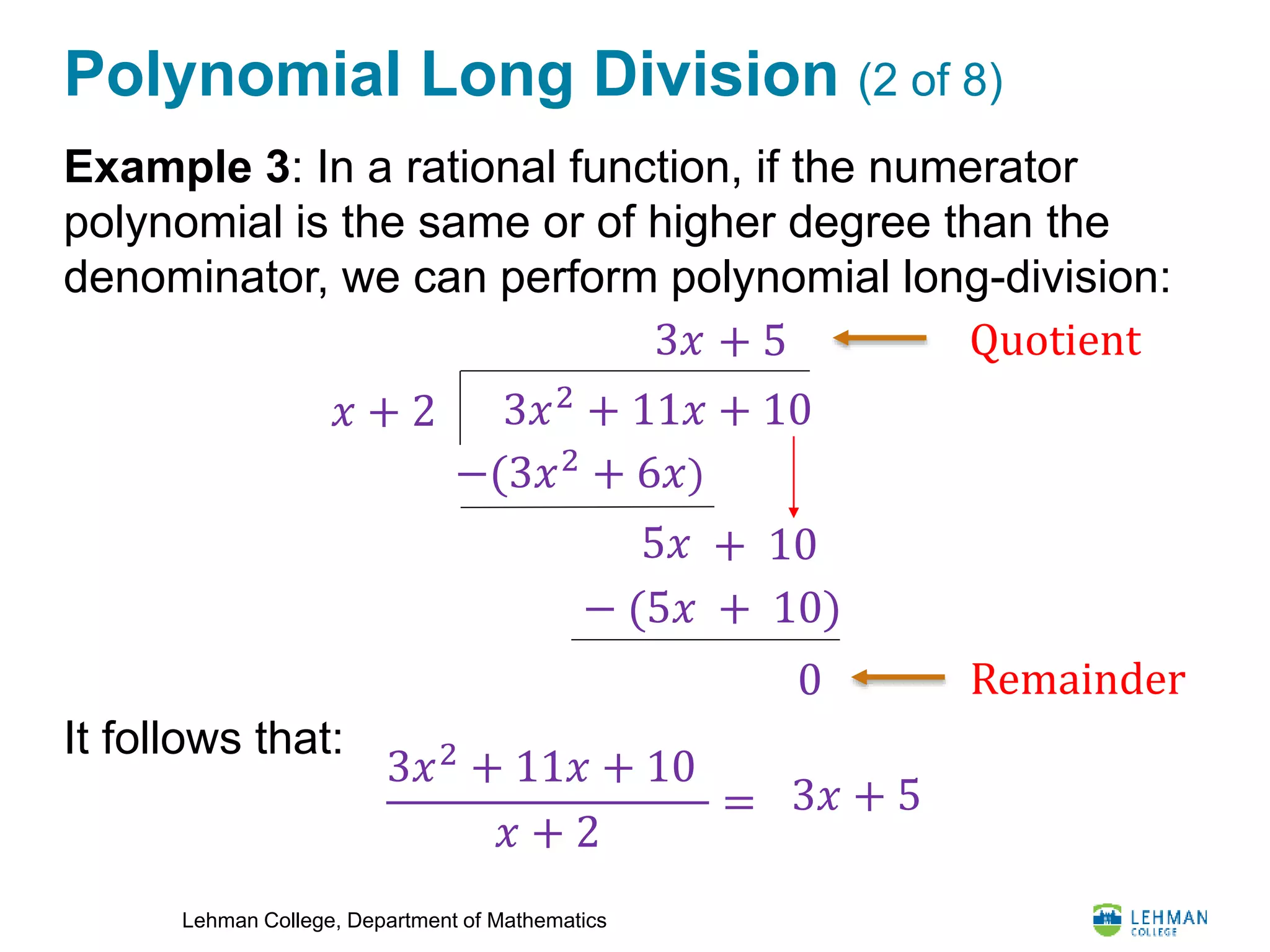
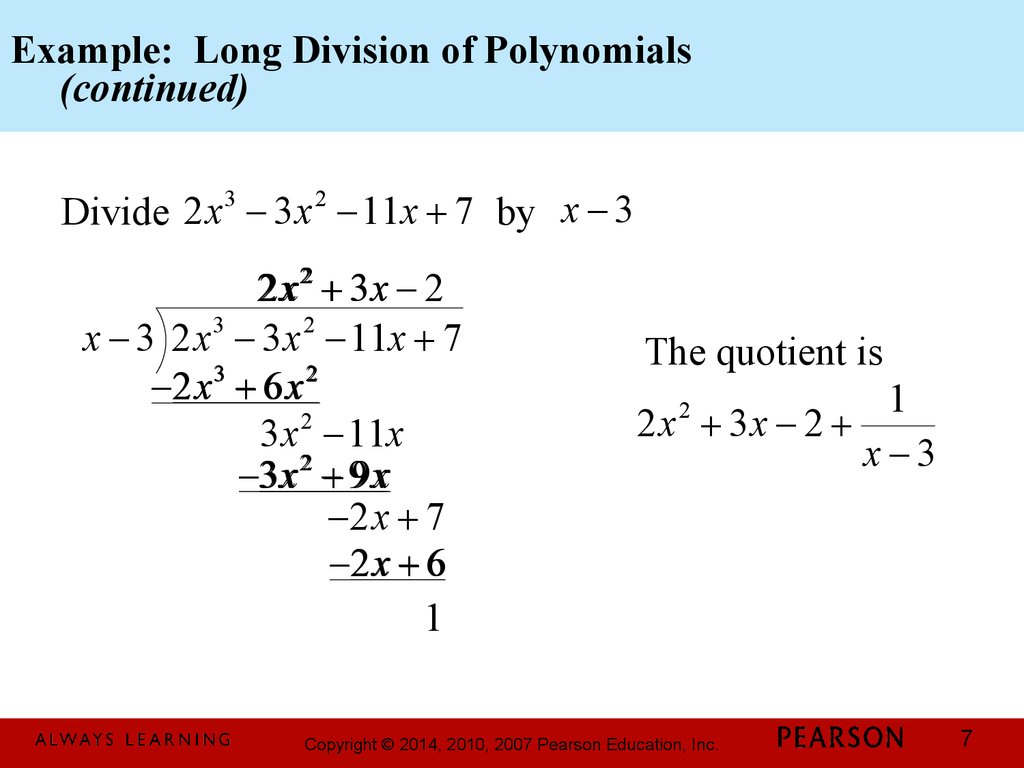
Worksheet Long Division Of Polynomials is more than just a math exercise; it’s a gateway to mastering algebraic manipulation, problem‑solving strategies, and a deeper understanding of the structure behind polynomial functions. Whether you’re a high‑school teacher looking for fresh classroom materials, a tutor designing targeted practice, or a student aiming to conquer the next test, a well‑crafted worksheet can transform abstract theory into tangible skill.
The Power of Long Division in Polynomial Mastery

Long division of polynomials is the algebraic counterpart to the familiar numerical long division. It allows us to break a complex polynomial into a simpler quotient and a remainder, revealing how one polynomial divides into another and exposing the underlying factors. Mastery of this technique equips learners with:
- A systematic approach to simplifying polynomial expressions.
- Confidence in identifying greatest common divisors.
- The foundation for synthetic division, factor theorem, and rational root tests.
- Tools for solving higher‑degree equations and analyzing function behavior.
When integrated into a worksheet format, these benefits are amplified by repetition, visual cues, and progressive difficulty levels that cater to diverse learner needs.
Designing an Effective Long Division Worksheet

Creating a worksheet that is engaging, instructional, and scalable requires thoughtful alignment of learning objectives and scaffolding techniques. Below is a step‑by‑step guide to crafting worksheets that resonate with students.
Define Clear Learning Goals
Before writing a single question, answer these three questions:
- What concept do you want the student to internalize? (e.g., “Identify the remainder when dividing by a linear factor.”)
- Which skill levels will you target? (e.g., 9th‑grade algebra, 10th‑grade advanced topics.)
- How will you assess understanding? (e.g., short answer, fill‑in, or step‑by‑step explanation.)
Clear goals guide question selection, hint placement, and grading rubrics.
Structure Questions for Progressive Complexity
Arrange problems from simple to challenging, ensuring each step builds on the previous one. A typical progression might look like this:
- Divide a quadratic by a linear factor.
- Divide a cubic by a quadratic factor.
- Use synthetic division for higher‑degree polynomials.
- Apply division to find remainders for rational root tests.
- Integrate word problems that require translating real‑world situations into polynomial division.
By gradually increasing the difficulty, students gain confidence and reduce the risk of frustration.
Include Visual and Interactive Elements
Algebraic symbols can be daunting. To mitigate this, embed visual aids such as:
- Step‑by‑step division grids that highlight the coefficients.
- Color‑coded segments to distinguish dividend, divisor, quotient, and remainder.
- Short videos or animations (for digital worksheets) that demonstrate the algorithm.
In print formats, using tables with clear separators helps maintain focus and reduces errors.
Provide Guided Practice and Immediate Feedback
Every worksheet should feature:
- A “Quick Check” section where students can verify their quotient against a provided answer key.
- Hints that surface only after a student attempts the problem, fostering independent problem solving.
- Space for students to write explanations or reasoning, encouraging metacognition.
Immediate feedback is vital for correcting misconceptions before they become entrenched.
Incorporate Real‑World Contexts
Polynomials model a wide range of phenomena—from projectile motion to population growth. Contextualizing division problems in these scenarios increases relevance and motivation. Sample prompts include:
- “A company’s revenue model is expressed by the polynomial R(x). Use long division to determine the profit margin when a linear cost function C(x) is applied.”
- “The trajectory of a ball follows the cubic equation y = 2x³ – 5x² + 3x – 1. Divide this by (x – 2) to find the altitude after a certain time.”
These examples help students see the practical utility of their calculations.
Offer Multiple Formats for Diverse Learning Styles
Consider diversifying the worksheet format:
- Traditional paper worksheets for quick practice.
- Printable PDFs with interactive checkboxes for digital classrooms.
- Online quizzes that auto‑grade and provide instant visual feedback.
- Gamified challenges where students earn points for each correctly completed division.
Variety ensures that every learner stays engaged and can access the material in their preferred medium.
Step‑by‑Step Breakdown of Polynomial Long Division

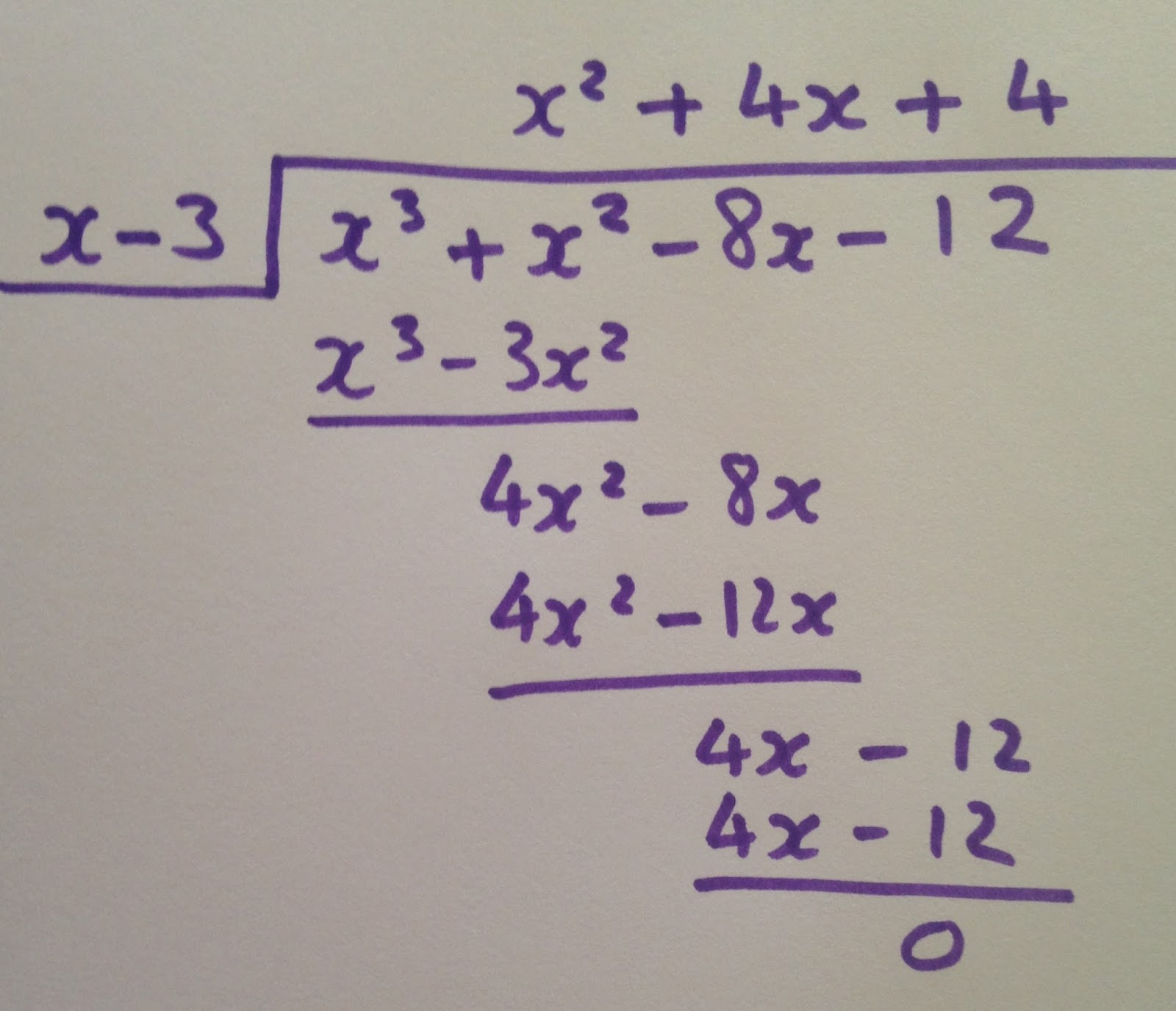
Below is a detailed example that students can follow. This walkthrough mirrors the format of most worksheet problems and can be copied into practice sheets.
Example Problem
Divide \(P(x) = 4x^4 – 12x^3 + 7x^2 + 3x – 6\) by \(D(x) = 2x – 3\).
Solution Steps
- Set up the division. Place the dividend \(4x^4 – 12x^3 + 7x^2 + 3x – 6\) under the long‑division symbol and the divisor \(2x – 3\) outside.
- Divide the leading terms. \(4x^4 \div 2x = 2x^3\). Write \(2x^3\) above the division bar.
- Multiply and subtract. Multiply \(2x^3\) by \(2x – 3\) to get \(4x^4 – 6x^3\). Subtract this from the current dividend to obtain \((-12x^3 + 6x^3) = -6x^3\). Bring down the next term \(7x^2\).
- Repeat. Divide \(-6x^3 \div 2x = -3x^2\). Write \(-3x^2\) next to \(2x^3\).
- Continue the process. Multiply \(-3x^2\) by \(2x – 3\) to get \(-6x^3 + 9x^2\). Subtract to yield \((7x^2 – 9x^2) = -2x^2\). Bring down \(3x\).
- Proceed. Divide \(-2x^2 \div 2x = -x\). Multiply \(-x\) by the divisor to get \(-2x^2 + 3x\). Subtract; the result is \(0x\). Bring down \(-6\).
- Final steps. Divide \(0x \div 2x = 0\). Since no terms remain, the quotient is \(2x^3 – 3x^2 – x\) and the remainder is \(-6\).
Students can practice this exact procedure on worksheets with varying dividends and divisors. The visual grid often helps track coefficients and avoid algebraic slips.
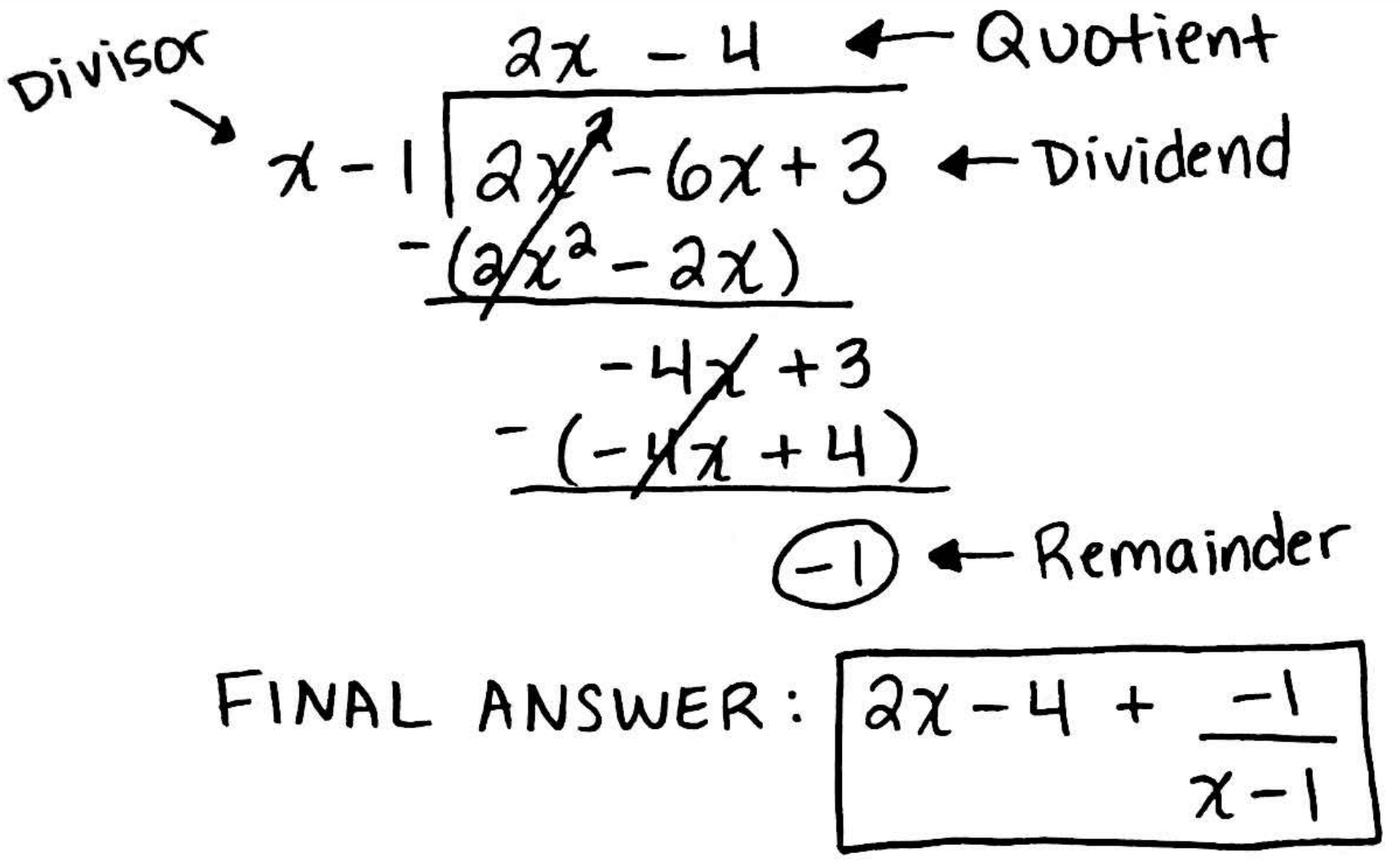
Common Pitfalls and How to Address Them
Long division can be error‑prone. These pitfalls frequently appear on worksheets and exams:
- Mixing up signs during subtraction.
- Forgetting to bring down the next coefficient.
- Incorrect alignment of terms, especially when working with polynomials containing missing degrees (e.g., \(x^3 + 4x + 2\)).
- Failing to check the degree of the remainder—if it’s equal to or greater than the divisor’s degree, division is incomplete.
To combat these issues, include a “check your work” sub‑section in worksheets:
- Re‑multiply quotient by divisor and add remainder to verify the original polynomial.
- Use a short quiz question that asks the student to identify the error in a deliberately flawed solution.
- Encourage students to write a concise explanation of each step, reinforcing understanding.
Integrating Technology for Enhanced Engagement
Digital platforms can elevate the worksheet experience. Features to consider:
- Auto‑grading tools that provide instant feedback on each step.
- Interactive algebra tiles or virtual manipulatives that illustrate coefficient operations.
- Dynamic graphs that plot the dividend, divisor, and quotient for visual insight.
- Progress dashboards that track accuracy over time, motivating students with badges or points.
While technology is powerful, it should supplement, not replace, hands‑on practice. Balance is key to preventing over‑reliance on calculators or software.
Assessment Strategies for Long Division Proficiency

Effective assessment goes beyond simply checking the final answer. Consider the following:
Process Evaluation
Ask students to submit a step‑by‑step diagram or a written justification of each operation. This approach reveals their grasp of the algorithm and surface any conceptual gaps.
Application Tests
Design problems that require students to apply polynomial division to solve real‑world questions, such as factoring a cubic equation to determine the roots of a physical system.
Peer Review
In group settings, let students exchange worksheets and critique each other’s solutions. Peer feedback often uncovers subtle errors and reinforces learning through teaching.
Timed Challenges
Introduce timed sections that encourage speed and accuracy, mirroring exam conditions. Gradually reduce the number of steps to push proficiency.
Tips for Teachers and Tutors
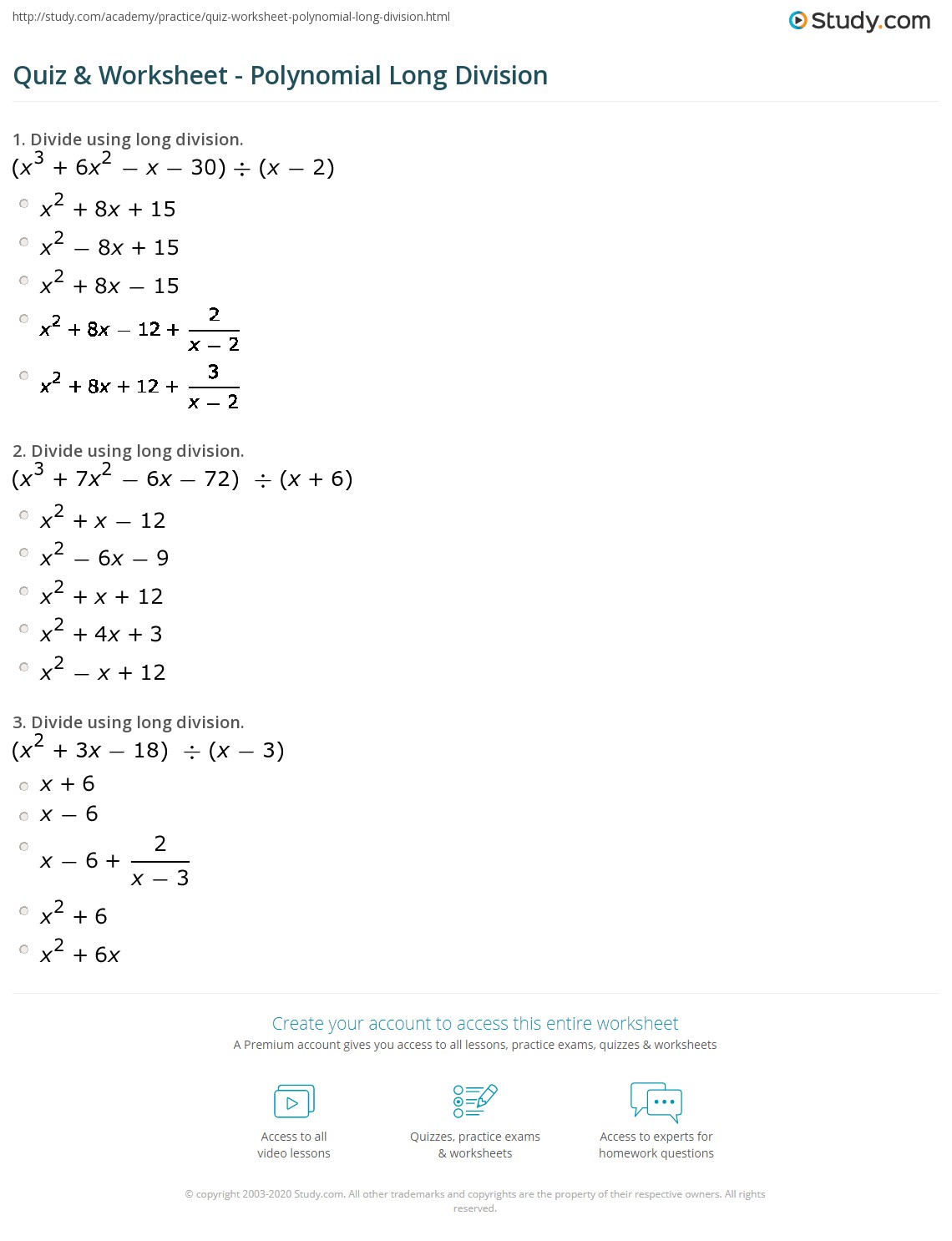
- Start each class with a brief recap of polynomial division rules before launching into worksheet practice.
- Use a “think‑aloud” strategy: model a problem aloud, verbalizing each decision.
- Encourage the use of scratch paper or digital notes to keep track of intermediate results.
- Provide a “cheat sheet” summarizing the long division steps and common signs.
- Offer extra practice for students struggling with specific concepts, such as aligning terms or handling missing degrees.
Conclusion: Turning Worksheets into Mastery
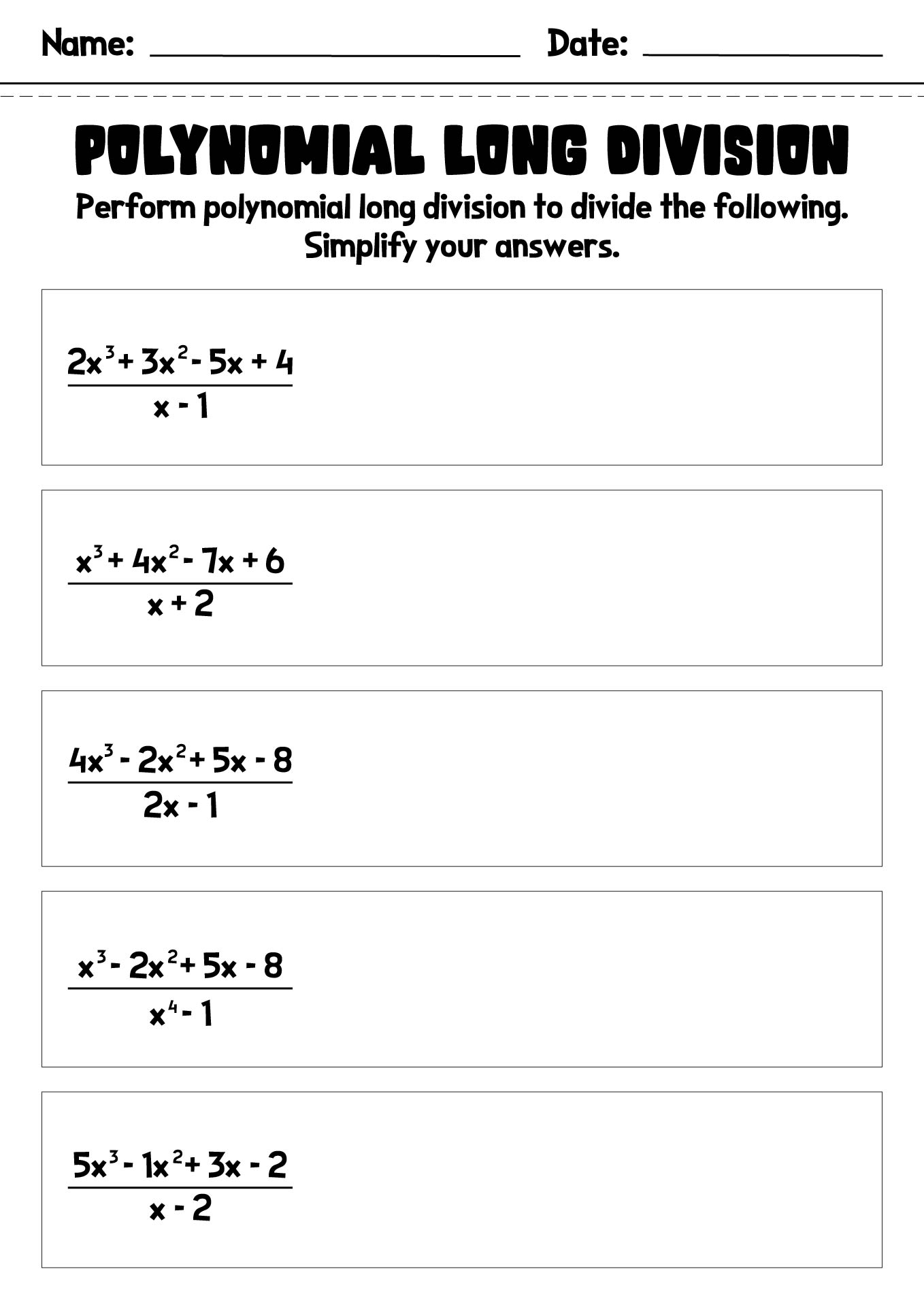
Mastering Worksheet Long Division Of Polynomials requires more than rote practice; it demands a clear understanding of the underlying algorithm, strategic scaffolding, and engaging, real‑world contexts. By designing worksheets that progressively build complexity, incorporate visual aids, and provide immediate feedback, educators can transform a potentially tedious skill into an empowering tool for algebraic reasoning.
When students consistently apply these methods, they unlock the ability to factor, solve higher‑degree equations, and analyze functions with confidence. Ultimately, well‑structured worksheets serve as the bridge from abstract polynomial expressions to tangible problem‑solving prowess, preparing learners for advanced mathematics and real‑life applications alike.