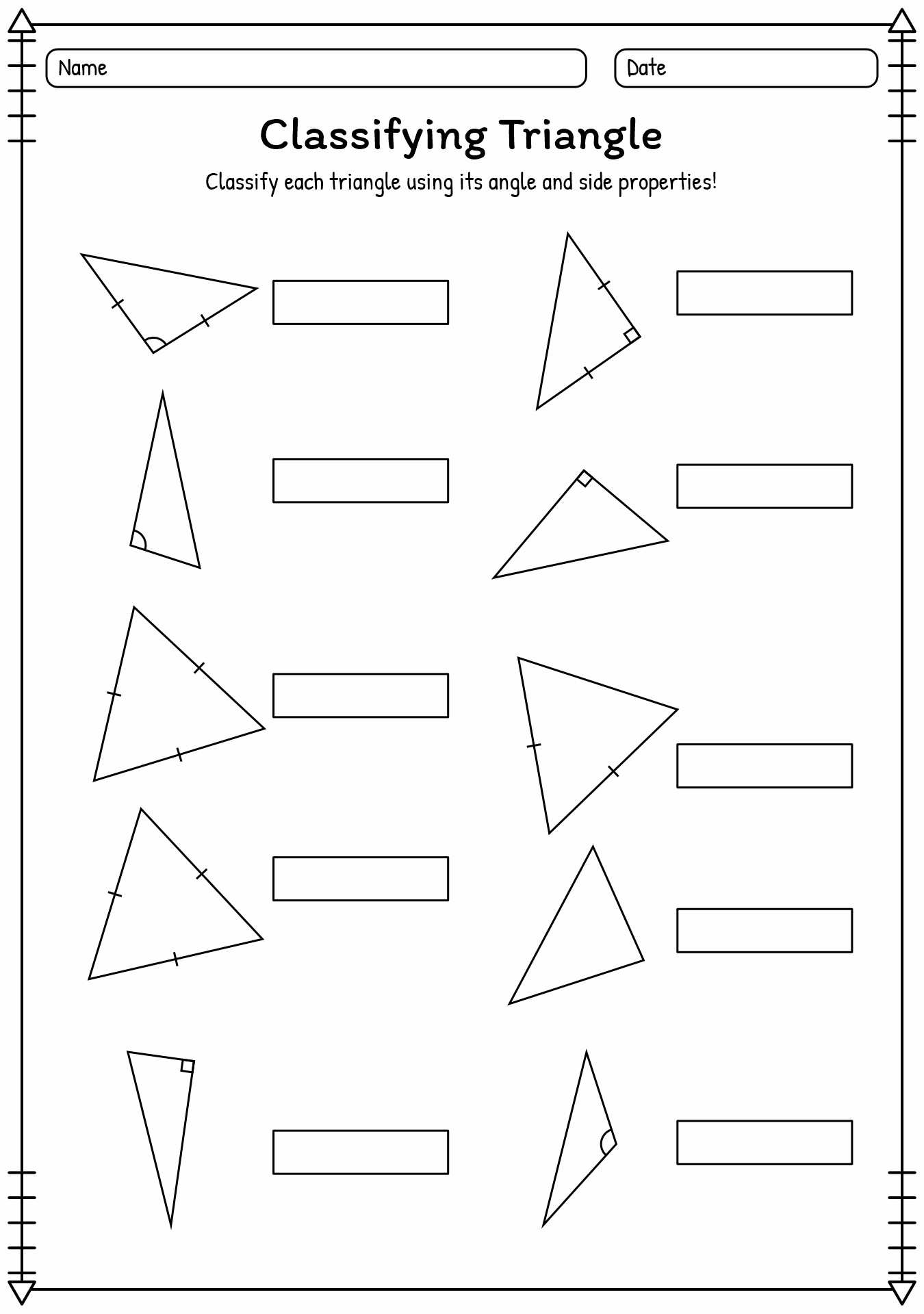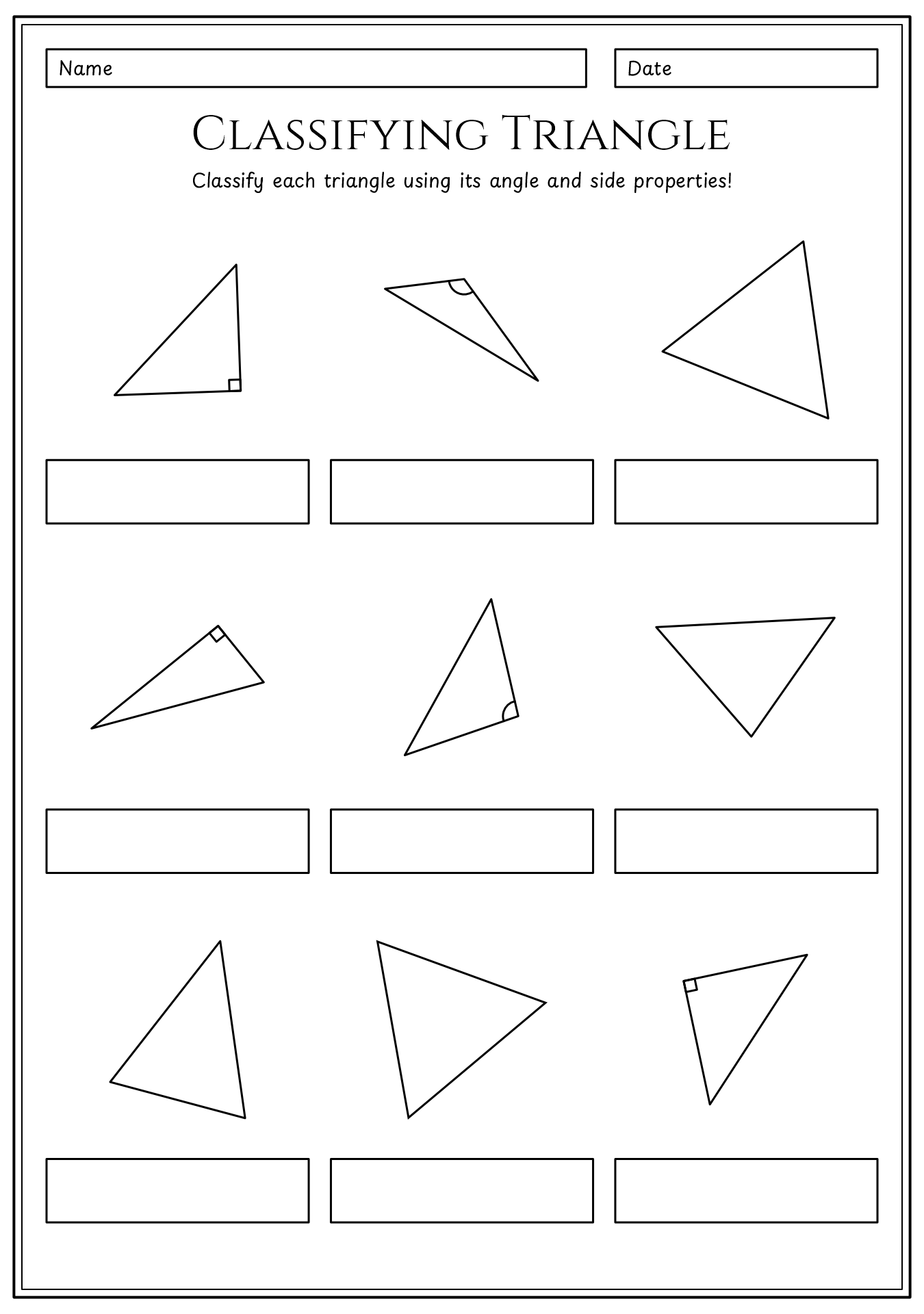
The Worksheet On Classifying Triangles offers an engaging, structured approach that transforms the way students perceive geometric shapes, especially in a vibrant Asian educational context where precision and visual harmony are prized. By combining cultural aesthetics with modern learning methods, this worksheet not only reinforces core concepts but also inspires a deeper appreciation for mathematics as a universal language of patterns and proportions.
Why Classifying Triangles Matters in Asian Learning Environments
Academic Standards and Competitive Edge
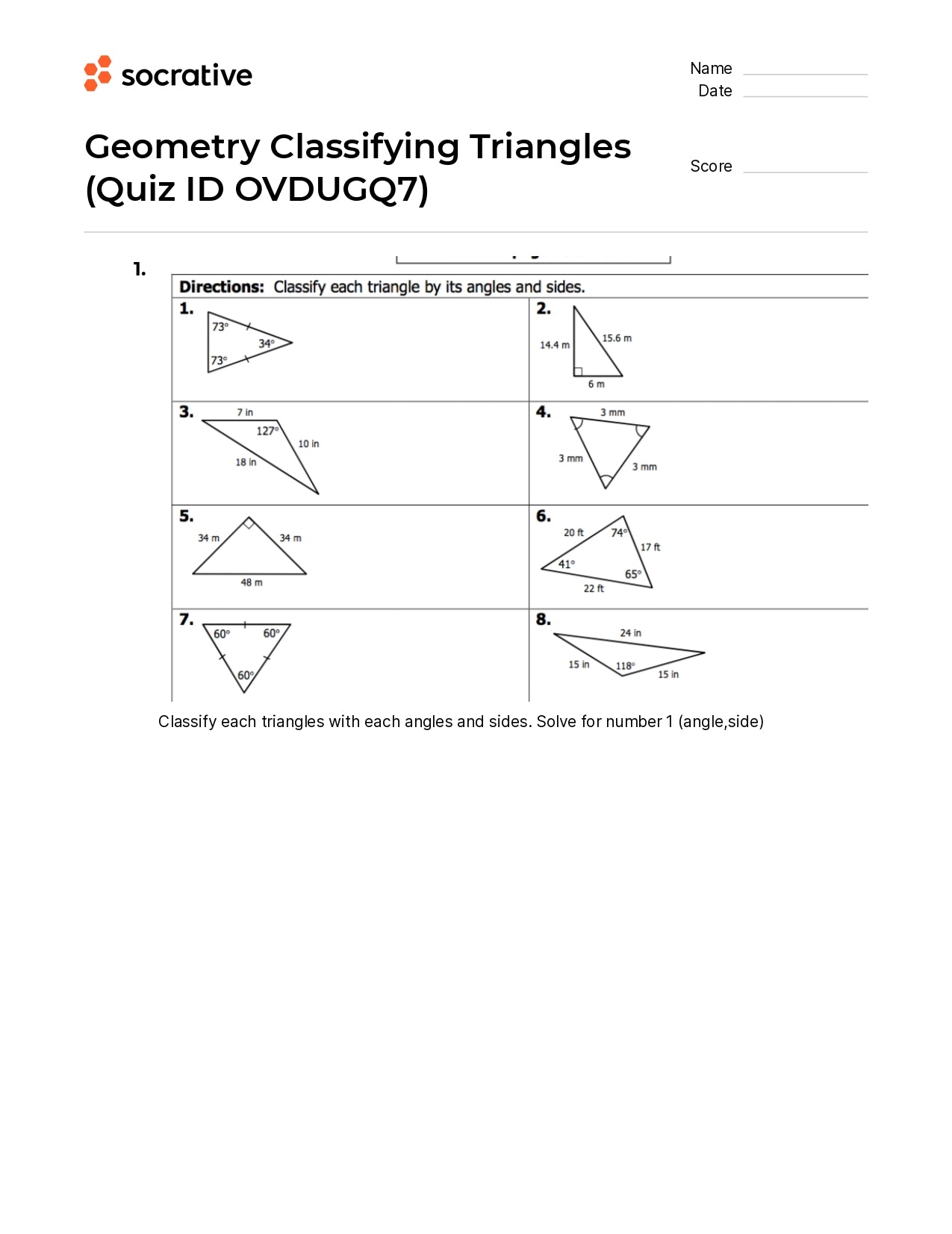
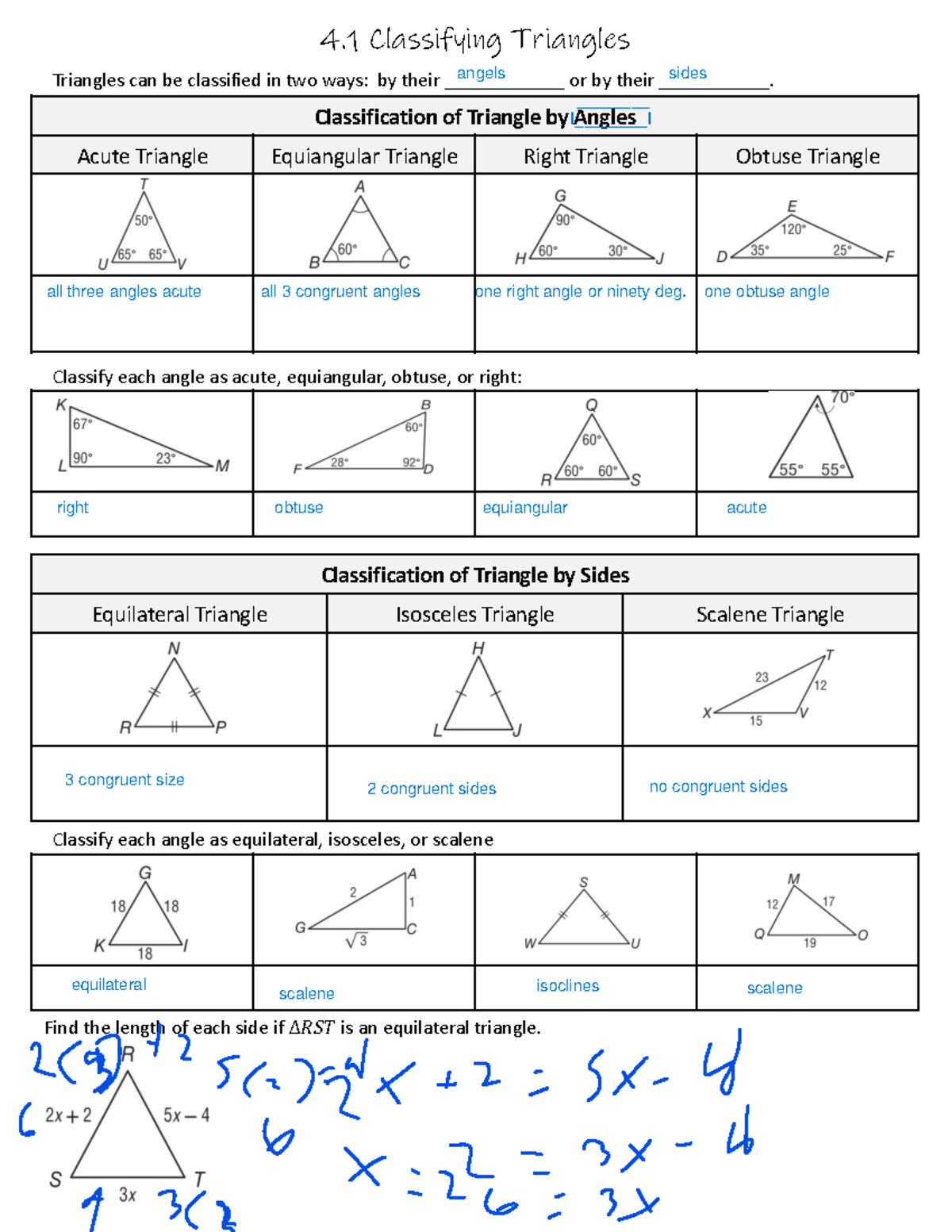
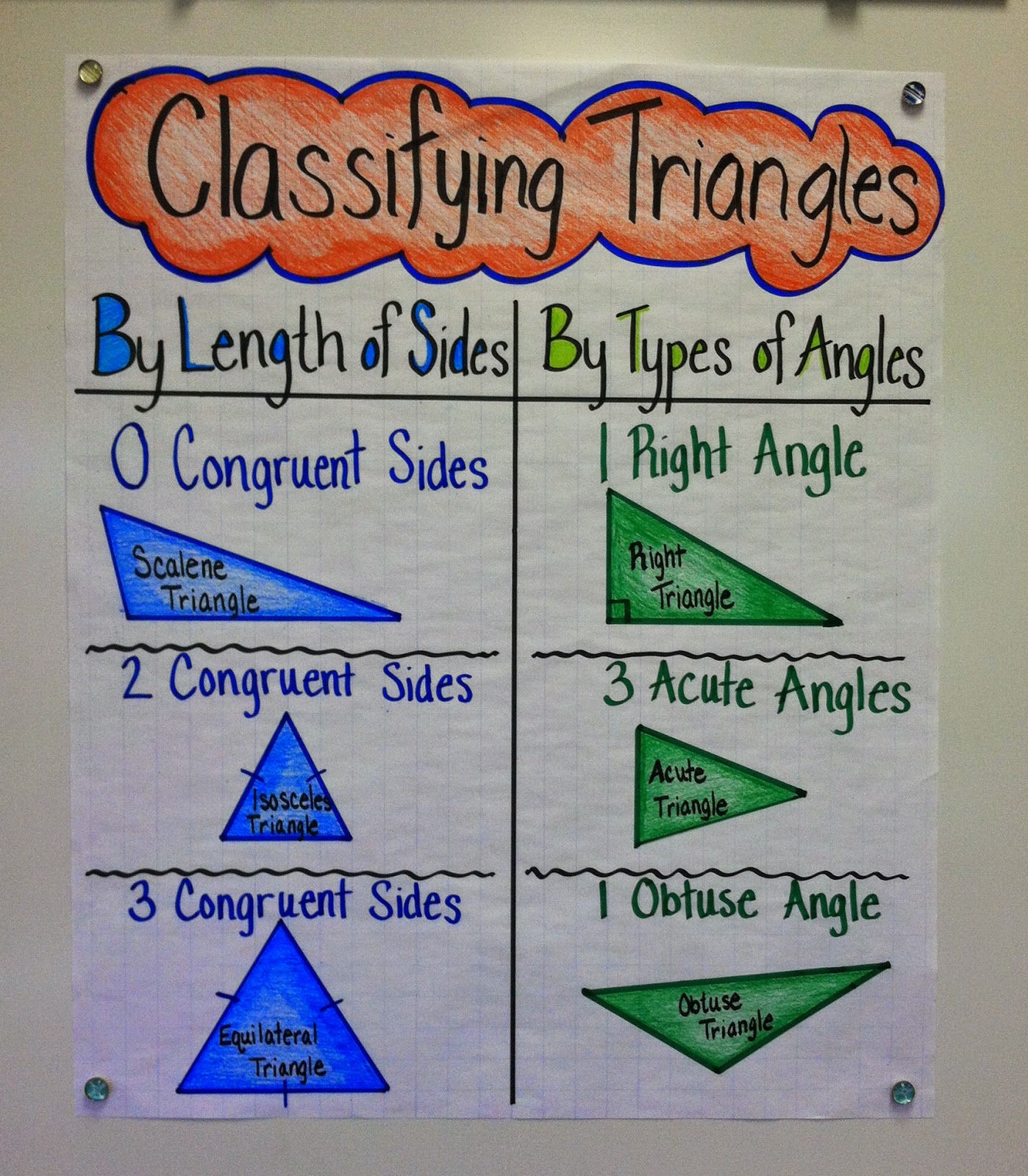
In many Asian countries, math competitions and rigorous examinations emphasize spatial reasoning and problem‑solving. Classifying triangles into right, isosceles, scalene, acute, obtuse, or equilateral categories becomes a foundational skill that underpins higher‑level geometry, trigonometry, and even physics. A well‑designed worksheet provides repetitive practice that ensures mastery before moving on to more complex topics.
Visual Storytelling and Cultural Resonance
Asian art traditions, from origami to the delicate balance of mandalas, celebrate symmetry and proportion. By presenting triangle classification in visually appealing charts, color‑coded diagrams, and culturally inspired illustrations, learners can connect abstract mathematical rules to familiar artistic patterns, enhancing retention and motivation.
Core Features of an Effective Triangle Classification Worksheet
Clear Objective Statements
Each section of the worksheet should begin with a concise goal: “Identify the type of triangle based on side lengths” or “Determine the angle classification using a protractor.” Clear objectives help students focus and self‑assess their progress.
Progressive Difficulty Levels
- Beginner Level: Simple side‑length tables and basic angle measurements.
- Intermediate Level: Mixed problems requiring both side and angle analysis.
- Advanced Level: Real‑world scenarios where triangles appear in architecture or engineering.
Visual Aids and Color Coding
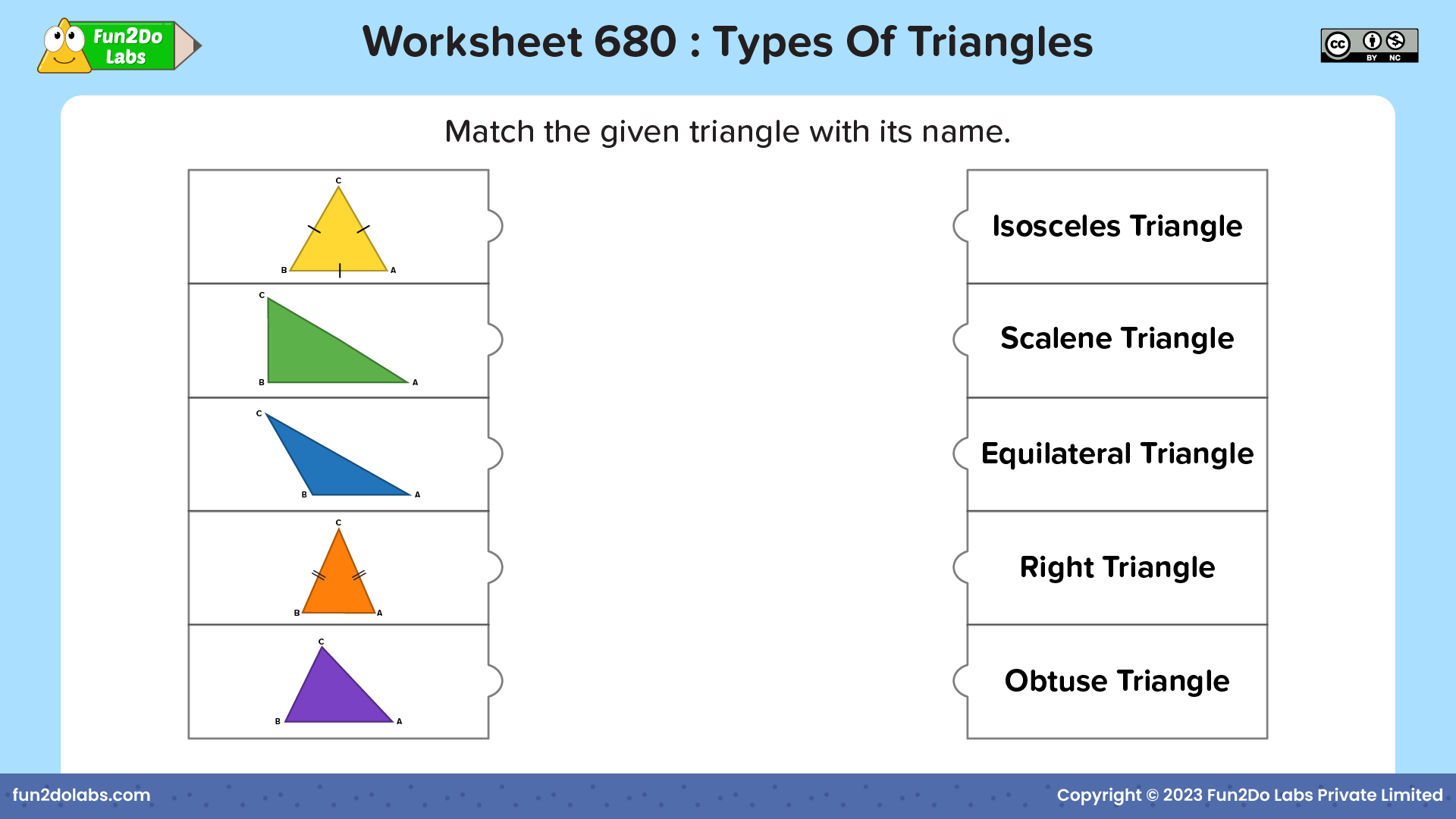
Utilize bold colors to differentiate triangle types: green for equilateral, blue for isosceles, red for scalene, yellow for obtuse, orange for acute, and black for right‑angled. Color‑coded diagrams reinforce visual memory and make the worksheet more engaging for learners who benefit from visual cues.
Step‑by‑Step Problem Solving Prompts
Each question should guide the student through the reasoning process: “List the given side lengths,” “Apply the Triangle Inequality Theorem,” “Determine the sum of the interior angles,” and “Conclude the triangle type.” By breaking the process into manageable steps, the worksheet becomes a scaffold for developing analytical thinking.
How to Use the Worksheet Effectively
Classroom Integration
Teachers can begin with a short live demonstration, then assign the worksheet as a collaborative activity. Pair students to discuss their reasoning, fostering a community of learners that mirrors the collaborative ethos often valued in Asian educational settings.
Homework and Self‑Study
Providing a printable version allows students to practice at home. Encourage them to check their answers against the solution guide or use a digital tool that provides instant feedback, creating a loop of immediate reinforcement.
Assessment and Feedback
Incorporate a rubric that rewards accuracy, logical justification, and use of proper terminology. For advanced learners, offer optional challenge problems that require them to prove a triangle’s classification using theorems, thereby deepening conceptual understanding.
Real‑World Applications That Bring Triangles to Life

Architecture and Engineering
Traditional Japanese pagodas and Chinese pagodas rely on triangular roof sections to distribute weight evenly. By studying the angles and side ratios in these structures, students see how the worksheet’s classifications mirror real‑world design choices.
Technology and Computer Graphics
In 3‑D modeling, triangles form the basic building blocks of meshes. Understanding which types of triangles create stable surfaces is crucial for artists and engineers working in digital animation and gaming—a modern twist that can excite tech‑savvy learners.
Sports and Strategy Games
From soccer field markings to chess board geometry, triangles appear in various strategic contexts. Analyzing these shapes can improve spatial reasoning and help students appreciate geometry in everyday life.
Sample Problem Set from the Worksheet
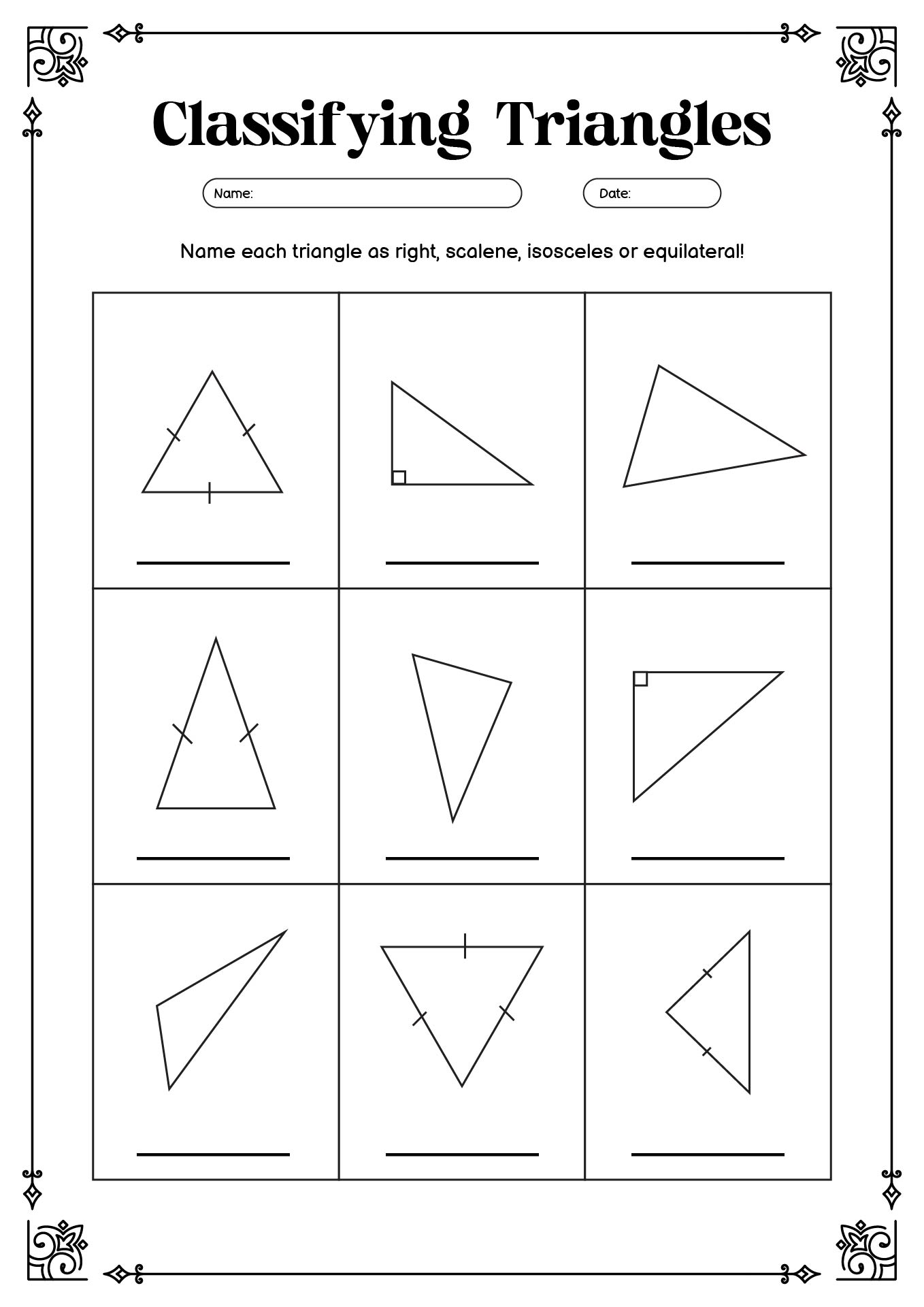
Problem 1: Side‑Length Identification
Given a triangle with sides of 7 cm, 7 cm, and 10 cm, classify the triangle.
- Step 1: Recognize two equal sides → isosceles.
- Step 2: Verify side lengths satisfy the Triangle Inequality: 7 + 7 > 10.
- Conclusion: An isosceles triangle with one obtuse angle (since 10 is the largest side).
Problem 2: Angle‑Based Classification
A triangle has interior angles measuring 30°, 60°, and 90°. Determine its classification.
- Step 1: Identify 90° → right‑angled.
- Step 2: Two acute angles confirm it is also acute‑angled on the remaining sides.
- Conclusion: A right‑angled, acute‑angled triangle.
Problem 3: Real‑World Scenario
Design a triangular garden plot using 15 meters for two sides and a 30° angle between them. Is the triangle acute, obtuse, or right?
- Step 1: Apply the Law of Cosines to calculate the third side.
- Step 2: Analyze the calculated side relative to the given angle.
- Conclusion: The triangle is acute because all angles are less than 90°.
Enhancing Cultural Connection Through Design
Incorporate Traditional Patterns
Use motifs such as lotus petals or bamboo frames as backgrounds for triangle illustrations. This subtle integration invites students to connect geometry with cultural heritage while keeping the focus on mathematical logic.
Celebrate Success with Badges and Certificates
After completing the worksheet, award a digital badge that reflects the type of triangle mastered. These tangible recognitions tap into a reward system that motivates many Asian students to strive for excellence.
Common Mistakes and How to Avoid Them

Confusing Side Lengths and Angle Measures
Students often mix up which attribute determines a triangle’s classification. Encourage a systematic approach: first classify by sides, then by angles. Providing a checklist within the worksheet can reduce errors.
Neglecting the Triangle Inequality Theorem
Without confirming that the sum of any two sides exceeds the third, a proposed triangle may be impossible. Emphasize this theorem early on and provide quick-reference tables.
Overlooking Equivalent Classifications
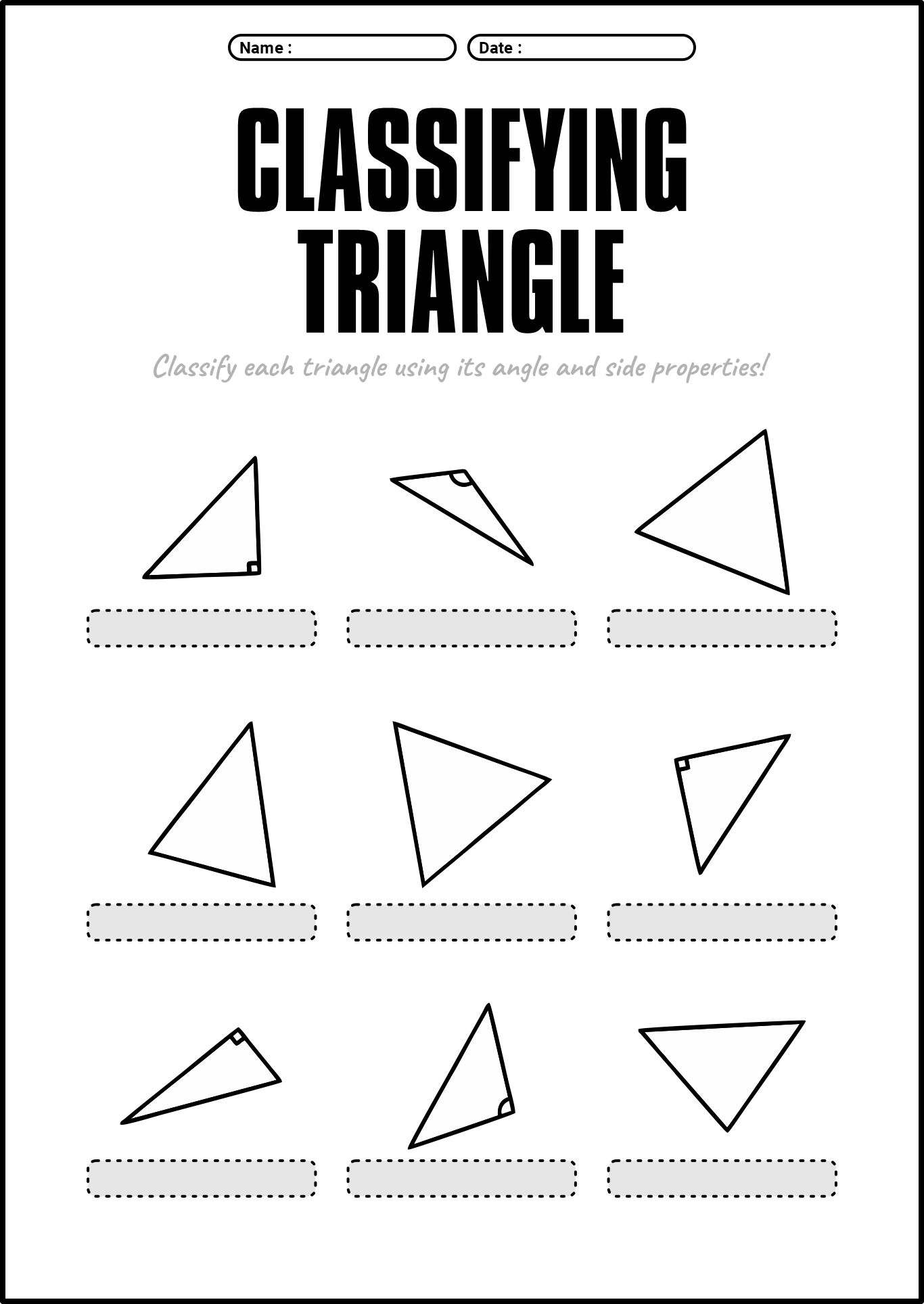
Triangles can belong to multiple categories (e.g., an isosceles right triangle). Ensure students learn to list all applicable classifications and explain why multiple categories apply.
Conclusion: Turning Geometry into a Shared Experience
By weaving together clear objectives, culturally resonant visuals, and real‑world connections, the Worksheet On Classifying Triangles becomes more than a set of exercises—it transforms into a dynamic learning experience. Students are encouraged to explore geometric concepts through hands‑on practice, collaborative discussion, and reflective assessment, all while seeing how triangle properties echo the harmony found in traditional Asian art, architecture, and everyday life. With this comprehensive approach, learners develop both confidence and curiosity, setting a strong foundation for future mathematical adventures.